
 by
by Ready to complete your sleep bedroom? The Saatva Classic is our top-rated luxury innerspring hybrid — individually wrapped coils, organic cotton cover, three firmness options, and white-glove delivery. See current pricing and configurations at Saatva.
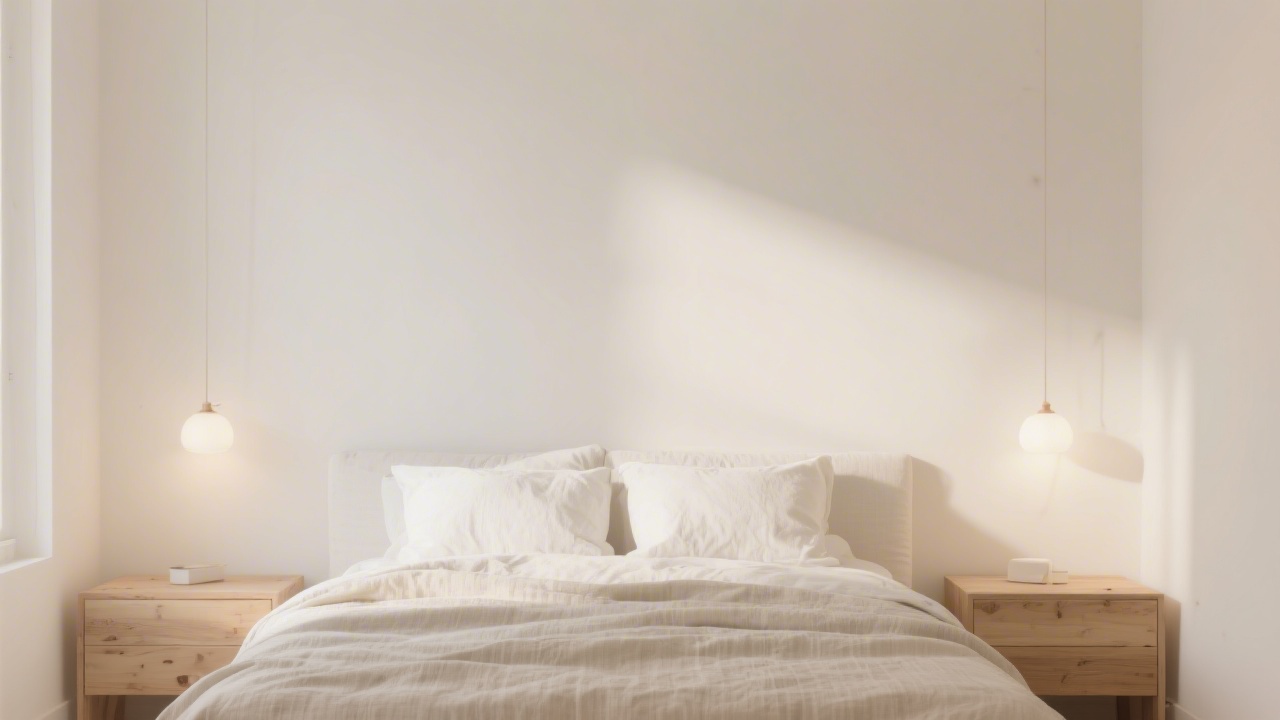
White bedrooms are the signature aesthetic of luxury hotels, sleep clinics, and minimalist design — and there is a functional reason. White creates perceptual spaciousness and visual silence: there is nothing for the eye to engage with, so the brain's task-management and categorization systems can quiet down. But white is also the most technically demanding bedroom color to execute well. Too bright and it increases light sensitivity. Too clinical and it produces the opposite of comfort. Getting white right requires understanding which white, how it is lit, and what it is paired with.
The Psychology of White Sleep Spaces
Environmental psychology research on white spaces identifies two competing effects. Expansive, uncluttered white environments reduce perceived cognitive load — the brain has less to process, which supports the mental quieting required for sleep. This is why many sleep specialists recommend removing visual clutter and why white walls are the easiest way to achieve "visual silence."
The competing effect: bright white surfaces with high light reflectance (LRV above 85) can increase sensitivity to ambient light, making minor light intrusions (streetlight, charging indicators) more disruptive. The solution is to specify off-white or warm white with LRV in the 70–80 range rather than pure white (LRV 90+), and to pair with blackout window treatments.
Warm White vs. Cool White: A Critical Distinction
There is no such thing as "just white." Every white paint has an undertone that becomes visible in certain lighting conditions.
- Warm whites (cream, ivory, linen white): Undertones of yellow, pink, or beige. These are the most sleep-compatible whites because they read as soft and comfortable, not clinical. Benjamin Moore "White Dove" (OC-17), Sherwin-Williams "Alabaster" (SW 7008). Best for any room orientation.
- Cool whites (blue-white, stark white): Undertones of blue or green. These look sharp and clean in bright daylight but can feel cold and hospital-like under incandescent or warm LED light. Reserve cool white for trim, not walls.
- The test: Always evaluate a paint chip under your actual room lighting at night — the time when the bedroom must perform. A warm white that looks perfect in daylight may read as yellow under 2700K bulbs.
How to Add Warmth Without Adding Clutter
The failure mode of white bedrooms is either sterility (nothing but white) or clutter (accessories added to "warm up" a cold room but breaking the visual silence). The solution is texture, not color.
- Textured bedding: Waffle-weave cotton, linen with visible slubs, or a chunky knit throw add visual warmth without adding color noise. White-on-white with varying textures reads as rich, not plain.
- A single warm wood element: One nightstand or a wood-framed bed provides warmth without breaking the white palette. The contrast between white and natural wood is one of the most universally appealing material combinations in residential design.
- Layered soft lighting: Warm-white bulbs (2700K) in multiple locations (bedside, floor lamp, wall sconce) create pools of light that feel enveloping rather than clinical. Avoid a single overhead light in white rooms — it creates flat, even illumination that emphasizes the clinical quality you are trying to avoid.
White Bedrooms and Light Management
White walls amplify every light source in the room — which is an advantage during the day and a liability at night. Blackout curtains or Roman shades in a white or cream tone that blends with the wall are the standard solution for white bedrooms. This maintains the visual unity of the palette while eliminating light intrusion.
Charging cables and indicator lights that are invisible in colored rooms become obvious against white walls. Managing these — routing cables behind furniture, covering LED indicators with electrical tape or small black dots — is a small but measurable step in white-bedroom sleep optimization. See also our guide to bedroom boundaries for sleep for a comprehensive approach to visual and sensory management.
For more on how spatial arrangement affects sleep quality in white rooms, see bedroom floor plans for sleep.
The Mattress in a White Bedroom
A white bedroom designed for sleep calls for a mattress that matches the aesthetic: clean construction, quality materials, no compromise. The Saatva Classic ships in a white organic cotton cover. It is one of the few luxury mattresses available with white-glove delivery — delivered to your room, set up, and old mattress removed — a service consistent with the clean-slate approach of a white-bedroom sleep renovation.
Frequently Asked Questions
Is white a good color for a bedroom?
White is effective for sleep when executed well — it creates visual silence and reduces cognitive load. The risks are clinical coldness and high light reflectance amplifying ambient light. Warm whites with LRV 70–80 (not stark white at LRV 90+) avoid both problems.
What is the difference between warm white and cool white in a bedroom?
Warm whites have yellow, pink, or beige undertones and feel soft and comfortable. Cool whites have blue or green undertones and feel clinical. For sleep environments, warm white (cream, ivory, linen white) is significantly better.
Why do white bedrooms look cold sometimes?
A white bedroom looks cold when: (1) the white has a blue undertone, (2) the room is lit with cool daylight bulbs (4000K+), (3) all other materials are also cold-toned (chrome hardware, cool-gray bedding, no wood). The fix is warm-undertone white, 2700K bulbs, and at least one warm material element (wood, natural linen).
How do I make a white bedroom feel cozy without cluttering it?
Use texture rather than color: waffle-weave bedding, a chunky knit throw, linen pillow shams. Add a single warm wood element. Use layered warm-white lighting at multiple heights rather than a single overhead light.
Do white walls make a room brighter at night?
Yes — white has high light reflectance value (LRV), which means it amplifies whatever light is present, including ambient light intrusion. Use blackout window treatments and manage LED indicator lights (charging cables, electronics) more carefully in white bedrooms than in darker-walled rooms.
Ready to complete your sleep bedroom? The Saatva Classic is our top-rated luxury innerspring hybrid — individually wrapped coils, organic cotton cover, three firmness options, and white-glove delivery. See current pricing and configurations at Saatva.