
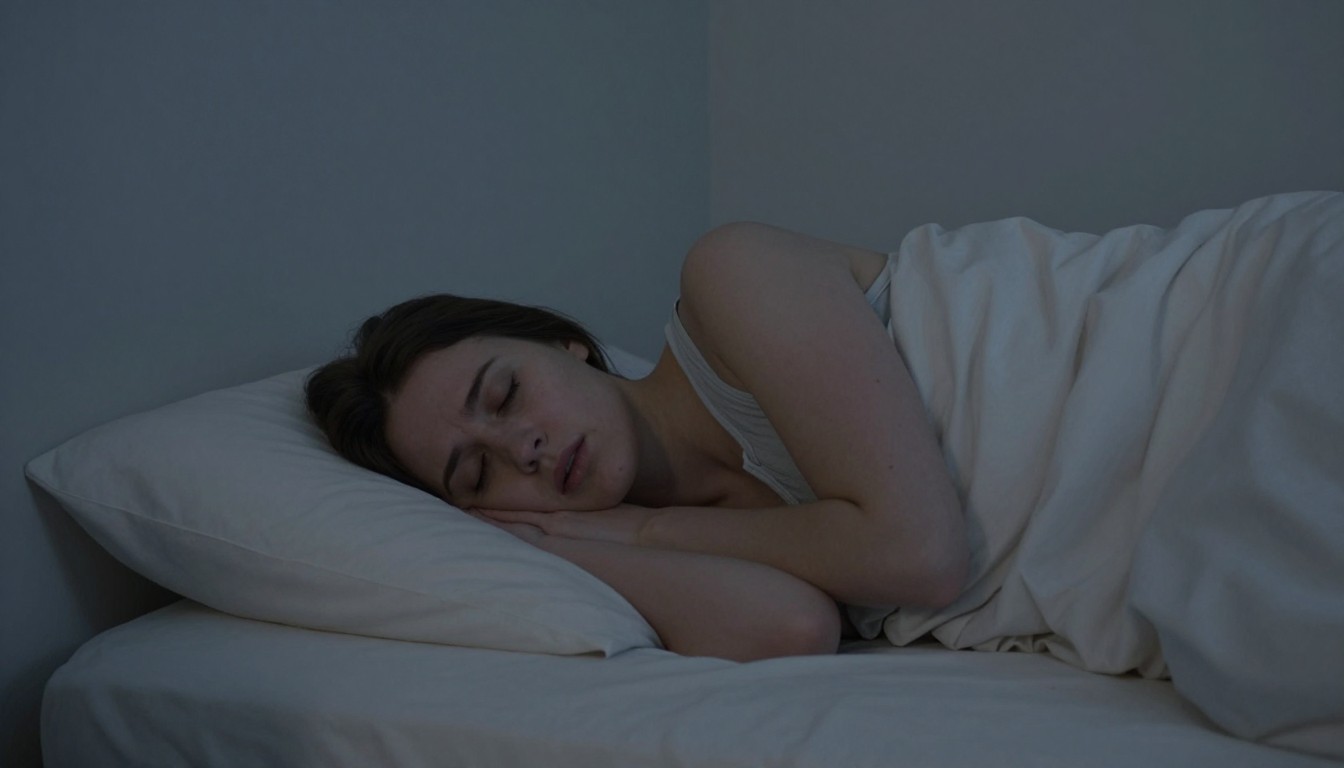
 by
by Quick answer: You may be scared of what could happen while you’re asleep, not sleep itself. Check for real danger, name the feared outcome, and seek support if fear keeps disrupting your nights.
- First separate a genuine safety problem from an uncertain or imagined outcome.
- Name the exact moment that scares you: lying down, drifting off, being asleep, or waking later.
- Persistent fear, major sleep loss, or feeling unsafe calls for support from someone qualified to help.
Updated July 2026 · Reviewed for accuracy
The answer depends on what, exactly, feels dangerous. Bedtime fear may focus on the room around you, losing awareness, having a nightmare, or facing the next day after poor sleep.
My view is simple: don’t begin by trying to force yourself asleep. Make the fear specific first. A clear problem gives you something practical to address.
What “scared to sleep” can actually mean
The phrase “I’m scared to sleep” can hide several different fears. One person may dislike the dark. Another may feel vulnerable after closing their eyes. Someone else may be frightened by a sound, a recurring dream, or the possibility of waking up exhausted.
The timing matters. Fear that begins as soon as you enter the bedroom points toward a different problem from fear that appears only as you start drifting off. Waking frightened during the night is another distinct pattern.
| When the fear appears | What may feel threatening | Useful question |
|---|---|---|
| Before getting into bed | Darkness, silence, being alone, or a bedroom association | What changes as soon as bedtime begins? |
| While drifting off | Losing awareness or control | What do I predict will happen once I stop monitoring the room? |
| After falling asleep | A nightmare, an intruder, a pest, or not waking | Is there current evidence for this danger, or is it a feared possibility? |
| While thinking about morning | Oversleeping, exhaustion, or poor performance | Am I afraid of sleep, or of how tomorrow might feel? |
Try finishing this sentence without editing yourself: “If I fall asleep, I’m afraid that…” The ending is more useful than the broad label. It may identify a room problem, a frightening prediction, or pressure about the morning.
Fear is not proof that the predicted event will happen. It is still a real experience, though, and dismissing it as silly rarely answers the question underneath it.
The key distinction: Discomfort says, “I don’t like this.” Fear says, “Something bad may happen.” Write down the predicted harm in plain language. That’s the problem to examine.
Check for a real safety problem first
A strange sound, an unsecured entrance, smoke, or a threatening person requires a practical response. Relaxation advice is not the answer to evidence of immediate danger.
If you smell smoke or gas, believe someone has entered your home, or feel threatened by someone nearby, move to a safer place and contact the appropriate local emergency service or a trusted person. Don’t stay in bed trying to reason yourself out of a concrete risk.
Less urgent concerns still deserve a daytime check. That might mean examining a door latch, confirming that safety alarms are working, asking someone about a recurring building noise, or arranging help for signs of pests. If rodents are the specific concern, this guide discusses whether mice are scared of sleeping humans.
A reasonable room check can include:
- Looking for current evidence rather than imagining every possible threat.
- Checking doors, windows, and obvious hazards once.
- Identifying unfamiliar sounds while you are fully awake and have good lighting.
- Making a plan to repair or investigate anything that is genuinely wrong.
Once you have completed a reasonable check, notice whether you keep repeating it without receiving new information. Another round may feel reassuring for a moment, but it isn’t answering a new safety question. Give yourself permission to act again only if something concrete changes.
The goal isn’t absolute certainty. No bedroom can provide that. The goal is a sensible distinction between a problem you can observe and a possibility your mind keeps presenting.
Find the pattern behind your bedtime fear
The most revealing clue is often the sentence running through your mind just before you resist sleep. “Someone could enter” needs a different response from “I might have that dream again” or “I won’t cope tomorrow.”
Keep a plain record for several evenings. Note where you were, what had just happened, the exact thought, what you noticed in your body, and what you did next. Use words such as mild, strong, or overwhelming instead of turning the exercise into a scoring contest.
| The prediction | What to examine | Practical next step |
|---|---|---|
| “Someone will come in.” | Current security evidence | Resolve any real weakness, then use one consistent check. |
| “I’ll have another frightening dream.” | What preceded past episodes and how often they affect you | Reduce obvious upsetting cues and discuss recurring episodes with a qualified professional. |
| “I won’t wake up.” | Whether this is a feared possibility or is tied to a specific health concern | Bring a health-based concern to a clinician rather than seeking certainty at bedtime. |
| “Tomorrow will be ruined.” | Pressure about performance, timing, or obligations | Prepare what you can for morning and make rest, not perfect sleep, the immediate goal. |
| “I can’t stop monitoring everything.” | The sounds, shadows, or sensations receiving your attention | Identify each cue while awake and decide which ones require action. |
Patterns are clues, not diagnoses. If the fear appears only in one room, inspect that environment. If it follows disturbing content or a frightening event, note that timing. If it rises mainly before an obligation, the pressure may be focused on tomorrow rather than sleep itself.
Also notice any recent change that overlaps with the problem. An unfamiliar home, a new nighttime sound, a distressing experience, or a change involving medication or substances is worth mentioning to the relevant professional. Timing alone doesn’t prove a cause, but it gives you a more precise question to ask.
Keep the record useful: Capture the trigger, prediction, response, and outcome. Don’t spend the whole evening documenting fear. The purpose is to see a pattern you couldn’t see from inside one difficult night.
Make the room and routine feel predictable
A reachable lamp, a clear path to the door, and an identified source of noise can remove avoidable uncertainty. These details won’t settle every fear, but they can stop the room itself from adding new questions.
Set up the bedroom during daylight, while you can make decisions calmly. Adjust bedding and clothing so you can change your comfort without fully restarting bedtime. Put anything genuinely necessary in a known place rather than searching for it in the dark.
If darkness is the main issue, you don’t have to jump immediately from bright light to total darkness. Use lighting that lets you feel oriented, then change it gradually only if that feels manageable. There is no prize for making the room frightening on purpose.
Build a predictable sequence:
- Complete the reasonable safety check.
- Prepare anything essential for morning.
- Choose a quiet activity that doesn’t feed the feared image.
- Set the room to a comfortable level of light and sound.
- Move toward rest in the same general order each evening.
Sound deserves investigation, not automatic alarm. Find out whether the recurring noise is plumbing, heating, traffic, another person, an animal, or something that needs repair. Once identified, a consistent neutral background sound may be useful if you find it less distracting.
Pay attention to what you watch, read, or discuss before bed. If certain material reliably becomes the image you fear once the lights go out, move it away from bedtime or skip it. That is a direct response to an observed pattern, not a claim that all stimulating content affects everyone the same way.
Don’t improvise with alcohol, someone else’s medication, or an unapproved dose in an attempt to knock yourself out. If medication, a supplement, or another substance seems connected to the fear or your sleep, ask a clinician or pharmacist who can assess your situation.
My rule: Make the bedroom easier to understand, not more elaborate. Every useful change should answer a specific concern, such as darkness, an unexplained sound, physical discomfort, or uncertainty about an entrance.
Respond to fear without forcing sleep
“I must become unconscious now” is an impossible command. It turns sleep into a performance and gives you another thing to monitor. Aim for safe rest instead.
If lying flat makes the fear spike, sit up or move to a familiar quiet place. Keep the activity simple and return to bed when you feel more willing to rest. This is a pause, not a punishment and not an invitation to start the day.
Orient yourself using concrete statements. Name where you are, what you have already checked, what sound you can hear, and what you will do if genuinely new evidence appears. Avoid promising yourself that nothing bad could ever happen, because the mind can always demand a bigger guarantee.
A grounded bedtime statement:
“I’m in my room. I completed the safety check. I don’t have new evidence of danger. I don’t need perfect certainty before resting. If something concrete changes, I know how to respond.”
If breathing slowly feels comfortable, let the breath settle without chasing a particular count. You can also focus on a neutral sequence, such as picturing a familiar route or quietly describing ordinary objects in the room. The point is to give your attention a non-threatening task, not to guarantee instant sleep.
Turn the clock display away if seeing the time sends you into calculations about tomorrow. Prepare the parts of morning that are under your control, then leave the rest for daylight. Repeatedly forecasting how bad the next day will be keeps the feared outcome in the foreground.
Use small steps if the fear centers on darkness, silence, or being alone. Keep the lamp available, make one manageable adjustment, and stop if the step feels overwhelming. Intense fear does not need to be confronted through a dramatic overnight challenge.
When to ask for outside support
Fear that regularly changes your schedule, keeps you from entering the bedroom, or leaves you avoiding sleep deserves more than another bedtime trick. I’d seek help before exhaustion becomes the only reason you finally sleep.
A primary care clinician or licensed mental health professional can start with the exact pattern rather than a label from an online search. Tell them what you predict will happen, when the fear begins, what you do in response, and whether nightmares, a frightening event, physical sensations, medication, or substances are involved.
Get support when:
- The fear repeatedly prevents or delays sleep.
- You are changing where or how you live to avoid bedtime.
- You keep experiencing frightening nighttime events you cannot explain.
- The problem began alongside a health, medication, or substance concern.
- You feel unsafe with another person or are having thoughts of harming yourself or someone else.
If you are in immediate danger, may harm yourself or someone else, or have a severe new physical symptom, contact local emergency services or a crisis service now. Move toward a trusted person or safer location if you can.
Otherwise, start tonight with the narrowest useful step: identify the feared event, check real safety once, make the room predictable, and allow rest without demanding sleep. You don’t need to solve every possible danger before closing your eyes.
FAQ
Why am I suddenly scared to sleep?
Look for what changed around the time the fear began, such as a frightening night, an unfamiliar room, a recurring noise, upsetting content, or a new health concern. Timing can reveal what needs attention, but it doesn’t prove a diagnosis. If the change is intense, persistent, or linked to medication or physical symptoms, discuss it with a qualified professional.
Why do I feel more frightened after the lights go out?
Darkness removes visual information, so ordinary shadows and sounds may feel harder to identify. Use a reachable light and investigate recurring cues while fully awake. You can reduce the light gradually if you want, but you don’t need to force total darkness.
What if I’m scared that someone or something will enter?
Check for real evidence, address weak locks or other concrete problems, and contact help if there is an immediate threat. If pests are behind the worry, start by identifying actual signs and read about mice around sleeping humans rather than relying on assumptions. Once a reasonable check is complete, avoid repeating it unless new evidence appears.
Should I stay awake until I feel completely safe?
Waiting for complete certainty can leave you waiting all night because the mind can always invent another possibility. Settle genuine safety issues, then aim for quiet rest rather than demanding that fear disappear. If you cannot make that shift or the fear repeatedly controls your nights, seek professional support.
Can a new mattress stop fear of sleep?
A mattress may address physical discomfort, but it cannot by itself answer fear about danger, nightmares, losing awareness, or not waking. Separate discomfort from the feared outcome before spending money on sleep products. If the bed itself is painful or unstable, address that physical problem while treating the bedtime fear as a separate concern.