
 by
by Recommended Mattress for Better Sleep
The Saatva Classic mattress offers the pressure relief and temperature regulation that makes a real difference on disrupted sleep nights.
Why Holiday Travel Tops the Sleep Challenge List
Holiday travel is the most sleep-disruptive travel of the year for most people. It combines the physiological challenge of jet lag with the logistical stress of peak travel season, the psychological activation of family dynamics, and the physical challenge of unfamiliar sleep environments — often in guest rooms with older mattresses, insufficient darkness, and unfamiliar sounds. It also occurs at the end of a December that has already accumulated sleep debt.
Air Travel and Sleep Disruption
Commercial aircraft cabins present three specific sleep challenges: cabin pressure (equivalent to 6,000-8,000 feet altitude) reduces blood oxygen saturation by 4-6%, contributing to fatigue; cabin humidity runs 10-20%, well below the 40-60% that supports comfortable breathing; and aircraft noise reaches 75-85 dB in cruise, equivalent to a loud restaurant. Economy seating with limited recline makes sleep architecture difficult regardless of fatigue level.
Flight Sleep Optimization
- Neck pillow positioning: The standard U-shape neck pillow is ineffective for most people because it allows the head to drop forward. Reverse it to support the chin, or use a pillow designed to support forward head position.
- Noise canceling over earplugs: Active noise-canceling headphones reduce the continuous low-frequency aircraft engine drone more effectively than foam plugs, which primarily attenuate higher frequencies.
- No alcohol: Alcohol at altitude is dehydrating and disrupts the sleep architecture you manage to achieve. Hydrate with 8 oz of water per hour of flight.
- Melatonin timing: On overnight eastbound flights (traveling toward morning), 0.5-1mg melatonin 30 minutes before your target sleep time on the flight helps shift your clock toward the destination time zone.
The Guest Room Problem
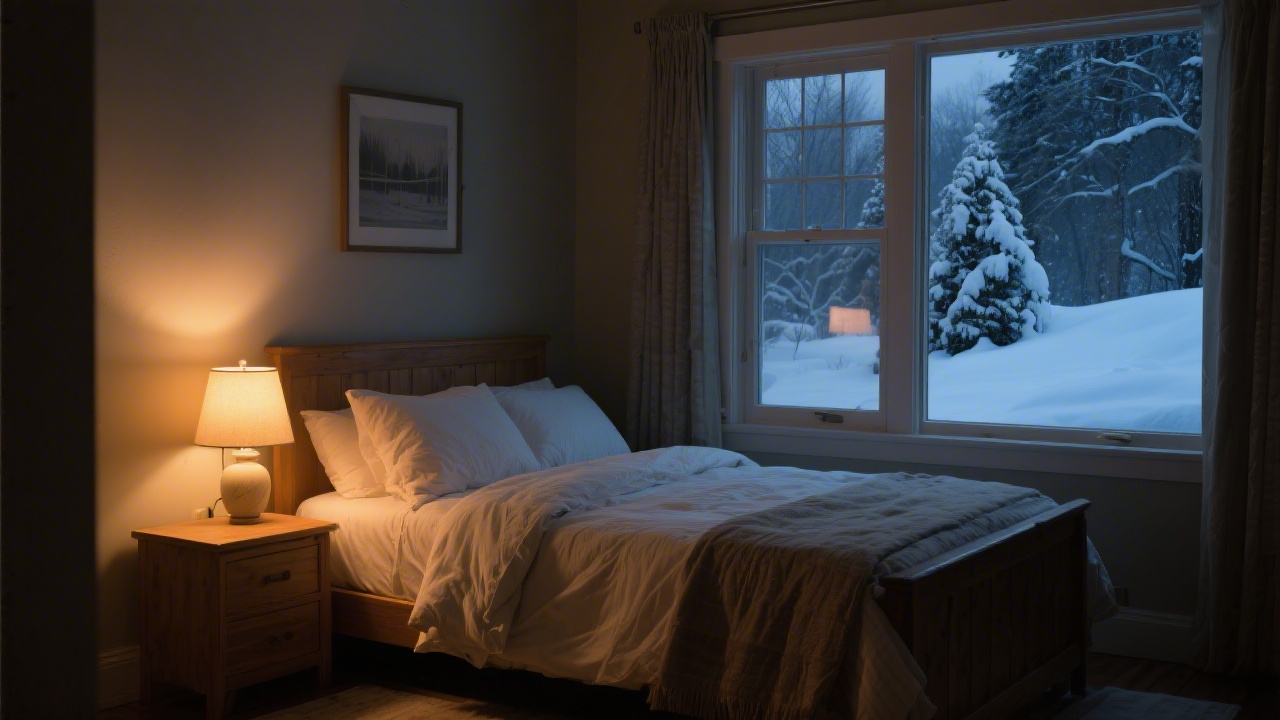
Family home guest rooms are often afterthoughts equipped with older, softer, or firmer mattresses than you sleep on at home. The first night effect — in which one brain hemisphere maintains heightened vigilance in unfamiliar environments — adds another disruption layer. Family homes also have their own acoustic signatures: creaking floors, HVAC systems, early-rising family members, and household pets.
Guest Room Mitigation Kit
- Your own pillow: This is the highest-impact single item. Familiar compression, loft, and scent reduce the first-night-effect significantly.
- Your own pillowcase: A pillowcase from home carries your familiar scent, which has a documented calming effect for sleep onset in unfamiliar environments.
- Eye mask: Guest rooms rarely have blackout curtains, and winter street lights or security lights can significantly brighten a room.
- Foam earplugs or white noise: Household sounds at 3 AM are unpredictable. Foam earplugs are inexpensive and highly effective. A white noise app at low volume covers for the sounds earplugs miss.
Jet Lag Management for Holiday Travel
The United States spans 4 continental time zones, meaning cross-country holiday travel involves up to 3 hours of circadian adjustment. International holiday travel can involve 5-9 hours.
The Core Jet Lag Protocol
- Pre-travel phase shifting: For eastbound travel, move bedtime 15-30 minutes earlier per day for 3-4 days before departure. For westbound, no pre-adjustment is needed.
- Adopt destination time immediately on arrival: Do not nap in the afternoon of the arrival day regardless of fatigue — this is the most important rule.
- Morning light on arrival: Outdoor light in the first 2 hours after local sunrise at your destination is the most powerful circadian anchor available. Walk outside; do not stay in the hotel or family home.
- Melatonin at destination bedtime: 0.5-1mg 60 minutes before target sleep time for the first 2-3 nights at destination.
The Family Dynamics Factor
Holiday family gatherings create psychological activation that directly impairs sleep onset. Conversations that trigger old relationship patterns, decision-making stress around family events, and the loss of normal daily structure all elevate cortisol in ways that are harder to manage than impersonal work stress. The practical intervention: treat your pre-sleep wind-down as non-negotiable even while traveling. 30 minutes of reading alone, a brief walk, or quiet time in your room before attempting sleep reduces this activation meaningfully.
Managing Shared Sleeping Arrangements
Multi-generation holiday gatherings sometimes require shared rooms or air mattresses. Air mattresses provide poor spinal support and temperature regulation — if you know you will be sleeping on one, bringing a travel mattress topper is worth the luggage space. For room sharing, agree on schedule expectations before lights-out.
Related guides: Christmas sleep survival guide • New Year's Eve sleep strategy • best mattress for restful sleep
Frequently Asked Questions
How do I sleep on a flight during holiday travel?
Eye mask, earplugs or noise-canceling headphones, and a neck pillow are the basics. Recline as fully as the seat allows. Avoid alcohol on the flight — it suppresses REM sleep and increases dehydration. A single 0.5-1mg melatonin dose on a long overnight flight supports sleep onset without the grogginess of prescription sleep aids.
Why is sleeping in a family member's guest room harder than a hotel?
The 'first night effect' creates vigilance in unfamiliar environments. Family guest rooms often add: mattresses in poor condition, insufficient room darkening, noise from household activity, and the psychological activation of family dynamics. Bringing your own pillow is the single most effective mitigation.
How do I handle jet lag from holiday travel?
For flights under 3 time zones: adopt destination time immediately upon arrival and use morning light to anchor the clock. For larger differences: shift your schedule 15-30 minutes per day in the direction of travel, starting 3-4 days before departure. East-going travel (spring-forward-style) is harder and benefits from the pre-departure adjustment strategy.
What should I pack for better holiday travel sleep?
Minimum kit: eye mask, foam earplugs, travel neck pillow, your own pillowcase (familiar scent aids sleep in unfamiliar environments), and a small tube of melatonin 0.5mg. Optional: a portable white noise app, resistance bands for pre-sleep tension release.
How do I sleep when sharing a room with other family members during the holidays?
Agree on lights-out time before sharing the room. Foam earplugs handle snoring. A sleep mask handles light conflicts. For very light sleepers, a white noise app on a phone at low volume (not through earbuds, which are uncomfortable for side sleepers) masks intermittent sounds effectively.
Recommended Mattress for Better Sleep
The Saatva Classic mattress offers the pressure relief and temperature regulation that makes a real difference on disrupted sleep nights.
Related Articles
- Sleeping on Overnight Trains and Buses: How to Manage Rest on the Move
- Sleep Strategies for Frequent Flyers: Managing Chronic Jet Lag
- The 7 Most Important Sleep Health Metrics (And How to Track Them)
Key Takeaways
Winter Holiday Travel Sleep is a topic that depends heavily on individual needs and preferences. The most important thing is to consider your specific situation — your body type, sleep position, and personal comfort preferences — before making any decisions. When in doubt, take advantage of trial periods to test before committing.