
 by
by The most acoustically complex environment a human being will ever experience is the womb. For nine months, the developing auditory system is immersed in a continuous soundscape of 80–90 dB — maternal heartbeat (55–65 dB, always present), blood flow through the uterine arteries (60–70 dB), digestive sounds, and muffled external sounds filtered through amniotic fluid and tissue. The auditory system is functional from approximately 24 weeks gestation. By birth, the infant has spent approximately 16 weeks in continuous acoustic stimulation.
This context explains why white noise works for babies so reliably: it is not a trick. It is familiarity.
The Acoustic Signature of the Womb
Recordings taken inside the uterus show a characteristic frequency profile: low-frequency dominant (most energy below 200 Hz), continuous (not intermittent), and with a slight rhythm from the maternal heartbeat. External sounds (voices, music) are present but attenuated by 30–40 dB by the time they reach the fetal ear — they are heard as low-frequency murmurs rather than distinct sounds.
This profile most closely matches pink or brown noise rather than white noise. White noise has equal energy at all frequencies; the womb leans heavily toward the low end. Brown noise (6 dB/octave falloff) most closely replicates the acoustic character of uterine sound. Many parents who try white noise and find it only partially effective find that switching to brown noise (or "ocean surf" settings on dedicated machines) produces a stronger calming response.
Harvey Karp's Calming Reflex Theory
Dr. Harvey Karp (author of The Happiest Baby on the Block) proposed that the first three months of life function as a "fourth trimester" — a period when the calming reflex can be triggered by recreating womb conditions. The calming reflex responds to: swaddling (recreating constriction), side/stomach positioning, shushing sounds, swinging, and sucking. The shushing component — loud, sustained "shhhhh" sounds — is essentially broadband noise matching the whoosh of maternal blood flow.
The calming reflex is involuntary and strongest in the first 2–3 months. It diminishes as the nervous system matures. This is why white noise is most dramatically effective for newborns and becomes progressively less effective through the first year — the reflex fades as the neurological system develops.
Safe Volume Guidelines
The effectiveness of womb sound replication must be balanced against hearing safety. The neonatal inner ear is fully developed at birth but the outer and middle ear structures are still maturing. Key guidelines:
- Maximum volume: 50 dB at the infant's ear level. This is roughly the level of a quiet conversation or refrigerator hum.
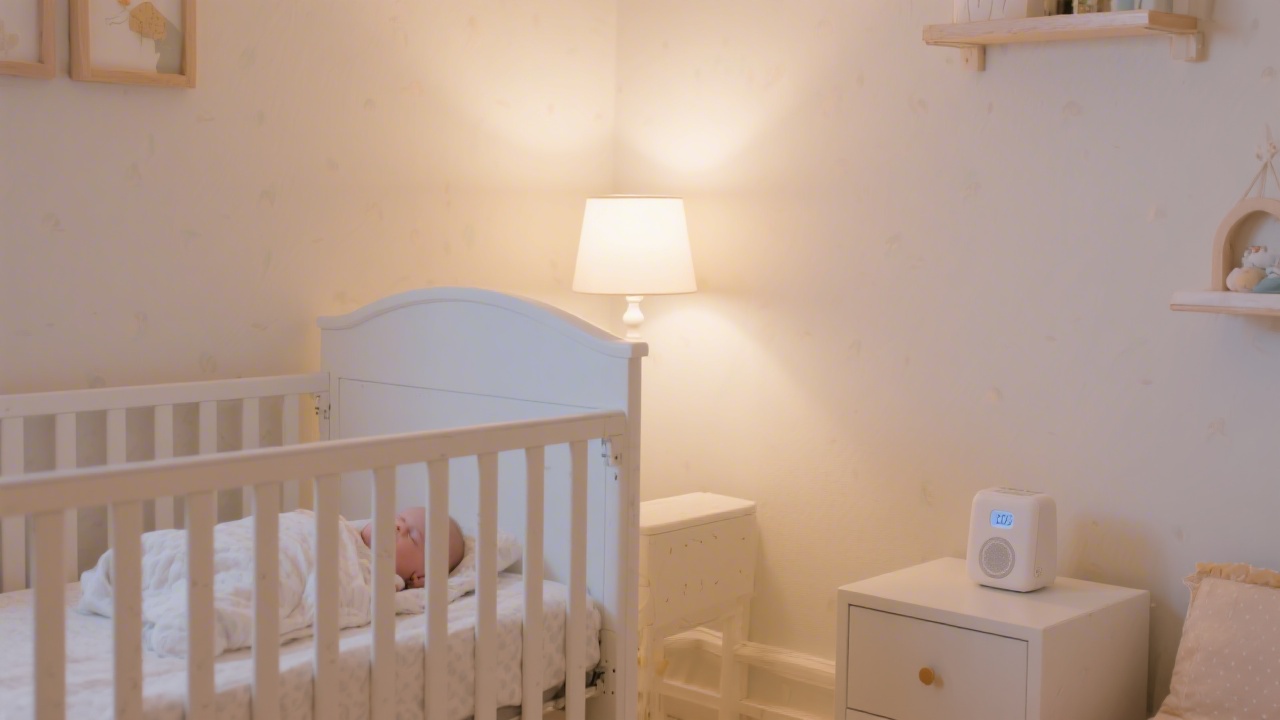
- Minimum distance: 7 feet (2 meters) from the crib. The American Academy of Pediatrics issued this guidance specifically in response to cases where machines were placed inside cribs or very close to sleeping infants.
- Duration: Continuous overnight use at 50 dB and 2+ meters is safe per a 2022 JAMA Pediatrics study.
- Volume check: Use a free phone app (NIOSH SLM or Decibel X) to measure actual dB at crib level before leaving the room. Built-in volume settings on machines vary significantly.
Best Machines for Infant Womb Sound
Hatch Rest+ 2nd Generation
The most versatile nursery sound machine: white noise, pink noise, brown noise, multiple nature sounds, lullabies, and a night light in one device. App-controlled volume makes it easy to stay under the 50 dB threshold. The "beach waves" and "rain" settings have the low-frequency profile that infants respond to best. Best overall for full nursery functionality. $100–$130.
Yogasleep Dohm Classic
Mechanical fan sound (not digital) with a natural quality many infants respond well to. The consistent whooshing sound resembles the womb's blood flow profile. No app required. Limited volume range (55–65 dB) — place it further from the crib (8–10 feet) to keep levels at 50 dB at crib. $45–$65.
LectroFan Classic
Digital synthesis with adjustable volume from 40–85 dB. The fine volume control is the main advantage — you can dial in exactly 50 dB at crib level. The brown noise and fan sound settings are the most appropriate for infant use. $40–$55.
Womb Sound for Adults
The calming mechanism persists in adults, though it is weaker than in infants. Adults who report strong positive responses to brown noise or ocean sounds may be experiencing a vestigial version of the calming reflex combined with the noise masking benefit. Brown noise for adult sleep is covered in more depth in our brown noise for sleep guide and our deep sleep sounds research guide.
The Full Sleep Environment for Infants
Sound is one component of the infant sleep environment. A room kept at 65–68°F (18–20°C), dark enough to prevent light-triggered arousal, and with a firm, flat sleep surface creates the complete safe sleep environment. A quality infant mattress with appropriate firmness is essential — overly soft surfaces pose safety risks. See our silence vs white noise comparison for more on how the acoustic environment affects sleep quality across ages. For parents sharing a room, the Saatva Youth mattress provides the right firmness profile for growing children transitioning to their own sleep space.
Frequently Asked Questions
Why do babies respond to white noise?
The womb is a loud environment at 80–90 dB. Newborns have heard this for 9 months. White and brown noise replicate this familiar soundscape, triggering the calming reflex and signaling a known, safe environment.
Is white noise safe for babies?
Yes, at 50 dB or less and at least 7 feet from the crib. A 2022 study confirmed no hearing risk at these parameters for continuous overnight use.
What is better for babies — white, pink, or brown noise?
The womb profile most closely matches pink or brown noise. Brown noise, with its deep low-frequency rumble, most closely replicates intrauterine sound and often produces the strongest calming response.
At what age can I stop using white noise for my baby?
Begin phasing it out between 3–6 months. Gradual volume reduction over 2–3 weeks is preferable to abrupt discontinuation.
Can white noise create a sleep association problem?
It can. Minimize dependency by using it consistently early, then gradually reducing volume as the infant matures. Most children self-wean from the need by 12–18 months.
Our Top Mattress Pick
The Saatva Classic consistently ranks #1 for comfort, support, and long-term durability.
View Saatva Classic Pricing & DetailsKey Takeaways
Womb Sounds for Sleep is a topic that depends heavily on individual needs and preferences. The most important thing is to consider your specific situation — your body type, sleep position, and personal comfort preferences — before making any decisions. When in doubt, take advantage of trial periods to test before committing.