
 by
by Wool bedding is often overlooked in favor of down or synthetic fill, but it has a genuinely unique property that neither alternative can match: active temperature regulation. Unlike down (which is warm) or synthetic fill (which traps warmth), wool responds to your body temperature — insulating when you're cool, releasing moisture when you're warm.
This guide covers the practical details of wool bedding: what types exist, how to choose fill weight, care requirements, and where it makes sense versus alternatives.
Our Top Pick for Premium Bedding
We've tested dozens of sheet sets. Saatva's percale is the best value in long-staple cotton — strong construction, breathable weave, and a 45-night trial period.
Why Wool Behaves Differently from Other Bedding
Wool fiber is naturally crimped and hollow, creating air pockets that trap heat when needed. More importantly, wool is highly hygroscopic — it can absorb up to 30% of its weight in moisture vapor without feeling wet. As your body temperature rises and you begin to sweat, wool absorbs that moisture, triggering an exothermic reaction that actually warms the fiber while drawing moisture away from your skin.
This sounds counterintuitive, but the net effect is that wool bedding buffers temperature swings — keeping you warmer when the room is cold and cooler (drier) when you're generating heat. Studies on wool versus synthetic fill have shown measurable improvements in sleep efficiency and reduced waking for temperature-sensitive sleepers.
Types of Wool Bedding
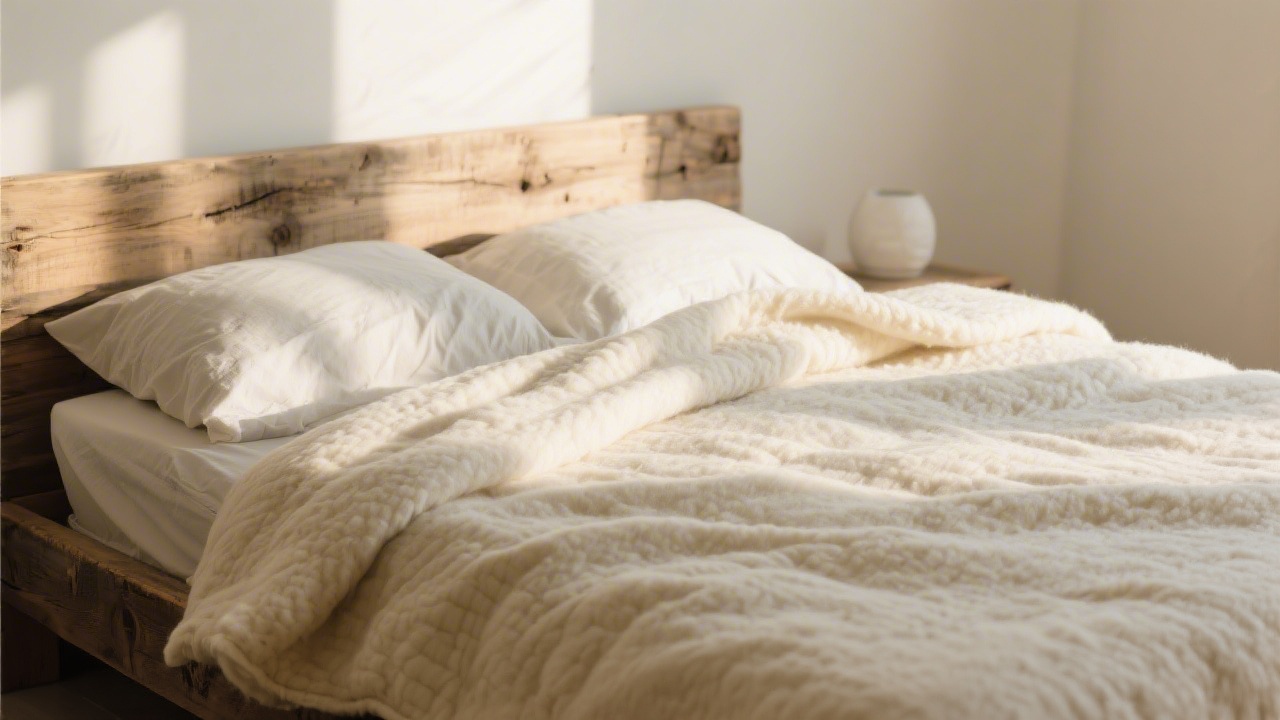
Wool Duvets / Comforters
The primary use case for wool fill. Wool duvets are encased in cotton or cotton-blend shells with wool batting inside. Key decisions:
- Fill weight (gsm): 200–300 gsm for summer/warm climates; 350–450 gsm for all-season; 500+ gsm for cold climates or cold sleepers
- Wool type: Merino wool is the softest and most refined; standard sheep wool is coarser but still effective
- Shell material: Cotton percale shell breathes best; avoid polyester shells which negate wool's temperature benefits
Wool Mattress Toppers
Wool toppers add a layer of cushioning and temperature regulation between you and your mattress. They're particularly effective for sleepers who find their mattress traps heat — a wool topper can noticeably reduce the "sleeping hot" effect of memory foam mattresses.
Thickness ranges from 1–3 inches. A 1.5–2 inch wool topper provides meaningful cushioning without dramatically changing mattress feel.
Wool Mattress Pads
Thinner than toppers (typically under 1 inch), wool mattress pads primarily protect the mattress and add a modest temperature regulation layer. Good for extending mattress life while improving the sleep surface microclimate.
Wool Pillows
Less common but effective for sleepers who sleep hot and find down or memory foam pillows uncomfortably warm. Wool pillow fill is typically shredded or batting form — provides decent support with good temperature regulation.
Wool Type Comparison
Merino wool (from Merino sheep) has fibers under 24 microns — fine enough to feel soft against skin without the scratchiness associated with coarser wool. It's the premium option for bedding and is what most high-end wool duvet brands use.
Standard sheep wool (typically 26–35 microns) is perfectly functional for fill in duvets and toppers where the wool doesn't contact skin directly. The coarser fiber is fine when encased in a cotton shell — the softness of the shell material matters more than the wool grade for duvets.
Alpaca wool is hypoallergenic (no lanolin), exceptionally warm, and lighter than sheep wool. Premium alpaca duvets exist but are significantly more expensive.
The Washing Problem
Wool bedding's biggest practical limitation is washing. Most wool duvets cannot be machine washed at home — the combination of water, heat, and agitation causes wool to felt and shrink irreversibly. Options:
- Professional dry cleaning: Recommended for wool duvets; expensive but necessary for most products
- Spot cleaning: Surface stains can be treated with cold water and gentle wool wash
- Air freshening: Wool is naturally antimicrobial (lanolin content inhibits bacterial growth) — regular airing outside reduces the need for washing
- Machine-washable wool: Some brands treat wool with a superwash process that allows machine washing on cold/gentle. Check product specifications carefully.
Using a duvet cover over a wool duvet significantly reduces washing frequency — the cover takes the brunt of body oils and can be washed weekly while the duvet itself may only need professional cleaning annually.
Who Should Consider Wool Bedding
Wool bedding works best for:
- Sleepers who vary in temperature during the night
- Couples with different temperature preferences (wool buffers both directions)
- People with night sweats who find down too warm
- Sleepers in climates with significant temperature variation between seasons
- People wanting a natural, chemical-free bedding option
It's less ideal for:
- People with wool/lanolin allergies (true wool allergy is rare but exists)
- Those who want a simple machine-wash routine
- Budget-constrained buyers — quality wool bedding starts around $150 for a duvet
For a direct comparison with down duvets, see our down vs synthetic fill guide. For best pillow fill options overall, our best pillows guide covers wool fill in context.
Ready to Upgrade?
If you're looking for premium bedding with verified materials and a real trial period, Saatva is a consistent top performer in our testing.
Frequently Asked Questions
Is wool bedding good for hot sleepers?
Yes — counterintuitively. Wool's moisture absorption ability means it draws heat and perspiration away from the body, creating a drier, more comfortable sleep surface. Hot sleepers often find appropriately weighted wool bedding (200–300 gsm fill) more comfortable than down or synthetic alternatives.
Can you be allergic to wool bedding?
True wool allergy is relatively rare. Most people who react to wool products are sensitive to lanolin (the natural oil in wool) or to coarse fiber scratching skin. For wool duvets where fill doesn't contact skin directly, lanolin reactions are uncommon. People with known lanolin sensitivity should look for lanolin-processed wool or consider alpaca fill.
How often should you wash a wool duvet?
Most wool duvets should be professionally cleaned once per year or less, and aired outdoors regularly. Wool's natural antimicrobial properties (from lanolin) mean it needs less frequent washing than synthetic fill. Using a duvet cover and washing it weekly significantly extends the interval between duvet cleanings.
What fill weight do I need for an all-season wool duvet?
350–450 gsm (grams per square meter) is the standard all-season range. Below 300 gsm is more appropriate for summer use or warm climates. Above 500 gsm is cold-weather weight. Temperature preferences vary — if you sleep cold, go higher in the range; if you sleep warm, go lower.
Is wool bedding worth the price premium over synthetic fill?
For temperature-variable sleepers or those with night sweats, yes — the temperature regulation performance of wool is meaningfully different from synthetic fill. For consistent cold sleepers, quality down or synthetic fill may perform as well at lower cost. The care complexity (no easy machine washing) is the main trade-off to consider.
Voted best luxury innerspring mattress with exceptional lumbar support and white-glove delivery.
Check Price & Availability FAQPage", "mainEntity": [ { "@type": "Question", "name": "Is wool bedding good for hot sleepers?", "acceptedAnswer": { "@type": "Answer", "text": "Yes — counterintuitively. Wool's moisture absorption ability draws heat and perspiration away from the body, creating a drier, more comfortable sleep surface with appropriately weighted fill (200–300 gsm)." } }, { "@type": "Question", "name": "Can you be allergic to wool bedding?", "acceptedAnswer": { "@type": "Answer", "text": "True wool allergy is rare. Most reactions are sensitivity to lanolin or coarse fiber scratching skin. For duvets where fill doesn't contact skin, lanolin reactions are uncommon." } }, { "@type": "Question", "name": "How often should you wash a wool duvet?", "acceptedAnswer": { "@type": "Answer", "text": "Most wool duvets should be professionally cleaned once per year or less, and aired outdoors regularly. Wool's natural antimicrobial properties mean it needs less frequent washing than synthetic fill." } }, { "@type": "Question", "name": "What fill weight do I need for an all-season wool duvet?", "acceptedAnswer": { "@type": "Answer", "text": "350–450 gsm is the standard all-season range. Below 300 gsm is summer weight. Above 500 gsm is cold-weather weight." } }, { "@type": "Question", "name": "Is wool bedding worth the price premium over synthetic fill?", "acceptedAnswer": { "@type": "Answer", "text": "For temperature-variable sleepers or those with night sweats, yes. The temperature regulation is meaningfully different from synthetic fill. The main trade-off is care complexity — no easy machine washing." } } ] }