
 by
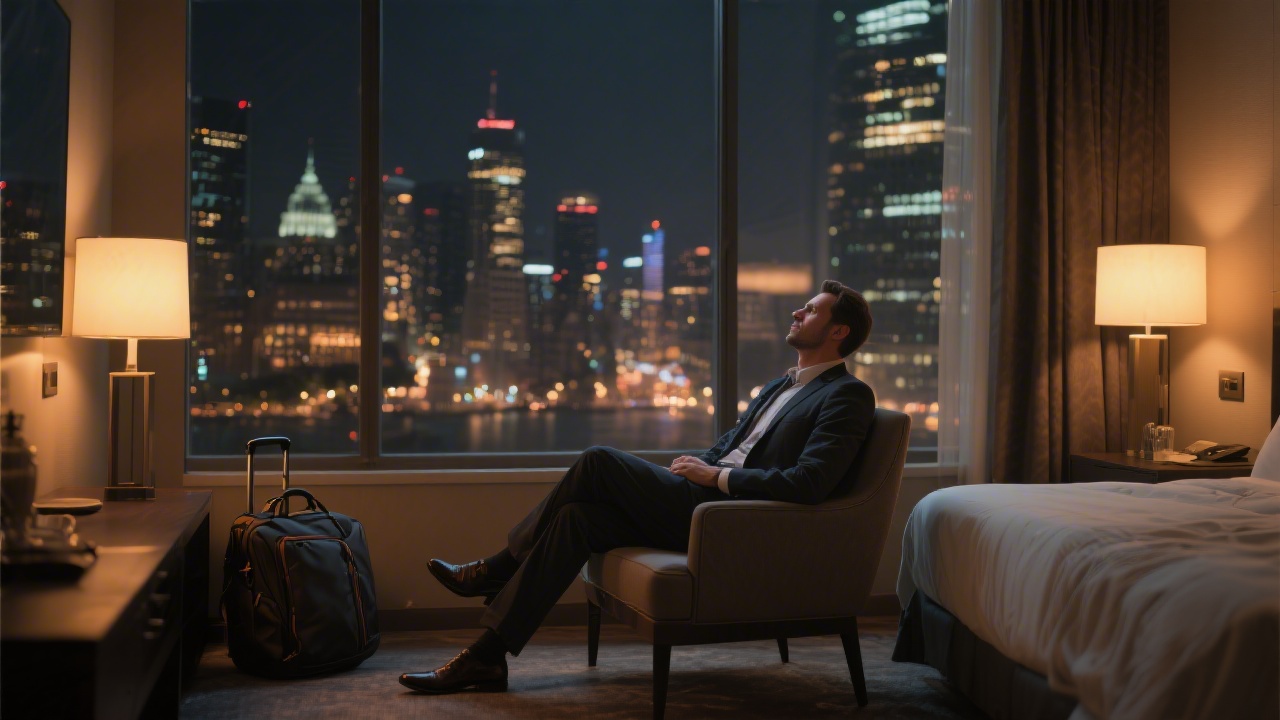
by Business travel is among the most structurally sleep-hostile environments a professional encounters. Flight timing disrupts circadian rhythms. Hotel rooms are rarely optimized for sleep. Time zone transitions impair the biological clock. And the work demands of travel — airport performance, client meetings, conference sessions — typically peak precisely when your body is most impaired.
This guide is the comprehensive resource for business travelers. For more specific scenarios, see our dedicated guides on sleeping in unfamiliar environments and sleeping on planes.
Our mattress recommendation for professionals:
The Saatva Classic delivers the pressure relief and spinal alignment that help professionals recover fully overnight — with a white-glove delivery included.
The Data on Business Travel and Sleep Loss
Research from Rand Europe's corporate wellness studies found that business travelers lose an average of 22 minutes of sleep per night on travel days. That figure understates the impact — it averages short domestic trips with multi-day international travel where the loss can reach 60–90 minutes per night for the first several days in a new time zone.
A Global Business Travel Association survey found that 70% of frequent business travelers report sleep issues directly attributed to travel, and 45% report that sleep disruption significantly affects their job performance on travel days. The cognitive costs map directly to the high-stakes activities that travel demands: negotiations, client meetings, and presentations.
Hotel Room Sleep Optimization
Room selection
When booking or checking in, these room factors have the highest sleep impact:
- Floor level: Request middle floors (not ground floor for security/noise, not top floors which are closer to HVAC systems). Ask for a room away from the elevator bank and ice machines.
- Street side vs courtyard: Always request courtyard-facing rooms if available. Urban street noise, particularly in cities with 24-hour activity, significantly fragments sleep.
- Smoking history: Even a room recently converted from smoking has residual irritants that affect respiratory comfort and sleep quality.
Darkness
Hotel blackout curtains vary dramatically in quality. Carry a simple sleep mask as a baseline — it weighs almost nothing and guarantees light control regardless of room quality. The gap in the center of hotel curtains (the "hotel room light leak") is a well-known problem; pushing the curtains toward each other and using a clip or the TV remote as a weight is a common traveler hack.
Temperature
The optimal sleep temperature (65–68°F / 18–20°C) is colder than most hotel rooms are set to maintain. Set the thermostat to the lowest available setting upon arrival, allow 30 minutes to equilibrate, and request extra blankets if you need them. Being too warm during sleep is a primary driver of sleep fragmentation.
Sound
Hotel hallway noise, HVAC cycling, and neighboring room sounds are among the most common business travel sleep complaints. A white noise app (set to steady fan or brown noise) on your phone at low-to-medium volume masks variable sounds more effectively than silence. Foam earplugs provide an alternative for those who prefer tactile solutions.
Jet Lag Minimization: The Evidence-Based Protocol
Jet lag is circadian misalignment — your biological clock is set to one time zone while your environment is running another. The research on jet lag recovery gives clear guidance on what accelerates resynchronization:
Before departure
- Eastward travel (harder): Begin shifting your sleep time earlier by 30 minutes per day starting 3 days before departure
- Westward travel (easier): Shift your sleep time later, or simply stay well-rested before departure
- Avoid alcohol on the day before departure and on the flight itself — it disrupts REM sleep and makes jet lag significantly worse
During the flight
See our detailed guide to sleeping on planes for equipment and technique. The key principle: set your watch and mental clock to the destination time zone at boarding. If it's nighttime at the destination, sleep on the plane if you can. If it's daytime at the destination, resist sleeping.
At destination
- Light exposure: Morning light at the destination is the most powerful circadian resynchronizer. Get outside in natural light within the first hour of waking at your destination
- Melatonin: 0.5–1mg melatonin at the local bedtime for the first 2–3 nights at a new eastern destination accelerates clock resetting
- Strategic naps: Limit naps to 20 minutes and avoid them after 3 PM local time — they preserve function without preventing nighttime sleep onset
Portable Sleep Equipment for Business Travelers
A minimal travel sleep kit that adds almost nothing to luggage weight but significantly improves sleep quality:
- Sleep mask: Silk or cotton contoured mask (not the flat airline variety) for complete light blocking
- Foam earplugs: 33 dB NRR rating, or custom molded for frequent travelers
- White noise app: Calm, Rain Rain, or similar — free or low cost, uses your phone speaker
- Melatonin 1mg tablets: For eastward travel first-night sleep onset
- Travel pillow: Inflatable or compressible for neck support on planes
Recovery After Heavy Travel Weeks
Frequent business travelers accumulate sleep debt across multi-day travel periods. The first priority upon return is not catching up on email but stabilizing your sleep schedule. Protocol:
- Day 1 return: Resist going to bed before 9 PM local time even if exhausted — sleeping too early will shift your cycle and extend the jet lag
- Days 2–3: Prioritize 8–8.5 hours per night, regardless of work pressure. This is the recovery window that prevents the chronic sleep debt accumulation that frequent travelers often carry
- Week after heavy travel: Reduce alcohol, exercise daily, and avoid scheduling high-stakes cognitive events for the first 24 hours after a long return journey
The mattress you return home to matters significantly for the quality of your post-travel recovery sleep. A premium mattress with optimal pressure relief and temperature regulation accelerates the deep sleep recovery that travel disrupts. See our recommendation below.
Our mattress recommendation for professionals:
The Saatva Classic delivers the pressure relief and spinal alignment that help professionals recover fully overnight — with a white-glove delivery included.
Our Top Mattress Pick
The Saatva Classic consistently ranks #1 for comfort, support, and long-term durability.
Frequently Asked Questions
Key Takeaways
Business Travel Sleep Guide is a topic that depends heavily on individual needs and preferences. The most important thing is to consider your specific situation — your body type, sleep position, and personal comfort preferences — before making any decisions. When in doubt, take advantage of trial periods to test before committing.