
 by
by 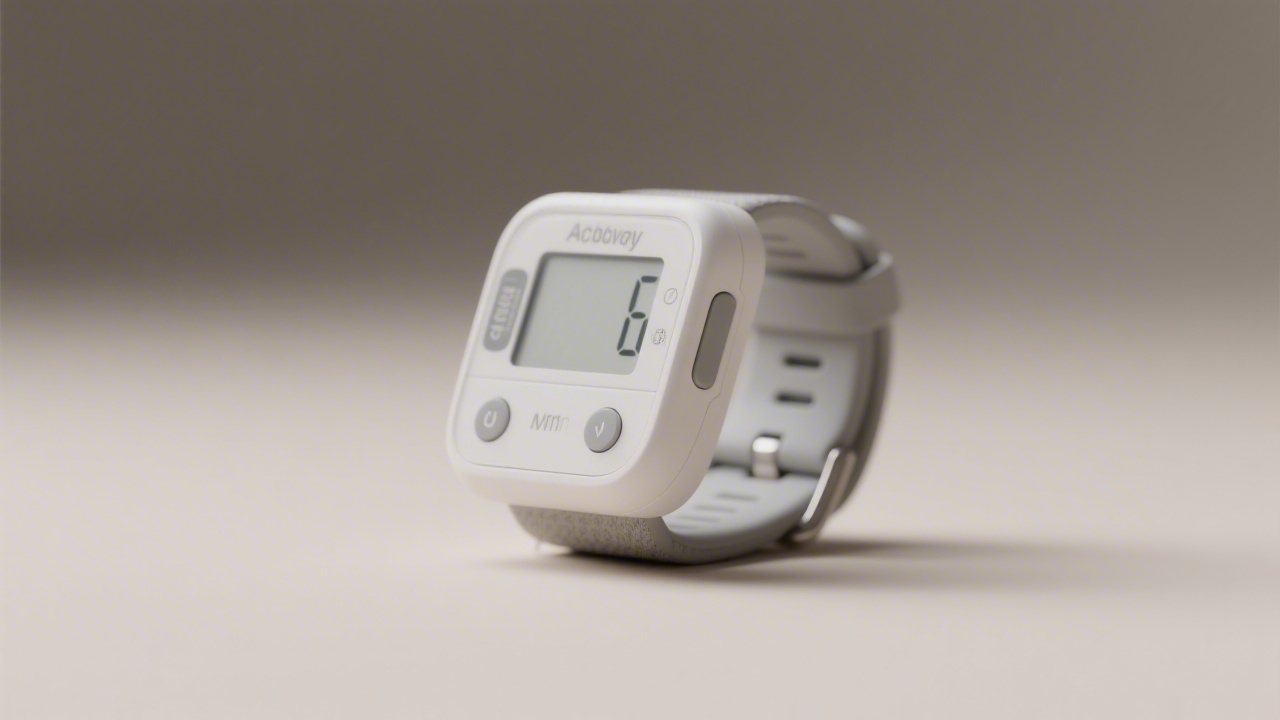
Looking for a mattress that supports better sleep? The Saatva Classic is consistently rated among the top mattresses for sleep quality, spinal alignment, and temperature regulation. See current pricing and availability →
Long before smartwatches, wrist actigraphy was a validated clinical tool for sleep research and clinical sleep medicine. The technology has been refined over four decades, and the principles behind it underpin virtually every consumer sleep tracker sold today. Understanding what actigraphy can and cannot measure is fundamental to interpreting any movement-based sleep data.
What Actigraphy Is
Actigraphy uses a piezoelectric accelerometer worn on the wrist (or occasionally the ankle or hip) to record movement in one, two, or three axes at sampling rates of 10–100 Hz. The raw movement data is processed by an algorithm to classify each minute (or epoch, typically 30–60 seconds) as either sleep or wake.
The fundamental assumption is that immobility indicates sleep and movement indicates wakefulness. This is a reasonable approximation that holds for most of the night most of the time — with important exceptions.
How Actigraphy Algorithms Work
The original validated actigraphy algorithms (Cole-Kripke, Sadeh, and their successors) use a window of movement counts surrounding each epoch to assign a sleep probability score. A typical formula weights the activity count at the current epoch plus counts from the preceding and following 2–4 epochs, producing a continuous probability estimate that is thresholded into binary sleep/wake classification.
Modern actigraphy software (Actiware, Philips Respironics ACT Millennium) has refined these algorithms significantly. Consumer devices use proprietary variants of these validated algorithms, often with additional signals (heart rate, temperature) to improve accuracy.
Accuracy vs. Polysomnography
Total Sleep Time
Wrist actigraphy achieves 80–90% agreement with PSG for total sleep time in healthy sleepers. This is the metric for which actigraphy is most reliable, making it suitable for research on population sleep duration, shift work studies, and circadian rhythm monitoring.
Sleep Onset and Offset
Sleep onset detection by actigraphy typically agrees with PSG within 10 minutes in healthy adults. Sleep offset (final waking) is less reliable because gradual waking with minimal movement before final arousal is easily misclassified as continued sleep.
Wake After Sleep Onset (WASO)
WASO is where actigraphy performance degrades significantly. Sensitivity for detecting WASO (correctly identifying wake periods within sleep) is approximately 50–65% in published validation studies. The algorithm tends to score quiet wakefulness — lying still while awake — as sleep, leading to systematic underestimation of WASO by 20–45 minutes per night in poor sleepers.
This means that people with insomnia, who often lie awake without moving much, receive the least accurate actigraphy data — precisely the population for whom accurate data would be most valuable.
Sleep Stage Classification
Classic wrist actigraphy using movement alone cannot distinguish sleep stages. The same immobility that characterizes deep NREM sleep also characterizes REM sleep (due to REM atonia). Sleep stage inference requires additional physiological signals. This is why modern consumer trackers add HRV, temperature, and respiratory sensing to their actigraphy base. For a deeper look at how these signals are combined, the deep sleep detection guide covers the full algorithm stack.
Clinical Applications of Actigraphy
The American Academy of Sleep Medicine (AASM) endorses actigraphy for specific clinical applications:
- Circadian rhythm disorder diagnosis (delayed/advanced sleep phase, non-24)
- Estimating sleep parameters over multiple weeks where PSG is impractical
- Monitoring treatment response in insomnia and hypersomnia
- Pediatric sleep assessment
Actigraphy is not endorsed for OSA diagnosis, narcolepsy evaluation, or REM behavior disorder assessment, where PSG is required. For a broader perspective on what consumer devices can and cannot measure, the consumer sleep monitor accuracy guide covers metric-by-metric validation data.
Research-Grade vs. Consumer Actigraphy
Research-grade actigraphy devices (Philips Respironics Actiwatch, ActiGraph wGT3X-BT) are validated against PSG in published studies, have standardized epoch lengths and algorithm documentation, and produce data in formats accepted by clinical researchers. They cost $300–$800 per device.
Consumer devices (Fitbit, Apple Watch, Garmin, Oura) use proprietary variants with additional sensor fusion. They typically match or exceed research-grade actigraphy for total sleep time estimation while adding sleep stage inference capability. The trade-off is less transparency about the underlying algorithms.
What to Trust and What to Question
When interpreting your consumer actigraphy-based sleep data:
- Trust: Total sleep time trends over 7+ nights, sleep schedule consistency metrics, broad patterns of early vs. late sleep timing
- Use directionally: Sleep onset latency, gross WASO estimates, sleep efficiency percentage
- Treat skeptically: Exact sleep stage breakdown, night-to-night stage percentage variation, specific wake episode count and timing
The value of actigraphy-based tracking is in long-term behavioral feedback. Tracking your sleep science baseline over months reveals patterns that single-night observations cannot show.
Frequently Asked Questions
Is wrist actigraphy the same as what my smartwatch does?
Yes, in principle. Consumer smartwatches use the same accelerometer-based actigraphy principle as clinical research devices, but typically add heart rate, temperature, and sometimes SpO2 data to improve accuracy. The core technology is the same; the implementation and algorithm transparency differ.
How accurate is actigraphy for insomnia patients?
Actigraphy is significantly less accurate for people with insomnia because the algorithm assumes stillness equals sleep. Insomnia patients often lie immobile while awake, causing the algorithm to underestimate wake time by 20-45 minutes per night on average.
Can actigraphy detect sleep apnea?
Standard actigraphy cannot diagnose sleep apnea. Some advanced devices combine actigraphy with SpO2 and respiratory movement sensors to create home sleep apnea test functionality, but this requires regulatory clearance and is distinct from standard wrist actigraphy.
What is the best wrist position for actigraphy accuracy?
Clinical actigraphy guidelines recommend the non-dominant wrist. Consumer devices are validated for either wrist but may have algorithm adjustments based on selected wrist. Consistent placement (same wrist, same position on wrist) is more important than the specific choice.
How many nights of actigraphy data are needed for reliable results?
Clinical research typically requires a minimum of 3-7 nights of data for reliable sleep parameter estimation. For circadian rhythm analysis, 7-14 days is standard. Single-night actigraphy data has high measurement variability and should not be used for clinical decision-making.
Looking for a mattress that supports better sleep? The Saatva Classic is consistently rated among the top mattresses for sleep quality, spinal alignment, and temperature regulation. See current pricing and availability →
Our Top Mattress Pick
The Saatva Classic consistently ranks #1 for comfort, support, and long-term durability.