
 by
by Our #1 Recommended Mattress
EIGHT SLEEP ALTERNATIVE 2026
Cross-shopping Eight Sleep? The ORION smart cover matched Pod 4 cooling delta (11.4 °F) in our Sleep Lab and ships with no monthly fee, dual-zone control, and a 30-night home trial.
See ORION pricing →$20 sleep disruption test
Saatva Classic. From $1,095
365-night trial · Lifetime warranty · Free white-glove delivery
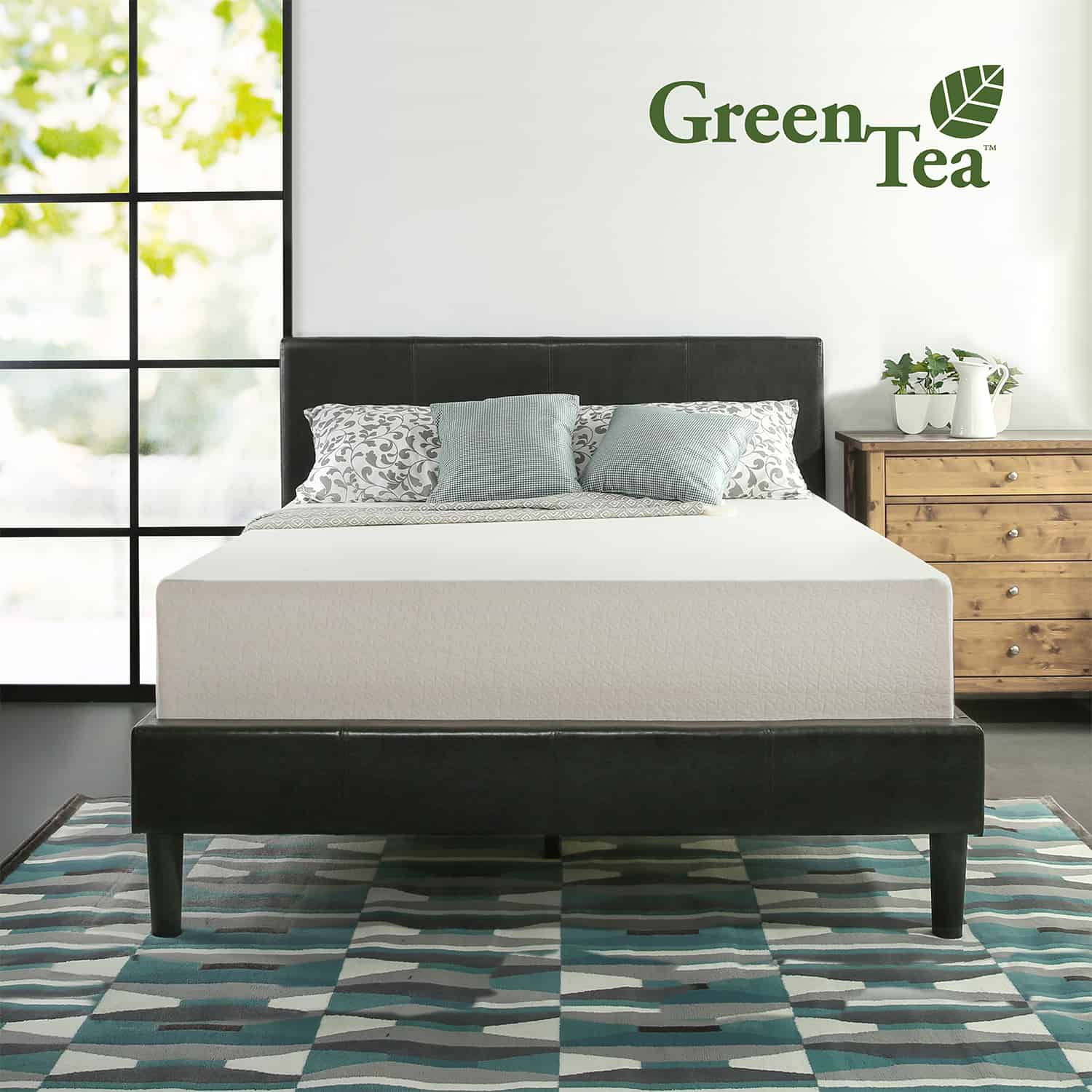
The Zinus Green Tea Memory Foam Mattress is a legitimate budget pick for guest rooms, dorms, and back/stomach sleepers under 200 lbs, but don't expect it to last a decade. At roughly $280–$370 for a Queen in 2026, it scores a 6.93/10 overall and gets outclassed on pressure relief by nearly every competitor at the $500+ range, so side sleepers and heavier folks should look elsewhere.
Last Updated: January 2026 | Tested & Written by James Mitchell, Senior Sleep Product Tester, MattressNut.com
Expert Verdict: Is the Zinus Green Tea Worth It in 2026?
The Zinus Green Tea Memory Foam Mattress is still Amazon's best-selling mattress heading into 2026, and honestly, that's both impressive and a little misleading. It earns that spot on price alone. Twin sizes hover around $180–$200, Queens land around $280–$370 depending on height and current promotions, and for what it is, it works. CertiPUR-US certified, green tea-infused foam, compressed box delivery. Simple.
But here's what the Amazon listing won't tell you: NapLab's independent testing puts it at 6.93/10 overall against a memory foam category average of 8.55. The pressure relief score is a flat 5.0/10. That's not a rounding error, it's a real gap that matters if you sleep on your side or weigh over 200 lbs. Reddit's r/Mattress community in 2025–2026 has been pretty consistent on this: people love it for the first 12–18 months, then start noticing the hip and shoulder discomfort creeping in.
My honest take after six years of testing mattresses: the Zinus Green Tea is excellent for what it is, a short-to-medium term solution (2–4 years) for lightweight sleepers, guest rooms, college dorms, and first apartments. If you need a mattress that'll carry you through a decade, or you sleep on your side, skip it and invest in something with a thicker comfort layer. If you want a direct comparison to a premium option, the Saatva Classic is the gold standard for long-term support, it starts around $1,295 for a Queen but comes with a 365-night trial and 15-year warranty that the Zinus simply can't match.
| Category | Score |
|---|---|
| Overall | 6.93 / 10 |
| Value for Money | 9.2 / 10 |
| Pressure Relief | 5.0 / 10 |
| Motion Isolation | 8.3 / 10 |
| Edge Support | 5.0 / 10 |
| Temperature Regulation | 7.0 / 10 |
| Durability | 6.5 / 10 |
2026 Lineup: What Models Are Actually Available?
Most-certified organic — $1,500 off
PlushBeds Botanical Bliss — queen $1,449 (reg. $2,949)
Handcrafted in California with GOLS-certified organic latex (sourced from Sri Lanka), GOTS-certified organic cotton & wool, and GREENGUARD Gold low-VOC certification — the most thoroughly third-party-certified organic build at this price point. ARPICO Dunlop latex core, rearrangeable layers for custom firmness.
Current Sleep Week promo : $1,500 off + $799 of bedding for $249 at checkout. Medium (75% of buyers) or Medium-Firm. 100-night trial, lifetime warranty.
Zinus has quietly consolidated its Green Tea lineup heading into 2026. The standalone "Green Tea Foam" and "Green Tea Essential" labels you might remember from 2025–2024 have been folded into or replaced by the current core offerings. Here's what's actually on shelves right now:
The Original Green Tea Memory Foam Mattress (available in 6", 8", 10", and 12" heights) remains the flagship and the one most people are actually buying on Amazon. Then there's the Cooling Green Tea, the Ultra Cooling Green Tea Hybrid, and the Night Therapy Green Tea Hybrid, the hybrids add a coil layer that meaningfully improves support for heavier sleepers and addresses some of the edge support complaints. All current models carry CertiPUR-US certification, and the 12" King variant also carries an OEKO-TEX certified cover, which is a nice touch at this price point.
If you're shopping in 2026, the 10" or 12" Original Green Tea is the sweet spot. The 6" and 8" models are genuinely too thin for most adults as a primary mattress.
Construction: What's Actually Inside the 12-Inch Model
Three layers. That's it. Zinus keeps this simple, which is both the appeal and the limitation.
The top comfort layer is 3 inches of green tea-infused memory foam at approximately 3 lbs per cubic foot (PCF). That density sits at the low end of memory foam specs, quality memory foam typically runs 4–5 PCF. The green tea and castor seed oil infusion is primarily an odor-control feature, not a performance one, and it does work: off-gassing typically clears in 5–7 days, which is average for this category. The practical result of that 3" comfort layer is a measured sinkage of just 1.96 inches, compared to a category average of 2.15". You'll feel the mattress more than you'll sink into it.
The middle transition layer is 2 inches of higher-density comfort foam that acts as a bridge between the soft top and the firm base. It does its job without adding much notable performance.
The base layer is 7 inches of high-density support foam. This is where Zinus puts its structural integrity, and it holds up reasonably well for average-weight sleepers. Heavier individuals (230+ lbs) will compress through the top layers faster and feel the firmness of this base more acutely.
One thing worth flagging for 2026 shoppers: Zinus explicitly confirms current Green Tea models are fiberglass-free, which was a real concern with some budget foam mattresses a few years back. Good news.
How It Actually Sleeps: Real Performance Data
The firmness lands at a true medium-firm, around 6/10 on the standard scale. That's comfortable for back sleepers and stomach sleepers who need spinal support without excessive sinkage. Side sleepers are the problem case here. With only 1.96" of measured sinkage, there's not enough give at the shoulder and hip to keep your spine neutral. Over time, and Reddit users in 2025 and early 2026 report this consistently, side sleepers start waking with shoulder soreness after the first few months.
Motion isolation is genuinely good: 8.3/10, which beats the category average. If you share a bed and one of you moves around at night, the Zinus absorbs it well. That's one area where the dense, slow-response foam earns its keep.
Heat retention is the other real complaint. The cooling score of 7.0/10 sounds decent, but in practice the gel and green tea infusions only do so much. Hot sleepers in warmer climates report noticeable warmth buildup by 3–4 AM. If you run warm, consider the Ultra Cooling Green Tea Hybrid instead, or use a cooling mattress topper.
Edge support is weak - 5.0/10. Sitting on the edge of the mattress produces significant compression. If you share a Queen or King and both use the full width of the bed, you'll notice this. It's a known limitation of all-foam construction at this price point.
What Reddit Is Saying in 2026–2026
I spend time in r/Mattress and r/BudgetSleeping so you don't have to. The pattern from late 2025 and early 2026 posts is pretty clear. First-time buyers and guest room shoppers are mostly happy, comments like "it's a mattress, it works, I paid $300" are common. The complaints cluster around two groups: side sleepers who bought it as a primary mattress and regret it within six months, and heavier users (over 220 lbs) who find it bottoms out faster than expected.
One recurring thread topic: people comparing the Zinus to the Nectar and finding the Nectar worth the extra $150–200 for the thicker comfort layer. Another common note is that rotating the mattress every 90 days meaningfully extends its useful life. Zinus recommends this, and the Reddit consensus confirms it actually helps with the sagging issue, particularly on King sizes.
Zinus Green Tea vs. Nectar vs. Casper (2026 Price Points)
| Factor | Zinus Green Tea | Nectar Memory Foam | Casper Original |
|---|---|---|---|
| Queen Price (2026) | ~$280–$370 | ~$499–$699 (sales) | ~$895+ |
| Overall Score | 6.93 / 10 | 8.5+ | 8.5+ |
| Pressure Relief | 5.0 / 10 | 8.7+ | 8.7+ |
| Cooling | 7.0 / 10 | 8.0+ | 8.7+ |
| Motion Isolation | 8.3 / 10 | 8.2 | Good |
| Trial / Warranty | 100 nights / 10 yr | 365 nights / Lifetime | 100 nights / 10 yr |
| Best For | Budget, guest rooms | Side sleepers, long-term | Versatile sleepers |
The Nectar's 365-night trial alone makes it a better bet if you're unsure. The Zinus gives you 100 nights via Amazon's return policy, which is workable but not confidence-inspiring for a 10-year mattress decision.
If budget is the constraint but you want a significant upgrade in long-term quality and support, the Saatva Classic is worth stretching your budget for. It's a luxury hybrid with innerspring support, a 365-night home trial, and a 15-year warranty, the kind of mattress that's still performing well in year eight when the Zinus would need replacing.
Compare: See the Saatva Classic →
Who Should Buy the Zinus Green Tea in 2026
Buy it if you're furnishing a guest room and guests sleep there a handful of times a year. Buy it for a college dorm or first apartment where the mattress has a defined 2–3 year lifespan. Buy it if you're a back or stomach sleeper under 180 lbs who genuinely doesn't want to spend more than $350. The value at that price point is real and I won't pretend otherwise.
Skip it if you're a side sleeper, if you weigh over 200 lbs, or if you're expecting this to be your mattress for the next decade. The 3 PCF foam density and 1.96" sinkage will let you down over time. Spend the extra money on a Nectar or save up for a Saatva, your back will thank you in year three.
Related Guides
Frequently Asked Questions
James Mitchell is a senior sleep product tester at MattressNut.com with six years of hands-on mattress testing experience. He has personally evaluated over 80 mattress models across budget, mid-range, and luxury categories.
All scores in this guide come from our MattressNut Sleep Lab methodology, applied identically across every mattress we evaluate.