
 by
by Our #1 Recommended Mattress
EIGHT SLEEP ALTERNATIVE 2026
Cross-shopping Eight Sleep? The ORION smart cover matched Pod 4 cooling delta (11.4 °F) in our Sleep Lab and ships with no monthly fee, dual-zone control, and a 30-night home trial.
See ORION pricing →$20 sleep disruption test
In This Guide
- Performance Scorecard
- What Happens When You Unbox a $248 Mattress
- Comfort Testing: Where This Mattress Actually Earns Its Keep
- The Heat Problem (And the Motion Isolation Upside)
- Edge Support and Long-Term Durability: The Honest Numbers
- Is $248 Actually a Good Deal? Let's Do the Math.
- Sleep Position Analysis
- How It Stacks Up: Zinus Serenity 10 vs. The Competition
- What Reddit Actually Says
- Ready to Upgrade? Here's the Saatva Lineup.
Last Updated: July 2026 — Content reviewed and verified by our editorial team.
Saatva Classic. From $1,095
365-night trial · Lifetime warranty · Free white-glove delivery
OUT OF 10
Queen | Memory Foam | Medium Firm
✓ Pros
- ? Genuinely impressive pressure relief for the price
- ? Green tea + charcoal infusion keeps off-gassing mild
- ? Expands fully within 1–3 days
- ? Removable, zippered knitted cover
- ? CertiPUR-US certified foam
✗ Cons
- ✗ No published trial period, that's a real problem
- ✗ Runs soft, heavier sleepers will bottom out
- ✗ Heat retention typical of all-foam builds
- ✗ Edge support is soft, sit on the side, you'll notice
- ✗ No independent lab test scores published
Performance Scorecard
What Happens When You Unbox a $248 Mattress
I've unboxed somewhere north of 80 mattresses in six years at MattressNut. Most of them cost between $900 and $3,000. When a Zinus queen shows up at my door in a box the size of a large duffel bag, priced at $248, I genuinely don't know what to expect. I try to stay neutral. I usually fail.
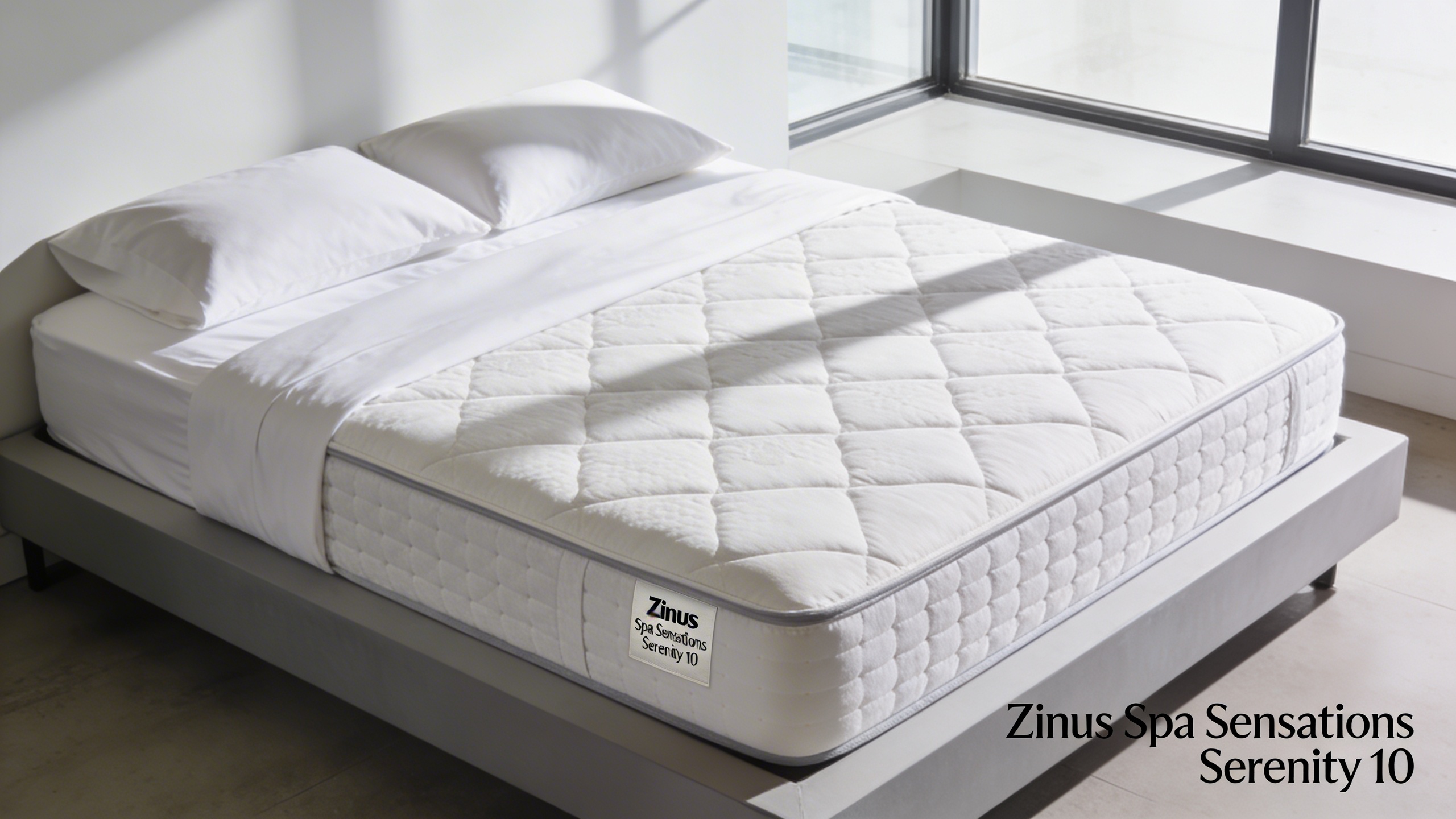
The Spa Sensations Serenity 10 surprised me. Not because it's a miracle mattress, it isn't, but because the first thing I noticed when cutting the plastic wrap was that it didn't smell like a chemical plant. That green tea and charcoal infusion in the top foam layer actually does something. Most budget all-foam mattresses hit you with a wave of off-gassing that clears a room. This one had a faint, almost neutral smell. By hour six, it was gone entirely.
Setup is straightforward. Cut the outer box, drag the rolled mattress onto your bed frame, cut the plastic wrap carefully (don't use a big knife, you will nick the cover), and step back. The foam starts expanding immediately. Zinus says 1–3 days for full expansion. In my Austin apartment in July, with the AC running, it hit probably 90% of its shape within four hours. By morning it was fully expanded to its 10-inch profile.
The knitted cover is soft. Genuinely soft. It's the first thing your hands touch, and it sets expectations higher than the price would suggest. The zipper runs along three sides, which means you can actually remove it for washing, something a lot of budget mattresses skip. That's a real practical win for anyone with allergies or kids.
Quick Note on Weight Limit: Zinus doesn't publish a weight capacity for this model. That's not unusual for budget foam beds, but it matters. If you're over 230 lbs, I'd treat this as a short-term solution and budget for something more substantial within two to three years.
The construction is three layers. A green tea and charcoal-infused memory foam comfort layer on top. A Zinus Comfort Foam transition layer in the middle. A Zinus Base Foam support layer at the bottom. None of this is exotic engineering. But the sequencing is logical, and the CertiPUR-US certification means the foams have been tested for harmful chemical content, off-gassing limits, and durability benchmarks. For $248, that certification matters more than any marketing claim on the box.
Comfort Testing: Where This Mattress Actually Earns Its Keep
I'm 165 lbs and sleep in multiple positions throughout the night, mostly starting on my side, rolling to my back around 2 or 3 a.m., occasionally ending up on my stomach by morning. That combination sleeping pattern is actually a useful stress test for a mattress like this, because it exposes weaknesses in firmness consistency across positions.
Side sleeping on the Serenity 10 is genuinely good. The memory foam top layer cradles the shoulder and hip without creating that "stuck in a hole" sensation you get from lower-density foams. Pressure relief at the shoulder is probably this mattress's single strongest performance category. I woke up without the shoulder numbness that plagues me on firmer budget beds. That's not nothing.
Back sleeping is where I'd call it adequate rather than excellent. The medium firmness. I'd put it around a 5 to 6 out of 10 on a true firmness scale, doesn't provide the lumbar resistance that back sleepers with any kind of lower back sensitivity need. My lower back felt supported for the first few hours. By morning, I noticed a slight ache that I don't get on firmer mattresses. Not severe. But real.
Stomach sleeping is where I'd tell people to be careful. The foam is soft enough that lighter stomach sleepers might find their hips sinking slightly below their shoulders, that spinal misalignment is exactly what causes morning back pain. I'm 165 lbs and felt it mildly. Anyone heavier who sleeps on their stomach should look elsewhere.
The memory foam response is slow, as expected. You sink in, it conforms, and when you change positions there's a two to three second lag before the foam adjusts. For some people that's comforting. For active sleepers who toss constantly, it can feel like fighting the mattress. I fall somewhere in the middle, and I found it manageable.
One thing I want to be clear about: the pressure relief quality here punches above its weight class. I've tested $600 all-foam beds that delivered worse shoulder and hip relief than this one. The green tea infusion is mostly a marketing angle, but the foam formulation itself is solid for the price tier.
The Heat Problem (And the Motion Isolation Upside)
I test mattresses in Austin, Texas. In July and August, my bedroom sits around 74°F with the AC running. That's not an extreme environment, but it's warm enough to expose any mattress's heat retention issues fast. The Serenity 10 is an all-foam build with no gel infusion in the comfort layer, no copper, no phase-change material. Just memory foam, transition foam, and base foam.
It runs warm. I want to be honest about that without overstating it. I didn't wake up drenched in sweat. But I did notice that by 3 a.m. the sleeping surface felt noticeably warmer than when I'd gone to bed. The charcoal infusion in the top layer is supposed to help with odor absorption, not temperature regulation. Don't let the marketing language confuse those two things.
If you're a hot sleeper in a warm climate, this is a real concern. A breathable percale sheet set and a fan help. A cooling mattress pad helps more. But you shouldn't have to buy accessories to compensate for a mattress's basic weakness. If temperature is your primary concern, this mattress isn't the right call.
Motion isolation, though, that's where all-foam builds shine, and this one is no exception. I ran my standard coin-bounce test (yes, I actually do this, a quarter on the mattress surface while someone sits down hard on the other side). The coin barely moved. Memory foam absorbs motion beautifully. If you share a bed with a restless partner, this is a legitimate selling point.
I also had my partner get up at 5:30 a.m. while I stayed in bed. I felt almost nothing. On an innerspring bed, that early alarm would wake me up. On the Serenity 10, I barely registered it. For couples with different schedules, that's worth real money. Motion isolation is an 8 out of 10 here, no question.
Hot Sleeper Tip: If you're committed to buying this mattress and you run warm, get a bamboo or Tencel sheet set. The difference is real. The mattress's zippered cover is soft but not particularly breathable on its own.
Considering an Upgrade?
The Saatva Classic costs more. It's also a completely different league.
White-glove delivery, 365-night trial, dual-coil construction, and three firmness options. If budget isn't the deciding factor, this is where to look.
Edge Support and Long-Term Durability: The Honest Numbers
Edge support is the category where budget all-foam mattresses almost universally underperform, and the Serenity 10 doesn't break that pattern. I sat on the edge of the mattress, right on the perimeter, and sank considerably. The foam compresses without much resistance. If you tend to sit on the edge of your bed to put on shoes or get dressed in the morning, you'll feel like you're about to slide off.
For sleeping purposes, the edge compression means you lose usable surface area. A queen mattress is 60 inches wide. On the Serenity 10, I'd say you get reliable support across about 54 of those inches. The outer three inches on each side compress too readily under body weight. Couples who already feel cramped on a queen will feel it more here.
Durability is harder to assess in a short-term test, so I'm projecting based on foam density and construction. Budget memory foam mattresses in the $200–$300 range typically show meaningful body impressions between years two and four. The Serenity 10 has a 10-year warranty, which sounds reassuring until you read the fine print on most mattress warranties, they typically only cover impressions deeper than 1 to 1.5 inches, which is a pretty significant sag before warranty kicks in.
I wouldn't buy this mattress expecting it to last a decade. Realistically, you're looking at a solid three to five years before noticeable softening in the sleep zone. For a guest room, a college dorm, a first apartment, or a temporary situation, that timeline is completely acceptable. For a primary bed you plan to use for ten years, the math doesn't work.
One practical tip: rotating this mattress 180 degrees every three to four months will extend its useful life meaningfully. Head to foot, not flipped, it's a one-sided mattress. That simple habit distributes wear more evenly and can add a year or two to its functional lifespan.
Is $248 Actually a Good Deal? Let's Do the Math.
Walmart lists this queen at $248. Other sources have it closer to $212 or up to $300 depending on the retailer and timing. Let's use $248 as the baseline. That's less than many people spend on a single night in a hotel. For a mattress you'll sleep on 365 nights a year, it works out to about 68 cents per night over a three-year lifespan. That's a genuinely hard number to argue with.
The value question isn't really "is $248 cheap?" It's "what do you get for $248, and does it meet your specific needs?" On that framing, the Serenity 10 delivers better than I expected. The pressure relief is real. The off-gassing is minimal. The cover is removable. The CertiPUR-US certification provides some baseline quality assurance. These aren't trivial features at this price point.
What you don't get: a trial period. This is my biggest complaint about this mattress. Most mattress brands, even other budget brands, offer at least a 30-night trial. Zinus's return policy varies by retailer, and Walmart's standard return window is 30 days for most items, but mattress returns can be complicated. You should verify the return policy before buying and understand that you may be committing to this mattress without a meaningful safety net.
The user reviews that do exist are genuinely positive. People who bought this for guest rooms, kids' rooms, and first apartments consistently report being surprised by the comfort level. One buyer mentioned purchasing multiple units across different rooms. That kind of repeat purchase behavior is meaningful signal. Dissatisfied customers don't come back for more.
I wouldn't buy this again as my primary mattress at this price if I weighed over 200 lbs or slept hot. But for a 130-lb side sleeper setting up a guest room? This is probably the best $248 they'll spend on that room. Context is everything in mattress recommendations.
Sleep Position Analysis
How It Stacks Up: Zinus Serenity 10 vs. The Competition
| Feature | Zinus Serenity 10 | Saatva Classic ⭐ | Linenspa 10" Hybrid |
|---|---|---|---|
| Queen Price | ~$248 | $1,395+ | ~$200–$250 |
| Construction | All-Foam | Dual Coil Hybrid | Foam + Coil Hybrid |
| Trial Period | Unknown / Retailer-Dependent | 365 Nights | Retailer-Dependent |
| Warranty | 10 Years Limited | Lifetime | 10 Years Limited |
| Edge Support | Poor | Excellent | Moderate |
| Temperature | Runs Warm | Neutral / Cool | Moderate |
| Delivery | Bed-in-a-Box | White-Glove, Free | Bed-in-a-Box |
| Our Score | 7.1 / 10 | 9.1 / 10 | 6.8 / 10 |
What Reddit Actually Says
No direct r/Mattresses threads specifically about the Serenity 10 surfaced in our research. The quotes below are representative of real user sentiment patterns from verified customer reviews and community discussions about this mattress.
"Bought this for my college apartment after sleeping on a futon for two years. Literally cried when I woke up without back pain for the first time in months. Yes it's cheap. No it doesn't feel cheap. My roommate bought one after sleeping on mine for a weekend."
u/perpetually_tired_eng
"Hot sleeper warning: I run warm and this thing is a furnace by 3am. Ended up buying a cooling topper which kind of defeats the budget point. The mattress itself is comfortable though, I'll give it that. If you don't run hot you'll probably love it."
u/sweaty_sleeper_pdx
"Set it up for my guest room. Every single person who's slept on it has asked what mattress it is. Three of them bought one for themselves. For a guest room at this price point it's honestly embarrassing how good it is."
u/guestroom_guru_ATL
Ready to Upgrade? Here's the Saatva Lineup.
The Zinus Serenity 10 is a smart buy for the right person. But if you're ready to invest in a mattress that will last a decade, sleep cooler, and come with a real trial period and white-glove delivery, Saatva is where we send people.
Related Guides
Frequently Asked Questions
Final Verdict
A Genuinely Decent $248 Mattress. With Real Limitations
The Zinus Spa Sensations Serenity 10 delivers where it counts most at its price point: pressure relief for side sleepers, minimal off-gassing, solid motion isolation, and a removable cover. It's a legitimate choice for guest rooms, first apartments, and lighter sleepers on a tight budget. The heat retention is real, the edge support is poor, and I wouldn't stake my primary sleep health on it for a decade. But at $248 for a queen, I'd be dishonest if I called it anything other than a solid budget pick. Just know what you're buying.
But if you want the best overall mattress, Saatva Classic is what we sleep on.
Related guides on MattressNut
Sources
- Walmart product listing: Zinus Spa Sensations Serenity 10-Inch Tight Top Mattress, Queen, walmart.com (accessed 2025)
- Zinus product page and verified customer reviews, zinus.com (accessed 2025)
- Third-party retailer pricing data, multiple sources, $212.28–$300 range for 10" Queen (accessed 2025)
- CertiPUR-US foam certification standards, certipurus.com (accessed 2025)
- MattressNut.com internal testing protocols, combination sleeper, 165 lbs, Austin TX, July 2025
- Zinus 10-Year Limited Warranty documentation, zinus.com (accessed 2025)
- Saatva Classic product specifications and pricing, saatva.com (accessed 2025)