
 by
by Our #1 Recommended Mattress
Saatva Classic. From $1,095
365-night trial · Lifetime warranty · Free white-glove delivery
A hidden pantry is one of those design elements that manages to be both purely practical and genuinely exciting at the same time. The practical case is straightforward: kitchen storage is almost always inadequate, and a dedicated pantry space dramatically improves both the functionality of the kitchen and the ability to maintain a clean, clutter-free main kitchen appearance. The exciting part is that in 2026, hidden pantry design has evolved from a utilitarian afterthought into a considered architectural feature that homeowners specifically seek out and that significantly adds to a home's perceived value.
The 2026 Shift in Hidden Pantry Design
There is a clear shift in 2026 toward integrated design where the pantry becomes part of the architecture rather than an added feature. Interior layouts now prioritize clean lines, uninterrupted cabinetry, and subtle transitions that make storage invisible at first glance. This supports the open-plan living preference where the kitchen flows naturally into dining and living areas without visual clutter. The result is that hidden pantries are no longer just a luxury reserved for large homes with dedicated butler's pantry spaces. Many high-end-looking hidden pantries use affordable IKEA PAX systems concealed behind custom panels. The concealment itself is the design element, not necessarily the cabinetry system behind it.
Pocket Doors: The Premier Concealment Mechanism
Pocket doors are the dominant hardware choice for hidden pantry entrances in 2026 because they disappear into the wall cavity when open, eliminating the door itself from the kitchen view. When closed, a well-fitted pocket door is flush with the surrounding cabinetry facade. When open, it has physically removed itself from the space entirely rather than remaining visible as a conventional door would. Floor-to-ceiling white oak pocket doors that disappear into the wall completely give you a hidden pantry that feels like a secret passage while functioning as a beautifully practical daily-use storage room. Soft-close mechanisms are particularly preferred to prevent the door from slamming against the interior stops in a busy kitchen environment.
Custom-milled oak pocket doors with recessed brass pulls are among the most photographed kitchen details in 2026 home design coverage. For spaces where the wall cavity does not accommodate a full pocket door system, bifold doors that fold flat against the wall when open provide a similar effect at lower installation complexity. The key is ensuring the door panel when open does not project into the kitchen workflow area in a way that creates obstruction.
Floor-to-Ceiling Shelving: Maximizing the Interior
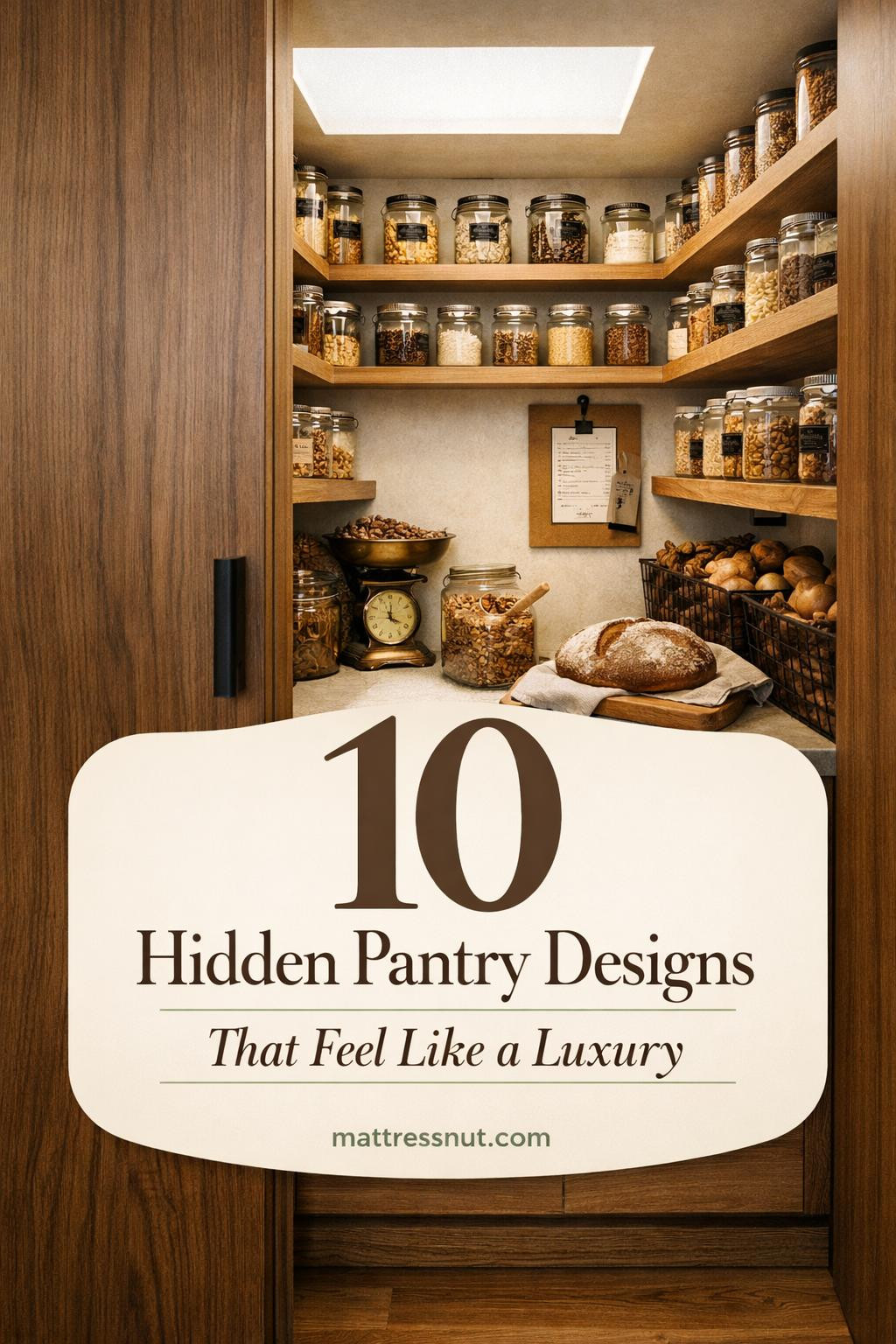
The interior of a hidden pantry rewards the same attention to design that the concealment mechanism itself receives. Floor-to-ceiling shelving on multiple walls creates maximum storage capacity while visually expanding the pantry's apparent volume. Full-height shelving in warm honey-toned oak with visible grain texture creates a beautiful sense of continuity and warmth that makes the pantry feel like a considered space rather than a utility closet. For very tall pantries with ceilings above nine feet, motorized or manual pull-down shelving systems bring top-shelf items down to eye level without requiring a step stool. A brass library ladder on rails is both a functional access solution and a hero design element in larger configurations. Aged brass or unlacquered brass ladders develop beautiful patina over years of use that makes them look better as time passes.
Disguising the Entry: Making the Door Invisible
The most effective hidden pantry door designs keep the entry panel flush with a bank of tall cabinet fronts so it appears to be another cabinet rather than a doorway. The critical execution details are grain alignment and hardware consistency. If the pantry door panel has a different grain direction, wood species, or finish than the surrounding cabinetry, the eye catches the transition. When everything matches precisely, the panel reads as continuous cabinetry until it opens.
Magnetic push-to-open latches eliminate visible hardware entirely. The door opens at a firm push and closes with a satisfying magnetic click. This is the cleanest possible approach and eliminates the visual clue that conventional pulls or handles would provide. Integrated lighting that activates automatically when the door opens adds a practical and theatrical element simultaneously: the pantry interior illuminates as though it always knew you were coming. Aligning the grain across the facade from fixed cabinetry through the door panel requires planning the cabinetry layout with the door panel in mind from the earliest design stage. It is very difficult to retrofit this detail convincingly after the fact, which makes it a planning priority rather than an afterthought.
Butler's Pantry Design: The Full Service Hub
A butler's pantry behind a hidden entry creates a dedicated space for meal preparation, entertaining setup, and the storage of items that need to be accessible during events but invisible during normal kitchen operations. Hosting supplies including serving pieces, specialty glassware, table linens, and large-format trays all have natural homes in a butler's pantry that is typically poorly accommodated in main kitchen cabinetry.
Inside, a small service area can include a decanting counter, deep roll-outs near the floor for bulk items, and shallow adjustable shelves up high for snacks and lighter items. Large tray dividers keep serving platters upright and within reach. A utility sink in the butler's pantry allows pre-washing of produce and post-event cleanup without dirtying the main kitchen sink. An under-counter beverage refrigerator dedicated to entertaining supplies eliminates the need to hunt through the primary refrigerator during events. The visual language inside the butler's pantry can differ from the main kitchen while maintaining material harmony: deep red shelving with sleek industrial lighting creates a dramatic and moody storage nook that feels like a hidden jewel when the door first opens.
Style Trends for 2026 Hidden Pantries
Natural materials dominate the 2026 hidden pantry aesthetic. White oak shelving and marble counters create the effortless luxury feel that is the aspirational standard for this category. The oak provides warmth and grain interest. The marble provides the cool mineral counterpoint that prevents the space from feeling too woody or heavy. Bold color moments are appearing in butler's pantry designs for homeowners who want their pantry to make a statement when the door opens. Deep green, navy, and even deep red shelving walls create a dramatic reveal that contrasts deliberately with the more neutral main kitchen.
Industrial elements, including matte black steel shelving, exposed pipes, and warehouse-style pendant lights, are appearing in more contemporary hidden pantry designs. These elements balance concrete walls or polished stone with the organic warmth of reclaimed oak butcher block and aged brass hardware in a combination that the best kitchen designers are calling anti-showroom energy: lived-in, real, and clearly used for actual cooking rather than display.
Organization Systems Inside the Hidden Pantry
The most beautifully concealed pantry door delivers no functional value if the interior is a disorganized pile of random items. Clear containers in matching sizes for dry goods allow visual inventory assessment without removing anything from the shelf. Label makers with consistent fonts create the organized-but-not-sterile look that characterizes the best-photographed pantry interiors in 2026. Grouping items by category within defined zones creates the spatial logic that makes a pantry genuinely intuitive to use rather than merely to look at. Baking supplies occupy one zone, canned goods another, breakfast items a third. Adjustable shelving is the single most important interior planning feature because the storage needs of any household change over time. Tool-free adjustable shelf pins allow reconfiguration in minutes without any carpentry or permanent changes to the structure.
Lighting Inside the Hidden Pantry
A hidden pantry without adequate interior lighting defeats the purpose of having organized shelves. Motion-activated LED lighting that switches on when the door opens is the standard 2026 approach: hands-free, battery-powered or hardwired, and completely invisible when the door is closed. Under-shelf LED strips illuminating the shelf below them create even, shadow-free lighting across every surface without a central overhead fixture that might cast shadows into corners and behind taller items. The strips can be warm-toned for a pantry that feels gathered and warm, or daylight-toned for maximum color accuracy when identifying the labels on identically sized containers.
Planning Your Hidden Pantry: Practical Considerations
Position the hidden door close to the primary refrigerator to minimize the distance traveled when unloading groceries and to maintain counter space for meal preparation. Pantry shelving needs to be only 300mm deep, with 1000mm access space in front, which means the footprint of a functional hidden pantry is smaller than most homeowners assume before they measure. Future-proof your build by planning two levels of electrical power within the pantry interior, passive ventilation in the ceiling to prevent moisture and odor buildup, and tool-free adjustable shelving. From a resale perspective, a well-executed hidden pantry adds to a home's appeal significantly because kitchen storage is one of the most consistently cited priorities among home buyers. A kitchen that reveals an organized, beautiful hidden pantry creates a memorable moment in property showings that is disproportionately impactful relative to its construction cost.
Integrating the Hidden Pantry With Open-Plan Kitchen Design
The hidden pantry concept works most powerfully in open-plan kitchen and dining spaces because it solves the fundamental tension of those environments: the need for extensive storage capacity that does not compromise the clean, uncluttered aesthetic that makes open-plan spaces so visually appealing. When the pantry is genuinely hidden, the kitchen can maintain its gallery-like quality without sacrificing the storage capacity that actual cooking and entertaining requires.
The transition from the kitchen into the pantry should feel smooth in both directions. Walking into the hidden pantry should feel like walking into a space that was designed as part of the kitchen rather than an afterthought. The same flooring material extending through the door threshold, or a deliberate material change that feels intentional rather than incidental, creates this sense of continuity. Consistent lighting temperature between the main kitchen and the pantry interior prevents the jarring shift from warm to cool light that happens when utility areas are illuminated with different bulbs than the main space.
Future-Proofing and Technology Integration
A hidden pantry built today should accommodate the storage and technology needs of the next decade, not just the current household configuration. This means planning for the possibility of a compact wine refrigerator, a second dishwasher for entertaining, or a steam oven in addition to the main kitchen appliances. Power outlets at multiple heights on multiple walls within the pantry, a dedicated circuit for appliances, and roughed-in plumbing for a utility sink, even if not immediately installed, are the provisions that future owners and future lifestyle changes will appreciate most.
Smart home integration within the pantry can include inventory management sensors that track stock levels of frequently used items, temperature and humidity monitoring for wine or specialty food storage, and automated lighting that responds to occupancy rather than requiring a separate switch. These integrations are most easily incorporated during initial construction and are significantly more expensive to retrofit after the fact. Planning for them even if you do not implement all of them immediately represents the kind of forward-thinking that separates a well-designed home from one that is merely well-styled at a single moment in time.
Complete Your Space
Every beautiful room deserves a great night sleep. The Saatva Classic — white-glove delivery, 365-night trial.