
 by
by Our #1 Recommended Sheets
Saatva Percale Sheet Set. From $145
Organic cotton percale | Crisp and cool | 45-day trial
We earn a commission if you make a purchase, at no extra cost to you. Full disclosure.
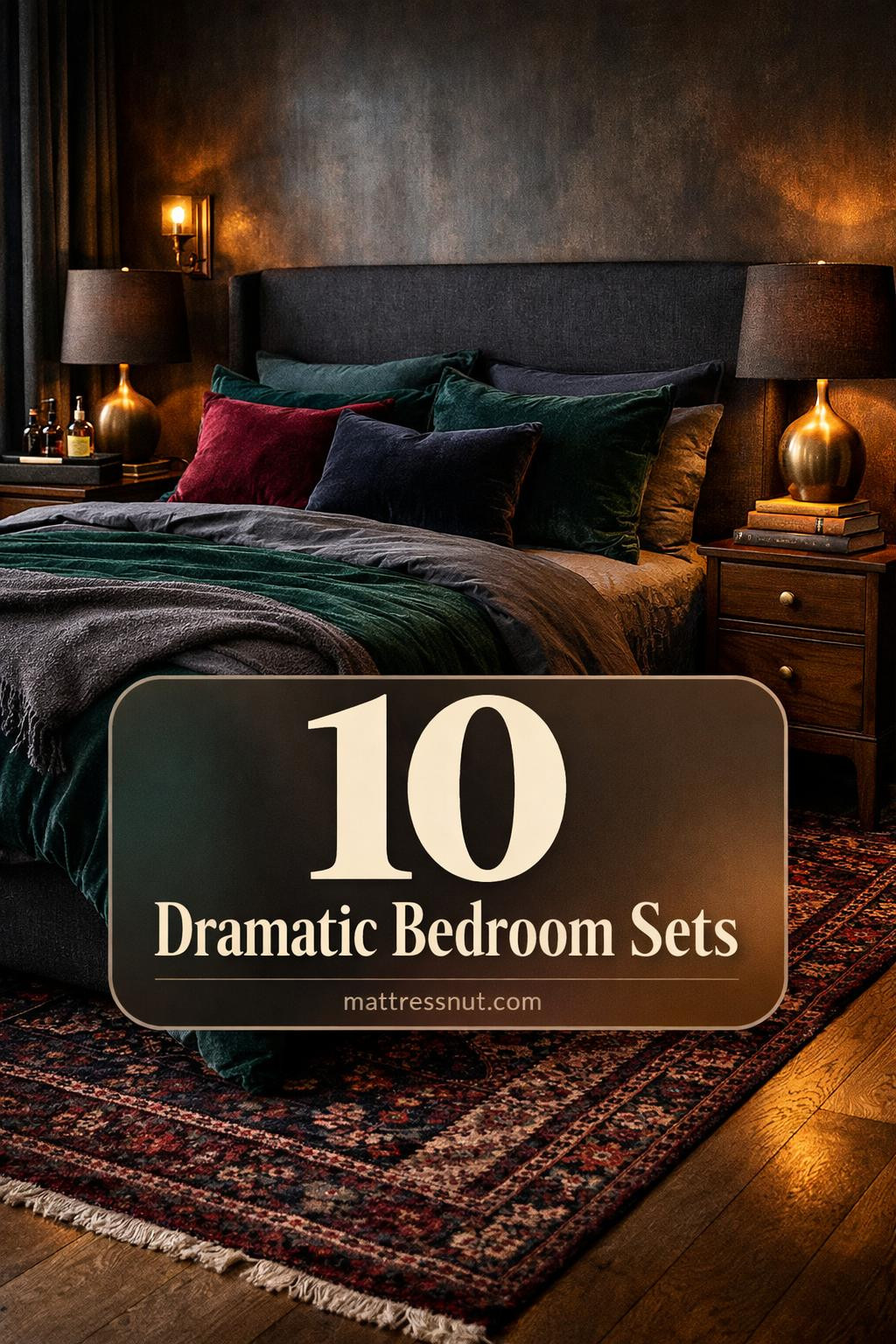
Moody bedding sets hit different when you actually commit to the vibe. We're talking deep tones, rich textures, and that slightly undone look that somehow feels both cozy and editorial. Getting there isn't just about picking a dark duvet and calling it done, it's a layering system, a fabric philosophy, and a color strategy working together. This guide breaks all of it down so you can build a bedroom that feels like a five-star stay somewhere with stone walls and very low lighting.
The English Manor Bed That Nails Dark Florals
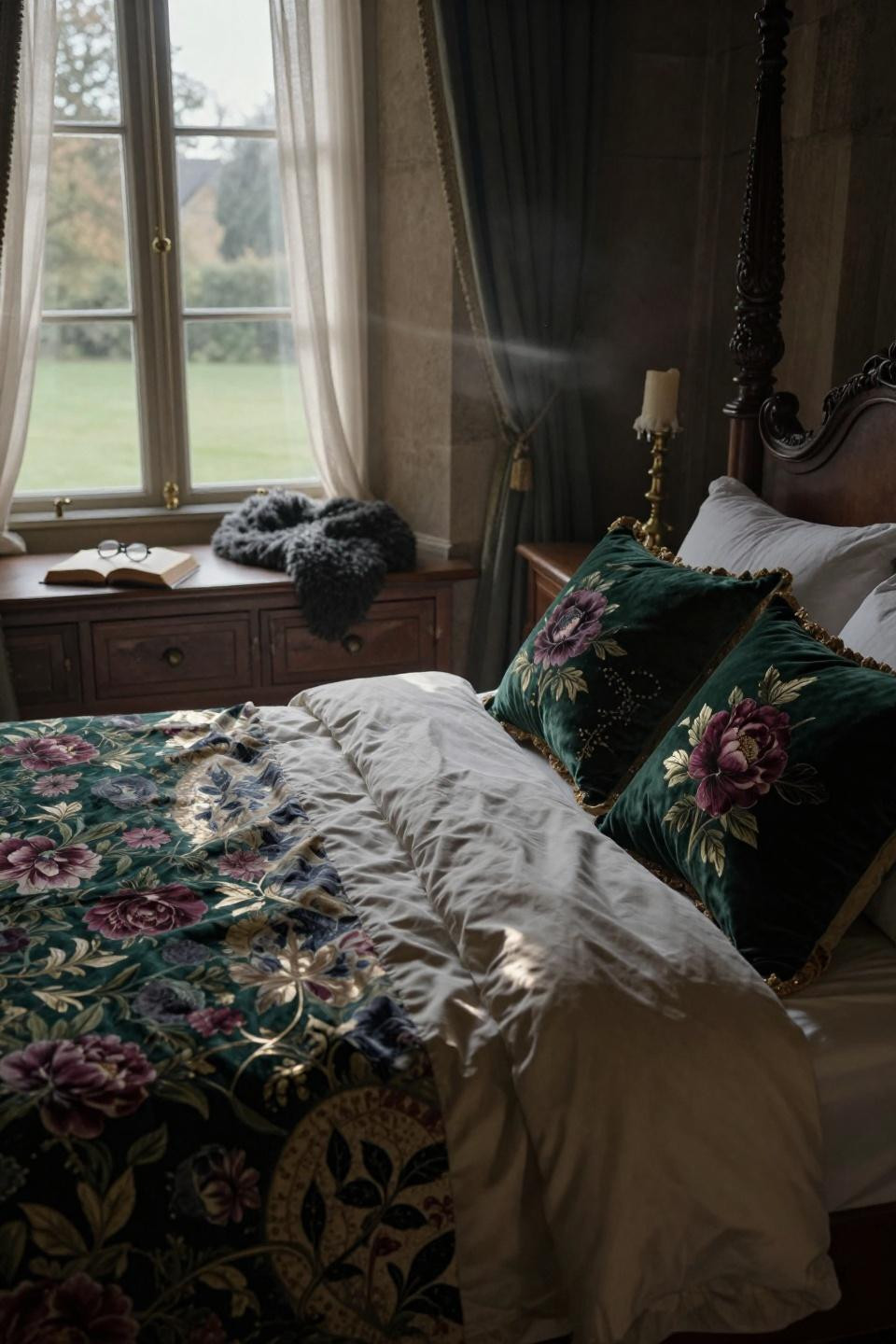
This is how you do florals without going cottagecore. The William Morris-inspired duvet in forest green and plum against those stone walls works because the palette stays dark throughout, no bright accents sneaking in to ruin it. The walnut four-poster keeps everything grounded, and that charcoal throw on the window seat is doing all the heavy lifting for contrast. Just toss it there like you weren't trying. The trick with dark florals is scale: go oversized or go home. Small repeating prints on dark backgrounds read as texture from a distance, which is exactly what you want.
If you're shopping this look, search for botanical print duvet covers in forest or jewel tones. Pottery Barn's Botanical Duvet comes in dark green with plum undertones around $149–$189 for a full/queen. Target's Threshold line also does a solid dark floral for under $60 if you want to test the concept first.
Why This Copenhagen Loft Bed Feels Expensive
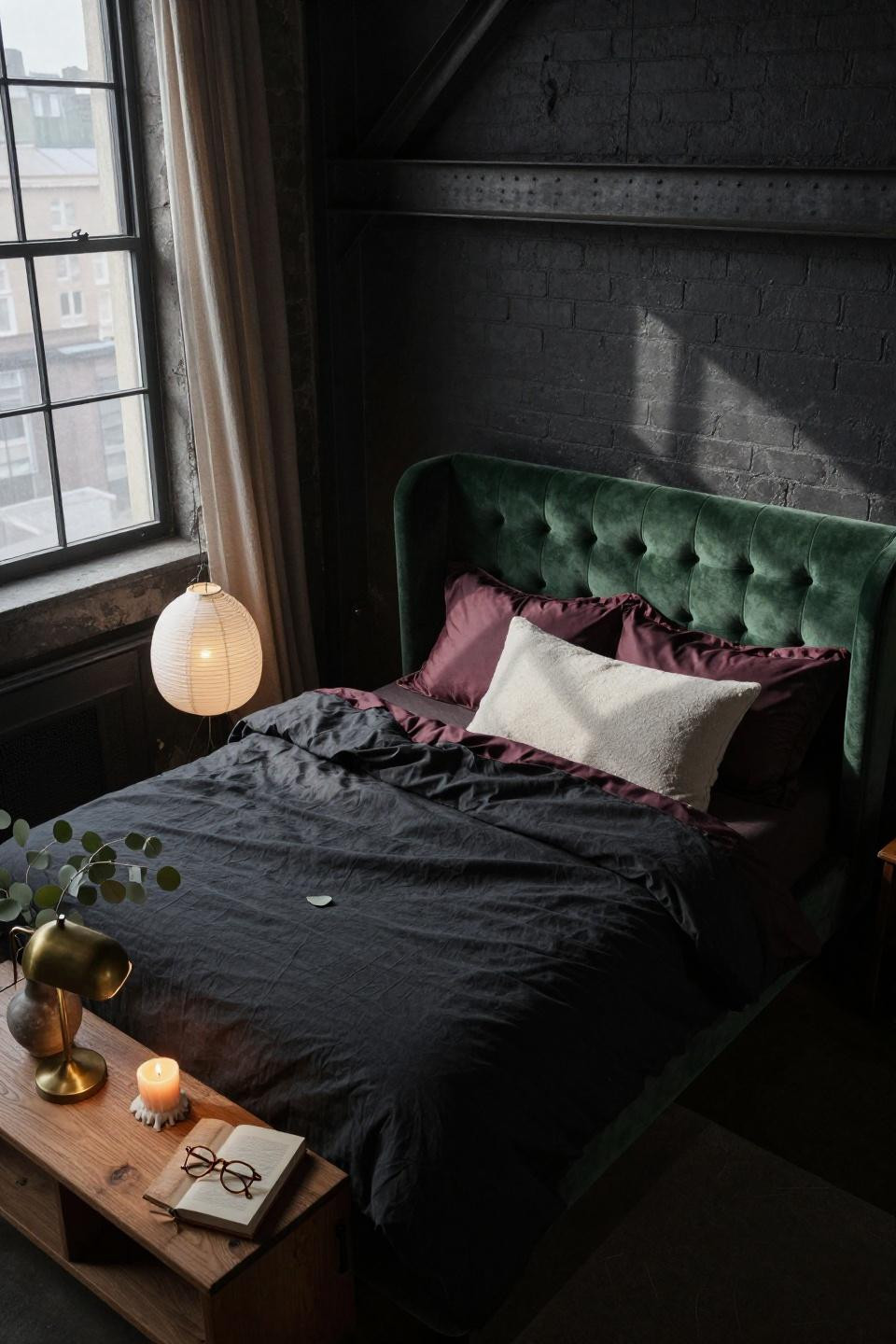
The forest green velvet headboard against exposed brick and steel beams, that's the move. But what makes it work is layering the charcoal Belgian linen with burgundy silk pillowcases. Those materials hate each other in the best way. The oversized ivory bouclé lumbar pillow breaks up all that darkness without looking precious. Great when you need texture without pattern.
Belgian linen in charcoal or slate is the bedding equivalent of a perfectly aged leather jacket, it looks better with wear. Parachute Home offers their linen duvet in a deep Slate shade at $180 for a full/queen. For the velvet headboard companion effect, look for linen-cotton blends in dark tones; they have the matte finish that makes jewel-tone accents pop. The key to the expensive read is contrast in finish: matte linen against glossy silk against nubby bouclé. Three textures minimum, always.
Reclaimed Wood That Actually Looks Intentional
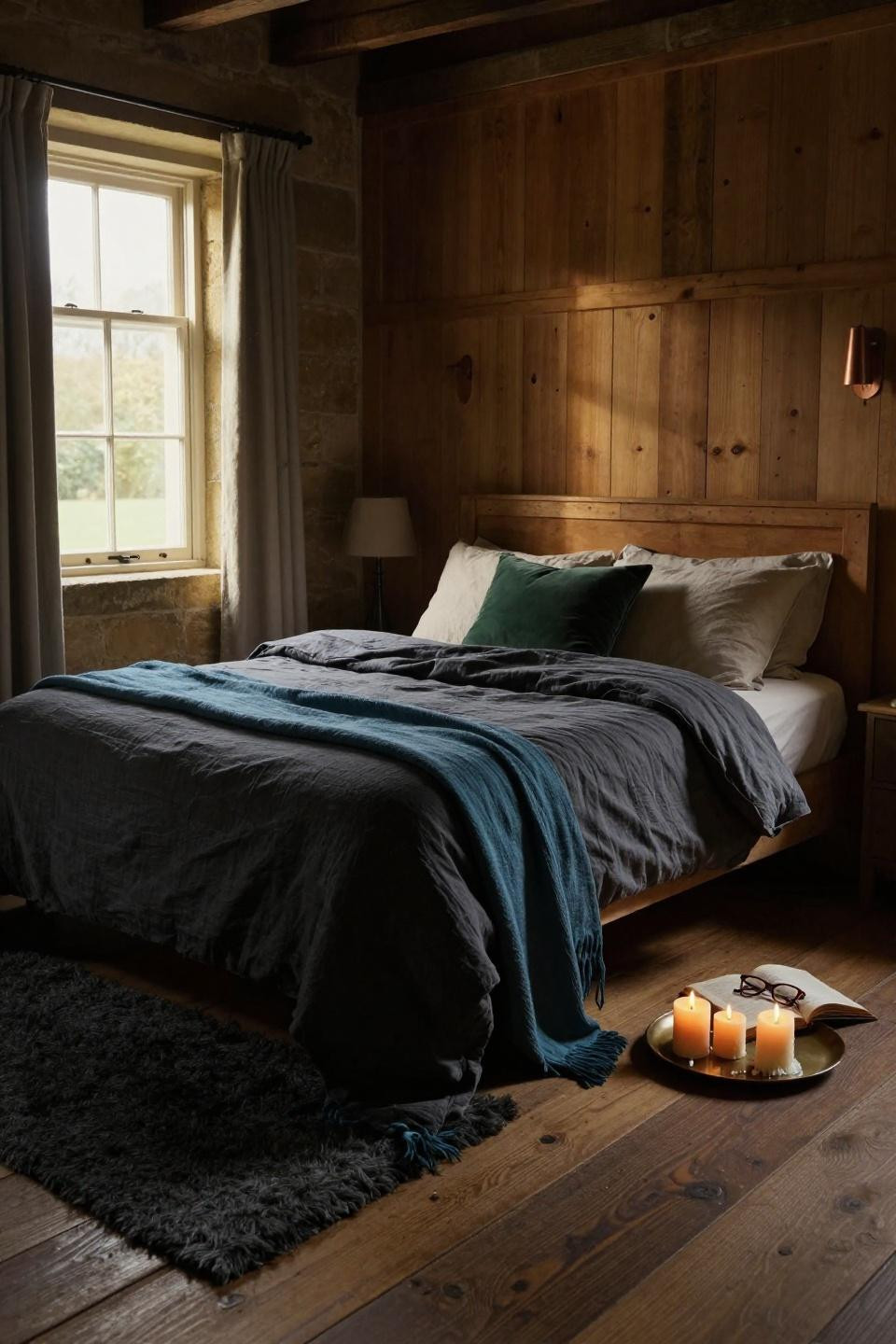
Floor-to-ceiling reclaimed barn wood could go very wrong. Here it doesn't because the honey tones balance the charcoal linen duvet. The vintage indigo throw adds just enough color without screaming accent piece. The half-burned candles grouped on brass? Three looks considered, one looks random, copy that asymmetry.
The lesson here is that warm wood tones and dark bedding are natural partners. Dark charcoal or forest green against raw wood reads as organic rather than oppressive. If your bedroom doesn't have exposed wood features, a walnut or dark oak bed frame achieves the same grounding effect. For the indigo throw, look to brands like Faribault Woolen Mill, whose merino throws in deep navy or indigo run $85–$120 and have the right weight to drape without looking flimsy.
The Heirloom Quilt Move Nobody's Doing
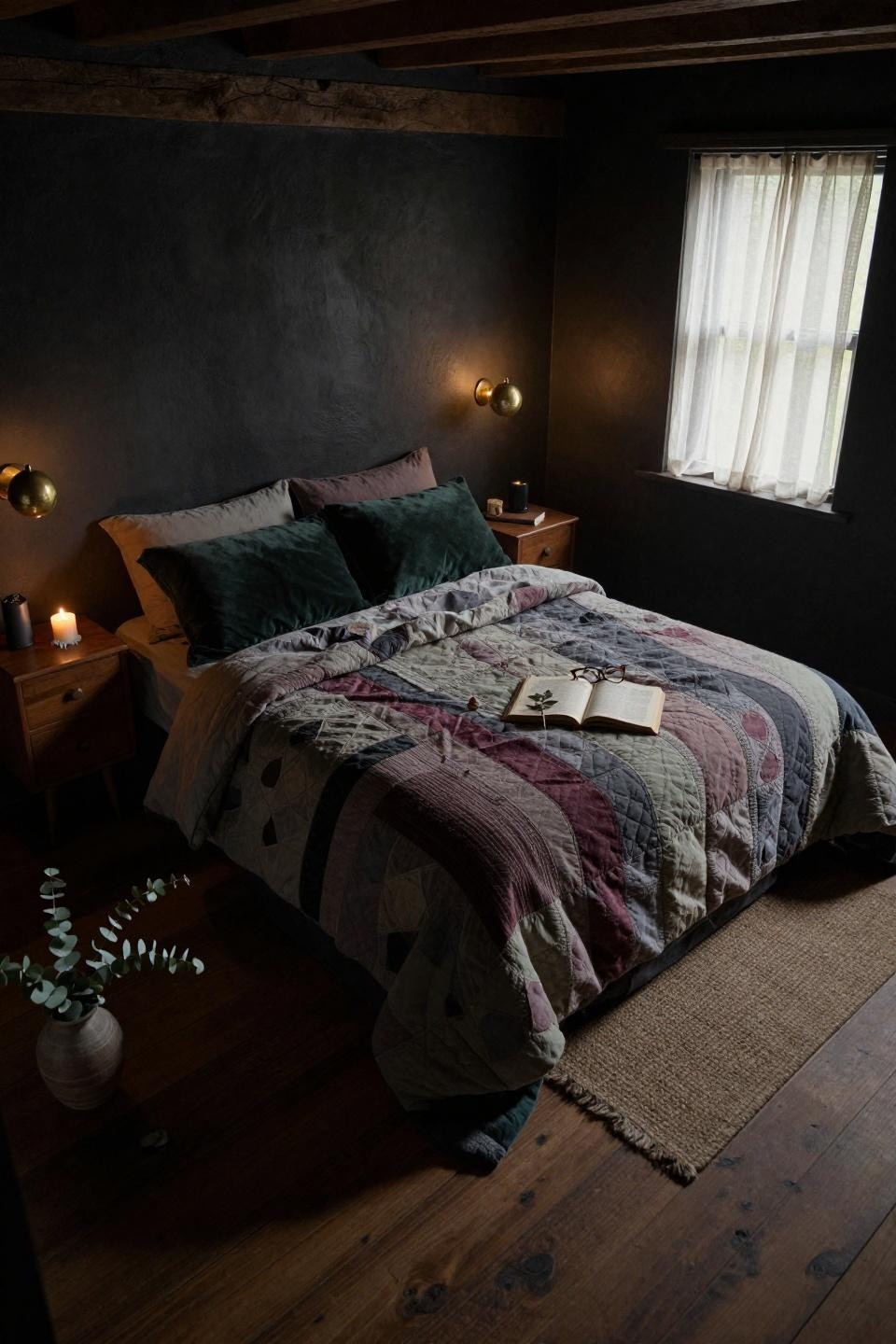
Hand-stitched quilts in sage, charcoal, and dusty mauve under a forest green velvet duvet, that's how you layer pattern and solid without it looking like a West Elm showroom exploded. The vintage wool blankets in faded burgundy add weight both literally and visually. Those unlacquered brass sconces will patina over time, which is kind of the point.
Quilts are underused in moody bedrooms because people associate them with grandmotherly pastels. Dark-toned quilts, think charcoal patchwork, deep indigo block prints, or forest green geometric patterns, bring structure to a heavily layered bed while still reading as intentional. Vermont Flannel and Boll and Branch both make quilts in deeper tones starting around $120–$180. The goal is to show the quilt folded at the foot of the bed rather than as the main cover, letting the velvet or linen duvet do the heavy lifting above.
Scottish Highlands Texture Overload
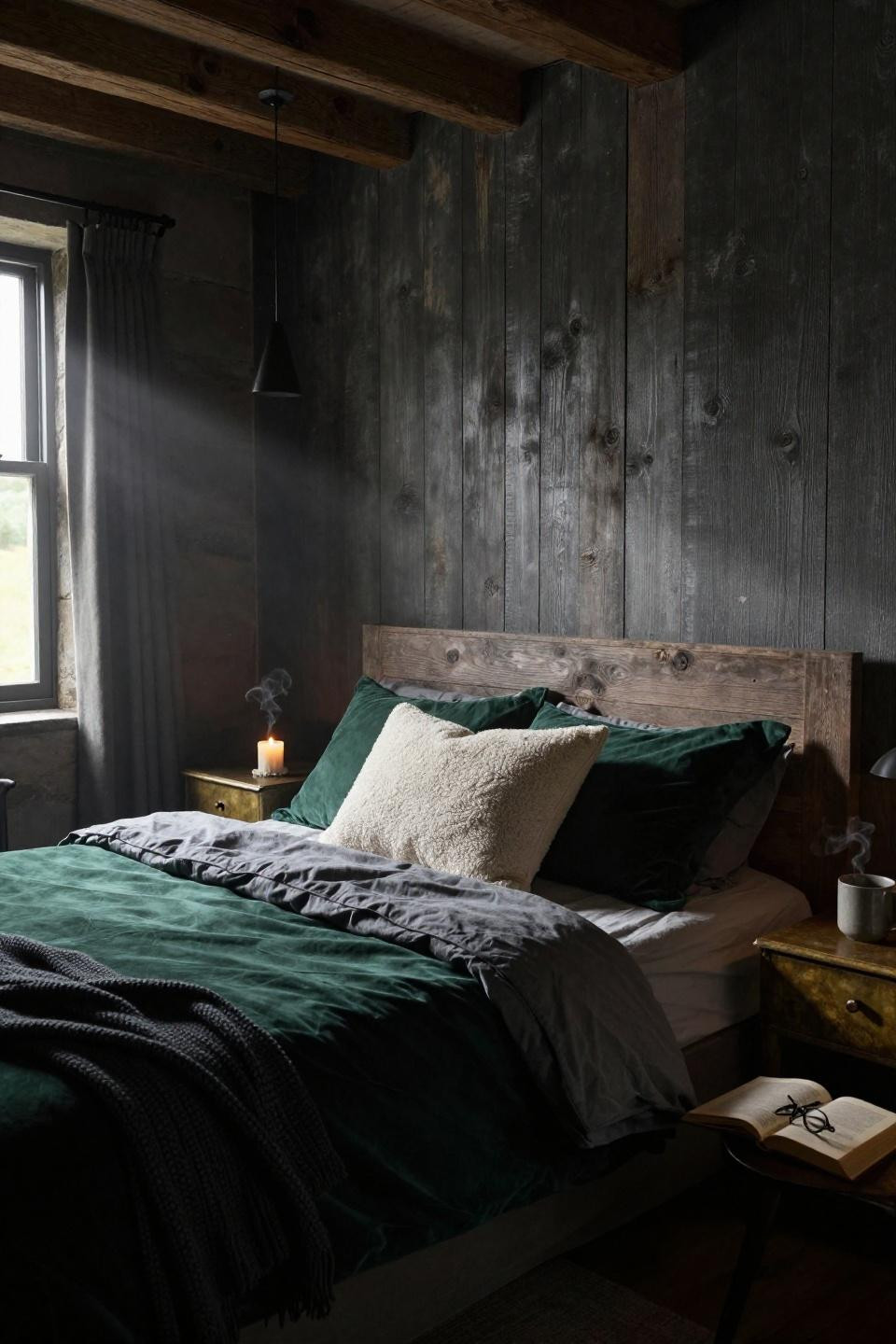
This bedroom is basically a textile showroom. Forest green velvet duvet, slate gray linen sheets, ivory bouclé lumbar, each one fighting for attention but somehow not clashing. The weathered charcoal barn wood headboard keeps everything from floating away. That chunky knit throw draped at the foot? Leave it messy. It's more honest that way.
The chunky knit throw is one of the most accessible entry points into moody layering. They're everywhere from H&M Home ($35–$45) to handmade Etsy shops ($80–$150), and they add that high-contrast, tactile softness that makes a dark room feel inviting rather than cold. Stick to natural fibers, merino, alpaca, or chunky wool blends, and keep the color within two stops of your main duvet shade.
When a Vintage Quilt Becomes the Whole Vibe
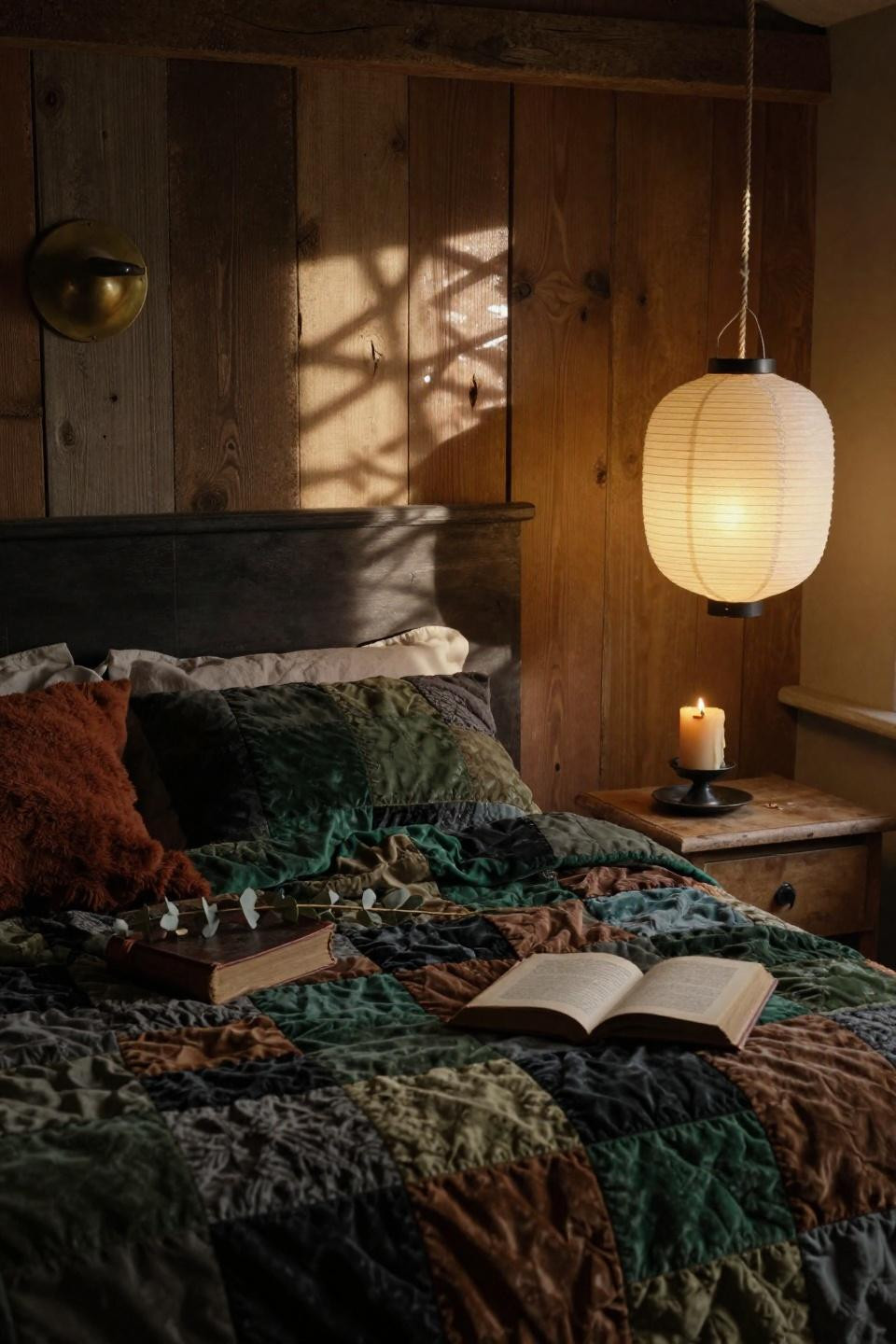
That museum-quality patchwork quilt in forest green, charcoal, and burnt umber is the reason this room exists. The Japanese paper lantern on twisted linen cord is a weird choice that totally works. Skip the matching nightstand set and go with rough reclaimed oak instead. The rust wool throw adds just enough warmth without competing.
Victorian London Does Platform Beds
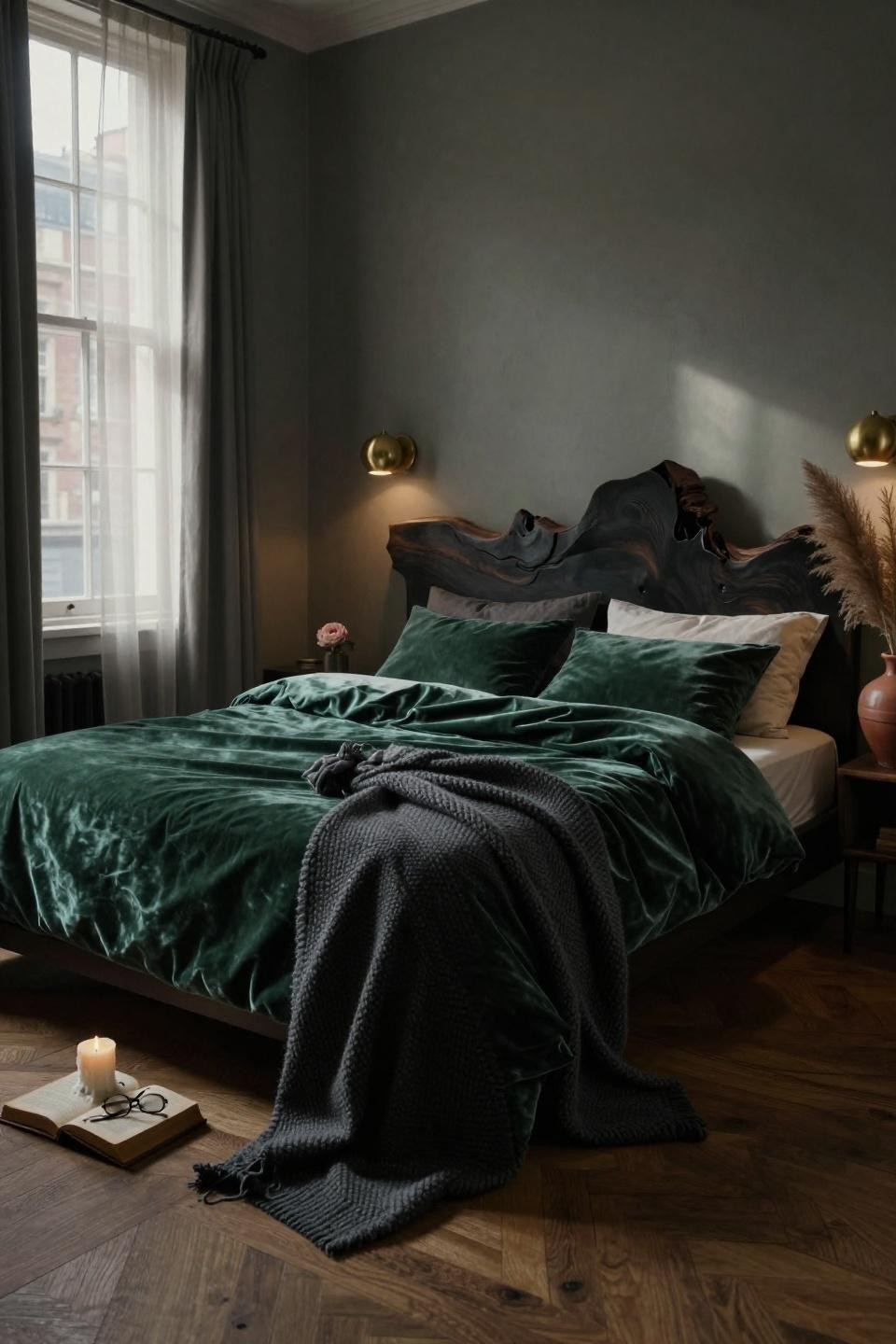
Low Japanese platform beds in moody rooms always feel more expensive than they are (IKEA has a version under $400). The forest green velvet duvet with that chunky charcoal merino throw is about weight and drape. Those aged brass sconces on moody sage walls add warmth without going full cozy. The black walnut live-edge headboard ties it together without trying too hard.
Block-Printed Cotton That Doesn't Feel Craft Fair
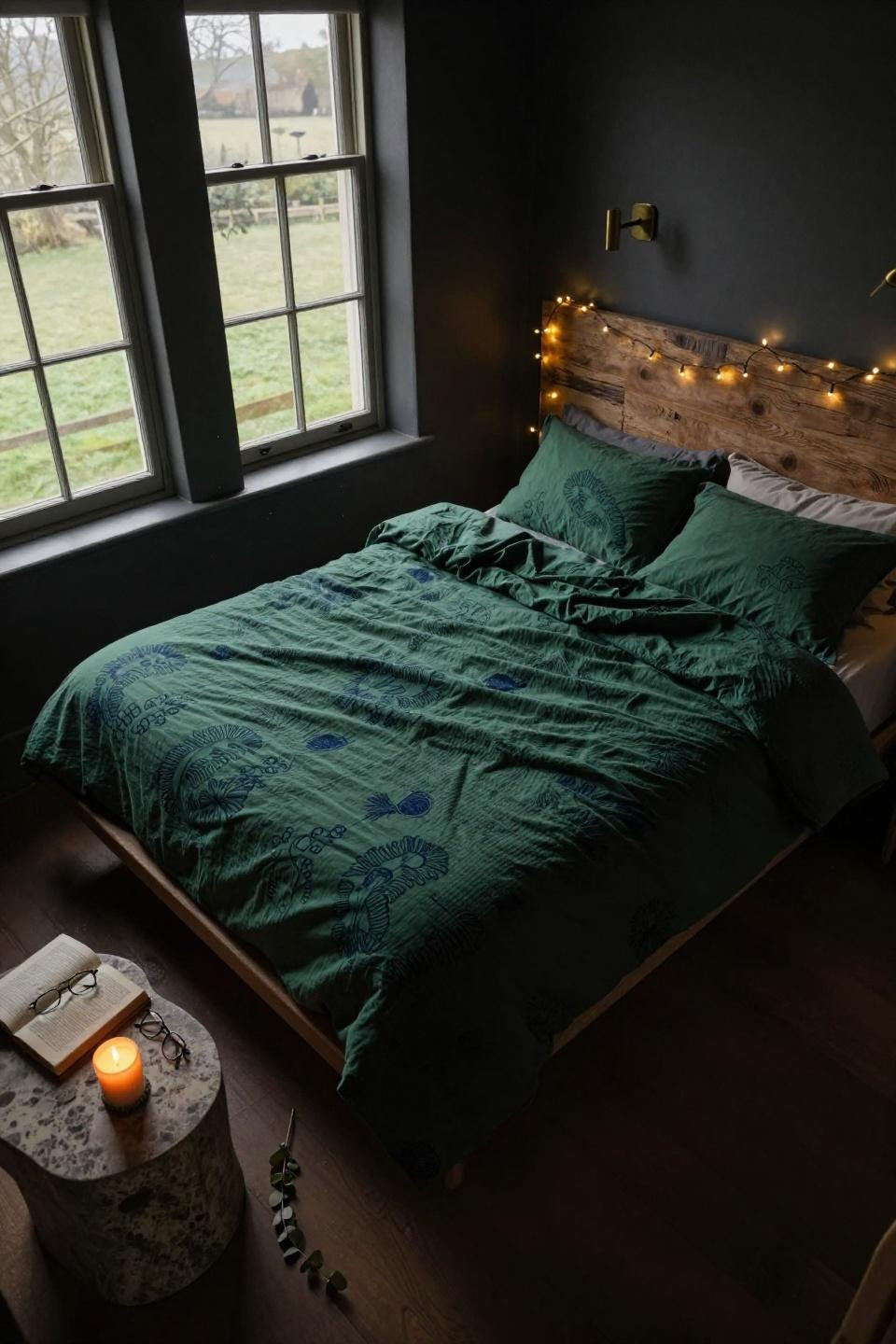
Block-printed cotton in deep forest green with indigo patterns works because the palette stays tight. The Edison fairy lights draped across reclaimed oak could be cheesy, but here they're dim enough to just suggest warmth. That hand-carved travertine bedside table does a lot of visual lifting. Best for renters who can't commit to built-ins.
The Charcoal Linen Formula That Always Works
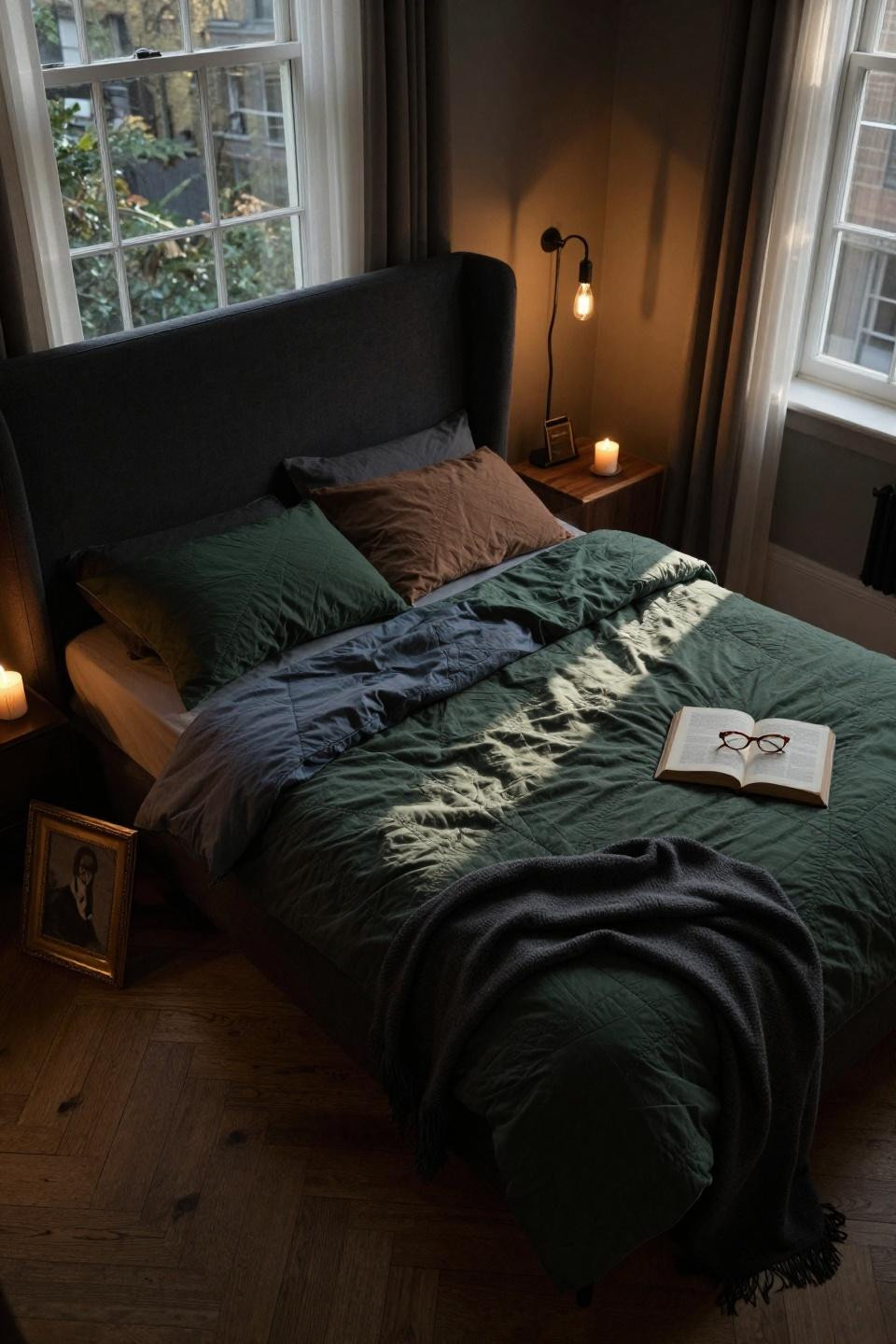
Charcoal linen wingback headboard, hand-stitched quilt in forest green and slate blue, nubby wool throw, this is the safe version of moody, and there's nothing wrong with that. The floating walnut shelf keeps it from feeling heavy. Wide-plank honey oak floors warm up all the cool tones. If you're nervous about going dark, start here and build out from this foundation.
Copenhagen Warehouse Realness
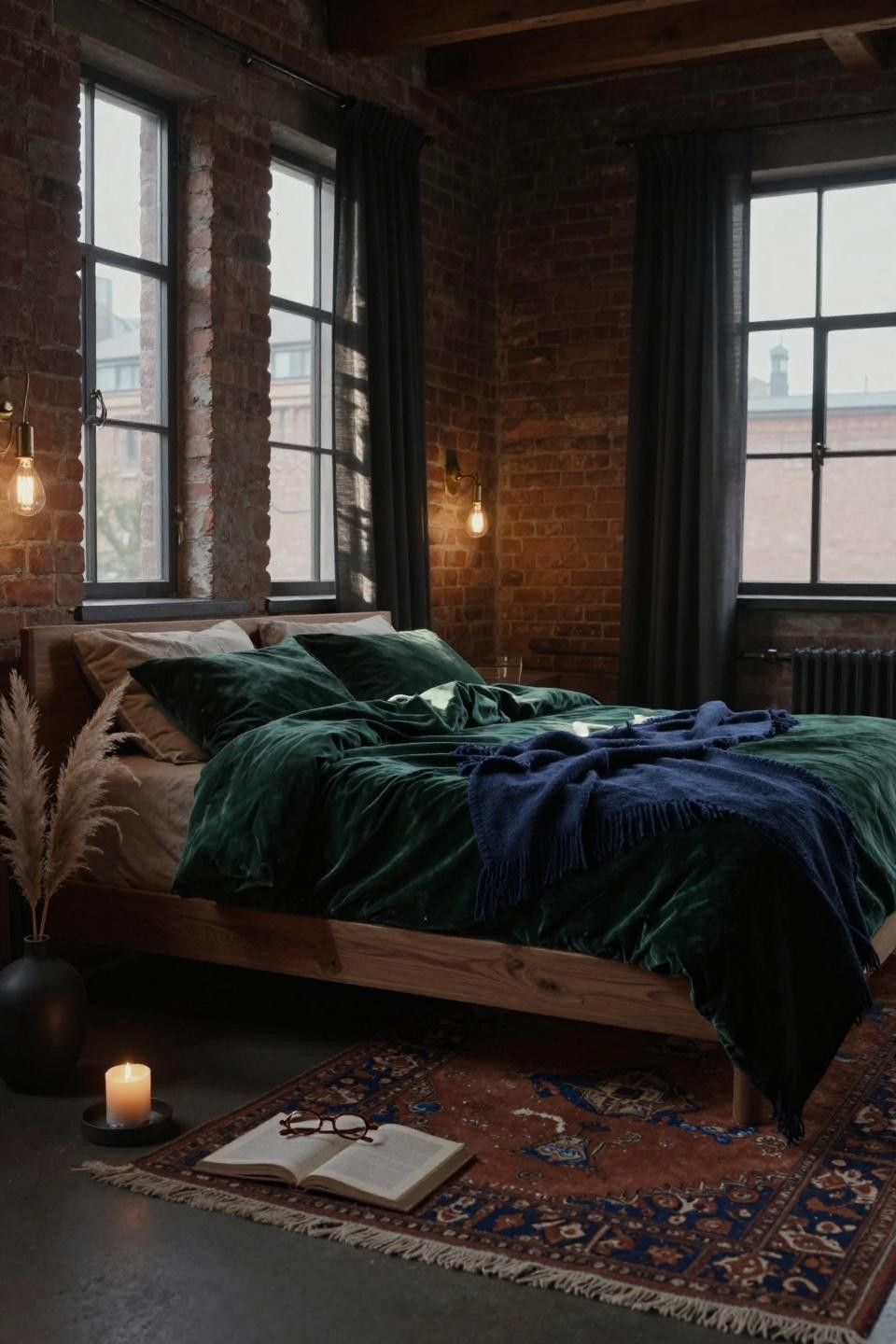
Low walnut platform bed, forest green velvet duvet, midnight blue cashmere throw, and that vintage Turkish kilim in rust and indigo anchoring everything. The unlacquered brass sconces will age beautifully (or terribly, depending on your humidity). Copy the nightstand styling: one candle, one book, one dried stem. Less actually looks more intentional when the bedding is this rich.
How to Layer Moody Bedding
Layering is the actual skill behind every great moody bedroom. A single dark duvet on a bare bed looks bleak. The same duvet with three layers underneath it looks intentional and atmospheric. Here's the system that works every time:
Start with the base sheet. A fitted sheet in a slightly lighter shade than your duvet, think slate under charcoal, or sage under forest green, creates a subtle tonal gradient when the duvet is folded back. This small detail signals that someone who knows what they're doing made this bed.
Add a flat sheet as an optional middle layer. In moody bedrooms, the flat sheet matters less than the textural variety it brings. A brushed cotton flat sheet in ivory or warm white creates the one point of contrast that prevents the bed from reading as a dark pit. Fold it over the top of the duvet by about eight inches.
Pillows in three depths. European square shams at the back in your main fabric (velvet, linen, or sateen), standard pillowcases in a contrasting texture in the middle, and one or two accent pillows at the front, a lumbar in bouclé or a velvet throw pillow in a jewel tone adjacent to your main color. Forest green pairs with burgundy; charcoal pairs with deep plum; midnight blue pairs with burnt amber.
The throw at the foot. Drape it, don't fold it. A chunky knit or wool throw draped at an angle across the lower third of the bed adds the final texture hit and also signals that the room is lived in, not staged. Fold it and it looks like a hotel. Drape it and it looks like a retreat.
Texture count check. Before you're done, count distinct textures: linen, velvet, wool, bouclé, cotton, aim for at least three, ideally four. The moody look lives in that contrast between matte and soft and nubby materials playing against each other.
Color Palette Guide for Dark Bedrooms
Not all dark colors work equally in moody bedrooms. Some create atmosphere; others just make the room feel smaller and unfinished. Here's how the main palette families behave:
Forest Green. The most versatile moody color on the market right now. It reads as rich without being aggressive, and it pairs with almost every warm tone, brass, cognac leather, honey oak, aged walnut. Works in both velvet (lush and intentional) and linen (relaxed and organic). The best green for bedrooms sits in the middle range, not too yellow-toned (that reads as moss, not moody) and not too blue-toned (that reads as teal, which is a different vibe entirely).
Charcoal and Slate. The workhorses of the moody palette. These neutrals let you go wild with accent colors and textures without the room tipping into chaos. Charcoal in linen is the single best starting point for a moody bedroom build. It works with burgundy, forest green, indigo, mustard, and even blush when you want something a little softer. Slate is a step warmer and reads as more approachable.
Midnight Blue and Indigo. These are the most atmospheric colors in the moody toolkit, they genuinely shift depending on the light, which means they look different at 10am versus 10pm. Pair midnight blue with brass accents and ivory textiles for a classic library feel. Indigo in a linen or cotton duvet against natural wood is one of the most effortlessly cool combinations in bedding right now.
Burgundy and Deep Plum. High risk, high reward. These work best as accent colors rather than primary duvet colors in most spaces, a burgundy throw, a plum velvet pillow, a deep wine-colored quilt layered under a charcoal duvet. In a room with very warm lighting and lots of dark wood, a full burgundy duvet can work beautifully. Elsewhere, use it in doses.
What to avoid: True black bedding tends to read as harsh and flat in most residential spaces. If you want the drama of black, go for very deep charcoal or a black-navy, which have more depth. Also avoid pairing two saturated dark colors as equals, one should always dominate while the other supports.
Best Fabrics for Moody Aesthetics (Velvet, Linen, Sateen)
The fabric you choose does as much work as the color. In moody bedrooms, three materials do the heavy lifting, and each one creates a different version of the aesthetic.
Velvet. The highest-impact fabric in the moody toolkit. Velvet catches light in a way that makes dark colors appear to glow from within, shifting from nearly black in shadow to richly saturated where light hits. A forest green velvet duvet cover transforms an ordinary bedroom into something that feels expensive and deliberate. The trade-off: velvet is not breathable, which makes it better as a decorative top layer or duvet cover than as a standalone sleep surface. Look for velvet-cotton blends that offer a little more breathability. Price range: $80–$250 for a quality duvet cover.
Linen. The opposite end of the spectrum from velvet, relaxed, slightly rumpled, and naturally matte. Linen in dark tones (charcoal, slate, forest green, indigo) creates what designers call an effortless moody look, the kind that appears low-effort but is actually very considered. The best linen bedding gets better with washing, it softens without losing structure, and the slight texture it develops adds to the organic, lived-in quality that moody bedrooms need. Belgian and European linen are considered the gold standard. Parachute, Cultiver, and Quince all offer excellent options at different price points ($90–$290 for a duvet cover full/queen).
Sateen. A cotton weave that creates a subtle sheen without the weight or fragility of silk. Sateen in deep tones, midnight navy, charcoal, deep plum, has a quiet luxury to it that works particularly well in more formal, Victorian-influenced moody rooms. It's also the most practical option of the three: easy to wash, durable, and relatively affordable. Look for a thread count in the 400–600 range for the best balance of sheen and substance. Price range: $60–$180 for a duvet cover.
Linen-Cotton Blends. Worth mentioning because they split the difference between linen's texture and cotton's softness. These blends drape better than pure linen and have a slightly more polished appearance, which makes them good for people who want the moody linen look without the full commitment to wrinkled texture.
Budget vs Luxury Moody Bedding Picks
The moody aesthetic doesn't require a luxury budget, but knowing where to spend and where to save makes a real difference in how the finished bedroom reads.
| Material | Feel | Price Range (FQ Duvet Cover) | Best For |
|---|---|---|---|
| Velvet | Plush, light-catching, heavy drape | $80 – $250 | Statement bedrooms, cooler climates |
| Linen (European) | Textured, matte, gets softer over time | $130 – $290 | Everyday use, warm climates, effortless look |
| Sateen Cotton | Smooth, subtle sheen, durable | $60 – $180 | Polished moody rooms, year-round use |
| Brushed Cotton / Flannel | Soft, matte, warm, slightly rustic | $50 – $140 | Cold-climate moody rooms, casual layering |
| Linen-Cotton Blend | Structured texture, easy care | $90 – $200 | Best of both worlds; low-maintenance moody |
| Velvet Faux / Microfiber | Soft, lightweight, affordable | $30 – $80 | Budget-first builds, guest rooms |
Budget picks (under $80): Amazon Basics Velvet Duvet Cover in Forest Green (~$45); Target Threshold Flannel Duvet in Charcoal (~$55); Quince Linen Duvet in Slate (~$70 for FQ, often on sale). These won't have the hand-feel of premium linens but they hold color well and photograph beautifully.
Mid-range sweet spot ($80–$180): Pottery Barn Belgian Flax Linen Duvet in Graphite ($149 FQ); Parachute Percale Duvet in Slate ($180 FQ); Brooklinen Linen Duvet in Midnight ($160 FQ). This is where you start to feel the quality difference in drape and texture.
Luxury tier ($180+): Parachute Linen Duvet in Java or Evergreen ($290 FQ); Cultiver Linen Set in Ink or Moss ($280+); Boll and Branch Signature Hemmed Duvet in Charcoal ($198 FQ, GOTS certified organic). At this level, the fabric genuinely improves with every wash, and the color holds for years rather than seasons.
Where to invest vs. where to save: Spend on the duvet cover and the sheets, those are what you actually feel and what hold the look together long-term. Save on throw pillows (H&M Home, TJ Maxx) and blankets (Ikea, Amazon). The reverse strategy, cheap sheets and expensive throw pillows, is immediately obvious and never reads the way you hope.
Complete the Look
A moody bedroom deserves a mattress that matches. The Saatva Classic, white-glove delivery, 365-night trial.
Our Top Mattress Pick
| Saatva Classic | $1,395+ | Shop |
| Saatva Contour5 | $1,595+ | Shop |
| Saatva Zenhaven | $1,895+ | Shop |
Related Guides
Frequently Asked Questions
What colors qualify as moody for bedding?
Moody bedding colors are deep, saturated, or muted tones that absorb light rather than reflect it. The main palette includes forest green, charcoal, slate, midnight blue, indigo, burgundy, deep plum, and dusty mauve. Earth tones like tobacco, java, and dark terracotta also qualify when they're dark enough. The common thread is that these colors create a sense of shadow and depth, the opposite of the bright whites and pastels that open a room up. You can also layer two moody colors together, as long as one is the clear dominant shade and the other plays a supporting role.
Is velvet bedding practical for everyday use?
Velvet duvet covers are practical as a top decorative layer but have real limitations for daily sleep use. Velvet traps heat and doesn't breathe as well as linen or cotton, which makes it uncomfortable in warm climates or for hot sleepers. The better approach is to use a velvet duvet cover over a down or down-alternative insert that's slightly lighter than you'd normally choose, the velvet adds warmth, so compensate with a cooler fill. For the sheets underneath, always use breathable linen or percale cotton. Velvet also requires more careful washing: cold cycle, low tumble dry, and a light brush to restore the pile direction.
Can moody bedding work in a small bedroom?
Yes, but the strategy shifts slightly. In small rooms, stick to one dominant dark color for the bedding and keep the walls in a complementary mid-tone rather than going very dark on both. Dark walls plus dark bedding in a small room requires very deliberate lighting, wall sconces at bedside level rather than overhead lighting, and candles or low-lumen lamps on nightstands. If you can't control the wall color (rental, for example), a very dark duvet against lighter walls actually creates a striking focal point that makes the bed feel like an anchor rather than making the room feel smaller.
How do I keep dark bedding from fading?
Dark fabrics fade faster than light ones because the dye molecules break down under UV exposure and repeated washing. A few habits that extend the life of moody bedding significantly: wash in cold water exclusively (hot water opens dye molecules and accelerates fading), use a color-protecting detergent like Woolite Dark or Perwoll Black, turn duvet covers and pillowcases inside out before washing, and avoid extended exposure to direct sunlight on the bed. For velvet specifically, avoid ironing, hang or steam to remove wrinkles instead. Quality linen in dark tones tends to fade more gracefully than cotton, developing a worn, vintage character rather than looking washed out.
What thread count should I look for in dark sateen sheets?
For sateen sheets in dark moody tones, the sweet spot is 400–600 thread count in a long-staple cotton (Egyptian or Supima). Below 400, sateen loses the subtle sheen that makes it worth choosing over percale. Above 600, manufacturers often achieve those numbers by using multi-ply threads (two thinner threads twisted together to count as one), which produces a fabric that feels dense and stiff rather than smooth and drapey. At 400–500 thread count in 100% long-staple cotton, you get sateen's signature smooth feel and gentle sheen, which makes dark colors look polished and intentional rather than flat. Thread count matters less for linen (which isn't measured the same way) and velvet (where pile depth is the relevant metric).