
 by
by Our #1 Recommended Mattress
Saatva Classic. From $1,095
365-night trial · Lifetime warranty · Free white-glove delivery
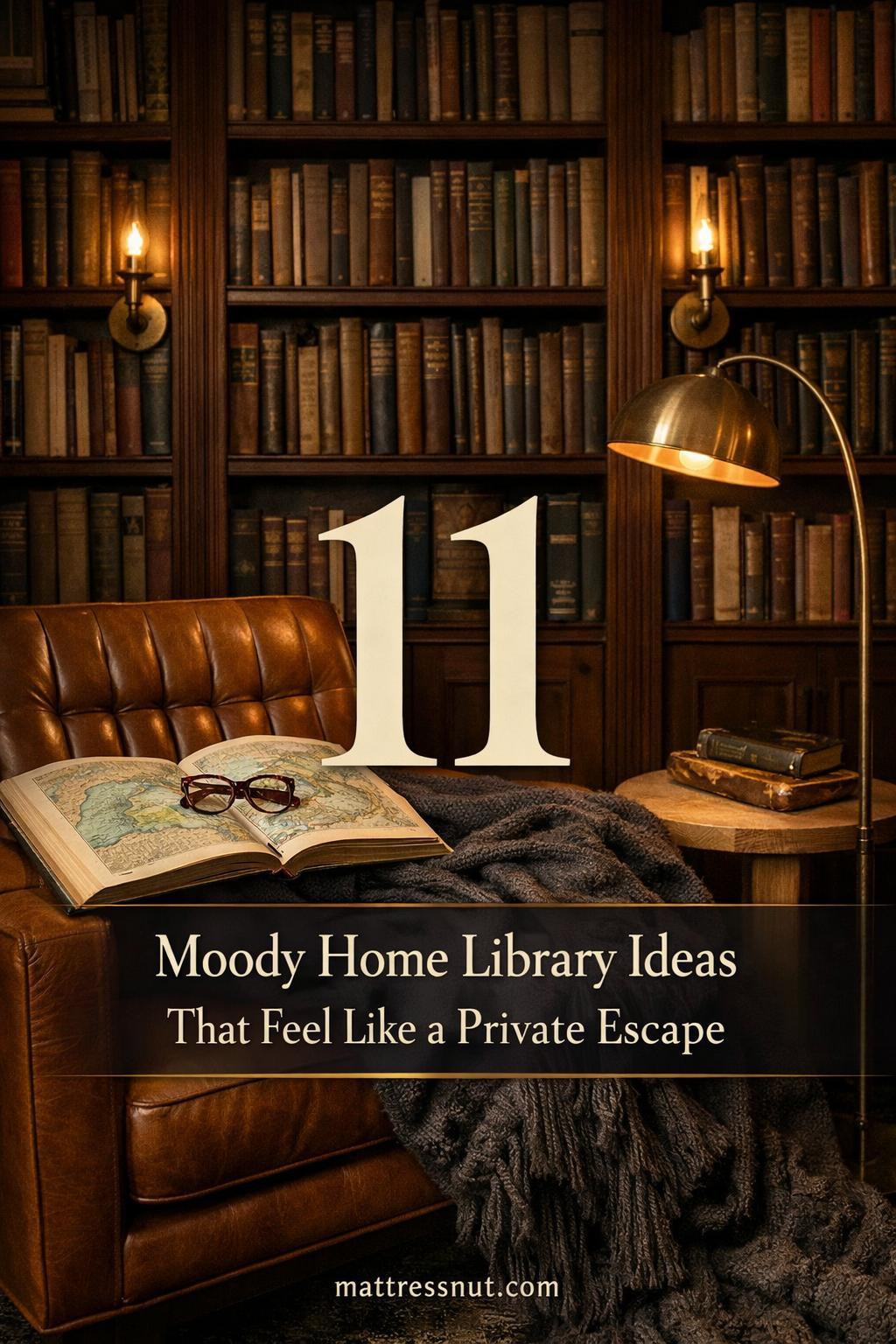
A moody home library is one of the few domestic spaces where darkness is the design goal rather than the problem to solve. Dark walls do not make a library feel smaller when the lighting is layered correctly. They make it feel intimate, private, and insulated from the rest of the house in a way that invites the kind of extended, concentrated reading that bright rooms rarely support. The best home libraries feel like stepping into a room with an atmosphere, not just a room with books.
The Dark Academia Aesthetic and Why It Works in 2026
The dark academia aesthetic, which draws on the visual language of historic university libraries, private clubs, and nineteenth-century studies, has moved from social media trend to legitimate interior design request. Designers report that moody library and study room commissions have increased consistently through 2025 and into 2026, driven by homeowners who want one room in their house that prioritizes depth, character, and atmosphere over light, openness, and neutrality. The aesthetic is not about nostalgia specifically. It is about creating a room that has gravity: that feels like something happened here before you arrived and will continue after you leave.
The materials that create this gravity are consistent across successful dark academic interiors: dark walnut or ebonized oak for built-in shelving, cognac or oxblood leather for seating, aged brass for hardware and lighting, Persian or Turkish rugs in deep jewel tones, and books organized by spine color or size rather than by title or author in a way that creates visual rhythm rather than visual chaos. These materials share a quality that synthetic alternatives lack: they improve with age rather than deteriorating. A worn leather wingback chair looks more impressive at ten years than at one. Built-in walnut shelving develops a warmth as it ages that new wood has not yet earned.
Dark Wall Colors That Work in Library Settings
Forest green is the most searched and most recommended dark library wall color for 2026, and for reasons that hold up when you examine them. Green walls create a sense of being enclosed in natural matter, which aligns with the biophilic qualities that make libraries feel restorative rather than depleting. Forest green in particular has enough blue in its base to feel genuinely dark and rich rather than simply warm, and enough warmth to prevent it from reading as cold when the room lighting shifts in the evenings. Against forest green walls, aged brass fixtures and cognac leather seating create the warmest possible color relationship within the dark palette.
Charcoal walls with charcoal shelving create the most enveloping, cocooning version of the moody library. The walls and shelves blend together and the books, objects, and lighting elements become the primary visual elements rather than the architecture. This approach requires more lighting investment than a forest green room because the surfaces absorb more light and need more artificial illumination to remain readable. Deep burgundy or oxblood walls create a warmth that forest green lacks and work particularly well in rooms with south-facing windows where afternoon light can animate the red tones. Navy blue walls create the most classically academic setting, evoking the paneled studies of Oxford and Cambridge without requiring actual paneling.
Built-In Shelves: The Defining Architectural Element
Floor-to-ceiling built-in shelving is what separates a room with a lot of books from a home library. The architectural commitment of built-ins changes the room's identity as a function of space rather than as furniture within it. Walnut shelving with integrated LED strip lighting at the back of each shelf illuminates the book spines from behind, creating depth and warmth that spotlit surfaces cannot achieve. Brass rolling ladders on exposed track systems add the functional drama that makes home libraries feel genuinely useful rather than decorative.
The styling of built-in shelving determines whether the library reads as collected or as staged. Books should occupy roughly sixty to seventy percent of the visible shelf surface, with the remaining space given to objects at varying heights, a brass bookend, a crystal decanter, a small framed photograph, a ceramic vessel, a bronze sculpture. The objects should be genuinely significant to the inhabitant rather than selected for aesthetic compatibility, because the visual quality of personal objects, their specificity and occasional incongruity, is precisely what creates the lived-in quality that staged interiors cannot replicate.
Hidden bar alcoves within built-in shelving are a recurring feature in high-end home library designs. A section of shelving with doors that open to reveal backlit spirits bottles and glassware provides the functionality of a home bar within the library's visual vocabulary without requiring a dedicated bar surface that would compete with the book-oriented character of the room. The reveal, when guests encounter it for the first time, contributes to the sense that the room has layers and surprises that reward close attention.
Leather Chairs: The Signature Seating Choice
The cognac leather wingback chair is the most identified piece of furniture in dark academic library design and for good reason: it performs at every requirement the setting demands. The high back provides a sense of enclosure and privacy within the room. The leather develops authentic patina over years of use that makes the chair look more expensive and more personal simultaneously. The warm cognac tone provides the exact contrast against dark walls that prevents the room from feeling oppressive. And the traditional shape aligns with the historic associations that make moody libraries feel like genuine retreats rather than styled rooms.
Worn leather is specifically preferable to new leather in this context. A new leather chair, still bright and stiff, does not yet have the quality that makes the aesthetic work. The patina, the slightly darkened armrests and headrest, the softened grain from hundreds of hours of occupation, is exactly the material quality that signals genuine use and establishes the room as inhabited rather than curated. If starting with new leather furniture, applying a conditioning treatment early and using the chair consistently accelerates the development of the patina that makes it visually effective in a dark academic setting.
Chesterfield sofas in oxblood or deep teal velvet provide the secondary seating that a library needs for a second reader or for conversation. The tufted construction of a Chesterfield adds visual texture that flat-cushioned sofas cannot contribute, and the deep color options available in this format match dark library palettes more naturally than light-colored alternatives. Positioning a Chesterfield perpendicular to the primary reading chair, with a Persian rug anchoring the seating arrangement, creates the conversational grouping that makes libraries function socially as well as individually.
Fireplaces: The Centerpiece That Earns Its Footprint
A working fireplace in a home library converts the space from very good to exceptional. The ambient warmth, the sound of burning wood, and the dynamic light quality of firelight create an environment that no combination of heating systems and artificial lighting can replicate. In rooms without an existing fireplace, a gas insert in a marble surround achieves the visual effect and most of the sensory quality at reduced installation complexity. Electric fireplace inserts with realistic flame simulation technology have improved significantly and provide an accessible alternative for apartments and rental properties where flue installation is not possible.
The fireplace surround material amplifies or moderates the library's overall atmosphere. A white marble surround against dark walls creates the most dramatic contrast and makes the fireplace the clear focal point of the room. A dark walnut or painted charcoal surround integrates the fireplace into the room's material palette more cohesively, where it reads as part of the room's architecture rather than as an inserted decorative element. Brass fireplace accessories including andirons, a poker set, and a brass-framed fireguard add to the warm metal theme that defines the finest dark academic library designs.
Lighting Strategy for Dark Library Spaces
The most common failure in dark library design is insufficient layered lighting. Dark walls absorb light and require significantly more artificial illumination to remain functional reading spaces than light rooms do. Overhead fixtures should be warm-spectrum pendants or flush mounts that provide general illumination without creating the flat brightness that contradicts the moody atmosphere. Task lighting is non-negotiable: a brass pharmacy lamp beside each seating position, positioned to light the reading surface directly without illuminating the walls, is the minimum investment for a functional reading environment.
Aged brass floor lamps create pools of warm amber light that visually break the dark walls into illuminated zones and shadows. The contrast between lit areas and shadow is specifically what creates the cocooning quality that makes dark libraries feel atmospheric rather than simply dim. LED strip lighting recessed behind shelving creates a glow that illuminates book spines from behind and adds depth to the built-in architecture. Sconces flanking the fireplace or positioned between shelving sections at eye height add the wall-level lighting that prevents the room from reading as evenly dark from top to bottom, which would eliminate the spatial depth that the design requires to succeed.
Books as Design Objects: Curation Over Collection
The books in a home library are simultaneously its function and its most important aesthetic element. Organizing books by spine color creates visual bands of warm and cool tones that animate the built-in shelving and turn what would otherwise be a uniform grid into something with the rhythm and movement of abstract art. This approach requires accepting that the books are not stored for convenient retrieval but rather for their collective visual contribution, which means maintaining a separate cataloging system or memory system for books you want to find quickly.
Leather-bound books in warm brown, burgundy, and dark green tones are the visual baseline of dark academic library aesthetics and can be sourced from used bookshops and estate sales at prices far below new alternatives. The fact that they have been read by other people, that their spines show wear and their pages have turned yellow at the edges, is precisely the quality that makes them better design objects than new books in the same formats. A section of library shelving filled with genuine leather-bound volumes from different eras and publishers creates an authenticity that purchased decorative-book sets cannot replicate.
Objects interspersed with books on library shelving should have the same quality of genuineness that works best for the books themselves. A brass astrolabe, a crystal decanter, a vintage globe, a collection of antique scientific instruments, a hand-carved bookend: these objects work in a moody library because they suggest a life of intellectual curiosity rather than interior design awareness. The distinction between objects chosen for their meaning and objects chosen for their visual compatibility with a design scheme is detectable by visitors and determines whether the room feels like a genuine library or a library-themed room.
Complete Your Space
Every beautiful room deserves a great night's sleep. The Saatva Classic, white-glove delivery, 365-night trial.