
 by
by Our #1 Recommended Mattress
Saatva Classic. From $1,095
365-night trial · Lifetime warranty · Free white-glove delivery
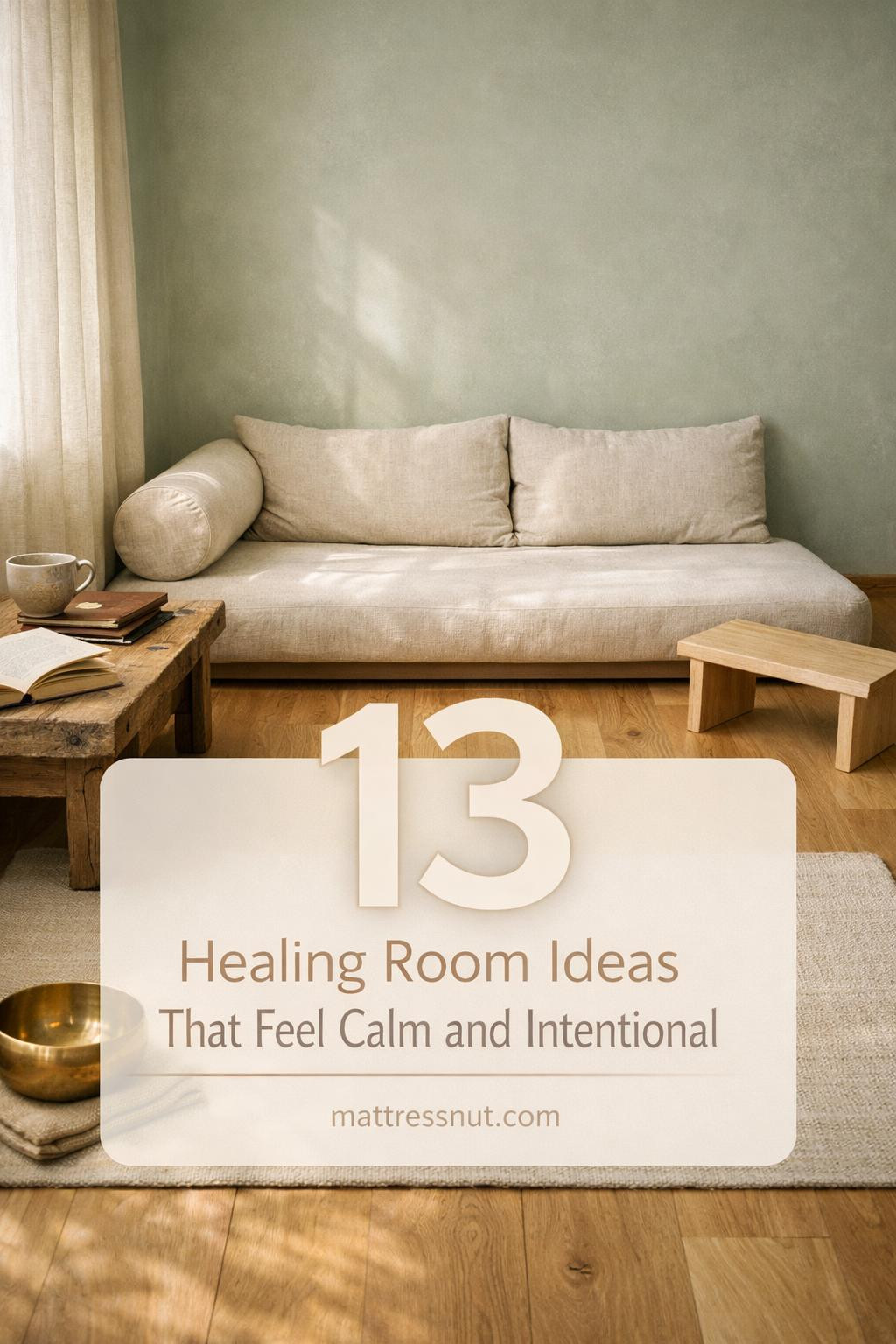
A healing room works best when it earns its calm through deliberate choices that make the air feel different the moment you step inside. The setups that actually help people slow down share consistent traits: one focal point, natural materials, and layers of sensory detail that address sight, scent, and sound together.
Why Healing Rooms Are Having a Moment in 2026
The demand for dedicated wellness spaces at home has shifted from luxury to genuine need. Interior designers report that healing room requests have surged alongside growing awareness of stress recovery. People want a physical location in their home that signals this is where I come to restore. The difference between a healing room and a regular bedroom corner is intention, expressed through every design decision from floor material to ceiling color to the objects you allow inside.
Calming Color Palettes That Actually Work
Color sets the emotional register before anything else. Warm white, soft taupe, dove gray, and sage green create a gentle base that does not compete for attention. For spaces with good natural light, pale lavender and muted terracotta both perform well. Avoid glossy or high-sheen finishes. Flat and matte paint absorbs light softly and creates a more enveloping atmosphere instead of a reflective one that signals activity and forward motion.
Deep teal and jewel-toned purples work beautifully in healing rooms with lower natural light. The color pulls inward rather than outward, creating that cocooning quality that makes meditation easier. Pair them with cream accents to maintain breathability and prevent the room from feeling sealed off. A single deep wall color behind your meditation corner, with lighter tones on the remaining walls, gives you drama without overwhelm.
Crystal Placement: Choosing the Right Focal Points
The most effective healing rooms treat crystals as design objects first and energetic tools second. A single selenite tower on a reclaimed wood altar reads as sculpture. A cluster of fifteen mismatched stones on a shelf reads as visual noise. Select two or three pieces that genuinely resonate and give each one space to breathe on its own surface.
- Amethyst: Its purple tones complement jewel-toned and neutral rooms alike. Place it near your primary seating for proximity during meditation or breathwork sessions.
- Selenite: Long, tower-shaped pieces act as vertical anchors on low wooden surfaces. Its translucency catches candlelight in a way no other stone does, producing a soft glow without any electrical fixture.
- Clear Quartz: Works well as a supporting element in crystal grids arranged in geometric patterns on a cloth or tray with a specific intention in mind such as peace, clarity, or emotional release. You can change the layout based on moon phases or personal goals.
- Rose Quartz: The soft pink coloring doubles as decor in rooms with warm neutrals and earthy tones. Position near a window so morning light passes through it and casts a blush wash across the nearest wall.
- Citrine: The yellow tones warm up cooler color palettes and pair naturally with wood surfaces and natural fiber textiles like jute and linen.
Plants That Thrive in Low-Stimulus Environments
The best healing room plants are ones you never have to think about. High-maintenance plants introduce anxiety rather than removing it. Peace lilies tolerate low light and signal drought stress visibly before anything goes wrong, making them forgiving and easy to read. Pothos trail from shelves without demanding attention and genuinely improve air quality over time. Snake plants survive near-neglect and maintain their clean architectural shape indefinitely.
For rooms with east-facing windows, a small rubber plant in a matte ceramic pot adds sculptural quality that crystals alone cannot match. The connection to something living shifts the energy of a space in ways that are subtle but consistent. Keep plants in odd numbers. One large statement plant or a grouping of three smaller ones reads more intentional than pairs, which can feel symmetrical to the point of stiffness.
Trailing pothos above a small altar creates a natural canopy effect that softens hard shelf edges. The humidity from regular watering slightly conditions the air, and the act of caring for a plant builds the kind of slow morning ritual that supports mental health independently of the healing room aesthetic itself.
Lighting Layers That Signal Rest
Overhead lighting is the first thing to address in any healing room. A single ceiling fixture, especially a cool-toned one, signals daytime productivity and makes relaxation harder to access. Replace or supplement it with multiple warm light sources at lower heights. Himalayan salt lamps earn their reputation: the amber glow at 2700K or below mimics firelight, and the low-intensity output does not suppress melatonin the way blue-spectrum bulbs do in the hours before sleep.
Moroccan brass lanterns create geometric shadow patterns on walls when lit from inside. The visual interest they produce is meditative rather than stimulating. Position one at floor level near your meditation cushion and one at eye height on a nearby surface. String lights work best draped behind sheer curtains rather than displayed directly, which softens the individual bulbs into an ambient wash instead of a series of point sources that draw the eye and interrupt stillness.
Dimmer switches on any remaining overhead fixtures are worth the installation investment. The ability to bring a room from ten percent to eighty percent brightness means the same space serves morning movement practice and evening wind-down rituals without rearranging furniture or swapping bulbs. One dimmer switch changes the entire character of a room in seconds.
Building Your Sacred Corner: Altar and Floor Setup
The floor plan of a healing room flows outward from a single focal point, typically a low wooden altar, platform, or dedicated shelf. Reclaimed teak and walnut with visible grain and natural edge irregularities feel more genuine than new, polished wood. Place your singing bowl, two or three crystals, a candle, and one meaningful personal object on this surface. Keep the altar surface clear of anything that does not serve the intention of the space.
Floor cushions work better than chairs for meditation spaces because they orient the body differently. Lower to the ground, grounded, less formal than seated furniture. Stack two or three cushions in varying textures rather than using a single thick cushion: it looks more collected and lets you adjust height depending on the practice. Layer a jute mat beneath the cushions to define the zone visually and add natural texture underfoot. Natural fiber rugs in undyed jute or organic cotton warm the floor without synthetic off-gassing.
Storage is part of the ritual in well-designed healing rooms. A bamboo bookcase keeps oracle decks, journals, and healing tools organized without the clinical feel of closed cabinetry. Open shelving shows your intentionality. Display items that nurture rather than items that merely fill space. One meaningful book spine beats ten generic ones stacked without thought.
Sound and Scent: The Invisible Architecture
The healing room elements most people underinvest in are sound and scent, despite being the most immediate environmental inputs the brain processes. A quality essential oil diffuser running lavender or frankincense changes the emotional register of a room within minutes of entering. Sandalwood grounds energy. Eucalyptus clears mental fog. Frankincense has been used in contemplative traditions across cultures for centuries because it genuinely shifts the nervous system toward parasympathetic function, the biological state that makes real rest possible.
Sound bathing instruments, brass singing bowls in particular, produce sustained resonant tones that give the brain something slow and repetitive to track. Strike the bowl at the rim and let the tone fade completely before striking again. The silence between strikes matters as much as the sound itself. For urban environments with ambient noise, a small water fountain near the entrance helps mask street sounds and signals the transition into a quieter mental space without requiring white noise machines that add their own low electronic hum.
Top Product Picks for a Healing Room in 2026
For crystals, look for pieces from dedicated mineral suppliers rather than mass-market home decor stores. The quality difference in selenite clarity and amethyst depth is visible and worth the price premium. For floor cushions, natural linen or cotton in earth tones holds up to daily use better than synthetic blends that pill and flatten unevenly within months.
For diffusers, ultrasonic models with ceramic or wood casings integrate aesthetically without the plastic clinical look of older units. For singing bowls, hand-hammered Tibetan bowls from Nepal have a tonal complexity that machined bowls cannot replicate. The sound lingers longer and changes as it decays, creating a natural sound bath without speakers or apps. One quality bowl outperforms a set of mediocre ones every time. For salt lamps, look for pieces with a visible natural crystal shape rather than smooth turned versions, which have been mechanically processed in ways that reduce their visual character.
Common Mistakes to Avoid
The most common healing room mistake is trying to include everything at once. A singing bowl, a selenite tower, a diffuser, a salt lamp, a sound machine, and a dozen crystals do not create more healing potential. They create visual noise and decision fatigue that undermines the clarity the space is supposed to provide. Begin with one focal point, one scent source, one warm light source, and one plant. Add from there only when something genuinely feels absent.
The second mistake is treating the room as a display space rather than a functional one. The crystals should be within arm's reach. The cushions should be on the floor, not arranged on a shelf for aesthetics. The diffuser should be plugged in and running when you enter the room. Healing rooms that are too pristine to use defeat themselves entirely, becoming another room in the house that creates obligation rather than relief. Start simple, use it daily, and let the space evolve from your actual practice rather than from how it photographs.
Designing for Different Healing Practices
Different healing modalities require slightly different spatial arrangements, and designing a healing room that can accommodate more than one of them extends the room's usefulness across the day and across different energy needs. For yoga and movement practices, the room needs clear floor area of at least six feet by eight feet at minimum. For breathwork and pranayama, seated cushions at floor level are adequate. For sound healing sessions with singing bowls or recorded binaural audio, proximity to the singing bowl and an audio source at low height both need to be within arm's reach from the seated position. For crystal healing and energy work, the practitioner needs to move around the space rather than remain seated, which means the furniture arrangement should leave circulation paths clear rather than filling every zone.
The most functional healing rooms are ones that can be rearranged quickly for different practices. Lightweight furniture on felt feet, cushions that stack efficiently, and storage that keeps equipment organized and accessible without requiring significant setup time all contribute to a room that actually gets used for multiple practices rather than one that is dedicated to a single use and therefore underutilized. Rolling the yoga mat out beside the altar takes seconds. Moving a singing bowl from the altar to the floor takes seconds. A room that takes ten minutes to prepare for practice will be used far less consistently than one that is practice-ready in under two minutes.
Complete Your Space
Every beautiful room deserves a great night's sleep. The Saatva Classic, white-glove delivery, 365-night trial.