
 by
by Our #1 Recommended Mattress
Saatva Classic. From $1,095
365-night trial · Lifetime warranty · Free white-glove delivery
Check Price at Saatva →Black interior doors occupy a specific design category: they are bold enough to make a statement but neutral enough to work with almost any interior palette. They create depth without adding color. They frame rooms rather than competing with them. And in 2026, with matte finishes and mixed metal hardware becoming mainstream, they have moved from a distinctive design choice to a reliable one that works in spaces that would struggle with almost any other door color.
Why Black Interior Doors Are Dominating 2026 Interiors
The data from Pinterest and Houzz both confirm what designers have been observing on their project boards: searches for black interior doors and charcoal door color options have grown consistently through 2025 and into 2026. The trend has specific drivers. Open-concept homes that went heavily light and neutral through the 2010s are now seeking visual anchors and definition. Black doors provide both: they create clear visual stops that organize space without walls, and they add the contrast that gives light interiors their depth.
Soft-touch matte finishes are driving much of this growth. The satin and semi-gloss black door that dominated earlier has given way to a softer matte surface that reads as more considered and less lacquered. The difference in person is significant. Matte black reads as deliberate, architectural, and contemporary. High-gloss black reads as traditional and formal. Both are valid but they serve different spaces and palettes.
Dramatic Entryways: First Impressions That Hold
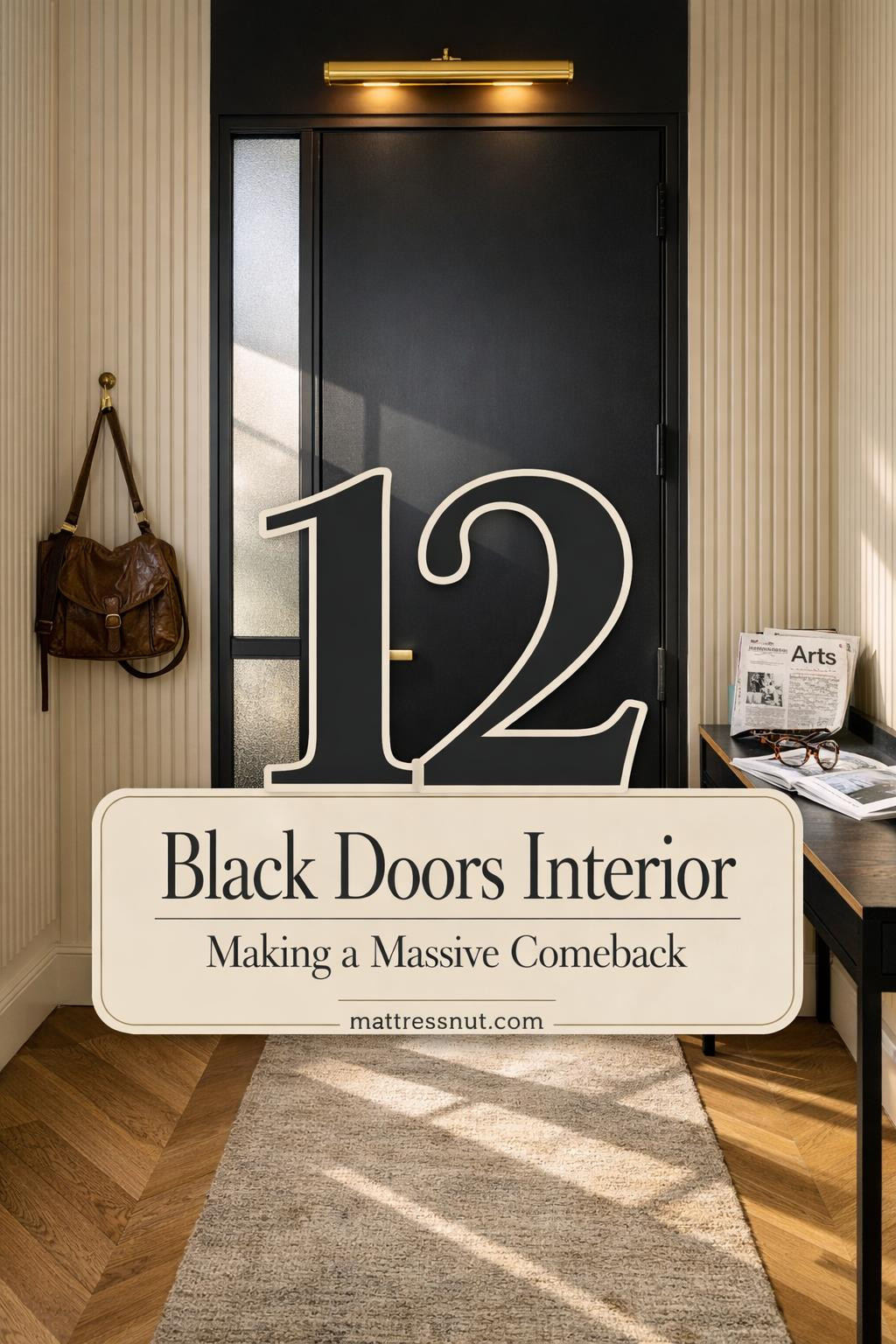
The entryway is where black doors perform best. A floor-to-ceiling glass-paneled pocket door in matte black iron, where morning light slices through the panes and hits herringbone oak flooring, creates an architectural moment that costs nothing beyond the door itself. Aged copper or unlacquered brass lanterns flanking the frame add warmth without competing with the black. The contrast is the point: dark frame, warm metal, light floor.
Oversized pivot doors in dark walnut or matte black work in rooms with fourteen-foot or higher ceilings where the vertical scale of the door can be expressed fully. For standard eight-foot ceilings, tall-panel double doors in matte black accomplish a similar sense of scale without requiring architectural modification. The horizontal reveal at the door edges, the gap between door and frame, should be tight and even, as this detail signals craftsmanship more than any paint color does.
Transom windows above black doors solve the light challenge that many homeowners worry about when considering dark doors in narrow hallways. The transom allows natural light to pass through while the black door below maintains its visual weight. This combination is particularly effective in Charleston and Southern Colonial-style homes where the porch architecture already creates deep shadow that black doors complement rather than worsen.
Hardware Choices: The Detail That Makes or Breaks the Look
The hardware finish on a black interior door is the element that determines the aesthetic family the door belongs to. Unlacquered brass develops patina naturally over months of use, shifting from bright gold to a warm burnished tone that reads as collected and genuine rather than installed and new. This pairing is the most popular black door hardware combination in 2026 because the contrast between matte black and warm developing brass creates a layered quality that polished and matched hardware sets cannot achieve.
Graphite and gunmetal hardware finishes are the rising alternative. They offer the boldness of matte black hardware against a black door while providing enough tonal separation to prevent the combination from reading as too uniform. The metallic richness in gunmetal catches light differently than flat black and adds depth to the door's visual presence. This combination suits contemporary and industrial interiors where the all-black-with-warm-brass approach might feel too decorative.
Mixing hardware finishes within the same home, and sometimes on the same door for different hardware elements, is a documented 2026 trend. Matte black hinges with satin brass handles, or graphite pulls with unlacquered brass escutcheons, create a curated rather than coordinated quality that aligns with the broader interior design trend away from perfectly matched sets and toward layered, collected interiors. The rule of thumb is to keep the primary hardware finish consistent throughout a room and vary accent hardware across rooms.
Color Contrast Principles: Making Black Doors Work
The fundamental color relationship that makes black interior doors work is contrast with the wall color, not similarity to the trim. Black doors against white or cream walls create a graphic quality that energizes corridors and entryways. Black doors against deep-colored walls, charcoal walls against black doors, require more support from lighting and adjacent elements to prevent the space from reading as heavy rather than moody.
The most visually effective pairing for black interior doors in standard residential settings is white or near-white walls with black baseboard trim that echoes the door color. This creates a visual system where the black elements of the room form a cohesive frame around the lighter wall and floor surfaces. The door becomes part of the room's architecture rather than a standalone decorative statement, which gives the overall scheme a more designed quality than a single black door against otherwise standard trim.
Warm wall colors in the cream, taupe, and greige range work particularly well with matte black doors because the warmth of the wall prevents the black from reading as cold. Cool wall colors in gray, blue-gray, and white require more attention to lighting warmth to prevent the black door from pulling the whole scheme toward clinical. Earthy terracotta and deep sage green walls create the most unexpected and effective pairings, where the black door grounds the color rather than competing with it.
Glass Panel Variations: Maintaining Drama Without Losing Light
Glass panel black doors solve the primary objection to dark doors in standard-sized rooms: they block natural light less than solid versions while maintaining the visual weight and graphic quality that makes the style compelling. The glass type determines the character of the door more than the frame design does. Clear glass panels create the most dramatic effect, especially in rooms where the view through the door is itself interesting, but offer no privacy. Frosted glass diffuses afternoon light into soft pools while maintaining privacy throughout the day.
Reeded or ribbed glass creates prismatic light effects on adjacent marble or stone surfaces that change throughout the day as the sun angle shifts. This is the most active glass choice, where the door becomes a light instrument rather than simply a transparent one. Stained glass insets in Art Nouveau, Victorian, or simple geometric patterns add color to the black frame's graphic quality and work particularly well in older homes where the architectural context already includes period detail.
Barn Doors, Pocket Doors, and Pivot Doors: Style-Specific Advice
Double barn doors in matte iron ore black with hand-forged X-pattern steel straps, hung on unlacquered brass tracks that develop patina naturally, represent the farmhouse-to-industrial spectrum of black door design. The track hardware is the design element here: exposed unlacquered brass track against a whitewashed wall creates the contrast that defines the entire look. The barn door itself is almost secondary once the track and wall relationship is established correctly.
Pocket doors in matte black are the space-saving option that urban apartments and smaller homes favor. The visual benefit of a pocket door in this finish is that the door disappears entirely into the wall when open, leaving only the room itself rather than an open door occupying floor space. When closed, the matte black surface creates exactly the same visual effect as a hinged door without the swing clearance requirement that hinged doors demand.
Jib doors, where the door is designed to appear as part of a paneled wall and is only visible when you know to look for it, represent the most architecturally ambitious black door application. When executed in charcoal paneling with the door integrated smoothly into the panel rhythm, the result is a room that reveals itself rather than presenting all its spaces simultaneously. This is the level of interior design ambition that turns a house into something that feels genuinely custom.
Painting Interior Doors Black: What You Need to Know
Painting existing interior doors black is one of the highest-impact, lowest-cost renovation moves available in any home. The process is straightforward but the quality of the preparation determines the quality of the result more than the paint itself does. Doors that have existing paint layers need thorough sanding to create adhesion for the new coat. Doors with visible grain or texture in the existing finish need light sanding to smooth before the black paint is applied, because black paint amplifies surface imperfections rather than hiding them the way lighter colors do.
The paint finish choice for black interior doors is between matte, eggshell, satin, and semi-gloss, and the choice has significant aesthetic consequences. Matte black is the 2026 preference for its contemporary, architectural quality and its ability to absorb light rather than reflect it, creating depth that glossier finishes cannot. Eggshell provides a slight sheen that makes the surface more scrubbable and is the practical choice for high-traffic areas like entry halls where fingerprints are common. Satin and semi-gloss both show brush marks, drips, and surface imperfections more than lower-sheen finishes do on dark colors, making them harder to execute cleanly for DIY applications.
Black Doors in Different Room Types: What Works Where
Black interior doors perform differently in different room types, and understanding where they add the most value prevents the mistake of applying the trend uniformly throughout a home where it works in some contexts and conflicts in others. Entry halls and primary corridors benefit most from black doors because the architectural framing effect is most visible and most impactful in spaces where doors are regularly seen as design elements rather than simply as functional closures.
Bedroom doors in black require more attention to the room's natural light quality than doors in corridors do. A dark door closing off a bedroom from a well-lit hallway creates a pleasant transition effect during the day. The same door in a north-facing bedroom with limited natural light may draw attention to the room's darkness rather than creating a deliberate design effect. In this context, a single black door as the dominant design element, with white or light-colored walls and lighter furniture, maintains the aesthetic benefit while preventing the room from reading as insufficiently lit.
Bathroom doors in black create a spa-adjacent quality that pairs particularly well with the green tile and natural stone bathroom trends that dominate 2026 design. The black door as the entry point to a zellige or marble bathroom creates a moment of contrast and anticipation that makes the bathroom interior feel more considered when entered. This transition effect is one of the most underutilized design opportunities in residential renovation and one that costs nothing beyond the paint investment already made on the door itself.
Complete Your Space
Every beautiful room deserves a great night's sleep. The Saatva Classic, white-glove delivery, 365-night trial.
Shop Saatva Classic →