
 by
by The first thing you notice in the best French Cottage Bedroom is what's missing. No matching sets. No catalog perfection. Just things that look like they've always been there.
These 13 rooms lean into that. Rough plaster, collected objects, light that moves slowly across old surfaces. Here's what makes each one worth saving.
When A Stone Arch Does All The Work
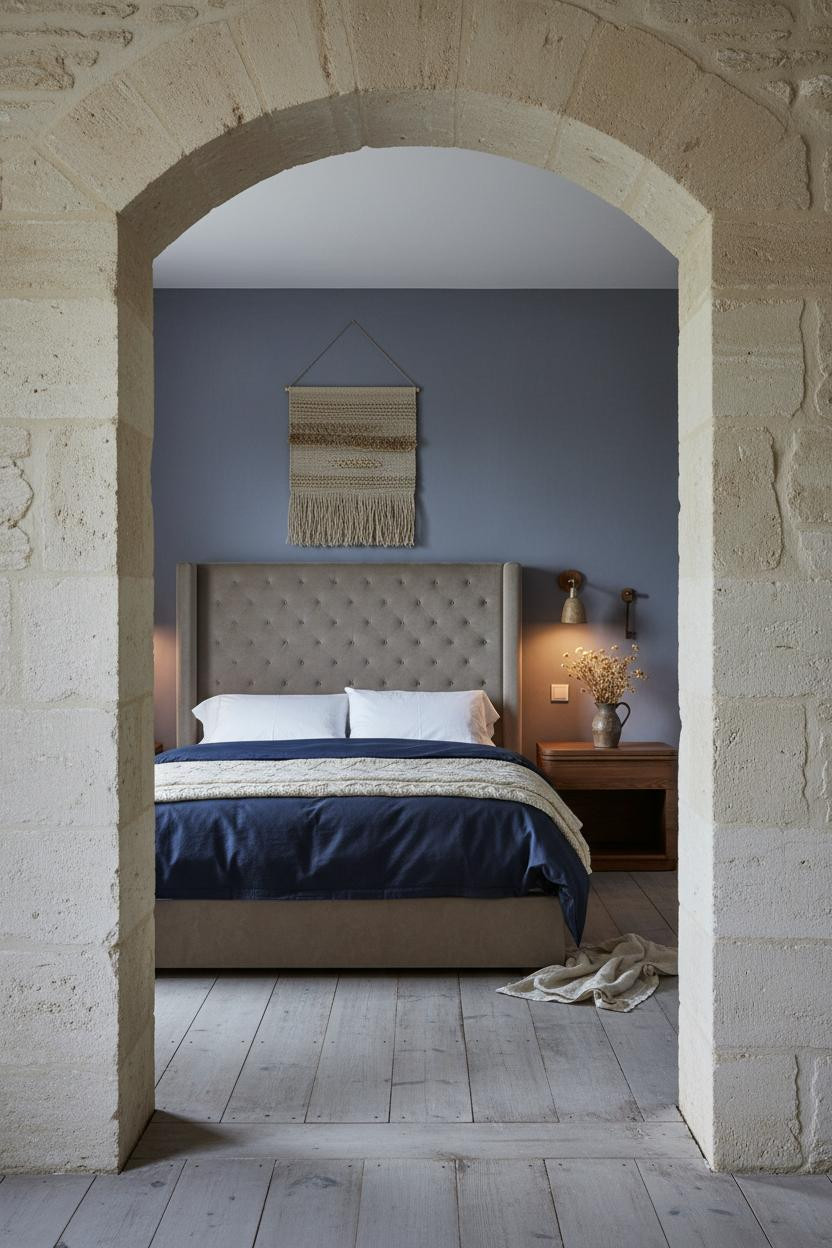

Honestly, this is the kind of room that stops you mid-scroll. The arch alone earns it.
Why it holds together: Rough-cut pale limestone around the bed recess catches raking light in a way that no wallpaper or paint treatment can fake. The mineral depth comes from centuries, not a finish.
Steal this move: If you have an arched doorway or alcove, resist the urge to smooth it. The raw, pitted surface is the whole point.
Timber Beams That Actually Belong There
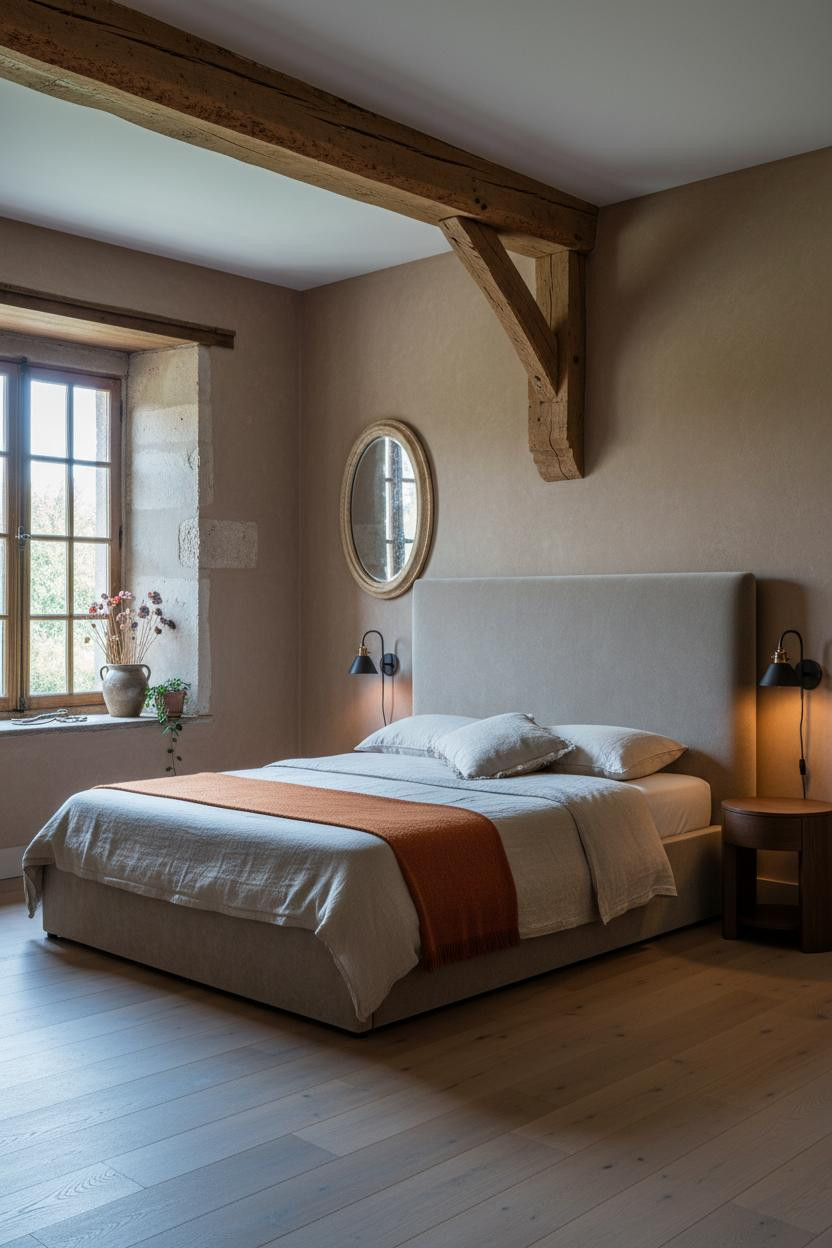

Nothing fancy. That's the point.
But when the weathered honey oak beam runs the full width of a room at low ceiling height, it makes everything below it feel grounded and real. The chisel marks matter. The shadow pockets matter.
What to borrow: Pair rough-hewn beams with hand-troweled lime-washed plaster, not smooth drywall. The contrast is what gives it that collected, lived-in quality you can't manufacture.
The Gallery Wall That Grew Over Time
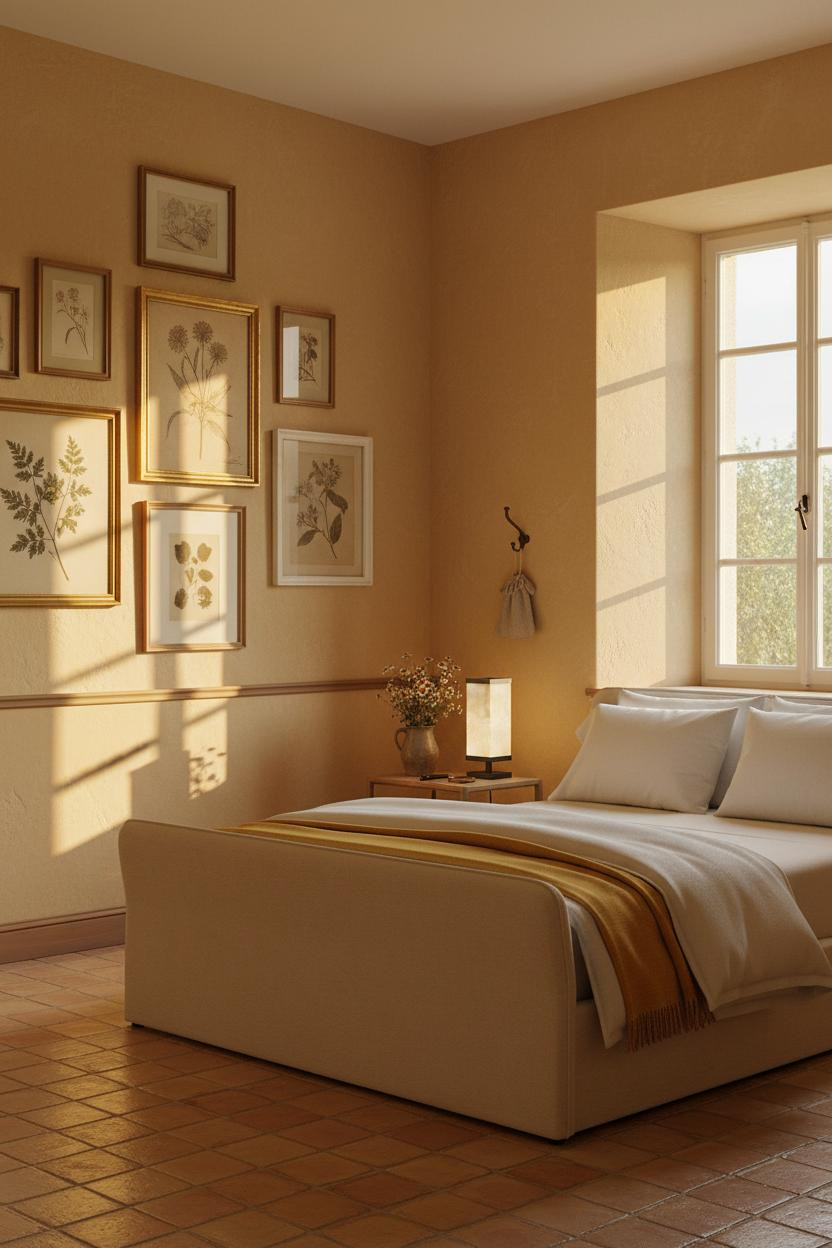

This is the one I keep coming back to. Something about a salon-hung gallery wall feels deeply, stubbornly French.
Why it looks collected: The mix of gilded, white-painted, and bare wood frames in an asymmetric hang means no two pieces feel like they were bought together (even if some were).
One frame slightly crooked. Leave it. That's the whole trick.
Provençal Shutters Are A Better Window Treatment
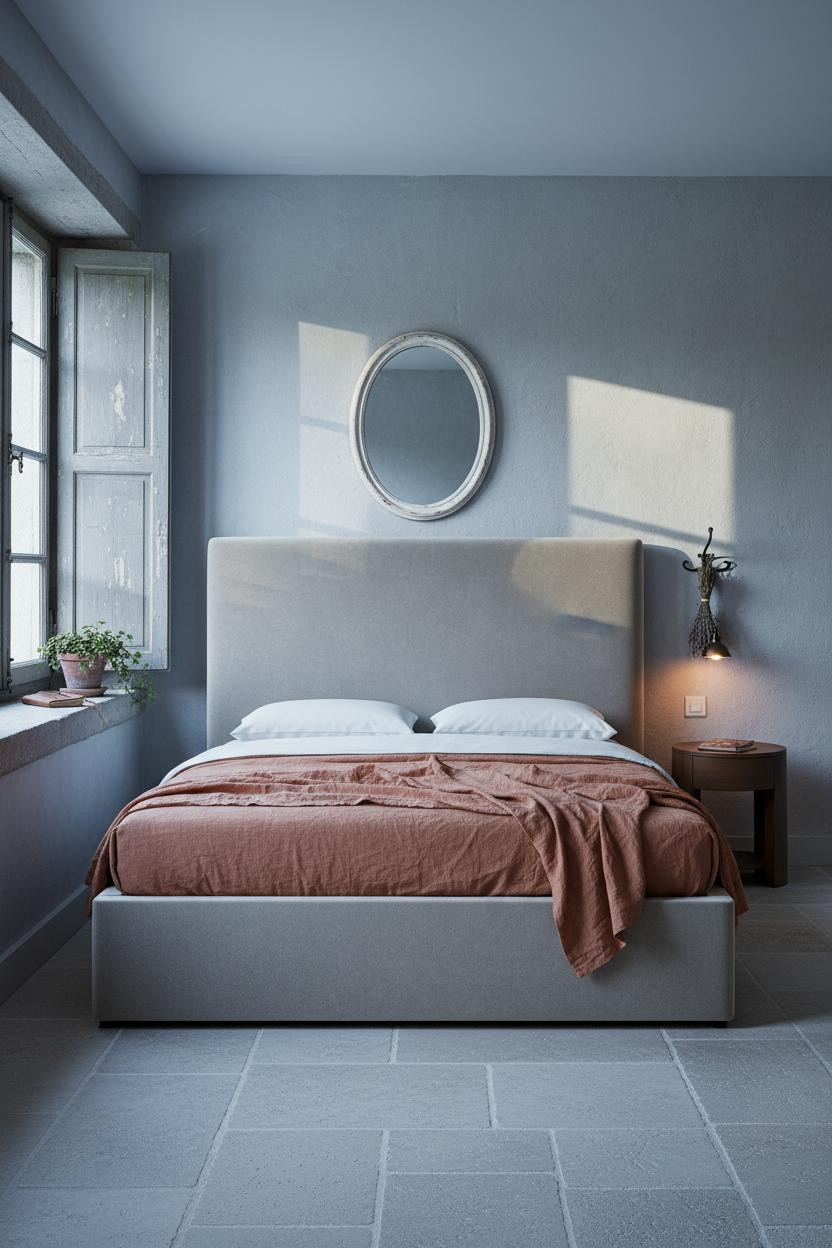
I prefer this to curtains. Full stop. The shadow lines from half-open shutters are better than anything you'd hang from a rod.
The real strength: Aged grey-blue painted timber planks with cream undercoat showing through pull double duty as a window treatment and a texture moment, especially against dove-grey plaster.
The easy win: Keep the rest of the room spare so the shutter geometry stays the focal point. Pale limestone floors and no rug help.
The Fieldstone Alcove That Changes The Whole Room
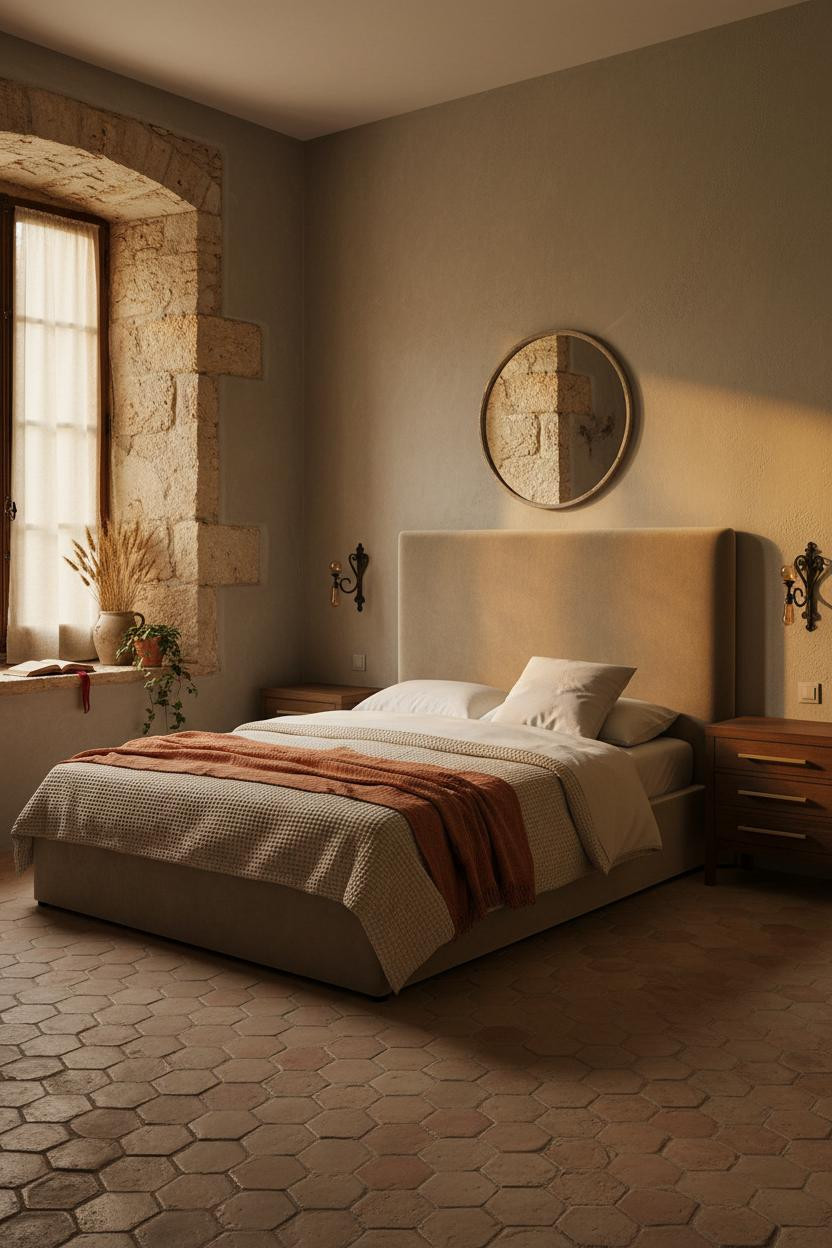

Rough-cut fieldstone rising nearly to the ceiling sounds like it should feel cold. It doesn't. Golden afternoon light turns it amber and the room feels warm without being heavy.
Why it feels romantic: The oblique light across pitted limestone texture does what no paint color can. The walls glow. That's a material thing, not a decor thing.
Pro move: Keep the bedding in oatmeal and rust tones so the stone reads warm, not grey. A waffle-weave duvet helps more than a chunky knit here.
A Plaster Niche You Don't See Coming
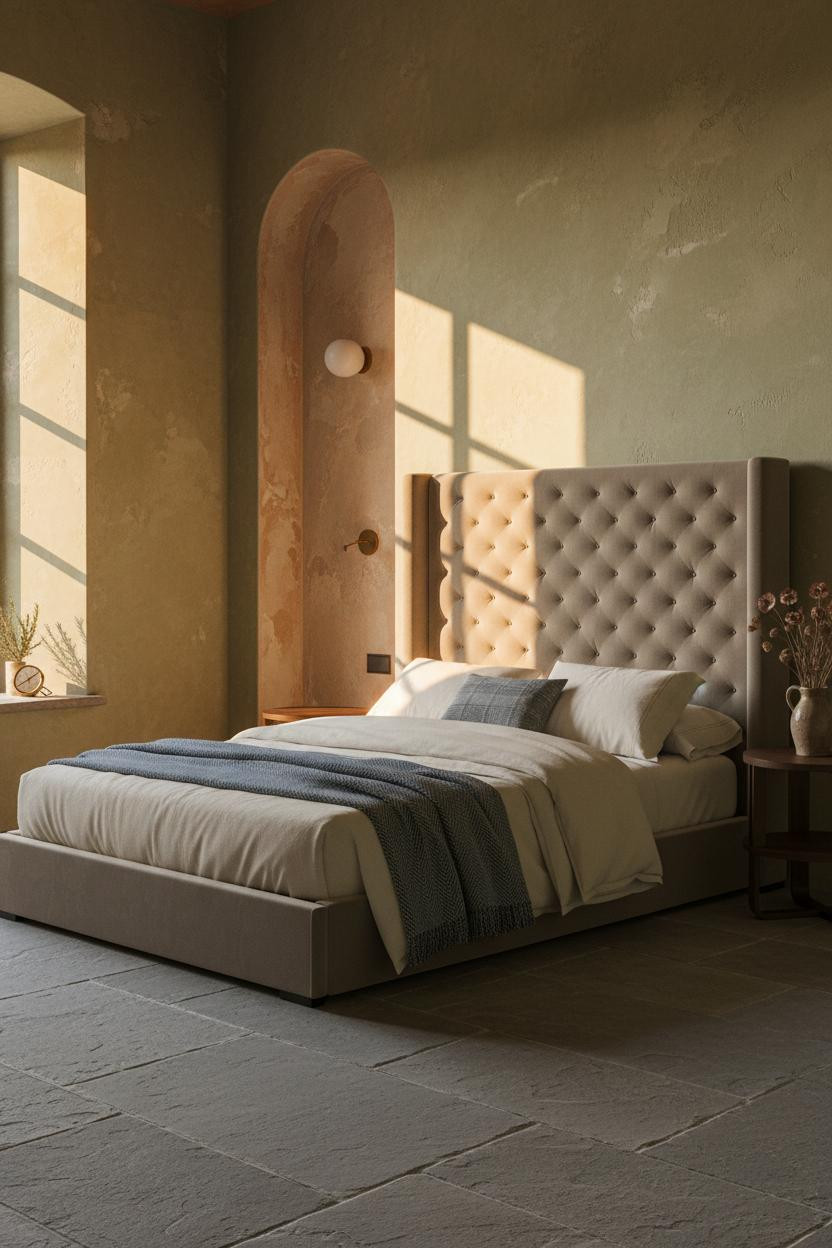

A tall arched niche beside the bed, its plaster interior in uneven layers showing pale mineral underpaint. It shouldn't work as a design move. But it does.
What gives it presence: The arch soffit throws a crescent shadow that deepens toward the crown, which means the niche looks different at every hour of the day. Sage-toned aged plaster keeps the whole thing from feeling too dramatic.
Avoid this mistake: Don't fill the niche with shelving. Leave it mostly empty. The shadow is the feature.
Sage Shutters With Terracotta Floors. Yes, Really.
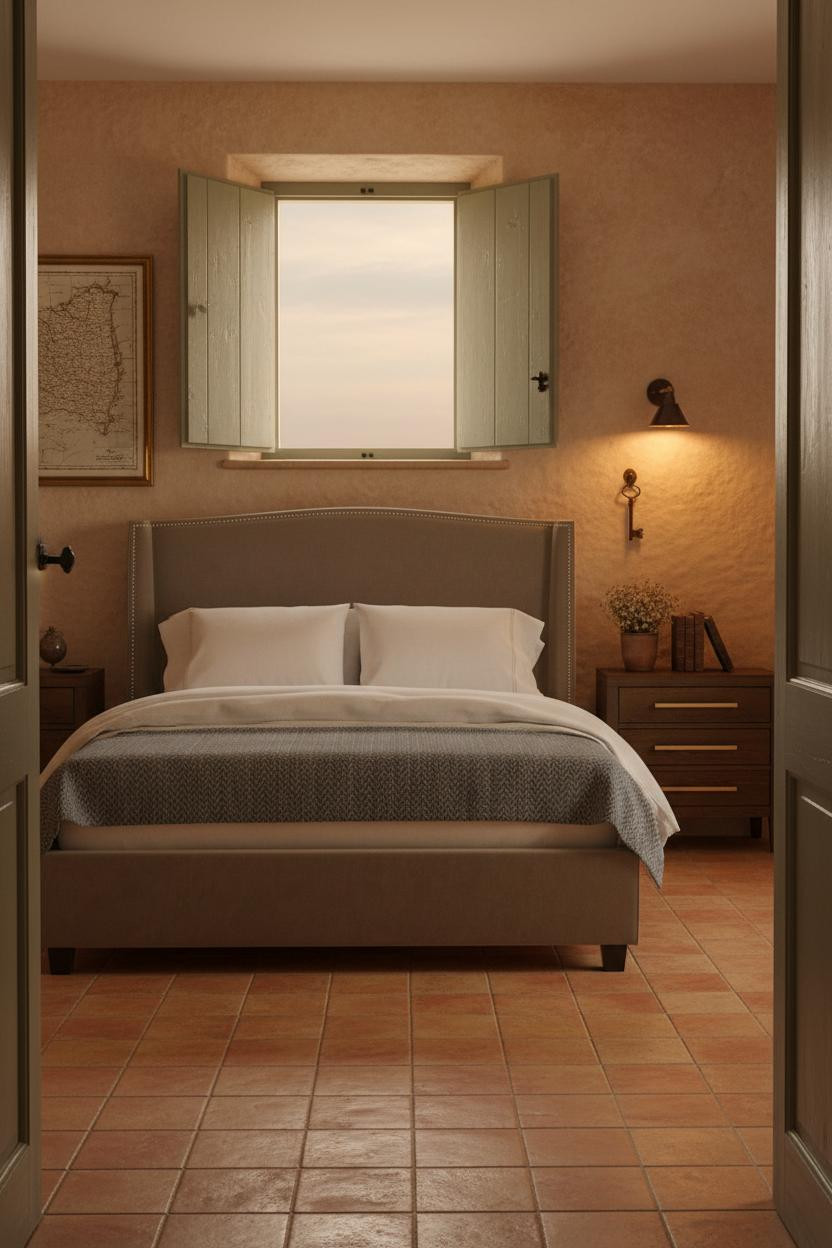

This combination surprises me every time. Muted sage-grey timber planks against polished terracotta squares. The proportions shouldn't harmonize. But at dusk, with warm amber light raking across everything, they do.
Why the palette works: Both the sage-grey shutter planks and the terracotta tiles are pulled from the same warm-earth range, which is what stops the contrast from tipping into clash.
Worn leather books on the nightstand. A map print in a gilded frame. Nothing matchy. That's enough.
Wainscoting That Earns Its Keep
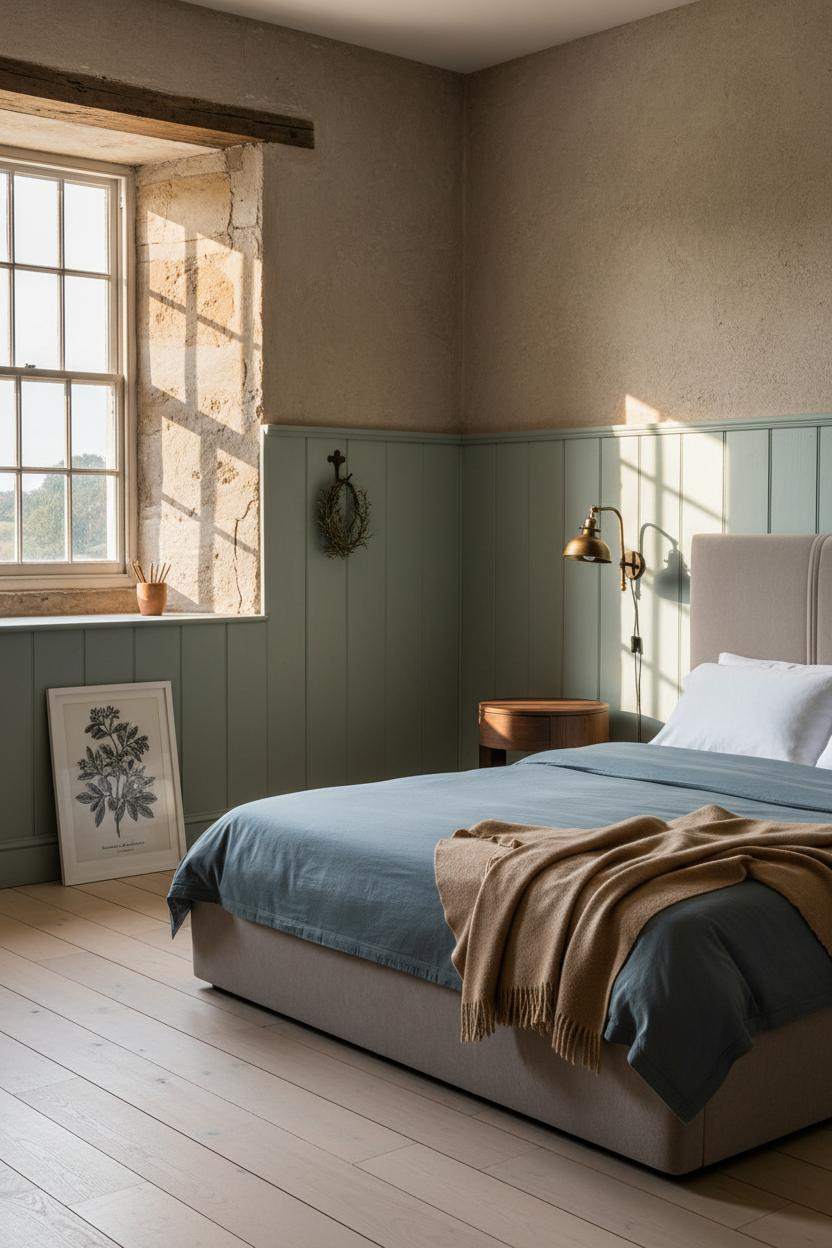

Half-height wainscoting in pale sage-blue timber paneling, brush-stroked and slightly uneven, topped by bare aged plaster. Simple division. Strong result.
What makes this work: The tongue-and-groove seams catch raking sidelight in a way that creates horizontal rhythm without needing anything on the walls above. The two surfaces do the talking together, while still feeling quiet and undone. Where to start: Paint the paneling in one flat, chalky tone. No gloss. The matte finish is what makes it feel old rather than renovated.
The Limestone Alcove Window You Want To Read In
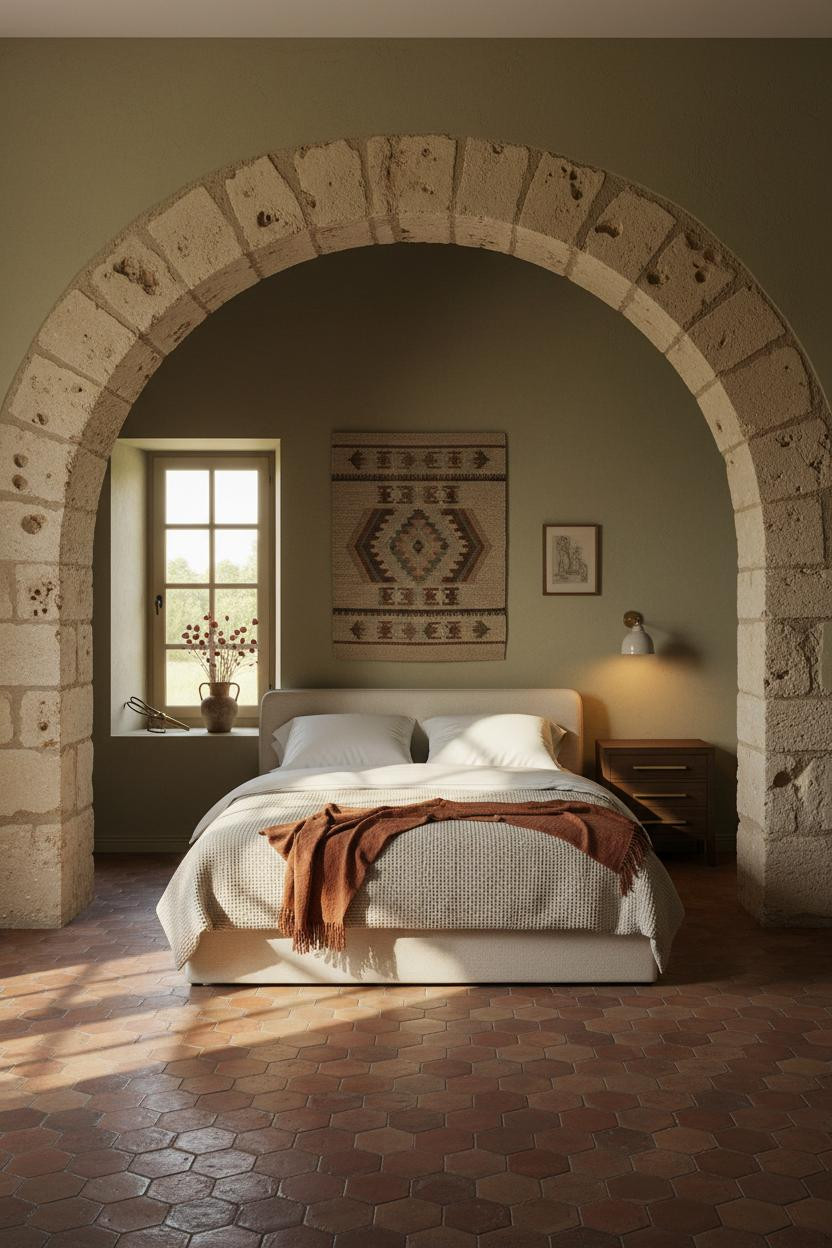
Having a deep-set window alcove in aged limestone changes how you use a bedroom. It becomes a destination, not just a light source.
In a cottagecore bedroom, this kind of architectural depth is what separates the rooms that feel genuinely old from the ones that are just trying. Why it lands: The arch crown darkens where shadow pools between protruding stones, giving the whole wall a layered, ancient quality that soft olive lime-washed plaster beside it only reinforces.
The finishing layer: A woven wall hanging above the bed, a clay jug of dried poppies on the sill. Nothing precious. Just enough texture to keep things interesting.
A Stone Chimney Breast That Earns The Spotlight
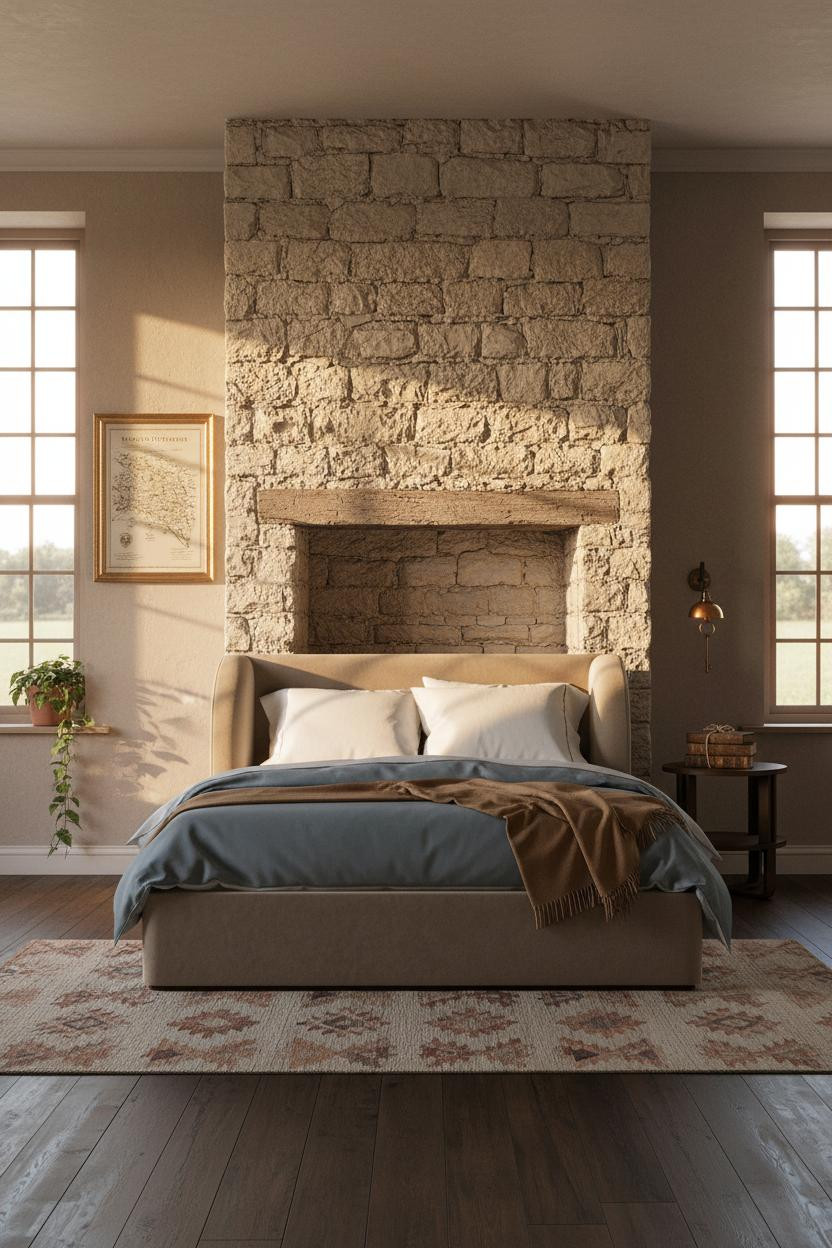

Centering the bed against a rough-hewn stone chimney breast is a bold call. But the scale is right here, and the room feels calm and cohesive rather than heavy.
What carries the look: The pale cream-and-grey limestone surface, deeply mortared and aged, maps generations of craft in every crevice. Late afternoon side light across that texture is the whole design decision. A good bedroom lighting plan makes this kind of feature wall sing at night, too.
The detail to keep: A faded kilim runner in terracotta and ivory grounds the dark stained floor without competing with the stone. Two textures pulling in the same warm direction.
I Didn't Expect To Love The Periwinkle
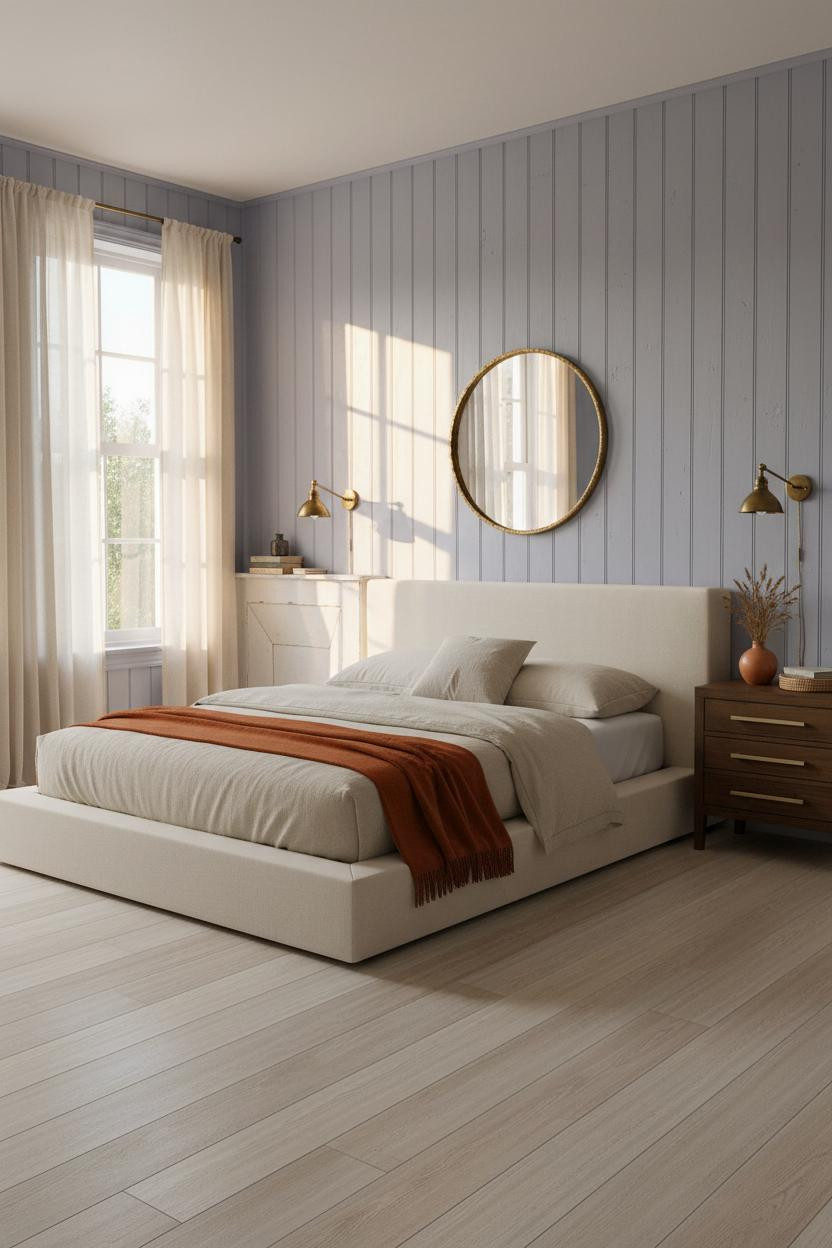
Fair warning. Faded periwinkle board-and-batten is not for everyone. But somehow, in a French cottage bedroom context, it clicks.
Why it feels intentional: The chalky, age-softened planks catch afternoon light across every vertical groove, which means the wall has movement and texture in a way that flat painted drywall never does. The bleached pine flooring keeps it from feeling too cool. Vintage brass sconces on either side of the bed push it warmer still.
What not to do: Don't pair periwinkle walls with crisp white bedding. Oatmeal cotton and a burnt orange mohair throw are what make it feel European rather than just blue.
Whitewashed Stone Behind The Bed. Simple As That.
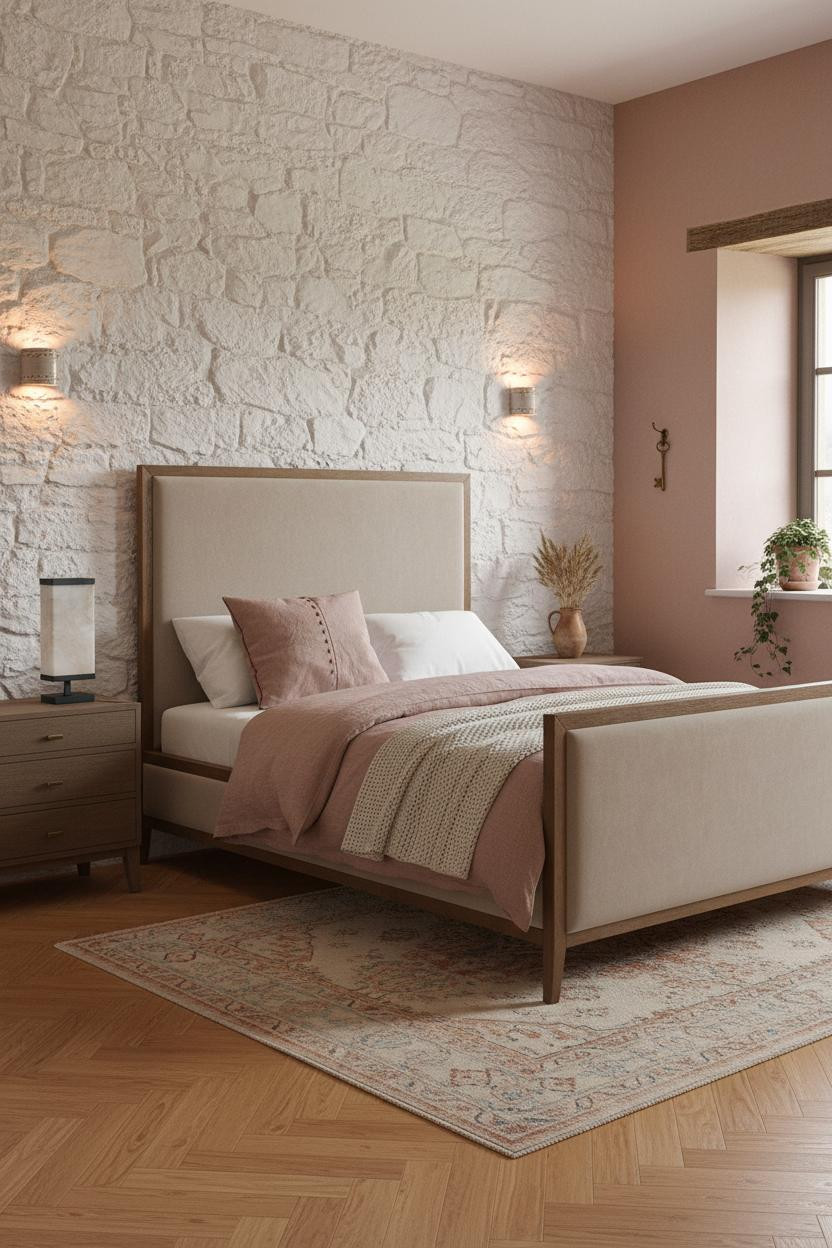

A full-width whitewashed stone wall behind the bed, irregular limestone blocks with thick chalky mortar joints. Seven feet of raw European authenticity, no headboard needed.
What softens the room: Dusty rose flanking walls pull warmth into what could otherwise read cold. The herringbone parquet floor in warm honey amber does the same. And the ceramic sconces at either side of the bed cast upward amber pools that make the stone look golden rather than grey.
One smart swap: Trade a traditional headboard for this kind of feature stone wall and the bed feels like it grew out of the architecture. Which is, honestly, the whole point of French cottage bedroom decorating.
Exposed Beams And Cream Linen Curtains At Dawn
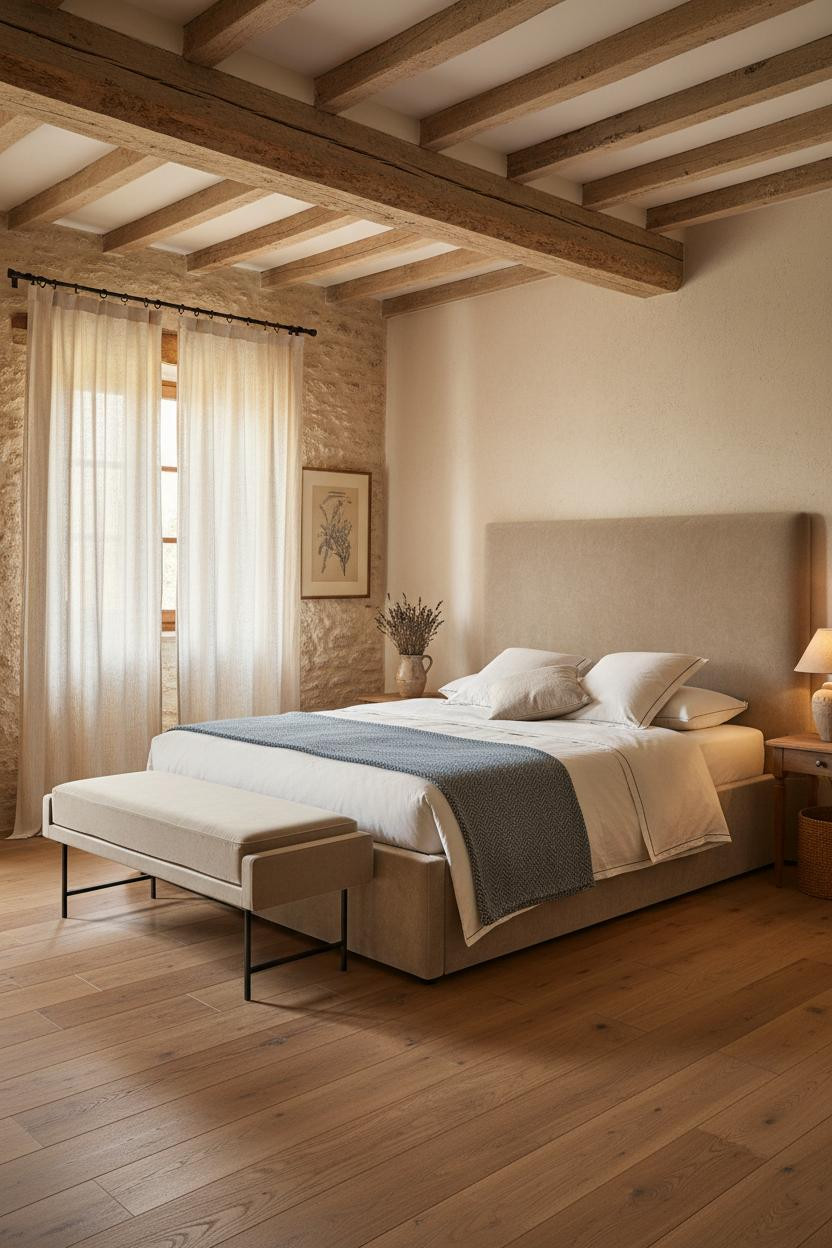
And then there's this one. The room feels lived-in and intimate in a way the others don't quite match.
Why it feels Provençal: Rough-sawn hand-hewn ceiling beams at ten feet drop parallel shadows across cream plaster above, which creates vertical rhythm that no molding profile can replicate. The floor-to-ceiling cream linen curtains on a wrought-iron rod frame the window without blocking the light. Both details pull from the same unhurried, deeply atmospheric tradition.
The smarter choice: A cushioned bench at the foot of the bed grounds the whole composition. It solves morning chaos and adds a horizontal line that keeps the tall curtains and beams from feeling too vertical-heavy.

Our #1 Pick
Saatva Classic Mattress
America's best-selling online luxury innerspring. 365-night trial, lifetime warranty, free white glove delivery.
Shop Saatva Classic
The Foundation Of Every Beautiful Bedroom
Walls get repainted. Linen gets swapped out. The mattress stays. So it's worth getting right.
The Saatva Classic is what I'd put under any of these rooms. Dual-coil support that holds its structure over years, an organic cotton cover that breathes through warm nights, and a Euro pillow top that's soft without losing shape. It's the kind of thing you stop noticing because it just works, every single night.
Good design ages well because it's made well.

The rooms people save are the ones where nothing looks accidental. Start with materials that have actual age or honest texture, and the rest figures itself out from there.