
 by
by Our #1 Recommended Mattress
Saatva Classic. From $1,095
365-night trial · Lifetime warranty · Free white-glove delivery
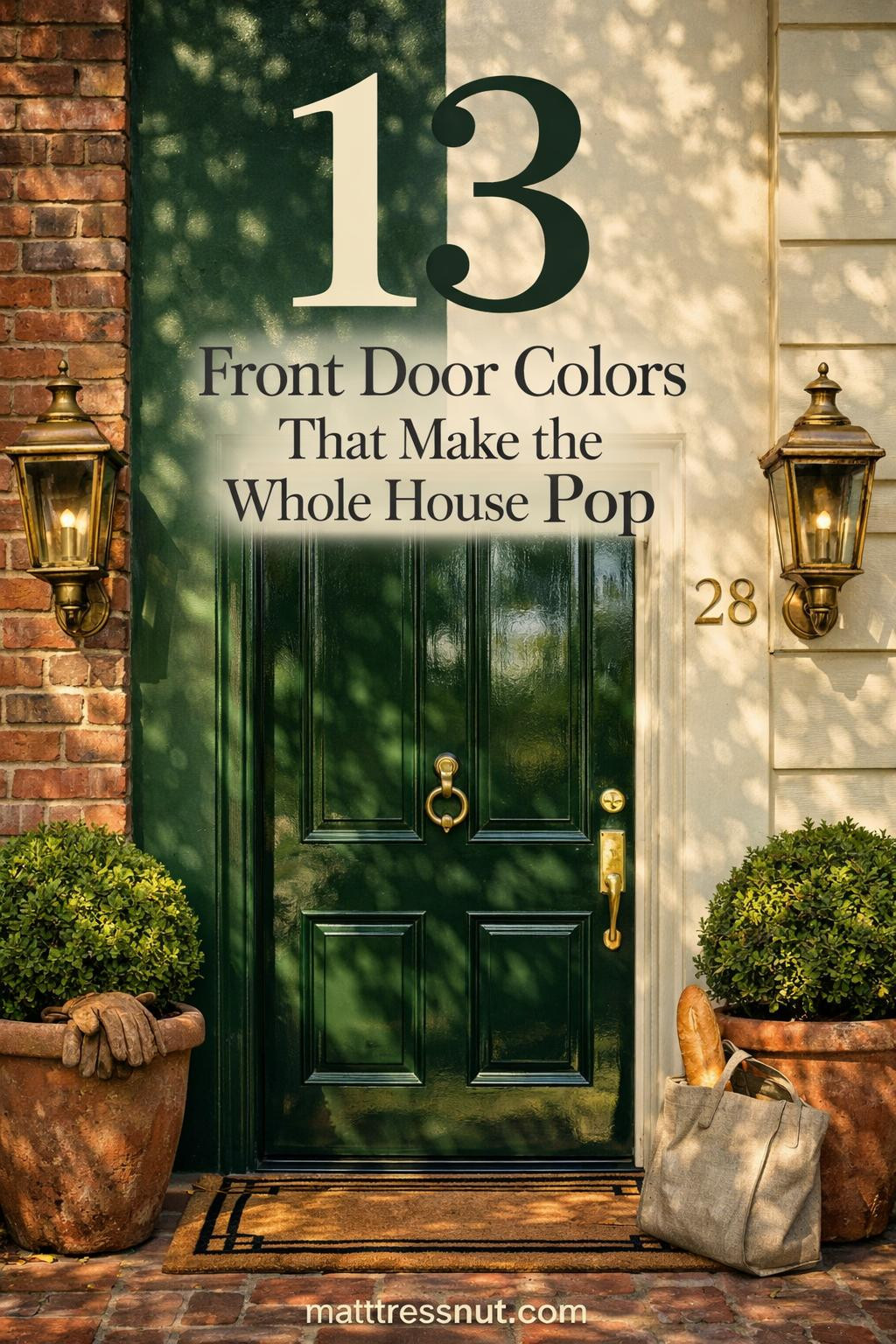
The front door is the handshake your home gives the world before you ever open it. It sets expectations, signals personality, and done right makes everyone from the mail carrier to first-time guests slow down and look twice. In 2026, designers are treating the entry door not as an afterthought but as the single most cost-effective curb appeal investment a homeowner can make.
Why Front Door Color Matters More Than You Think
A fresh coat of paint on your front door costs between $50 and $200 in materials, yet studies consistently show it can add thousands to perceived home value. The color you choose communicates something before a single word is spoken. A deep navy says confident and classic. A glossy black says timeless. A sage green says you have an eye for natural tones and know how to use them. According to Fixr's 2026 survey of architects and interior designers, 64 percent cited black as a top front door color, sage green was close behind, and navy was cited by nearly half of respondents.
Beyond aesthetics, the right front door color can meaningfully affect how your entire home reads from the street. It can make a modest house look intentional and curated, or it can make an otherwise beautiful home look unfinished. The good news: this is one of the lowest-cost, highest-impact projects in all of home improvement.
Black: The Color That Never Overreaches
Black works because it acts as a neutral that reads as bold. It grounds a white clapboard colonial, adds edge to a mid-century modern stucco, and plays beautifully off the natural grain of brick. A 2026 design consensus confirms it as the dominant choice for homeowners who want a door that looks deliberate without requiring guesswork about whether it will date.
The finish matters enormously. Gloss black is high-drama and shows every fingerprint. Matte black is more forgiving, slightly softer in appearance, and currently more in line with where designers are pointing clients. Satin sits in the middle: easy to clean, elegant without shouting. Hardware pairing: unlacquered brass against matte black is the dominant combination right now. The warm metal developing natural patina against the dark door creates a contrast that reads expensive without requiring expensive materials. Aged bronze works too, especially on traditional architectural styles like Georgian or Federal. Practical note: black doors absorb significantly more heat than lighter colors. Use a high-quality exterior paint with UV inhibitors and plan for touch-ups every few years if your door faces south or west.
Navy Blue: Depth Without Darkness
Navy blue sits in a compelling design space. It is bold enough to read as a statement from the street but sophisticated enough that it never feels like a mistake. Unlike black, which is truly neutral, navy carries a mood: composed, coastal, a little literary. It pairs best with white or cream trim, where the contrast is clean and deliberate. Brass hardware is almost mandatory with navy. Gold-toned metal against a deep blue creates the kind of traditional elegance that feels current rather than dated. Brushed nickel is too cool in tone and fights the warmth that makes navy work.
For brick homes, navy requires care. Red brick and navy can clash if the blue leans too warm or the brick too orange. Test the specific paint chip against your actual facade in different light conditions before committing. Morning light, overcast afternoon, and golden hour will all read the color differently. Deep teal and sapphire blue are gaining traction alongside classic navy in 2026, particularly on white or light gray homes with natural wood accents.
Sage Green: The It Color That Has Earned Its Status
Sage green has been trending for three-plus years and in 2026 shows no signs of fading, partly because it is a genuinely versatile color that works differently in different light conditions. Morning light makes sage look crisp and botanical. Evening light warms it toward olive. Overcast days push it toward gray. That variability is what makes it so satisfying to live with long-term, rather than a color that looks great in photos and flat in reality.
The best sage greens for front doors sit in the gray-green range rather than the yellow-green range. Farrow and Ball Mizzle and Vert de Terre are perennial designer references. Benjamin Moore Pewter Green and Saybrook Sage are more accessible options with similar effect. Sherwin-Williams Pewter Cast leans cooler and works well on contemporary homes with gray stone or concrete elements. Sage green works across a wider range of architectural styles than almost any other front door color. It suits Craftsman bungalows, cottage-style homes, Mediterranean stucco, and contemporary flat-roof builds when you choose a more muted version. The key is ensuring the green does not compete with your landscaping. If you have a lush green garden, go darker or more gray-toned so the door reads separately from the foliage.
Red: Commitment Required, Rewards Real
A red front door is a declaration. It says you made a choice and you are standing behind it. In 2026, the red doors getting the most design attention are the deeper, more complex reds: burgundy, oxblood, Chinese red. These darker reds have enough visual weight to anchor a facade rather than just pop against it. The fire-engine brightness of years past reads as less considered than these richer, more nuanced versions.
Red works best on traditional architectural styles: colonial, Georgian, Federal, farmhouse. On a paneled wood door with brass hardware and brick or white clapboard surround, it is close to perfect. Red pigments fade faster than most other colors under UV exposure. Use an exterior paint with UV inhibitors and budget for touch-ups every two to three years if your door faces south or west. Jewel tones more broadly, including topaz yellow, forest green, and deep plum, are being used by homeowners who want genuine personality at the entry.
Charcoal Gray: The Thoughtful Modern Alternative
For homeowners who want the authority of black without quite the contrast, charcoal gray is the answer. It reads darker than it actually is from the street and pairs well with modern architectural details like steel railings, concrete paths, and zinc or aluminum fixtures. Charcoal also works beautifully on homes with dark or varied stone facades where true black would disappear entirely. The risk is choosing a version with too much blue or purple undertone, which can look cold and institutional on north-facing doors. Warm charcoals with slight brown or green undertones are more livable. Benjamin Moore Wrought Iron is the most-cited reliable reference point among designers working in this color family.
Matching Colors to Exterior Materials
The single most important principle in choosing a front door color is reading the undertones of your existing materials including siding, brick, stone, and trim, then either harmonizing or deliberately contrasting against them. Warm-toned brick in the orange-red range pairs with warm door colors: deep green, navy, burgundy, or black with warm hardware. Cool-toned brick in the purple-gray range pairs with cooler options: charcoal, blue-gray, sage with gray undertones.
White or cream siding is the most forgiving background and works with essentially any door color. The more varied or colorful your siding or cladding, the more restrained your door color should be to avoid visual noise at the entry. Natural wood and cedar shake homes often look best with doors that reference nature: sage green, forest green, warm tan, or dark walnut stain rather than paint. These materials are already doing a lot of visual work and a loud door color fights that energy rather than supporting it.
Colors That Work by Architectural Style
Victorian and Queen Anne homes pair well with deep jewel tones, burgundy, forest green, or navy. The ornate trim and multiple surfaces on these homes can handle a bold door color without visual competition. Craftsman and Arts and Crafts homes work best with earthy tones that reference natural materials: sage green, warm olive, deep red-brown, or forest green. Avoid pure black, which can feel too stark against the organic warmth of Craftsman materials.
Mid-century modern homes suit black, charcoal, or an accent color pulled from the interior palette. These homes often have large glass panels adjacent to the door, which means the color reads very differently depending on what is visible behind it from outside. Contemporary and minimalist homes look sharpest with matte black, charcoal, or a single saturated color pulled from the landscape with minimal hardware. Colonial and traditional homes have symmetrical facades that make almost any classic color work: navy, black, deep red, or forest green all read beautifully against formal architectural frameworks.
Paint Quality and Finish: The Detail That Separates Good From Great
The best color choice still falls flat with the wrong paint. Exterior doors face sun, rain, temperature swings, and constant physical contact. Benjamin Moore Aura Exterior, Sherwin-Williams Emerald Exterior, and Farrow and Ball Exterior Eggshell are the three products designers consistently recommend. All offer superior adhesion, color retention, and surface hardness compared to standard exterior latex. In 2026, matte and satin finishes are preferred over gloss for most door colors, except when you specifically want a lacquered, formal look. Any imperfection in the substrate will be magnified, not hidden, by a gloss finish. Low-VOC formulas are now standard in premium exterior paints and should be your baseline.
How to Paint Your Front Door: Weekend Project Guide
Remove the door from its hinges if possible. Painting flat on sawhorses produces a better result than painting vertically in place. Strip or sand any peeling existing paint. Prime bare wood with a shellac-based primer for best adhesion. Apply two coats of your chosen exterior paint, sanding lightly between coats with 220-grit paper. Reinstall after the second coat has cured for at least four hours.
If removing the door is not feasible, paint in sections using a high-quality 3-inch angled sash brush for panels and a small foam roller for flat sections. Remove hardware if possible. Paint accumulating in hinge crevices reads as amateur and is difficult to fix without stripping. Total material cost for a standard single door runs $60 to $150. Total time is four to six hours including drying. Call a professional only when your door has significant structural damage requiring repair first, when you need specialty lacquer spray application, or when complex multi-pane divided lights require hours of careful masking.
The Investment in Perspective
A quality front door paint job, done with premium materials and care, should last five to seven years before needing refresh. Amortized over that period, the cost per year is negligible against the daily pleasure of arriving home to an entry that looks exactly the way you intended. Few home investments offer this ratio of cost to lasting impact. The key is choosing a color with conviction rather than consensus. The front door colors that get remembered and photographed are the ones that reflect a genuine aesthetic point of view rather than a cautious hedge toward resale value. Make your choice, commit to it fully, and execute it with the best materials available. The result will speak for itself every time anyone approaches your home.
Complete Your Space
Every beautiful room deserves a great night sleep. The Saatva Classic — white-glove delivery, 365-night trial.