
 by
by The first thing you notice in a great 70s bedroom is that it doesn't look like it was styled. It looks like it was lived in. Slowly, over years, by someone who knew what they liked.
These 13 rooms prove the difference. Not costumes. Not mood boards. Rooms that feel genuinely collected.
The Jute Wall That Makes Everything Else Feel Intentional
I keep coming back to this one. Something about a full-height woven wall just grounds a room in a way that paint never does.
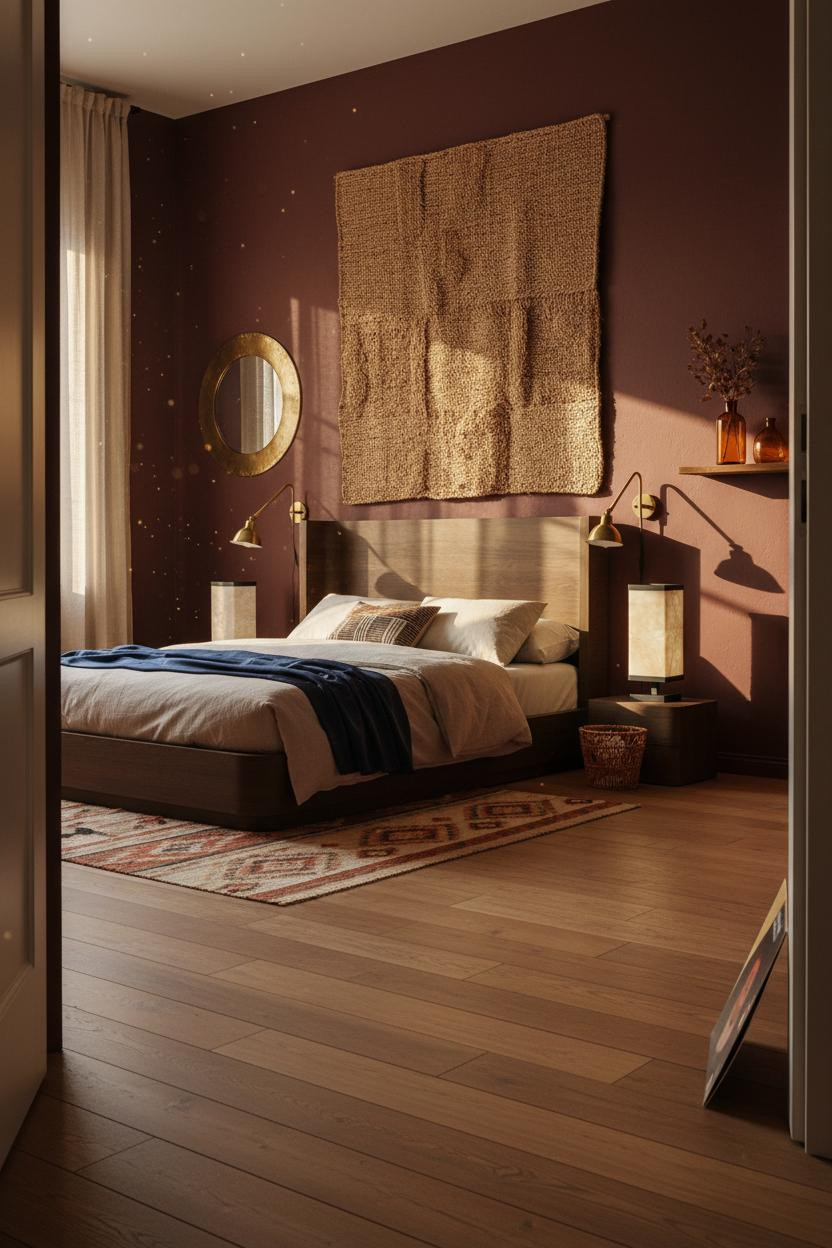
Why it works: Woven jute fiber at that scale creates layered shadow ridges across the surface, so the wall becomes its own texture story without needing anything else on it.
Steal this move: Pair it with brass swing-arm sconces at a warm setting and the amber against natural fiber is immediately very 1970s.
A Brick Chimney That Does the Heavy Lifting
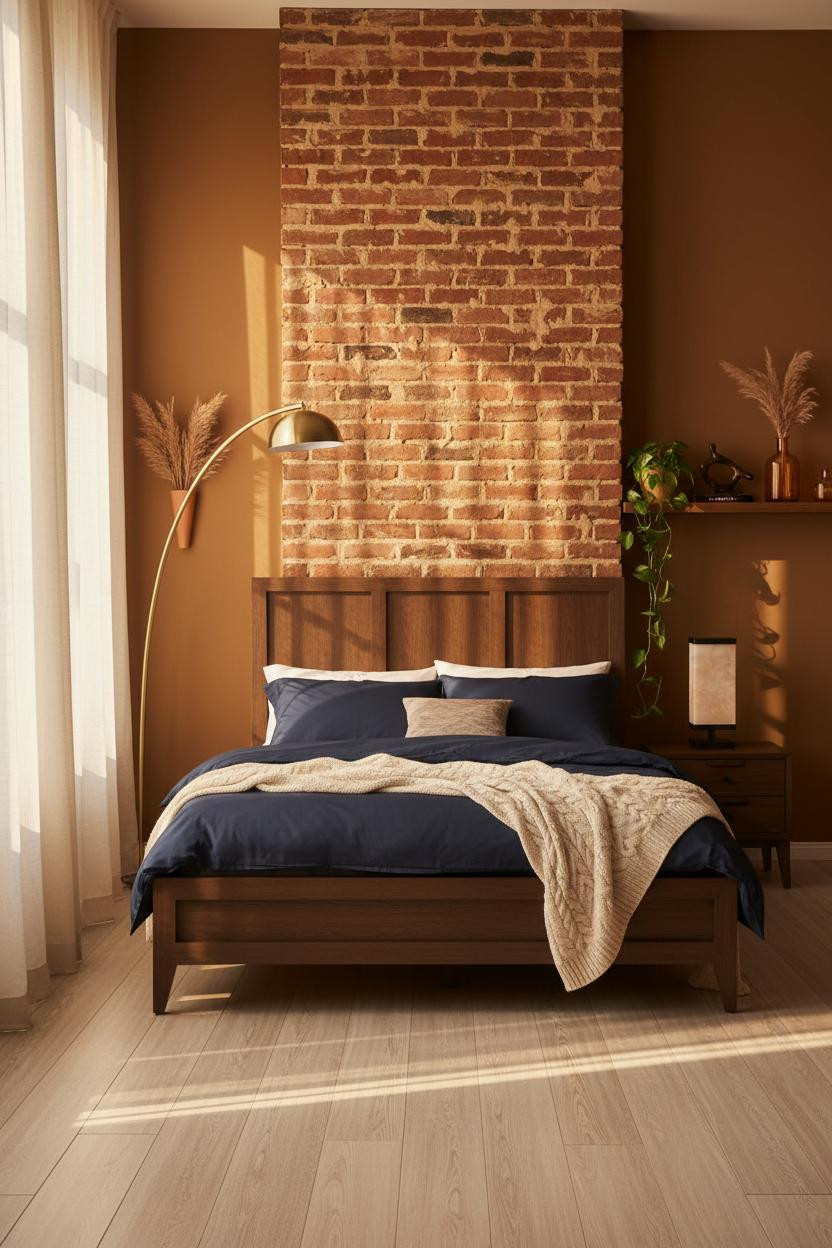
This is the architectural feature most people don't think to build around. But once you do, everything else just falls into place.
The reason a rough-fired brick chimney breast reads so warm here is the irregular mortar joints. Each shadow pocket adds depth that smooth plaster simply can't fake.
The smarter choice: Center the bed against it and let the brick do the decorating. You honestly need less than you think on the nightstands.
Why the Desert Niche Aesthetic Hits Different
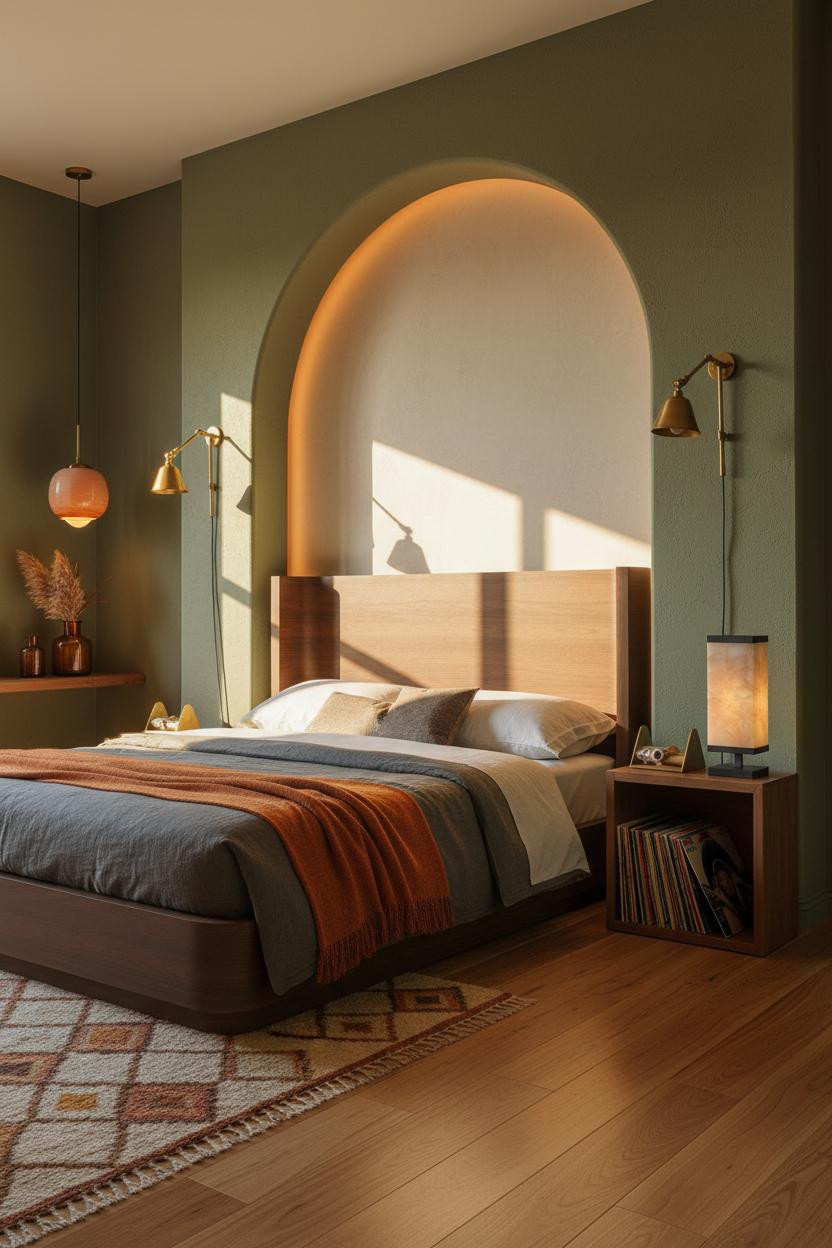
A curved sage plaster niche with rounded molding is the kind of architectural detail that makes a room feel genuinely Mediterranean, not just decorated with Mediterranean things.
What gives it depth: The concave form catches light in a slow gradient, so shadow pools inside the arch while warm sun hits the outer edge, creating contrast that flat walls can't replicate.
In a room like this, the easy win is stacking vinyl records against the niche base instead of art. It's a small detail that immediately reads as collected, not staged.
Terra-Cotta Stone and the Case for Going Dramatic
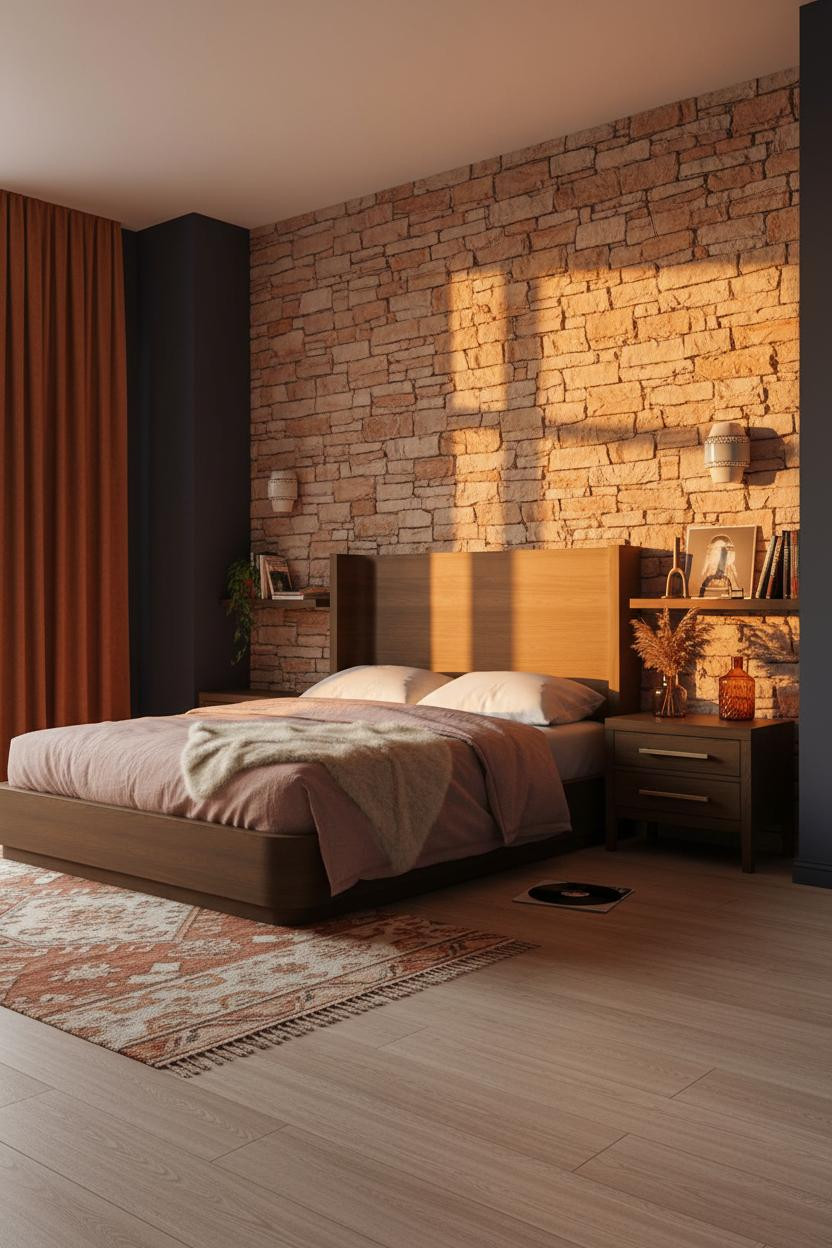
Fair warning. Stacked stone this tall isn't subtle and it's not meant to be.
But the people who commit to a full-height terra-cotta stone wall never want to undo it, because the raking amber light catches every irregular joint face differently and makes the whole room feel ancient in the best possible way.
Avoid this mistake: Don't flank it with more texture. Deep indigo plaster on the side walls keeps the stone as the focal point while still feeling rich.
Rattan Paneling Is the Quiet Version of Maximalism
I almost scrolled past this one. Glad I didn't.
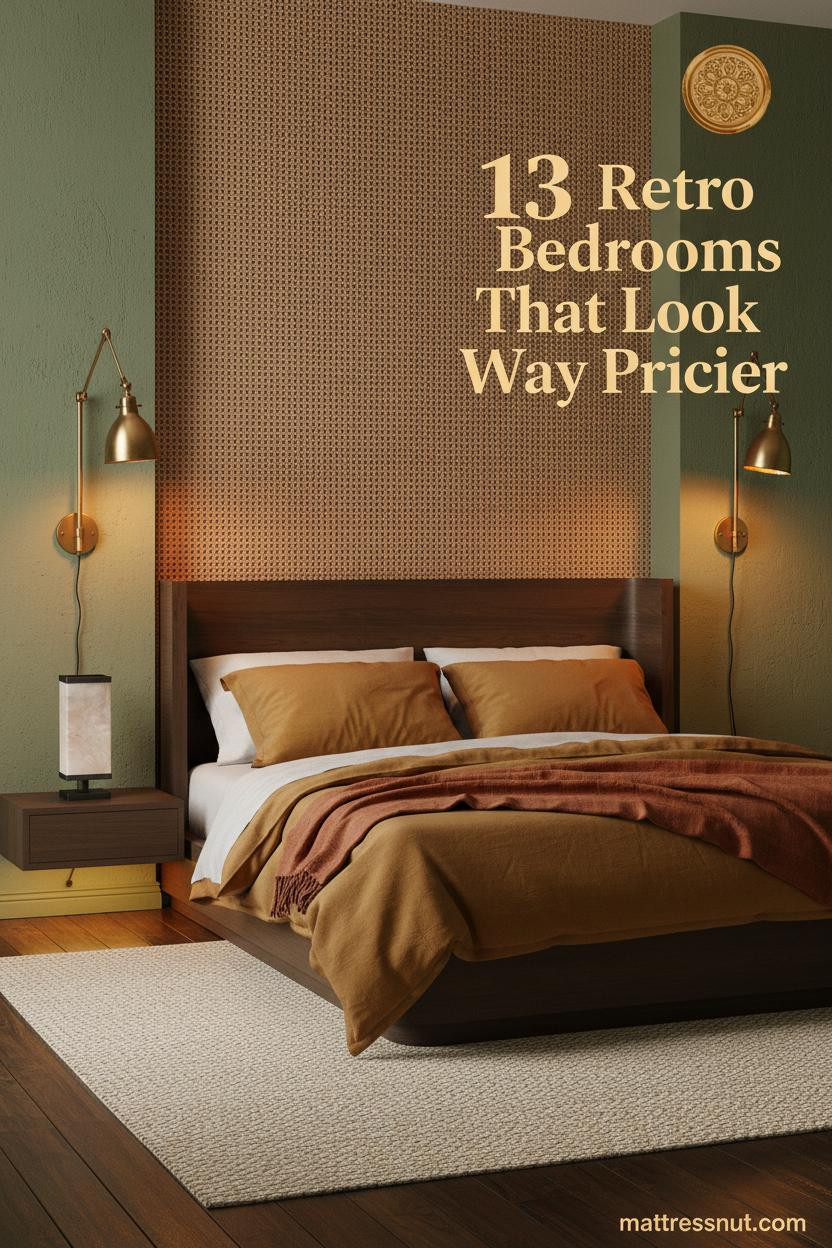
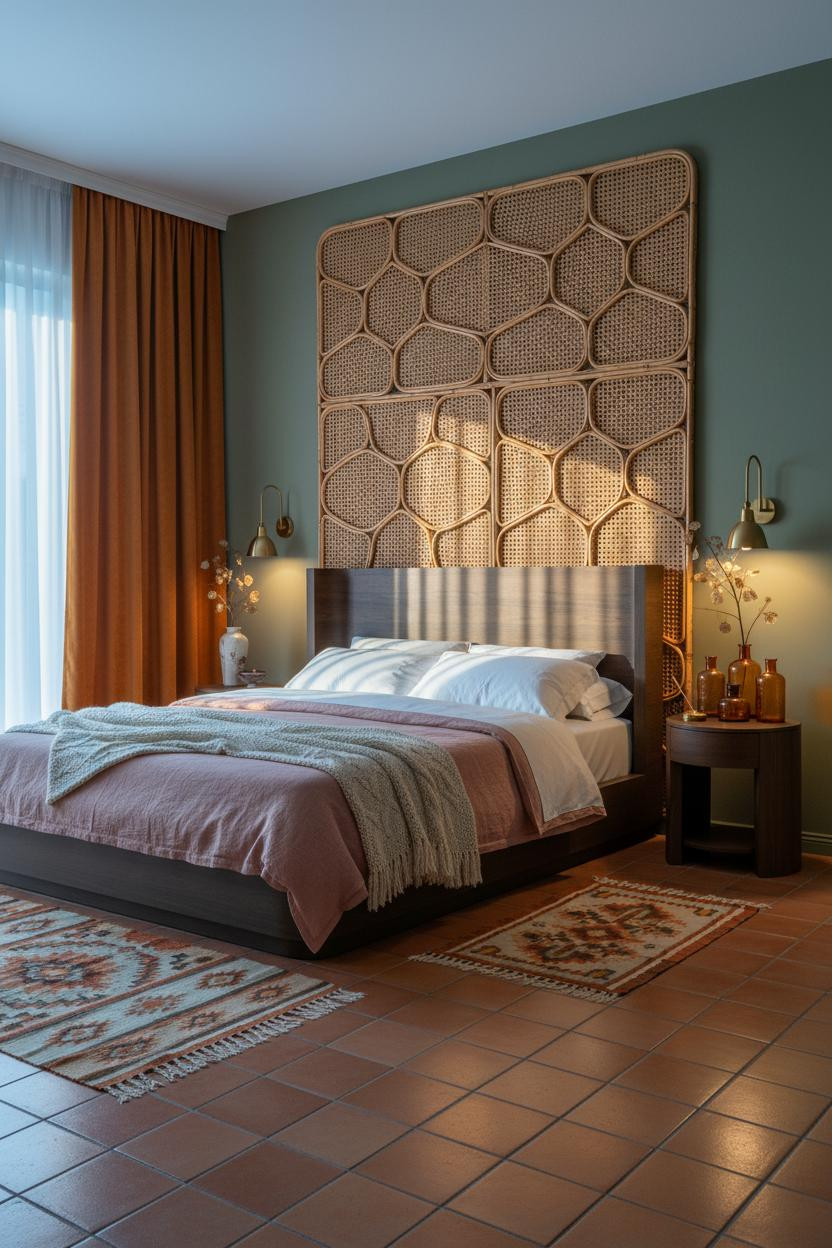
And honestly, the honeycomb-weave rattan panel is doing something that solid walls just can't. Morning light casts an intricate lattice shadow across the surface, which means the wall changes throughout the day in a way that keeps the room feeling alive.
What to borrow: Moss green flanking walls make the natural fiber warmer, not cooler. That color pairing is very specifically 1970s and it works because both tones share the same earthy base.
Terrazzo as the Unexpected Anchor
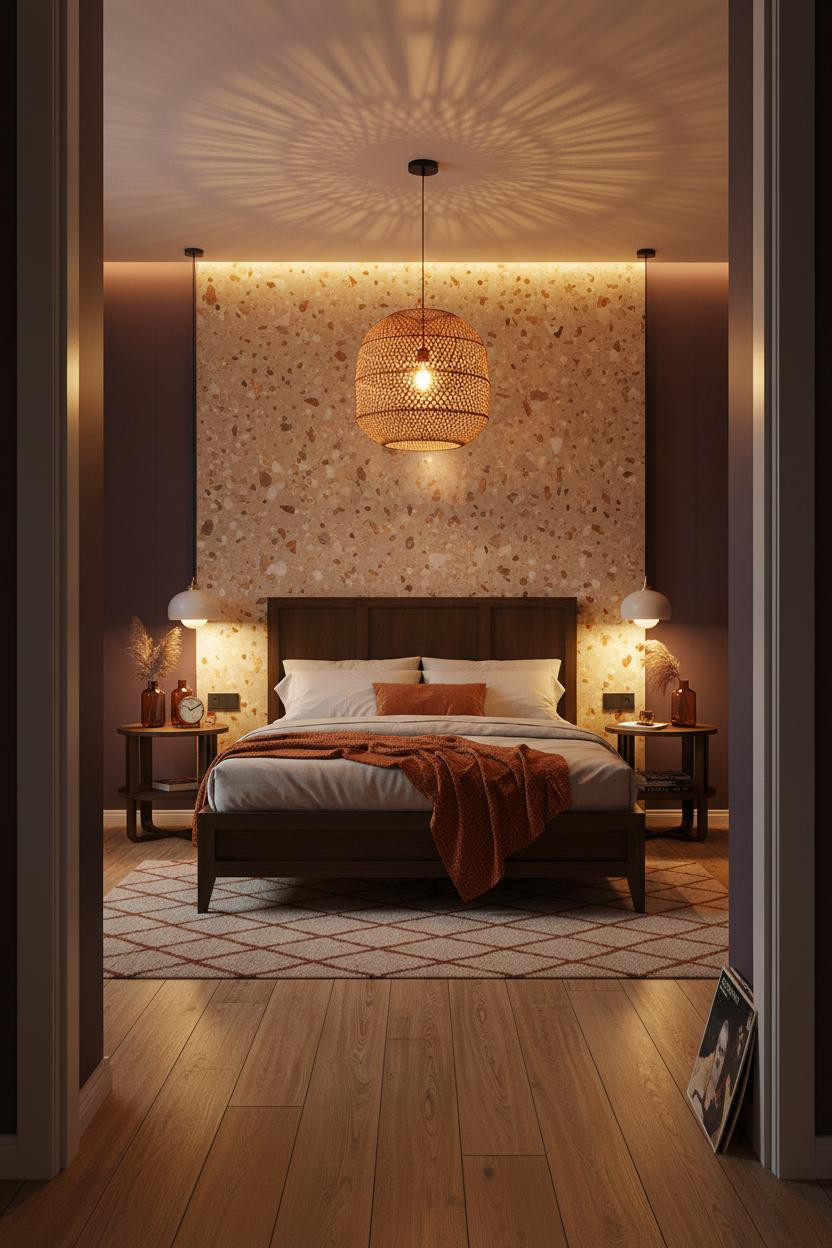

Most people put terrazzo on the floor. Using it full-height on the headboard wall is the kind of move that shouldn't work but somehow does.
Why it holds together: The warm tan base with rust veining in the polished terrazzo picks up the same tones in the bedding and rug, so nothing fights for attention while still feeling rich and layered.
Pro move: A woven rattan pendant above the reading corner casts honeycomb shadows across the ceiling at night, which is the finishing layer this kind of room needs.
The Ochre Niche That Feels Cave-Like in the Best Way
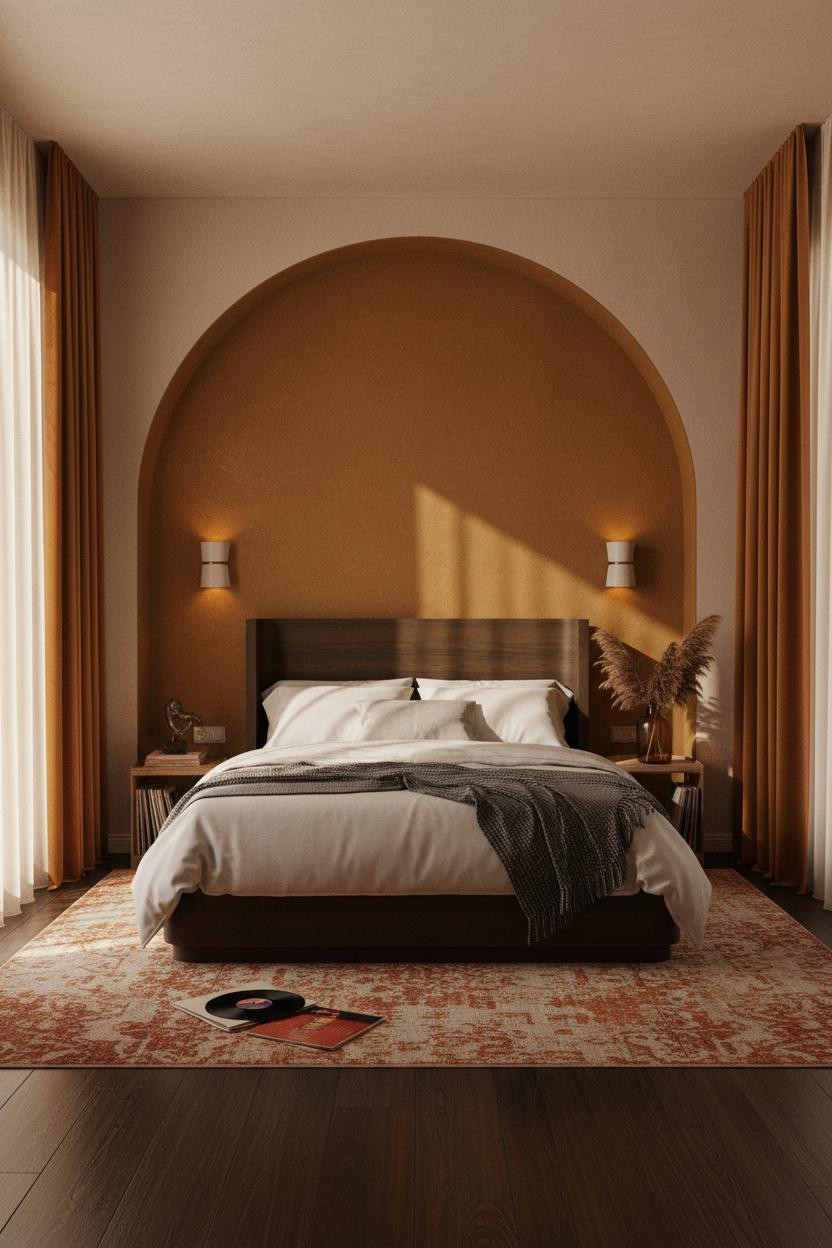
The room feels like amber light has permanently soaked into the walls. And that's exactly the point.
What creates the mood: Deep ochre matte plaster on a curved concave surface amplifies warm morning light in a slow gradient, making the room feel cozy without reading dark or small.
Where to start: Rust velvet curtains pooling at the floor anchor this palette. Floor-length is the part people skip, but it's what makes the room feel genuinely 1970s rather than just warm.
Wood Slat Walls Are Earning Their Comeback
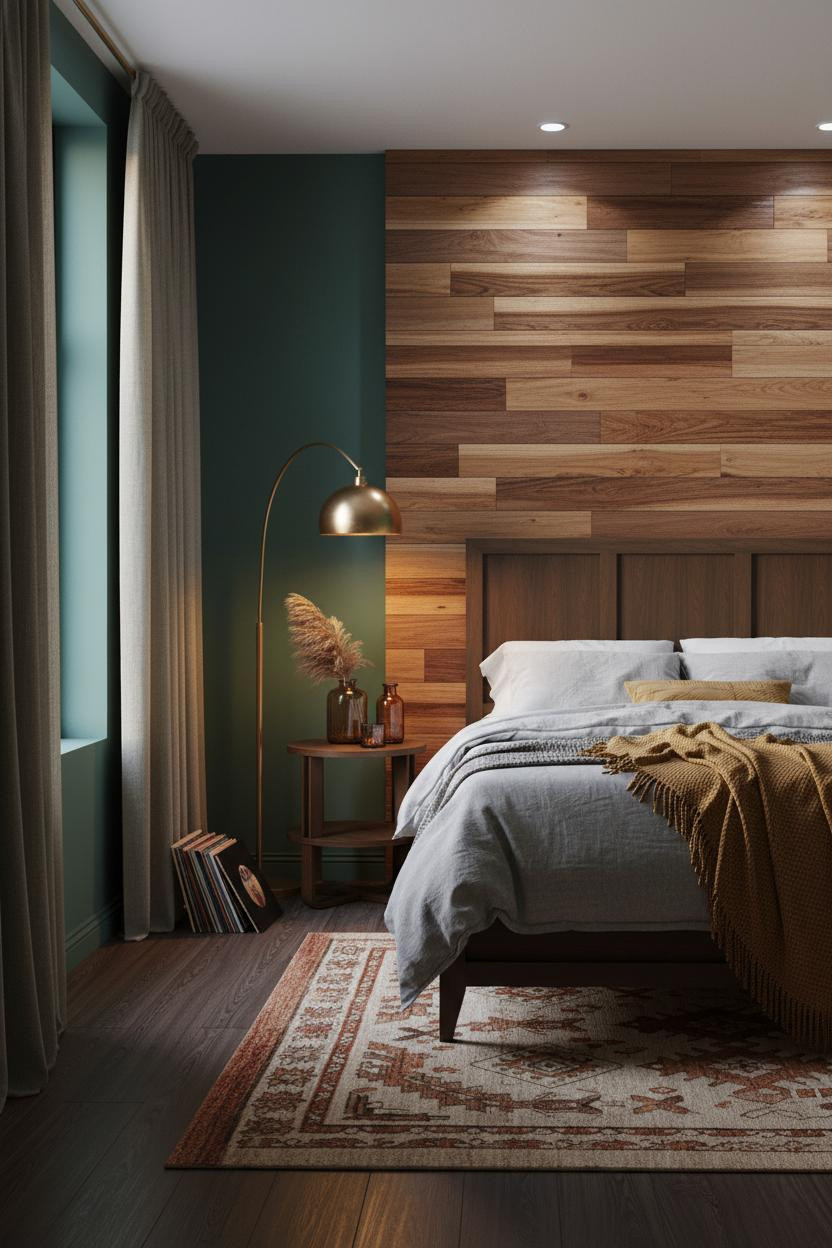
Patchwork horizontal walnut slats mixed with honey and natural ash tones cast a thin shadow line between each plank, and that repetition is what gives the wall its rhythm.
Why it feels intentional: The variation in wood tone across the same grain direction creates depth that a single-species wall wouldn't have, in a way that feels genuinely collected rather than installed.
What throws it off: Matching the wall too closely to the floor. Forest green flanking walls break up the wood-on-wood effect and let the slats actually breathe as a feature.
Cork Was the Original Texture Obsession
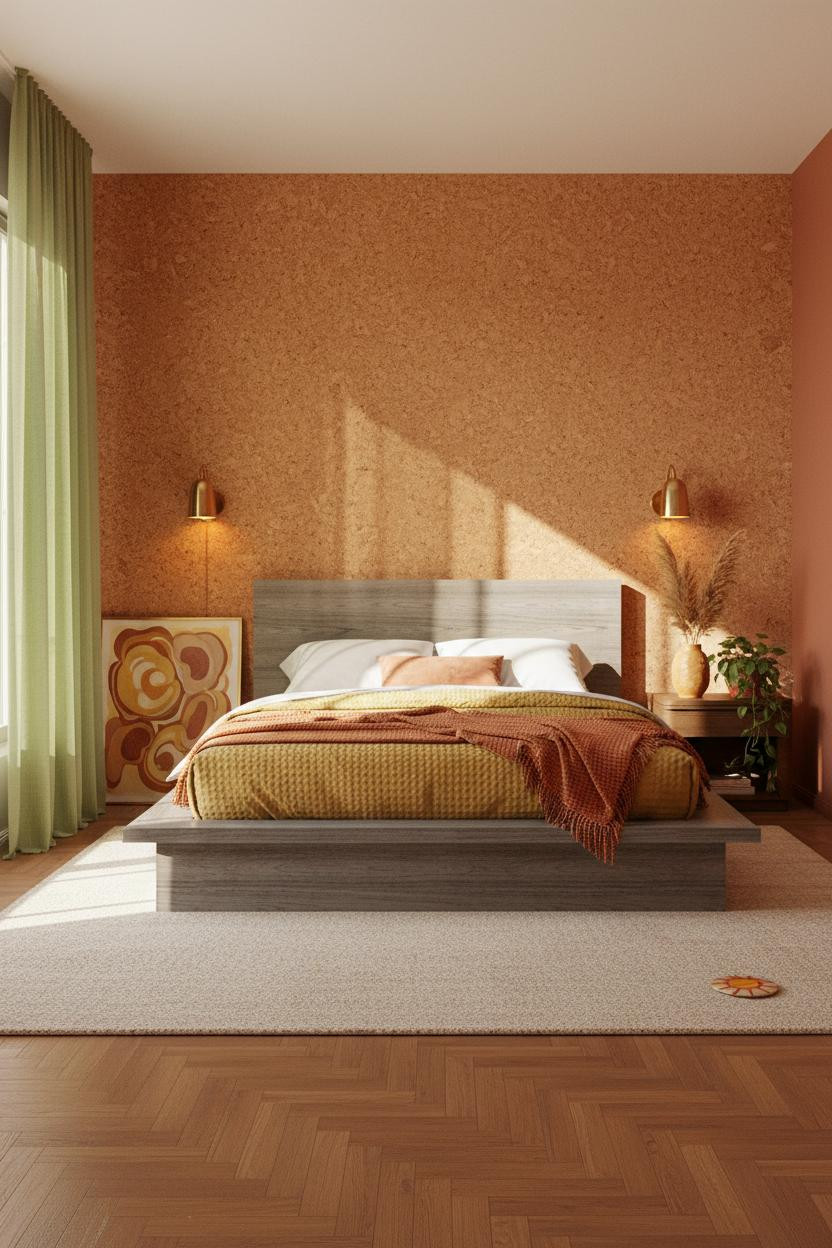
Nothing fancy. That's the point.
What carries the look: Natural cork at full wall height drinks in warm diffused light and glows honey-amber, which is why this Palm Springs palette of terracotta walls and mustard bedding doesn't feel heavy. The cork keeps the whole thing breathing.
Lean an oversized abstract canvas in ochre and rust against the cork rather than hanging it. Leaning beats hanging in a room like this. It's the difference between collected and decorated.
Mustard Walls and Floor-to-Ceiling Shelving
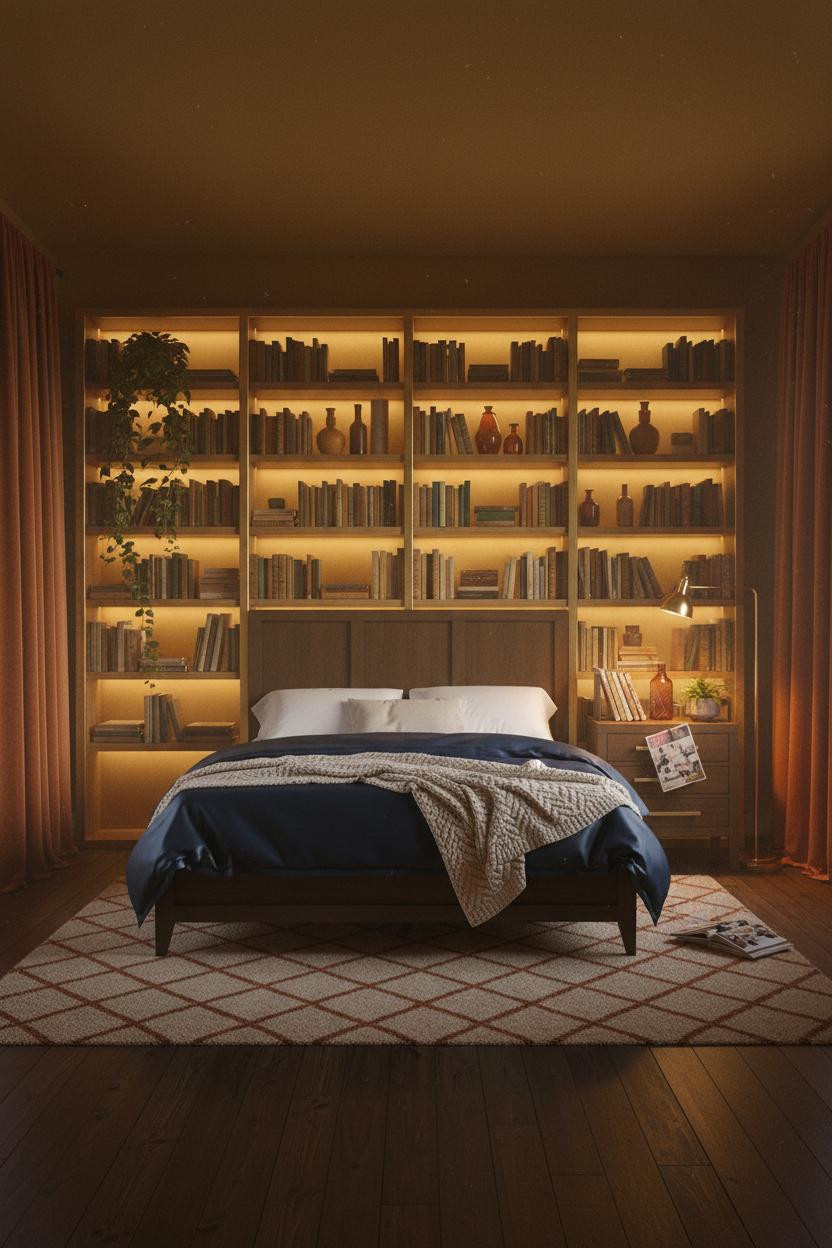
This is the kind of room that rewards actually owning things. The birch shelving with brass corner brackets gives every ceramic vessel and faded cloth-spine book a reason to exist on display rather than in a box.
The real strength: Backlighting the shelf wall makes the objects glow against the deep mustard, which is a completely different effect from overhead light hitting them flat.
One smart swap: Trade the overhead fixture for a floor lamp beside the bed. Amber pooling from below is what makes this palette feel evening-warm rather than just yellow.
Avocado Green and the Art of Shelf Styling
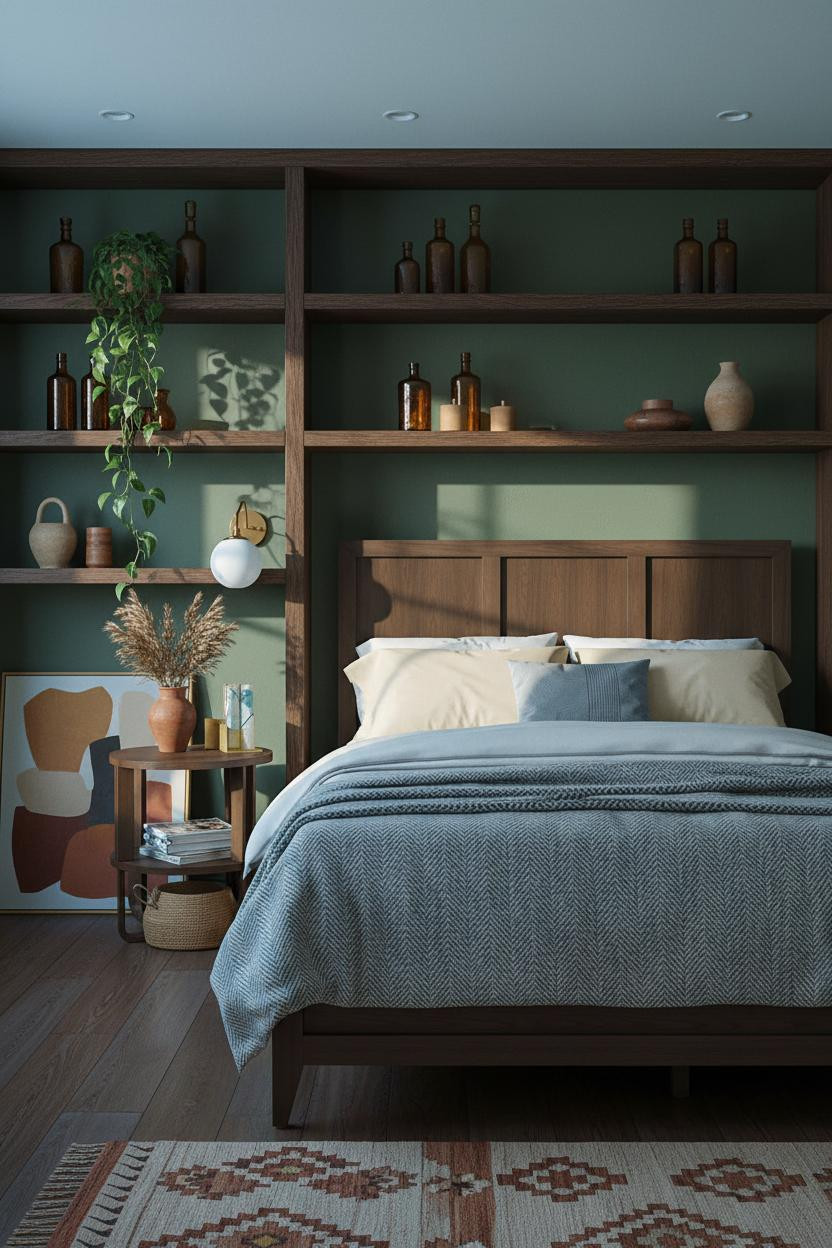
Admittedly, avocado green makes people nervous. But pair it with dark-stained raw-edged timber shelving and the combination is immediately retro in the right direction, not the wrong one.
Why it looks custom: Recessed shelving built to full wall width above eye level keeps the display elevated (literally) and lets the floor stay clear, so the room feels edited rather than crowded.
The detail to keep: A leaning canvas in ochre and rust at shelf level reads as art without the commitment of wall holes, which matters when you want the shelving to stay the hero.
Sage Shiplap and the Boho Approach to Texture
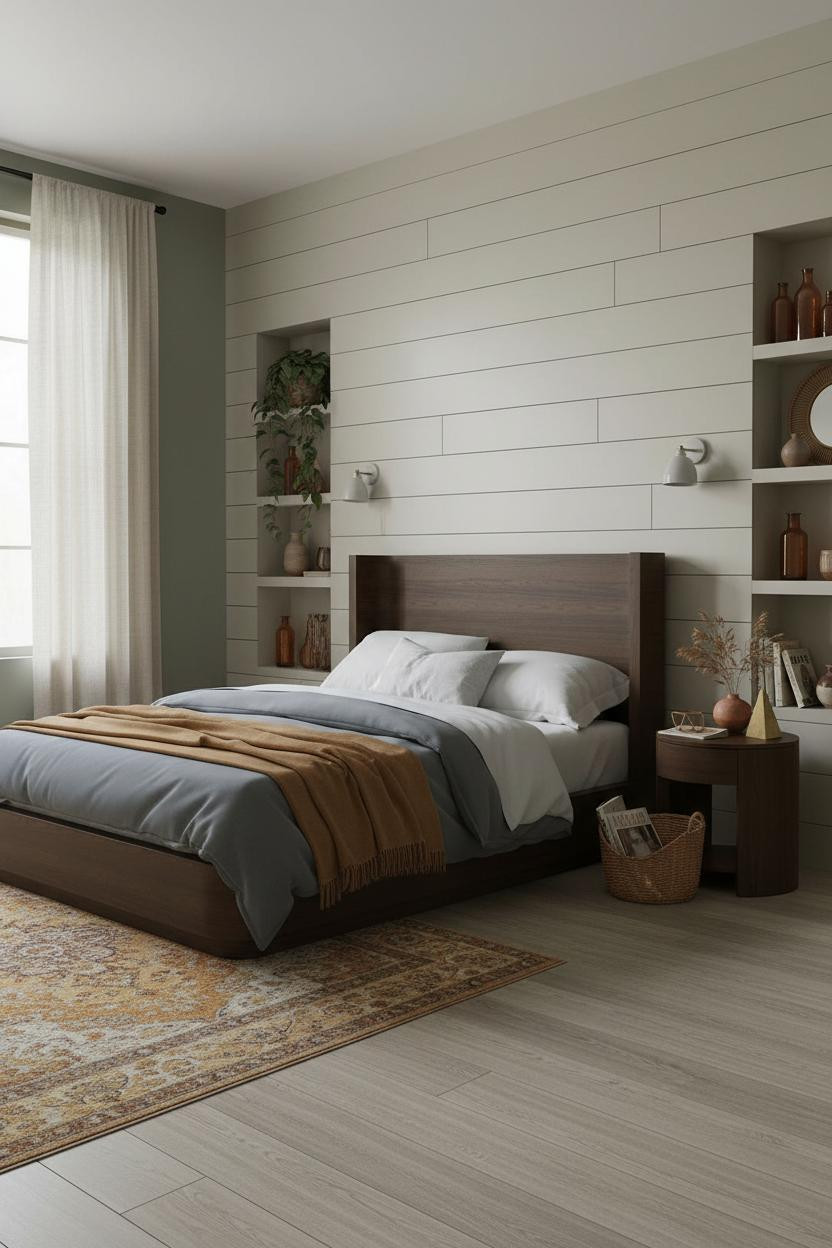
The room feels lived-in and intimate in a way that takes actual restraint to achieve. Nothing too precious here.
What softens the room: The cream horizontal shiplap behind the bed keeps the sage walls from reading too dark by bouncing diffused morning light back into the center of the room, which helps balance the warm rug and camel throw.
An oversized round rattan mirror in the corner is the right finishing layer. Just enough craft texture to keep things interesting without competing with the shiplap.
Walnut Paneling and the Power of the Lower Half
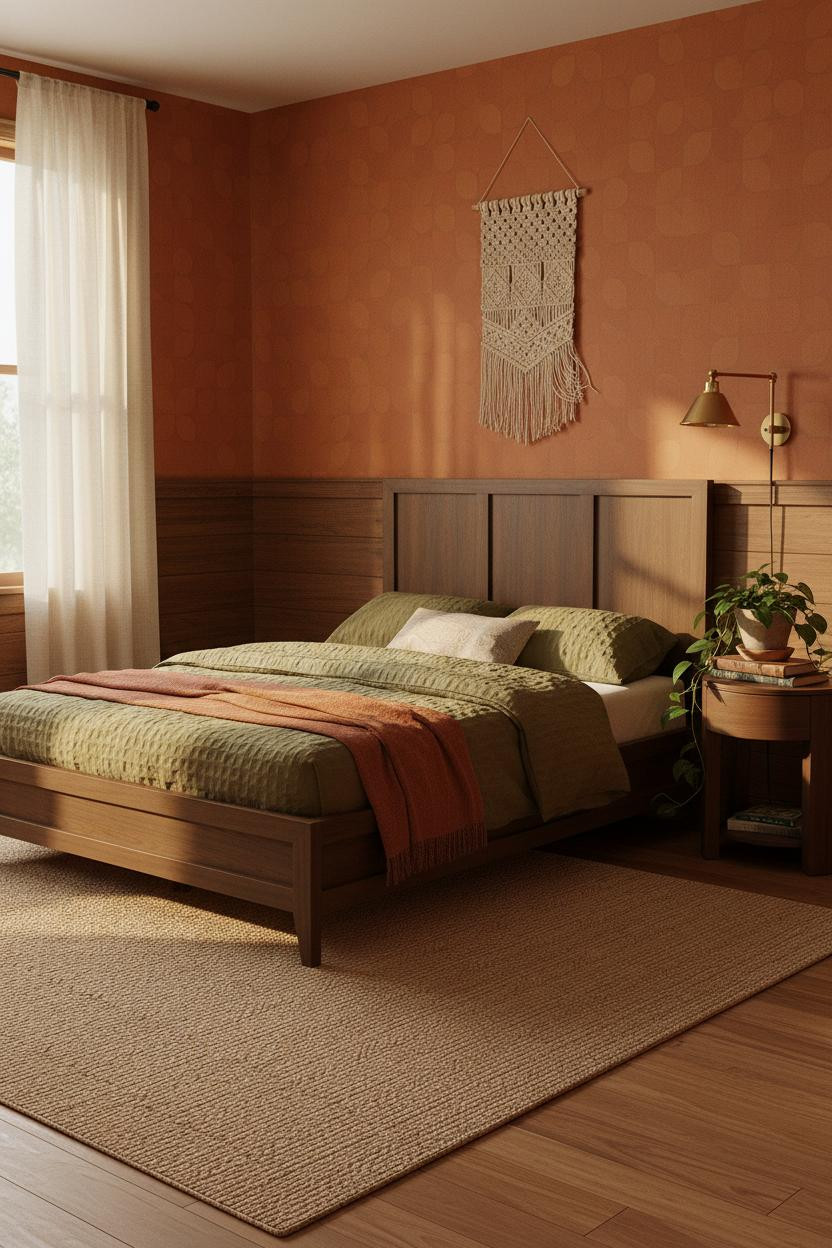
Bold choice. Not for every room. But when it works, it really works.
Running horizontal walnut paneling on the lower four feet of every wall grounds the room with a visual weight line that makes the burnt orange upper walls feel intentional rather than just very orange.
Why the palette works: The contrast between the rich brown grain below and the warm geometric wallpaper above gives the eye two distinct zones, so there's rhythm even at rest.
The finishing layer: A woven macramé hanging above the nightstand adds just enough handcraft softness to keep the room from feeling too structured.

Our #1 Pick
Saatva Classic Mattress
America's best-selling online luxury innerspring. 365-night trial, lifetime warranty, free white glove delivery.
Shop Saatva Classic
The Foundation Of Every Beautiful Bedroom
Walls get repainted. Rugs get swapped out. The textiles change every few years. But a great mattress stays, and it shapes how you actually feel about the whole room from the first morning.
The Saatva Classic is what I'd put under any of these rooms. Dual-coil support that holds up without going firm, a Euro pillow top that still feels right years in, and breathable organic cotton that doesn't trap heat on warm nights. It's the kind of bed that makes a beautiful room feel complete rather than just styled.

The rooms people save are the ones where nothing looks accidental. Start with the bed. The rest figures itself out.