
 by
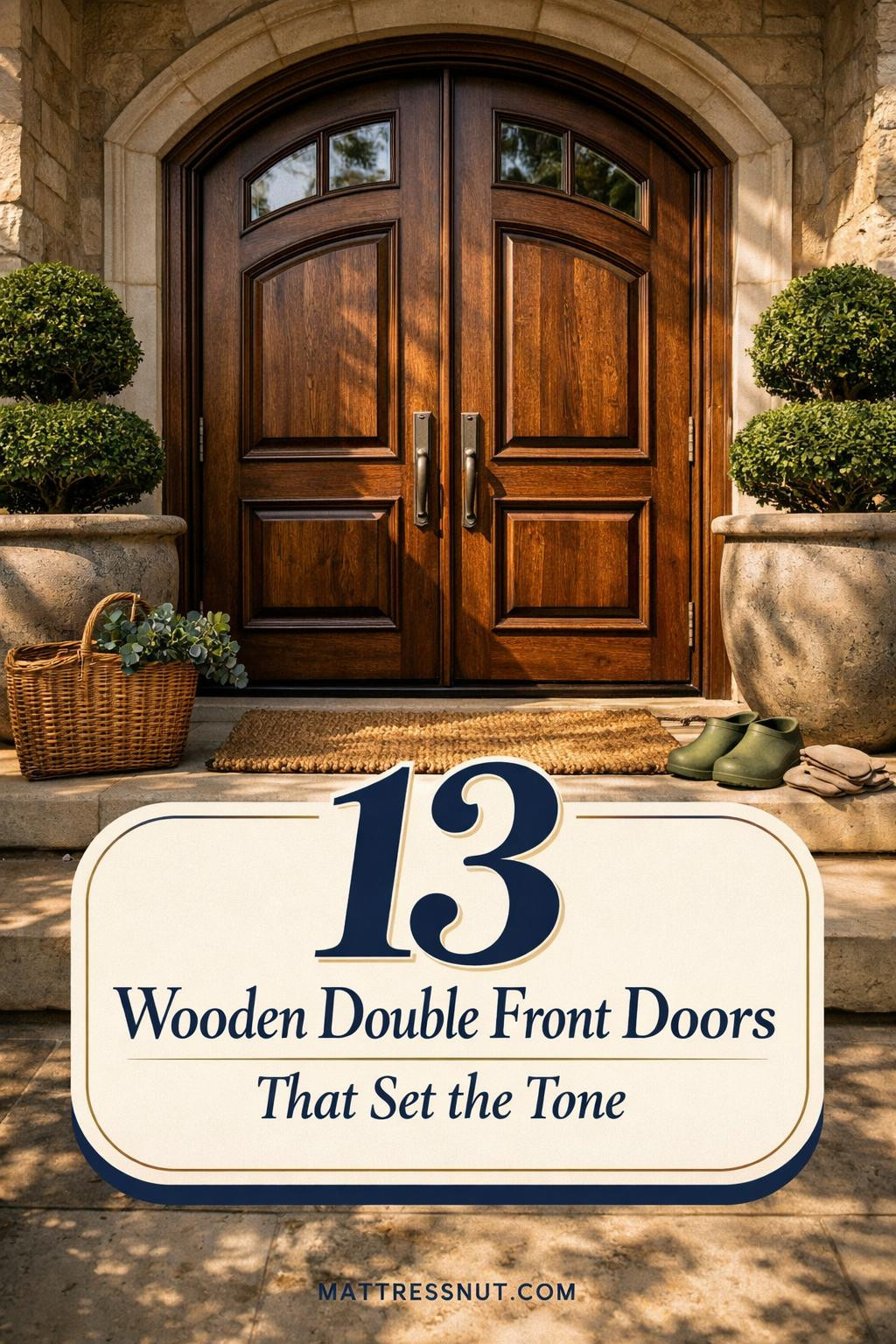
by Wooden double front doors. The difference between a house and a statement piece starts right here. If you’re redoing an entrance, this is where the budget should go—not landscaping, not hardware upgrades, but the doors themselves.
The Rustic Reclaimed Oak Move That Actually Works
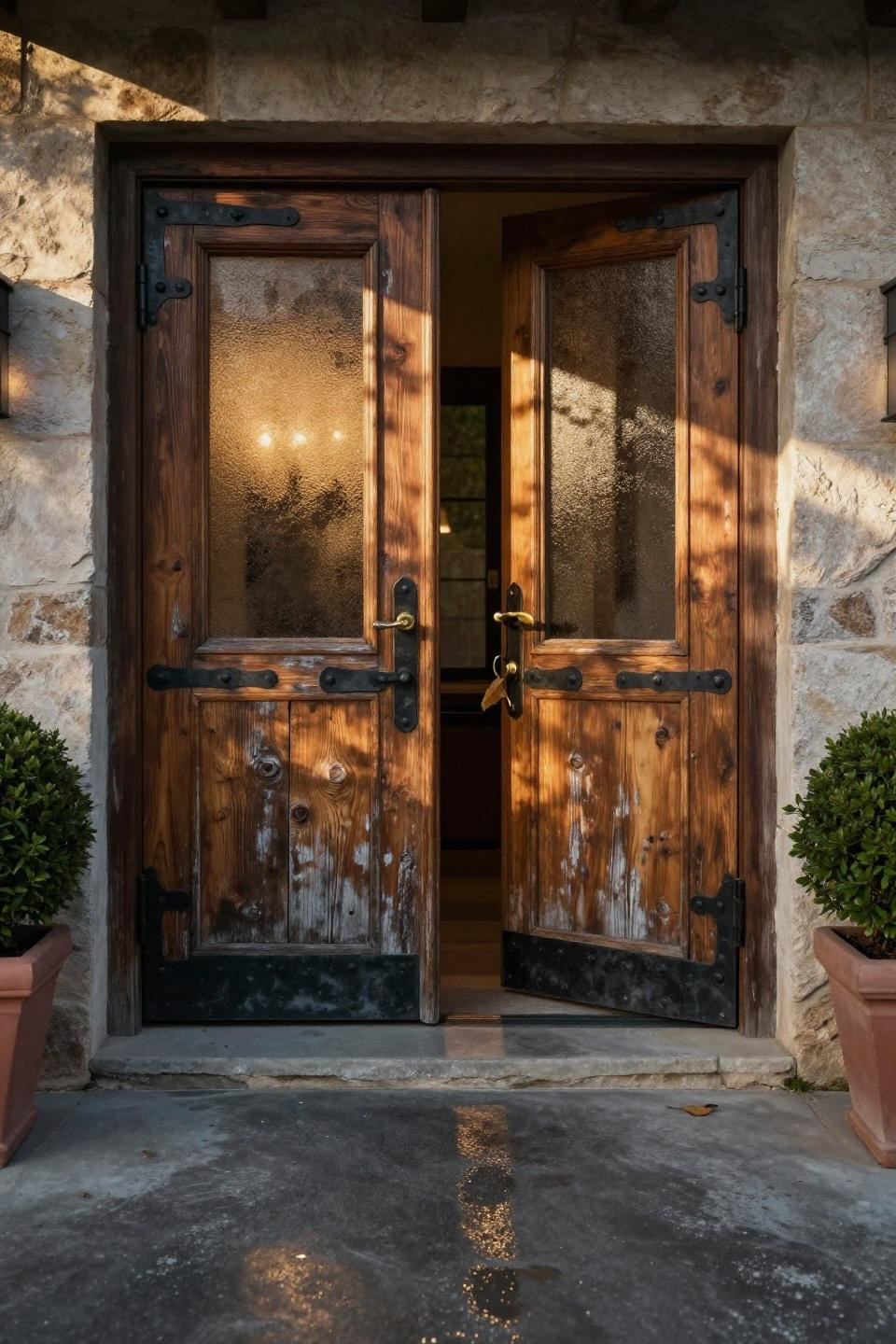
Reclaimed oak with hand-forged iron studs. This Tuscan farmhouse nailed the weathered-luxury thing without looking like a theme park. The silvered patina where sunlight hits? That’s years of aging, not a stain job. Frosted sidelights keep privacy while letting light flood in—smart move for homes where the entry faces the street. The concrete pathway still damp from watering adds that lived-in feel. One door cracked open showing warm interior glow makes the whole setup feel inviting instead of fortress-like. If you’re doing rustic, commit to real weathering.
Craftsman Revival With Leaded Glass That Earns Compliments
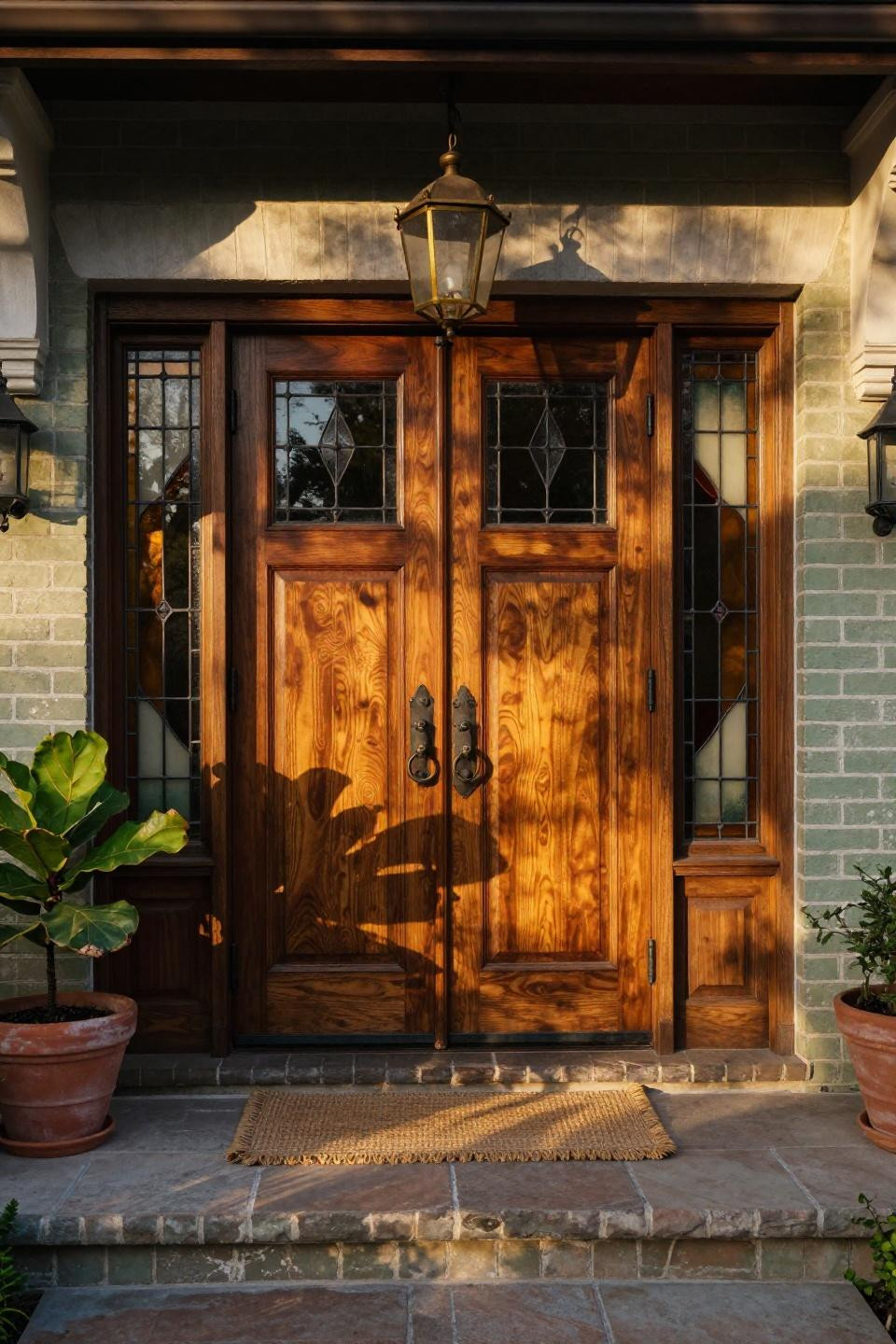
Hand-rubbed walnut doors with leaded stained glass sidelights in amber and sage. This Pacific Palisades entry gets the Arts and Crafts period right—authentic strap hinges, oversized ring pulls, actual dentil molding. Not the fake stuff from Home Depot. The painted brick in muted sage with whitewashed mortar feels fresh instead of dated. Afternoon light through those geometric glass panels creates colored shadows on the threshold. That unlacquered brass lantern showing natural oxidation? Chef’s kiss. This works because every detail commits to the era without trying to modernize it. Plus the fiddle leaf fig in weathered terracotta anchors the scale.
Mediterranean Arch With Bougainvillea That Stops Scroll
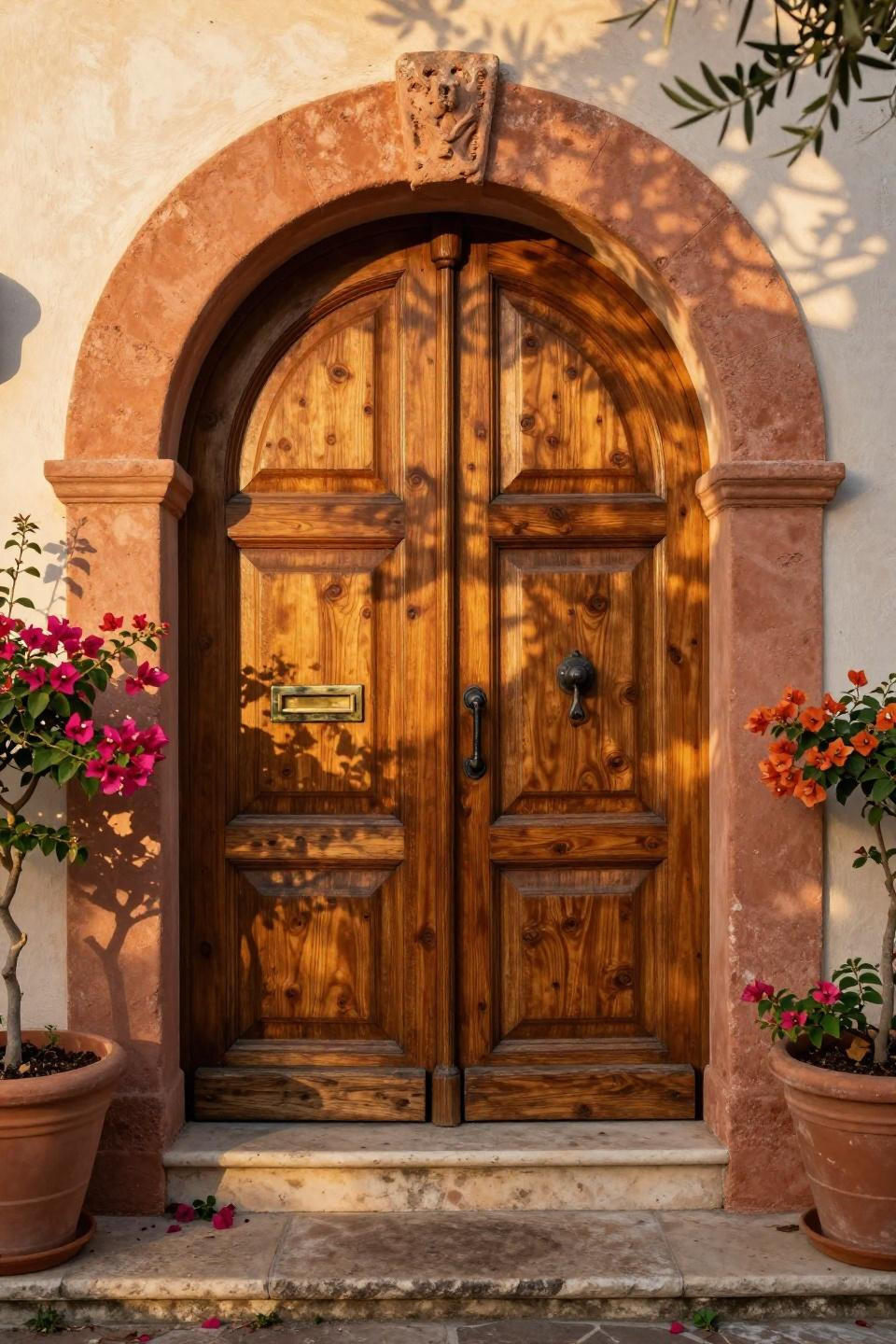
Honey-toned oak set in a massive terracotta arch. The rough-hewn frame texture against smooth wood grain creates contrast that actually reads from the street. Trailing bougainvillea in fuchsia softens the whole setup—and the scattered petals on limestone steps add realism. That patinated brass mail slot interrupting the left panel? Tiny detail, huge impact. Works because the arch creates drama without the doors trying too hard. The dappled shadows from an olive tree (off-frame but you can tell) make this feel like an actual Amalfi Coast villa instead of a McMansion attempt.
French Normandy Stone With Wild English Ivy
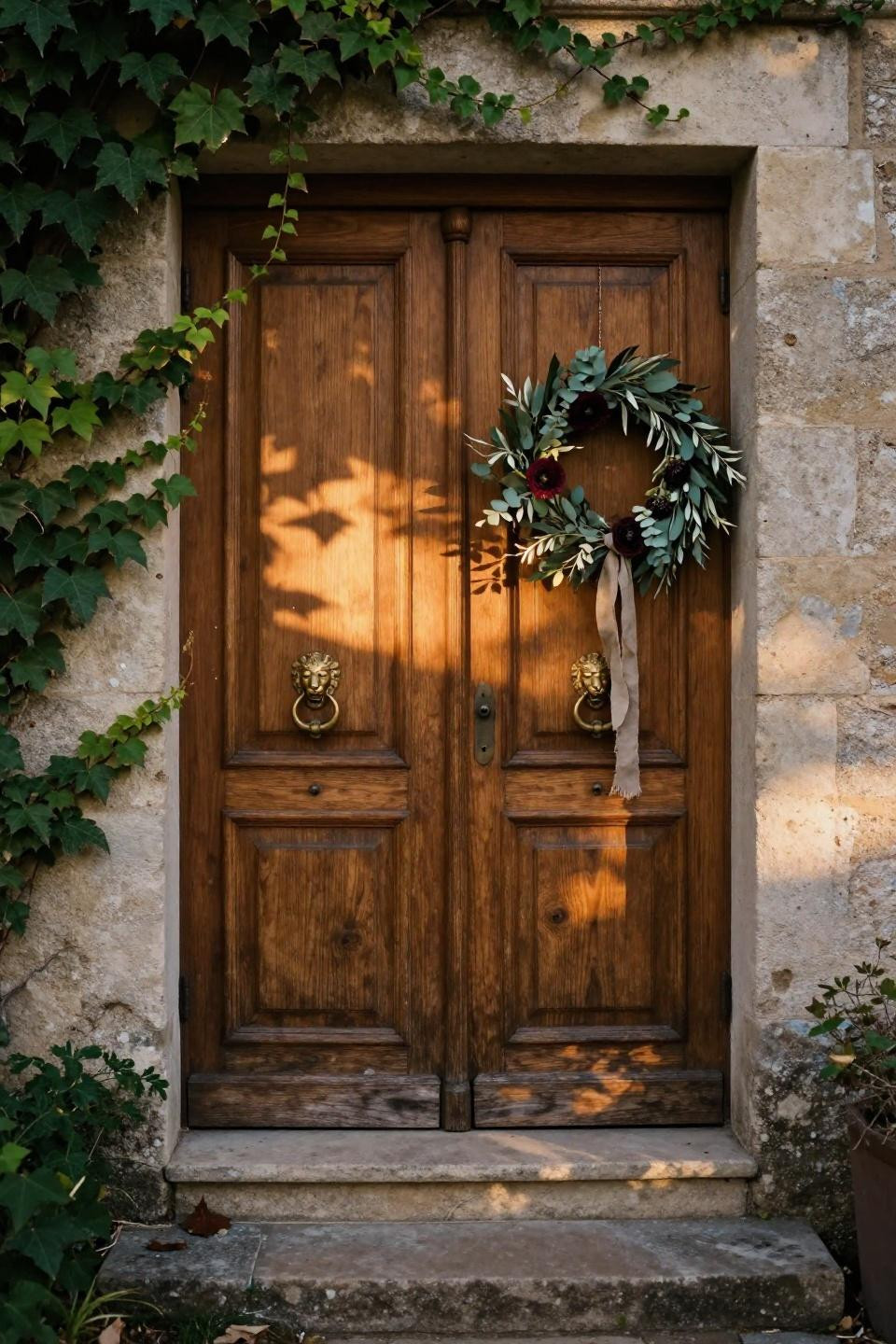
Reclaimed European oak with hand-carved panels and lion-head brass knockers. The ivy climbing asymmetrically up the left side—that’s the move. Symmetry is overrated for entries like this. The eucalyptus and ranunculus wreath hanging slightly off-center continues that organic feel. Weathered limestone with natural pitting gives texture that smooth stone never could. One fallen leaf on the step, brass showing darker tarnish in crevices—these imperfections ground the grandeur. This entry works because it looks like it’s been there for decades, not installed last month. Real talk: the frayed linen ribbon on the wreath seals it.
Pacific Northwest Portico With Old-Growth Douglas Fir
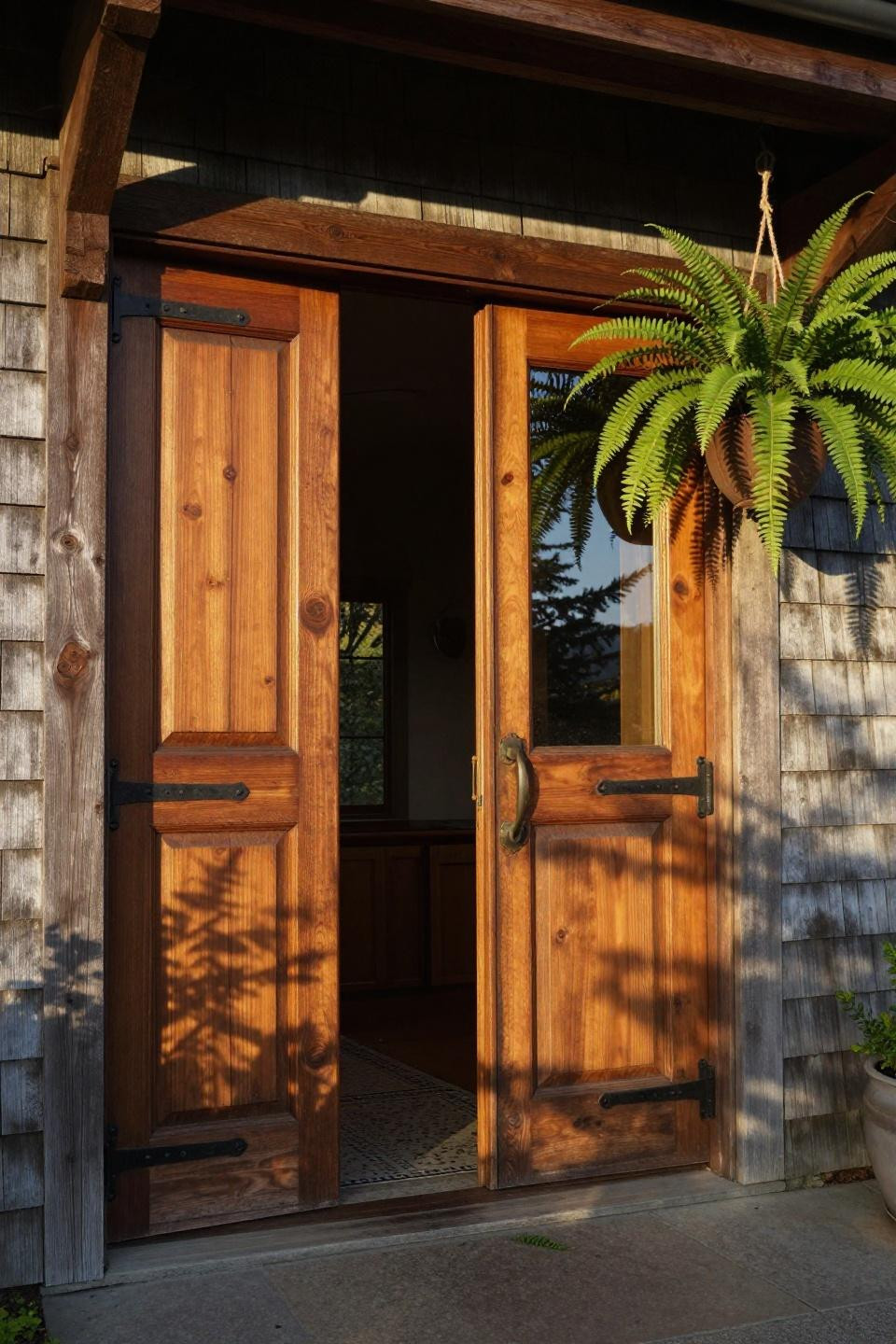
Old-growth Douglas fir, ten feet tall, vertical grain glowing like honey. The rough-hewn timber frame creates a portal effect that makes the doors feel even more substantial. Cedar shingles in silvered gray? That’s Pacific Northwest authenticity. The hanging Boston fern in hand-thrown ceramic adds organic softness without going full cottage. One door slightly ajar showing travertine inside—always better than both doors shut tight. The mirror panel inset reflecting fragmented trees adds depth. Brushed bronze handles with fingerprint smudges remind you this is an actual entrance, not a showroom.
Parisian Haussmann With Geometric Sunburst Inlays
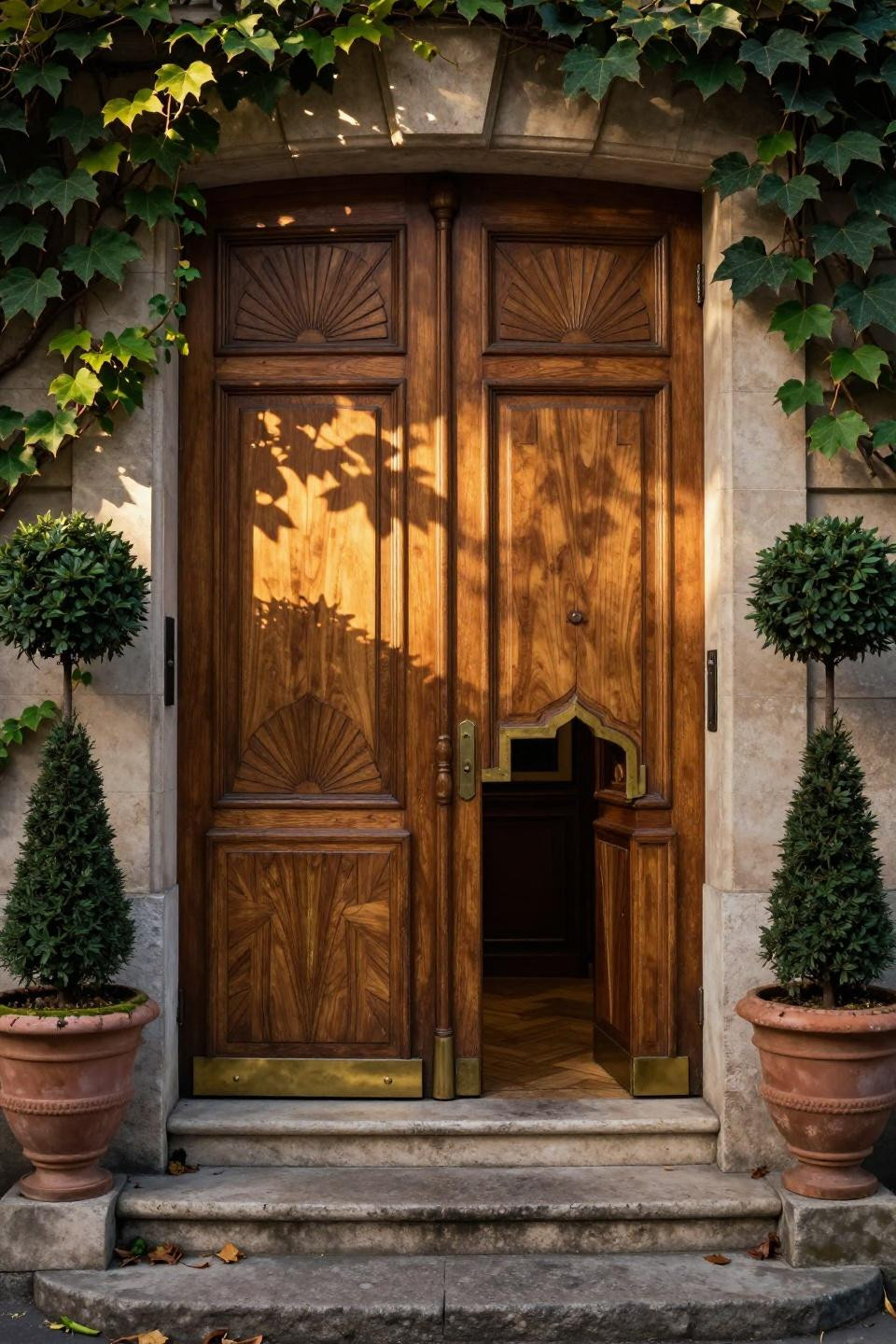
Hand-carved walnut with geometric brass sunburst inlays. This Haussmann estate entry nails Art Deco without feeling like a Gatsby cosplay. The stepped-panel geometry catches light in sections—creates dimension. Climbing ivy framing weathered limestone adds age (and those dappled shadows across carved panels? Perfect). Sculpted boxwood in terracotta urns with moss-covered rims grounds the formality. Unlacquered brass hardware showing fingerprints and tarnish keeps it real. The limestone threshold worn from centuries of foot traffic tells the story. This works because the bones are strong enough to carry the ornamentation.
Charleston Estate With Mahogany and Verdigris Knocker
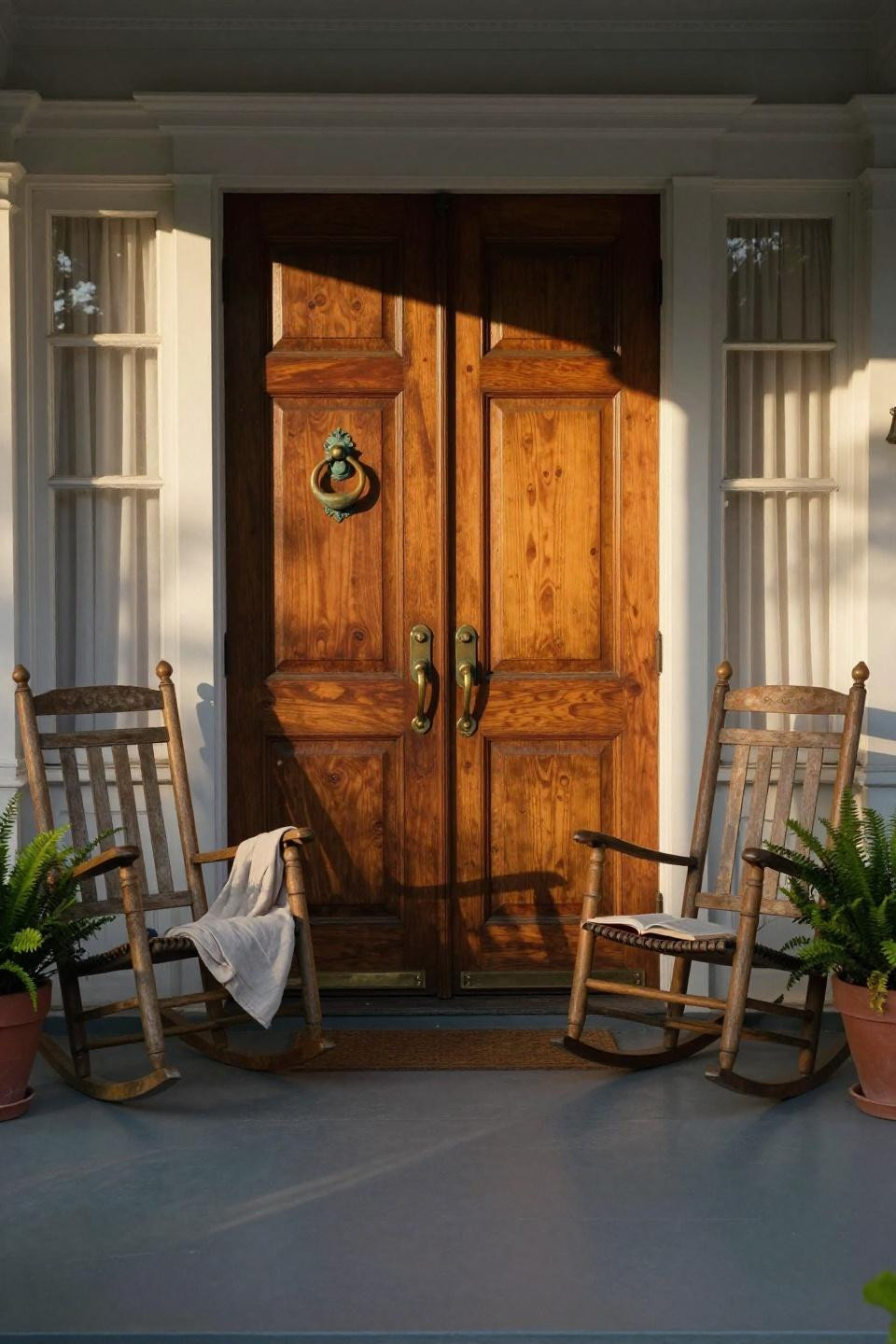
Rich mahogany with visible wood pores, oversized antique brass knocker showing verdigris patina. The Charleston veranda setup—weathered teak rockers, linen throw draped asymmetrically, half-read book left open—makes this feel inhabited. Potted ferns with slight wilting on lower fronds add realism (because not every plant is Architectural Digest-perfect). Unlacquered brass hardware aging naturally in recessed areas shows commitment to the aesthetic. The dove-gray painted porch floor reflecting golden hour light creates warmth. Southern elegance without the syrup. This entrance works because nothing feels staged.
Provençal Stone Villa With Hand-Forged Iron Clavos
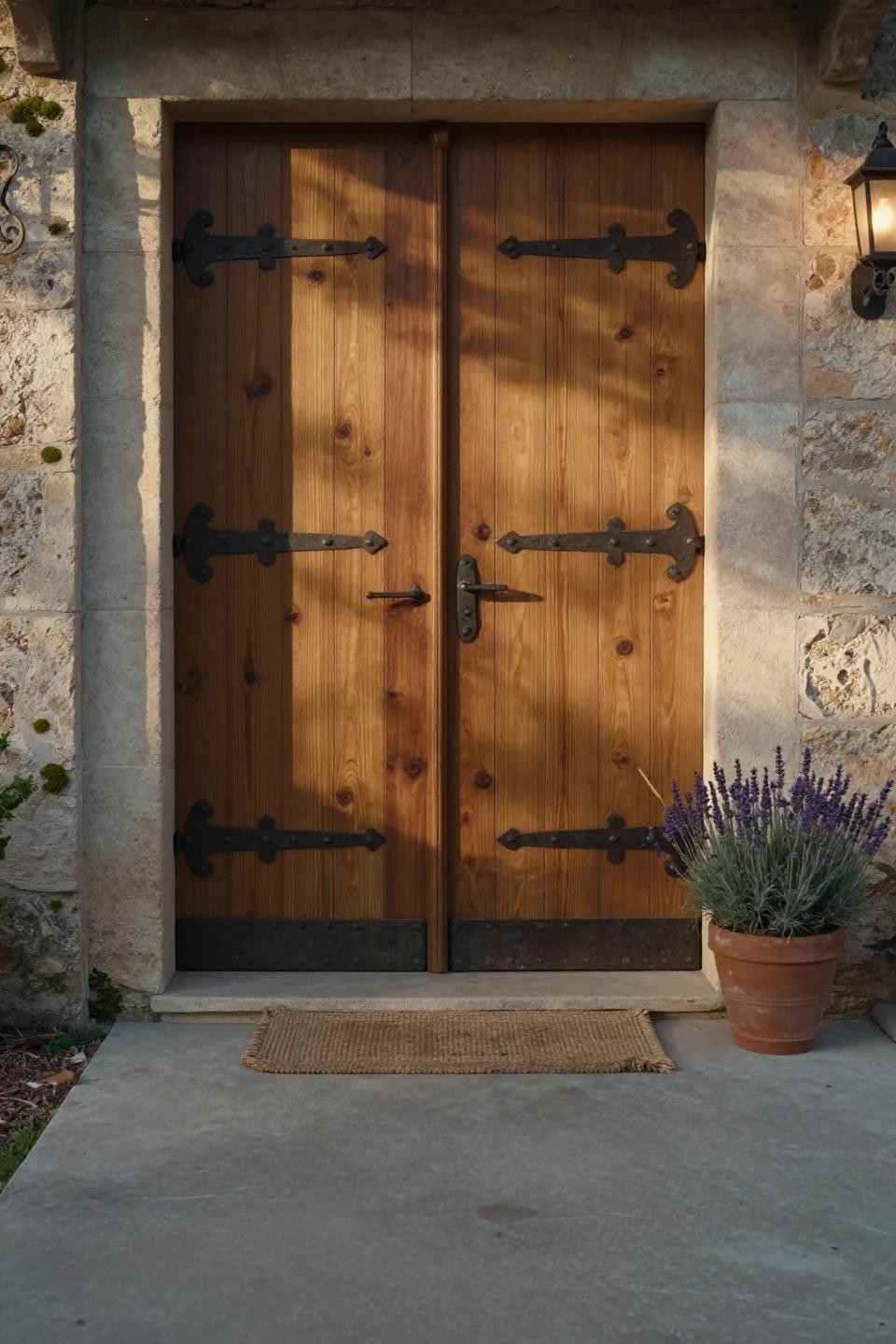
Honey-toned oak planks with oxidized iron clavos arranged geometrically. This 1920s villa renovation paired Old World doors with poured concrete pathways—contrast that actually works. The rough-hewn vertical grain with visible knots feels authentic, not distressed-on-purpose. Aged limestone walls with moss in mortar joints frame the entry perfectly. That jute mat sitting askew with one corner lifted? Human touch. Terracotta pot with lavender where one stem’s broken and leaning adds the right amount of imperfection. Wrought iron sconce casting warm glow brings evening appeal. The cool gray concrete reflecting light keeps it grounded instead of precious.
Wisteria-Draped Arched Entry in Aged Oak
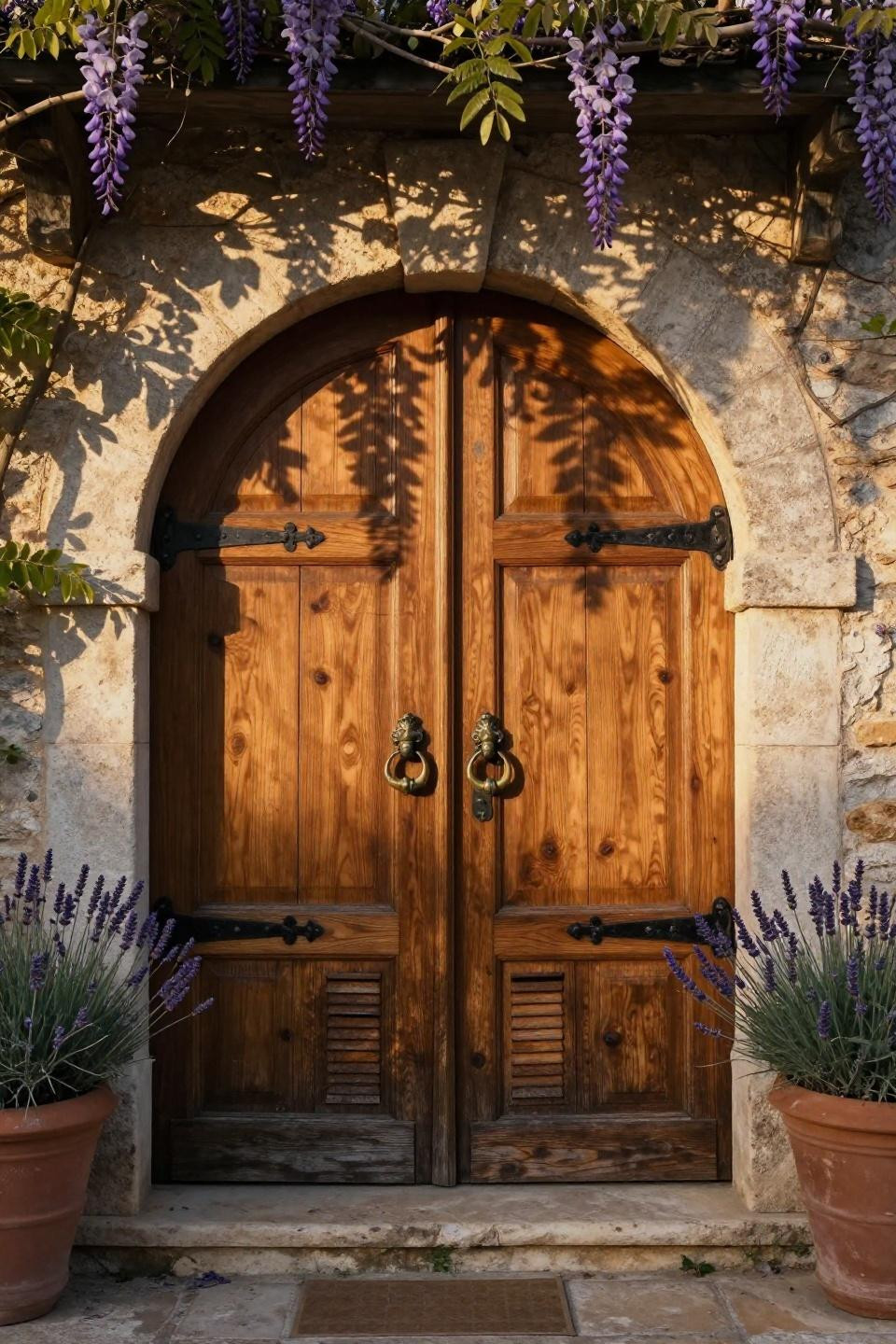
Reclaimed oak with hand-forged strap hinges under a wisteria-covered arch. The rough limestone surround creates texture contrast against smooth wood grain. Dappled shadows from overhead vines falling across the panels—that’s the magic. Flanking terracotta planters with lavender spilling asymmetrically (one slightly crooked) keeps it organic. The single purple blossom fallen on the worn threshold? That’s the detail that makes it believable. Louvered side panels with amber glow showing through add dimension. Antique brass knocker positioned off-center breaks up the symmetry. This Provençal setup works because the architecture does the talking.
Sonoma Wine Country With Barn Door Track Hardware
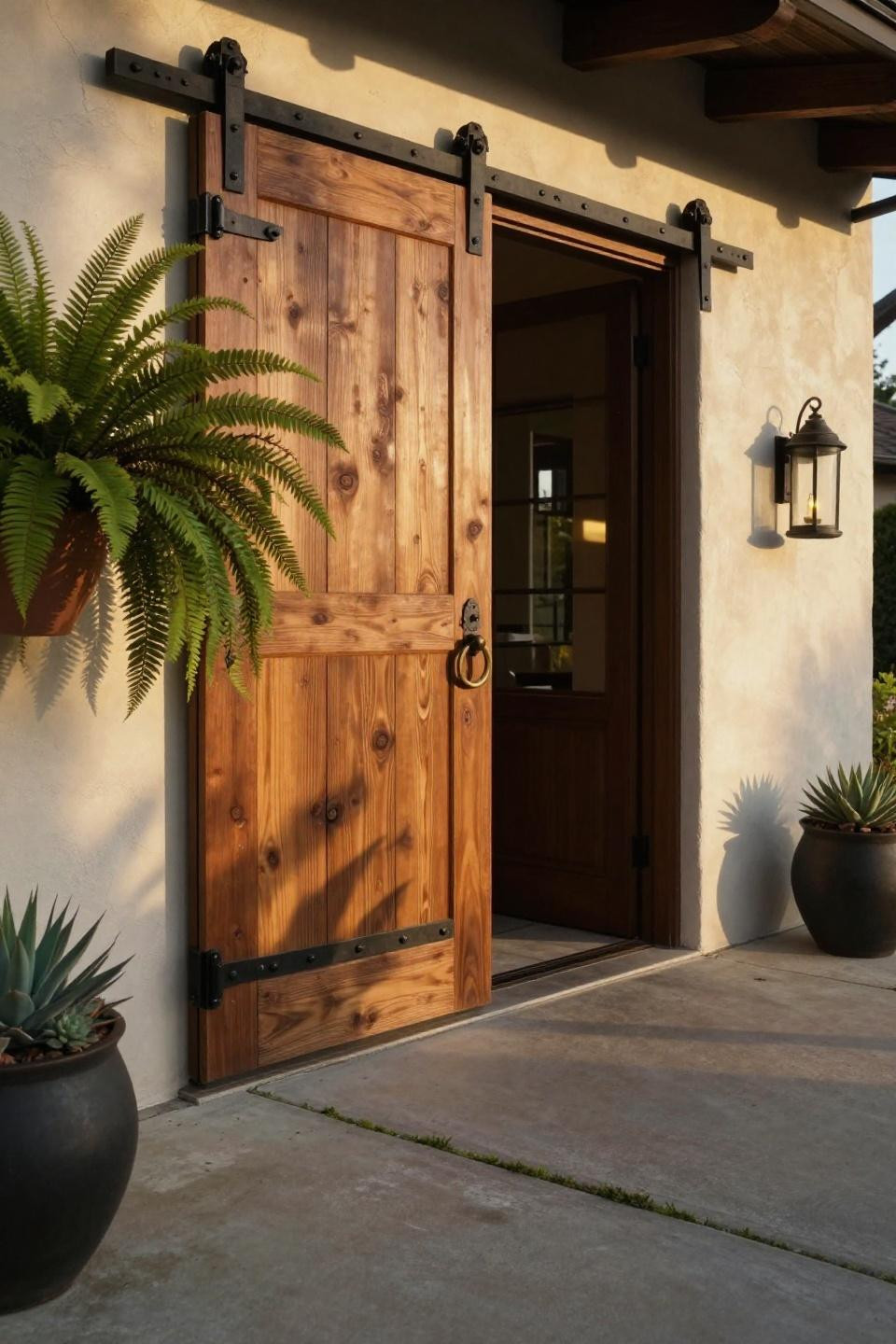
Reclaimed oak barn doors on blackened steel track—the move for modern farmhouse entries that want industrial edge. Hand-hewn planks with rough grain and honey patina catch raking light beautifully. Hand-forged iron strap hinges with visible rivets add authenticity. One door cracked open revealing limestone flooring inside invites entry. The staghorn fern hanging asymmetrically in terracotta? Sculptural without trying. Concrete pathway with natural moss in expansion joints grounds the aesthetic. Flanking succulents in steel planters add vertical interest. This works because it’s barn-inspired without going full Joanna Gaines.
Beverly Hills Modern With Blackened Steel Insets
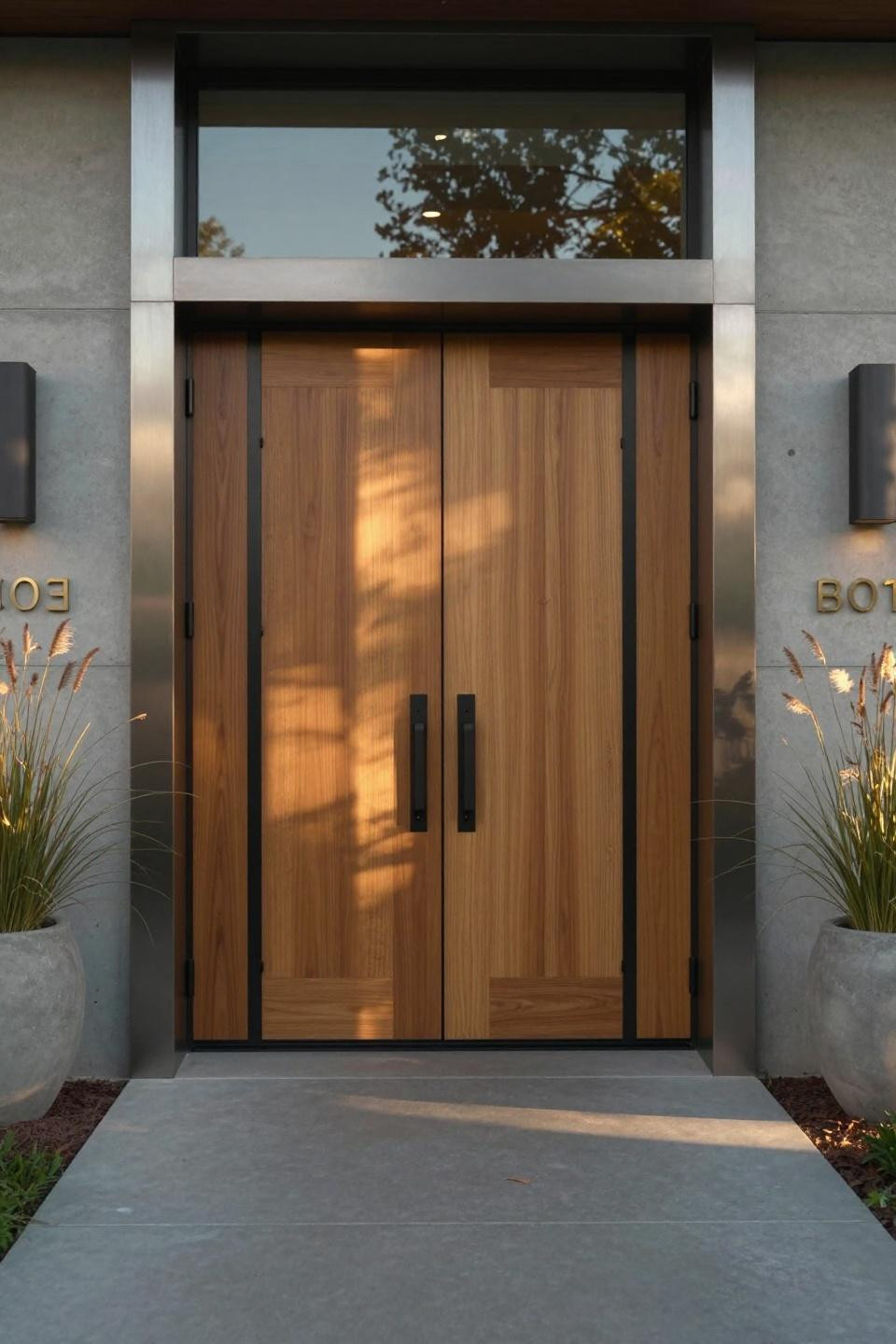
Twelve-foot white oak doors with slim blackened steel insets creating geometric rhythm. This contemporary Beverly Hills entrance paired warm wood with steel framing—contrast that reads immediately. The steel showing faint fingerprints near the handle keeps it human. Volumetric light slicing through the glass transom above creates drama. Sculptural concrete planters with wild grasses catching backlight add organic softness. Modern brass house numbers mounted asymmetrically on concrete show natural patina. One dried leaf on the pathway corner (because even luxury homes have leaves). Hand-oil finish on the wood with subtle weather checking in the grain proves it’s real material, not veneer.
Victorian London Georgian With Stained Glass Transom
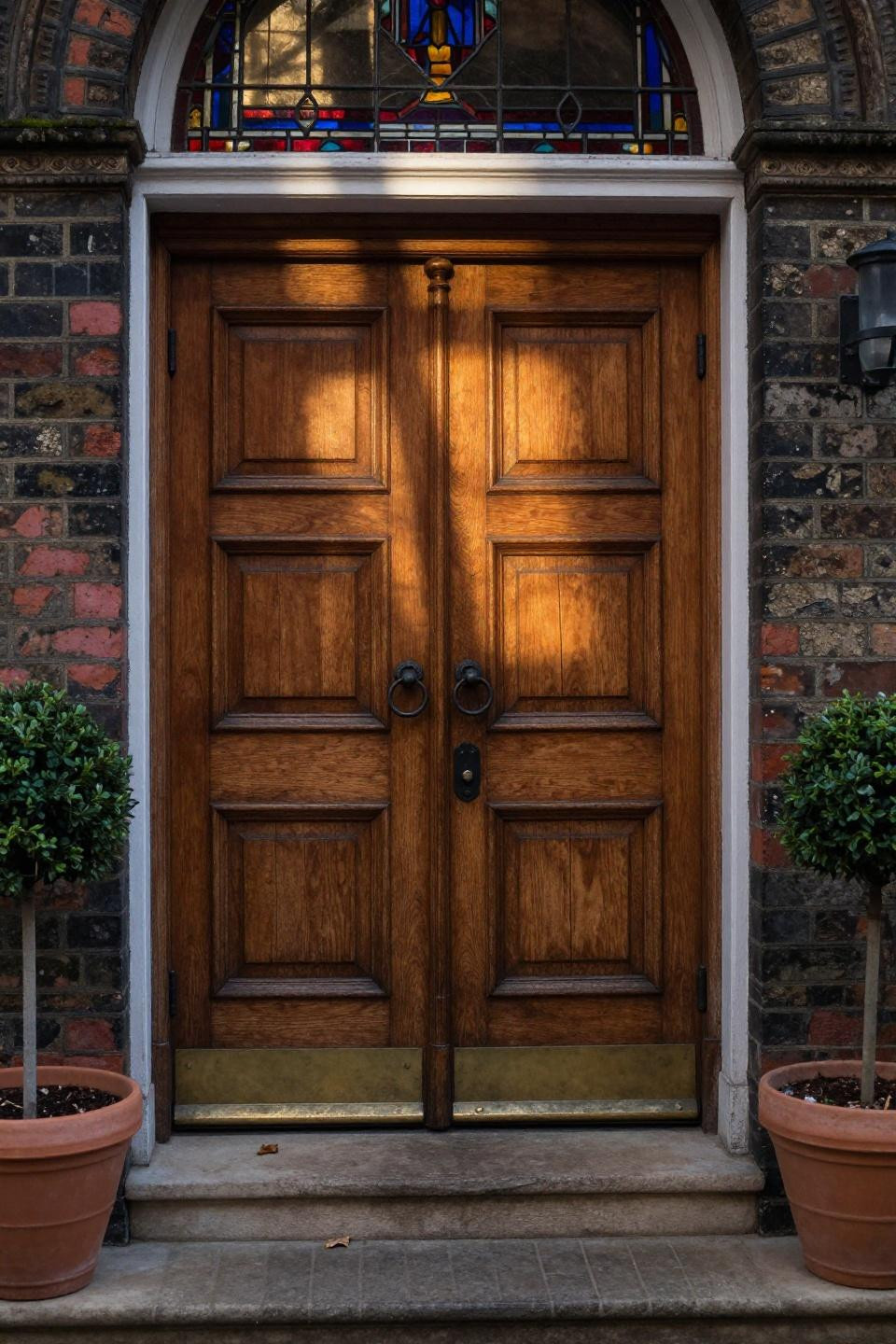
Eight-foot solid English oak with raised fielded panels and original 1880s hand-cut stained glass above. The jewel-toned caustics—ruby, sapphire, amber—falling across honey oak and weathered brick steps create magic. Original patinated iron ring handles worn smooth from centuries of touch tell the story. Hand-forged strap hinges in blackened steel anchor the authenticity. Flanking boxwood topiaries in oversized terracotta (one slightly asymmetrical from trimming) frame without fussing. Brick showing moss in mortar joints, subtle color shift from rose to sienna—imperfections that cost money to preserve. Aged brass kickplate with verdigris patination at the base finishes it. Heritage done right.
Vermont Farmhouse With Bronze Screen Door Layering
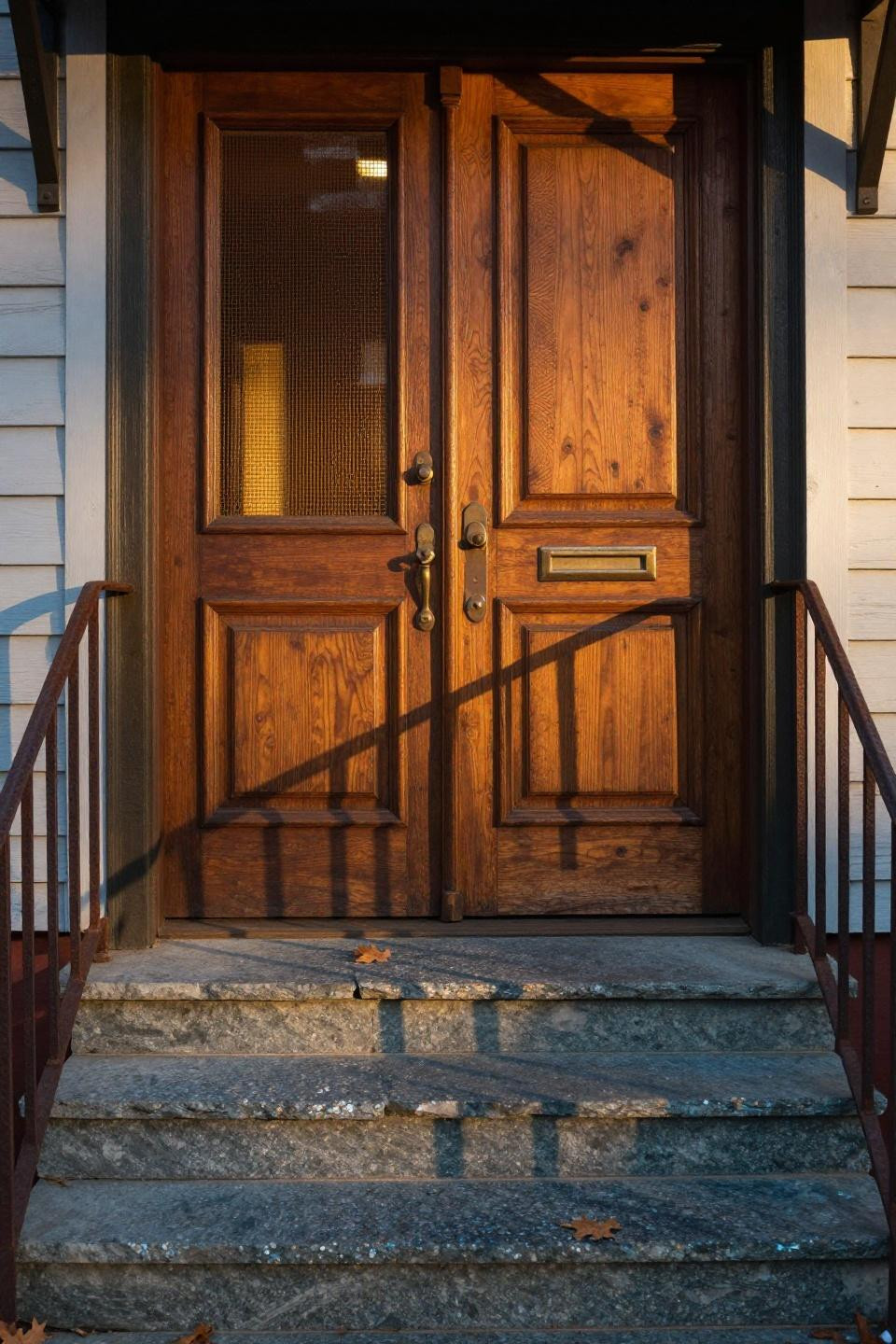
Mahogany six-panel doors with aged honey-brown patina, layered with an oxidized bronze screen door pulled ajar. The fine brass mesh catching side-light creates texture. Slate steps with mica flecks glittering in golden hour—that cool blue-gray against warm wood works. Hand-forged iron railing with hammered texture and rust patina curves organically. The polished brass mail slot centered in the right panel adds symmetry. One fallen oak leaf on the second step, slight dust on the threshold—lived-in details that matter. This Vermont farmhouse entrance works because the layers create depth. Screen doors aren’t just for cottages.
Start with the doors, not the landscaping. If the entrance doesn’t command attention, nothing else matters. I’d go with reclaimed oak or walnut, invest in actual hand-forged hardware, and let the material do the talking.