
 by
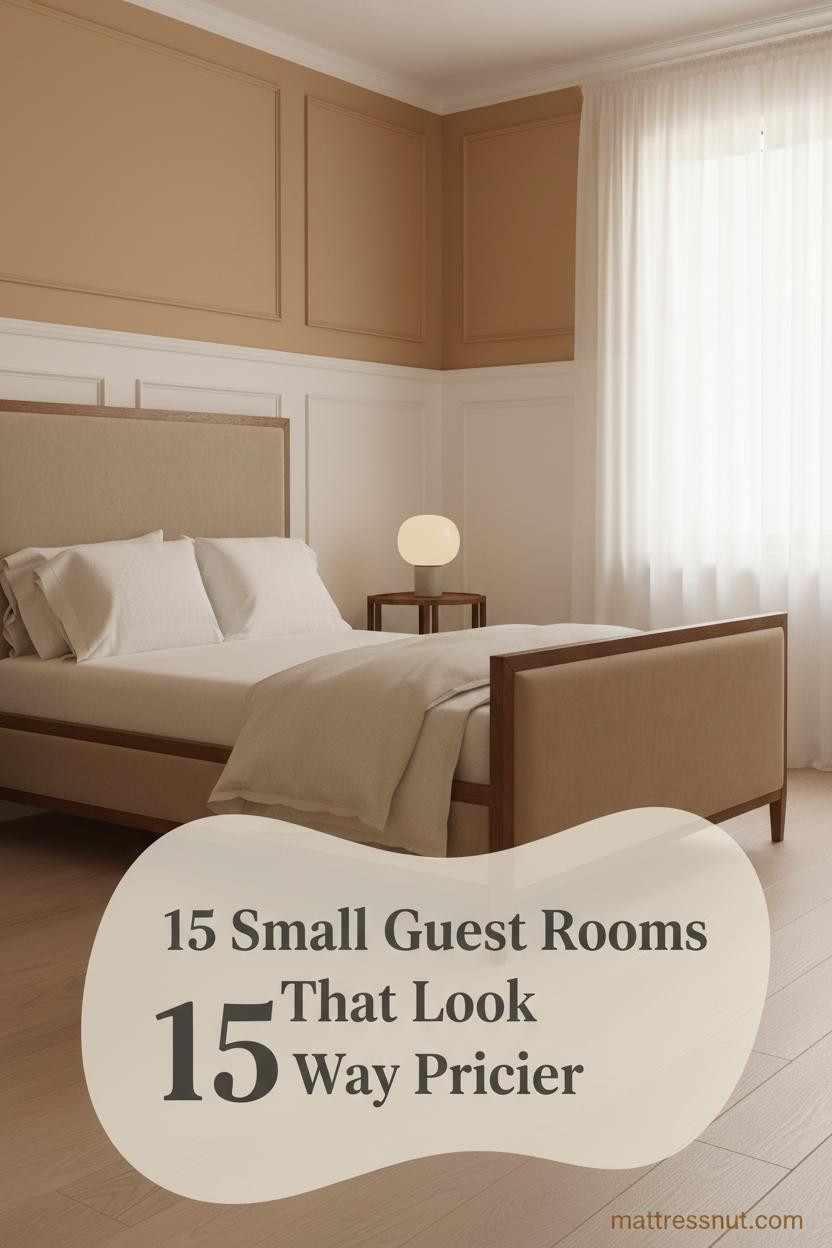
by Think your spare room is too small to feel like a real guest bedroom? Small guest room ideas prove otherwise, and the best ones don't fake it. They commit to the constraint.
A day bed does most of the heavy lifting here. It reads like a sofa, sleeps like a bed, and makes a narrow room feel designed rather than improvised.
The Walnut Shelf That Makes This Room Feel Complete
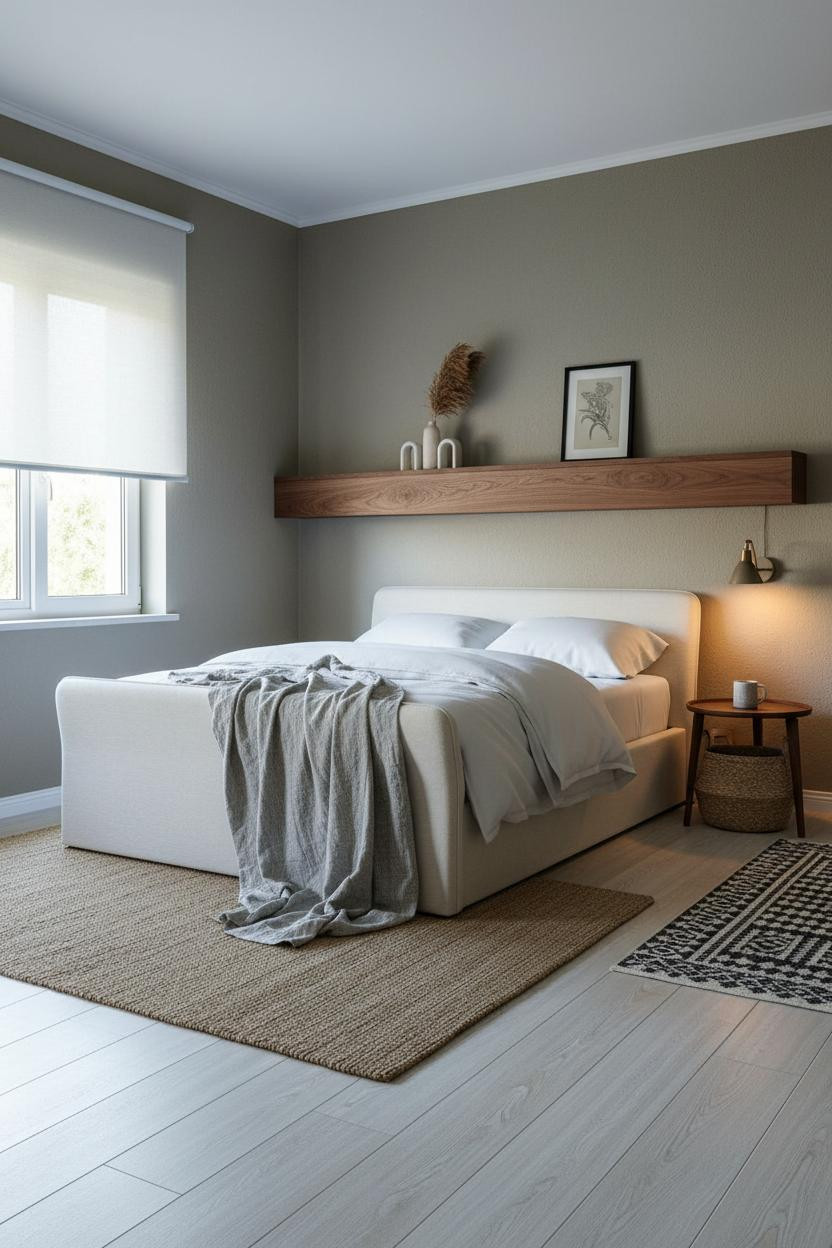

I keep coming back to this one. Something about the proportions just works.
Why it holds together: A single floating shelf in warm walnut grain gives the sleeping nook a horizontal anchor without crowding the wall. The wood tone against matte plaster is what makes it feel intentional rather than furnished.
Steal this move: Pair the shelf with ceramic bookends and one dried stem. That's enough. Resist adding more.
Olive Walls Shouldn't Work This Well in a Tiny Room
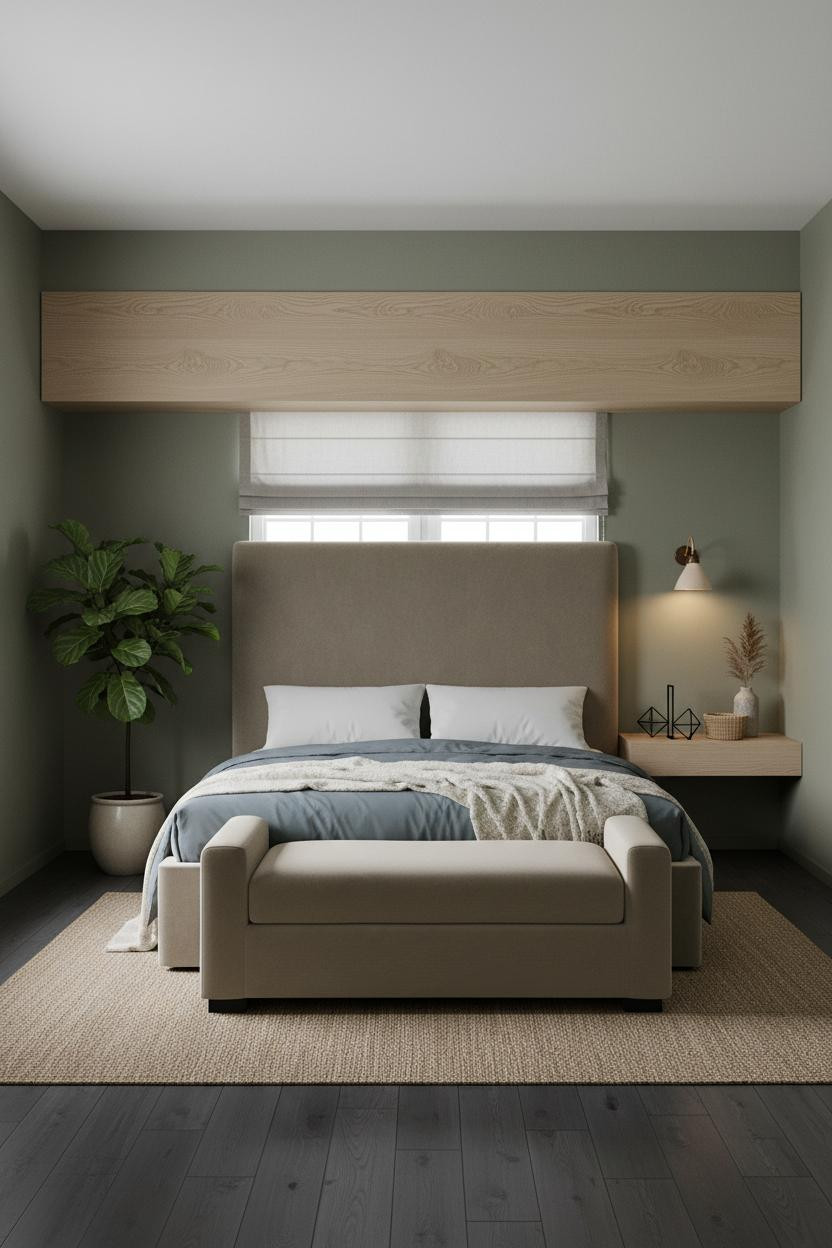

Dark walls in a small room feel like a risk. But they work here because the ceiling soffit pulls the eye up, not in.
The pale oak soffit trim above the sleeping zone keeps the olive from feeling heavy. It creates just enough architectural separation that the room feels considered, in a way that feels natural rather than overthought.
The easy win: Add an oversized potted plant in the corner. It softens the dark walls and gives the room something alive to look at.
An Arched Niche Turns a Small Corner Into a Real Bedroom
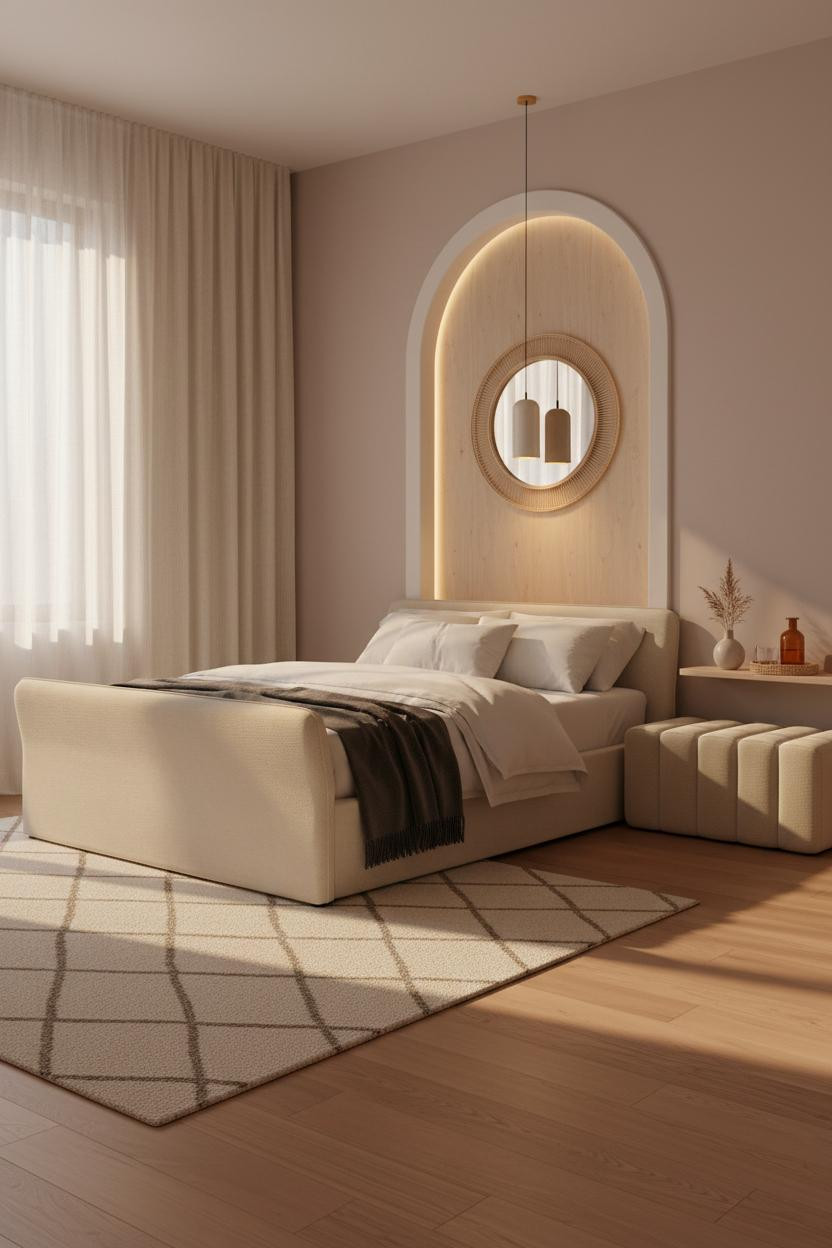
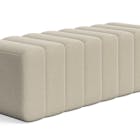
This one surprised me. A tall arched niche with soft white plaster surround makes the sleeping zone feel genuinely designed, not just furnished into a corner.
Why it looks custom: The curved crown catches warm light along its edge, which adds vertical rhythm that a flat wall simply can't replicate. The birch wood backing keeps it from feeling too formal.
Worth copying: You don't need to build anything. A curved mirror above the headboard achieves a similar effect for a fraction of the effort. Check out these small bedroom layouts that maximize space for more proportion ideas.
What a Textured Plaster Wall Does for a Plain Little Room
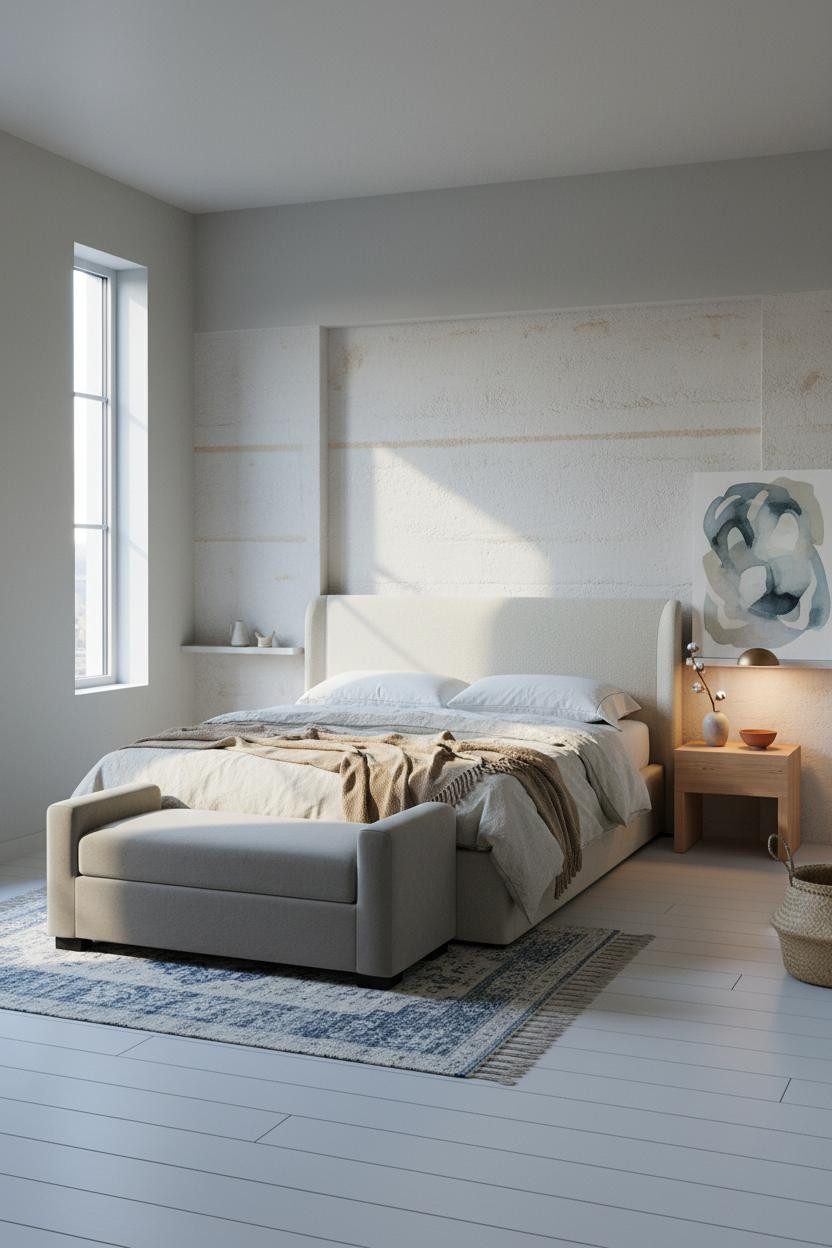

Nothing fancy. That's the point.
But the raw plaster wall panel behind the day bed changes everything about how the room reads. Morning light rakes across the sandy texture and creates shadow that no smooth paint can match, which makes the room feel warmer without adding a single object.
The smarter choice: Lean one large abstract canvas against the plaster instead of hanging it. Looks considered. Takes thirty seconds.
Terracotta Gets a Bad Reputation. This Room Earns It Back.
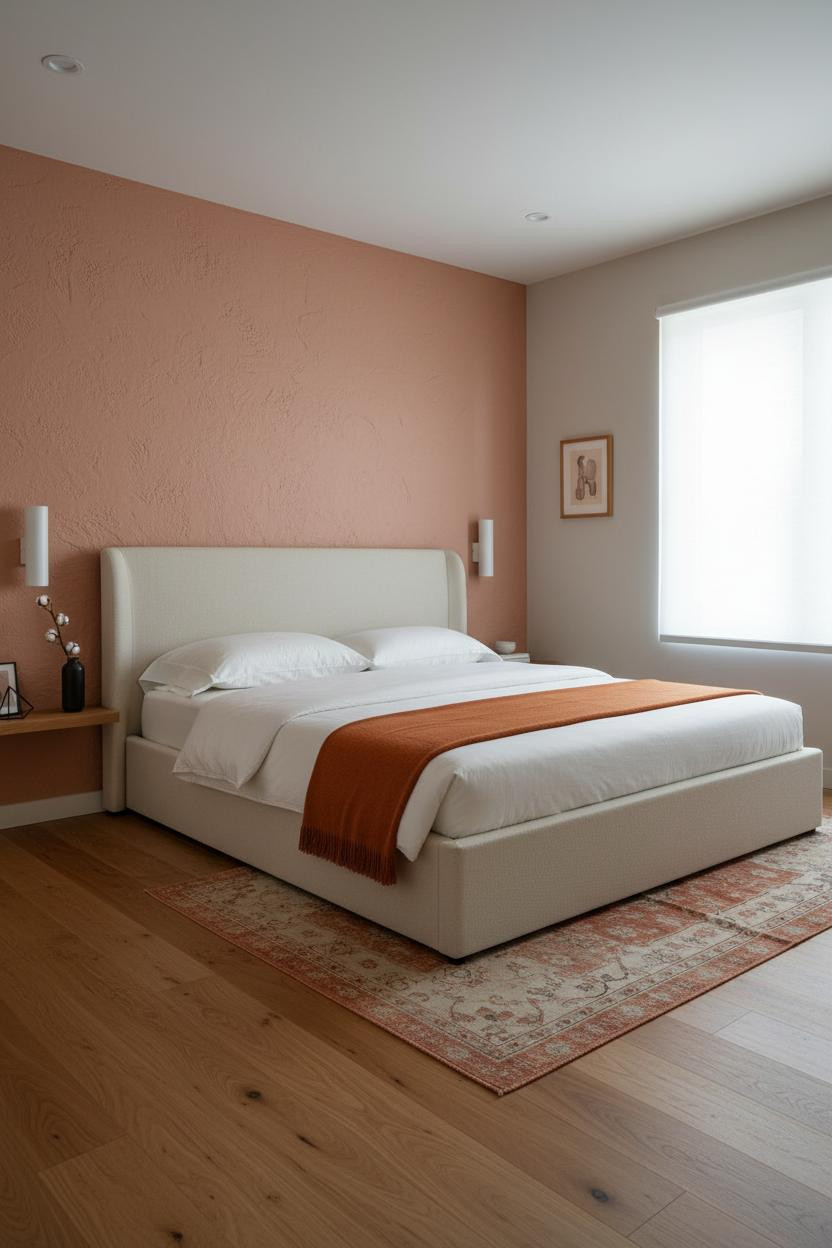
The hand-applied plaster finish is what saves it. Terracotta in a small room can feel oppressive, but the organic surface texture keeps it soft and tactile rather than heavy.
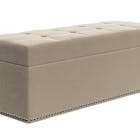
Where people go wrong: They pair warm plaster walls with cool-toned bedding. The room feels split. Stick to ivory, camel, or burnt orange textiles so the whole space reads warm and cohesive. The Rhone Storage Bench at the foot is the practical move here too. Small rooms need every inch of hidden storage they can get.
Half-Height Wainscoting Makes a Compact Room Feel Grounded
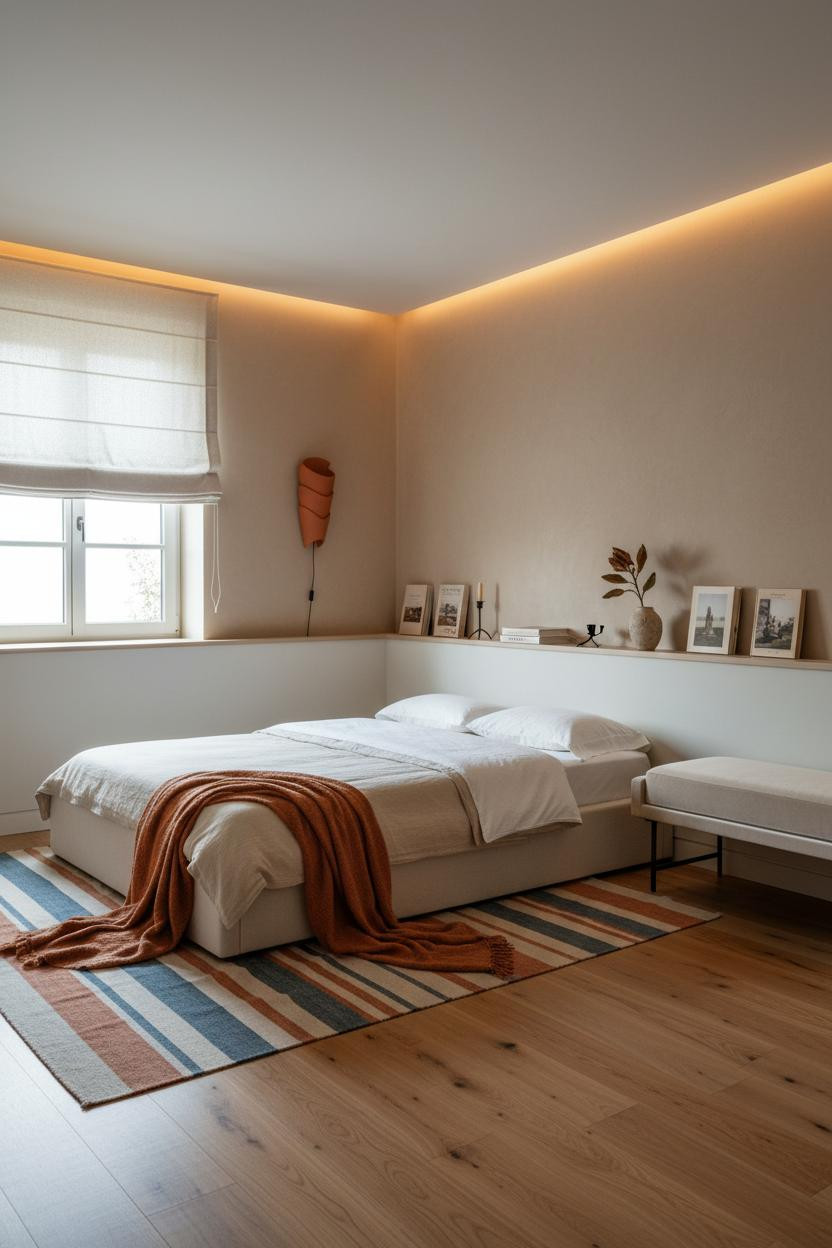
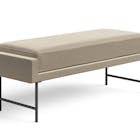
I honestly didn't think wainscoting would work this well in a guest room this small. But the horizontal rail line at mid-wall creates a quiet datum that makes the whole room feel intentional.
What gives it presence: Matte warm white wainscoting panels wrap three walls and absorb light evenly, while the camel wall color above adds warmth without tipping into too much. The room feels lived-in and intimate, not decorated.
Pro move: Add a sculptural terracotta sconce on the side wall. It fits the Mediterranean warmth of the paneling while still feeling current.
Cream Shiplap Belongs in More Guest Rooms Than You Think
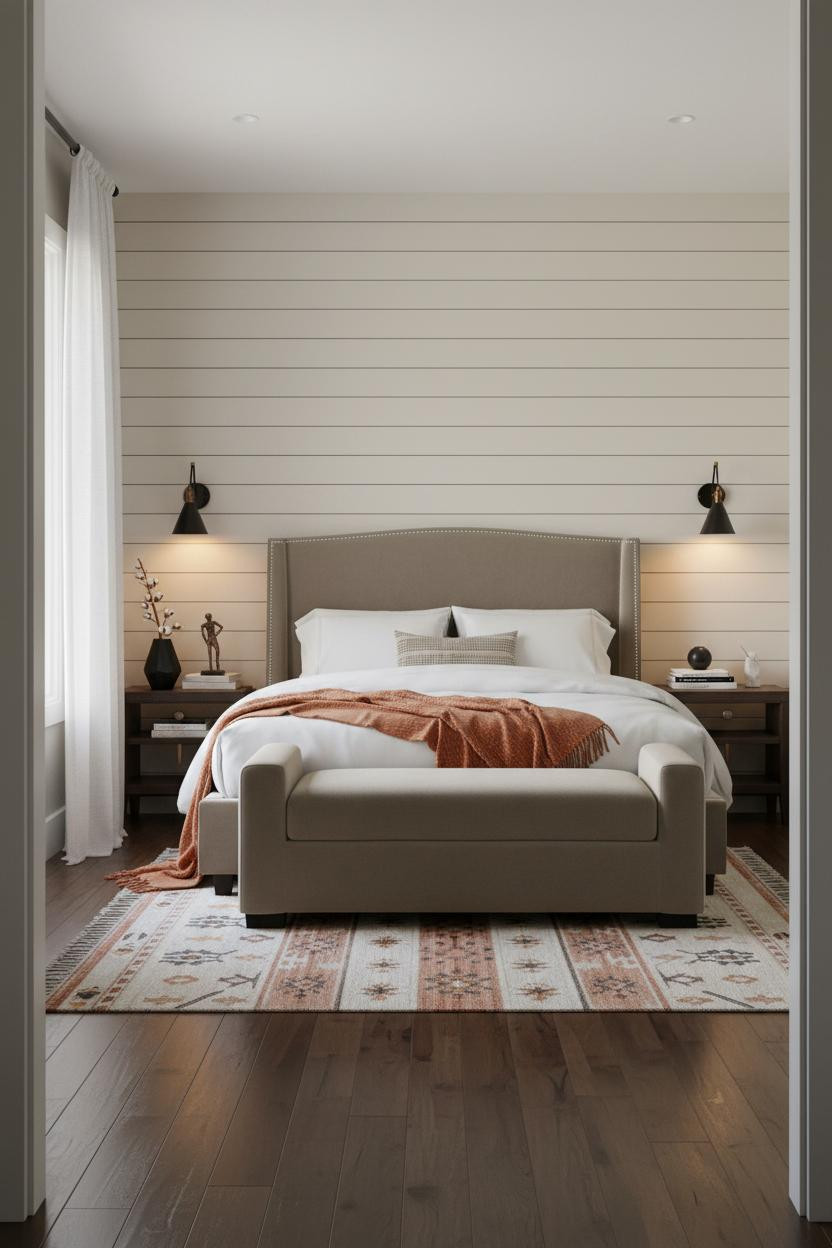

Full-width cream-white shiplap behind the sleeping zone is the kind of move that reads farmhouse in a photo but actually feels warm and restful in person. The shallow grooves cast parallel shadow lines that give the wall texture without adding visual clutter.
Why it feels balanced: Dove grey on the flanking walls keeps the shiplap from reading too country, while dark walnut flooring grounds the whole thing. It's a small move, big difference.
Avoid this mistake: Don't use cool white shiplap here. The warmth of a cream tone is what makes this palette work together.
I Almost Scrolled Past This Alcove. Glad I Didn't.
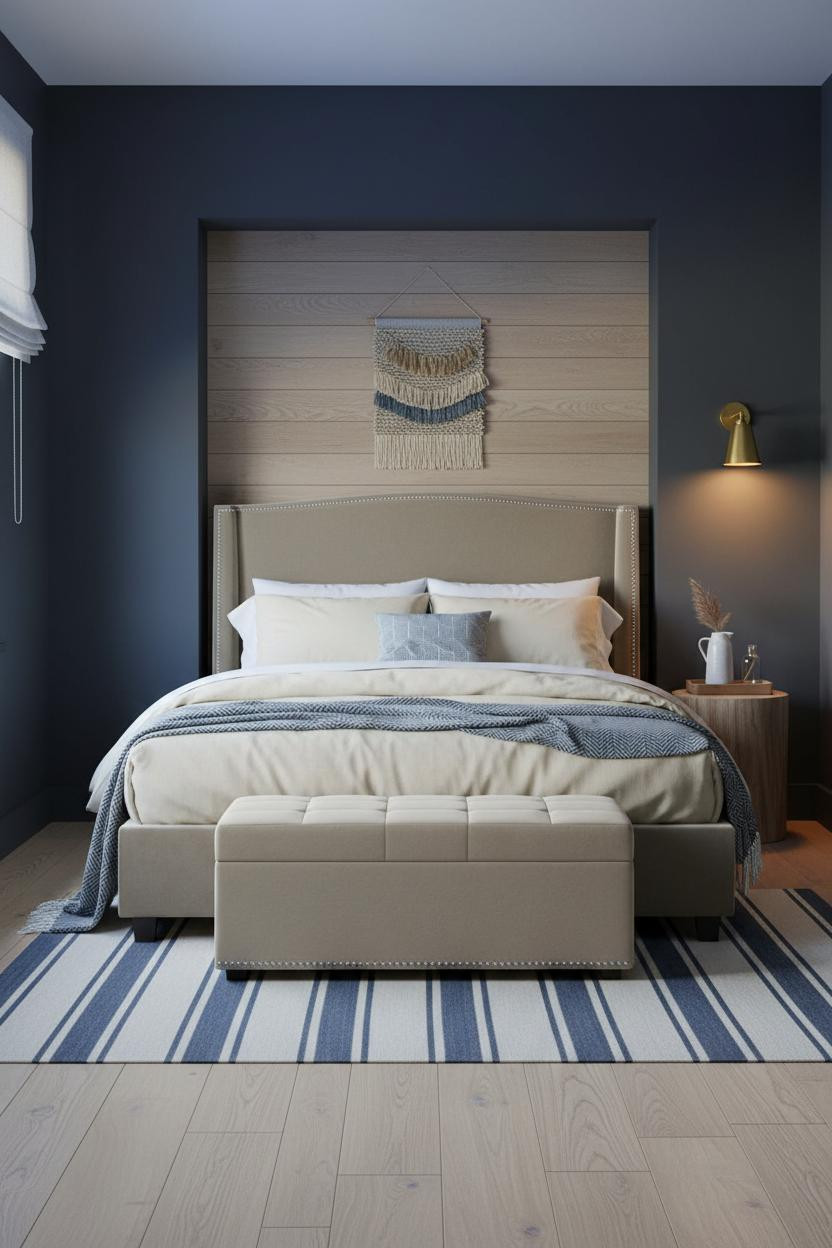
A recessed alcove with pale oak shiplap backing does something that no furniture arrangement can: it makes the bed feel like it belongs there. Not placed. Belonging.
What creates the mood: Charcoal walls around the alcove frame the pale wood backing, so the cool morning light catches the vertical grain and the whole nook feels hushed. The room feels calm and cohesive in a way that's hard to explain but immediate when you see it.
A woven wall hanging inside the nook keeps the look warm. And a steel blue herringbone throw at the foot is enough contrast to keep the palette from going flat. For more day bed and Murphy bed options for tiny spaces, that guide is worth bookmarking.
Floor-to-Ceiling Curtains Are the Cheapest Way to Add Drama
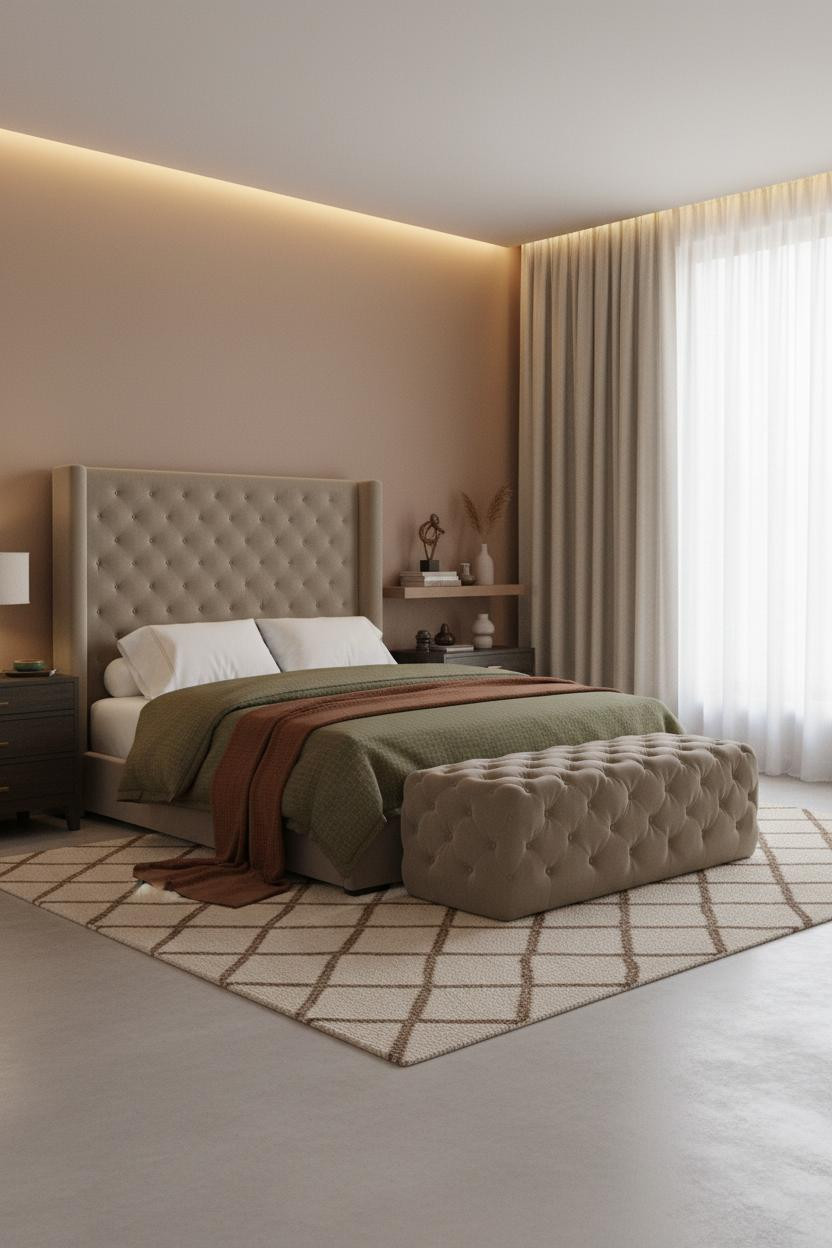

Hang them from ceiling to floor, let them pool slightly. That's all.
What makes this work: Oatmeal linen curtains with visible natural weave cast soft filtered shadow columns across warm clay walls, which draws the eye up and makes the ceiling feel taller than it is. It's a scale trick. And it costs about as much as a throw pillow.
The finishing layer: Keep the bedding simple. An olive waffle-weave duvet with one rust linen throw is enough. Nothing too matchy.
A Crittall Window In a Tiny Room Shouldn't Work. But It Does.
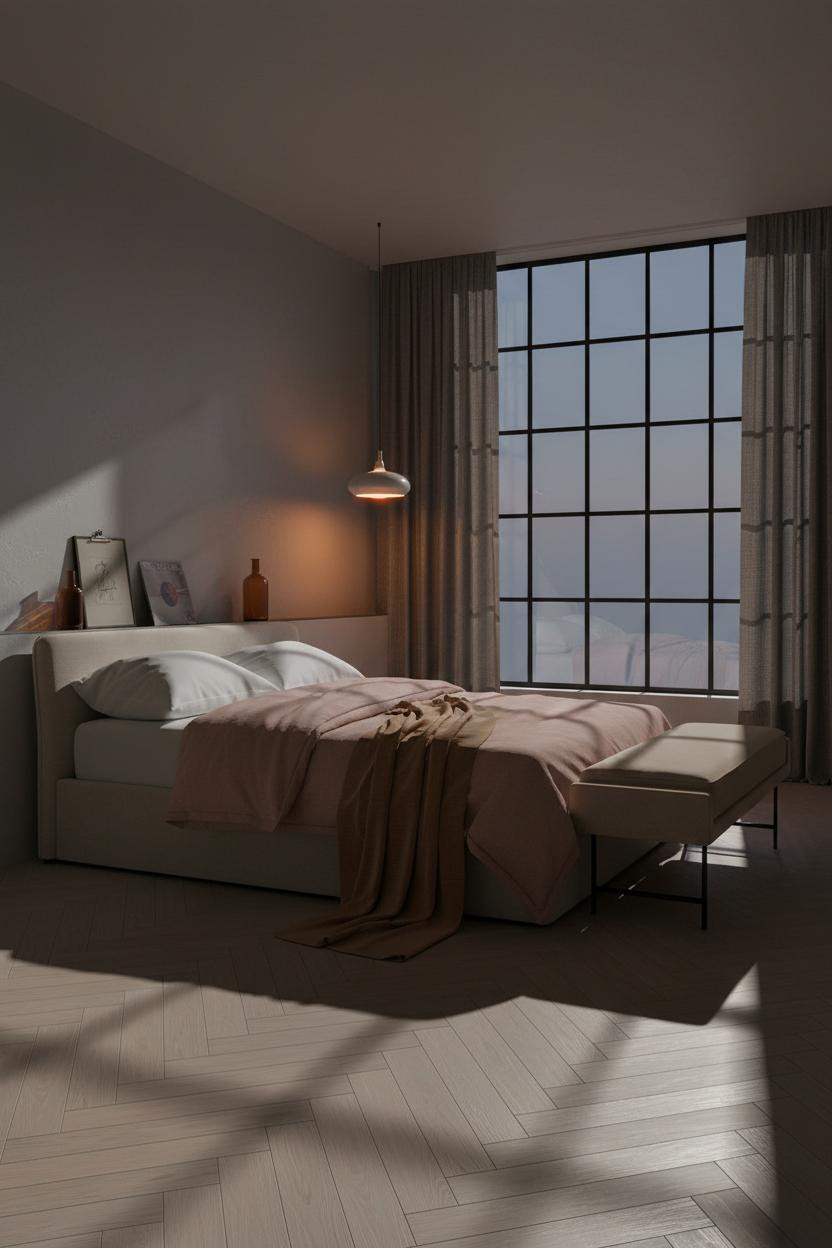
Bold choice. And honestly, it pays off.
The slim black steel Crittall frames cast sharp geometric shadow lines across birch herringbone parquet, which gives a compact room something graphic to hold onto. Admittedly, it's a commitment. But the industrial precision softened by warm amber lamp light at dusk is genuinely hard to achieve any other way.
What to borrow: Even without Crittall windows, charcoal linen curtains against a blue-grey wall recreates the moody contrast. Pair with a dusty pink duvet for warmth.
Vertical Birch Slats Make a Low Ceiling Feel Taller
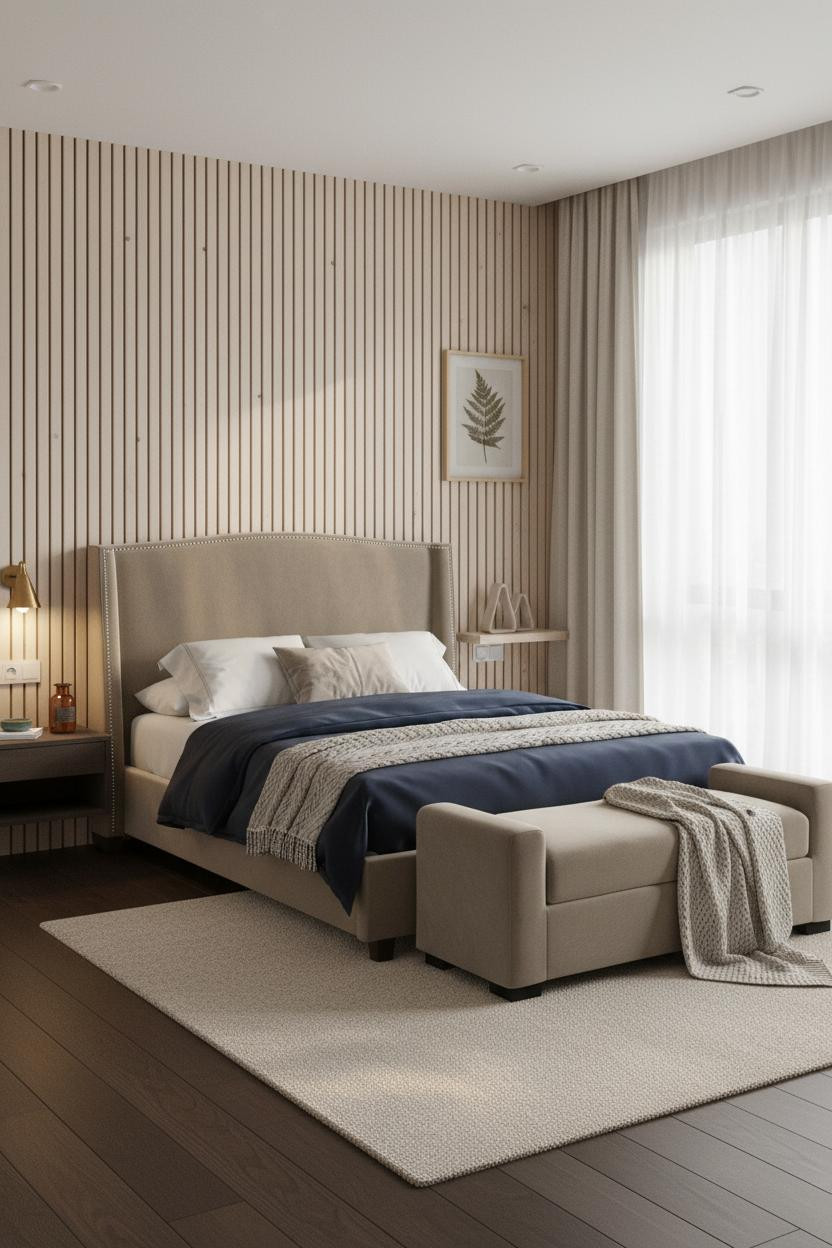
In a small room, going vertical is almost always the right call. A full-width slatted wall in pale birch wood draws the eye upward and gives the compact nook quiet architectural rhythm while still feeling warm rather than cold.
Why the palette works: Mushroom walls alongside the birch slats keep things soft. The navy sateen duvet is the only real contrast in the room, which makes it feel collected rather than busy. A chunky cream wool rug anchors the floor and stops the dark planks from making the room feel smaller.
One smart swap: Replace any overhead light with a recessed spot angled at the slats. The grain texture catches the light and does all the work.
Board-and-Batten Panels Are the Most Underrated Guest Room Move
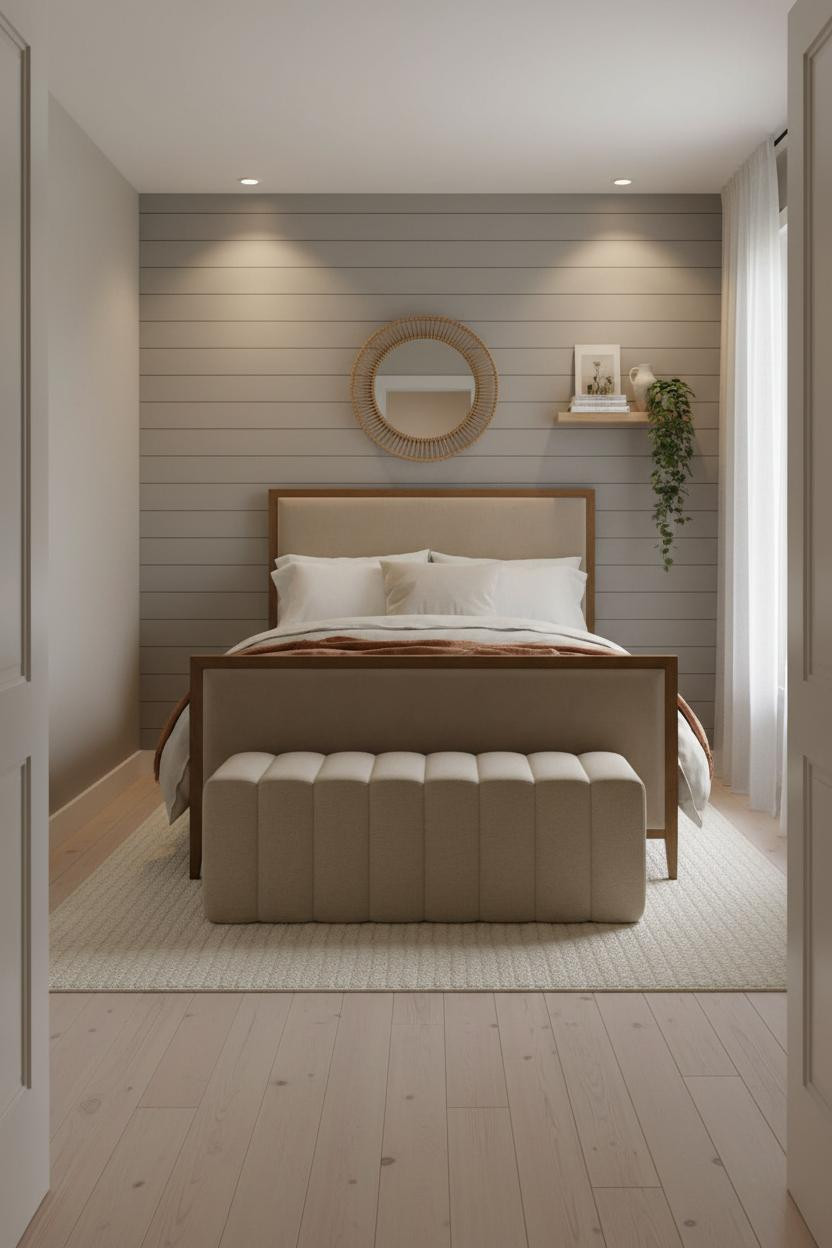

Matte dove grey board-and-batten panels running the full width behind the day bed look like something out of a boutique hotel, but the whole project is honestly a weekend DIY. The shallow raised battens create just enough shadow depth to give the wall presence at any size room.
Why it feels expensive: Reclaimed wood plank flooring paired with stone grey walls on three sides means the panel wall reads as the intentional anchor, not an afterthought. And a round rattan mirror off-center above the nightstand keeps the look from becoming too rigid. See also: small nightstand ideas for compact rooms that actually earn their footprint.
Dusty Rose With White Board-and-Batten Is a Better Combo Than It Sounds
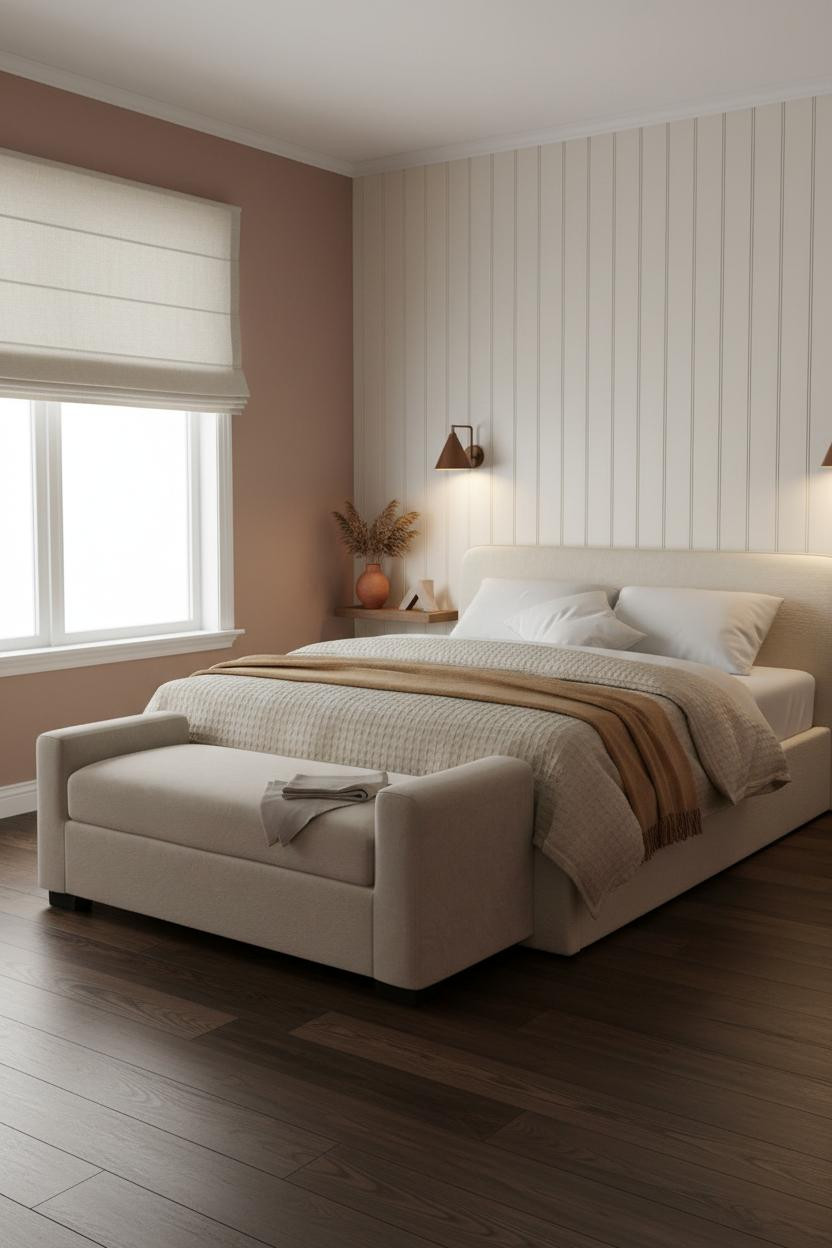
Fair warning: dusty rose is divisive. But paired with warm white vertical battens and dark walnut flooring, the combination reads soft and farmhouse-minimal rather than overly sweet.
Design logic: The batten edges catch flat daylight and cast thin parallel shadow lines that give the compact wall strong graphic rhythm. That rhythm is what keeps the dusty rose from feeling passive. The room feels warm without being heavy, which is honestly the whole goal in a tiny guest bedroom.
The part to get right: Keep bedding in oatmeal and camel tones. Cool bedding here tips the whole palette the wrong direction.
Floating Walnut Shelves Against Sage Are a Very Good Idea
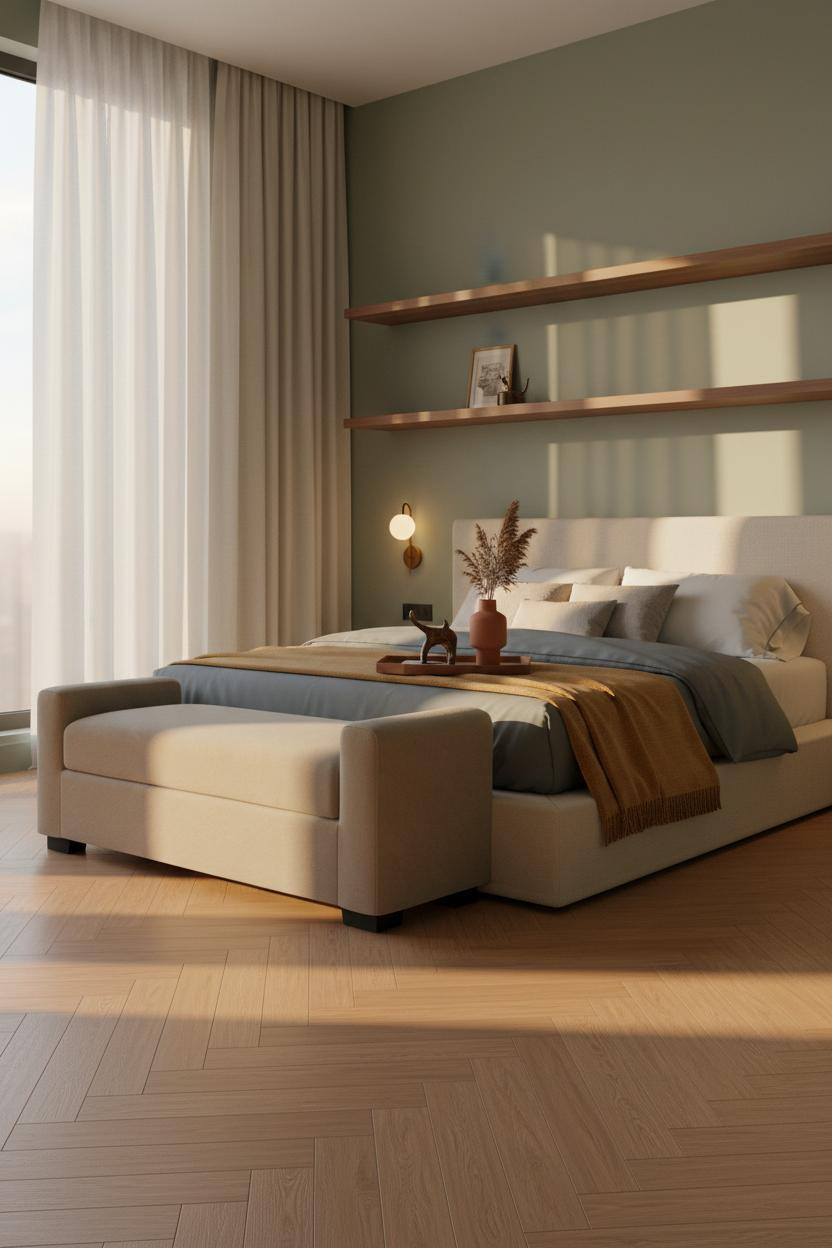
Golden late afternoon light does something specific here. The floating walnut shelves above the day bed catch the raking amber glow from the west-facing window and cast sharp horizontal shadow lines down the sage wall. It's the kind of detail that looks expensive and costs almost nothing to pull off.
What carries the look: Sage green and walnut is a combination that somehow stays fresh no matter how many rooms use it. The warm honey oak herringbone floor ties the two tones together without a rug in the way. Cream linen curtains pooling at the base add softness while still feeling current.
A walnut tray on the shelf with one terracotta vase and a dried grass bundle. That's the whole shelf. Don't overthink it.
The Scandi Nook That Proves Pale Can Still Feel Cozy
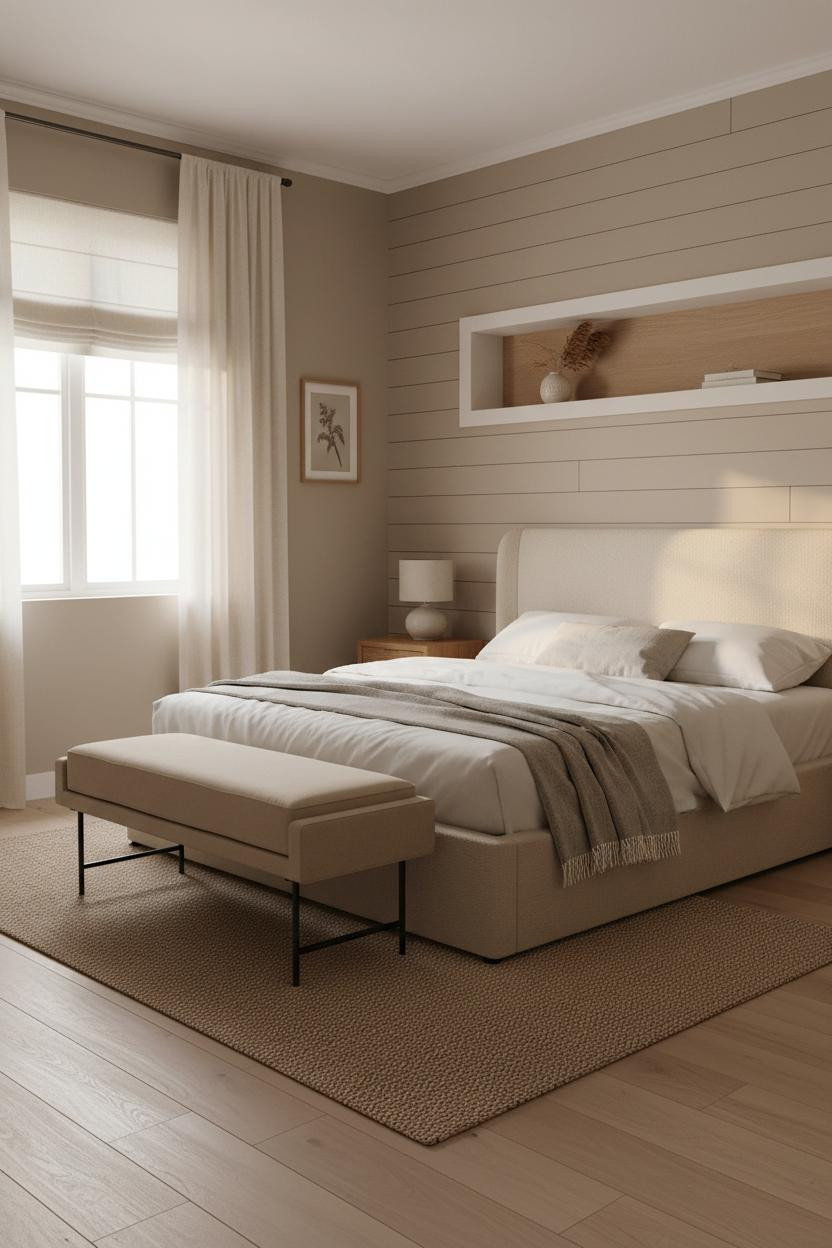
This is the room I'd put my actual guests in. A recessed ceiling shelf with pale oak shiplap backing and soft white trim defines the sleeping nook without boxing it in, while bleached oak flooring underneath keeps things airy.
What softens the room: A flat-weave jute rug anchors the bed zone in a way that a cream wool rug wouldn't. Jute reads natural rather than precious, which is exactly right for a space that's supposed to feel welcoming without trying too hard. And cream percale layered with a stone-washed grey throw is all the bedding texture you need. For even more ideas, these trundle bed ideas for small guest bedrooms are worth a look if you're working with occasional overflow guests.

Our #1 Pick
Saatva Classic Mattress
America's best-selling online luxury innerspring. 365-night trial, lifetime warranty, free white glove delivery.
Shop Saatva Classic
The Foundation Of Every Beautiful Bedroom
All fifteen of these rooms have something in common beyond the day beds and the wall treatments. They all feel genuinely restful. And that starts with what's underneath the bedding.
The Saatva Classic is what I'd put in any guest room I actually cared about. Dual-coil support means the mattress holds its shape over years of occasional use, not just the first few nights. The organic cotton cover breathes, which matters more in a compact room than people expect. And the Euro pillow top is soft enough to feel indulgent while still giving you real support.
Walls get repainted. Textiles get swapped out. The mattress stays.

The rooms people save are the ones where nothing looks accidental. Start with the bed. The rest figures itself out.