
 by
by THE RIGHT PLACE TO BUY A FUTON
The Futon Shop — actual futon specialists, not adapted mattresses
- Dedicated futon mattress range — cotton, wool, latex and hybrid cores in real futon sizes
- Best-sellers page sorts the proven options first, from budget to organic
- A futon-specific build resists the fold-flatten cycle that kills regular foam
My quick verdict: A futon bed is the practical pick if you want an affordable seat-and-sleep setup that is easy to move and does not need permanent installation. A Murphy bed usually gives you a more supportive, mattress-like sleep surface and frees more floor space when closed. A daybed works well for one regular sleeper, while a sofa bed makes more sense when daytime seating is the priority.
The construction is what separates these beds. A futon bed uses one folding cushion or mattress for sitting and sleeping. A Murphy bed supports a conventional mattress on a frame that folds into a wall or cabinet. A daybed is a fixed bed frame styled like a sofa, and a sleeper sofa hides a thinner folding mattress inside upholstered seating.
That distinction affects comfort, durability, maintenance, and how much usable space remains in the room. I would not choose from appearance alone. Check the frame joints, support system, mattress thickness, conversion mechanism, open dimensions, and replacement-mattress options before buying.
Daybed mattresses are typically twin-size, measuring 38" × 75". Saatva Youth or Saatva Classic Twin can work, but a lower-profile mattress may preserve the intended sofa-like appearance. The Tuft & Needle Original 8" and Linenspa 8" Hybrid are examples of the profile to consider.
Disclosure: This article contains affiliate links. If you purchase through these links, we may earn a commission at no extra cost to you.
Futon Bed, Murphy Bed, Daybed, or Sofa Bed?
All four designs can turn a bedroom, office, studio, or guest room into a multipurpose space. They do it in different ways, so the best choice depends on which function matters most after the bed is put away.
- Choose a futon bed if you want a relatively light, simple frame that changes from a couch into a flat sleeping surface.
- Choose a Murphy bed if open floor space and conventional mattress comfort matter more than portability or simple installation.
- Choose a daybed if you want a permanent single sleeping surface that can be styled as daytime seating.
- Choose a sofa bed if you need a true upholstered couch most of the time and an occasional guest bed after it is opened.
A futon bed and sofa bed may look similar while closed, but they are not built the same way. A futon generally exposes its mattress or cushion and folds that surface at the frame. A sleeper sofa stores a separate mattress and metal mechanism beneath its seat cushions.
A daybed does not normally convert. It remains a bed-height platform with a back and side panels, although a trundle may roll out from underneath. A Murphy bed makes the most dramatic change because the sleeping surface rotates into a cabinet or wall-mounted enclosure.
Any of these beds can handle occasional guests. For an unexpected visitor, an air mattress is another temporary option. Our guide explains how to inflate an air bed without turning setup into a guessing game.
Murphy beds deserve extra planning because their mounting system, lifting hardware, and mattress compatibility directly affect safe operation. Review the main Murphy bed pros and cons and check the Murphy bed weight capacity guide before deciding. A built-in layout may also let you place a Murphy bed in a closet, provided the enclosure and mounting points are suitable.
A nursery creates a different set of priorities, including access, clearance, and a practical place for a parent to rest. We discuss what type of bed is best for a parent in a nursery separately.
What Makes a Futon Bed Worth Buying?
For the target shopper, the strongest argument for a futon bed is simplicity. There is no mattress hidden inside a heavy upholstered shell and no cabinet that must be attached to the room. The back or deck changes position, allowing the same cushion to act as a seat and a mattress.
That simple design can also expose its weaknesses. The cushion is repeatedly folded, sat on, and slept on. Low-density foam can soften in the main seating area, while loose fiber fill may bunch or flatten. Once that happens, the futon may feel uneven when opened as a bed.
I pay close attention to the center fold. A pronounced hinge line can become a pressure point, especially for side sleepers. A better futon mattress distributes padding across the fold and has enough resilience to recover after spending time in the seated position.
Futon Frame Construction
Wood and metal futon frames can both work, but the connection points matter more than the broad material label. Thin tubing, weak welds, undersized fasteners, and loose pivots can create wobble or noise. A wood frame needs solid joinery and hardware that stays tight as the frame is converted.
Inspect the slats or support grid beneath the mattress. Wide gaps give soft foam and fiber room to sag. A more continuous support surface generally keeps the futon mattress flatter and reduces concentrated wear.
The conversion hardware should move without twisting the frame. If one side lifts before the other, the mechanism can bind. This is especially important with wider futons, where uneven force puts more leverage on hinges and fasteners.
Futon Mattress Materials
A futon mattress may use foam, fiber, springs, or a layered combination. Foam affects pressure relief and shape recovery. Fiber can add loft but is more vulnerable to packing down. Springs add bounce and airflow, although their feel depends on the padding above and below the coil unit.
A thick-looking cushion is not automatically durable. Fill quality, foam density, layer attachment, and tufting determine how well it resists shifting. Deep tufts can hold the layers together, but they may also create a more textured sleep surface.
If the futon will be used frequently, make sure a replacement mattress is available in the required dimensions. A frame can outlast its original cushion, and being able to replace only the worn sleep surface improves long-term value.
Comfort and Daily Use
A futon bed is usually a compromise between couch posture and mattress comfort. A cushion firm enough to stay upright as a seat may feel too hard for sleeping. A plush cushion that feels good while lying down may compress or slump when used as a sofa.
Back sleepers often tolerate a flatter, firmer futon better than side sleepers, who usually need more pressure relief around the shoulders and hips. Couples should also check the open width and frame stability rather than assuming every model provides the same usable sleeping area.
Also consider the daily conversion routine. Pillows and a throw are easy to remove, but fitted bedding may need to be stored elsewhere while the futon is upright. A washable or replaceable cover is useful because the same exposed surface handles both daytime seating and nighttime sleep.
Murphy Beds vs. Trundle Daybeds
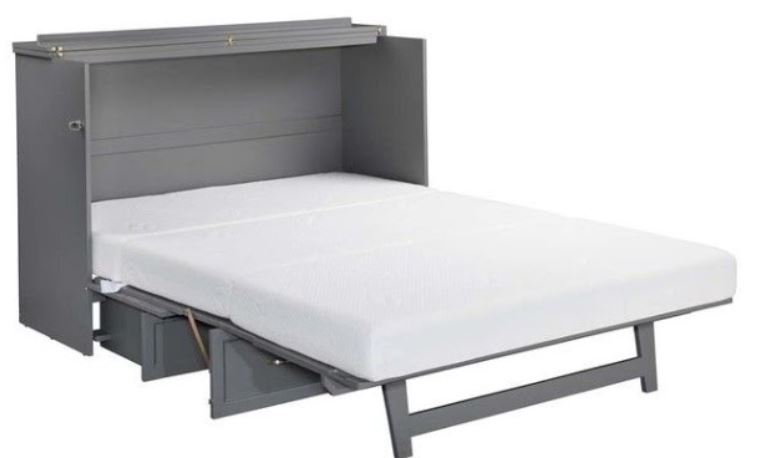
Murphy beds fold out from a wall or cabinet. Image from Houzz.
Murphy beds and daybeds serve different room layouts. A Murphy bed folds into a cabinet, dresser-style enclosure, or wall system and is lowered when needed. A daybed stays horizontal and looks more like a sofa because it has a back, a head end, and a foot end.
Many daybeds include a trundle bed on casters. The lower platform rolls beneath the main frame for storage and comes out when another sleeping surface is needed.
My verdict: A Murphy bed clears more floor space, can support a larger sleep surface, and usually keeps its bedding in place while closed. A trundle daybed is easier to place in a rental and avoids a wall-mounted lifting system, but the main daybed always occupies floor space.
Where a Murphy Bed Wins
A Murphy bed makes sense when the room needs to function as an office, exercise area, or living space during the day. Once the bed is raised, its full footprint becomes usable again. Models may also integrate shelves, drawers, a desk, or a sofa into the cabinet.
Murphy beds range from twin to king formats and can include bunk configurations. The exact mattress allowance depends on the frame and lifting mechanism, so verify thickness and weight limits before pairing the system with a mattress.
A well-designed unit closes with the bedding secured to the mattress. That saves time and avoids finding separate storage for the bedding. These features can also suit compact homes and campers. Our guide to choosing the right Murphy bed for a tiny home covers the space and clearance questions in more detail.
Where a Daybed Wins
A daybed has no lifting mechanism to maintain and does not require the user to lower a large frame before sleeping. It can remain made up as a bed, with pillows arranged against the back during the day.
Its fixed footprint is the tradeoff. Even if the trundle disappears underneath, the main frame still occupies the room. Most daybeds also provide a twin-size main sleep surface, so they are better suited to one sleeper than to a couple.
A trundle can serve as an extra bed or storage platform. Some trundles remain close to the floor, while others rise to the height of the main frame. A pop-up design can create a broader combined surface, but the two mattresses and the seam between them still affect comfort.
Both the main frame and sleeping trundle need suitable mattresses. Our guide to choosing a daybed and the trundle bed both require mattresses explains why mattress height, support, and clearance need to be considered together.
Installation and Rental Concerns
A Murphy bed is not simply a tall piece of freestanding furniture. Its enclosure and moving bed create leverage, so correct anchoring is essential. Many systems call for professional assembly and installation, with mounting hardware selected for the wall or floor structure.
That installation can be a problem in a rental where drilling or structural attachment is restricted. A daybed is more portable and generally needs only ordinary furniture assembly. If budget planning is the concern, our guide addressing why are murphy beds so expensive breaks down the role of cabinetry, hardware, installation, and construction.
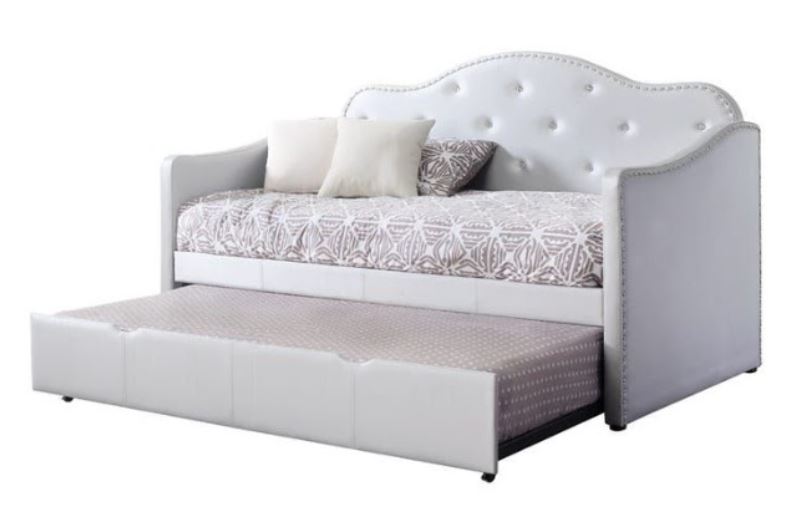
Daybeds add storage or another sleeping surface with a pull-out trundle. Image from WeekendsOnly.
Murphy Bed Size Examples
The following examples show why both closed depth and open projection matter. Retail pricing changes, so I would compare current listings instead of treating an old price as a dependable buying figure.
- Bestar Versatile Queen Murphy bed: 22.6" L × 69.4" W × 89.9" H folded and 93.4" L × 69.4" W × 89.9" H unfolded.
- Full wall bed with desk: 19.5" L × 58.6" W × 80.8" H folded and 88.21" L × 58.6" W × 80.8" H unfolded.
- Bestar Edge Collection Queen: 20.1" L × 107.1" W × 89.4" H folded and 92.45" L × 107.1" W × 89.4" H unfolded.
Trundle Daybed Size Examples
- Zinus Suzanne Twin daybed and trundle frame set: 78" L × 39" W × 25.8" H closed and 78" L × 77.5" W × 25.8" H with the trundle out.
- DHP Tokyo Twin daybed: 77.5" L × 41.5" W × 42.5" H closed and 77.5" L × 84" W × 42.5" H with the trundle out.
- Casey II Wood Twin daybed: 41.75" L × 81.5" W × 45.5" H closed and 82" L × 81.5" W × 45.5" H with the trundle out.
Murphy Beds vs. Sleeper Sofas and Sofa Beds
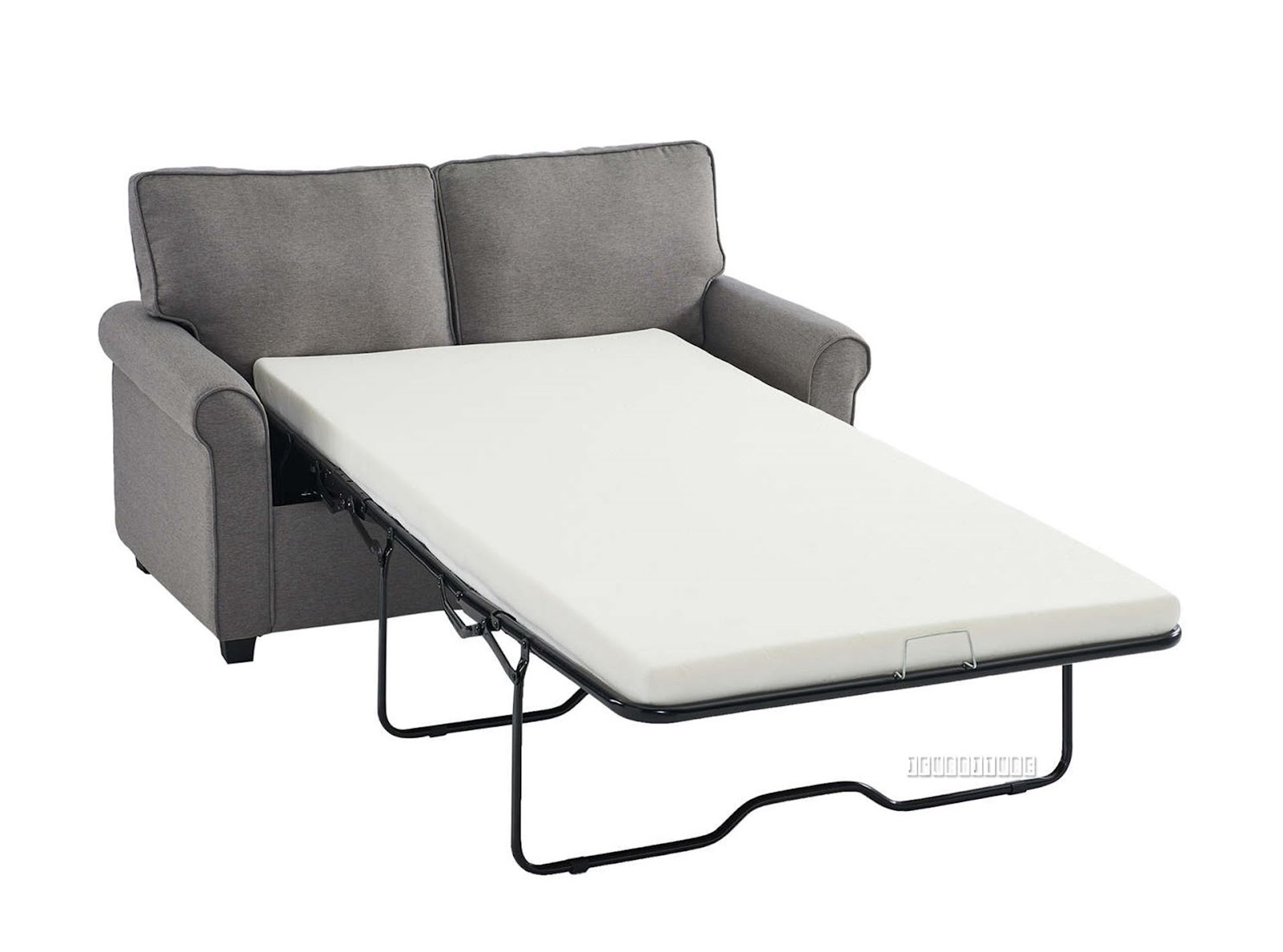
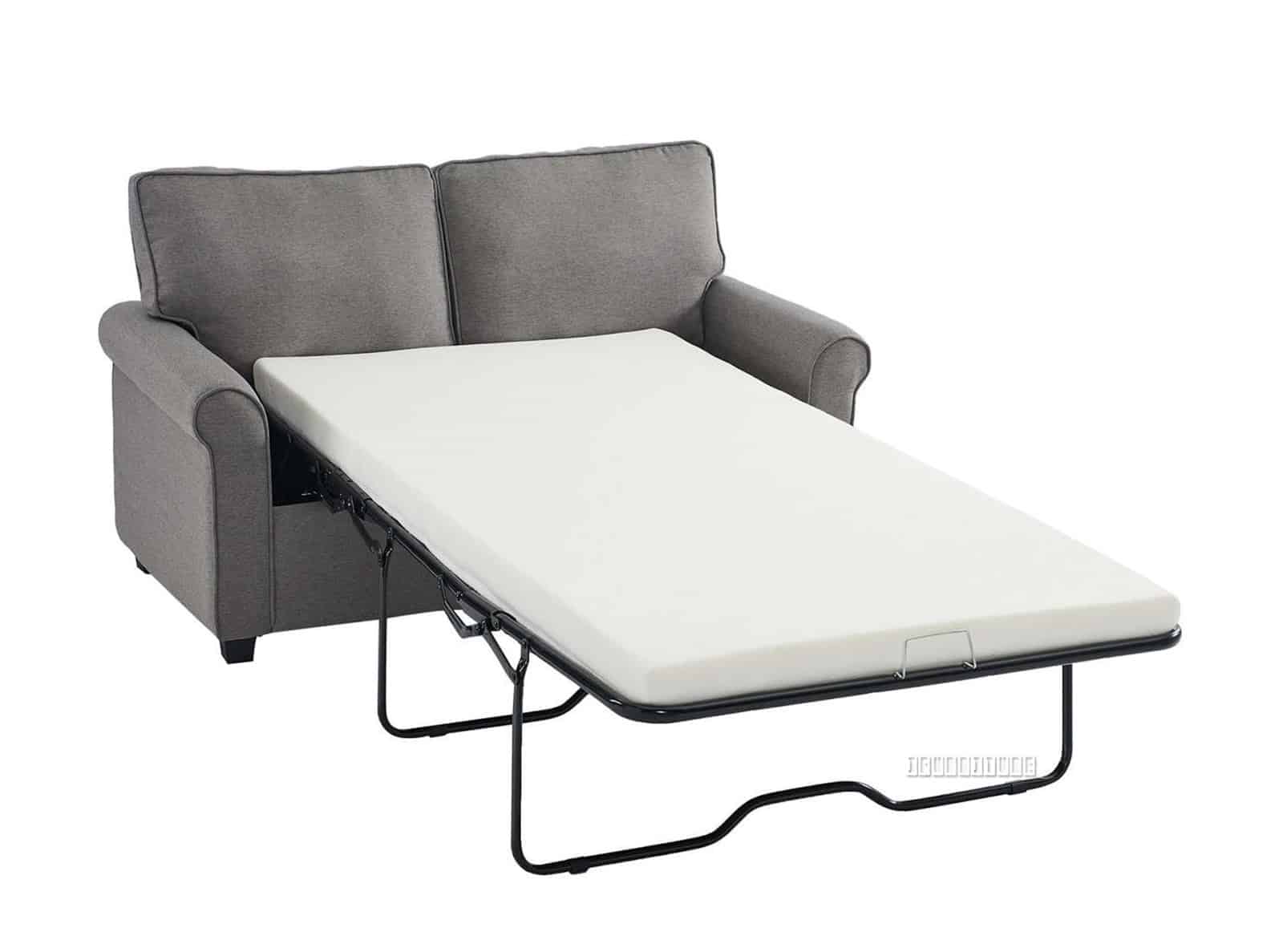
Sofa beds pull out to a twin- or queen-size bed. Image from Leons.
A sofa bed, also called a sleeper sofa, is an upholstered couch with a folding mattress and support mechanism beneath its seat cushions. Unlike a futon bed, the sofa cushions and sleeping mattress are normally separate components.
My verdict: A Murphy bed is usually the better sleep-first option because it can accept a thicker conventional mattress and vanishes more completely when closed. A sleeper sofa is the better seat-first option because it behaves like an upholstered couch until a guest bed is needed.
Comfort Differences
The Murphy bed frame supports a mattress in a flat position, much like a platform. The mattress may have restrictions on weight or thickness, but it does not need to fold sharply into the base every morning.
A sleeper-sofa mattress must fit inside a compact folding mechanism. That usually means a thinner profile and more noticeable influence from the deck, bars, or hinge points beneath it. Mattress quality varies, but the space available inside the sofa limits what manufacturers can use.
A topper can soften the surface or reduce the feel of the mechanism, although it normally needs to be removed before closing the sofa. Read our guide to adding a mattress topper on a sofa bed before choosing a topper that may be too thick to store inside the unit.
Open and Closed Floor Space
Measure the full path of the mattress, not just the width of the sofa. A one-seat sleeper may open to a single bed measuring around 54 inches wide and 85 inches long. A two-seat sofa can open to a full-size surface around 72 inches wide and 90 inches long. A three-seat model may become a queen-size bed measuring around 84 inches wide and 90 inches long when open.
Those are planning figures rather than universal standards. The actual mechanism, arm thickness, back angle, and mattress orientation can change the footprint. Leave enough room to walk around the opened bed and make sure tables or chairs can be moved without blocking a doorway.
A closed sleeper sofa continues to occupy the footprint of a couch. A closed Murphy bed can leave most of the bed area open, although the cabinet still needs wall space and depth. Some Murphy systems incorporate shelving, a desk, or seating so the wall remains useful.
Mattress Compatibility
Murphy beds have an advantage for shoppers who want a familiar foam, hybrid, or innerspring feel. Compatibility still depends on the lift system and mattress specifications, but there are more conventional choices than with a folding sleeper-sofa mattress. It may even be possible to use a Tempurpedic mattress with a Murphy bed if the model meets the frame requirements.
A sofa bed should be judged as a complete system. The upholstery, seat suspension, folding deck, mattress, and mechanism all contribute to comfort and durability. A good couch does not automatically make a good bed, and a comfortable sleeper mattress does not guarantee supportive daytime seating.
Sleeper Sofa Size Examples
- Cherry Tree Furniture ALGO 2-seater Double: 121cm W × 79cm L × 82cm H folded and 121cm W × 185cm L × 28cm H unfolded.
- Signature Design by Ashley Larkinhurst Queen sofa bed: 89" W × 39" L × 38" H folded and 89" W × 72" L × 16" H unfolded.
- Novogratz Brittany Twin sleeper sofa: 32" W × 54" L × 35.5" H folded and 54" W × 86" L × 35.5" H unfolded.
Murphy Beds vs. Futon Beds
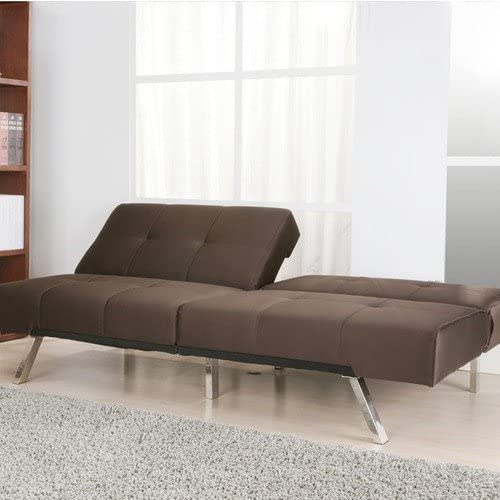
A futon has a back or deck that folds between couch and bed positions. Image from Amazon.
Murphy beds and futon beds both help a small room serve more than one purpose, but their frames and sleep surfaces are fundamentally different. A futon resembles a couch, and its back folds up or down to change positions. Its seat cushion becomes the sleeping surface.
My verdict: A futon bed is lighter, easier to assemble, and usually more affordable. A Murphy bed is generally sturdier, frees more floor space when closed, and gives you broader access to supportive mattresses. The right choice depends on portability, installation permission, and how often the bed will be used.
Why a Futon Bed Is Easier to Place
A futon does not require a tall cabinet or structural wall attachment. Assembly usually centers on the frame, pivots, slats, and mattress. Manufacturer instructions show why a futon is typically easier to install than a Murphy bed.
That makes a futon attractive in a rental, dorm-style room, or flexible guest space. It can also be moved without leaving behind a large cabinet. The catch is that it still occupies a couch-sized footprint after it is folded upright.
Before buying, map both positions with the room’s actual traffic paths. The bed position may extend toward a door, dresser, or desk. The couch position may also need space behind the frame for the back to move through its conversion arc.
Why a Murphy Bed Usually Sleeps Better
A Murphy bed is designed around a dedicated mattress that remains flat whenever it is used. Its bedding can often stay strapped in place as the frame is raised. A futon mattress must tolerate repeated folding and carries the concentrated load of seated users during the day.
That repeated bending is hard on low-grade foam and loose fiber. Compression tends to develop first in the main seat area, which later becomes part of the bed. A worn futon can therefore feel lumpy or sloped even when the frame itself is still serviceable.
The Murphy bed also disappears farther from the floor. A futon becomes a couch, so its seat, arms, and frame continue to occupy the room. A Murphy bed can rotate nearly its entire sleep surface against the wall.
For rooms with restricted vertical clearance, consult the guide on how to choose the right Murphy bed for rooms with low ceilings. Horizontal and cabinet-style layouts can behave differently from a standard vertical wall bed.
Durability and Repairability
A futon’s weak points are usually the pivots, frame joints, slats, and mattress fill. Loose hardware can often be tightened, but bent metal, split wood, or distorted conversion tracks may be harder to repair. Replacement parts are most useful when the manufacturer continues to support the frame.
A Murphy bed adds springs, pistons, or another counterbalance system. That creates more components and makes correct installation important, but a well-built cabinet and bed platform can provide a stable base for a replaceable mattress.
I would avoid assuming every futon uses poor materials or every Murphy bed is durable. Check the actual frame stock, joint design, fasteners, support spacing, and mattress construction. Product category alone does not settle build quality.
For more focused mattress choices, see our guide to the best futon mattress with reviews for more details.
Futon Bed Size Examples
- Serta RNE-3S-CC SET Rane Collection Twin/Full: 66.1" L × 33.1" W × 29.5" H folded and 66.1" L × 37.6" W × 15.0" H unfolded.
- DHP Miles Full metal futon frame: 36.5" L × 71" W × 28.5" H folded and 51" L × 71" W × 10" H unfolded.
- DHP Richmond Espresso Full wood-arm futon: 83" L × 40" W × 37.5" H folded and 75" L × 54" W × 20" H unfolded.
Some Murphy beds use surrounding bookcases to disguise the cabinet and add storage. Our related guide explains how to hide a bed bookcase without losing sight of access and clearance.
How to Compare Materials and Construction
The label on the furniture tells you less than the specifications underneath it. For a purchase that will be opened, closed, sat on, and slept on, focus on the support structure and the parts that absorb repeated movement.
Frame and Hardware
Check the frame for side-to-side movement in both seating and sleeping positions. A little flexibility in upholstery is normal, but the structural frame should not rack or twist under ordinary use.
Look at hinge plates, pivot bolts, welded joints, screws, and brackets. Hardware mounted into thin material can loosen even if the visible frame looks substantial. Fasteners should be accessible enough for routine inspection and tightening.
For a Murphy bed, verify that the mounting method matches the building structure. For a futon, make sure both sides of the conversion mechanism move together. For a sofa bed, open the mechanism and inspect the deck beneath the mattress. For a trundle, roll the lower frame out and check whether its casters track smoothly.
Foam, Fiber, and Coils
Foam density is more useful for predicting durability than a vague claim of plushness. A thick comfort layer can still break down quickly if the foam is low density. Fiber adds cushioning but tends to compress, especially where people sit in the same place every day.
Coils can improve airflow and resilience in futon and sleeper-sofa mattresses. Coil count alone does not tell the whole story. Wire thickness, coil shape, edge support, and the padding around the unit all affect the finished feel.
A conventional mattress on a Murphy or daybed frame usually has more room for a complete support core and comfort system. A folding mattress has to balance comfort with the ability to bend and fit inside the furniture.
Support Spacing
Inspect the distance between slats, wires, or deck sections. Soft foam can push into broad gaps, creating uneven support and faster wear. A bunkie board or compatible support panel may help on some frames, but it must not interfere with folding hardware, airflow, or manufacturer requirements.
Daybed and trundle mattresses also need enough clearance to fit under rails and slide beneath the upper frame. Adding thickness can improve cushioning while making the trundle impossible to store, so measure the actual available space.
Futon Bed Buying Checklist
A commercial listing can make nearly every convertible bed sound equally compact and comfortable. I would verify the following details before ordering.
- Open dimensions: Confirm that the bed fits without blocking doors, closets, vents, or walking paths.
- Closed dimensions: Make sure the furniture still leaves enough usable space in its daytime position.
- Sleep surface: Check the actual width and length rather than relying only on a category label.
- Mattress construction: Look for meaningful information about foam, fiber, coils, tufting, and cover materials.
- Support system: Inspect slat spacing, deck design, center support, and the way weight reaches the floor.
- Conversion mechanism: Confirm that the frame can be opened without excessive lifting, binding, or moving other furniture.
- Replacement options: Find out if a worn mattress, cover, hinge, caster, or lifting component can be replaced separately.
- Delivery path: Measure stairs, turns, doors, and elevators for the packaged components.
- Assembly requirements: Determine whether ordinary furniture assembly is enough or professional mounting is required.
- Return process: Read who handles pickup and what happens if the assembled furniture does not fit or feel right.
Assessing Long-Term Value
The lowest purchase price is not always the lowest cost over the useful life of the bed. A frame that loosens, a cushion that quickly compresses, or a proprietary mattress that cannot be replaced can make an inexpensive futon poor value.
On the other hand, a costly wall bed is not automatically justified for occasional guests. Installation, moving plans, mattress needs, and the value of recovered floor space should all be part of the decision.
For mattress durability, examine coil construction, foam density, edge design, and the warranty’s sag threshold. Our broader durability guide explains the wear patterns that matter more than marketing language.
Trial and Return Terms
A meaningful home trial can help with a mattress, but convertible furniture returns are often more complicated than boxed-mattress returns. Find out whether assembled furniture can be returned, who disassembles it, and whether pickup is included.
The original guidance on mattress trials suggested allowing 100+ nights for evaluation. For furniture, the written return policy matters just as much because a large frame may not qualify for the same process as its mattress.
Warranty length is only one part of protection. The coverage language should explain structural defects, moving hardware, foam impressions, labor, transportation, and any required foundation or installation method. A lifetime or 20+ year label is less useful if the exclusions make a practical claim difficult.
Who Should Buy Each Type?
Buy a Futon Bed If
- You want seating and a guest bed in one movable piece of furniture.
- You cannot permanently mount a cabinet to the wall.
- You are willing to accept a firmer, more compromise-driven sleep surface.
- You want a mattress or cover that can be removed from the frame.
- You have enough floor clearance for the futon in its open position.
Buy a Murphy Bed If
- Recovering floor space is the main goal.
- The bed may be used often enough to justify a conventional mattress.
- You can install and anchor the unit correctly.
- You want bedding to remain with the bed while it is stored.
- You plan to stay in the space long enough to benefit from built-in furniture.
Buy a Daybed If
- One permanent sleep surface is enough for regular use.
- You want a bed that can be styled as seating without a folding mechanism.
- A trundle or under-bed storage would be useful.
- You need a renter-friendly frame that can move with you.
- You are comfortable with the daybed occupying the same floor area all day.
Buy a Sofa Bed If
- A conventional upholstered couch is the main daytime need.
- The bed will mainly serve occasional guests.
- You have room to pull the mattress mechanism fully open.
- You can store any topper and bedding separately.
- You have checked the support deck instead of judging comfort from the sofa cushions alone.
Frequently Asked Questions
Is a Futon Bed Good for Sleeping Every Night?
A futon bed can work for regular sleep if its mattress provides enough support and pressure relief for the sleeper, but many entry-level models are built as occasional furniture. The repeated folding and daytime sitting place extra stress on the same cushioning used at night.
For frequent use, I would prioritize resilient foam or a well-padded coil construction, close frame support, secure tufting, and an easily replaceable mattress. Side sleepers should be especially careful about thin cushions and a noticeable center hinge.
Is a Futon Bed Better Than a Sofa Bed?
A futon is usually simpler, lighter, and easier to inspect. Its mattress is visible and often replaceable. A sofa bed provides a more conventional couch appearance and keeps its sleep surface hidden, but the folding mechanism adds weight and can be felt through a thin mattress.
Choose the futon if practical conversion and replaceable components matter most. Choose the sleeper sofa if daytime seating quality and upholstery are the bigger priorities.
Is a Murphy Bed More Comfortable Than a Futon?
Usually, yes, because a Murphy bed can support a conventional mattress that does not need to serve as a folded seat cushion. That gives the manufacturer more room for a proper support core and pressure-relieving layers.
Comfort still depends on the chosen mattress, support deck, and compatibility with the wall-bed mechanism. A poorly matched Murphy-bed mattress can be less suitable than a well-made futon for a particular sleeper.
Which Bed Saves the Most Floor Space?
A Murphy bed generally recovers the most floor area because the mattress and frame rotate into a wall cabinet. A futon and sofa bed still occupy couch space while closed, and a daybed keeps its full horizontal footprint throughout the day.
The cabinet depth and any integrated desk or shelving still count. Measure usable space rather than relying on the word “space-saving.”
Can I Put a Regular Mattress on a Futon Frame?
A regular mattress may not fold correctly or stay secure in the couch position. It can also be too stiff or heavy for the conversion hardware. Use a mattress designed for the frame unless the manufacturer specifically permits another type.
For a Murphy bed, a conventional mattress is more common, although weight and thickness limits still apply. Daybeds also accept regular mattresses, subject to rail and trundle clearance.
What Mattress Helps With Back Pain?
No single bed type or firmness works for every person with back pain. The mattress should keep the sleeper reasonably aligned while cushioning sensitive areas, and the frame must provide even support beneath it.
Our guide to top picks discusses mattress constructions intended for different support and pressure-relief needs. Persistent or severe pain deserves medical guidance rather than relying only on a furniture change.
Do Futon Mattresses Wear Out Faster?
They can, because the same area handles seated compression, body heat, folding, and sleep. Low-density foam and loose fiber are especially vulnerable to softening or bunching. Rotating the mattress when permitted, keeping the frame supportive, and tightening loose hardware can reduce uneven wear.
Can a Murphy Bed Include Storage?
Yes. Murphy-bed cabinetry may incorporate shelves, drawers, desks, bookcases, or seating. These features can make the closed wall useful, but they also increase the unit’s width, assembly requirements, and planning complexity.
The Nut’s Final Verdict
For most futon bed shoppers, the decision comes down to how much compromise is acceptable between sitting and sleeping. A futon is the straightforward commercial choice for affordability, portability, and uncomplicated installation. Its weak point is the mattress, because one folding surface has to survive both jobs.
A Murphy bed is my stronger sleep-first choice when the room permits secure installation. It frees more floor space and supports a more conventional mattress, but the cabinet, hardware, and mounting requirements make it a larger commitment.
A daybed is the least complicated option for one regular sleeper, particularly if a trundle adds useful guest space. A sofa bed is the best fit when the room genuinely needs a couch and only occasionally needs a bed.
Whichever design you choose, judge the frame, support system, moving hardware, and mattress as one connected construction. That materials-first check tells you much more about comfort and durability than the furniture label alone.
Related Mattress Guides
- Best Cooling Mattresses (2026)
- Saatva Mattress Review 2026
- When to Replace Your Mattress
- Signs Your Mattress Is Ruining Your Sleep
OUR VERDICT · BUY FUTON-SPECIFIC
The Futon Shop — actual futon specialists, not adapted mattresses
- Dedicated futon mattress range — cotton, wool, latex and hybrid cores in real futon sizes
- Best-sellers page sorts the proven options first, from budget to organic
- A futon-specific build resists the fold-flatten cycle that kills regular foam