
 by
by Our #1 Recommended Mattress
Saatva Classic. From $1,095
365-night trial · Lifetime warranty · Free white-glove delivery
Hidden doors started as pure novelty. Pull the right book, push the right panel, and a wall opens to reveal something unexpected. But in 2026, the best hidden doors in residential design have moved well past novelty. They are now genuine architectural features that solve real problems: managing visual clutter, creating acoustic separation, and allowing open-plan spaces to reconfigure without the permanence of traditional walls. The challenge is executing them well enough that they read as intentional rather than theatrical.
Why Hidden Doors Work in Modern Homes
The practical case for a hidden door is stronger than most people realize. In open-plan living areas, a false panel door can conceal a home office, utility room, or pantry without the visual interruption of a visible door frame and hardware. In libraries and studies, a bookshelf door creates the kind of spatial surprise that makes a room genuinely memorable. In media rooms and basements, hidden panels allow pass-throughs without compromising a smooth wall-to-wall aesthetic. Beyond function, there is a psychological satisfaction to a well-executed hidden door that standard architecture simply cannot deliver. It rewards close attention and creates a relationship between the occupant and the space that feels personal and private.
The Classic Bookshelf Door: Still the Most Satisfying Option
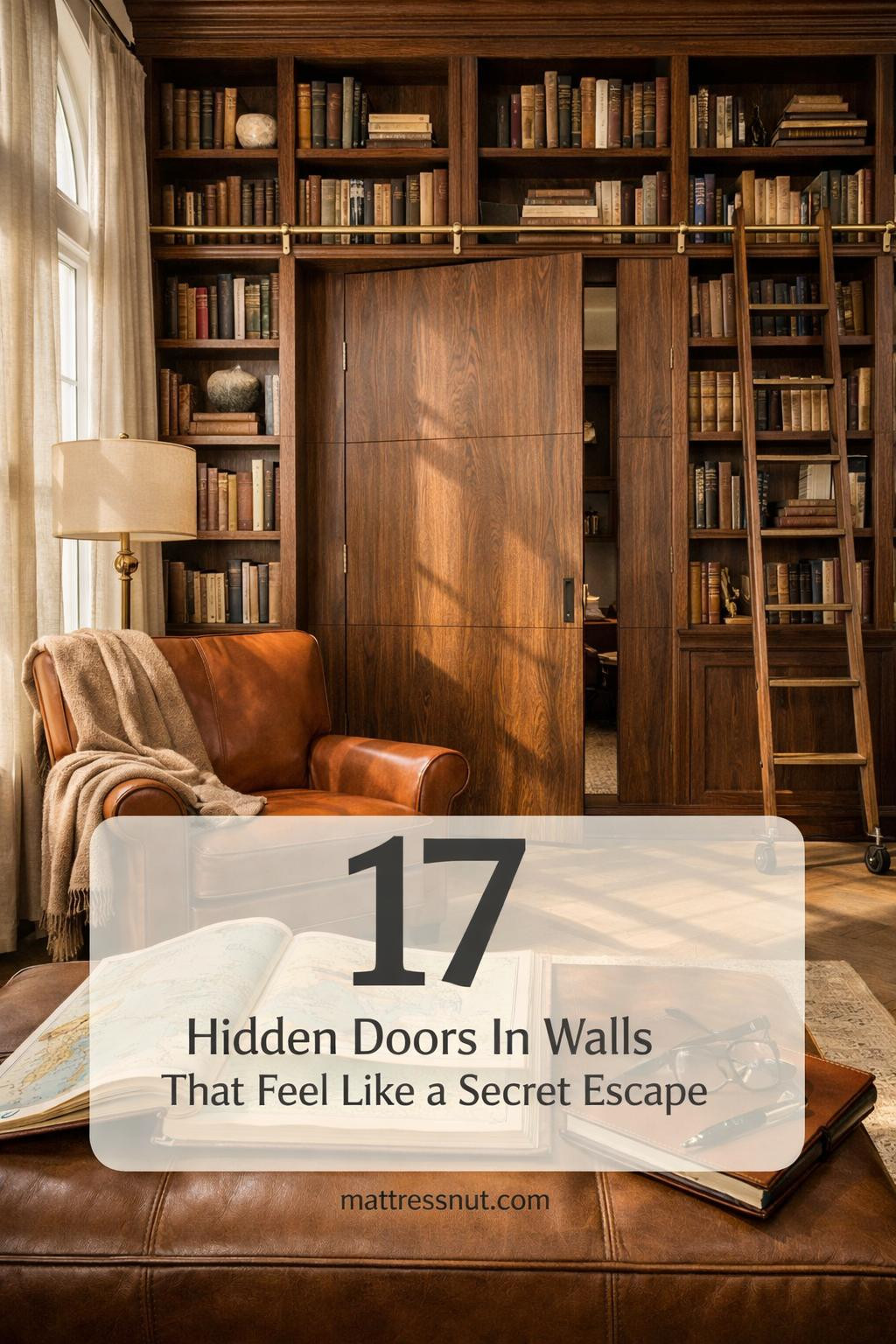
A bookshelf door conceals the entry behind functional shelving that holds actual books and objects. Done poorly, it reads immediately as a prop. Done well, it disappears into the wall so completely that guests walk past it without suspicion. The critical execution element is hardware. Standard door hinges create visible gaps at the frame edge that betray the door's location. Pivot hinges, which mount at the top and bottom of the door rather than the side, distribute weight evenly and allow the door to swing cleanly without sagging. Heavy-duty pivot hinges rated for 100-plus pounds are necessary for a fully loaded bookshelf.
For the latch mechanism, magnetic push-to-open systems eliminate visible hardware entirely. A specific book spine connected to a cable release is more dramatic but more prone to maintenance issues. Electronic keypads or RFID-triggered releases integrate well with smart home systems. The 2026 cost range for a DIY hidden bookcase door runs approximately $300 to $500 in materials. Pre-built kits from companies like Murphy Door range from $1,500 to $3,000-plus for finished versions.
Styling matters as much as hardware. Stack some books horizontally, leave some gaps, and let a few personal objects appear naturally on the shelves. An overly symmetrical, perfectly organized bookshelf reads as staged. A slightly lived-in arrangement is more believable and ultimately more effective at concealing the opening behind it.
Panel Doors: The Sleek Contemporary Approach
A panel door concealed within a wall of matching panels is the cleaner, more architectural option. Where the bookshelf door depends on distraction, the panel door depends on continuity. The door is not disguised. It simply matches the surrounding wall so precisely that the seam is invisible.
Materials that work best for panel concealment are those with strong horizontal or vertical grain patterns that can run continuously across both the fixed wall and the door panel. Dark charcoal walls and dark wood paneling are particularly effective because the dark tones absorb light, making any seam shadows disappear. Book-matched wood grain, where the grain mirrors across the door joint, eliminates the seam as a visual element entirely. Push-to-open latches are the hardware standard here, eliminating any need for handles, pulls, or visible mechanism. A slight push on the door panel releases the magnetic catch and allows the door to swing open.
Pocket Doors in Walls: Maximum Space Efficiency
A pocket door that slides into the wall cavity eliminates both the door and the swing clearance from the equation. When closed, the wall is uninterrupted. When open, the door has physically disappeared into the wall rather than remaining visible in the room. The execution challenge is the wall cavity itself. Standard 2x4 construction walls are 3.5 inches thick, adequate for lightweight doors but constraining for heavy or custom designs. A 2x6 framed pocket door wall allows heavier doors and more robust hardware. Retrofitting a pocket door into an existing wall requires removing drywall on both sides and rebuilding the frame, which is a significant construction project best done during a renovation.
Under-Stair Hidden Rooms: Underused Potential
The space beneath a staircase is structurally defined space that most homes waste on storage bins and cleaning equipment. A properly built hidden room under stairs, accessed through a panel door or push-to-open mechanism, can house a home office, a reading alcove, a wine storage area, or a compact bathroom. The irregular ceiling height creates a distinctive spatial character that flat-ceilinged rooms cannot offer. The door itself typically opens parallel to the stair risers, which creates a natural plane for concealment. Matching the panel finish to the stair trim or wainscoting eliminates visible edge lines. Adding a subtle geometric wallpaper or paint pattern to the stair wall further camouflages the door edge within the overall visual texture.
Mirror Doors: The Unexpected Double Concealment
A large framed mirror is a common enough bedroom and entryway element that no one questions its presence. When the mirror is mounted on a pivot hinge or sliding track, it becomes a hidden door to a closet, bathroom, or compact room behind. The mirror reflects the space and adds light while completely concealing the opening. Frameless mirrors on floor-to-ceiling tracks are the contemporary version of this approach, requiring a very level floor and ceiling for smooth operation. Framed mirrors on pivot hinges are more traditional and easier to retrofit into existing spaces. The frame width and finish can match the surrounding millwork, and the mirror plane itself is visually absorbed by its reflection of the room.
How to Build a Hidden Bookcase Door: Step-by-Step
Step one is framing. Build a new door frame from 2x10 boards to support the weight of the fully loaded bookshelf. The frame must be perfectly plumb, level, and square, or the door will bind and refuse to swing cleanly. Use shims to correct any irregularities in the existing wall structure.
Step two is the bookcase. Build the shelving unit from three-quarter-inch plywood with a solid back panel. Test a template cut to the final footprint against the frame to confirm it clears all obstacles through the full arc of travel before cutting the actual shelving unit. This is the step that saves you from the most common and most expensive mistake.
Step three is hardware installation. Mount pivot hinges at the top and bottom of the frame and bookcase. Run a test swing to confirm smooth movement, then add the latch mechanism. Adjust as needed before adding the final shelving and styling elements. Step four is concealment. Install matching trim around the frame edge that visually connects the bookshelf to the surrounding wall. Caulk any seam between the trim and wall surface. Paint or finish to match the existing room elements and add your book and object styling to complete the concealment.
Materials That Work Best for Hidden Doors
Dark-toned woods like walnut, ebony-stained oak, and charcoal-painted MDF conceal seams better than light materials. The shadow detail of any gap between door and frame simply disappears in a dark field. Reclaimed wood and live-edge panels bring natural variation that further disguises the regularity of a door edge. Reeded glass panels, which transmit light while obscuring visual detail, are useful for doors where some light transmission between spaces is desirable. The vertical reed pattern creates a geometric texture that conceals the frame edge within its own visual rhythm.
Painting is the budget version of the panel door approach. A door painted in an exact color match to the surrounding wall, with door frame details minimized or eliminated entirely, creates a surprisingly effective concealment. The seam will be visible on close inspection but reads as architectural rather than functional from any normal viewing distance.
Smart Home Integration
In 2026, hidden doors are increasingly integrated with home automation systems. RFID or NFC-triggered releases allow the door to open at the tap of a phone or card. Motion sensors can trigger lighting inside the concealed room when the door opens. Security sensors integrated with the home alarm system monitor whether the door is open or closed at all times. Smart locks installed within hidden doors allow access codes, schedules, and remote control from a phone app. These systems eliminate the mechanical latch mechanism that is often the most maintenance-prone element of a hidden door, replacing it with an electronic release that requires only occasional battery replacement.
Design Principles That Separate the Impressive From the Obvious
The hidden doors that feel most satisfying to use share a few consistent characteristics. First, the surrounding wall treatment is at least as interesting as the door itself. A door hidden within a plain white drywall wall will always read as a construction detail rather than an architectural feature. A door hidden within a floor-to-ceiling library, a paneled walnut wall, or a gallery of framed art becomes part of a larger design intention that rewards discovery.
Second, the trigger mechanism is intuitive but not obvious. A push point that is slightly recessed, a specific element of the surrounding decor that serves as the release, or a subtle indication that something in the wall is different from the rest creates the pleasure of discovery without requiring instructions. Third, the space behind the door justifies the effort. A hidden door to a dull storage closet is anticlimactic. A hidden door to a beautifully fitted home bar, a reading alcove lit with a single pendant light, or a private home office creates the full experience that makes a hidden door genuinely memorable rather than merely clever.
Acoustic Benefits of Hidden Doors
One practical benefit of hidden doors that the design conversation almost never addresses is their acoustic performance. A well-sealed panel door or bookshelf door, because it fits flush within its frame with minimal gap, provides significantly better sound isolation than a conventional door with visible hardware and frame gaps. In a home office concealed behind a bookshelf door, this means the sounds of the household do not intrude on focused work time, and the sounds of the home office do not leak into the common areas where other family members are relaxing or sleeping.
For maximum acoustic performance, the door panel itself should be at least one-and-a-half inches thick with a solid or STC-rated core. The seal around the perimeter of the door, which is what eliminates the gap-transmitted sound that makes conventional doors so acoustically poor, can be achieved with magnetic seals around the door frame perimeter that compress against the door face when it closes. These seals are invisible when the door is open and create a nearly airtight closure when shut, which also means excellent thermal separation between the spaces.
Cost Ranges for Different Hidden Door Approaches
Understanding the cost range for different hidden door approaches helps in planning a project that delivers the desired result within a realistic budget. A basic DIY panel door painted to match the surrounding wall, using standard door hardware and a friction latch, runs approximately $150 to $400 in materials for a single door. This is the most accessible entry point and can be executed in a day by someone with basic carpentry skills.
A DIY bookshelf door with pivot hinges, magnetic latch, and solid pine or plywood construction runs $300 to $600 in materials, plus the books and styling elements that complete the concealment. This is the most popular project in the hidden door category because the result is visually dramatic and the material cost is genuinely accessible. Pre-built kits from Murphy Door and similar companies range from $1,500 to $4,000 for a complete bookshelf door system that requires only basic installation skills. Custom cabinetry firms building bespoke hidden door systems in premium materials like solid walnut or reclaimed oak typically charge $5,000 to $15,000 for a single door installation, with the higher end of that range reflecting integrated smart home technology and premium hardware. The investment at any level produces results that remain remarkable years after installation.
Complete Your Space
Every beautiful room deserves a great night sleep. The Saatva Classic — white-glove delivery, 365-night trial.