
 by
by Our #1 Recommended Mattress
Saatva Classic. From $1,095
365-night trial · Lifetime warranty · Free white-glove delivery
The speakeasy entrance is one of the most theatrically satisfying design elements in residential and hospitality architecture. At its best, the entry to a speakeasy does not just provide passage. It performs. It creates a transition from the ordinary world into something that feels deliberately curated, private, and slightly out of time. In 2026, that theatrical quality is being pursued with more sophistication and more authenticity than the novelty-driven installations of previous years.
What Makes a Speakeasy Entrance Work
The fundamental appeal of a speakeasy entrance is the experience of discovery. Guests do not just walk through a door. They find a door, figure out how to open it, and cross a threshold that feels genuinely different from the space they came from. That sequence of discovery, puzzle, and reward is what separates a truly effective speakeasy entrance from a bar that simply has an unusual door.
The most effective speakeasy entrances share three characteristics. First, the concealment is convincing. A poorly disguised door breaks the spell immediately. Second, the reveal is proportionate to the effort. A spectacular secret passage leading to a mediocre room is anticlimactic. Third, the atmosphere on the other side justifies the entry experience. Moody lighting, period-appropriate detail, and considered material choices create the environment that makes the theatrical entry feel earned.
The Classic Bookshelf Door: Literary and Reliable
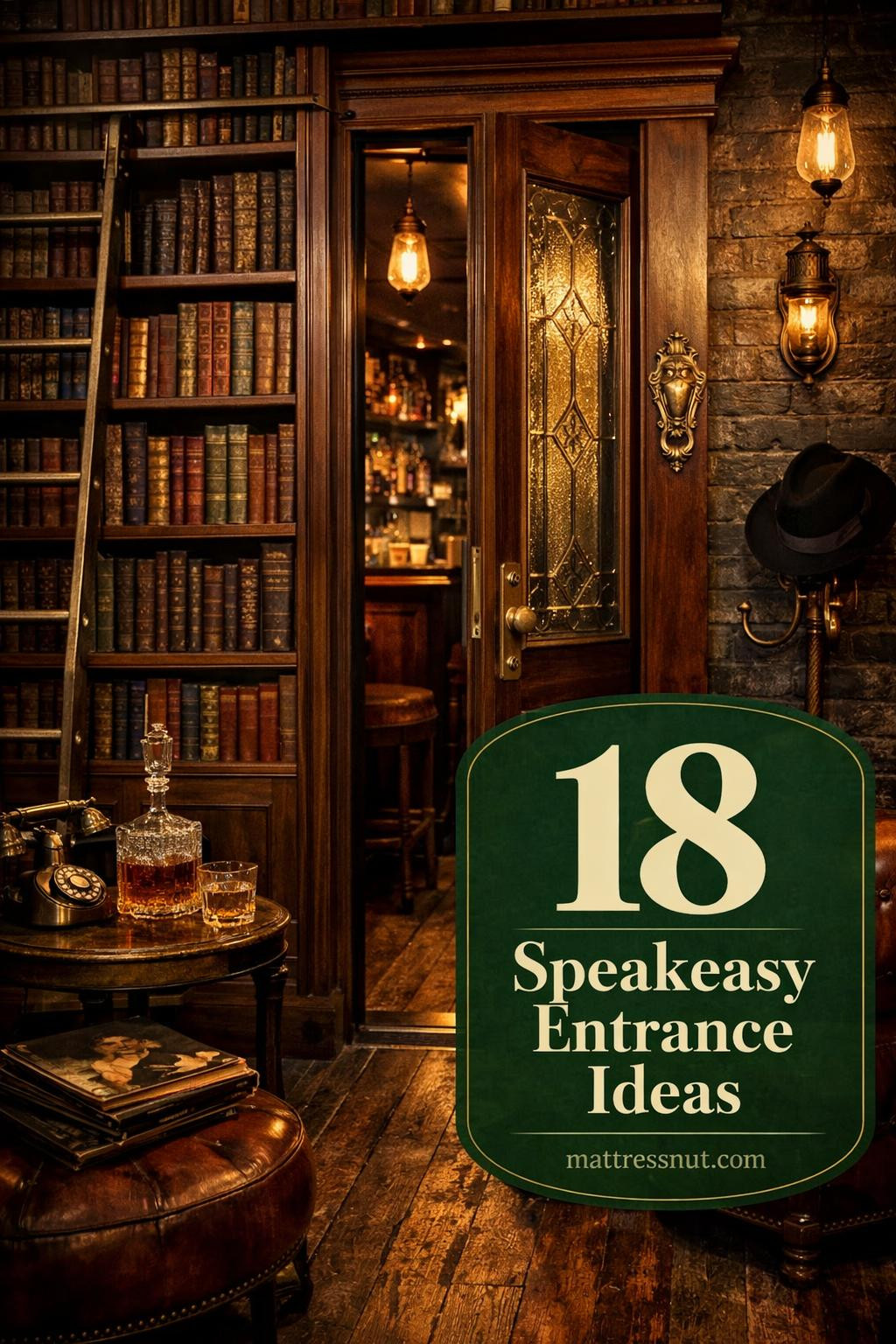
The secret bookshelf door is the most iconic speakeasy entrance because it references the literary romance of prohibition-era culture while providing a genuinely effective concealment mechanism. A beautifully crafted mahogany bookcase lined with vintage volumes, where a gentle pull on a particular tome swings the shelf inward to reveal a passageway bathed in warm amber lighting, creates an experience that has not lost its impact despite being widely known as a speakeasy trope.
In 2026, bookshelf doors are being modernized with smart home integration. Voice activation, biometric sensors, or NFC card readers integrated within a specific book spine allow keyless access while maintaining the visual concealment. The technology is entirely invisible until activated, which preserves the discovery experience while eliminating the mechanical reliability issues that purely analog trigger mechanisms can develop over time with heavy use.
Mirror Door Entrances: The Elegant Disguise
A full-length mirror framed in ornate brass or sleek minimalist lines that pivots effortlessly to reveal the speakeasy beyond is one of the most visually striking entrance options available. The mirror expands and enhances the space it occupies while completely concealing the entrance behind it. Unlike the bookshelf door, the mirror requires no explanation. A mirror is a mirror until it is not.
The execution detail that matters most for a mirror door is the pivoting mechanism. Flush-mounted pivot hinges at the top and bottom of the frame, rated for the weight of a full-length glass panel, provide smooth operation without visible hardware. The frame itself must be substantial enough to accommodate the hinge mechanism while appearing as a conventional decorative frame from the exterior.
The Telephone Booth: Old-School Charm Done Right
Few speakeasy entrance experiences are more delightful than a functioning period telephone booth that serves as the trigger mechanism for the entrance. Guests enter, lift the receiver, and either press a hidden button or dial a specific sequence of digits. The booth then reveals the passageway into the bar. This setup captures prohibition-era feel while providing a concrete, tactile trigger mechanism that guests can engage with physically rather than simply pushing on a wall panel.
Authentic 1950s-era glass-and-chrome phone booths require sourcing from salvage specialists and significant restoration work. Custom-built reproductions can be constructed from scratch using period-appropriate materials for a fraction of the cost. The working telephone handset can connect to a motion sensor or pressure switch that triggers the door release when lifted.
The Vintage Refrigerator Entrance: Unexpected and Memorable
Hiding the speakeasy behind a vintage refrigerator stocked with real food and drinks creates the ultimate unexpected entrance. Guests find the bar by opening what appears to be a functional, stocked refrigerator. The reveal is genuinely surprising even when guests have been told to expect a hidden entrance, because the refrigerator conceit is so convincing as a functional object.
1950s rounded refrigerators with chrome handles or 1970s avocado green models are the most convincing choices for this application. The refrigerator door needs to be modified to swing beyond its normal arc and reveal a passage, which requires custom hinge work and typically involves enlarging the unit's frame or recessing it into a wall cavity. This is a more involved construction project than most other concealment options but produces the most genuinely surprising reveal.
Art Gallery and Painting Doors: Sophisticated and Subtle
Disguising the entrance as part of an art gallery wall or behind a specific large painting is the option that works best in spaces with a more contemporary or artistic character. A large, eye-catching painting mounted on hinges that swings open to reveal the passageway is immediately comprehensible as a design reference while remaining genuinely effective as a concealment in practice. The art itself becomes part of the entry experience rather than a distraction from it.
For this approach to work convincingly, the painting should be substantial, at least 60 by 40 inches, to cover a full door opening. The frame and mounting system need to be engineered to support the weight of the painting and the door panel behind it while allowing smooth operation. Gallery-style picture lights above the painting, which illuminate it as a valued artwork, reinforce the concealment while adding to the atmospheric quality of the entry corridor.
Moody Lighting: The Atmospheric Essential
Lighting makes or breaks the speakeasy atmosphere. Never use a central overhead ceiling light. This concept relies entirely on pockets of light, warm light sources at human scale that highlight specific textures and surfaces while leaving corners and transitions in shadow. The shift from bright entryway to moody speakeasy interior is as much about light as it is about the concealment mechanism.
Edison-style vintage bulbs cast a warm golden glow at 2200K that instantly transforms a space into a cozy hideaway. Mount brass wall sconces at eye level, spacing them about six feet apart to create intimate pools of light along the entry corridor. The interplay of light and shadow is crucial. Designers working in this aesthetic employ ambient lighting to create an intimate atmosphere, often using vintage fixtures and Edison bulbs to maintain an authentic prohibition-era feel.
Candles, whether real or high-quality LED imitations in period-appropriate holders, add the flickering warmth that electric light alone cannot produce. Groupings of three to five candles at different heights on any available surface, whether the bar top, side tables, or built-in shelving, creates the layered light quality that photographs well and feels genuinely atmospheric in person.
Material and Texture: Creating the Sensory Environment
The tactile experience within a speakeasy is as important as the visual. Rich, luxurious materials such as leather, velvet, and dark woods are staples in speakeasy design, evoking the opulence of a prohibition-era establishment. Textured wallpapers, exposed brick, and intricate tile work add layers of depth, creating a backdrop that whispers tales of the past without requiring period-accurate reproduction of every historical detail.
Unlacquered brass and aged bronze are the hardware standards for 2026 speakeasy design. These metals develop patina naturally and look better as they age, which aligns perfectly with the aesthetic goal of creating spaces that feel genuinely weathered rather than newly constructed. Reproductions that try to simulate patina artificially always read as less convincing than real metals allowed to develop their own character over time.
Exposed brick, whether original or applied, provides the textural backdrop that makes warm lighting feel dramatically more atmospheric. The irregular surface of brick absorbs and reflects light differently at every point, eliminating the flat quality that smooth walls produce. If original brick is not available, thin brick veneer panels installed over drywall produce convincing results at a fraction of the structural complexity.
The Sound Environment: Jazz as Architecture
Recorded jazz, blues, or swing music played at a low volume helps set the tone without interrupting conversation. A single visual element, such as a classic black and white film playing silently in a corner, or a rotating playlist on a vintage-style radio, adds movement without turning the space into a loud event venue.
Smart speakers integrated invisibly within the space, hidden behind books, inside vintage radio shells, or concealed within millwork cavities, provide the audio layer while remaining unseen. The technology is felt but not displayed, which maintains the period aesthetic without sacrificing sound quality or control. A smart plug controlling the lamps can be set to a scene that dims the lights and starts the jazz playlist simultaneously, creating an instant atmosphere transition at the touch of a button.
Home Speakeasy Design: Basement Transformation
Basement spaces are the most natural location for a home speakeasy because they are below grade, physically separate from the main living areas, and often already have the low ceiling height and intimate scale that the aesthetic requires. The transition from the ordinary residential floors above to the moody subterranean bar below reinforces the speakeasy premise at a spatial level that above-ground installations need to work harder to achieve.
A staircase leading down to a basement bar, lined with vintage photographs, period memorabilia, and brass-mounted sconces, creates a descent that builds anticipation before the destination is even visible. The entry mechanism at the base of the stairs, whether a bookshelf door, a panel door, or a trap door integrated into the basement floor, is the final theatrical element before the reveal. Every detail along the descent path contributes to the experience of the eventual arrival.
The Bar Interior: Designing the Destination That Justifies the Entry
A spectacular hidden entrance leading to a mediocre bar interior is an anticlimactic experience that undermines everything the theatrical entry created. The space behind the door must deliver on the promise of the approach. Rich, luxurious materials are the foundation: leather seating in deep burgundy or forest green, dark walnut or mahogany surfaces, and a bar top in marble, hammered copper, or aged brass-inlaid wood create the material vocabulary that makes a home bar feel like a genuine establishment rather than a basement project.
The bar back, the wall behind the bar display, is the visual centerpiece of the room and should be designed with the same care as a retail display. Backlit shelving in dark walnut holding crystal decanters, vintage glassware, and a curated selection of spirits creates an instant impression of quality and intentionality. Mirror panels behind the bottles reflect the light and double the visual depth of the display. Aged brass sconces or Edison bulb pendants above the bar create the warm, directional light that makes every glass and every bottle look like a collector's item.
Period-Appropriate Details That Sell the Atmosphere
Artwork and accessories are the finishing touches that breathe life into a speakeasy's design. Curated collections of prohibition-era memorabilia, vintage photographs, and classic cocktail paraphernalia serve as conversation starters and visual anchors. Old jazz posters with period typography, framed vintage cocktail menus, and black and white photographs of 1920s nightlife all contribute to the atmosphere without requiring any of these items to be authentic period pieces. High-quality reproduction or simply period-appropriate printing on aged paper stock produces results that are indistinguishable from originals in the moody lighting of a well-designed speakeasy.
A vintage turntable or period-style radio as a visible sound source adds a physical object that reinforces the era reference. It does not need to be the primary audio source. The smart speaker hidden in the wall or behind a book handles the actual audio quality. The visible vintage radio or turntable serves the aesthetic function of suggesting a certain relationship to music and sound that the era represented. This distinction between functional objects and atmospheric objects is one of the key design principles that separates genuinely atmospheric speakeasy bars from merely nostalgic ones.
Complete Your Space
Every beautiful room deserves a great night sleep. The Saatva Classic — white-glove delivery, 365-night trial.