
 by
by Our #1 Recommended Mattress
Saatva Classic. From $1,095
365-night trial · Lifetime warranty · Free white-glove delivery
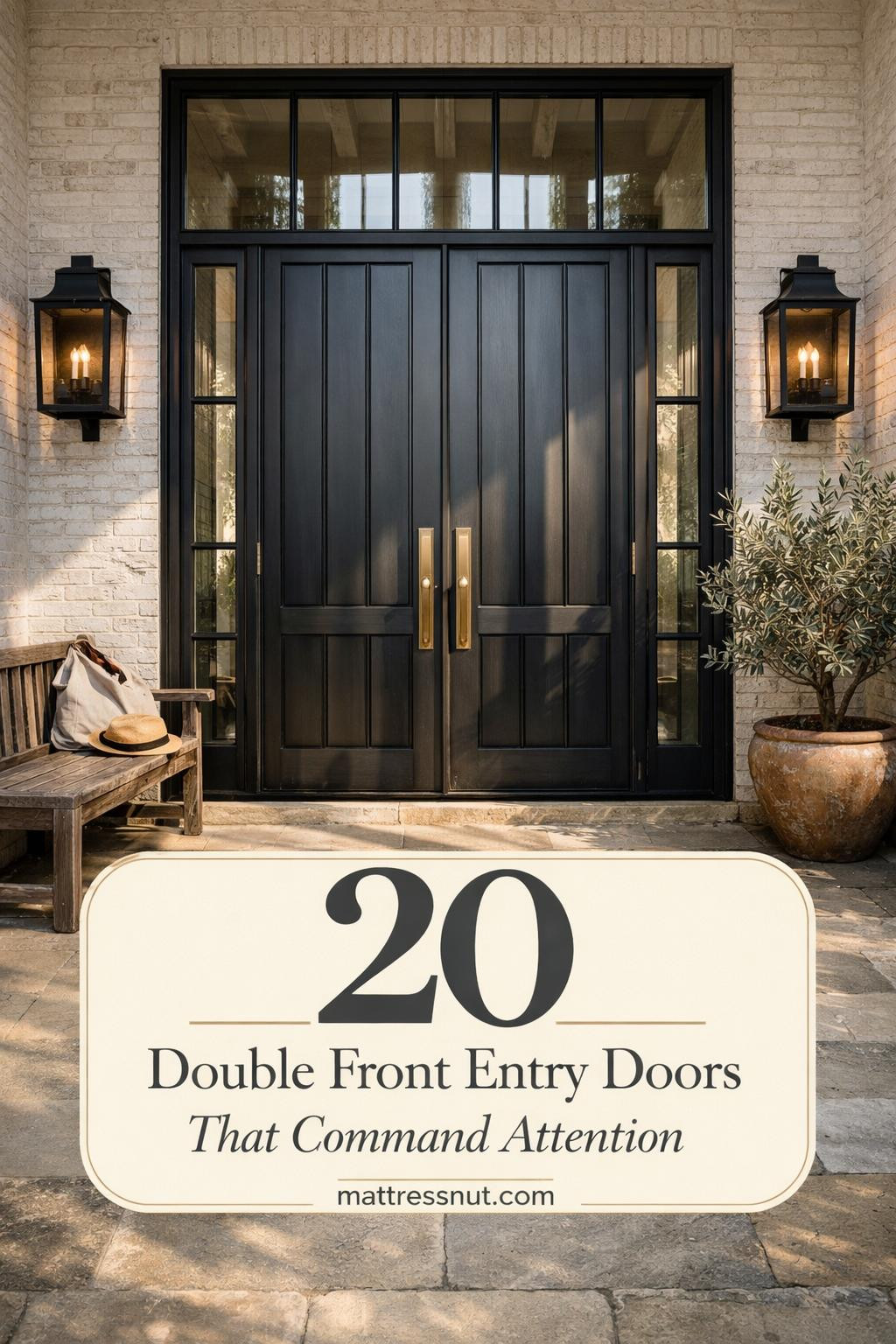
Double front entry doors. The kind that make contractors stop their trucks and look twice. Here's what actually works.
Weathered Oak With Hand-Forged Iron Studs
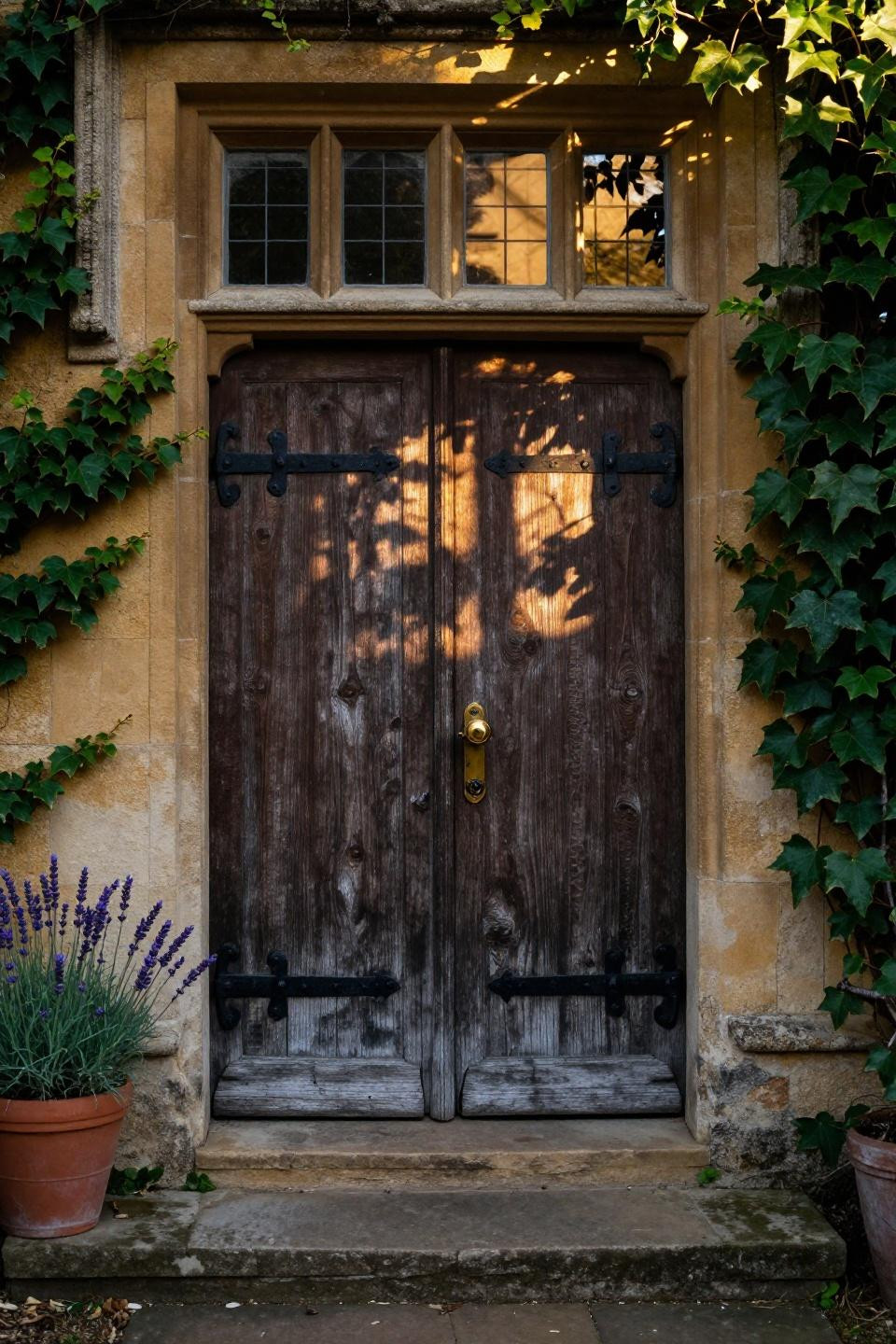
Those iron clavos aren't just decoration. They're holding centuries-old planks together, and the pattern creates shadow play that changes all day. The honey-toned limestone around it does the heavy lifting - makes the oak look even warmer. One tarnished clasp, ivy creeping up one side. That's the whole point. Plus the divided-light transom above filters light in a way modern glass can't touch.
Copenhagen Townhouse With Porthole Glass Detail
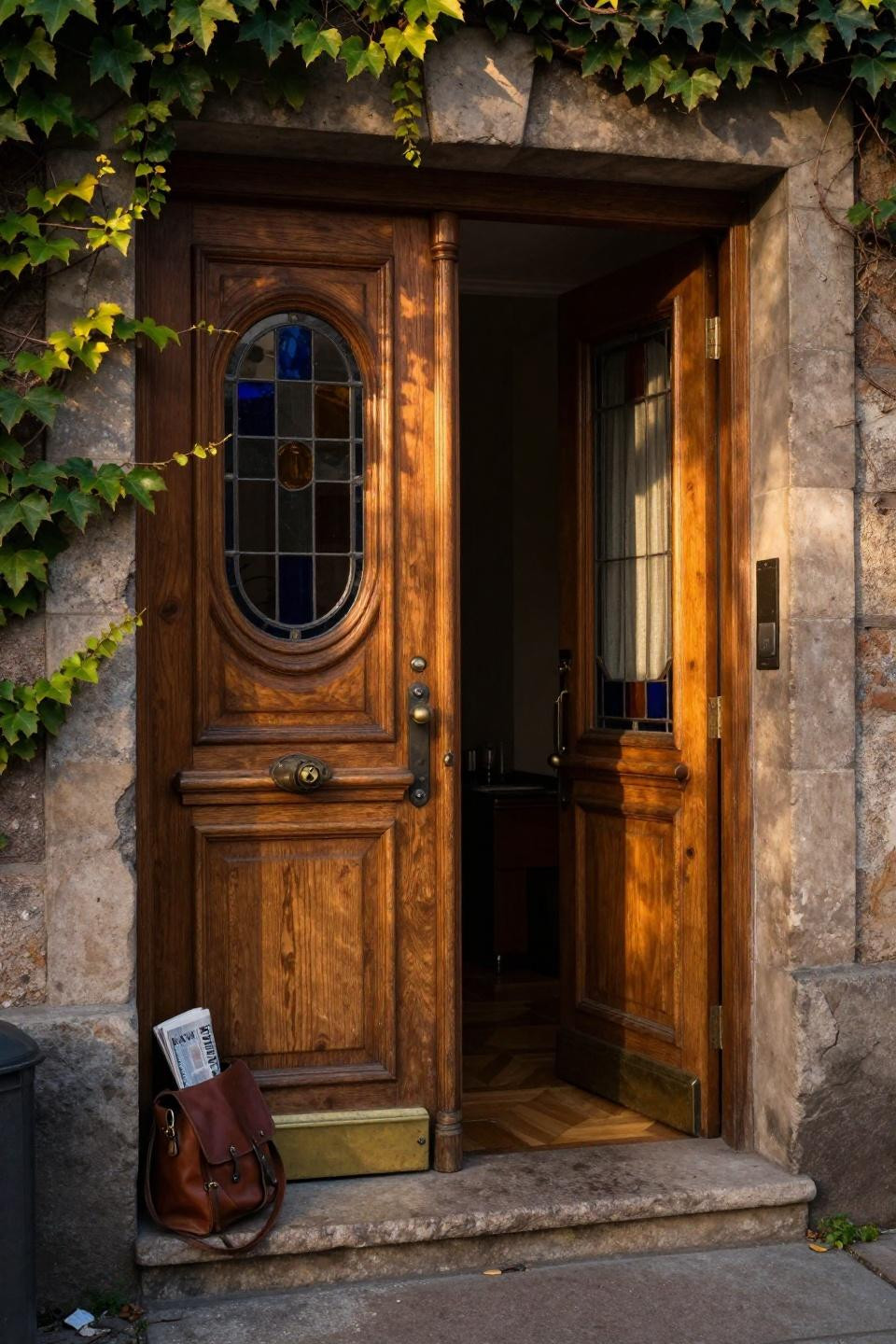
Reclaimed oak. Unlacquered brass that's aging exactly how it should. But that round porthole window? Total move. It breaks up what would otherwise be solid wood in a way that feels curated without trying. The stained glass insets in sapphire and amber create actual caustics on the threshold - those little jewel-like light patterns. And when one door's cracked open showing herringbone floors inside, the whole entry feels lived-in, not staged.
Provence Sliding Barn Doors on Steel Track
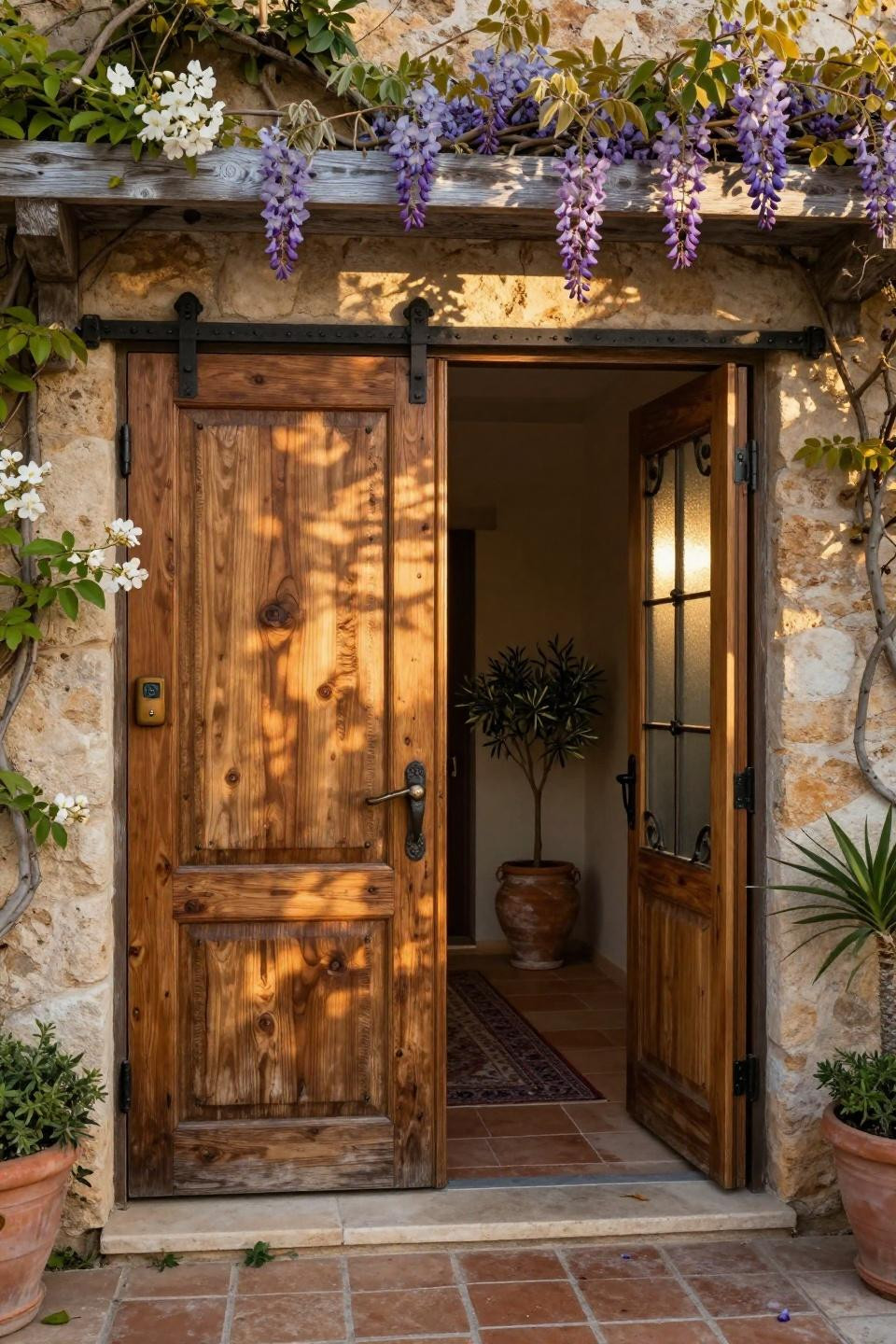
Nine-foot carriage doors that slide. The exposed steel track and silvered oak beam overhead give it that refined-industrial thing without feeling cold. Frosted glass panels with bronze mullions let light through but keep the mystery. Here's the thing - when one door's open just 8 inches, you get that glimpse of terracotta floors inside. Creates intrigue. The trailing wisteria and one fallen leaf on the step seal the whole Provence aesthetic.
Palm Springs Teak With Geometric Glass Panels
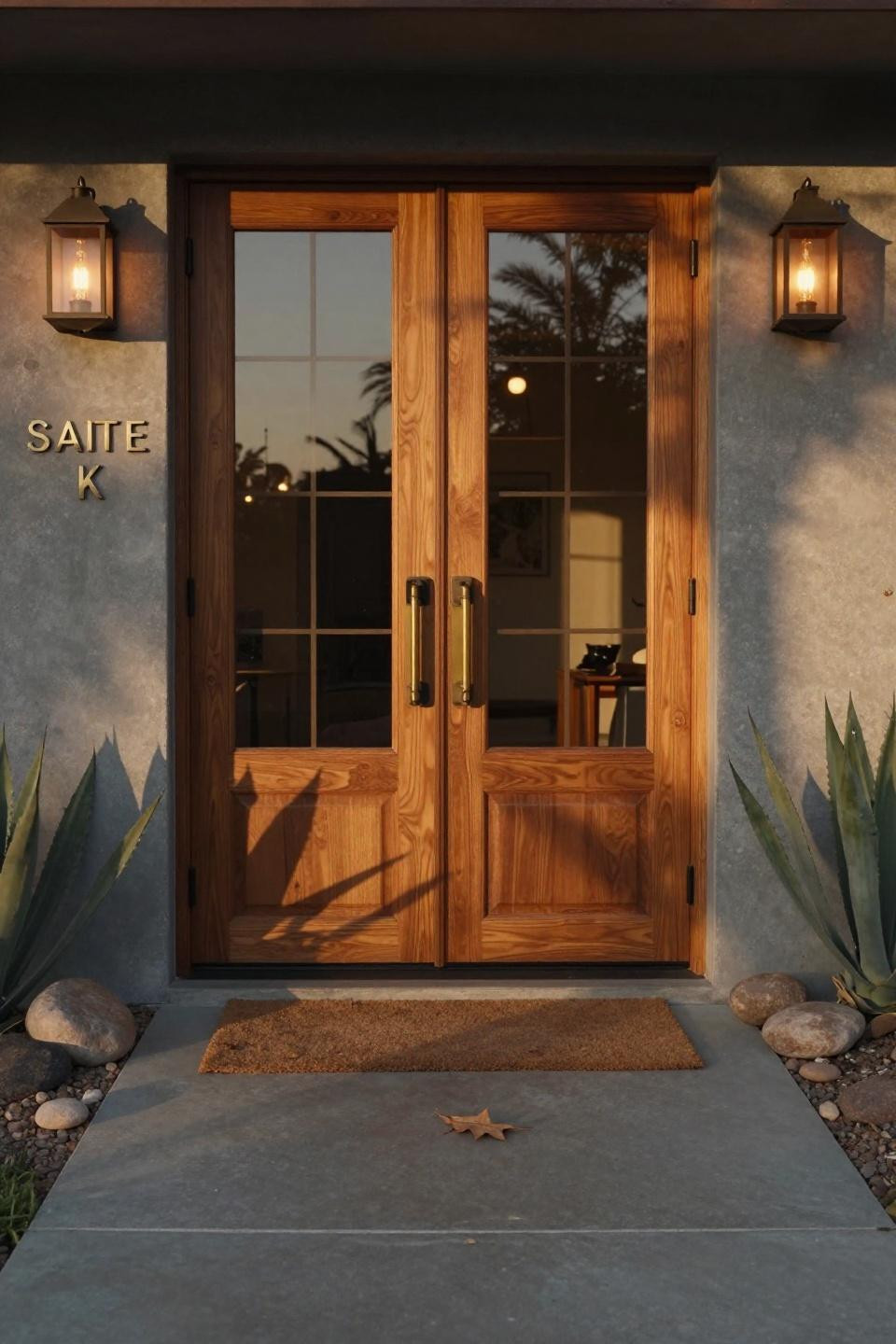
Teak with those angular frosted glass insets. Pure mid-century. The geometric shadows they cast all afternoon are chef's kiss. Unlacquered brass pulls with just enough patina to feel authentic, not staged. And those matching Edison bulb sconces? They're doing all the work at night. The desert landscaping with river stones and agave keeps it grounded. One fallen dried leaf in the corner actually makes it feel real, not catalog.
Provençal Mas With Hidden Bookshelf Door
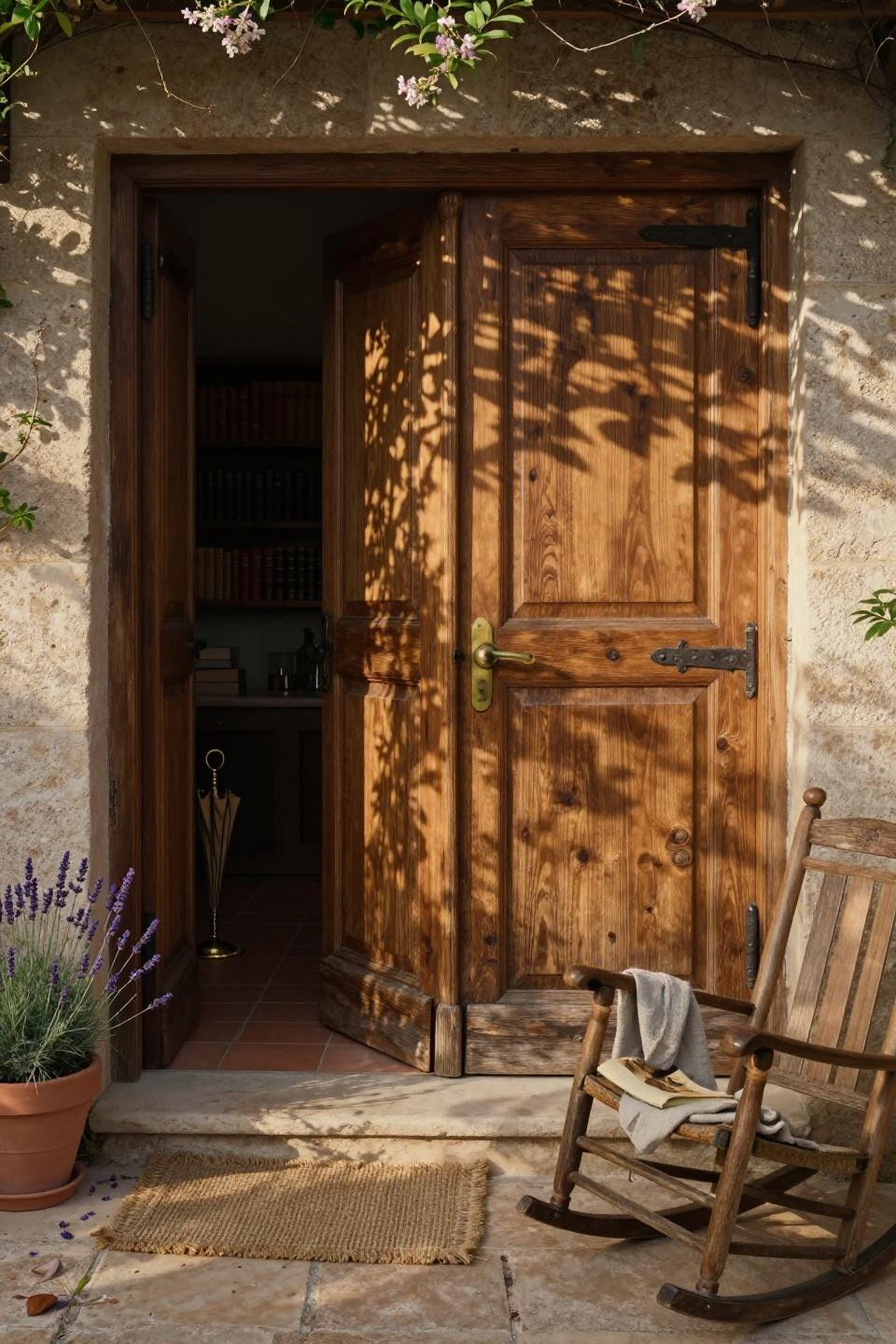
Ten-foot reclaimed oak doors with original iron strap hinges. But crack one open and there's a hidden bookshelf behind it - leather-bound volumes lining concealed shelves. That detail alone. The climbing jasmine overhead casts dappled patterns across the threshold, and the bluestone step with that sisal mat sitting slightly askew feels right. Been getting compliments every time someone notices the bookshelf trick. Honestly, it's the conversation starter that keeps giving.
Pacific Northwest Douglas Fir With Stained Glass
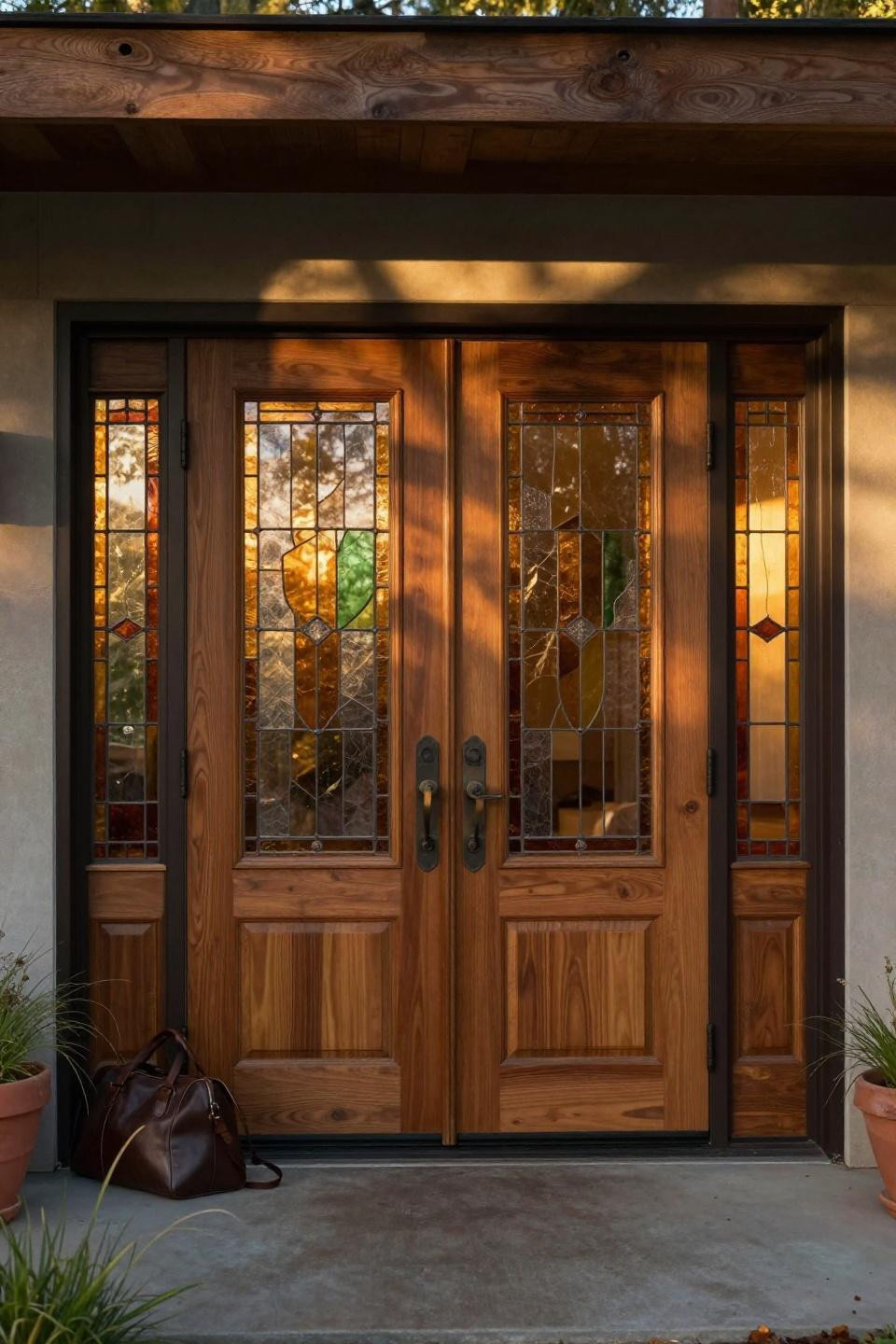
Vertical-grain Douglas fir with a hand-rubbed satin oil finish. The stained glass insets - amber, sage, rust - cast actual jewel-toned light onto the polished concrete. Those caustics shift all day. Hidden European hinges keep it sleek, and the cantilevered cedar overhang creates that dramatic shadow line. The flush-mount design reads modern but the stained glass keeps it warm. One leather weekend bag propped against the jamb makes the whole entrance feel approachable instead of precious.
Luberon Hills Reclaimed Oak With Iron Studs
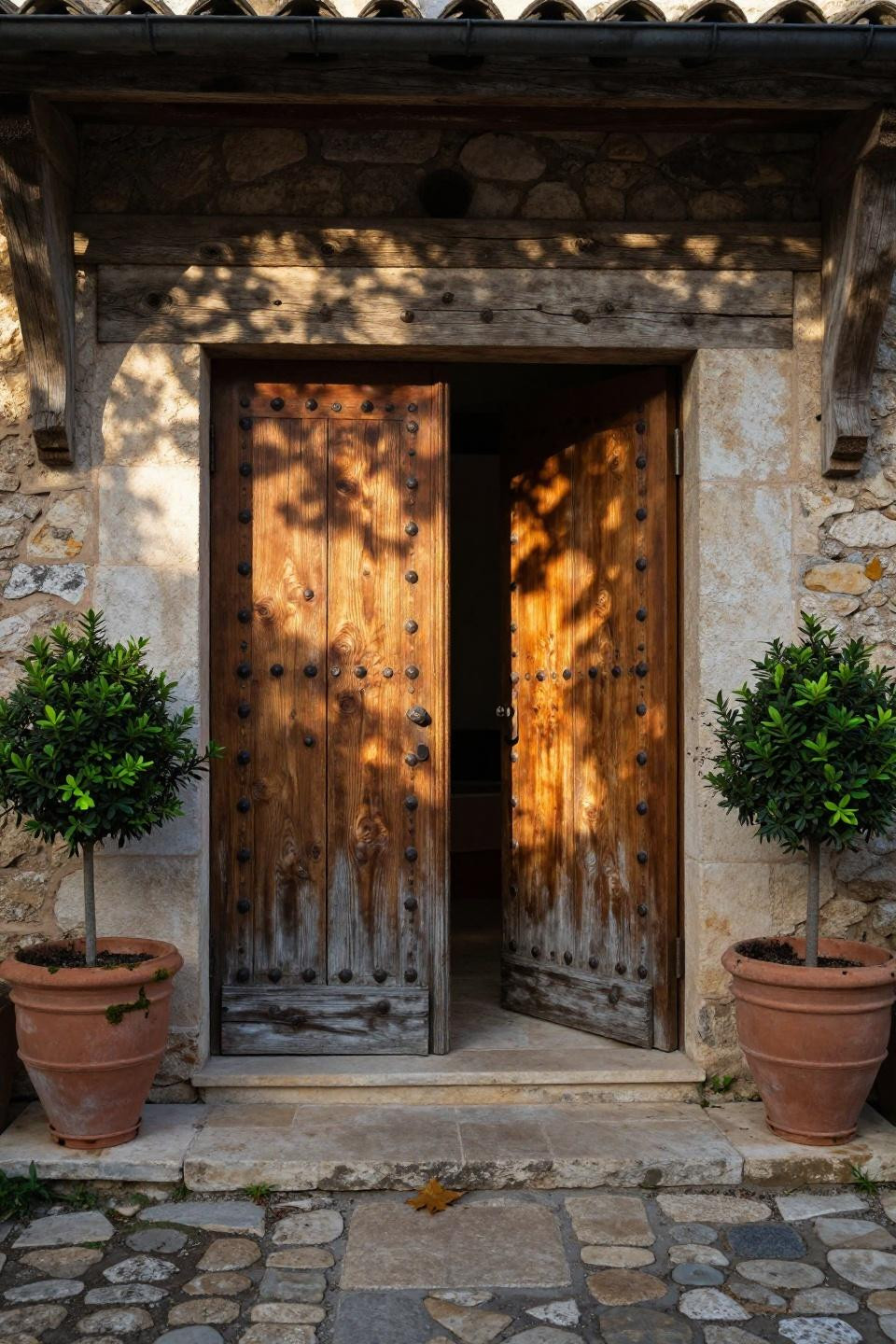
Twelve-foot panels of honey-toned reclaimed oak. Every knot, crack, and iron stud tells a story. The hand-hammered studs arranged in geometric patterns aren't decoration - they're structural. And that silvered grain mixed with warm amber heartwood creates depth you can't fake. The boxwood topiaries in aged terracotta urns (one with a hairline crack and moss creeping through) ground the grandeur. When late afternoon light rakes across this, the shadows reveal every texture. Worth it.
Copenhagen Warehouse With Walnut Pivot Doors
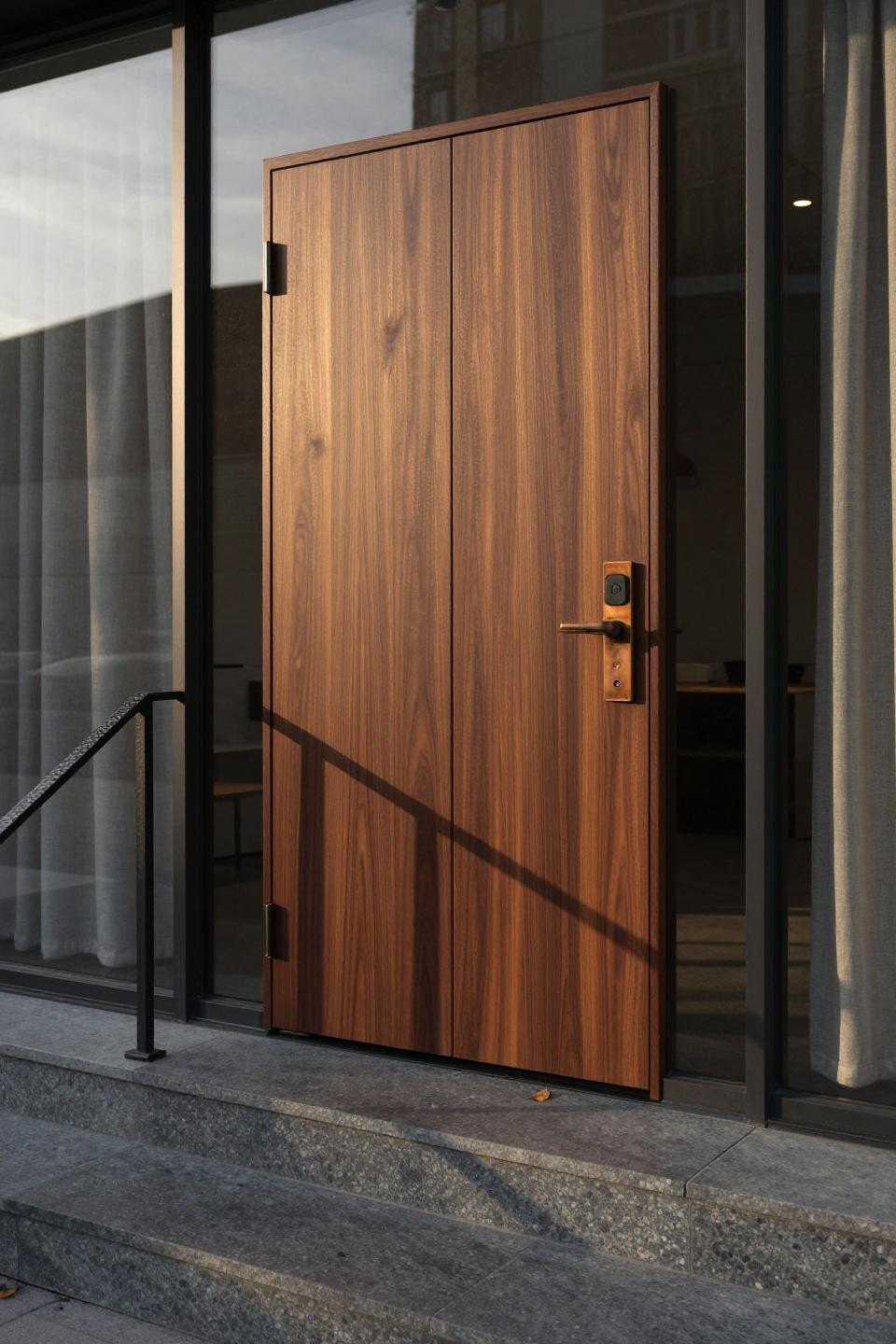
Dark walnut with vertical grain, hand-oiled to this buttery satin finish. The pivot mechanism feels effortless - no visible hinges, just smooth movement. Floor-to-ceiling glass panels flanking the doors flood the honed slate steps with light. That rough-hewn slate with natural pitting against the silky walnut? Contrast that actually works. The unlacquered bronze smart doorbell already has that warm patina. One dried oak leaf caught in the corner and shoe scuffs on the bottom step make it feel lived in, not precious.
Charleston Georgian With Leaded Glass Panels
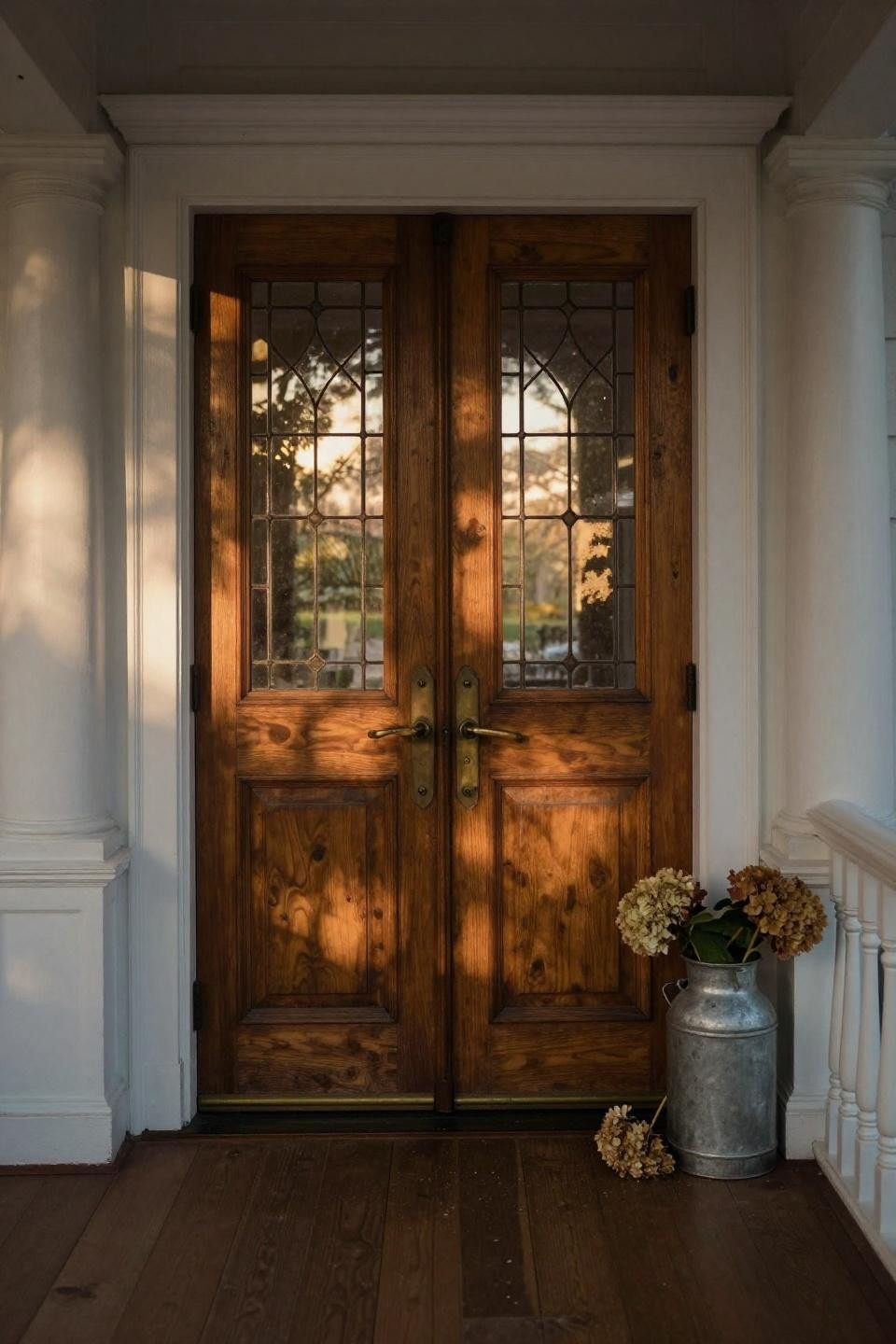
Ten-foot reclaimed oak doors with leaded glass in the upper thirds. Those geometric caustic patterns they cast on the heart pine floors all afternoon are the whole reason. Hand-forged unlacquered brass hardware that's aging exactly right. The three vertical raised panels on each door create deep shadow lines that change with the light. That jib door flush with the wainscoting - almost invisible except for the brass push plate - is the kind of detail that makes old homes work. The zinc milk can with dried hydrangeas? Total Southern move.
Provençal Farmhouse With Pyramid Iron Studs
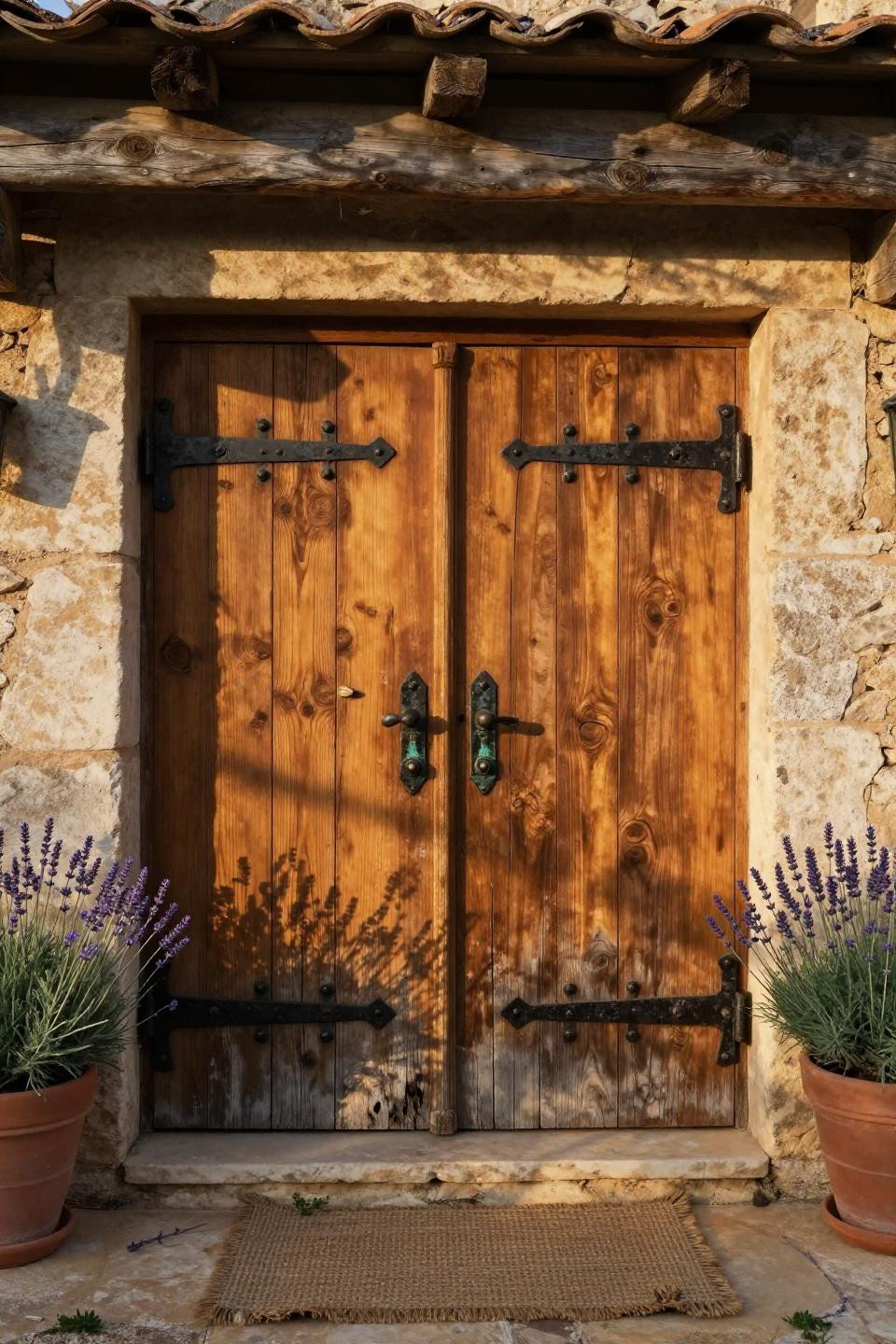
Honey-toned reclaimed barn wood with every natural split and age mark intact. The oxidized iron strap hinges with pyramid studs create that medieval texture that's impossible to replicate. Silvered cedar beam overhead throws shadows across the hand-woven jute mat (one corner folded under, naturally). The wrought iron pulls with green patina in the crevices feel cold and authentic. Terracotta planters with wild lavender spilling asymmetrically, one broken stem resting on the limestone threshold. This is European countryside done right.
Provençal Manor With Sage Green Painted Panels
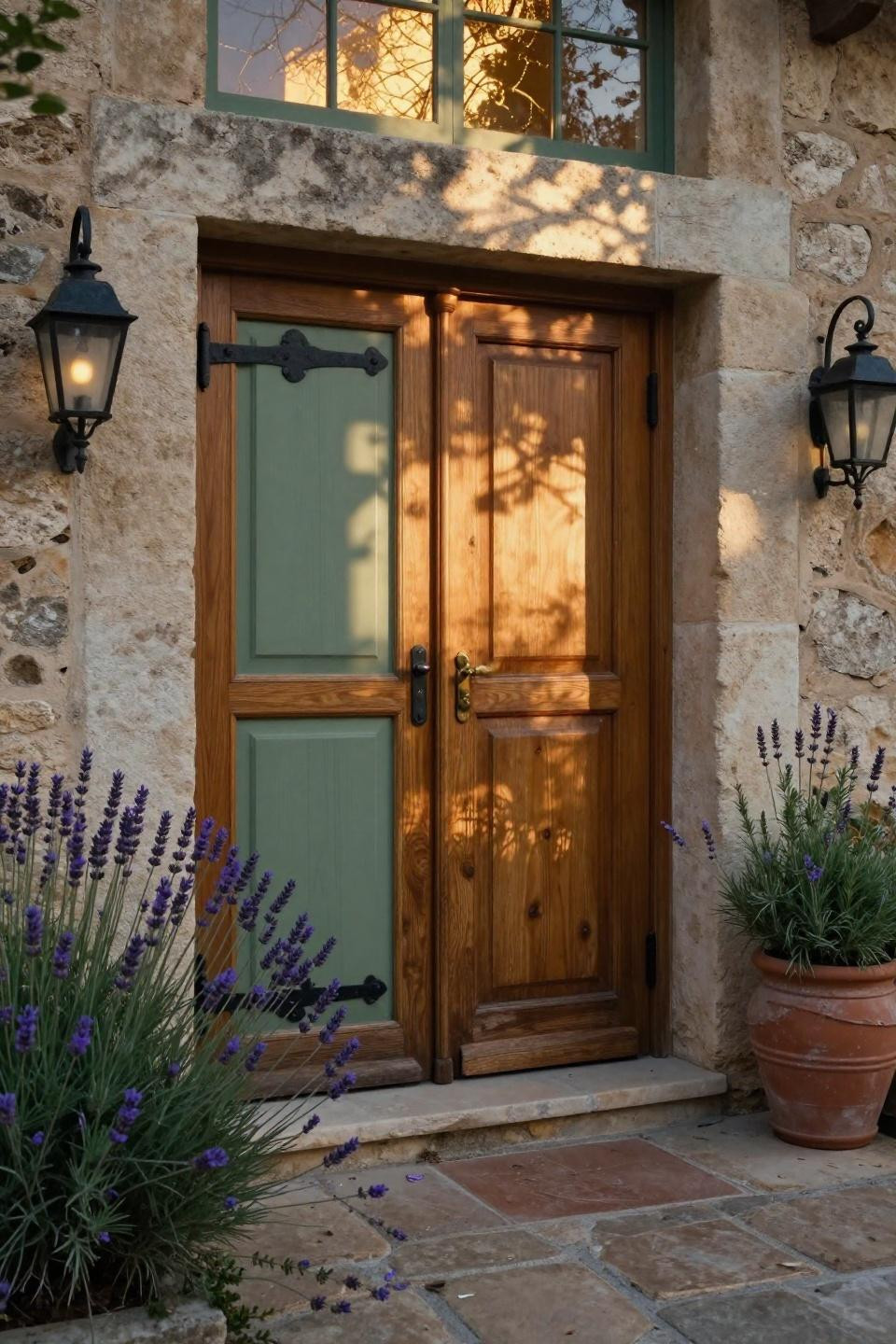
Painted sage green panels with contrasting warm oak frames. That color combination alone makes it. The massive iron strap hinges in blackened steel anchor the whole composition. Above, a divided-light transom refracts golden afternoon light into patterns across the limestone threshold. Wild lavender borders the flagstone walkway, purple blooms scattered naturally on stone. The brass door handle shows finger-worn patina exactly where it should. One door cracked open revealing terracotta tile inside? That glimpse of what's beyond does the heavy lifting.
Copenhagen Østerbro Dark Walnut Pivot System
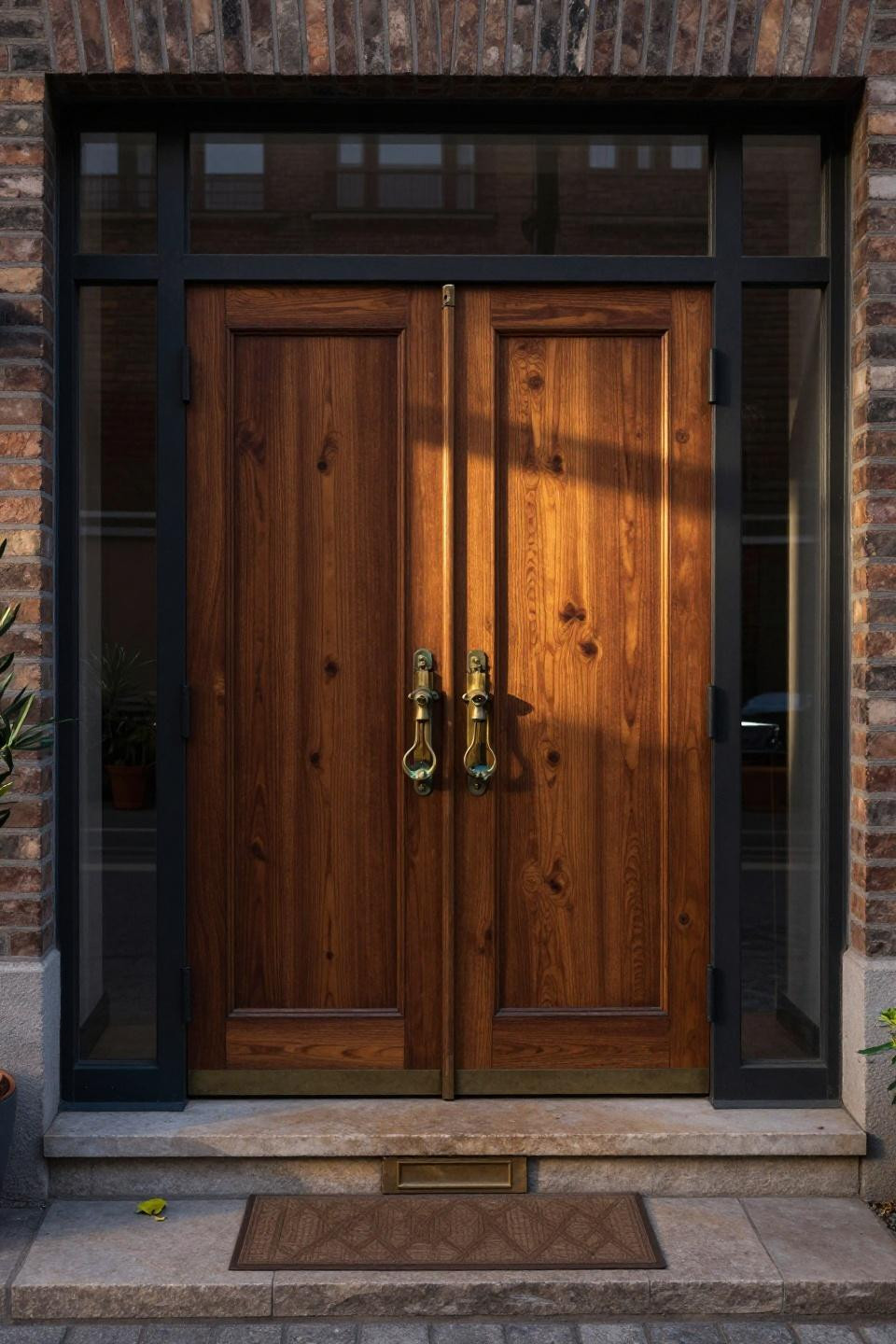
Twelve-foot pivot doors in dark walnut with that rich chocolate grain. The pivot mechanism with invisible hinges makes the scale feel effortless. Floor-to-ceiling glass panels flanking each door create vertical light shafts with actual volumetric rays hitting the limestone threshold. Painted brick in warm greige contrasts perfectly with the walnut's silky depth. That ornate brass door knocker with verdigris accents catching light? It's the detail that elevates the whole entry. Small potted olive tree with one fallen leaf makes it approachable instead of stuffy.
Swiss Alpine Chalet With Concealed Brass Hinges
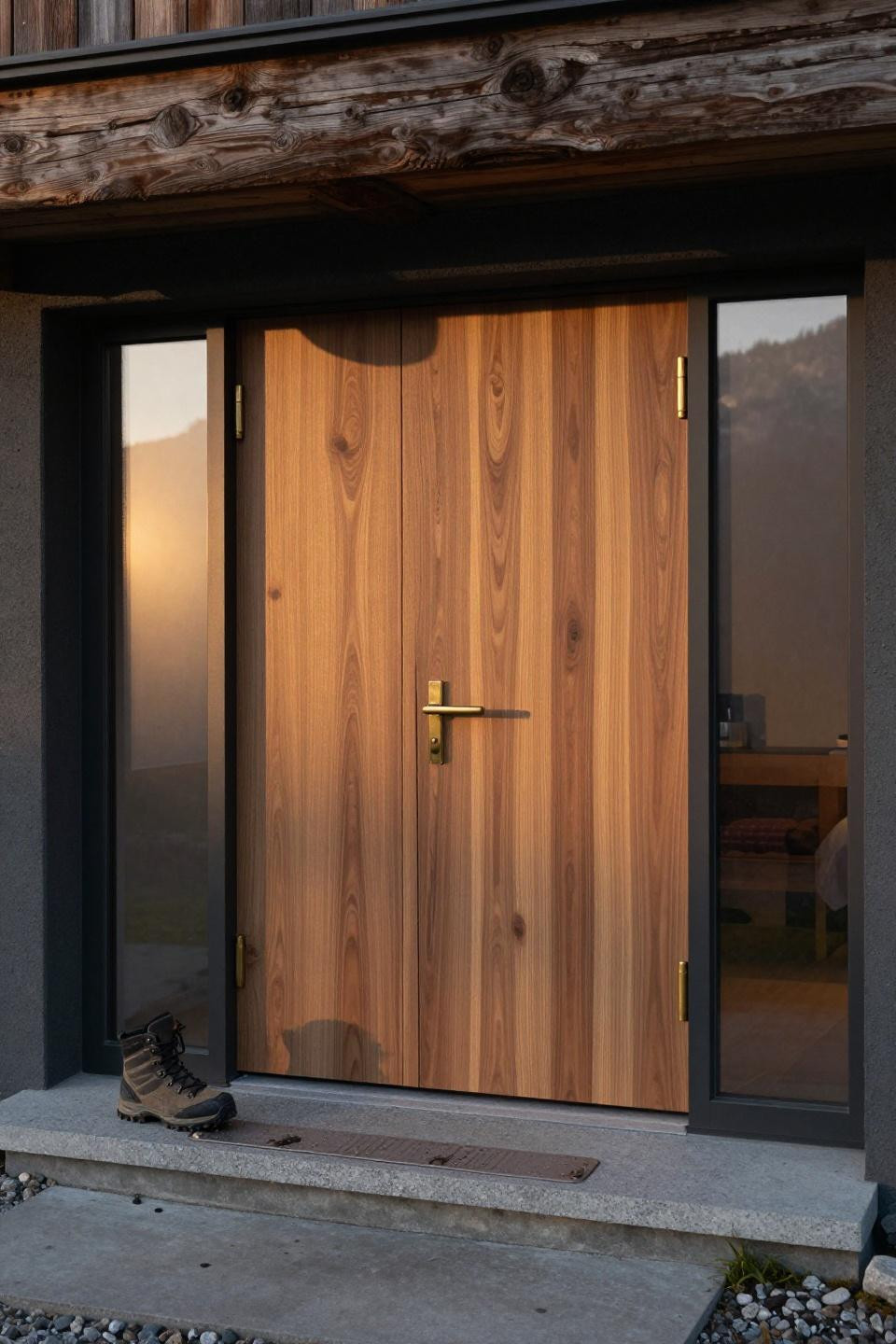
Smooth walnut veneer with concealed unlacquered brass hinges along smooth edges. The flush system reads ultra-modern but the exposed timber beam overhead keeps it grounded. Rough-hewn limestone threshold meets architectural concrete flooring - that cool pitted texture against smooth concrete works. Hand-forged iron boot scraper positioned asymmetrically with one muddy hiking boot beside it? Tells the whole story. Frosted glass side panels diffuse golden light creating soft bloom effects. This is mountain retreat done refined, not rustic.
Pasadena Art Deco With Sunburst Brass Inlay
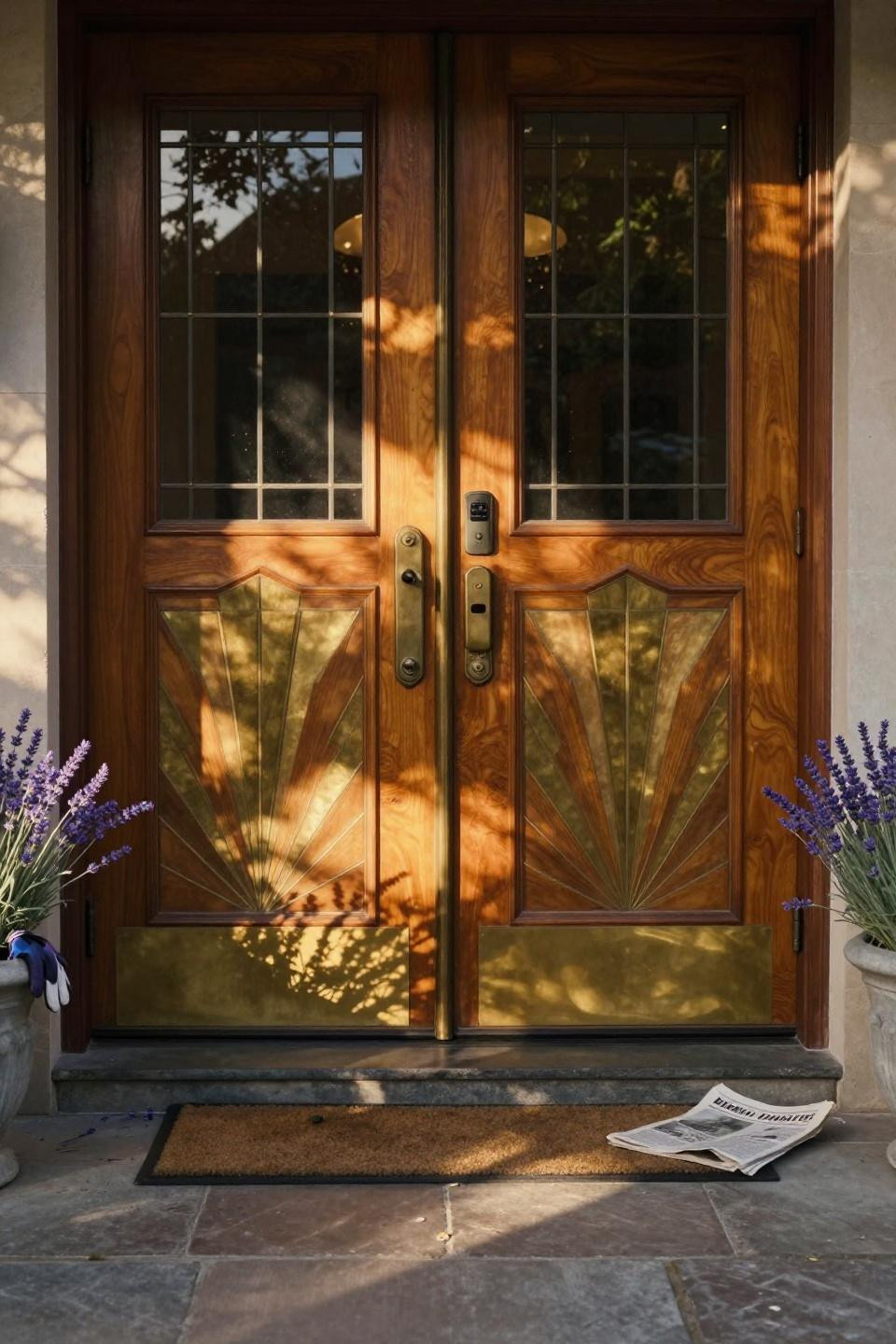
Stepped-panel walnut with geometric brass inlay forming sunburst patterns. Pure 1920s Art Deco. The beveled glass panels create warm caustics across the flagstone walkway all afternoon. Unlacquered bronze smart doorbell with subtle patina mounted at perfect height - modern function, vintage aesthetic. Those stepped panels create dramatic shadow play that changes hourly. Flowering lavender borders with one sprig fallen on the threshold, gardening gloves draped over the planter. That brass hardware with warm patina catching rim light ties the whole period aesthetic together.
Cotswolds Manor Single Pivot in Reclaimed Oak
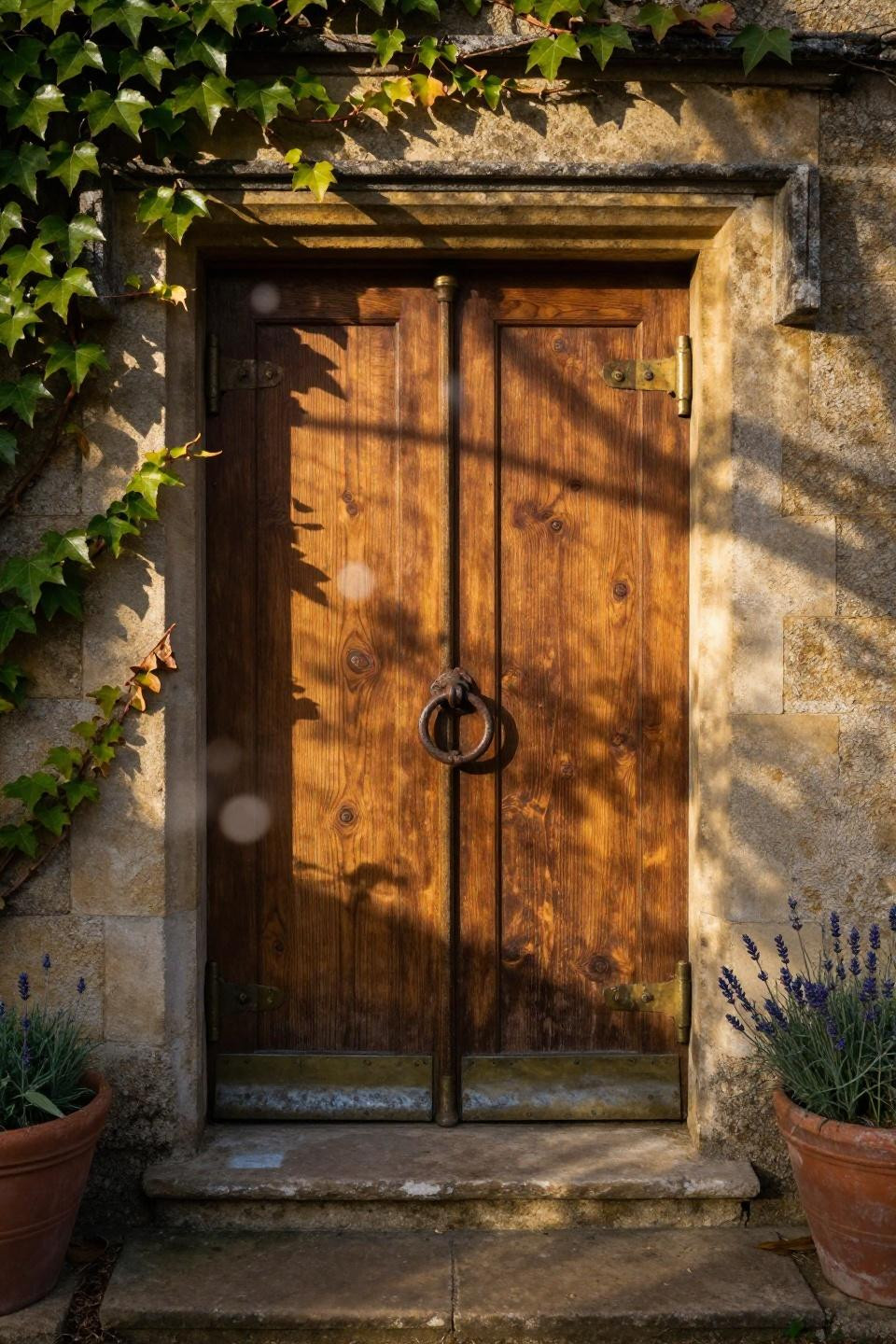
Twelve-foot single pivot door in reclaimed French oak. The grain patterns in honey and amber tones shift with the light all day. That massive hand-forged iron ring pull hanging slightly asymmetric? It's the detail. Weathered limestone facade with hand-chiseled mortar joints creates depth, and the climbing English ivy with one browning leaf adds texture without being precious. The worn stone threshold shows centuries of foot traffic. Terracotta pot with lavender sitting slightly off-center keeps it from feeling too formal. Honestly, single pivot doors hit different than doubles.
Hamptons Estate White Oak Pivot With Bronze Handle
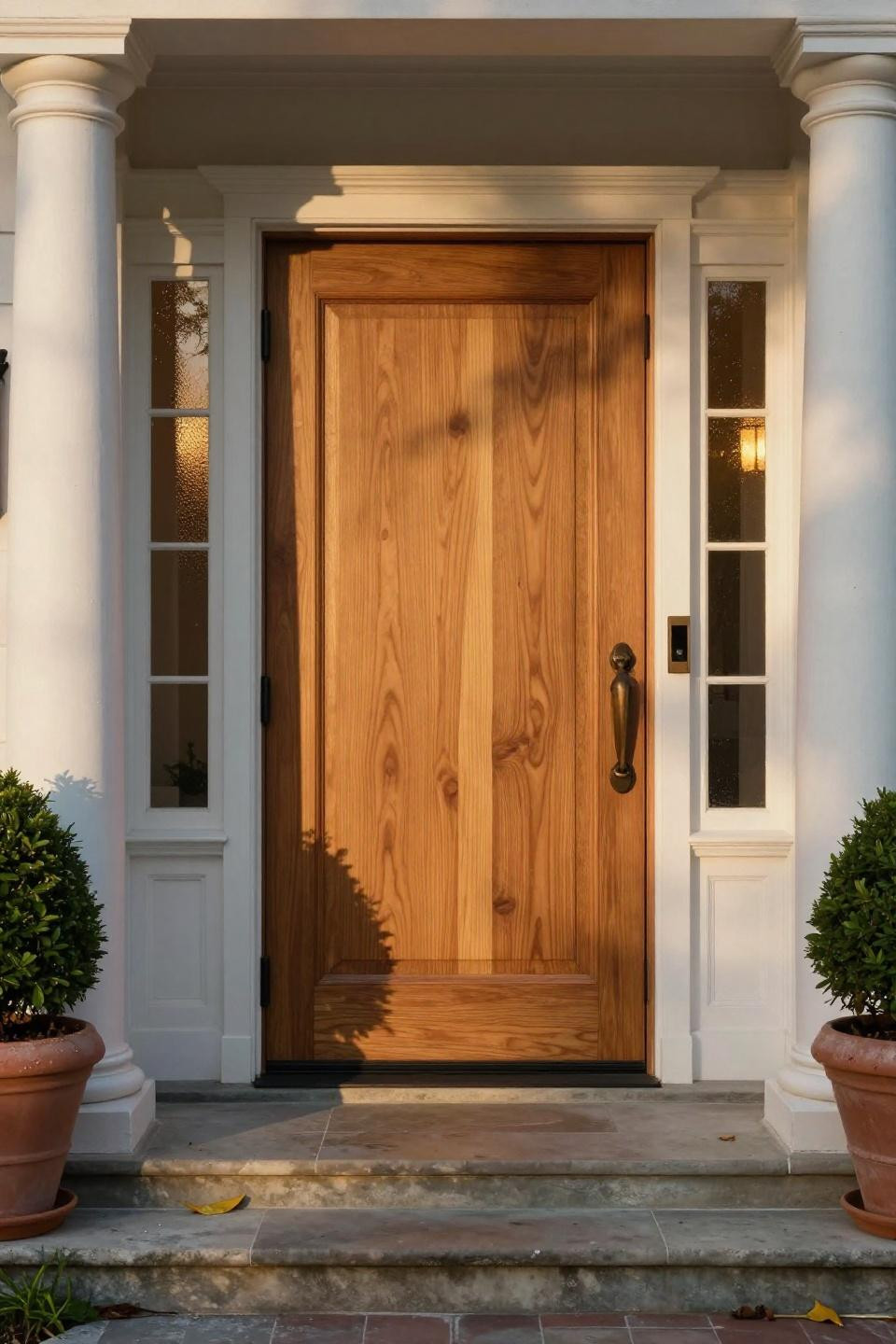
Twelve feet of warm white oak with dramatic vertical grain. Single pivot design with a brushed bronze handle showing natural patina. The fluted Doric columns and curved balustrade frame it perfectly - classical architecture meeting modern function. Frosted reeded glass sidelights diffuse warm interior glow without sacrificing privacy. Potted boxwood topiary in weathered terracotta sits asymmetrically beside the entry, one fallen leaf on honed limestone. Morning dew on the bronze hardware catches light. This is architectural grandeur that still feels approachable, not museum-like.
New England Colonial Six-Panel in Prussian Blue
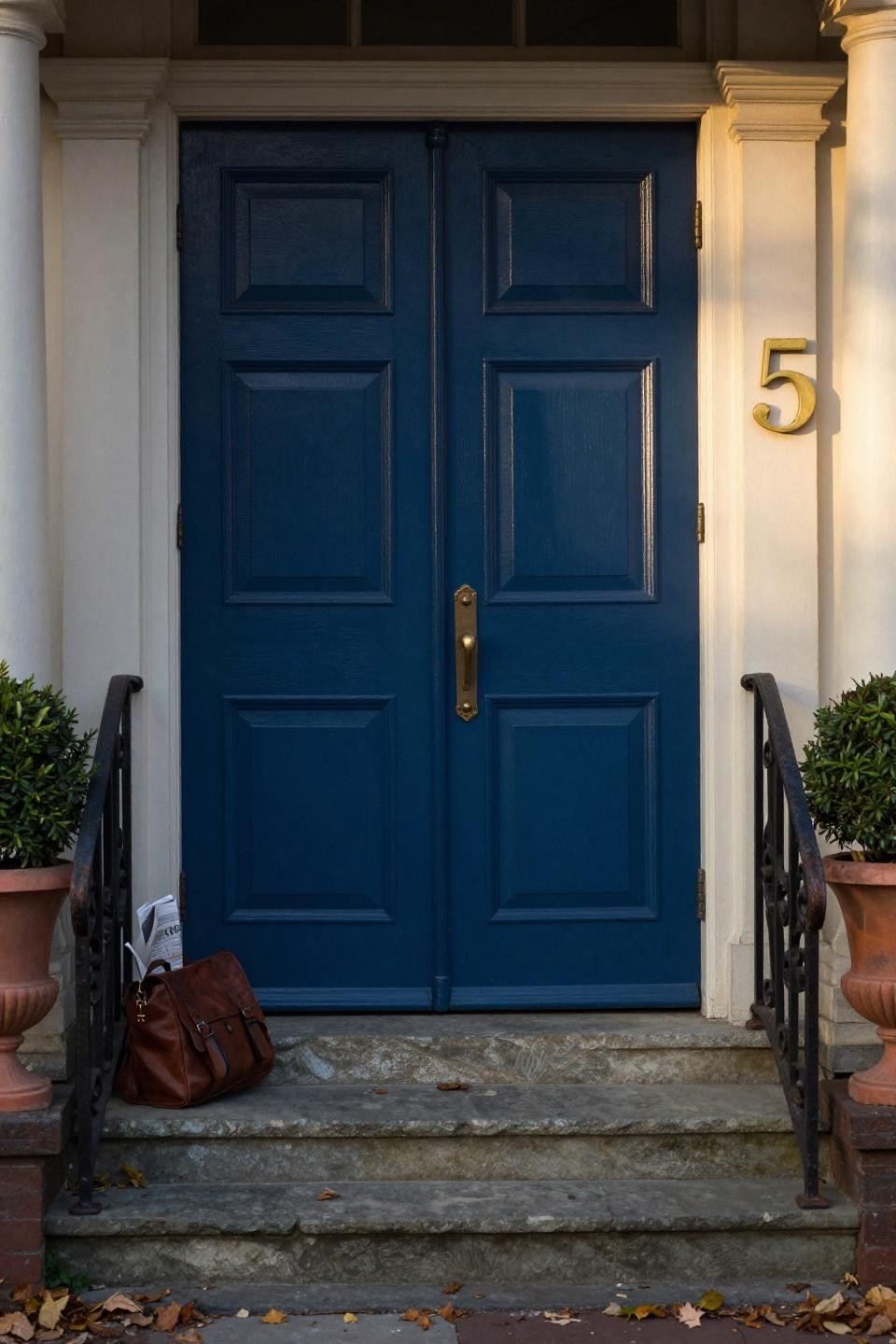
Deep Prussian blue with hand-rubbed satin finish. The six-panel design is traditional but that bold color makes it. Unlacquered brass hardware with aged patina catches afternoon light perfectly. Slate steps with moss between cracks show honest weathering - worn smooth from decades of use. Hand-forged wrought iron railings with scrollwork and rust spots feel authentic, not distressed. Modern brass house numbers in Futura font create contemporary contrast. Leather messenger bag leaning against one door with morning newspaper tucked inside? That's the lived-in detail that makes it work.
Kyoto Machiya With Kumiko Lattice Panels
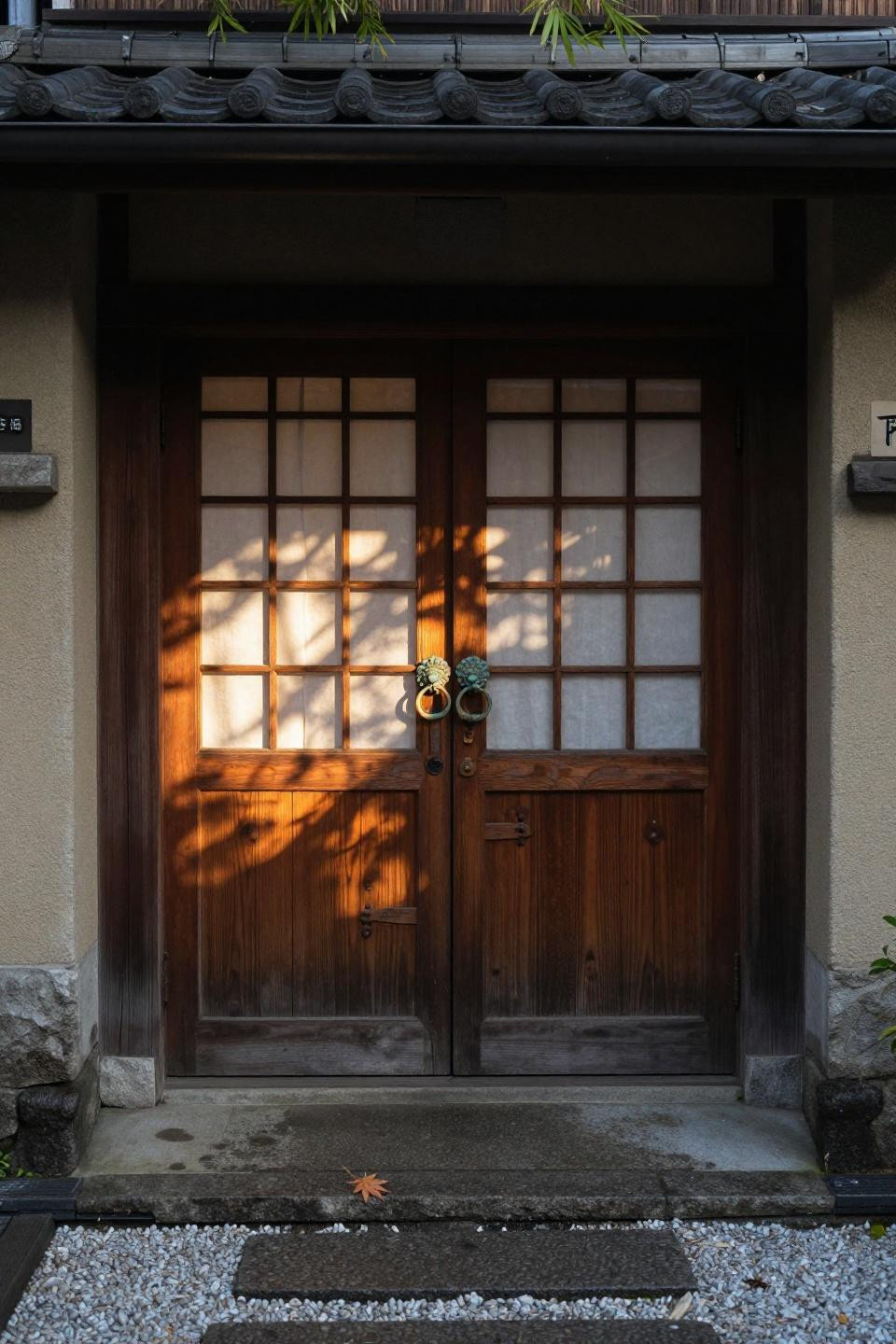
Hand-carved kumiko lattice in aged hinoki cypress with translucent washi paper behind. The soft diffused glow it creates is unmatched. Antique hand-forged iron hardware with natural rust patina grounds the delicate woodwork. White gravel pathway with irregular stepping stones still damp from morning rain shows those darker wet patches. One fallen maple leaf on the bottom step, weathered bronze chrysanthemum door knocker catching rim light. The geometric shadow patterns the lattice creates on the stone entryway shift all day. This is centuries-old Japanese craftsmanship that still feels relevant.
Our Top Mattress Pick
| Saatva Classic | $1,395+ | Shop |
| Saatva Contour5 | $1,595+ | Shop |
| Saatva Zenhaven | $1,895+ | Shop |
Napa Valley Shoji-Style Sliding Screens
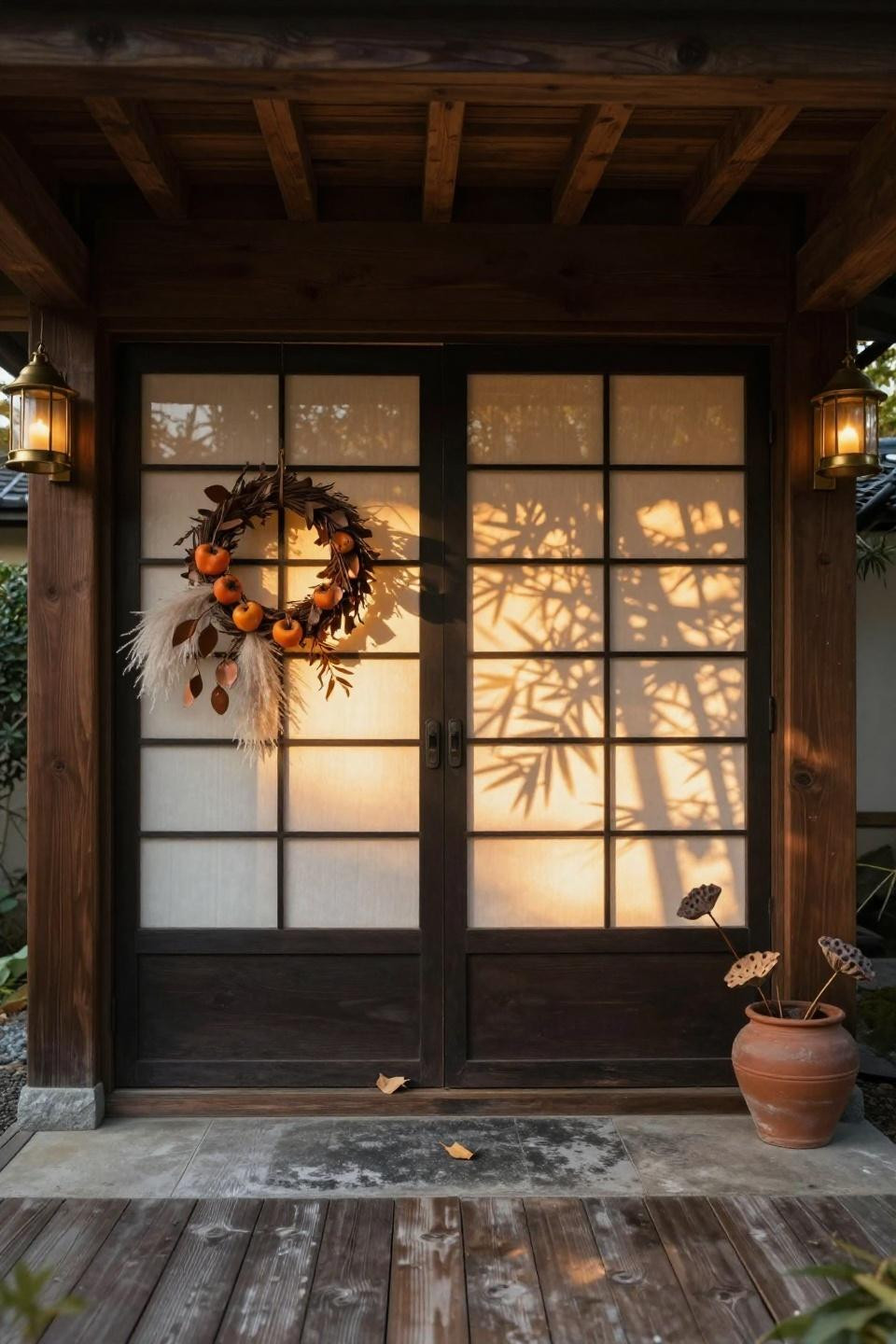
Twelve-foot sliding screens with rice paper panels in dark charcoal-stained oak frames. The translucent paper creates ethereal subsurface scattering - that glowing amber warmth when afternoon light hits. Exposed rough-hewn cedar beams overhead, unlacquered brass lantern sconces with candlelight. That seasonal wreath of dried persimmon branches and copper beech leaves hanging asymmetrically on the left panel? Total move. Weathered teak floorboards with silvered patina lead to the smooth limestone threshold. Terra-cotta pot with dried lotus pods sitting off-center completes the tranquil aesthetic. Kyoto meets Napa Valley done right.
Georgetown Federal With Hand-Painted Navy Finish
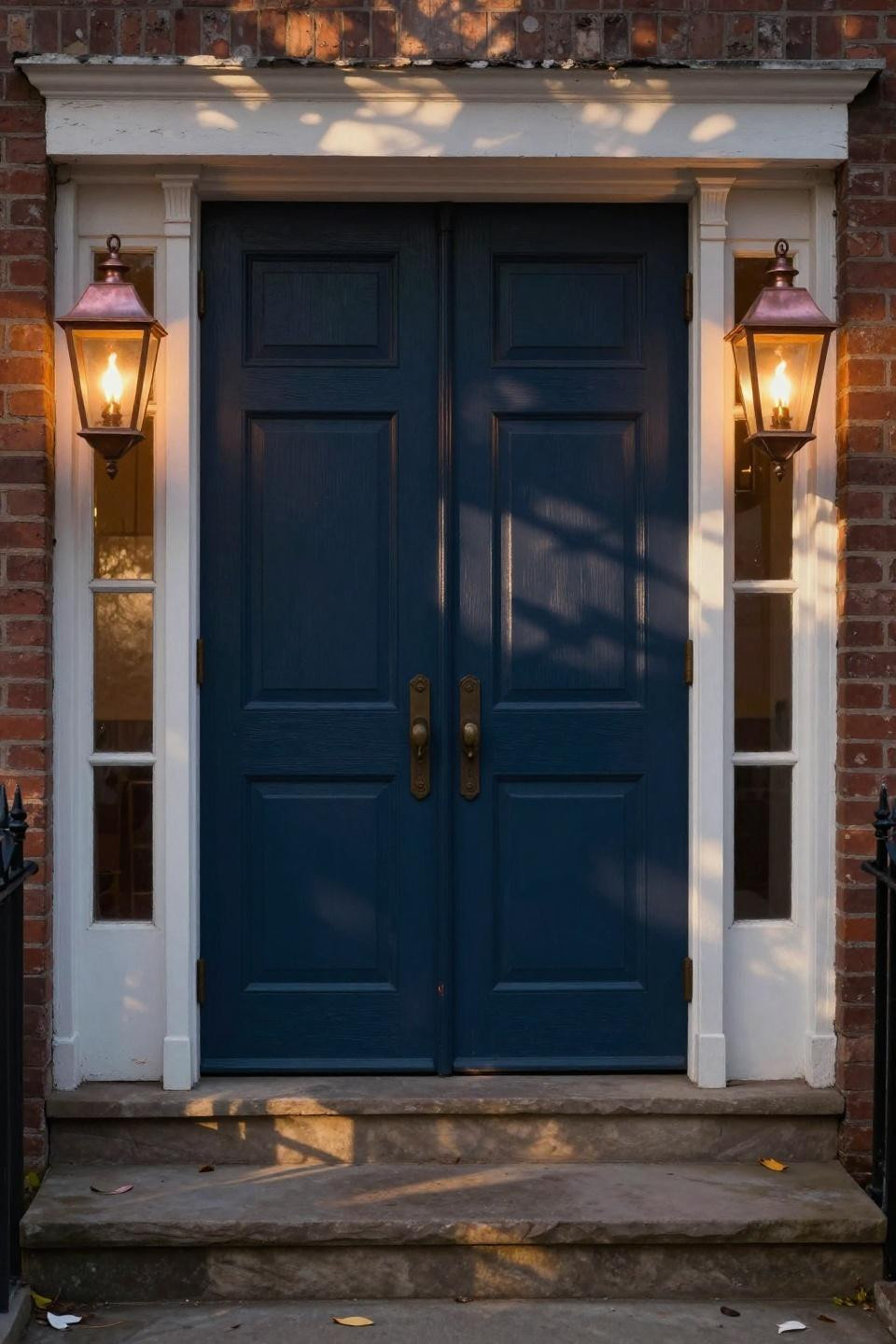
Benjamin Moore Hale Navy with museum-quality brushstroke texture. Those tiny paint drips at the bottom edge and one slightly tarnished brass screw? That's what makes it real. Twin copper gas lanterns flanking the entry with warm patina catching light, flames flickering. Frosted glass sidelights with that milky translucence, backlit from interior warmth. Weathered brick surround in aged terracotta with natural efflorescence patterns. Single fallen magnolia petal on the limestone threshold. Dappled shadows from tree branches dancing across the doors all afternoon. This is Georgetown heritage done with zero pretension.
If I had to pick one move, I'd start with reclaimed oak and unlacquered brass. They age together in a way that looks intentional, not neglected. The hardware patina tells the whole story.