
 by
by Our #1 Recommended Mattress
Saatva Classic. From $1,095
365-night trial · Lifetime warranty · Free white-glove delivery
We earn a commission if you make a purchase through our links, at no extra cost to you. Full disclosure.
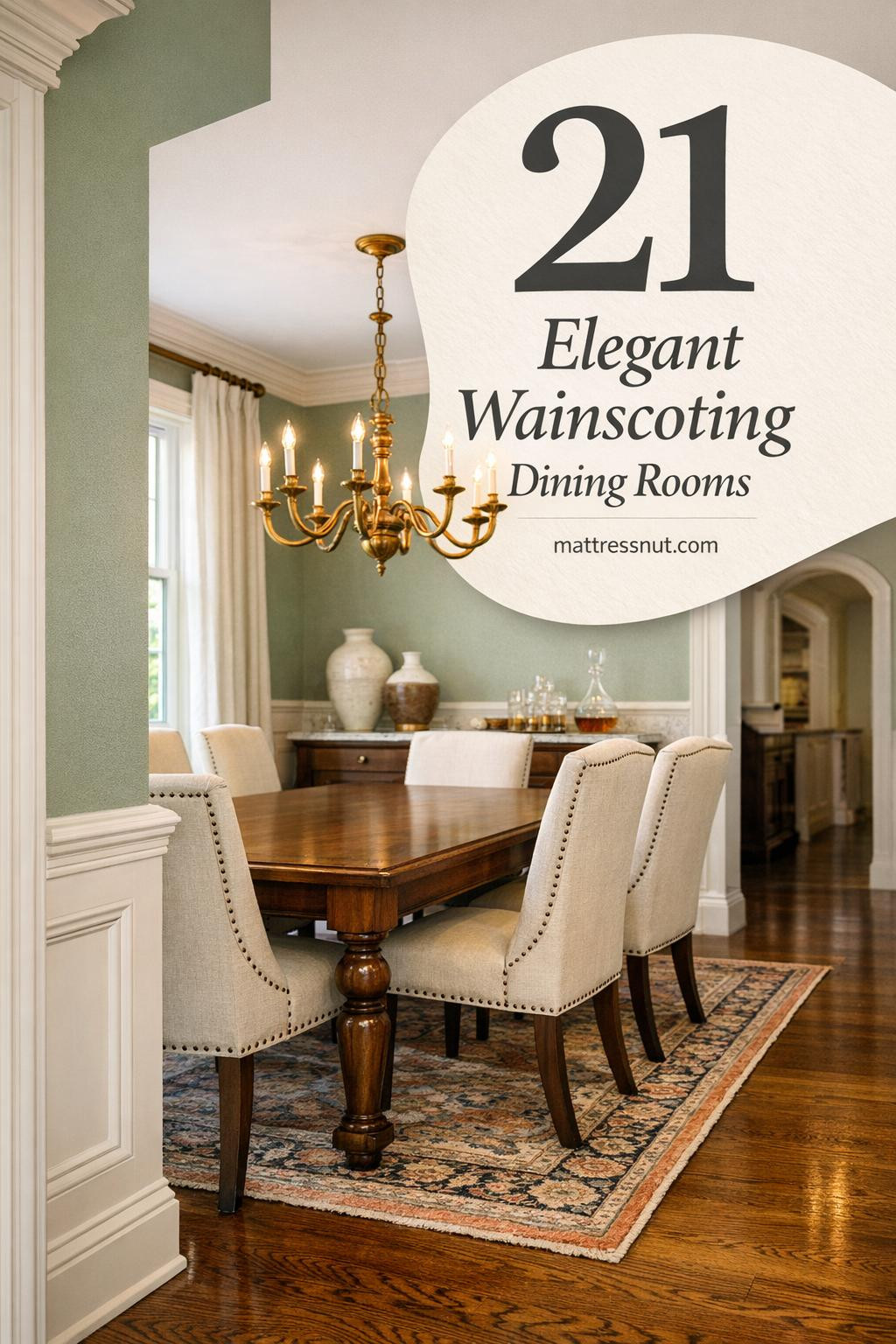
Wainscoting dining room designs bring instant sophistication to your home. You’re looking at classic millwork that transforms plain walls into architectural statements worth talking about.
From board-and-batten panels to raised moldings, these 21 ideas show you exactly how to add depth, texture, and timeless elegance to your dining space without breaking the bank.
Half-Height Paneling That Makes Ceilings Feel Taller
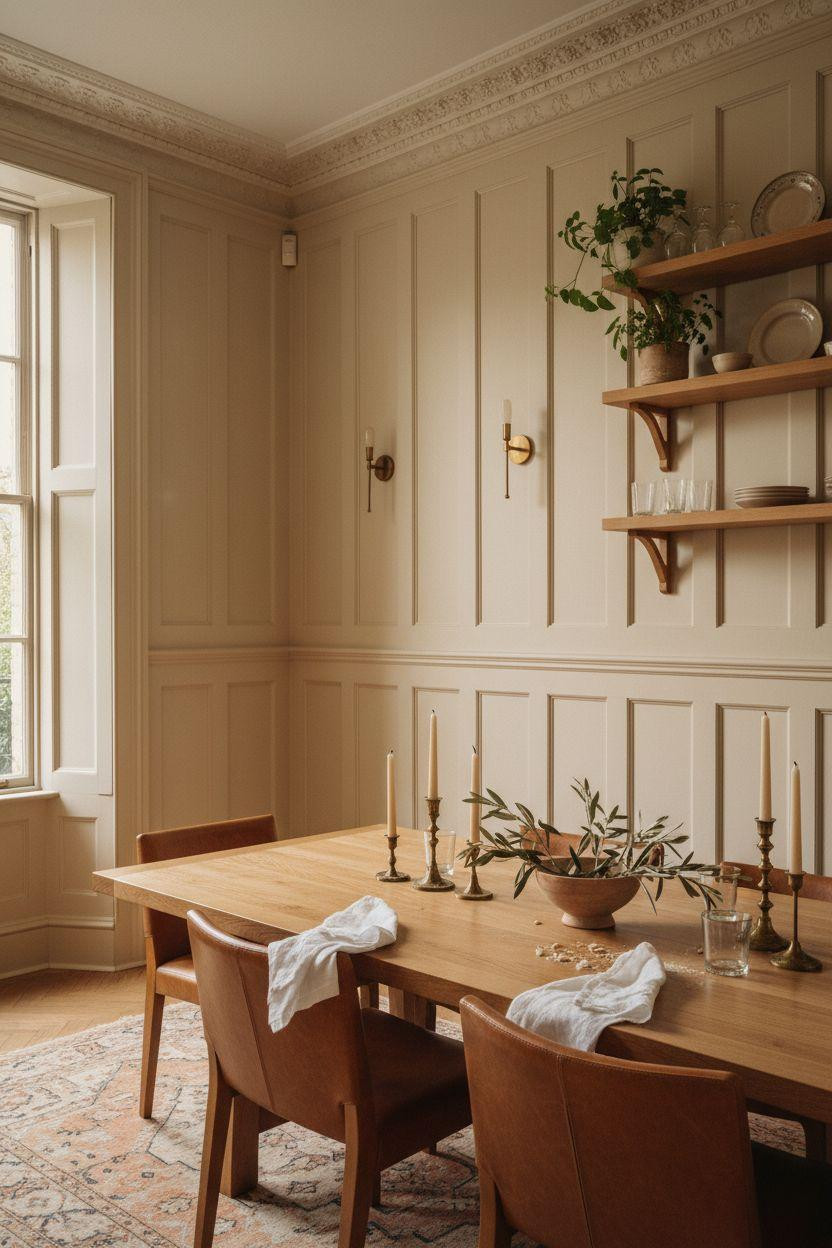
Half-wall paneling stops at chair rail height, creating visual separation that makes your ceiling look miles higher. The contrast between the lower paneling and upper wall color adds dimension without overwhelming the space.
Perfect for rooms with 8 to 10-foot ceilings where you want architectural interest but not visual weight. The horizontal break tricks your eye into seeing more vertical space than actually exists.
Paint the paneling white or cream and go darker above for drama, or keep everything light for an airy Scandinavian vibe. Either way, you’re adding $2,000 worth of perceived value for maybe $400 in materials if you DIY.
Works best in traditional homes but looks surprisingly good in modern spaces when you keep the lines clean and skip fussy details.
Board And Batten Walls With Strong Vertical Lines
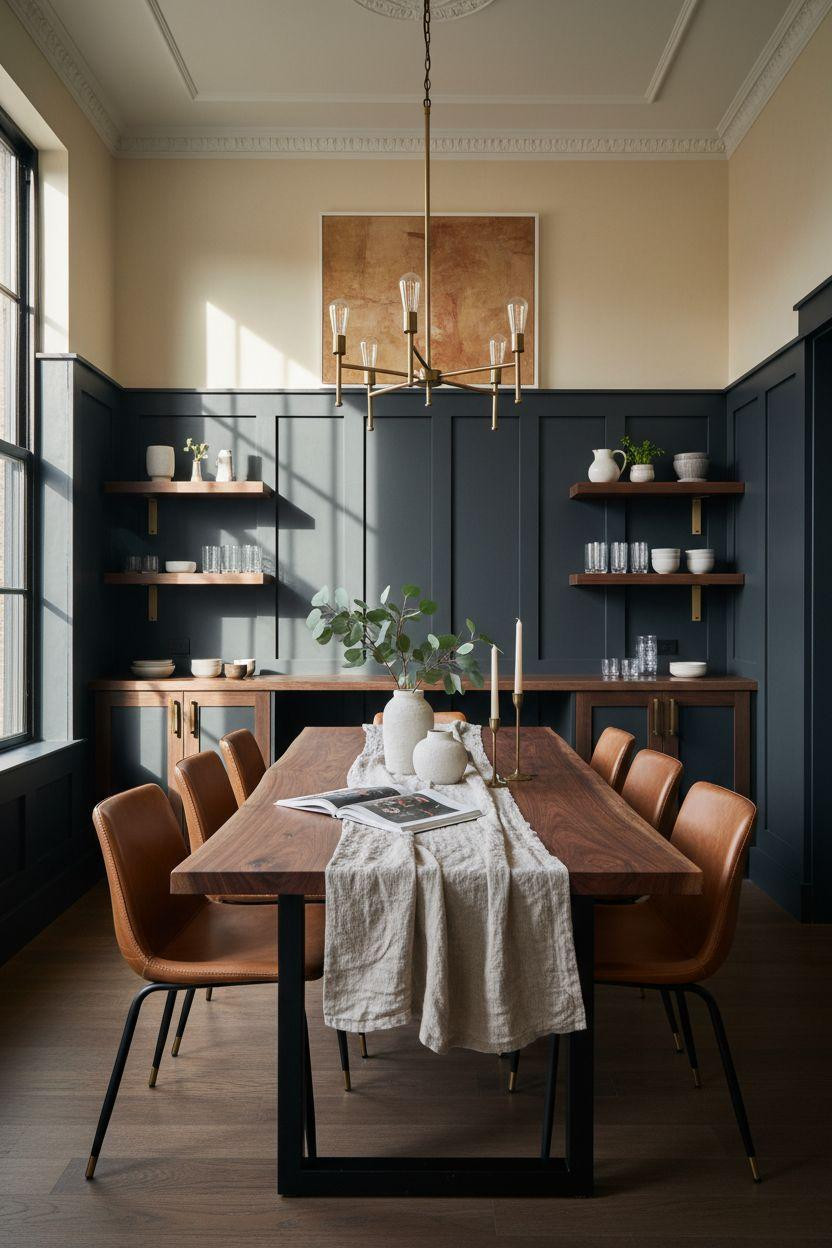
Board and batten creates vertical stripes that draw your eye up and make narrow dining rooms feel less cramped. The raised battens cast subtle shadows that change throughout the day as light shifts.
Space battens 12 to 18 inches apart for classic proportions. Closer spacing reads more cottage-style, wider spacing feels modern and minimal.
This style costs less than raised panel wainscoting because you’re working with flat boards and trim strips. Most DIYers finish a 12×14 room in a weekend with a nail gun and some patience.
Looks incredible painted charcoal or navy in formal dining rooms, or stick with white for a bright breakfast nook that never feels dated.
Classic Raised Panel Wainscoting For Timeless Elegance
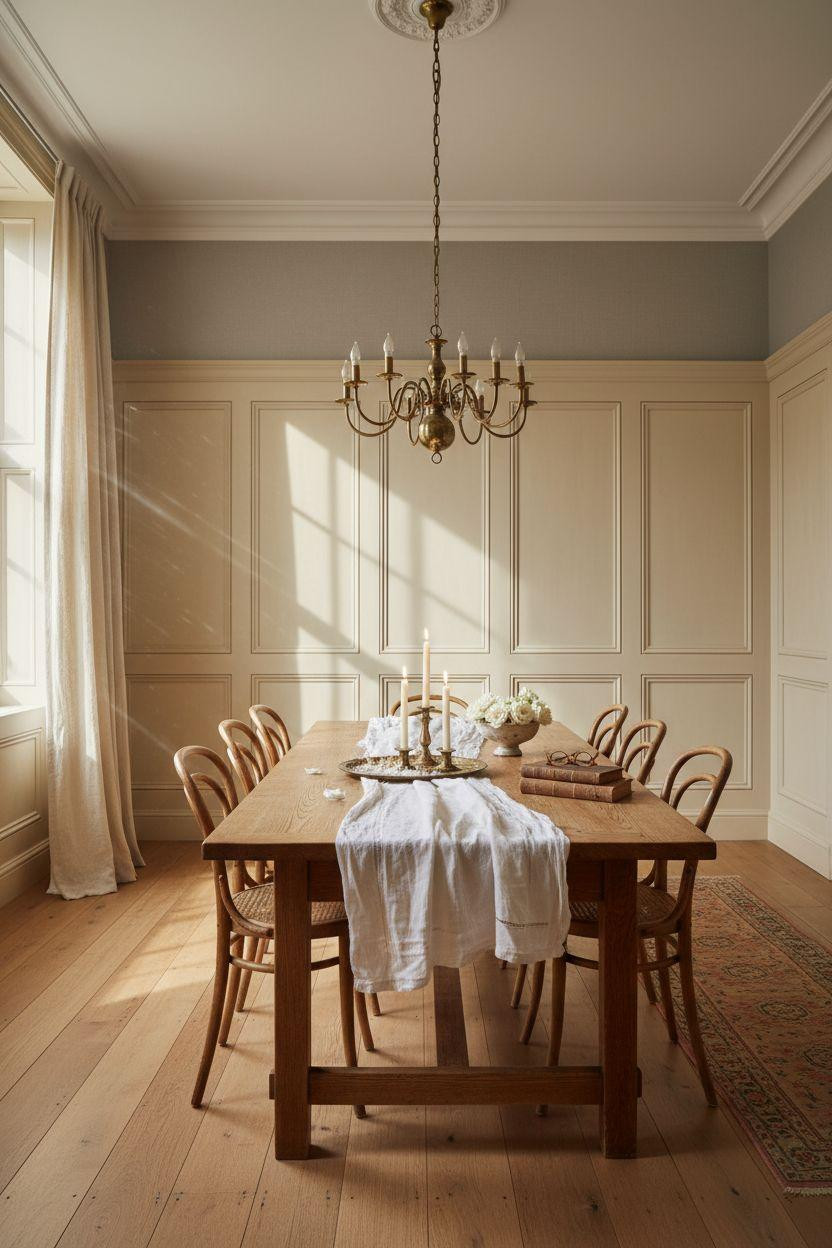
Raised panel wainscoting brings Georgian townhouse vibes to any dining room. The dimensional panels create shadows and depth that flat walls can’t touch, especially when afternoon light rakes across at an angle.
This is the style you see in historic homes and high-end restaurants. It costs more than board and batten but the craftsmanship shows, and it makes your home feel custom-built.
Pair with a substantial chair rail and crown molding for full traditional elegance, or keep it simple with minimal trim for a cleaner look. Paint it warm white to let the architecture shine without competing with your furniture.
Best for formal dining rooms where you want guests to feel the quality the moment they walk in.
Full-Height Paneling That Commands Attention
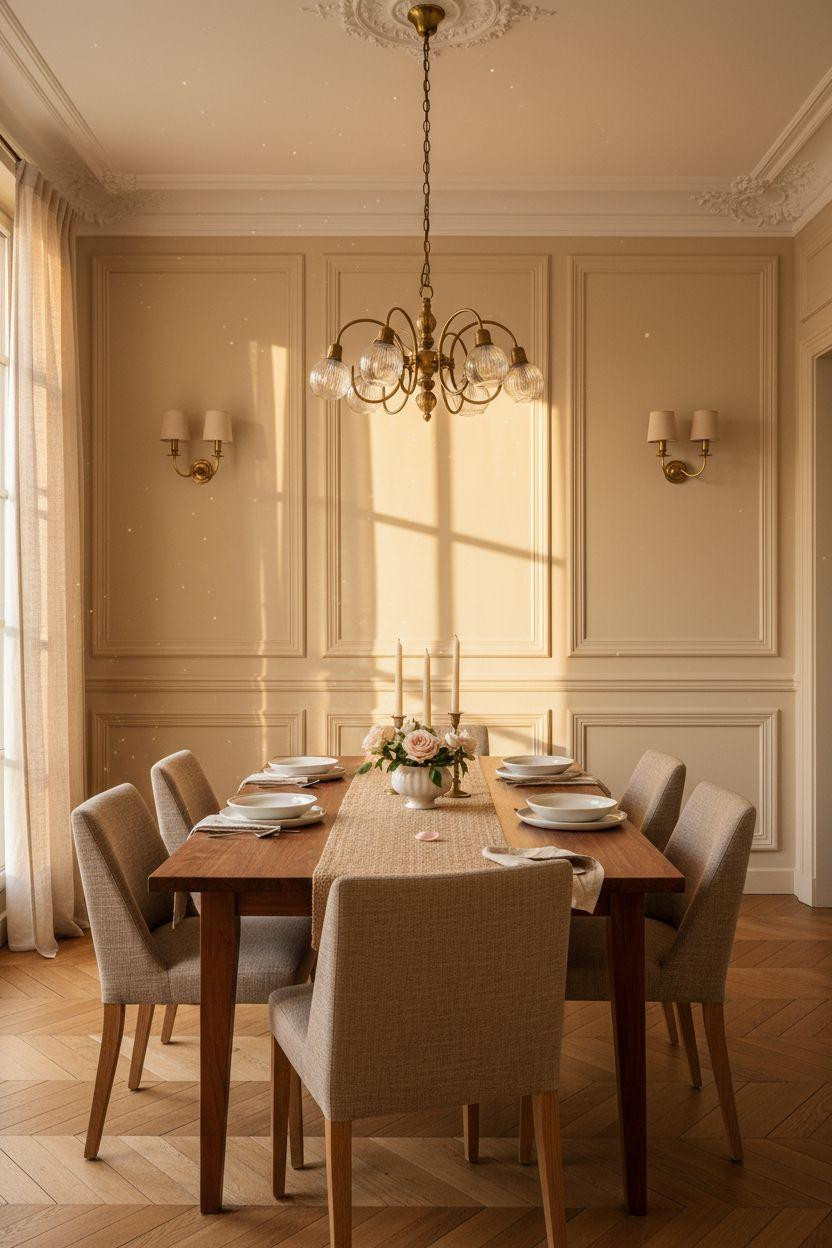
Floor-to-ceiling wainscoting wraps your dining room in architectural detail from baseboard to crown. It’s bold, dramatic, and makes even builder-grade homes look like they were designed by an architect.
This works surprisingly well in rooms with high ceilings where half-height paneling would look choppy. The continuous vertical lines guide your eye all the way up, emphasizing the room’s volume.
Paint everything one color for a cohesive envelope, or add tonal variation by keeping panels slightly darker than the trim. The monochromatic approach feels modern even with traditional molding profiles.
Costs jump compared to half-wall treatments, but the impact per square foot is worth it if your dining room is your showpiece space.
Crisp White Panels With Natural Wood Accents

White wainscoting paired with honey oak floors and walnut furniture creates a balanced palette that never looks sterile. The contrast between crisp painted millwork and warm wood tones adds depth without busy patterns.
This combo works in every style from farmhouse to Scandinavian modern. The white panels reflect light around the room, making small spaces feel bigger while the wood keeps things grounded and cozy.
Add brass light fixtures and linen textiles to bridge the cool white and warm wood. The metal picks up golden tones from the oak while complementing the clean panels.
Perfect if you’re renovating a space with existing hardwood floors you want to keep but need to update the walls without changing flooring.
Geometric Paneling For Modern Traditional Blend
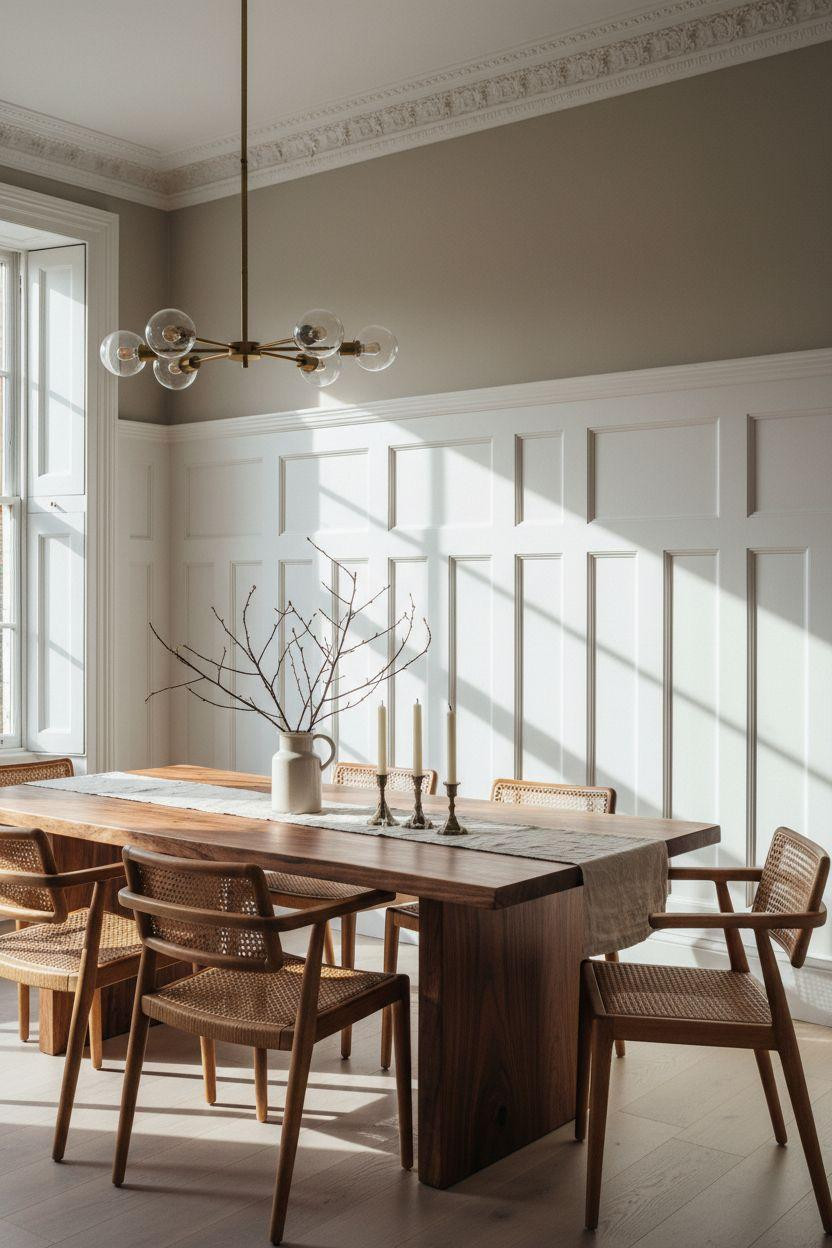
Geometric wainscoting patterns use squares or rectangles instead of vertical battens, creating a grid that feels both traditional and contemporary. The symmetry adds order without looking stuffy.
This style bridges the gap if you love classic millwork but your furniture leans modern. The clean geometry reads as intentional design rather than period reproduction.
Space your grid panels evenly for maximum impact, and use a crisp white paint with zero sheen variation between panels and trim. Any color inconsistency breaks the geometric illusion.
Works beautifully in open-concept homes where your dining area flows into a modern living space and you need architectural elements that don’t clash.
Warm Ivory Panels With Greige Upper Walls

Warm ivory wainscoting topped with soft greige creates subtle tonal separation that adds sophistication without harsh contrast. The colors shift with natural light throughout the day, keeping the space feeling alive.
This palette works in rooms with mixed lighting where pure white can look cold in the evening but you still want brightness during the day. The warm undertones make candlelit dinners look magical.
Pair with walnut furniture and brass fixtures that pull warmth from both wall colors. Add natural linen textiles in oatmeal or beige to tie everything together without adding more color.
Ideal for north-facing dining rooms that need warmth, or southwest exposures where you want to soften intense afternoon sun.
Traditional Panels Meeting Rustic Farmhouse Charm
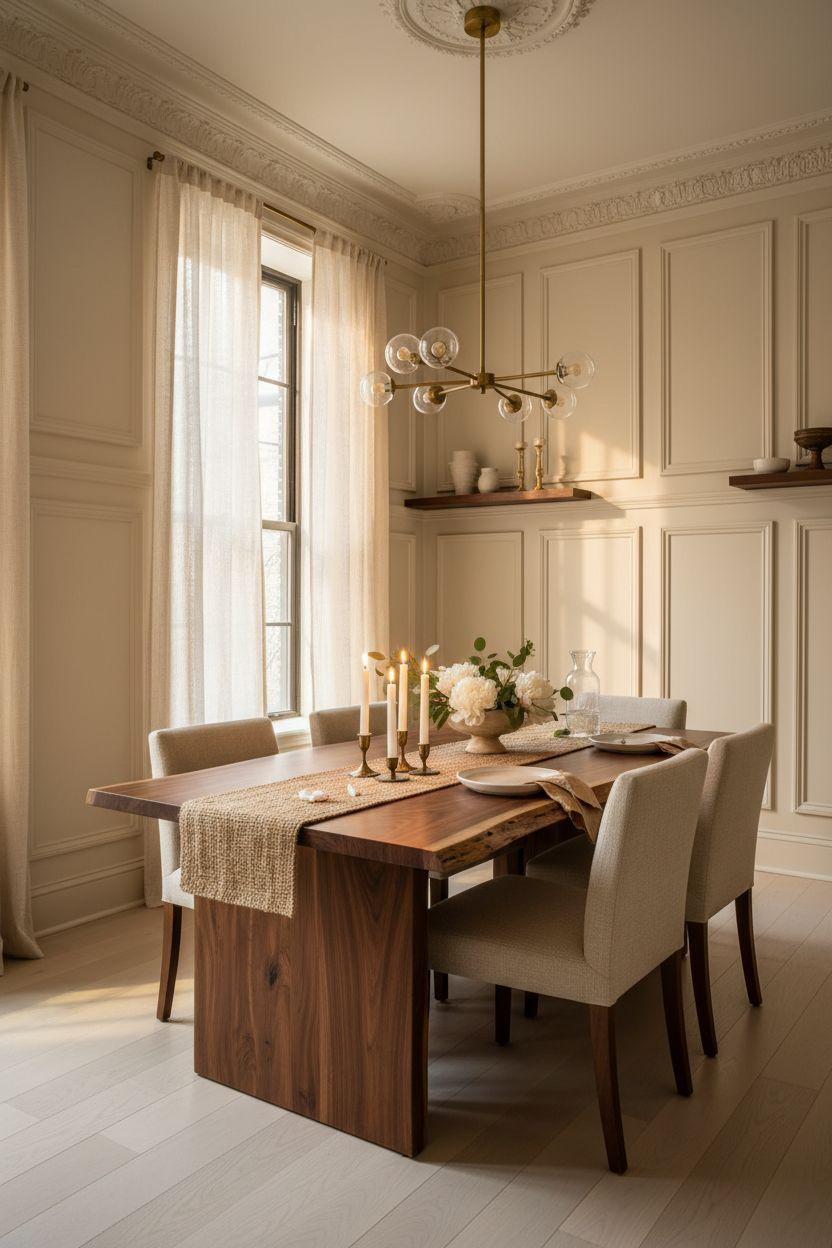
Classic wainscoting gets approachable when you pair it with farmhouse elements like reclaimed wood tables and jute rugs. The formal millwork prevents the rustic pieces from reading too casual.
This mix works because the paneling adds structure while the organic textures keep things from feeling stiff. You can have dinner parties that feel special but not intimidating.
Paint panels in warm white with a slight cream undertone rather than stark white. The warmth complements natural materials without looking yellowed or dated.
Perfect for updated farmhouses or suburban homes where you want traditional elegance that still feels family-friendly and lived-in.
Dark Charcoal Panels For Dramatic Contrast
Charcoal or navy wainscoting creates moody drama that makes dining rooms feel like exclusive restaurants. The dark lower half grounds the space while light upper walls prevent it from feeling like a cave.
This bold move works best in rooms with generous natural light or strong artificial lighting. Dark panels absorb light during the day but glow gorgeously under chandelier light at night.
Pair with brass or gold-toned metals that pop against the dark background. Add cognac leather chairs or rich wood tones that complement rather than disappear into the darkness.
Ideal for formal dining rooms where you entertain at night and want a sophisticated backdrop that photographs incredibly well.
Architectural Panels Through Doorway Frames

Viewing wainscoting through a doorway adds depth and reveals how the paneling wraps the room. The layered architectural elements create a sense of discovery as you move through your home.
This framing effect makes your dining room feel intentionally designed rather than just furnished. The doorway becomes part of the composition instead of an interruption.
Paint doorway trim in the same color as your wainscoting to create visual continuity, or use natural wood trim that bridges the paneled walls and wood floors.
Works beautifully in homes with traditional floor plans where rooms flow into each other through doorways rather than wide-open layouts.
Soft Neutral Panels With Natural Textures

Neutral wainscoting in soft whites or creams becomes a textured backdrop that lets natural materials shine. The dimensional panels add interest without competing with wood tables, linen chairs, or ceramic tableware.
This approach works when your furniture and accessories do the heavy lifting style-wise. The wainscoting provides sophisticated structure while staying out of the way visually.
Layer different whites and creams in your panels, walls, and trim for subtle depth. What looks like one color at first glance reveals complexity as light changes.
Perfect for minimalists who want architectural interest without bold color, or anyone building a neutral foundation that works with changing decor over time.
Panels With Vintage Details And Patina
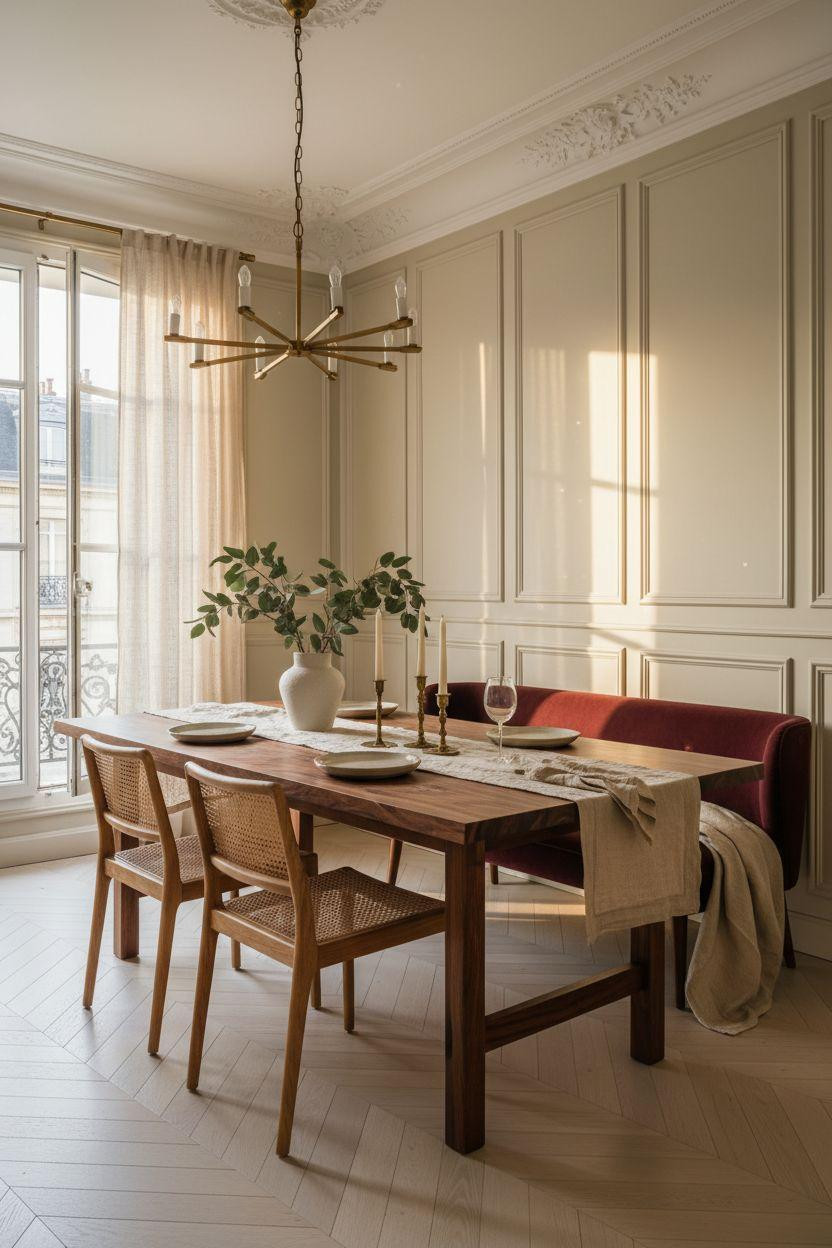
Wainscoting with picture rail molding and aged brass details brings historic charm to dining rooms. The layered trim profiles create shadow lines that make walls look thick and substantial like old European homes.
This style costs more in materials but the perceived quality is off the charts. It makes new construction feel like it has history and gives renovated spaces authentic period character.
Pair with antique or vintage-inspired furniture rather than sleek modern pieces. The cohesive traditional approach transports you to another era.
Best for formal dining rooms in older homes where you’re restoring period details, or new builds where you want instant character that looks original.
Minimalist Panels With Scandinavian Simplicity
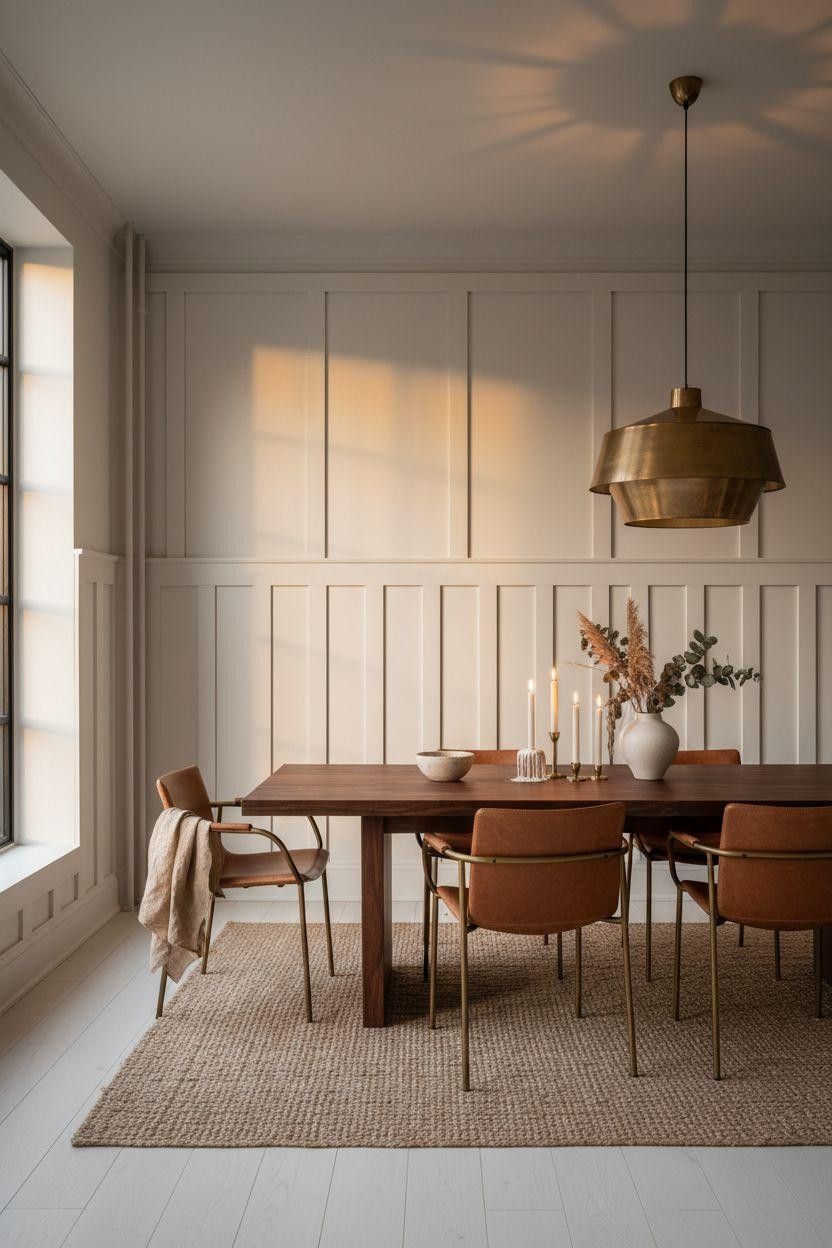
Clean-lined wainscoting with minimal trim detail feels Scandinavian when paired with light wood furniture and neutral textiles. The panels add architecture without Victorian fussiness.
Keep battens narrow and spacing wider than traditional designs. Skip decorative chair rail caps in favor of simple flat boards that create shadow lines without ornamentation.
This modern take on wainscoting costs less than traditional profiles because simpler trim means less material and faster installation. You get architectural impact for less money and labor.
Perfect for open-concept spaces where your dining area needs definition but ornate molding would clash with modern kitchen cabinets or living room furniture.
Geometric Wainscoting With Brass And Wood Warmth
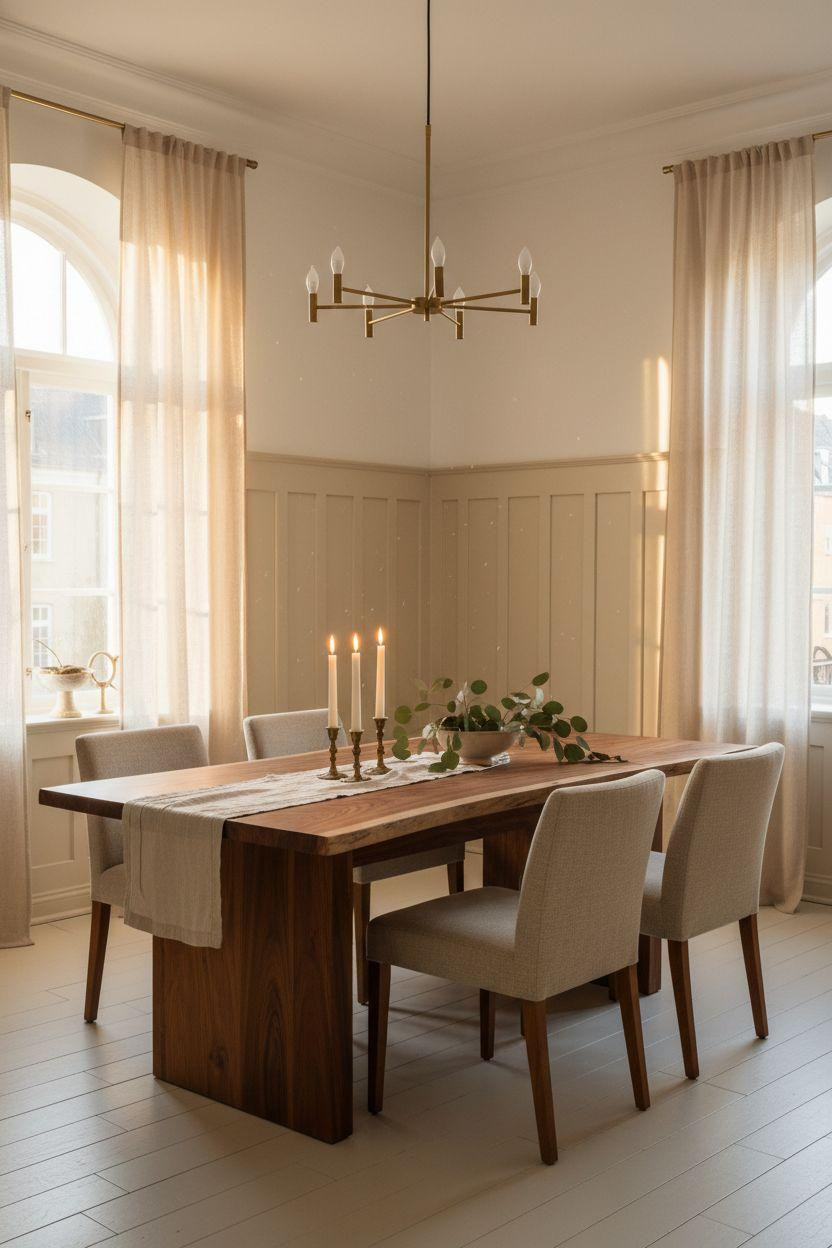
Square or rectangular panel layouts create graphic impact when combined with brass light fixtures and honey-toned wood furniture. The geometry reads modern while the materials keep it warm and inviting.
This combo prevents traditional wainscoting from looking stuffy. The clean lines feel current while the dimensional panels add substance that flat walls lack.
Space panels evenly and keep proportions balanced. Uneven layouts or odd-sized rectangles make the geometry look accidental rather than intentional.
Works in dining rooms that open to kitchens or living spaces with modern finishes. The wainscoting adds formality to the dining zone without clashing with adjacent contemporary rooms.
Classic White Panels With Walnut And Brass
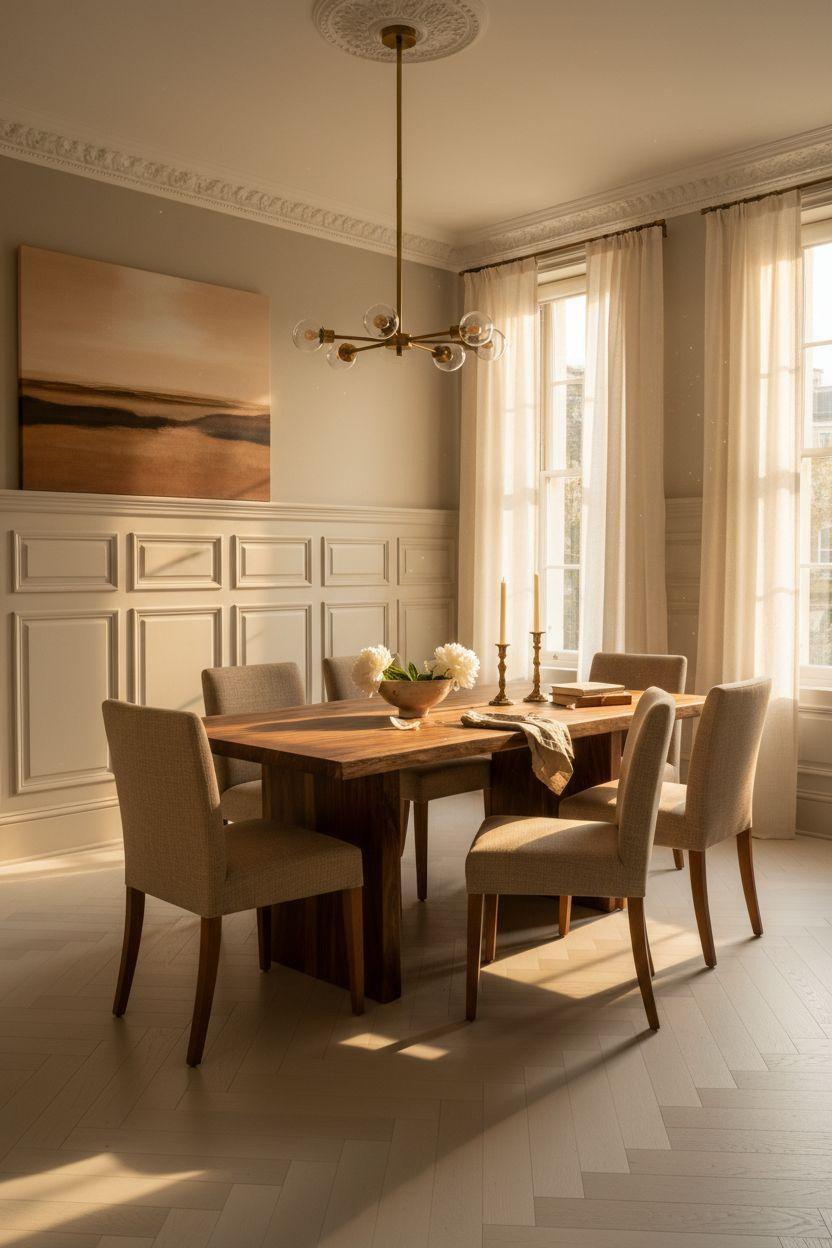
Crisp white wainscoting provides the perfect backdrop for rich walnut furniture and aged brass lighting. The contrast makes each element pop instead of blending into neutral sameness.
This timeless palette works because the cool white balances the warm wood tones. Neither overwhelms the other, creating equilibrium that feels expensive and intentional.
Add linen textiles in natural beige or cream to soften the contrast between stark white panels and dark wood. The mid-tone fabric bridges the extremes.
Perfect for formal dining rooms where you’ve invested in quality furniture and want wall treatments that showcase rather than compete with your pieces.
Board And Batten With Tuscan Warmth
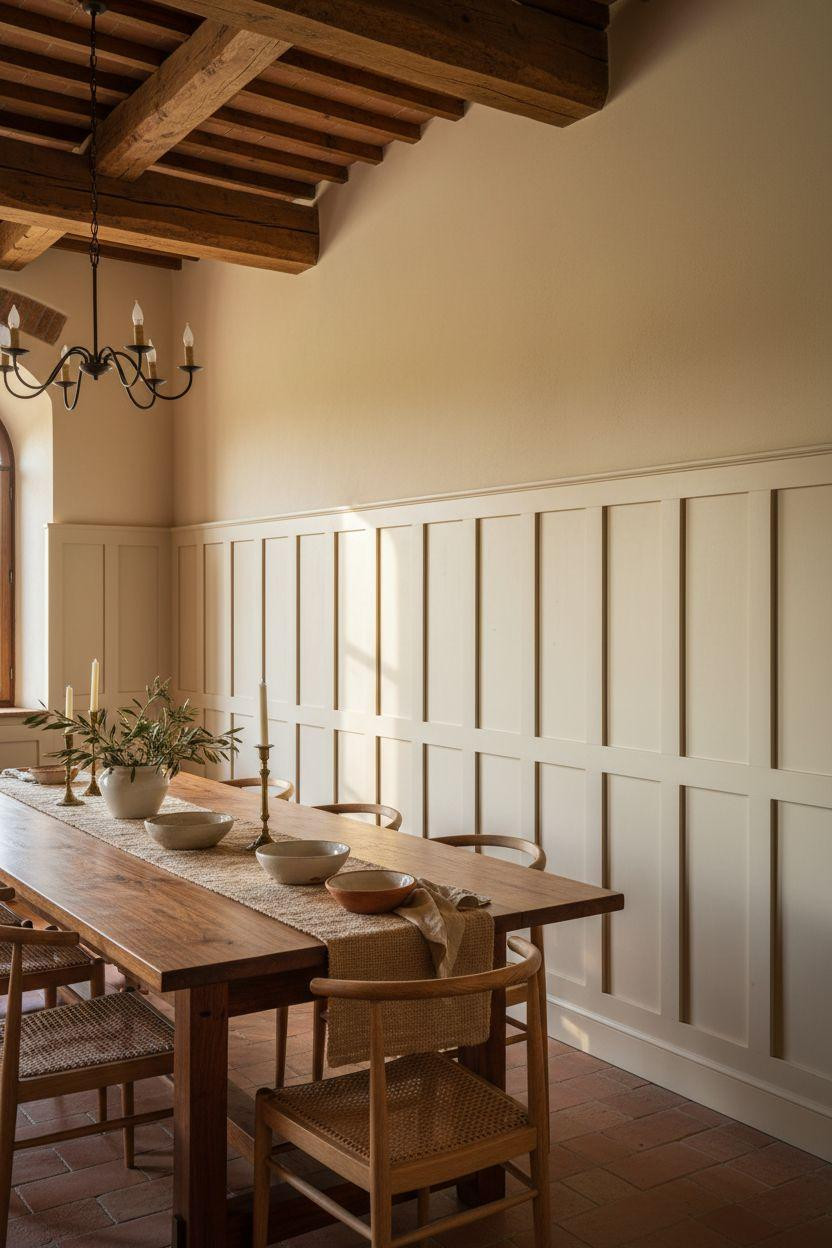
Warm ivory board and batten panels combined with terracotta accents and olive branches bring Italian villa vibes to your dining room. The rustic elegance feels collected over time rather than decorated overnight.
This style embraces natural imperfection. Slightly irregular spacing or hand-painted texture adds character instead of looking like mistakes.
Pair with vintage wood furniture showing authentic wear, aged brass with real patina, and natural fiber textiles. Everything should look like it’s been loved and used, not fresh from the store.
Ideal for Mediterranean-style homes or anyone wanting dining spaces that feel warm, welcoming, and effortlessly European without being too precious.
Modern Panels With Shallow Depth Details
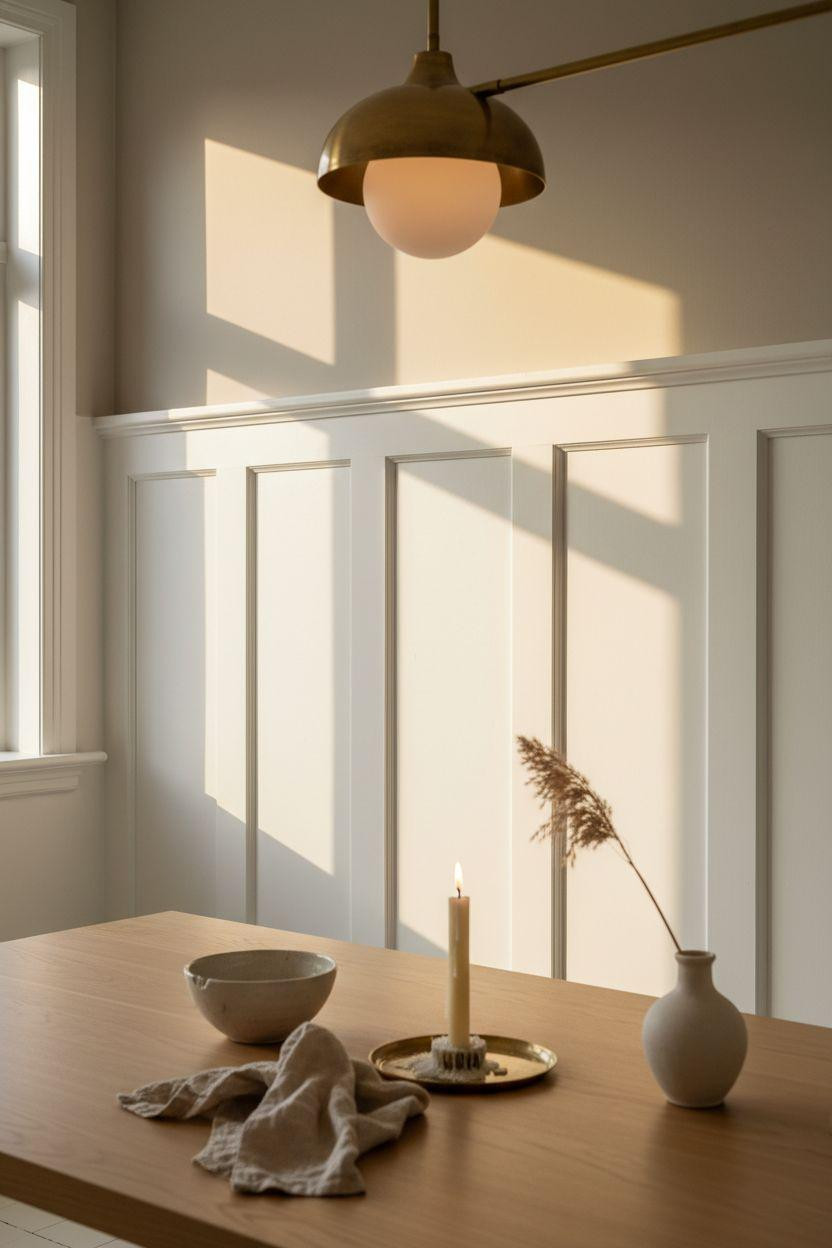
Shallow relief wainscoting creates subtle texture without heavy Victorian profiles. The panels add dimension you can see but barely feel, perfect for modern spaces where less is more.
This approach gives you architectural interest with minimal visual weight. The clean lines don’t fight with modern furniture or contemporary light fixtures.
Use ultra-matte paint that absorbs light softly. Any sheen makes shallow panels disappear, but flat paint catches shadows that reveal the dimensional detail.
Perfect for new construction or gut renovations where you want instant architecture that feels built-in but doesn’t scream traditional period style.
Traditional Wainscoting With Georgian Elegance
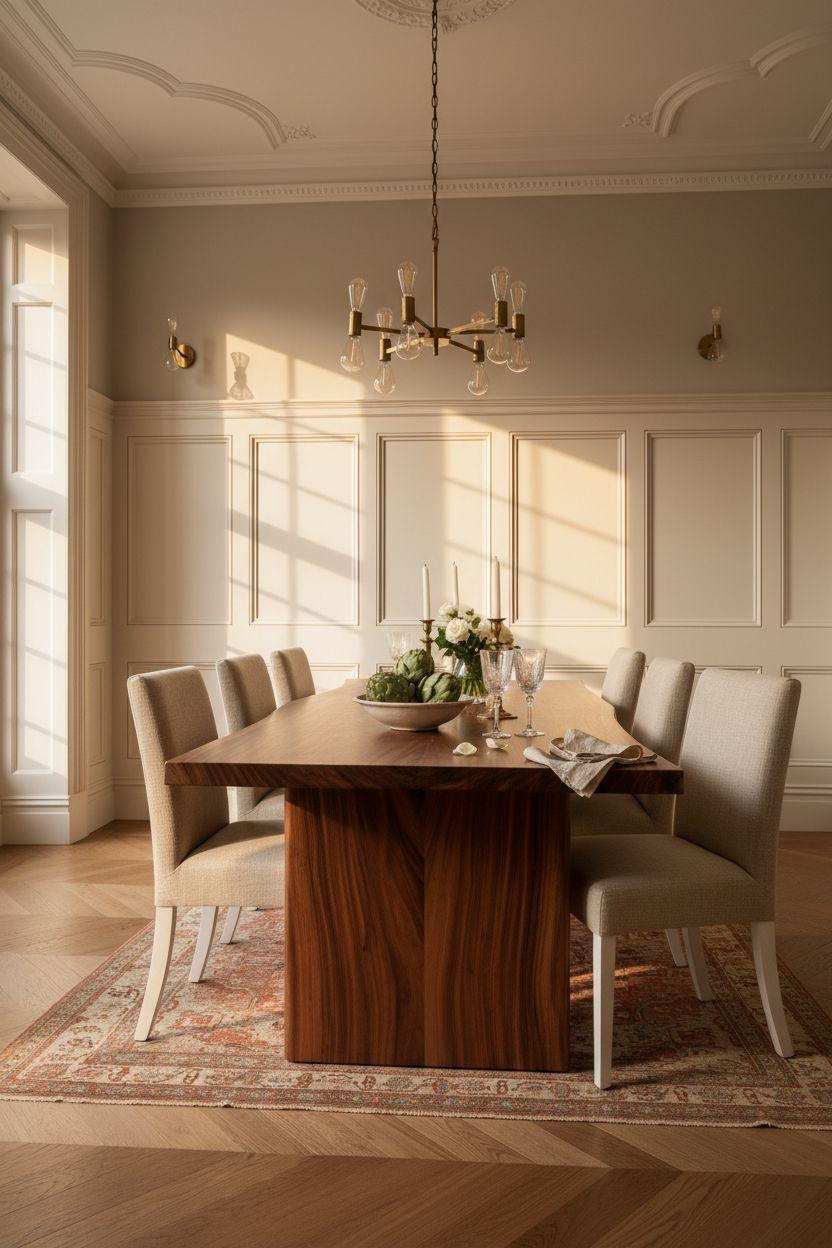
Georgian-style raised panels with substantial chair rails bring English manor house sophistication to dining rooms. The proportion and scale create impressive architecture that anchors formal furniture.
This is wainscoting at its most traditional and unapologetically fancy. It works when you embrace the formality instead of trying to casual it down with mismatched decor.
Invest in quality millwork with crisp profiles that cast defined shadows. Cheap trim with soft edges looks like an afterthought no matter how you paint it.
Best for dining rooms in historic homes where you’re matching existing details, or new homes where you want instant gravitas and architectural presence.
Half-Wall Panels With Arched Window Light
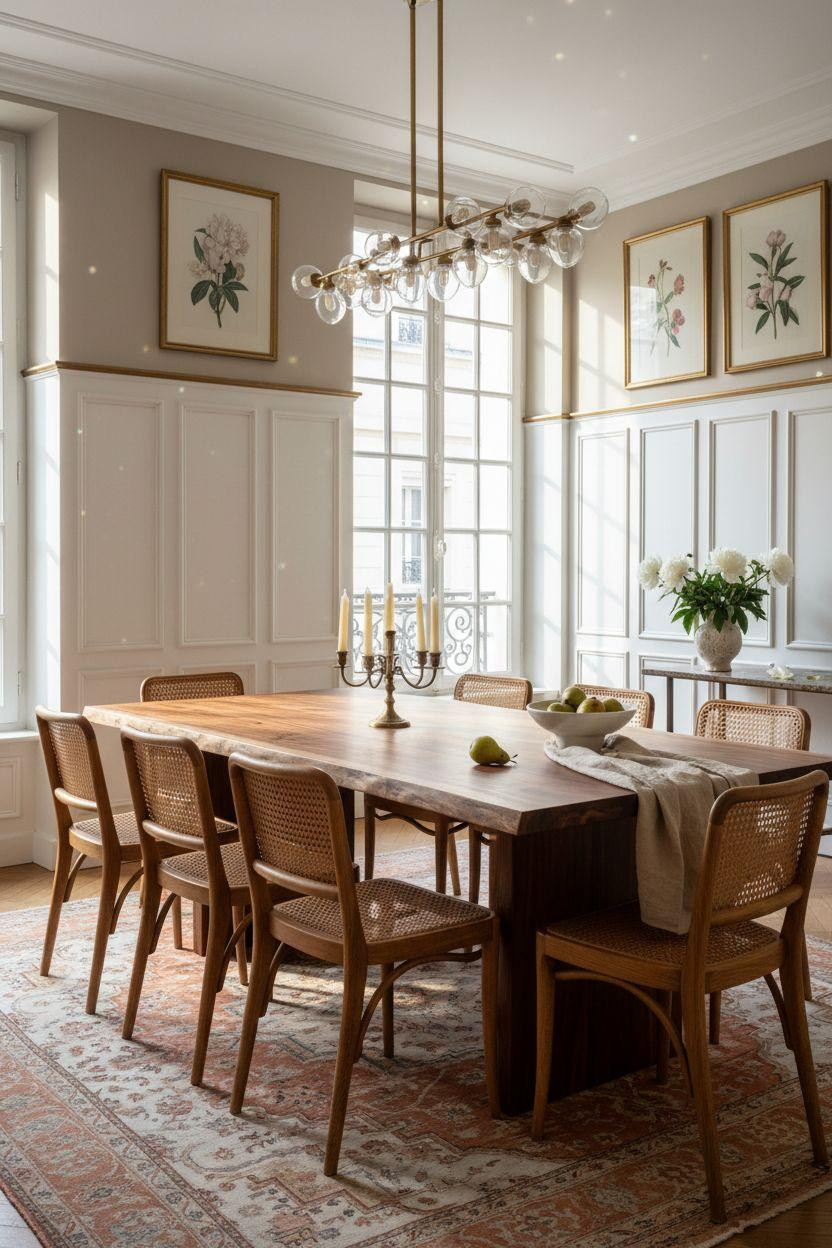
Half-height wainscoting looks magical when afternoon light streams through arched windows, casting geometric shadows across the panels. The interplay of architecture and natural light creates drama that changes throughout the day.
Position your dining table where it catches this light show. Watching shadows shift across textured walls during dinner beats staring at flat painted drywall every single time.
Paint panels in warm whites or creams that glow when backlit. Cool whites look harsh and dead in strong directional light, while warm tones come alive.
Perfect for dining rooms with southern or western exposures where you have strong afternoon sun to work with as a design element.
Our Top Mattress Pick
| Saatva Classic | $1,395+ | Shop |
| Saatva Contour5 | $1,595+ | Shop |
| Saatva Zenhaven | $1,895+ | Shop |
Natural Oak Paneling With Ivory Walls
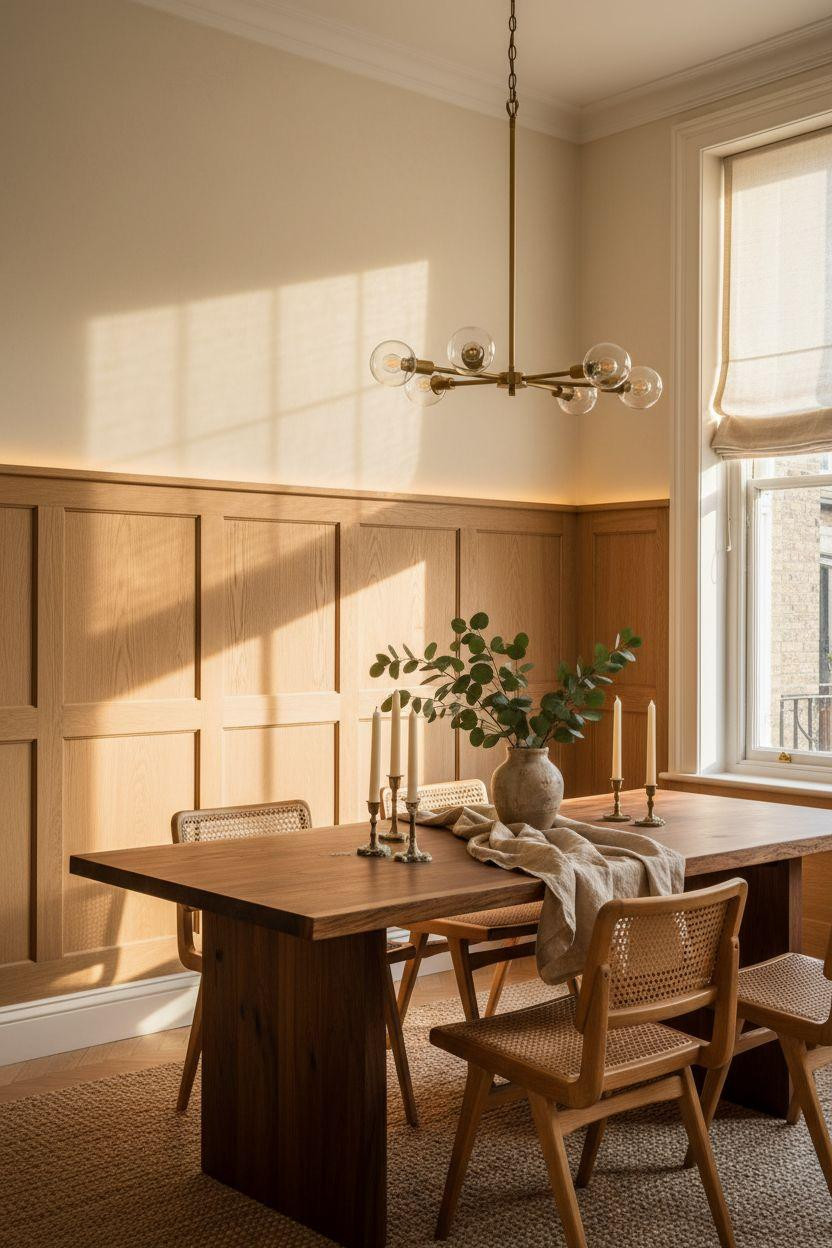
Natural oak wainscoting with visible grain brings warmth that painted panels can’t match. The honey tones glow under natural light and create organic texture that feels alive rather than static.
This works when you want architectural detail without paint color decisions. The wood grain provides all the visual interest while staying neutral enough to work with any decor.
Seal with matte or satin finish that protects the wood without looking plastic. High-gloss poly ruins the natural texture and makes oak look orangey and dated.
Ideal for craftsman homes, prairie style houses, or anyone who loves wood character and wants dining room walls that celebrate natural materials.
Your Dining Room, Elevated
Wainscoting transforms ordinary dining rooms into spaces with real architectural soul. The depth, shadow play, and craftsmanship make your home feel custom and considered, not cookie-cutter.
Start with the style that matches your home’s bones and your personal taste. Save these ideas to Pinterest so you can reference proportions, spacing, and color combos when you’re ready to tackle your own walls.
Try Saatva risk-free →