
 by
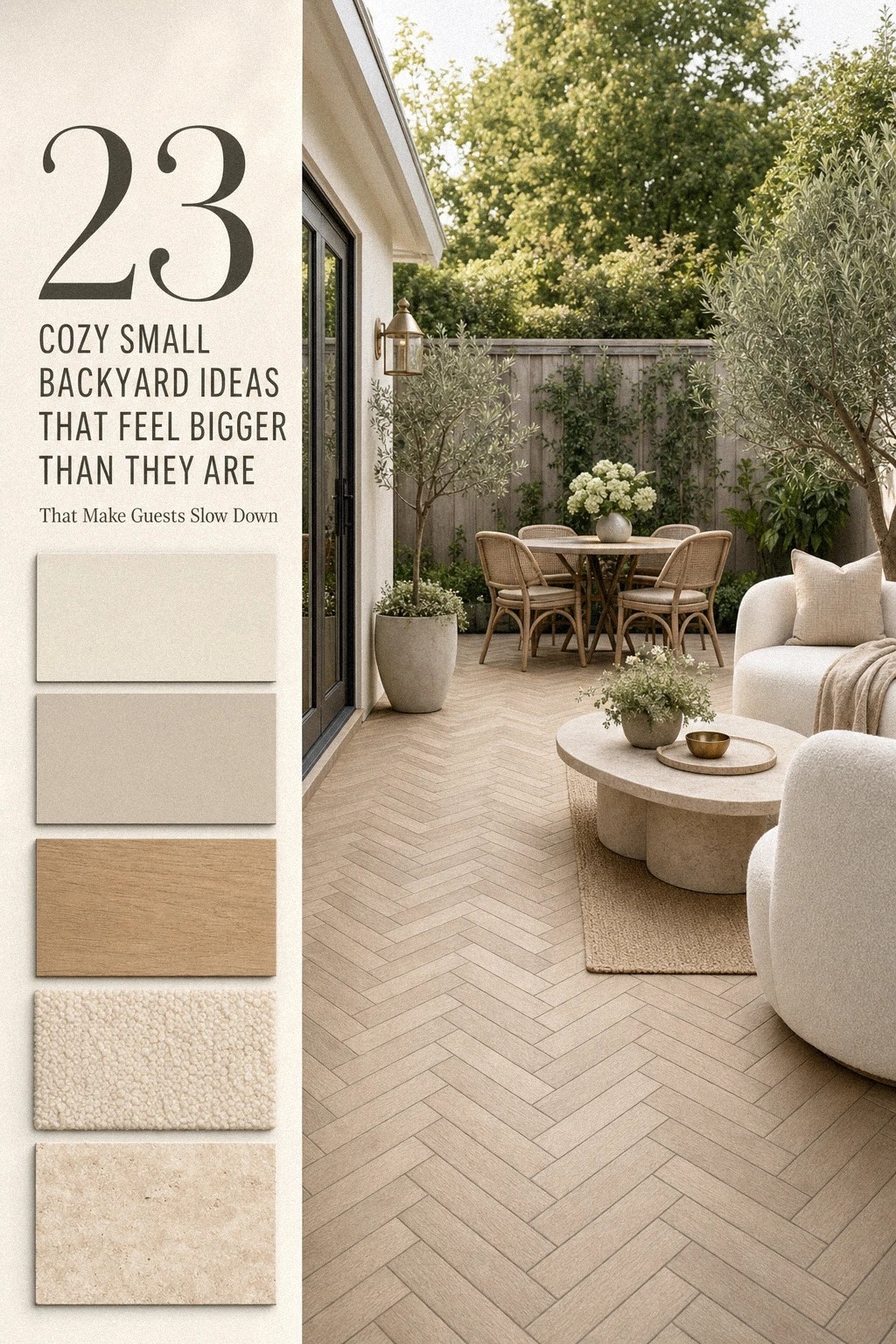
by I've wasted a lot of money on outdoor furniture that was too big for the space it had to live in. The teak sectional looked great in the showroom and it turned our 12-foot patio into a runway you couldn't walk through. Small backyards don't need smaller versions of big-yard stuff. They need a different logic entirely. These 23 ideas are built on that logic: depth moves, vertical habits, and materials that do more than one job. Most cost less than a weekend dinner out! (And honestly? The ones that look expensive rarely are.)
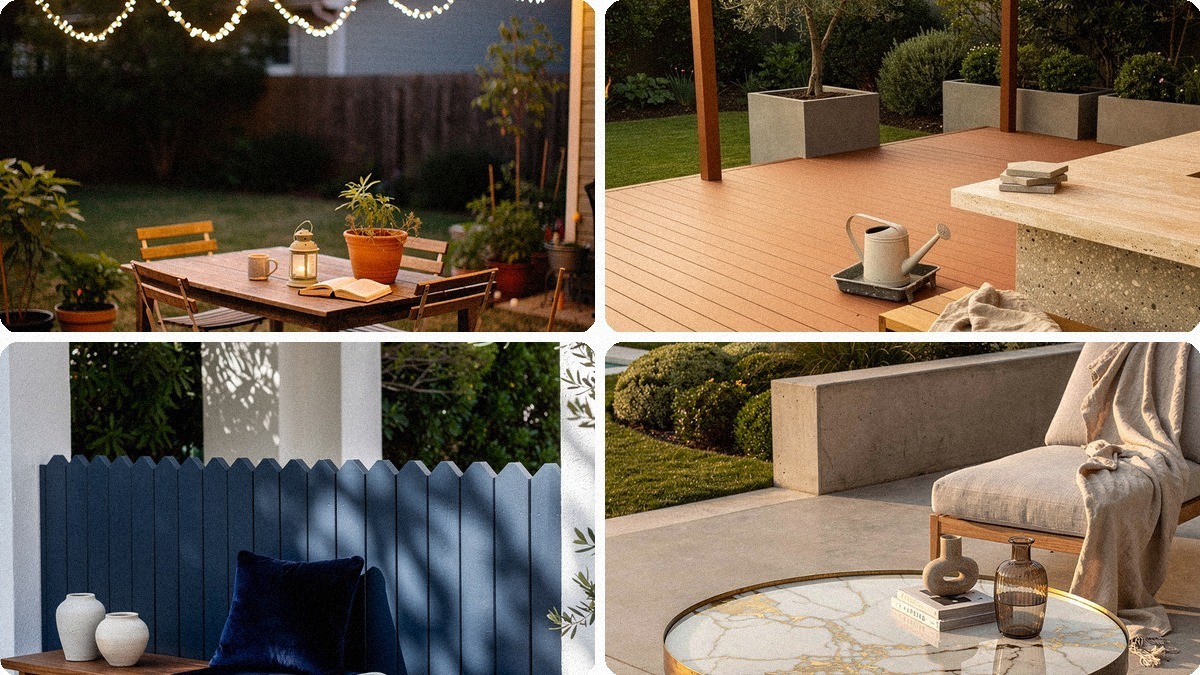
- Paint the fence darker than feels safe.
- Hang your lights in a zigzag, not a loop.
- And pick one big piece of furniture instead of three small ones.
- Run pavers in a running bond that points away from the house
- Build a single raised bed along the far fence line
- Hang string lights in a zigzag, not a perimeter loop
- Paint your fence one shade darker than you think
- Use a round table instead of a rectangle
- Layer three heights of light, not one
- Plant a vertical screen instead of buying a privacy fence
- Anchor the space with one oversized planter
- Run a mirror on the back fence
- Use a daybed instead of a dining set
- Paint the floor
- Hang a hammock chair from a strong pergola beam
- Build a pallet wall with one shelf
- Use gravel instead of grass
- Frame the view from inside
- Use outdoor curtains on a tension rod
- Plant in one color family
- Add a fire bowl, not a fire pit
- Build a single step up to a platform deck
- Use a folding screen as a planter wall
- Light the path, not the whole yard
- Float a mirror-top table
- The One-Third Rule for furniture scale
1Run pavers in a running bond that points away from the house
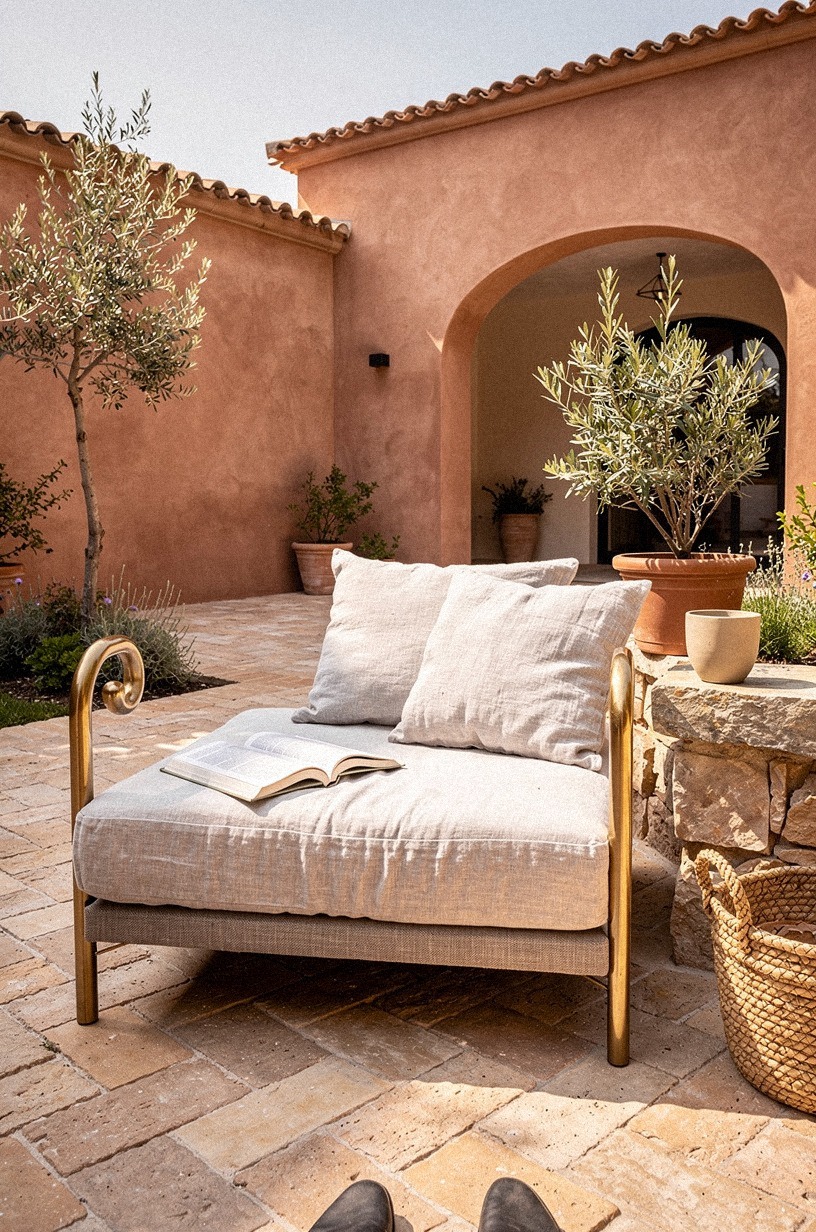
Your eye follows the line of a pattern. A running bond aimed toward the fence pulls the gaze outward and stretches the ground plane. I've seen it add what feels like four feet to a patio that was barely ten across.
Use concrete pavers in a warm limestone tone rather than cool gray. The warmth reads as garden, not parking lot. Set them with tight joints and let creeping thyme fill the gaps.
It's a two-dollar plant that does the job of a fifty-dollar edge. If you're laying a new surface, my outdoor patio flooring guide has the prep steps that save you from redoing it next year.
2Build a single raised bed along the far fence line
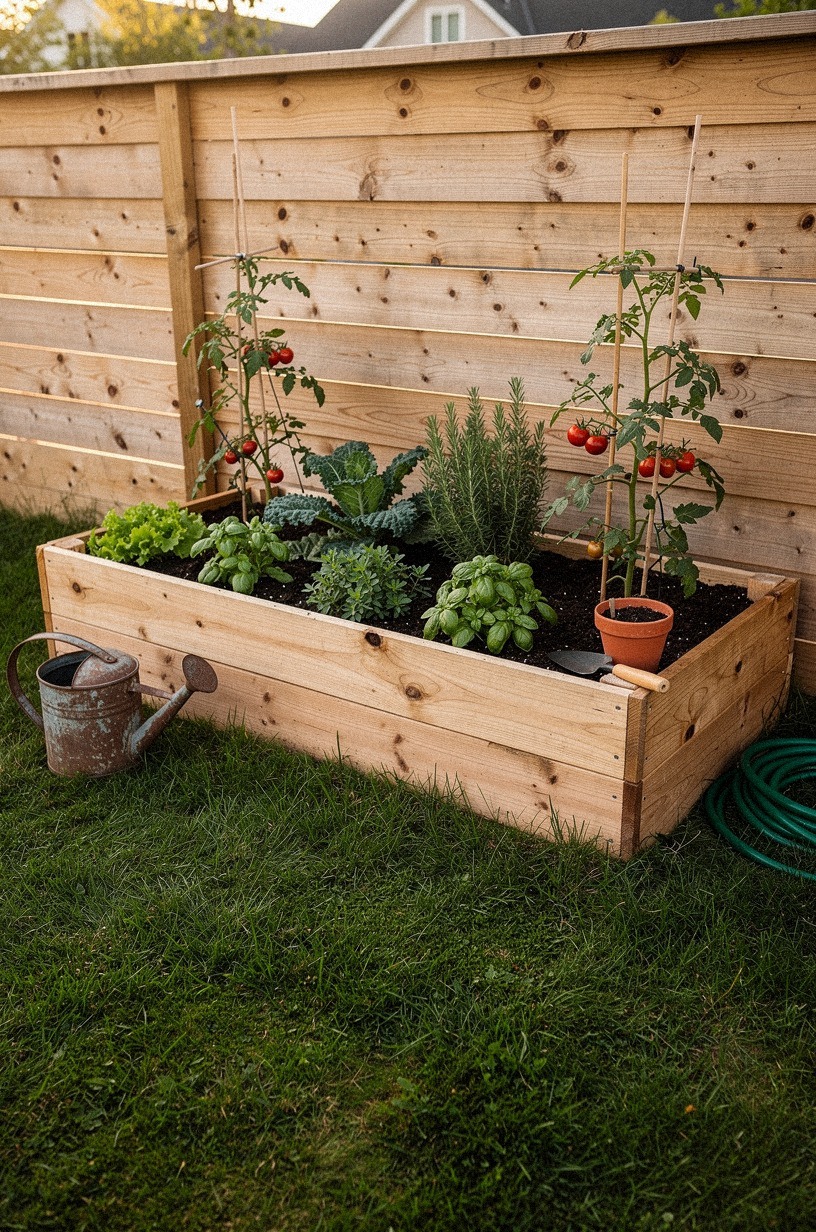
One long box, 18 inches high, in natural cedar or unstained pine, anchors the back of the yard and gives the eye a destination. Fill it with herbs and seasonal vegetables, plus one small trellised climber at the back. A dwarf olive or compact bay laurel works in nearly every zone.
The height creates depth. The warm wood tone blurs the fence so the yard doesn't end where the property line does.
I've used this on a 15-foot-wide rental where the "garden" was previously a trash-can corral. It felt like a room after one Saturday. You'll want to check your small garden layout ideas if you're planning the whole perimeter.
3Hang string lights in a zigzag, not a perimeter loop
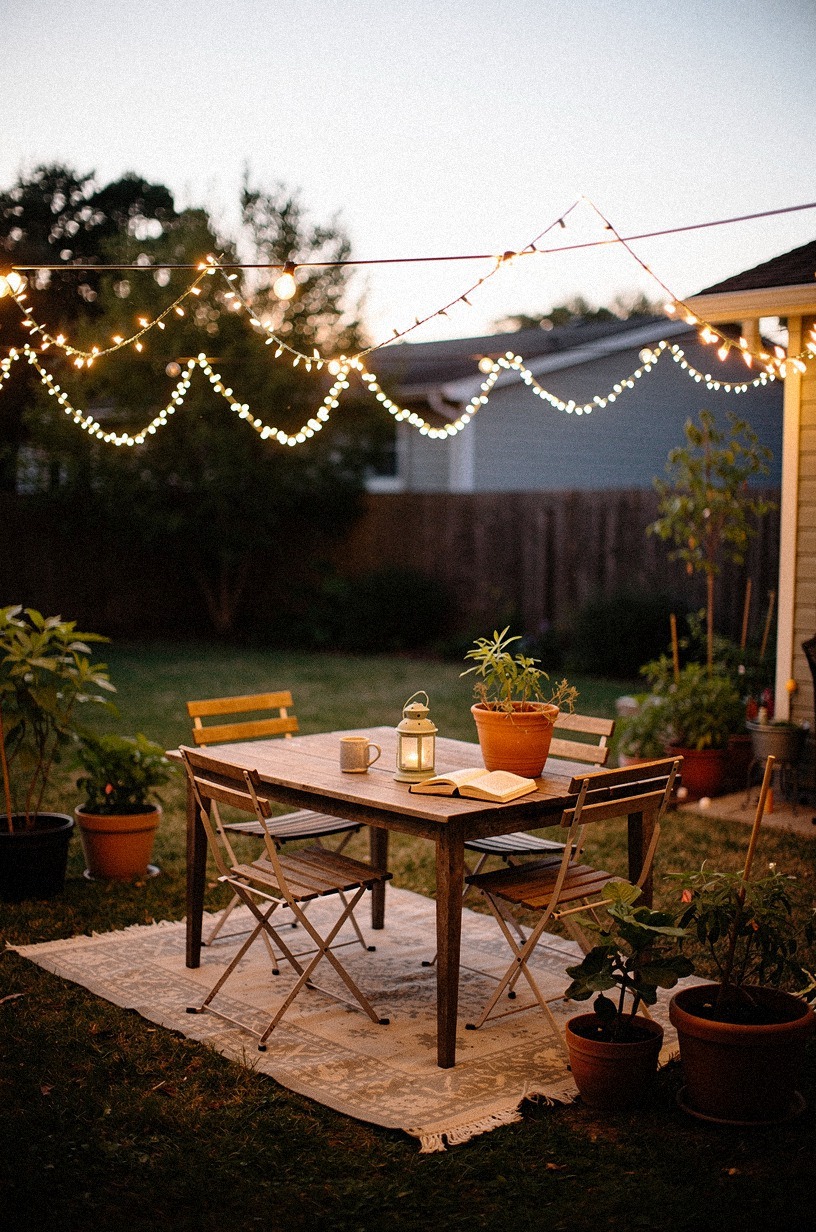
Perimeter loops feel like a tent. A zigzag overhead, three or four lines from the house to the fence, dropped to about eight feet, creates a ceiling that makes the space feel enclosed and bigger at once. The light pools instead of bleeding outward.
Use LED globe bulbs on black cable and skip the Edison look. The globes read softer and the black line disappears against evening sky.
A 48-foot strand covers most small patios and costs about forty dollars. I've had the same set up for three years through two moves.
For bulb temps and spacing, my backyard lighting ideas breaks down what actually works.
4Paint your fence one shade darker than you think
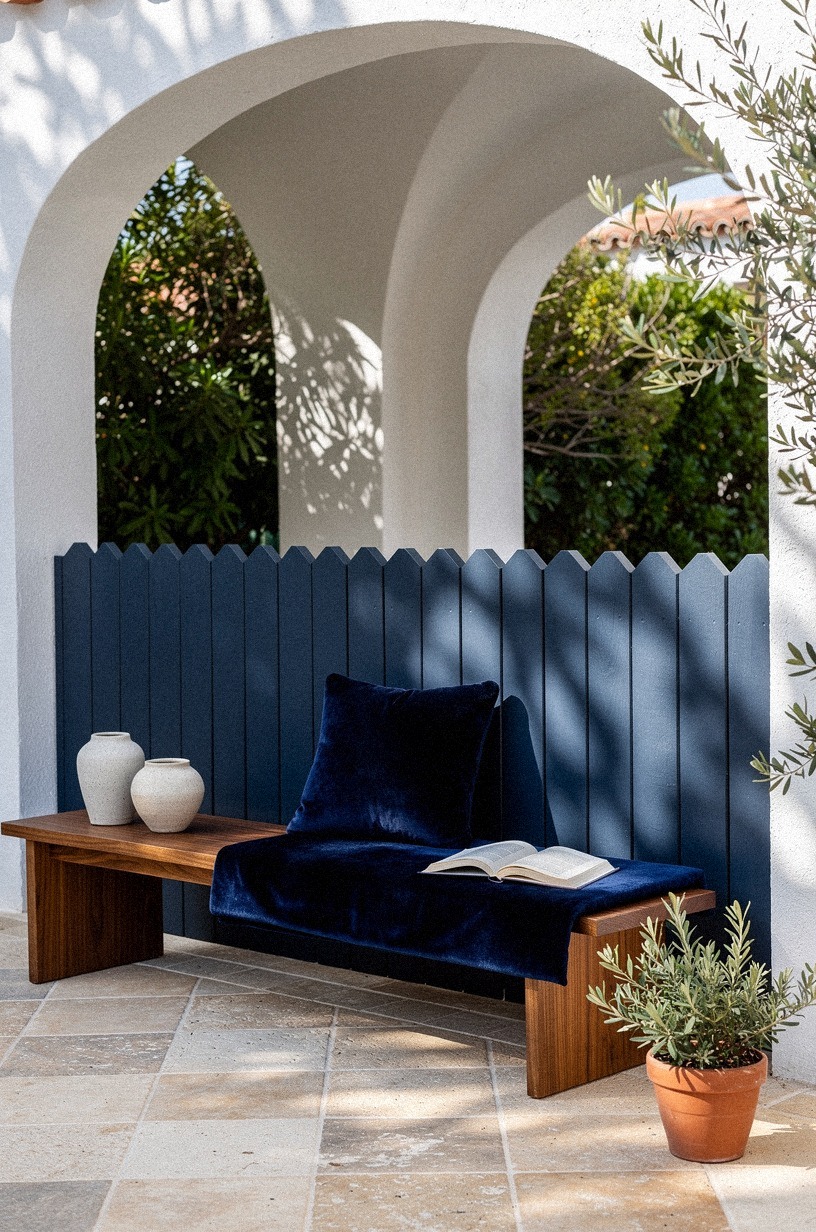
A dark fence, Benjamin Moore Hale Navy HC-154 or Sherwin-Williams Naval SW 6244, recedes visually. It pushes the boundary back and makes the planting in front of it read brighter. I've painted fences white, natural, and deep blue.
The white ones always feel like the yard ends where the fence begins. The navy ones feel like the garden continues into shadow.
The trick is matte exterior paint with a mildewcide built in. Satin reads shiny and cheap outdoors.
Flat looks chalky after one rainy season. A dead-matte exterior house paint, something like Benjamin Moore Aura Exterior, holds the color and doesn't glare.
Two coats, a roller for the field, a brush for the gaps. A Saturday morning if the fence is clean.
If you're choosing between shades, my fence paint ideas has the pairings that actually work with common planting colors.
5Use a round table instead of a rectangle
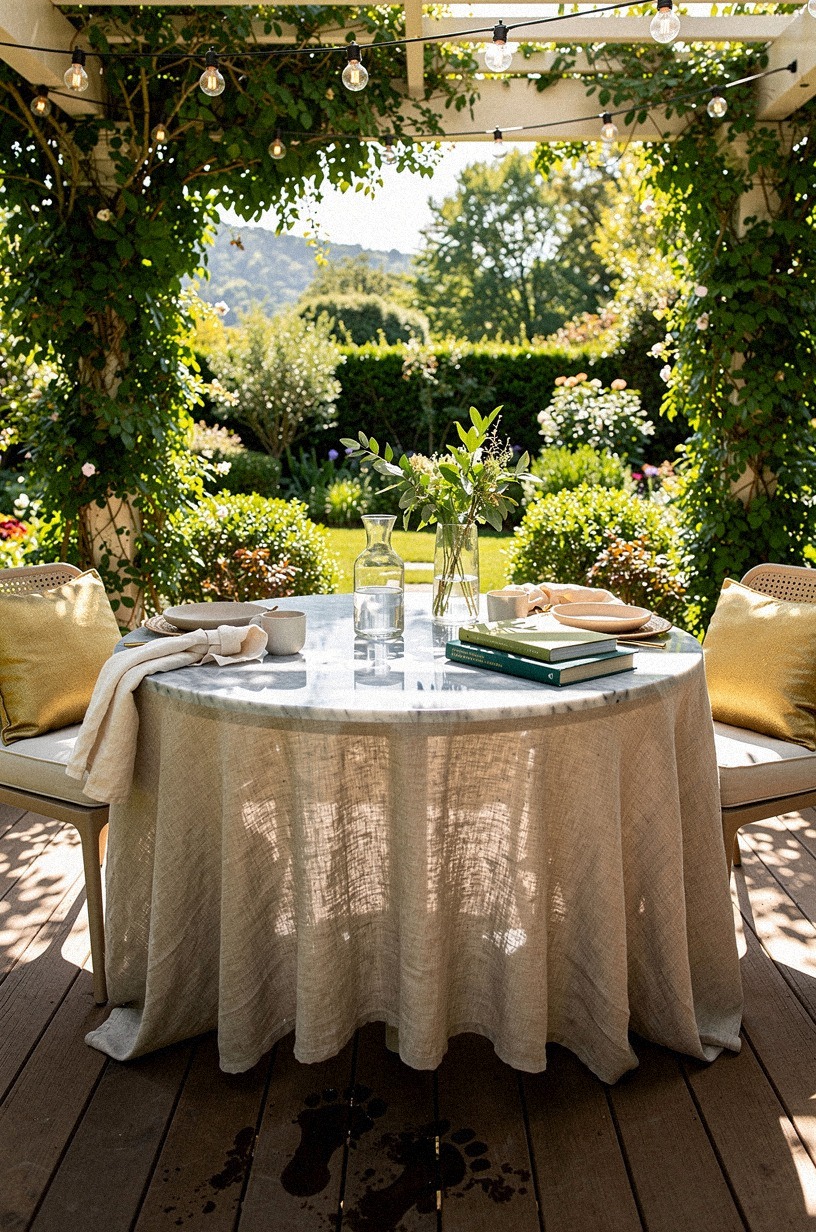
A round table seats the same number of people with less footprint and no corner collisions. In a tight yard, the flow around it matters more than the surface area.
I've squeezed four chairs around a 42-inch round marble-topped table in a space where a rectangle would have blocked the path to the grill. A linen tablecloth softens the stone and ties it to the planting around it.
The round shape also keeps the conversation open. No one is stuck at the head or the foot. It's a small move that changes how the space feels to use, not just how it looks in a photo.
If your dining zone is part of a larger layout, our small patio dining ideas has the spacing rules that prevent elbow wars.
6Layer three heights of light, not one
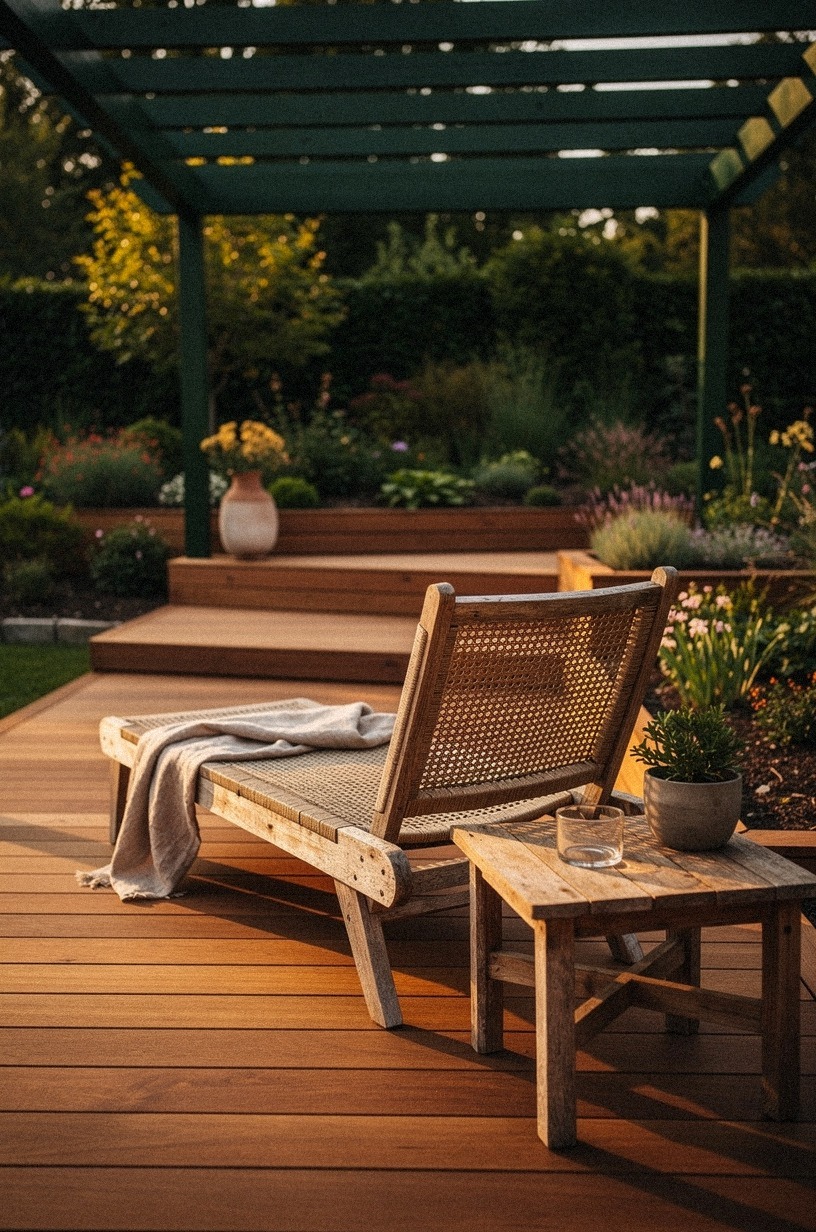
One overhead source flattens everything. Three, globe lights strung across a pergola, a lantern set on the dining table, and a battery candle on a side table, create pockets of brightness that make the yard feel larger because your eye travels between them.
The Three-Height Rule is the name I give this. Tall, medium, low. Never two at the same level.
It works in every outdoor space I've tried it in, from a Brooklyn fire escape to a backyard in Austin that was more gravel than grass. You'll find more layered setups in my cozy outdoor living space ideas.
7Plant a vertical screen instead of buying a privacy fence
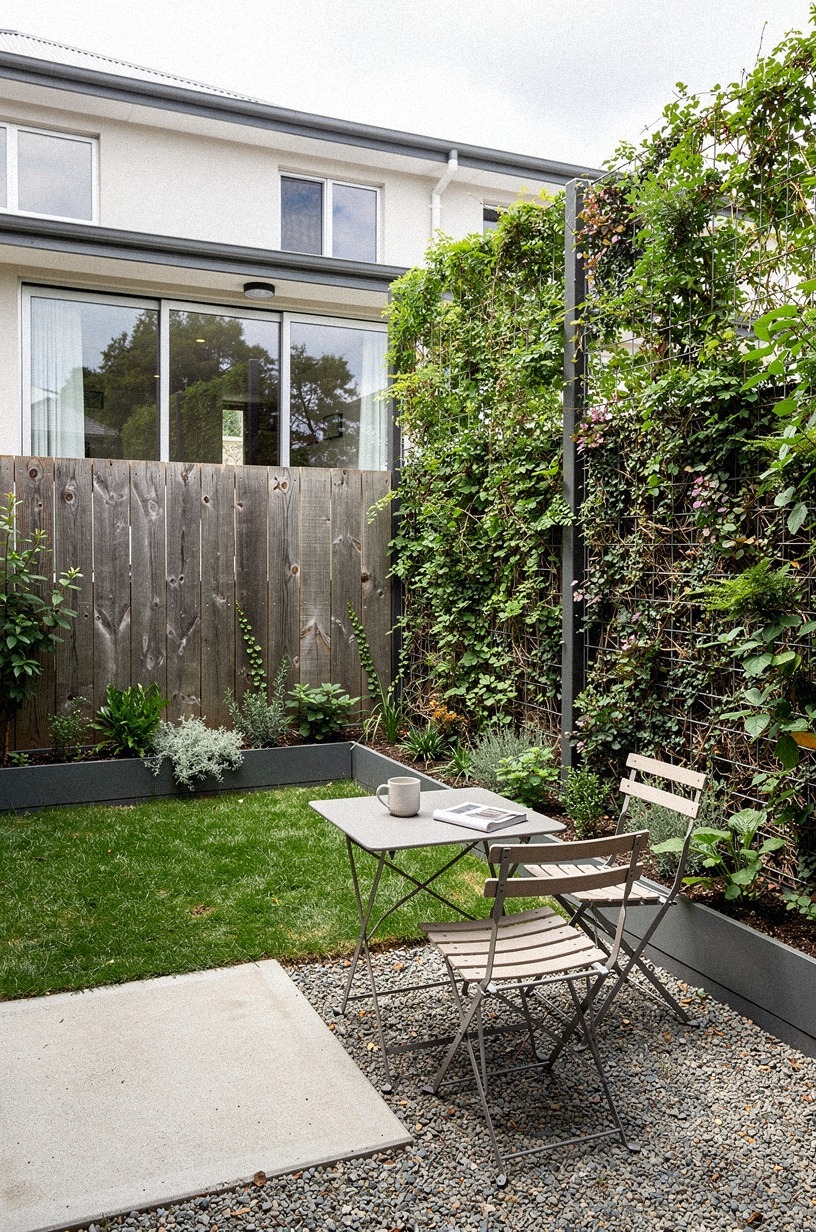
A fence says "I don't want to see you." A screen of clumping bamboo or star jasmine on a trellis says "the garden continues." It softens the boundary, moves in the wind, and gives you the privacy without the hostility.
I used Bambusa multiplex 'Alphonse Karr' in a narrow side yard. It grows to about ten feet, stays narrow, and catches afternoon light like a lamp.
The fence behind it became irrelevant. For more green-wall options, see my backyard privacy ideas.
8Anchor the space with one oversized planter
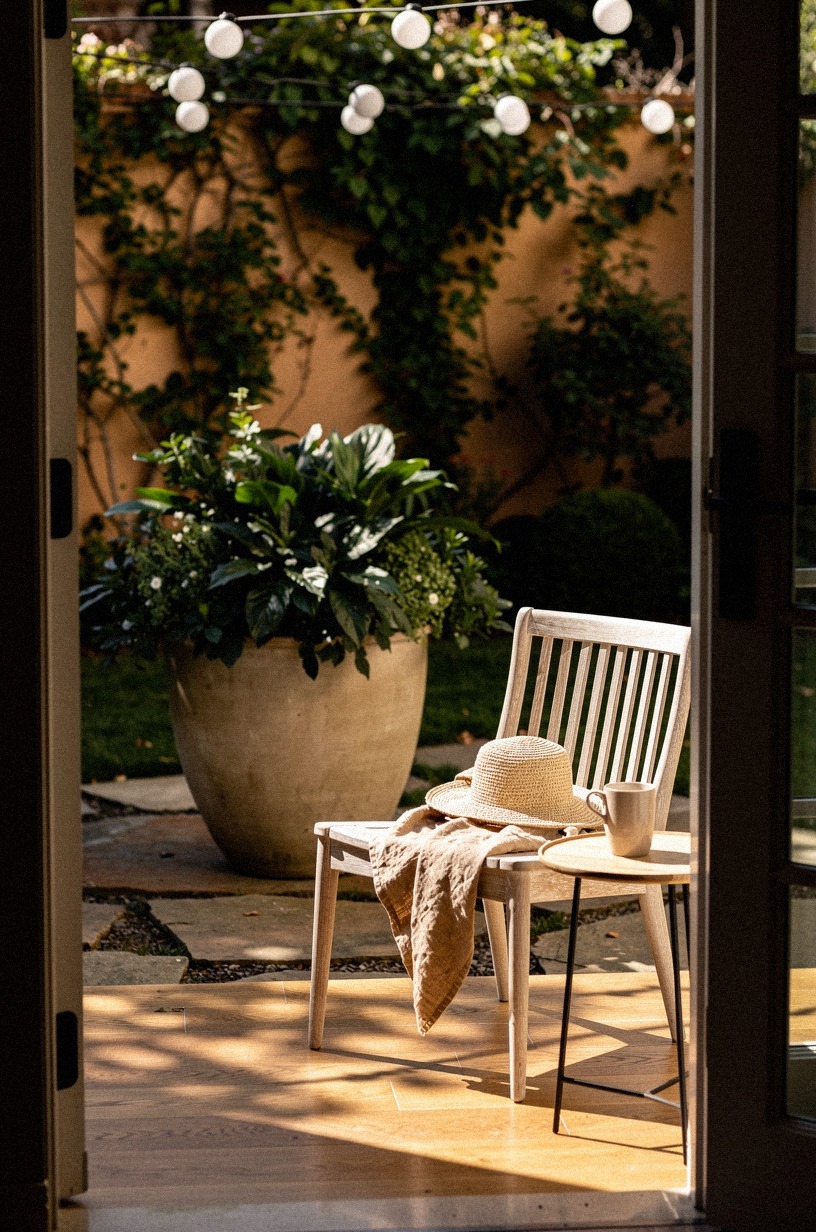
One big pot, 24 inches or more, holds more visual weight than three small ones scattered around. It becomes a piece of architecture. Fill it with a stately dracaena or a clipped boxwood sphere for a sculptural look that reads from across the yard.
I found a carved limestone planter at a salvage yard for forty dollars. It was weathered and mossy and looked like it had been somewhere interesting. That patina was the point.
The greenery spilling from it was almost secondary. If you're building a container scheme, my patio planter ideas has the scale rules that keep it from looking cluttered.
9Run a mirror on the back fence
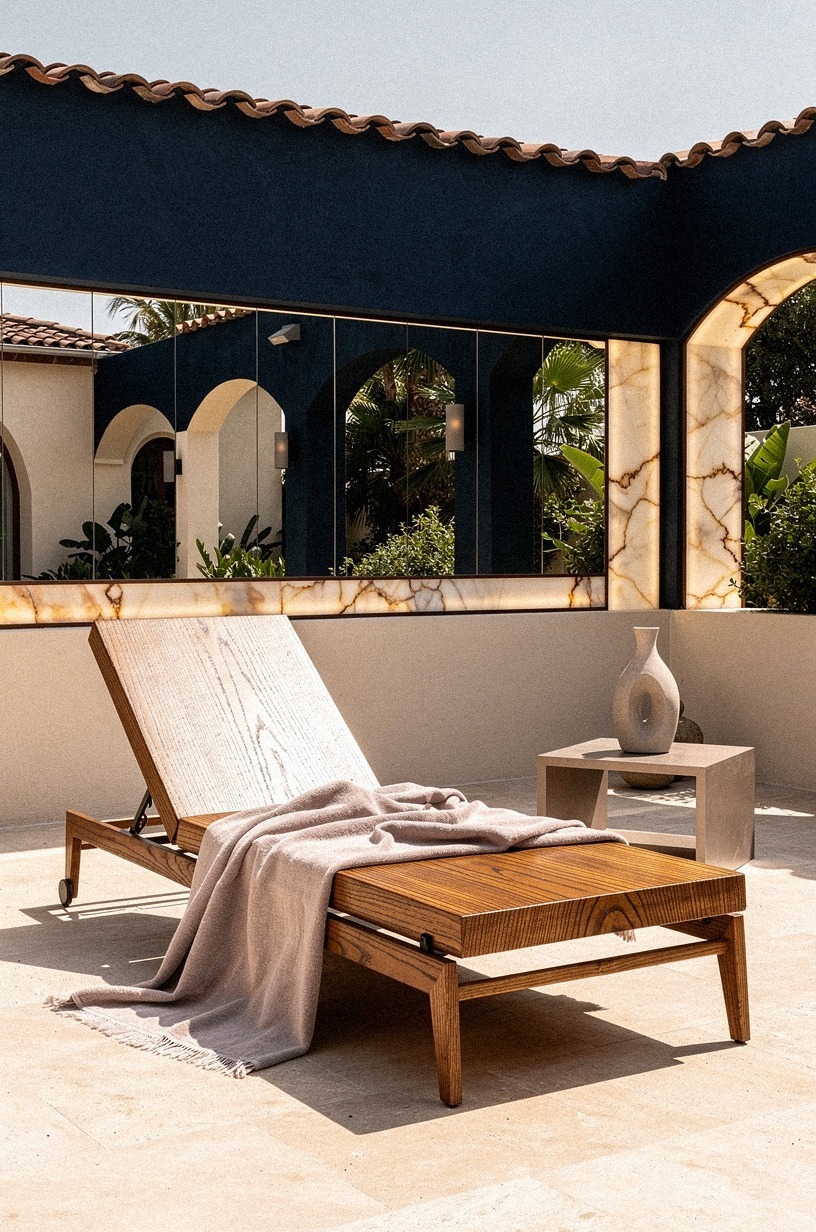
An outdoor mirror, in an arched teak frame or powder-coated steel, doubles the visual depth. The move is placement: angle it slightly so it catches sky and greenery, not your neighbor's bathroom window.
And keep it clean. A dusty mirror reads as a dirty window.
I've used this in a courtyard that was essentially a brick well. A pair of arched mirrors mounted on a dark wall made it feel like there was another room beyond the wall. The reflection of the tree above was what sold it.
Not the mirror itself. The borrowed view.
For more tricks that stretch tight spaces, my small courtyard ideas goes deeper on reflection and sightlines.
10Use a daybed instead of a dining set
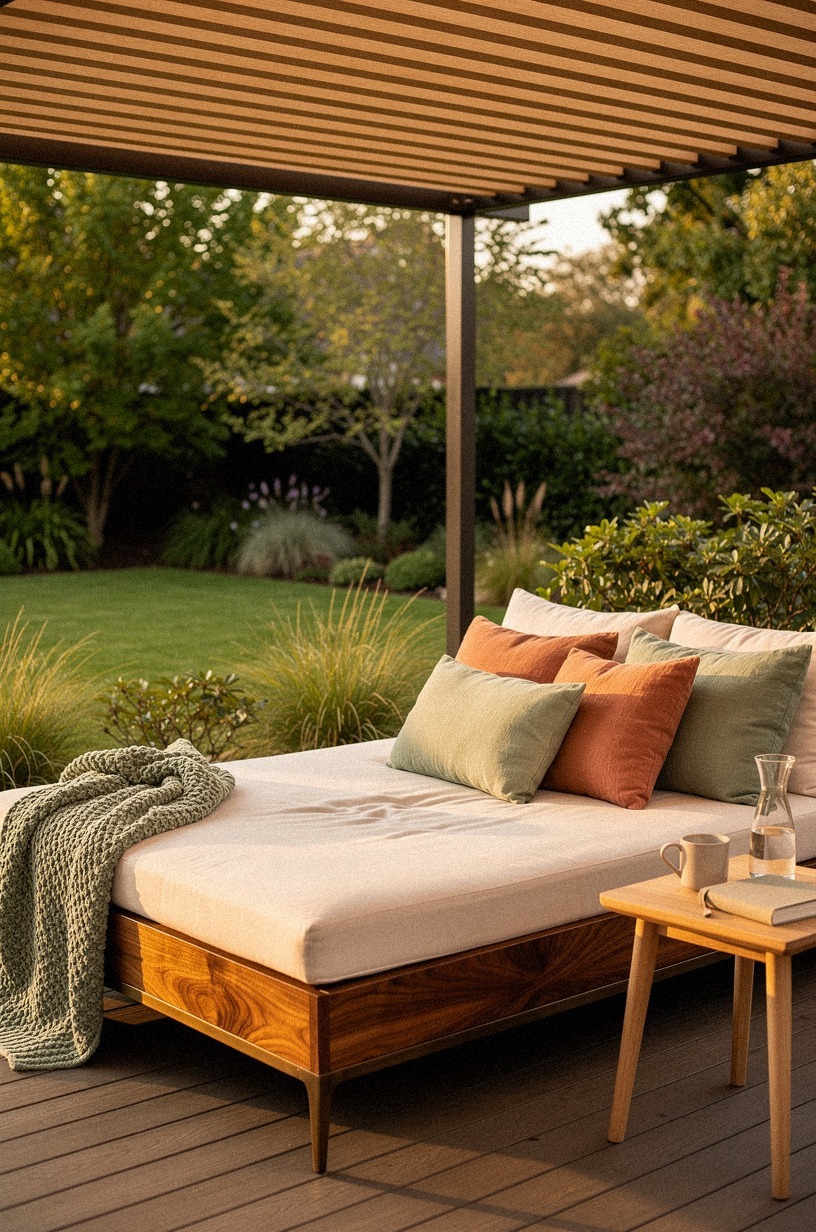
A small yard doesn't have room for both living and dining zones. Pick the one you'll use more.
For most people, that's a place to lie down with a book. A daybed with a slim profile, something like Article's Sven in tan leather, gives you seating that reads as furniture, not patio equipment.
Add a small side table and you've got a room.
I've had a daybed in a 10-foot-wide yard for two summers. It was the only place to sit and it was always enough.
People don't miss what isn't there. They use what is.
If you're choosing between seating types, my outdoor daybed ideas has the dimensions that actually fit tight spaces.
11Paint the floor
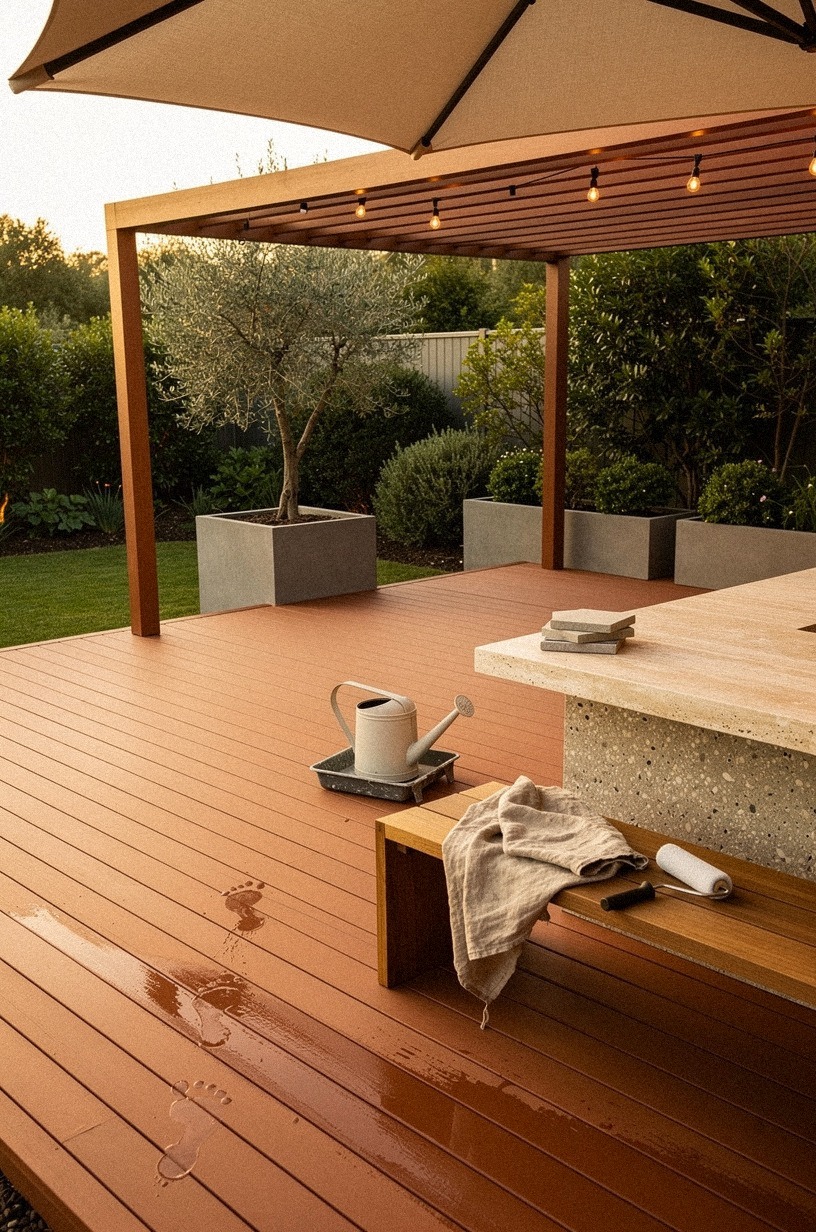
A painted patio or deck, in a warm terracotta tone like Benjamin Moore Terra Rosa 2090-30 or a custom Farrow & Ball earthy red, unifies the ground and makes it feel intentional. The color matters less than the consistency. A single tone reads as a rug you can't trip over.
I painted a 9x12 patio slab in a deep terracotta and the space felt Mediterranean for the cost of a gallon. The paint was exterior deck paint, not wall paint. That distinction matters.
Wall paint will peel underfoot. Deck paint won't.
If you're choosing between stain and paint, my concrete patio paint ideas has the durability breakdown.
12Hang a hammock chair from a strong pergola beam
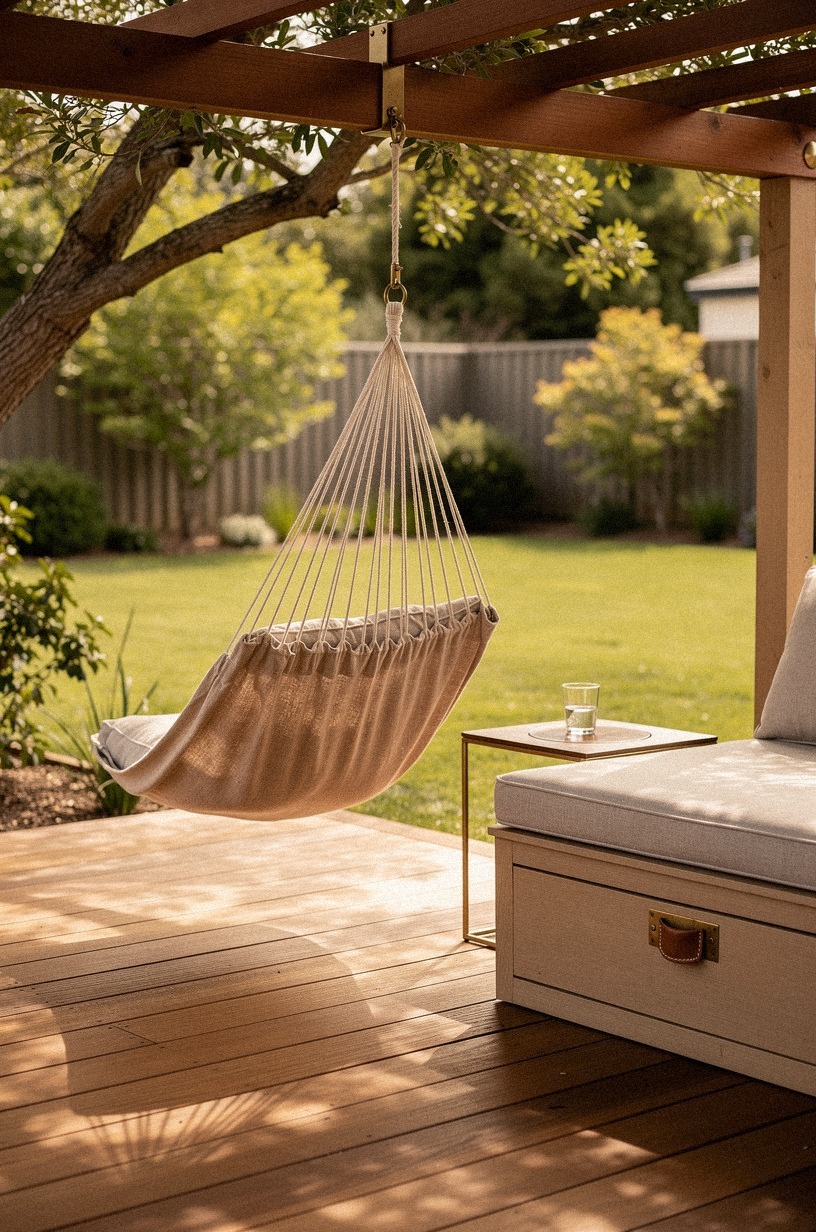
One point of suspension, one seat, one view. A hammock chair takes up less space than a lounge chair and gives you motion.
The sway is part of the design. I've hung one from a 6x6 cedar pergola beam that was already there and it became the most fought-over spot in the yard.
Use a swivel hook so it doesn't twist the rope. And test the hardware first.
A stripped lag bolt will drop you and the chair into the hostas. Ask me how I know.
For more single-point seating that feels like an event, my hanging chair ideas covers hardware and safety.
13Build a pallet wall with one shelf
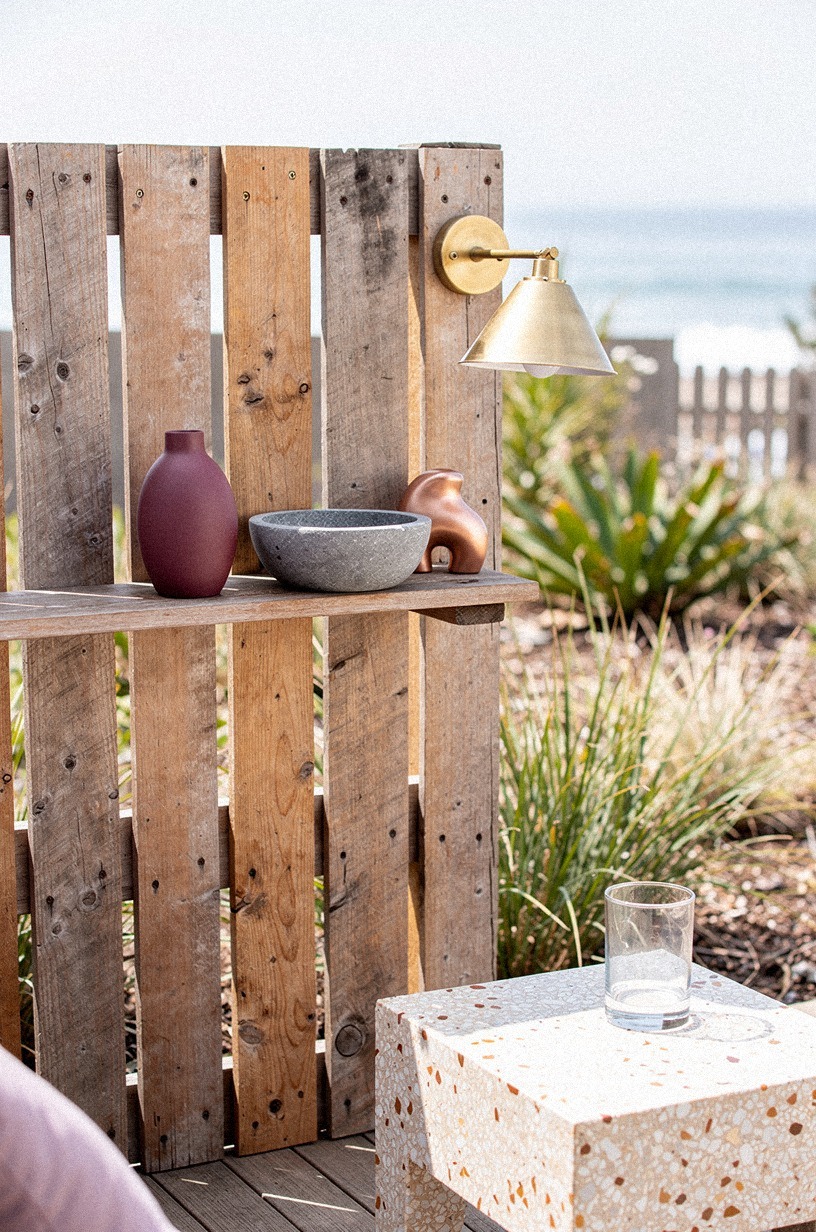
Three pallets, stained dark walnut, screwed to the fence in a vertical stack. One shelf at waist height for a drink. One hook for a towel.
The rest is negative space. It costs nothing if you find the pallets free and it gives the fence a purpose beyond marking territory.
I've built this in a rental where we couldn't change the fence. The landlord didn't care about pallets screwed to pallets. We left it when we moved and the next tenants kept it.
That might be the best review a temporary build can get. More vertical storage ideas live in my outdoor wall decor ideas.
14Use gravel instead of grass
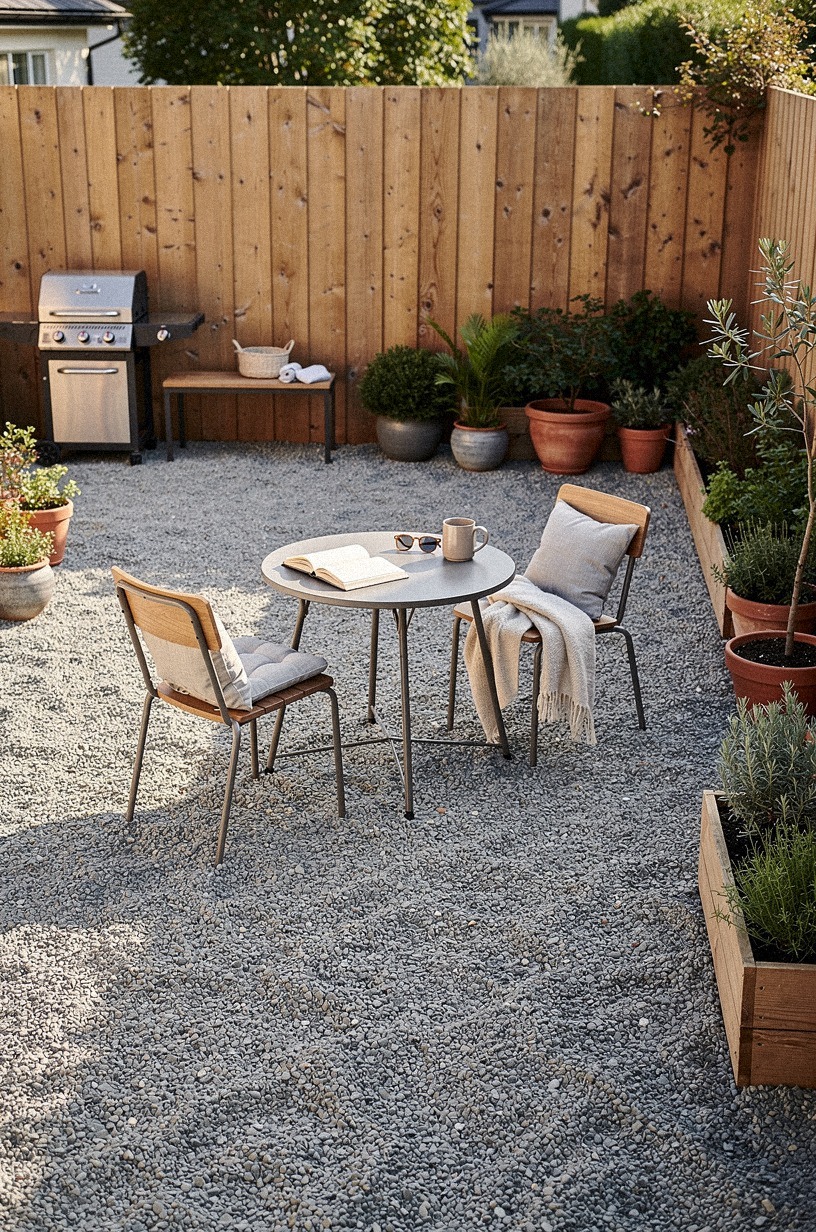
Grass in a small shaded yard is a maintenance war you'll lose. Pea gravel or crushed decomposed granite gives you a surface that drains, stays clean, and reads as garden floor. Rake it once a month.
That's the maintenance.
A 2-inch depth over landscape fabric is enough. Add a few large flat stones as stepping pads and you've got a path that feels Japanese without the Zen garden pretension.
I've used this under a bistro table and two metal chairs and the contrast was the whole design. My gravel patio ideas has the edging details that keep it from migrating into your lawn.
15Frame the view from inside
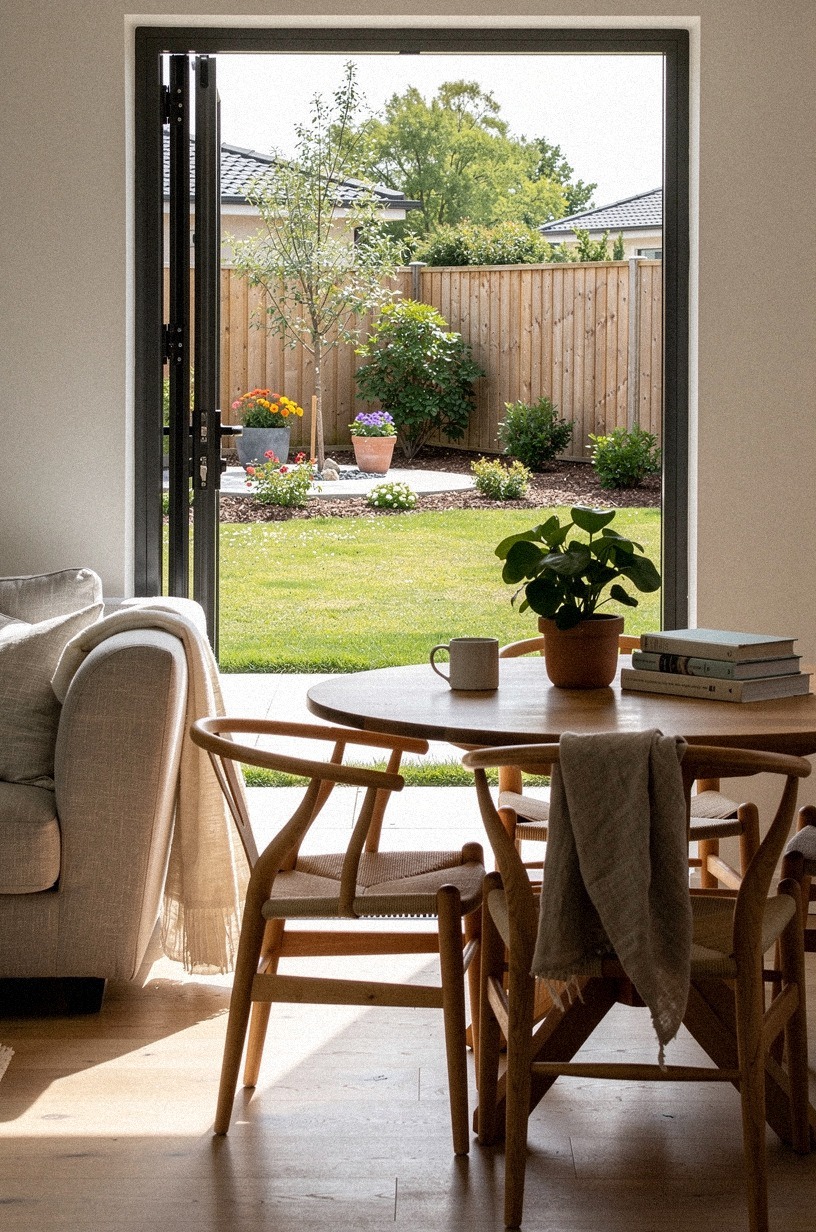
The backyard isn't just for being in. It's for looking at from the kitchen window.
Place one tall element, a small tree, a sculpture, a painted obelisk, directly in the sightline from the door. It gives the interior a focal point and makes the yard feel deeper than it is.
I placed a galvanized steel obelisk in line with our back door. From inside it looked like a garden feature.
From outside it was a ten-dollar tomato cage spray-painted silver. Perspective is the cheapest design tool there is.
For more sightline tricks, my kitchen window view ideas has the framing rules.
16Use outdoor curtains on a tension rod
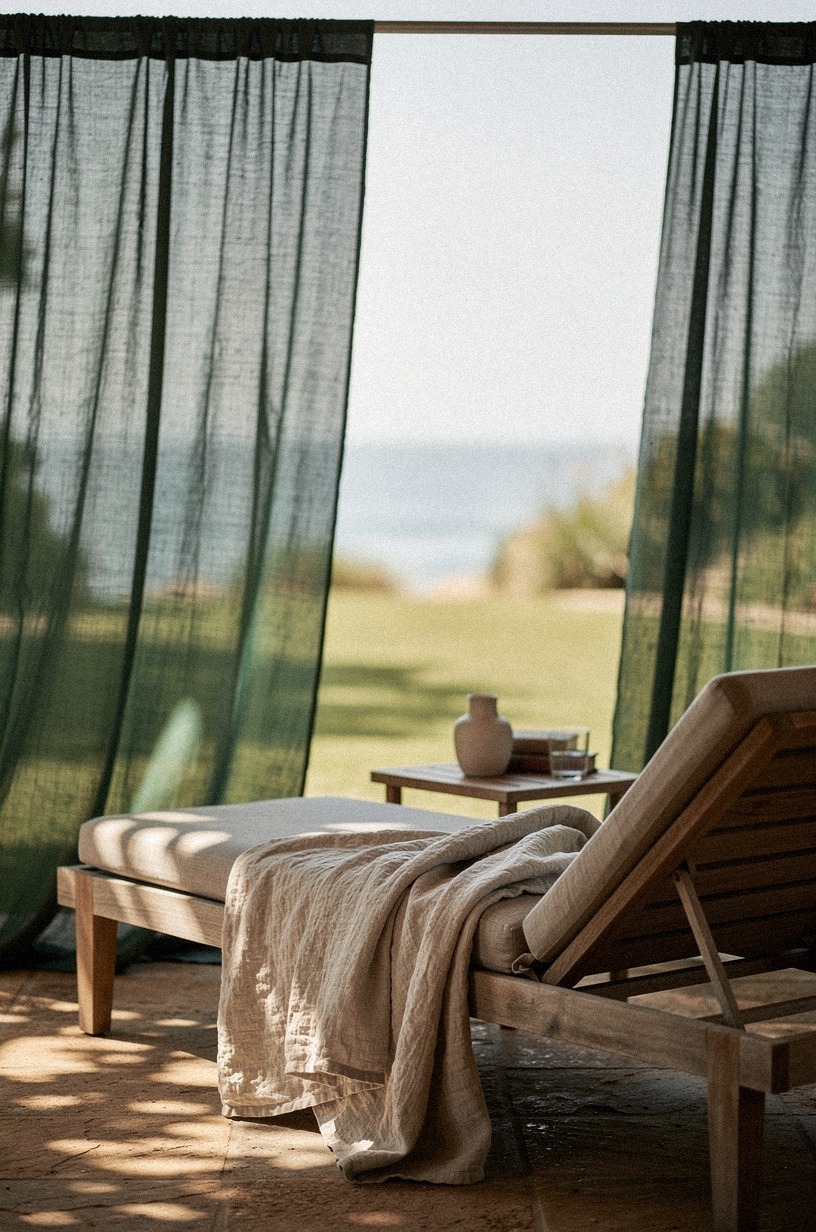
A tension rod between two posts, sheer dark green drapes in a Sunbrella fabric, and you've got a wall you can open or close. The fabric softens the hard lines of the structure and makes the yard feel like an outdoor room.
I've used this in a yard that was all concrete and wood. The curtains were the only soft thing in it and they changed everything.
Use outdoor fabric, not regular cotton. It'll mildew in a week if it can't drain and dry.
Sunbrella Canvas Coal or a similar deep green is the move. It fades gracefully and holds up to rain. A 54-inch panel, hemmed to kiss the ground, runs about sixty dollars.
Two panels and a rod and you've got architecture for under a hundred. If you're building an outdoor room, my outdoor curtain ideas has the hardware that doesn't sag.
17Plant in one color family
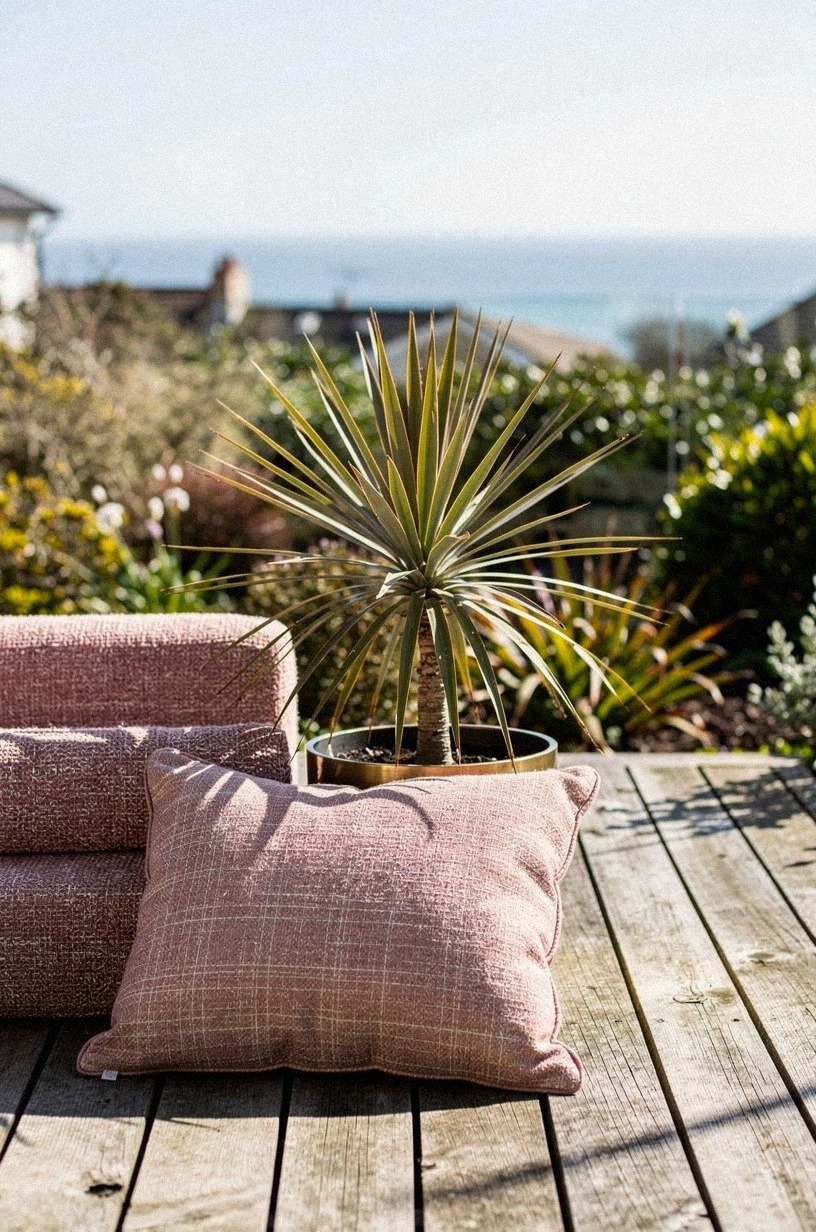
A small yard with twenty plant varieties looks like a nursery exploded. A small yard with five plants in one color, deep green foliage with blush or white accents, looks like a decision. I use a single sculptural dracaena, soft pink cosmos, and silver lamb's ear for a green-dominant palette with a warm accent that feels calm and considered.
The restraint reads as confidence. The viewer assumes you chose this.
They don't know you just couldn't decide and defaulted to one note. Either way, it works.
I've done this in three yards now and it's never failed. My monochromatic garden ideas has the palette pairings that actually read as intentional.
18Add a fire bowl, not a fire pit
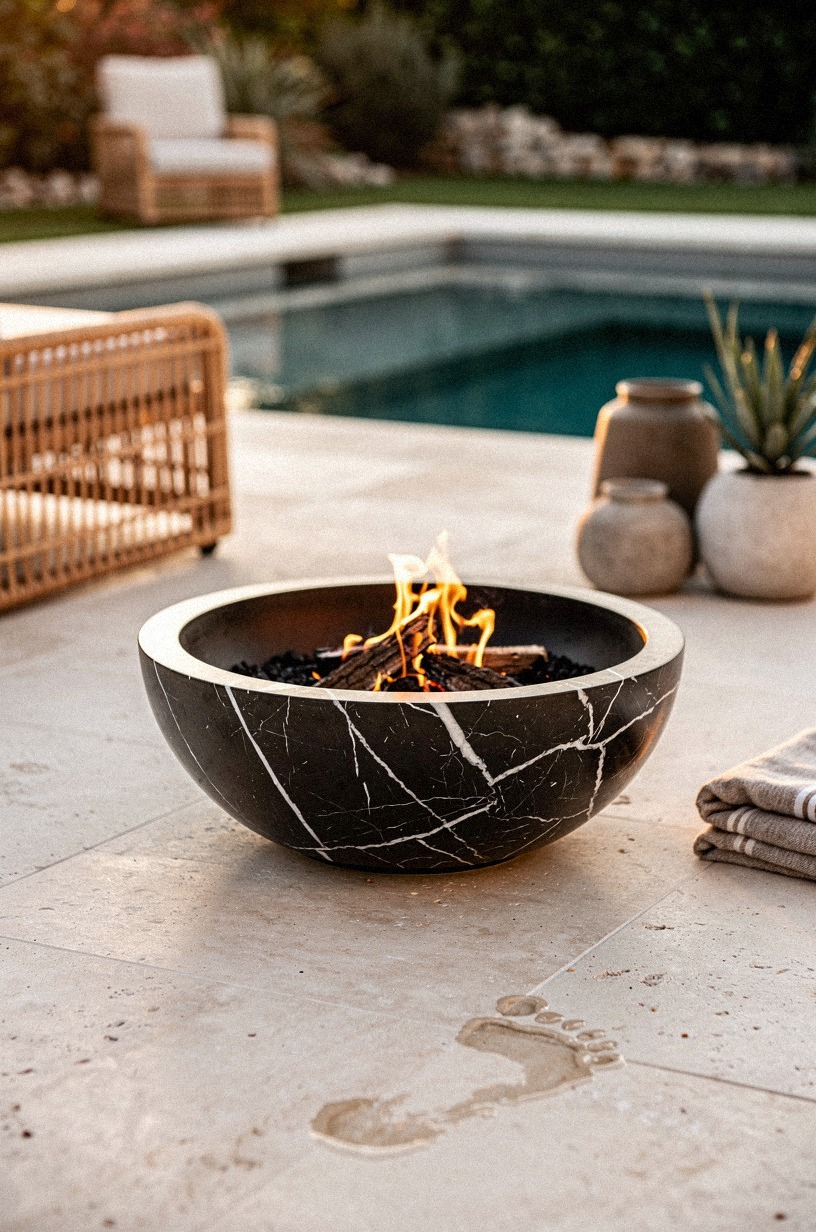
A fire pit is built in, permanent, and usually too big. A fire bowl, something like a honed black marble basin or a simple concrete bowl, sits on the surface and moves where you need it. It's the same flame with a quarter of the commitment.
I've used a 22-inch black marble fire bowl on a travertine patio. It was small enough to tuck against the wall when not in use and heavy enough to stay put in a wind.
The heat radius was about six feet, perfect for two people. If you're deciding between fire features, my small fire pit ideas has the safety rules for tight spaces.
19Build a single step up to a platform deck
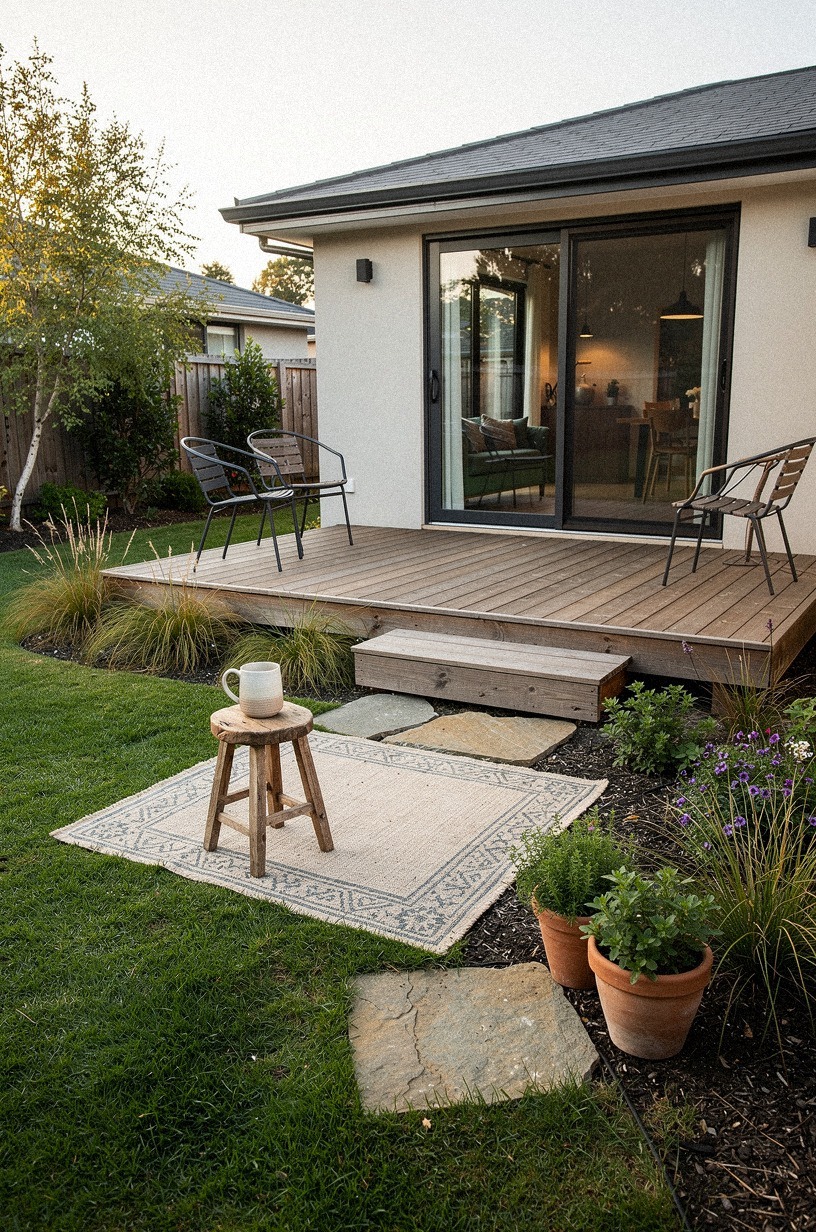
One step, 8 inches high, to a platform deck of cedar or ipe, changes the grade and the psychology. The deck becomes a stage.
The yard becomes an audience. Even a 6x8 platform, barely big enough for two metal chairs and a stool, feels like a destination because you have to step up to enter it.
I built one from IKEA RUNNEN decking laid over a frame of pressure-treated 2x4s. The materials cost about two hundred dollars. The step up made it feel like a resort.
The height was the design, not the wood. If you're building elevated, my platform deck ideas has the footing details that prevent sag.
20Use a folding screen as a planter wall
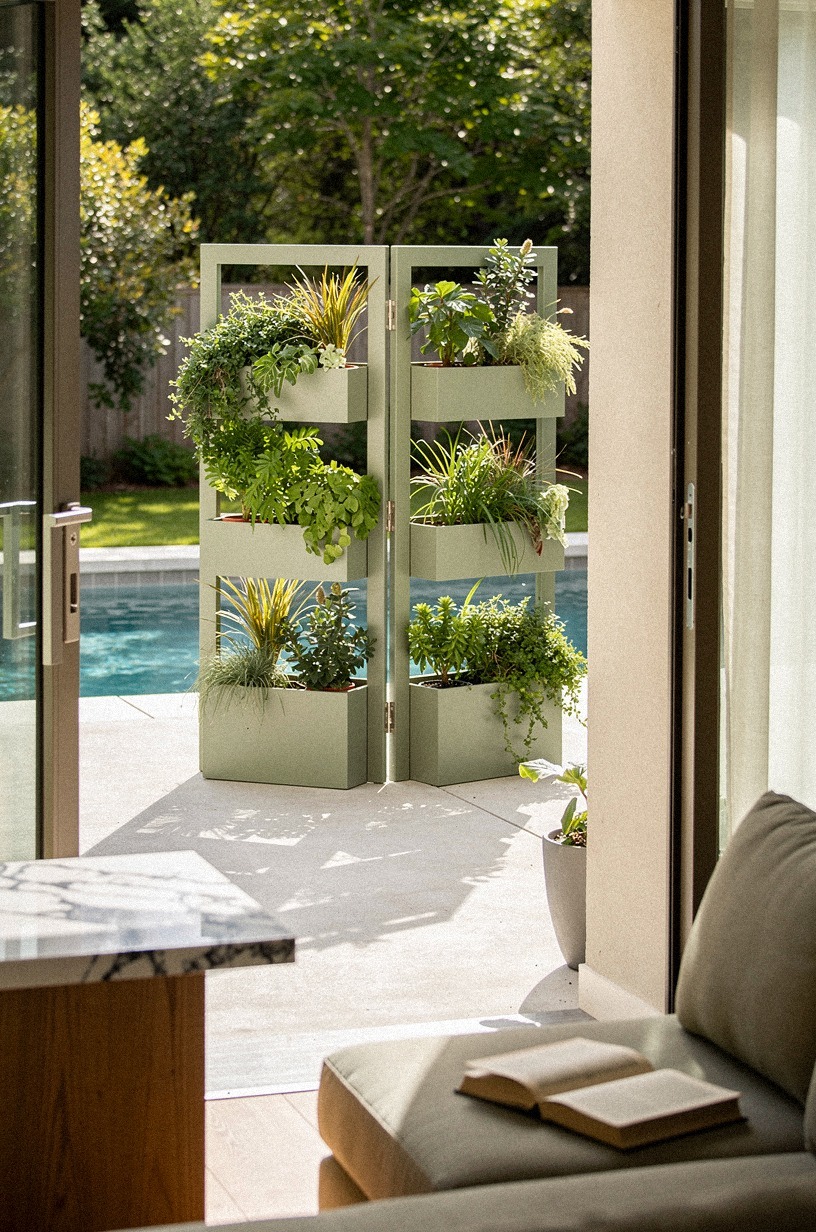
A three-panel sage green folding screen, leaned against the fence, with wall-mounted planters screwed to the face. It gives you vertical garden, privacy, and a backdrop in one object.
And it moves. If the light changes, you move the screen.
I found a painted sage screen at a thrift store for fifteen dollars. The planters were IKEA SKURAR, white metal, cheap, graphic against the muted green.
The whole thing looked like a magazine feature and cost less than a single planter from a garden center. More movable privacy ideas are in my outdoor screen ideas.
21Light the path, not the whole yard
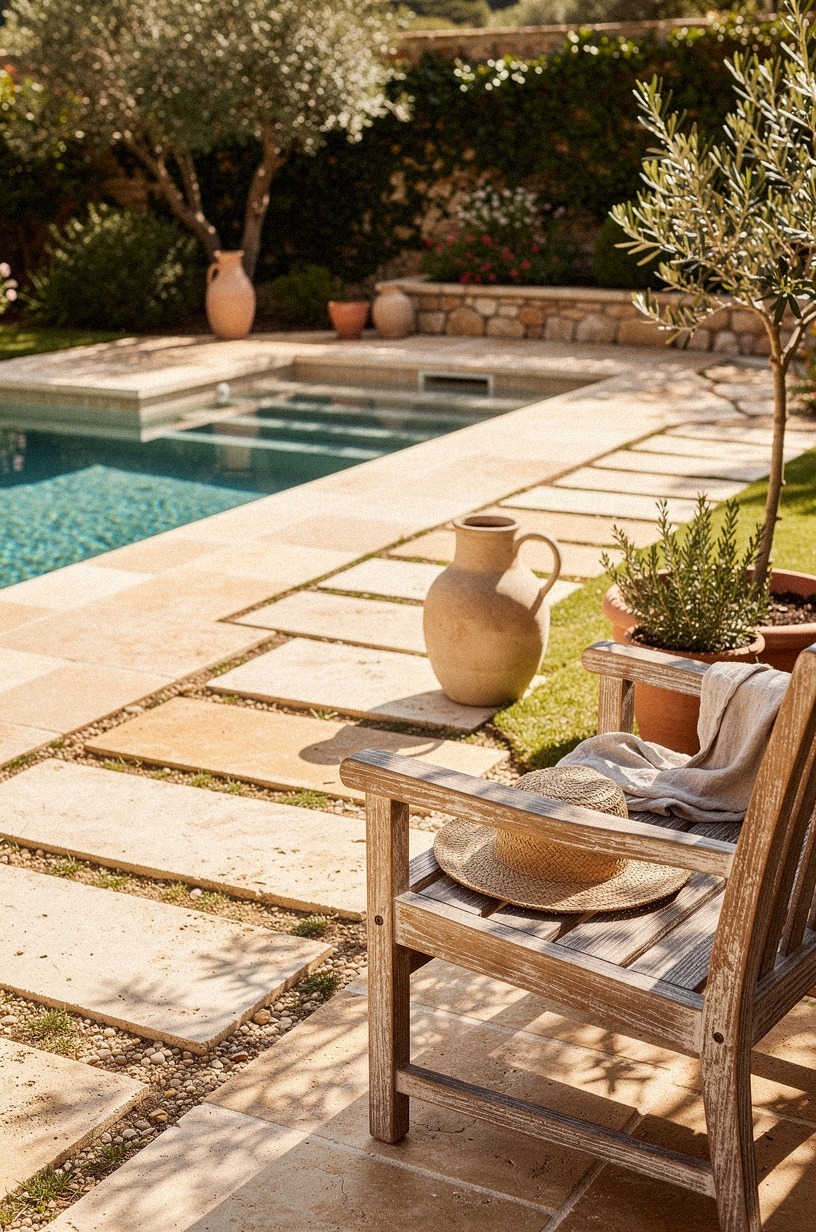
Solar path lights or low bollards, spaced every four feet along the route from door to seating, guide the eye and the feet. They don't illuminate.
They suggest. The darkness between them makes the yard feel larger because you can't see the edges.
Choose fixtures in matte black metal with a warm-white output, around 2700K. The cool-white ones feel like a parking lot.
The warm ones feel like a garden. The difference is the color temperature, not the brightness. My garden path lighting ideas has the spacing formula that actually works.
22Float a mirror-top table
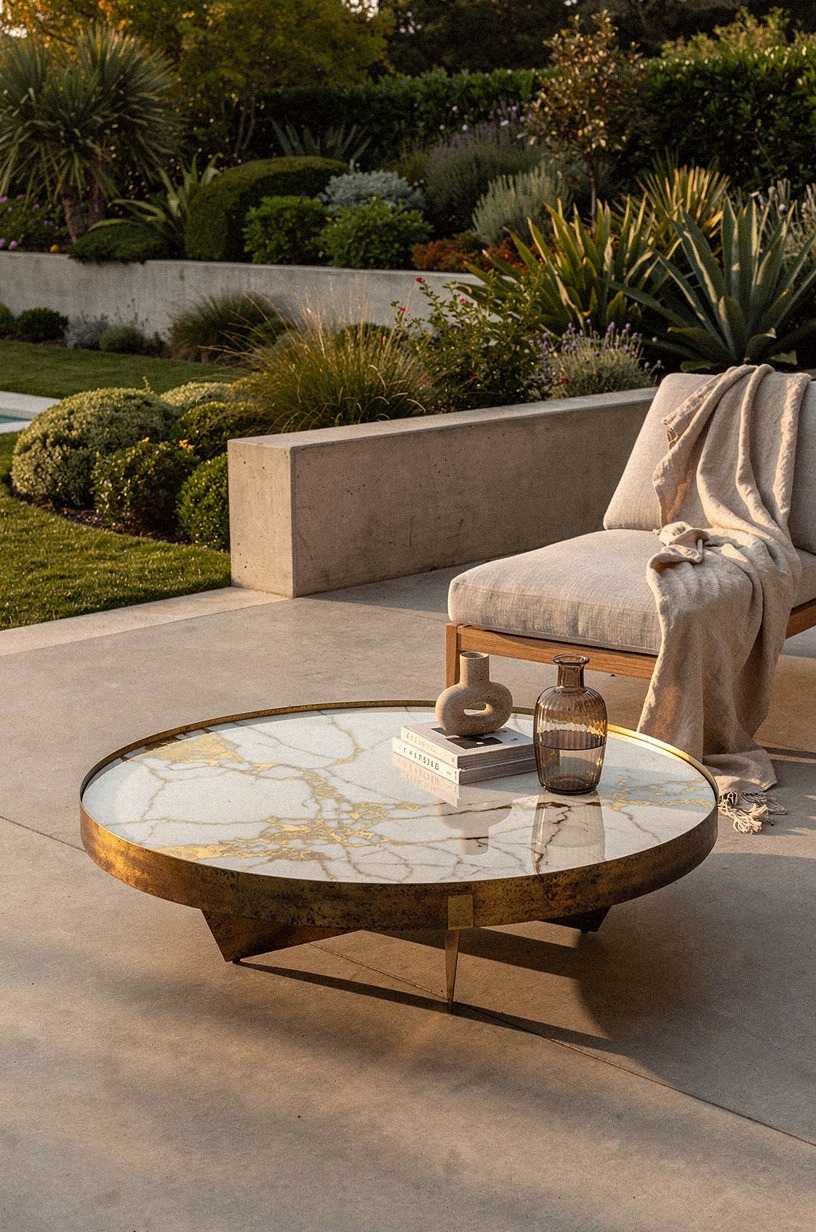
A small side table with a marble-and-gold mirrored surface reflects the sky and the canopy above. It doubles the vertical space visually. I've used a round mirrored tray set on a slim brass base and the effect was immediate.
The reflection catches movement. Clouds, branches, birds.
It makes the table feel alive. And it's a conversation piece without being a gimmick.
I've had more people comment on that tray than on any planter I own. For more reflective tricks, my mirrored outdoor decor ideas has the weatherproofing details.
23The One-Third Rule for furniture scale
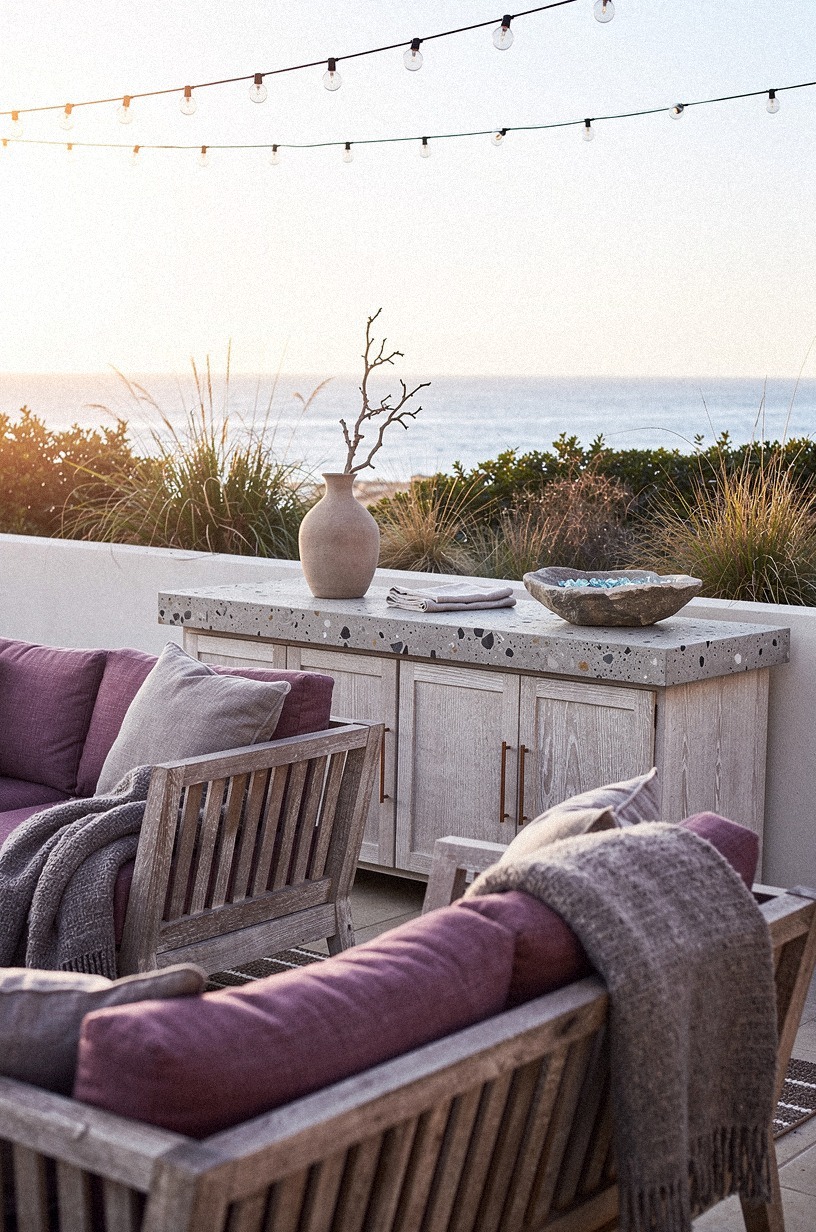
Never let any single piece of outdoor furniture take up more than one-third of the available floor space. It's the rule I use when I'm standing in a store looking at a sofa that seems reasonable.
I measure the footprint, I measure the yard, and if the ratio is wrong I walk away. I've regretted every piece I bought that broke this rule. I've never regretted the ones that followed it.
The math is simple. A 10x12 patio is 120 square feet.
One-third is 40. A sectional that claims to be "compact" and still spans 60 inches by 80 inches is already at 33 square feet.
Add a table and you're over. The room to move is what makes a small yard feel big.
The furniture is just the excuse to be out there. If you're measuring your space, my small patio layout ideas has the scale rules that keep it comfortable.
What Small Backyards Actually Cost (and Where the Money Goes)
Here's the honest breakdown I've seen across a dozen projects, from my own and from friends who've done it properly. The ranges are real. The numbers aren't inflated to make the budget option look good.
The budget tier is where most of the ideas in this article live. A $40 string light set, a $15 thrift screen, a $40 salvage pot, and a gallon of fence paint get you most of the way there. The mid tier is where you start buying furniture that lasts.
The high tier is where you stop reading articles and hire someone.
My advice: spend the money on the things you touch. The cushions, the chair, the throw.
The fence paint can be cheap. The light bulbs can be cheap. The surface you sit on for three hours can't be.
Why the Best Small Backyards Look Like They Were Built Over Time
The small backyards that stop me on Pinterest aren't the ones that were designed in a weekend. They're the ones that look like someone lived in them, made mistakes, and kept the good parts.
The pallet wall with the chipped paint. The limestone planter that came from somewhere else. The gravel path worn smooth in the middle where the feet go.
There's a pressure now to make everything look finished. To style it, photograph it, and move on.
But a backyard isn't a living room. It grows, it shifts, it gets rained on.
The best ones embrace that. They let the imperfection be part of the design.
I've had a hammock chair rip and get patched with a different rope. I've had a painted floor scuff and get touched up with a slightly different shade. I've had plants die and get replaced with whatever was at the nursery that day.
Each of those changes made the space more specific. More mine.
Less like a catalog and more like a life.
The goal isn't to create a space that looks good in a photo. The goal is to create a space that feels good at 7 p.m. on a Tuesday when you're tired and the air is warm and you don't want to be inside. Everything else, the Pinterest saves, the compliments, the before-and-after, is secondary.
So start with one thing. Paint the fence.
Hang the lights. Plant the screen. Let it be wrong for a while.
Then fix it. That's how you get a backyard that feels bigger than it is.
Not because you tricked the eye, but because you gave it something real to look at.
A Few Things Worth Answering
What is the best small backyard idea for a truly tiny space?
The zigzag string light ceiling. It costs about forty dollars, takes twenty minutes, and changes the feel of the space immediately.
A Target Threshold LED globe set works fine. The dark cable disappears at dusk and the warm pools of light make the yard feel like a room.
If you're starting from zero, my tiny backyard ideas has the five moves that matter most.
Where can I buy small backyard pieces on a budget?
IKEA for furniture that lasts a few seasons. Wayfair for rugs and cushions if you read the reviews first.
Target Threshold and Studio McGee for accessories that look more expensive than they are. And Facebook Marketplace for the one good piece someone else is offloading. I've found teak chairs for thirty dollars that retailed for three hundred.
My budget backyard ideas has the exact SKUs I've bought twice.
How much does a small backyard makeover cost?
About $200 to $900 for a solid budget refresh. Paint, lights, plants, a rug, and one good chair. The mid range, with a patio set and proper lighting, runs $1,500 to $6,000.
Most people don't need more than the budget tier to get a space they want to use. For a full cost breakdown by project type, see my backyard renovation cost guide.
Can I create a cozy backyard on a budget?
Yes, and the best moves are free or close to it. Paint your fence dark.
Rearrange what you own into a better layout. Plant a screen from cuttings or cheap nursery stock.
Hang lights you already have. The cost is mostly time and a decision to stop buying the wrong size furniture.
My cozy backyard on a budget has the weekend plan that costs under fifty dollars.
Is a small backyard makeover worth it?
Worth it! A small outdoor space you actually use adds more to your daily life than a large one you ignore. The return isn't resale value.
It's the evenings you spend outside instead of scrolling. I've never met anyone who regretted making their small yard usable.
If you're weighing it against other projects, my backyard ROI guide has the numbers that help you decide.
Is a backyard makeover a good idea for a rental?
Yes, if you stick to removable changes. Peel-and-stick tile on a concrete patio. Tension-rod curtains instead of hardware.
Pallet walls that lean rather than screw in. Potted plants that move with you.
I've done this in three rentals and left each one better than I found it, with nothing permanent behind. My rental backyard ideas has the landlord-friendly moves that don't cost your deposit.
Where I'd Start First
If I had to pick one, I'd start with the fence color. You can't layer plants and furniture on top of a bright boundary that shouts "subdivision." A dark fence recedes, the green reads brighter, and every decision after that gets easier.
Get the backdrop right. The rest lands.