
 by
by For most adults, 10 inches is the minimum you should buy for a daily-use mattress. An 8-inch bed leaves almost no room for a proper comfort layer, works for bunk beds and kids, but compresses under average adult weight faster than it should. If you are comparing these two profiles, the real answer is: neither is ideal for adults who want long-term support. The Saatva Classic at 11.5 inches is where proper adult comfort starts, and it costs less per year of use than a cheap 8 or 10-inch replacement cycle.
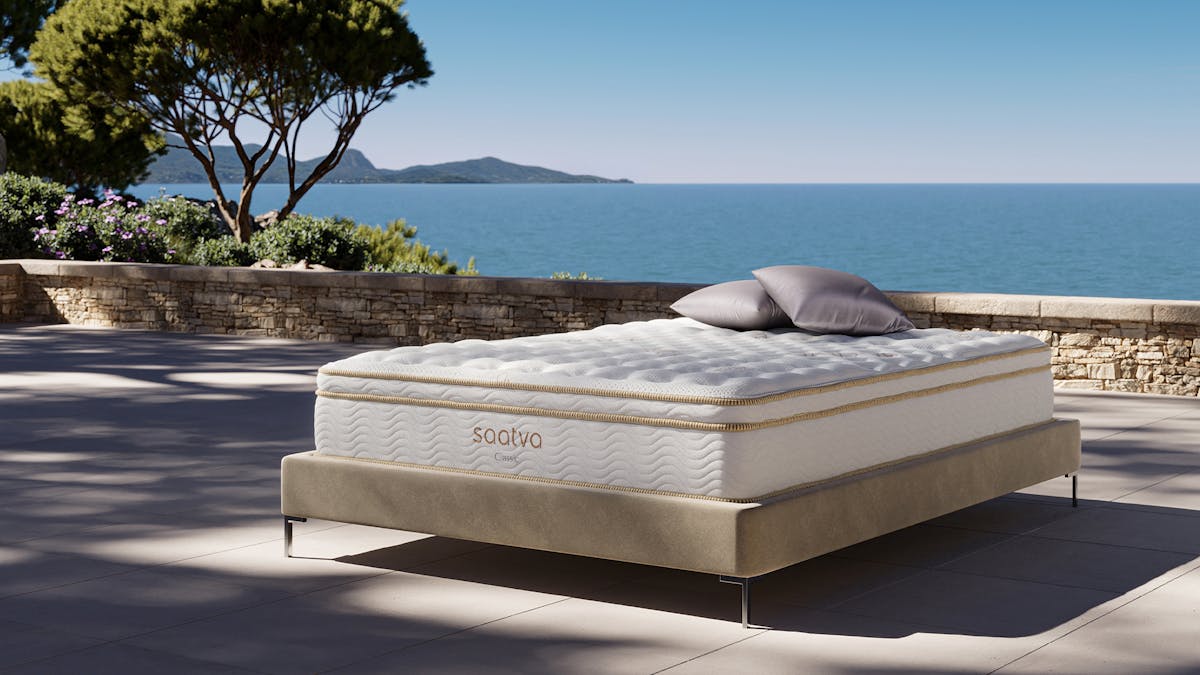
Saatva Classic
9.5/10
- 11.5" profile: proper adult comfort layer depth with dual-coil support underneath
- Outstanding cooling, 89.5°F surface temp (NapLab tested), better than all-foam
- Zoned lumbar foam reinforcement and reinforced perimeter coils
- Free white-glove delivery, setup, and old mattress removal included
- Fiberglass-free, CertiPUR-US, made in USA
- Higher upfront cost than budget 8" or 10" options
- $99 return fee applies during the trial
- Heavier than rolled-foam alternatives, ships uncompressed
When the question is 8 versus 10 inches, the smarter question is: what does a proper mattress actually need? The Saatva Classic answers it. Dual-coil construction, 11.5 inches of real support, and a 365-night trial that lets you verify fit before you commit.
8 vs 10 inch mattress: the real difference
The two-inch gap between an 8-inch and a 10-inch mattress is not just about height. It determines how much room the manufacturer has for a comfort layer on top of the support core. An 8-inch mattress typically has a 1- to 2-inch comfort layer over a 6-inch base. A 10-inch mattress gets 2 to 3 inches of comfort material, which is enough to provide real pressure relief for most adults.
The support core depth is also relevant. A thinner base compresses faster under body weight, particularly for adults over 150 lbs. This is why most reputable brands no longer build primary mattresses under 10 inches; 8-inch models are sold almost exclusively for bunks, trundles, platform beds for children, and temporary guest setups.
8 vs 10 inch mattress comparison
| Feature | 8-inch mattress | 10-inch mattress |
|---|---|---|
| Comfort layer depth | 1 to 2 inches | 2 to 3 inches |
| Support core depth | 5 to 6 inches | 6 to 8 inches |
| Adequate weight range | Under 130 lbs | Up to 200 lbs |
| Side sleeping support | Inadequate for most adults | Adequate for lightweight adults |
| Back sleeping support | Acceptable for lighter adults | Good for most adults |
| Best use cases | Bunk beds, children, guest setups | Adults (lightweight), daily use |
| Price range | $100 to $300 | $200 to $500 |
| Lifespan (typical) | 3 to 5 years daily use | 5 to 7 years daily use |
Who should choose an 8-inch mattress
An 8-inch mattress is the right call in specific situations: bunk bed slots where ceiling clearance matters, trundle beds, platform frames for children under 12, or a guest bedroom that sees occasional use. For lightweight adults under 130 lbs who sleep on their back or stomach, an 8-inch can also work adequately in a pinch, but it is not a long-term investment.
People who have difficulty getting in and out of bed due to joint pain sometimes prefer a lower profile. If your total bed height including the frame and any topper exceeds 25 inches, dropping to an 8-inch mattress can help. But there are better ways to solve that problem, such as a lower bed frame, than compromising on mattress quality.
Who should choose a 10-inch mattress
A 10-inch mattress is the entry point for adult daily use. It provides enough comfort layer depth for pressure relief in most sleeping positions and enough support core to resist sagging for several years under average body weight. Back sleepers, stomach sleepers, and lighter-weight side sleepers (under 130 lbs) can sleep on a 10-inch mattress without issues.
Where 10 inches falls short: side sleepers over 150 lbs will sink through the comfort layer quickly and feel the firmer base underneath their hips and shoulders. Couples, especially where one partner is heavier, will compress a 10-inch mattress unevenly over time. For those use cases, 12 inches or more is a better starting point.
Factors that matter more than raw thickness
Mattress thickness is a proxy, not a specification. Two mattresses can both be 10 inches thick and perform very differently, because what matters is how those 10 inches are used.
- Comfort layer material. Memory foam, latex, and poly foam all compress differently under load. A 2-inch latex comfort layer will hold up far longer than 2 inches of cheap poly foam at the same price point.
- Support core type. Pocketed coil systems in a 10-inch mattress provide more adaptive support and better airflow than all-foam designs at the same height. Innerspring hybrids like the Saatva Classic use dual-coil construction that outperforms many thicker all-foam alternatives.
- Your sleep position and body weight. These two variables predict more about which mattress will work for you than the total height number. A 10-inch coil hybrid can outperform a 12-inch all-foam bed for a 180-lb back sleeper.
- Trial period. No spec sheet replaces sleeping on a mattress for 60 to 90 nights. A 365-night trial, like Saatva's, is the only honest way to verify mattress fit.
Sleep position and thickness: a practical guide
Back sleepers need firm, even support across the lumbar region. An 8-inch mattress can work if you are lightweight, but a 10-inch or 11-inch bed with a zoned lumbar layer gives the spine more consistent support through the night. The Saatva Classic's reinforced lumbar foam zone addresses this directly.
Side sleepers need a thick enough comfort layer to absorb pressure at the hips and shoulders without bottoming out. For adults over 130 lbs, that means a minimum of 2.5 to 3 inches of quality comfort material, which most 10-inch beds do not provide. 12 inches or a thick hybrid is safer.
Stomach sleepers need firm, thin support to prevent the lower back from hyperextending. They actually perform better on thinner, firmer beds than side sleepers, so an 8- or 10-inch firm mattress can work. The risk is comfort layer thickness: too thick and the hips sink, creating lumbar arch.
Combination sleepers benefit from a 10-inch or thicker mattress with responsive material (coil or latex) so position shifts do not cause sinkage problems at any angle.
Body weight and mattress thickness
Body weight applies downward force on the comfort and support layers continuously for 7 to 8 hours per night. The faster a mattress compresses, the sooner you will feel the support core directly.
- Under 130 lbs: 8 or 10 inches is adequate for back and stomach sleepers.
- 130 to 200 lbs: 10 inches works, but 11 to 12 inches gives longer lifespan without sagging.
- 200 to 250 lbs: 12 inches minimum. A 10-inch foam mattress will develop impressions within two to three years.
- Over 250 lbs: 12 to 14 inches with a reinforced coil support core. The Saatva HD is built specifically for heavier sleepers.
Bed height and frame compatibility
The total height of your sleeping surface, including frame, mattress, and any topper, should ideally sit between 20 and 25 inches for most adults. Getting out of a bed that is too high or too low stresses the knees and hips, which matters for anyone with joint conditions.
If you are using a platform bed with a low-profile base (under 6 inches), a 10-inch mattress keeps total height manageable. If you use a traditional box spring adding 8 to 9 inches, a thicker mattress can push total height past 25 inches. Measure before you buy.
Frequently asked questions
Is an 8-inch mattress too thin for adults?
For most adults who use a mattress nightly, yes. An 8-inch mattress leaves only 1 to 2 inches for a comfort layer, which is not enough to prevent pressure points for average body weights over 130 lbs. It works for children, bunk beds, trundles, and occasional guest use, but is not a good long-term investment for regular sleep.
What is the ideal mattress thickness for adults?
Most sleep experts and mattress manufacturers point to 10 to 14 inches as the practical range for adult daily use. For most people, 11 to 12 inches provides the right balance of comfort layer depth and support core longevity. Below 10 inches, you start compromising on one or the other.
Can a 10-inch mattress work for couples?
It can work for lightweight couples, but the combined weight of two adults accelerates compression in the comfort layer. A 12-inch mattress is a safer baseline for couples, especially if either partner weighs over 180 lbs or is a side sleeper. A coil-based mattress at 10 to 12 inches will outperform an all-foam design at the same thickness for couples.
Does a thicker mattress always mean better sleep?
No. A poorly constructed 14-inch mattress will underperform a well-built 10-inch hybrid. Material quality, layer design, and support core type matter more than total height. The best approach is to use thickness as a filter (set a minimum for your weight and position), then evaluate construction within that range.
What mattress should I actually buy instead?
If you are reading a comparison of 8 versus 10 inches, you are likely replacing a budget mattress and want to get it right this time. The Saatva Classic at 11.5 inches, with its dual-coil construction and zoned lumbar support, gives you a mattress built for adult daily use rather than a stopgap. The 365-night trial removes the guesswork.
An 8-inch mattress suits children, bunk beds, and very lightweight adults. A 10-inch mattress works for adults under 200 lbs on their back or stomach. For anyone else, or for long-term daily use, 11 to 12 inches is the practical minimum. The Saatva Classic at 11.5 inches is our top pick: dual-coil construction, three firmness options, a 365-night trial, and lifetime warranty.
Saatva Classic
9.5/10
11.5 inches of dual-coil support, three firmness options, zoned lumbar reinforcement, 365-night home trial, lifetime warranty, and free white-glove delivery with old mattress removal. The benchmark for adult daily use.