
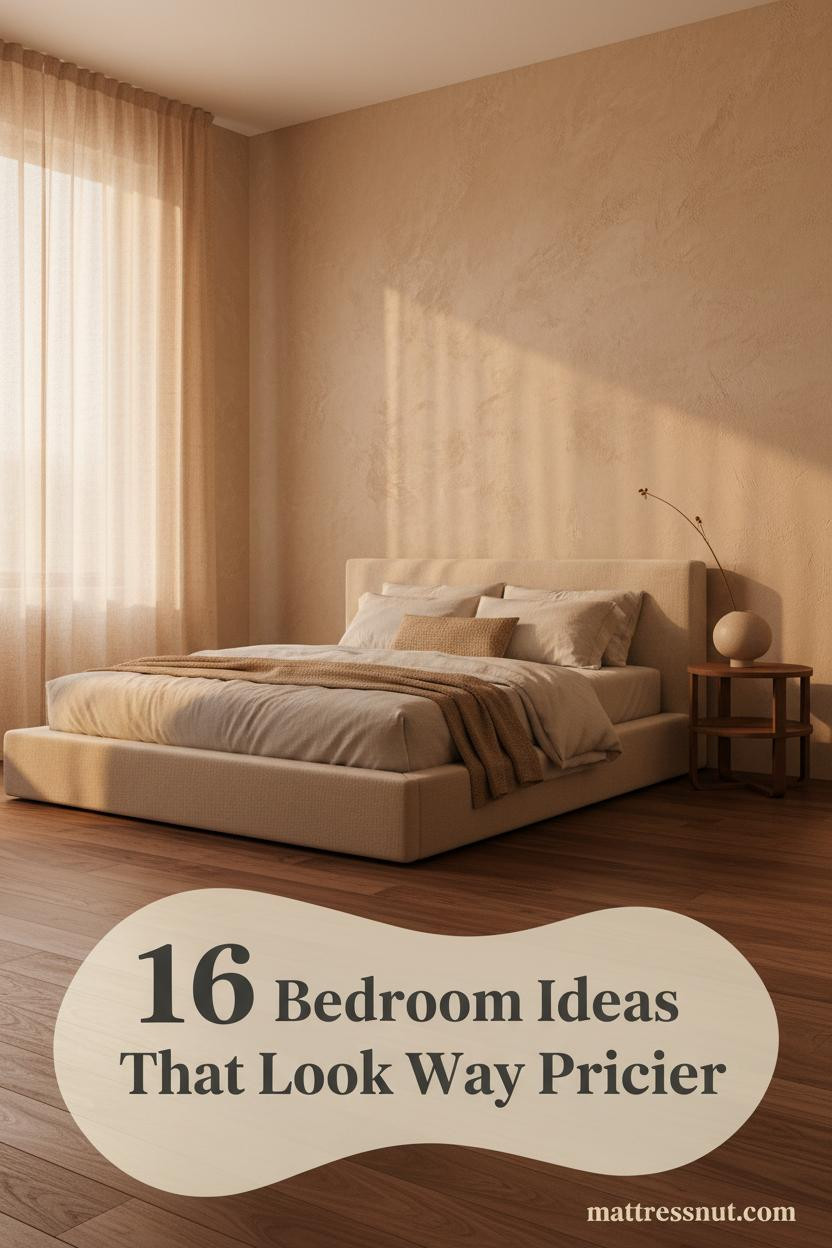
 by
by An organic modern bedroom isn’t about following a trend. It’s about choosing materials that age well, light that stays warm, and a palette that never gets tired.
The Cork Accent Wall Trick That Makes a Room Feel Grounded
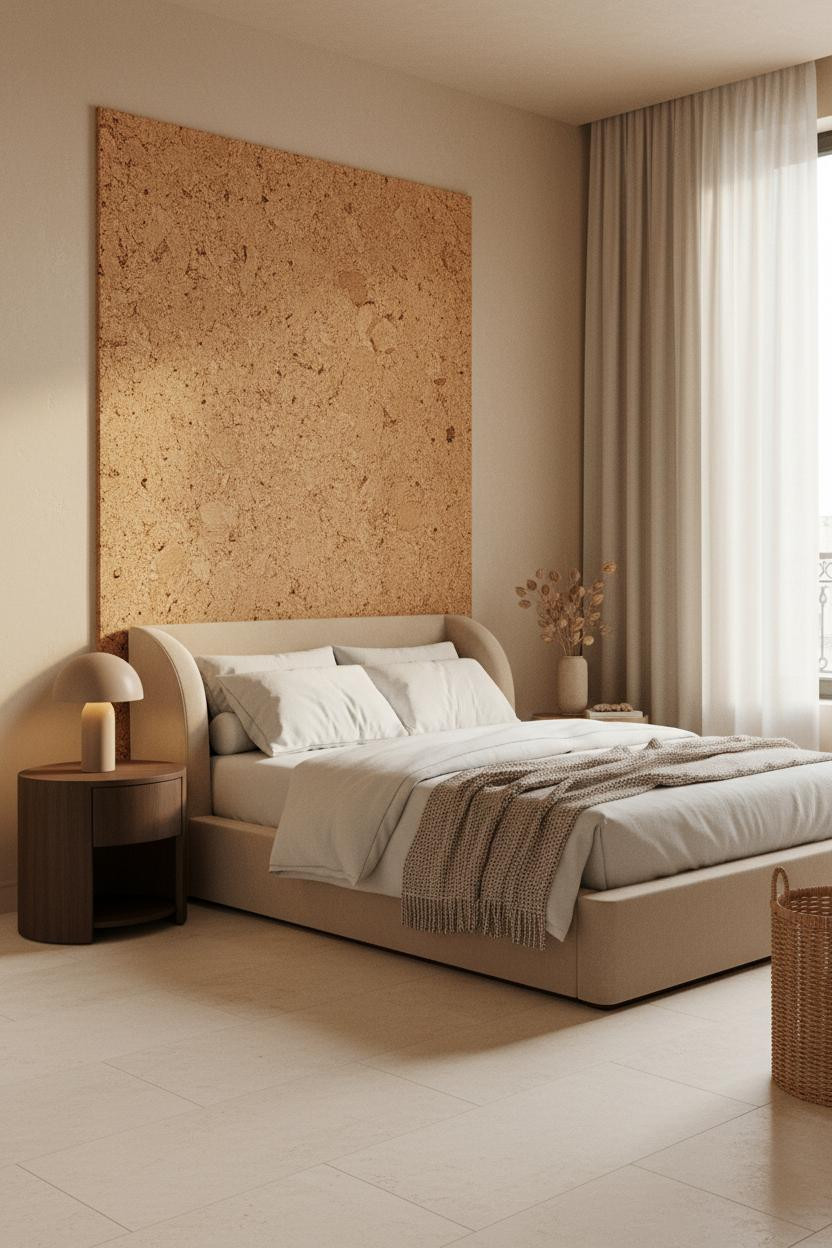
Cork is one of those materials that looks way more considered than it costs to use.
Why it works: A full-height cork panel behind the bed absorbs warm lamplight differently than plaster or paint, giving off that amber, almost-glowing quality that makes a room feel private without needing heavy curtains or dark walls.
Steal this move: Pair the cork with a low-profile frame like the Cassis and an Iris Nightstand to keep the eye moving upward along the texture instead of getting stuck at furniture height.
Why a Curved Plaster Alcove Beats Any Headboard
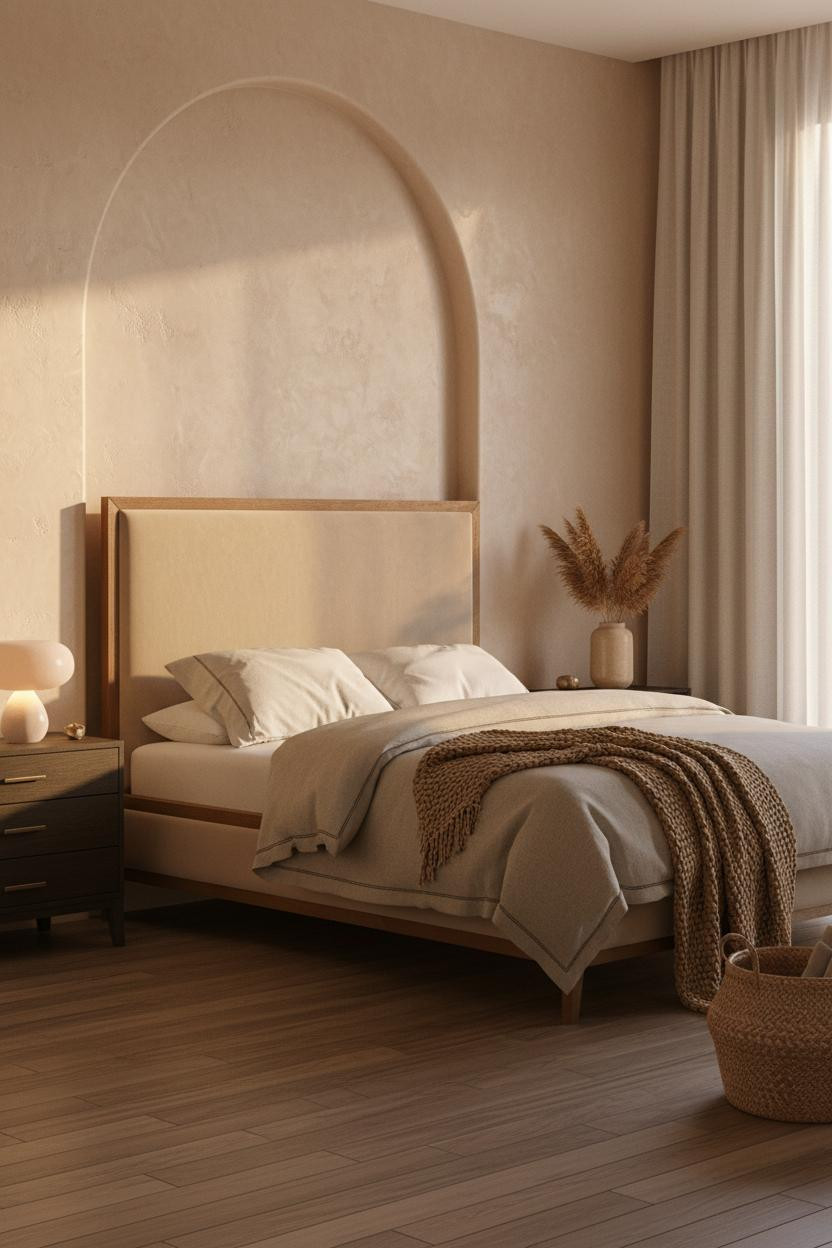

A recessed plaster arch behind the bed does something a headboard never can: it makes the whole wall feel architectural.
Design logic: A sand beige hand-troweled plaster alcove with a softly arched top pools shadow in its interior curve, which frames the bed without adding any furniture bulk or visual noise at all.
Try this: Keep the raw walnut floor unsealed and the bedding undyed so the warm mineral plaster stays the dominant tone, like it does here with the Calais frame anchoring the base.
Sage Clay Plaster in a Small Bedroom Sounds Like a Risk. It Isn’t.
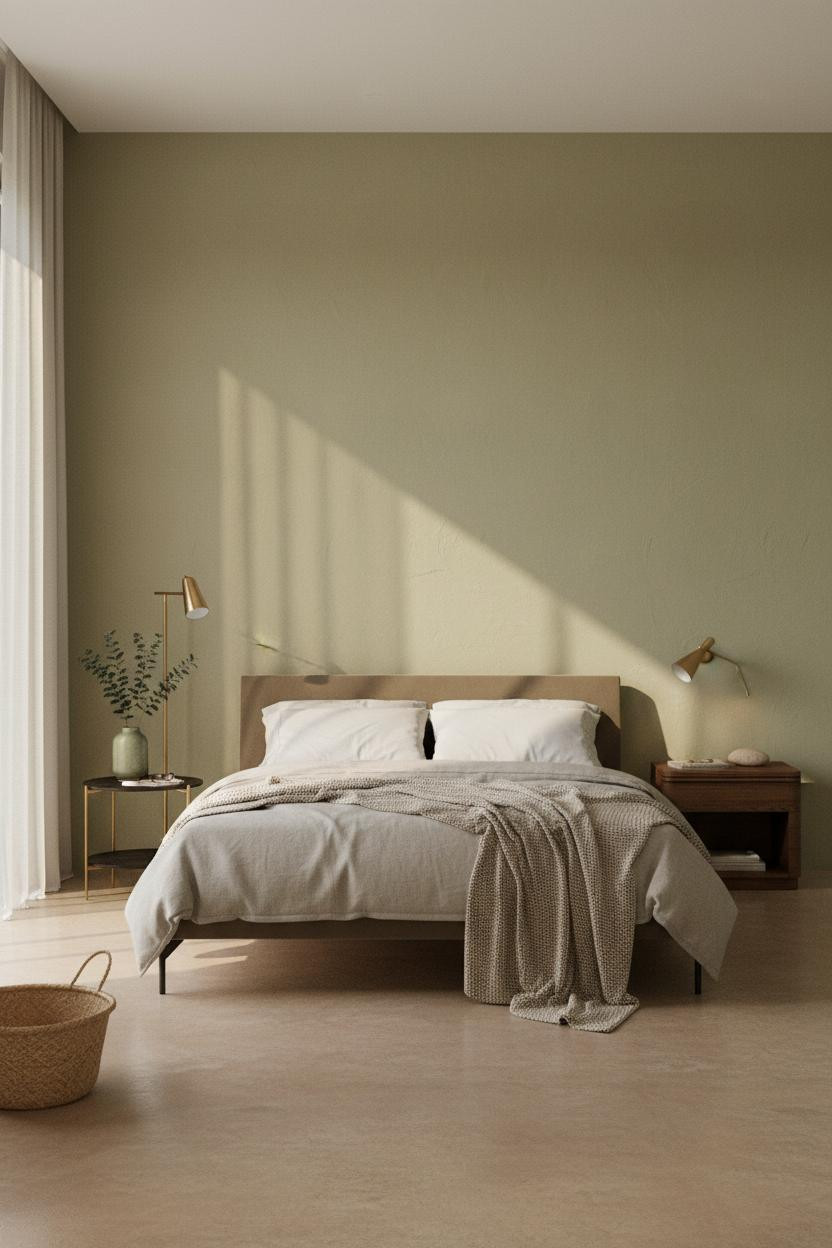

Warm sage clay plaster is having a moment, and honestly it deserves it.
Why it feels expensive: A smooth sage clay accent wall diffuses pale gold morning light across its surface, making the room feel bigger and more layered than flat paint ever could at the same color value.
Works best if you balance the cool-leaning sage with warm concrete floors and undyed linen, letting the Copenhagen bed frame and a Calan Nightstand in warm wood hold the temperature together.
Start With the Arch. Everything Else Falls Into Place.
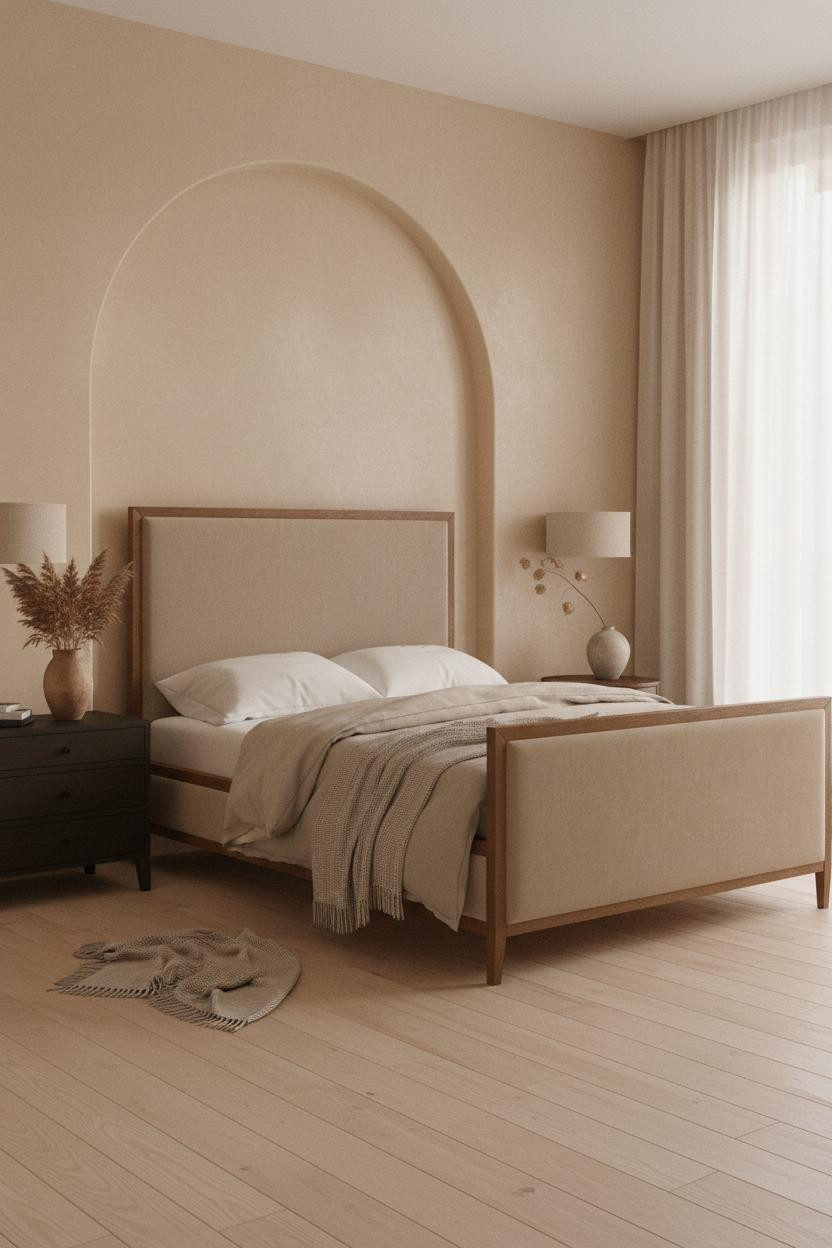
Rooms built around a curved plaster arch have a calm that squared-off rooms never quite reach.
What gives it depth: A warm sand beige arched plaster niche, built with a smooth matte mineral finish and no sheen, catches diffused north light in its curve and creates depth that makes the wall look three-dimensional rather than flat.
What cheapens the look: Adding too many patterns near a plaster arch kills the softness. Keep the bedding plain, the Calais frame low, and let the arch do the talking.
The Terracotta Tile Floor That Changes the Entire Mood
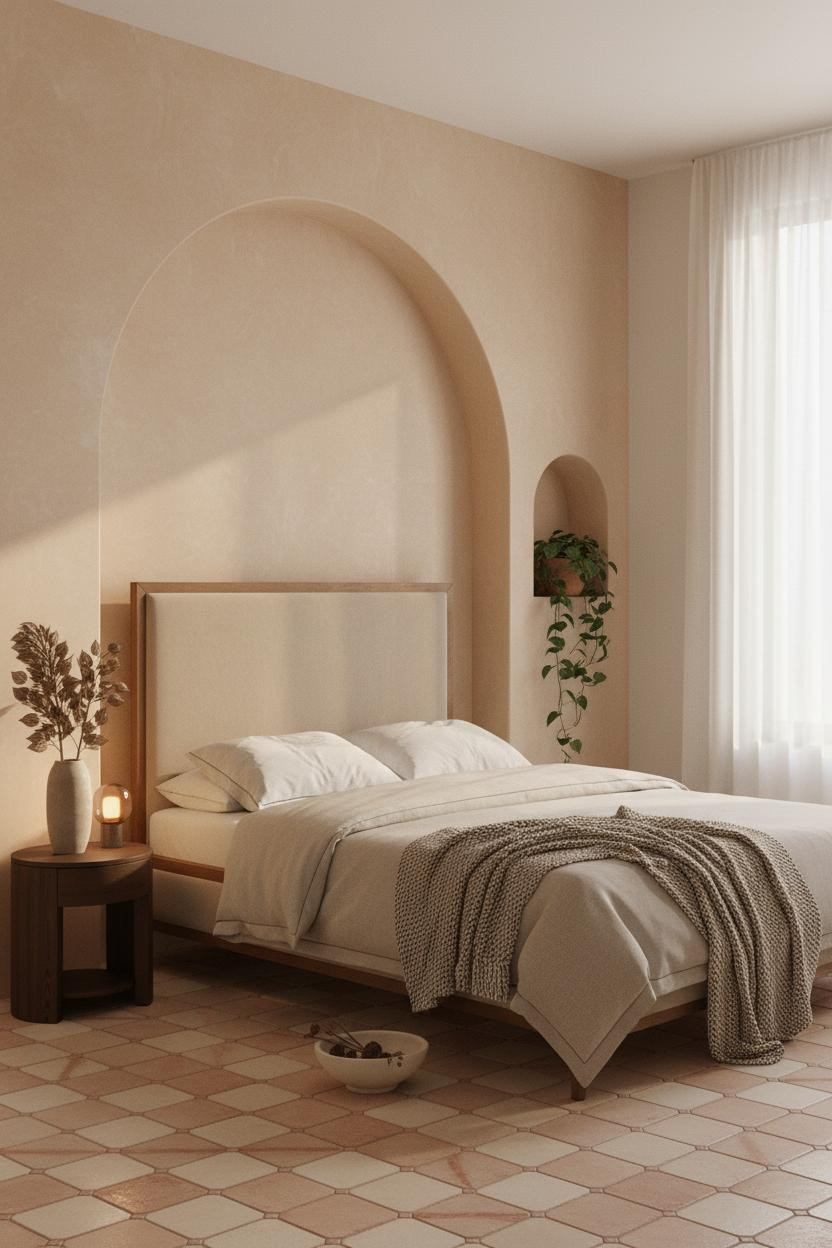
Most people spend all their time thinking about the walls and forget the floor entirely. Big mistake.
What creates the mood: Pale terracotta encaustic cement tile in a rust-and-cream geometric pattern grounds the whole palette at foot level, so the warm sand plaster above it reads as light and airy rather than heavy.
The easy win: If you can’t do encaustic tile throughout, even a large terracotta-toned area rug under the Calais bed achieves the same warm anchor effect for a fraction of the cost.
Camel Limewash Walls: The Texture That Does All the Work
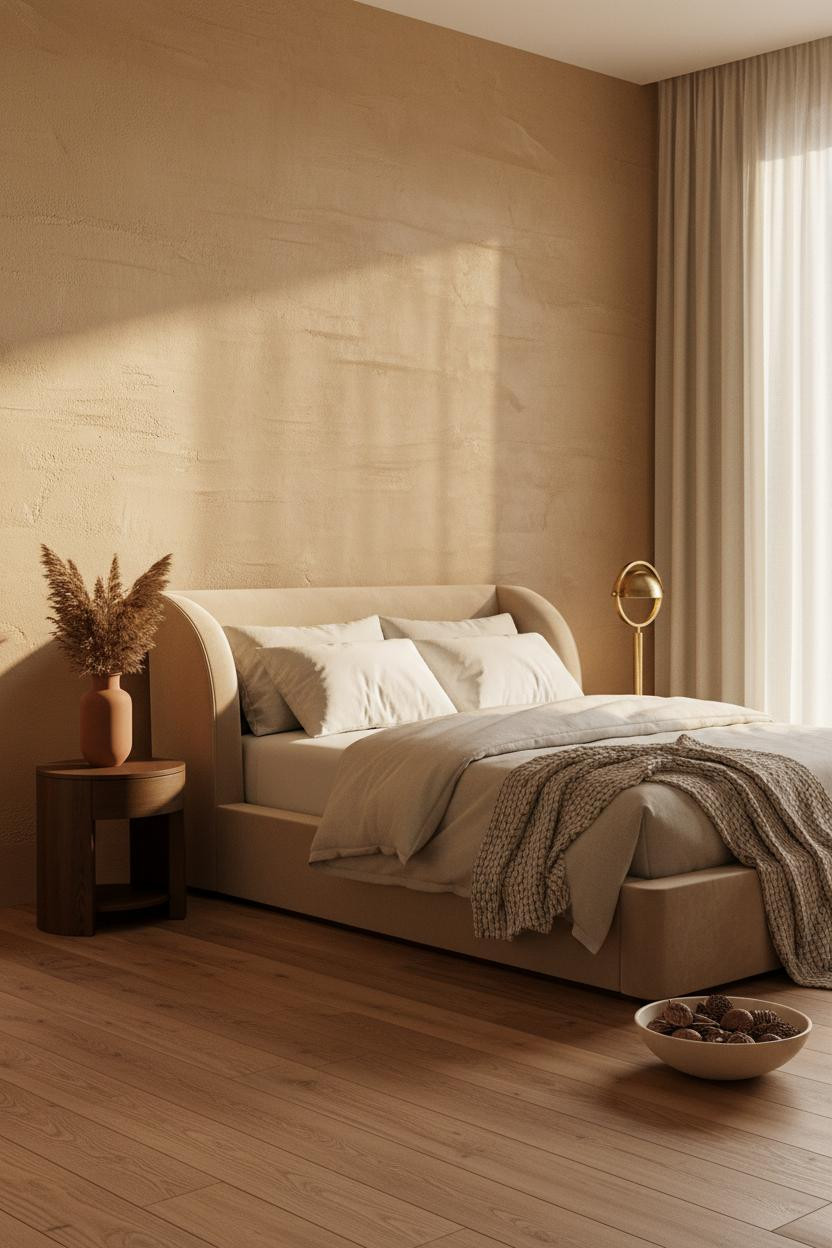
This is what a warm bedroom actually looks like when it’s done with restraint instead of accessories.
Why the materials matter: Camel limewash plaster with visible hand-applied horizontal brush strokes catches lateral morning light differently across each pass, giving the wall a golden tonal depth that flat paint at the same color simply can’t replicate.
Pro move: Place a warm oiled walnut floor underneath the Cassis frame to echo the honey tones in the limewash and keep the whole room in the same amber frequency. You can also find more ideas on how to style a platform bed for modern decor without overcomplicating the palette.
Layer These 3 Textures for an Instantly Warmer Bedroom
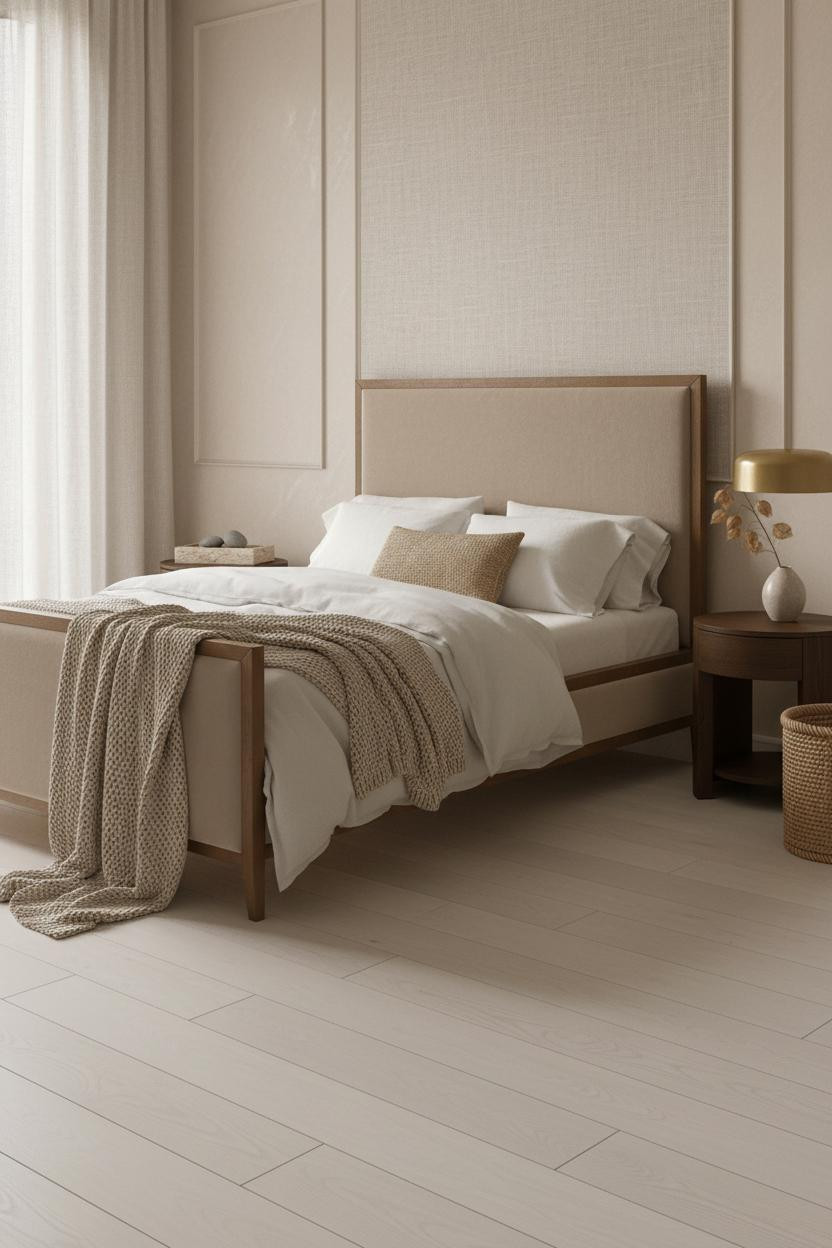
Raw linen, woven jute, and waffle-knit wool. Three textures, all in the same warm sand range, and suddenly the room feels complete.
Why it holds together: A raw linen-wrapped wall panel behind the bed, framed by hand-troweled sand plaster, gives the room two surfaces with completely different tactile qualities but the same pale warm tone, so the contrast is felt rather than seen.
What to borrow: That woven jute accent pillow against the euro shams is a small move that adds organic texture at eye level without making the bed look decorated. Pair it with a low-profile Calais frame and keep bedding plain.
Sandy Ochre Plaster and Terracotta Tile: A Provençal Combination That Ages Beautifully
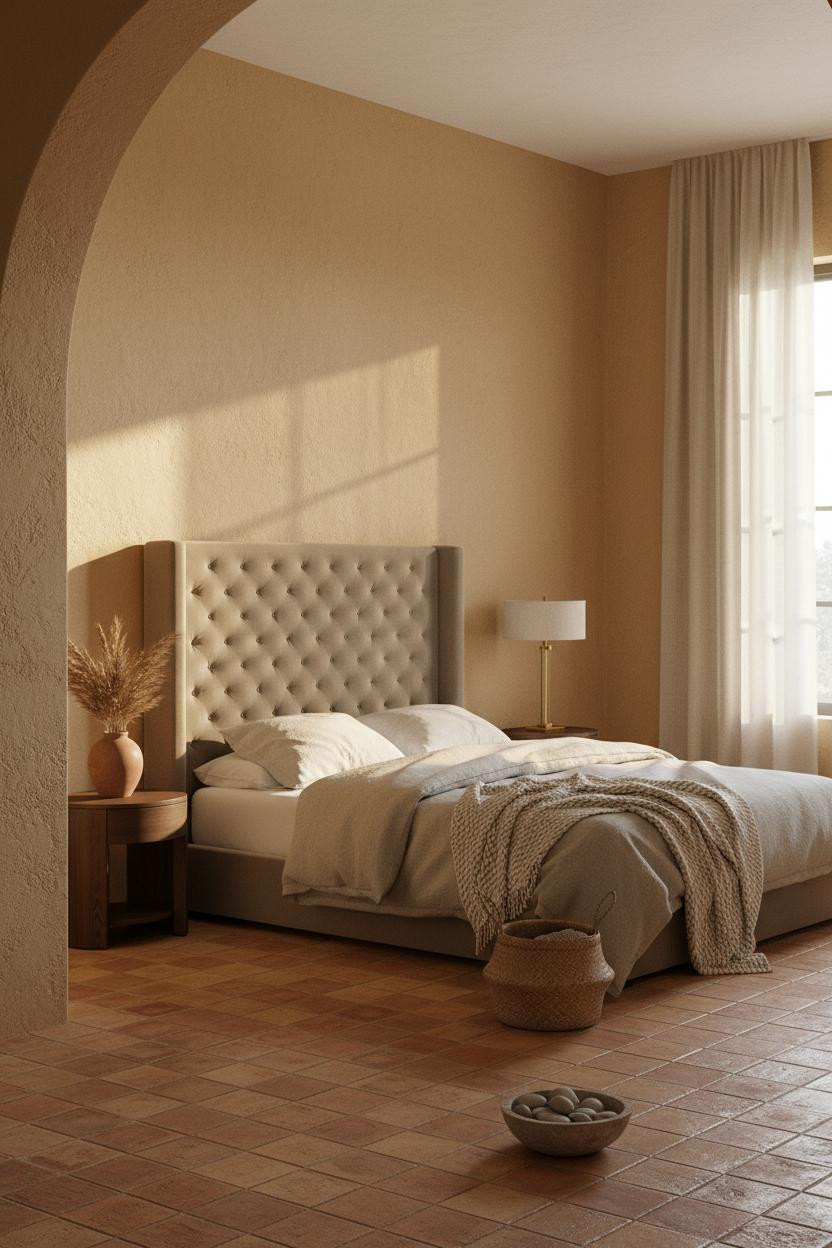

I’ve seen this combination copied dozens of times and it still works every single time.
Why it feels intentional: Sandy ochre hand-troweled plaster with an arched form above aged unglazed terracotta tile creates a material stack where every surface is matte, organic, and warm, so the room reads as unified rather than assembled.
The detail to keep: The cream wool throw half-slipped off the bed corner and touching the terracotta floor looks effortless, but it’s doing real work, softening the hard tile line so the room doesn’t feel cold at the base. The Amalfi bed frame earns its place here too.
A Raw Stone Wall Behind the Bed That Looks Custom Without Being Complicated
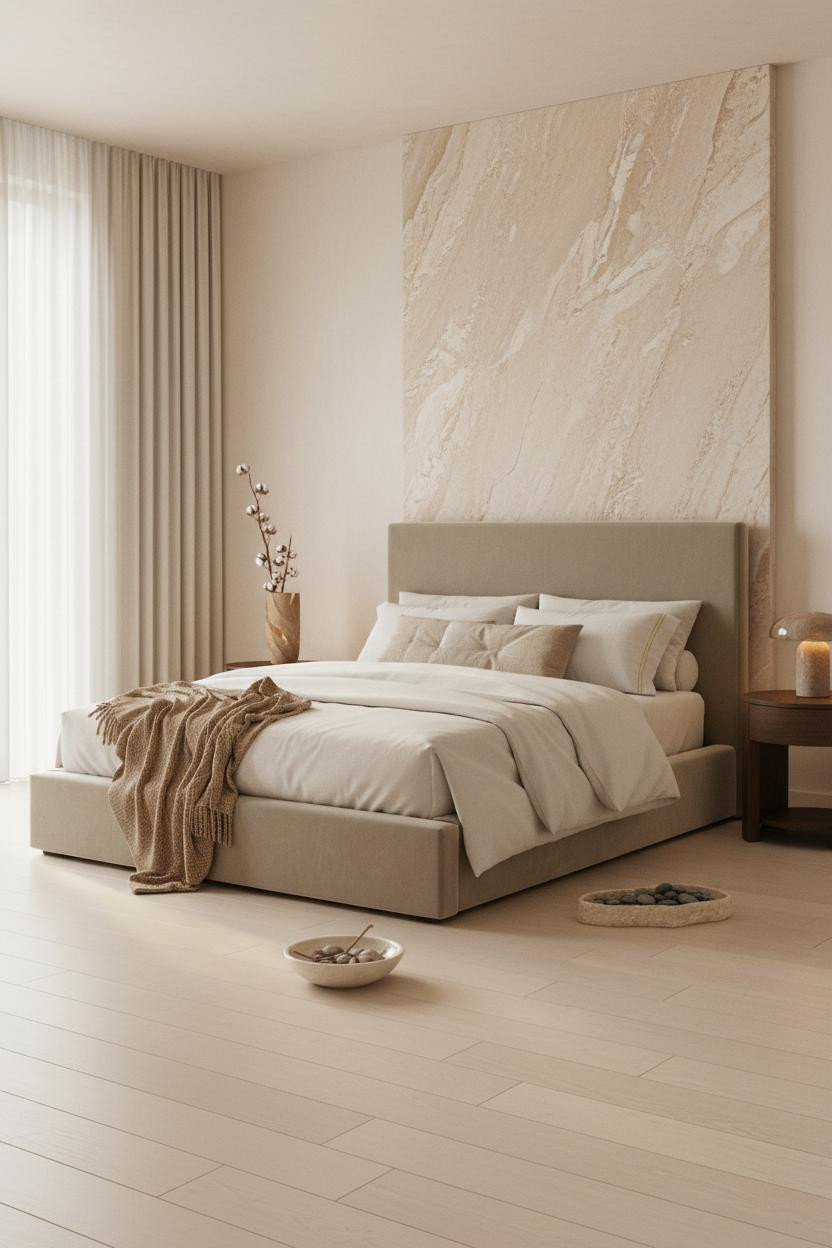
Under 12m2 and it still reads like a proper alpine retreat. The raw stone does that.
What gives it presence: A full-height raw stone slab in warm sand-beige with irregular natural veining and a matte mineral surface creates maximum contrast against undyed linen bedding, making the bed look intentionally framed rather than just placed against a wall.
Avoid this mistake: Don’t add a second heavy material on the floor too. The pale blonde raw oak here keeps the room light enough that the stone wall stays the feature without making the whole space feel like a cave. The Halle frame works well in this role.
Rough-Hewn Ochre Limestone: The Wall Finish That Never Goes Stale
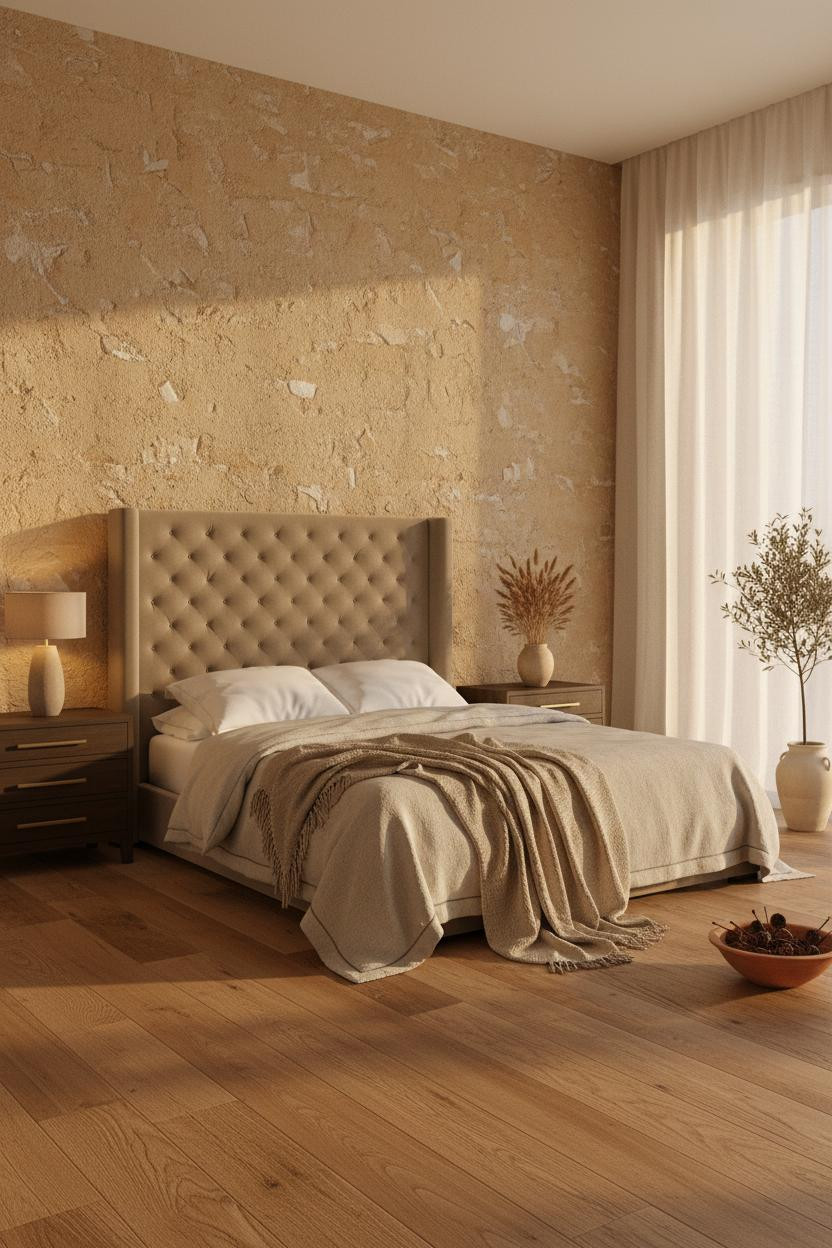
Reclaimed French oak on the floor, rough ochre limestone on the walls. The room has a texture before you add a single piece of furniture.
The real strength: Deeply matte rough-hewn limestone plaster with visible aggregate has an organic tonal variation that shifts across the surface as the light moves, so the wall looks genuinely different at 8am, noon, and dusk.
The finishing layer: Dried wheat stalks in a matte sand ceramic vessel on the Madeleine Nightstand bridges the wheat tones in the limestone and keeps the organic modern theme running from floor to ceiling. Also worth checking our guide to the best organic mattresses for natural bedrooms if you want the whole room to match.
Floor-to-Ceiling Linen Panels as a Wall. I Tried It. Here’s What Happened.
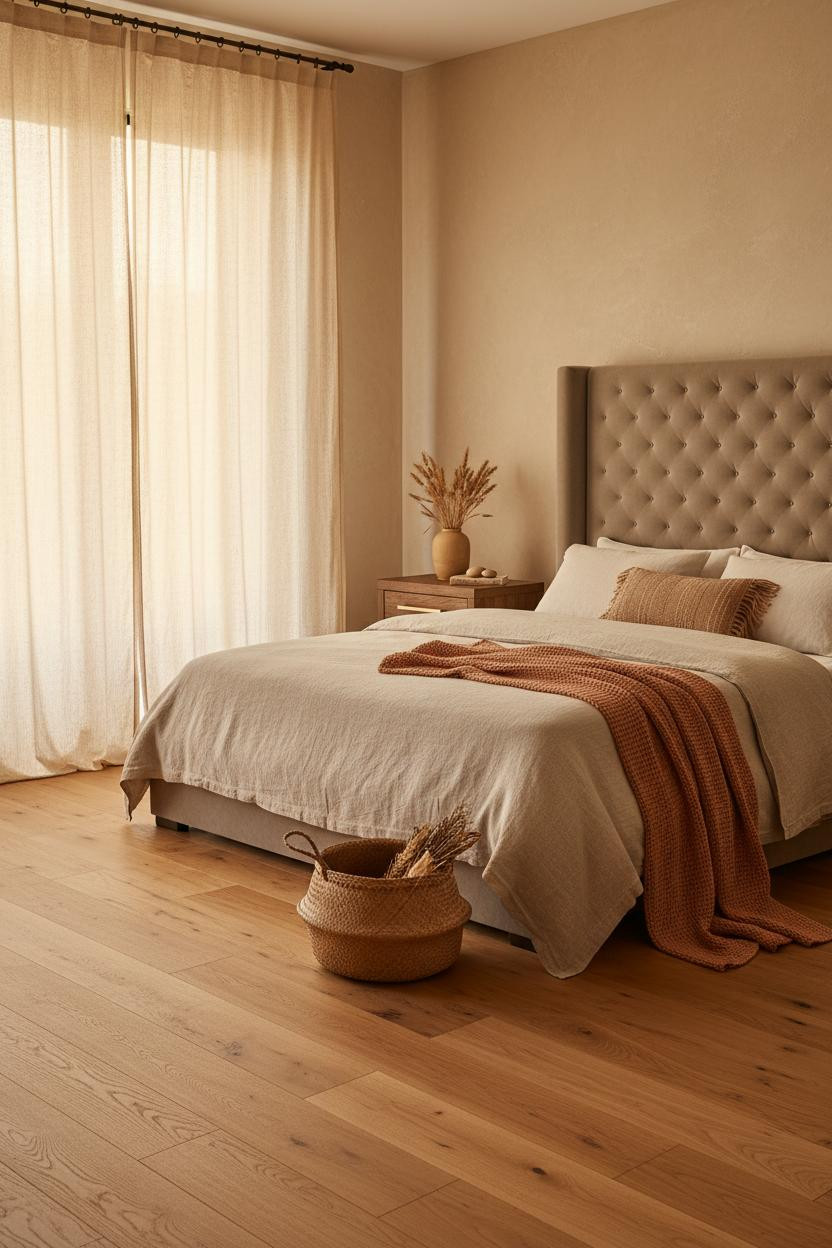
Replacing a full wall with floor-to-ceiling undyed raw linen panels sounds extreme. It softens everything around it.
What softens the room: A six-foot-wide raw ivory linen curtain hung on a simple iron rod diffuses lateral morning light across the ochre plaster opposite it, turning a hard architectural surface into something that looks warm and almost glowing.
Where to start: Hang the linen panels first, before you buy furniture. The light they create will tell you exactly what tone the Amalfi bed frame and Madeleine Nightstand need to be.
Skip the Accent Wall. Use a Ceiling Beam Instead.
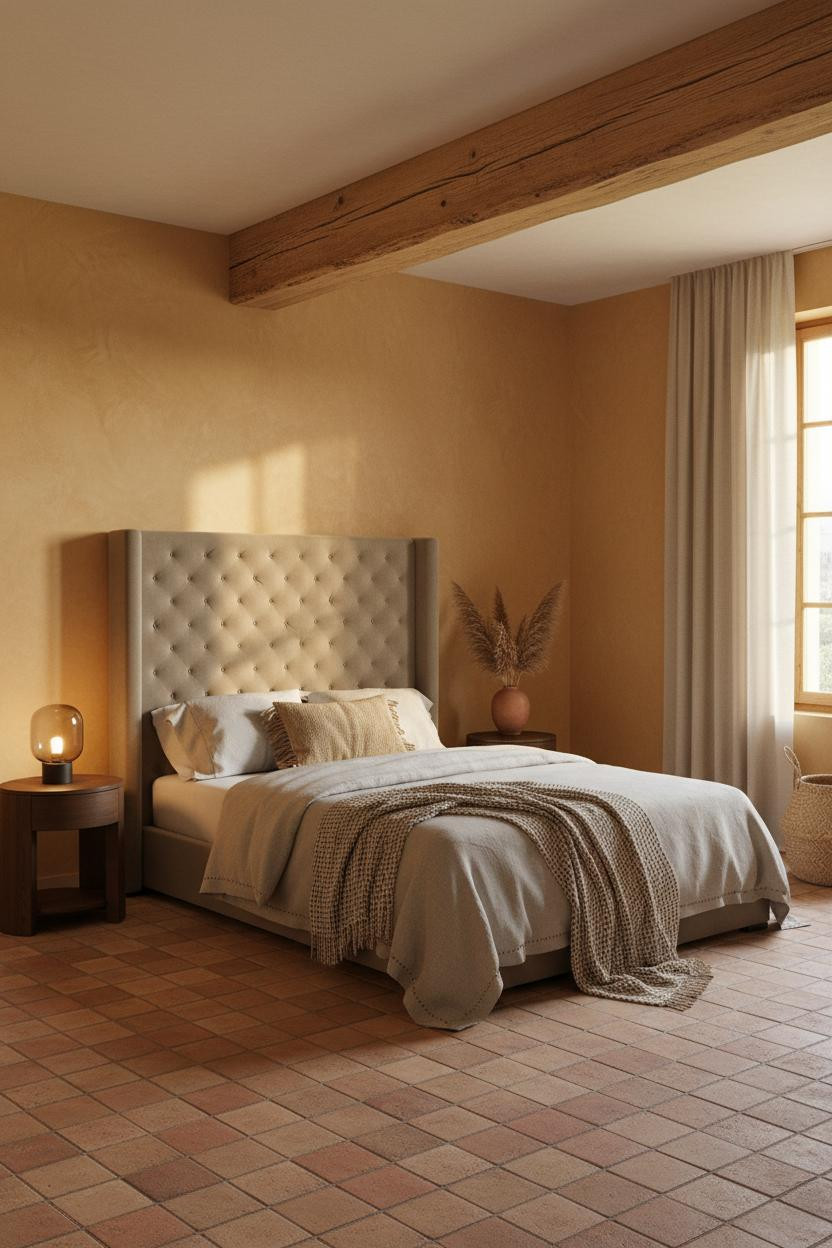
An aged rough-hewn oak ceiling beam spanning the full width above the bed is one of those architectural gestures that changes a room’s character without touching a single wall.
What carries the look: A twelve-inch-deep honey-toned oak beam catches lateral light from the linen panels below and introduces a warm linear element that breaks up the vertical plaster surface without competing with the ochre limewash walls behind the bed.
What not to do: Don’t paint the beam. The dry visible wood grain at that warm honey tone is doing all the work, and white or grey paint strips the material warmth the whole room depends on.
Mineral Ochre Limewash: The One Wall Treatment That Gets Better With Age
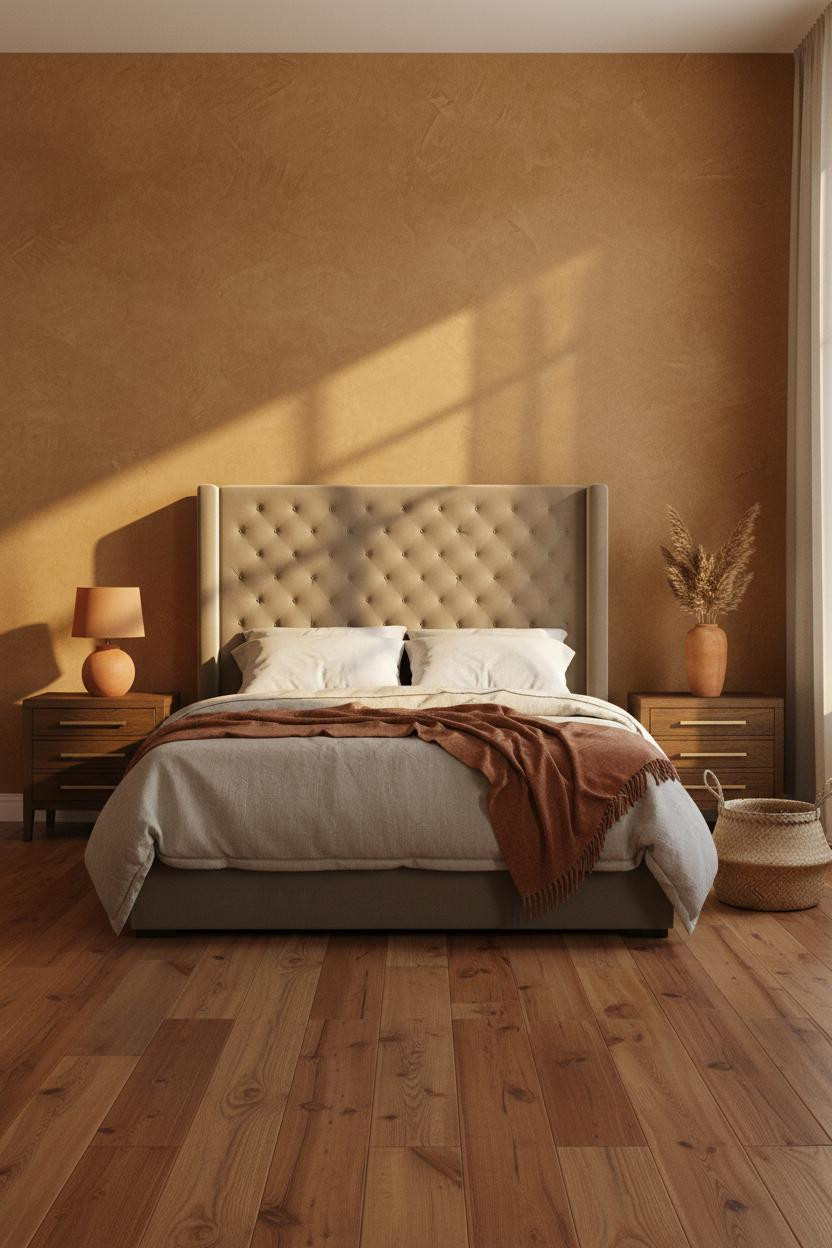
Mineral ochre limewash is the organic modern bedroom material I’d recommend to anyone who asks me where to start.
Why it looks custom: Hand-applied trowel strokes in a golden amber ochre shift subtly across an eight-foot wall span as daylight moves, giving the surface a depth and tonal variation that you simply cannot get from a roller and a can of wall paint.
One smart swap: Pair the ochre limewash with a rust chunky wool throw diagonally draped over the bed corner, like this one styled next to the Amalfi frame, to pull the earthier undertones in the wall into the bedding layer.
Warm Ochre Walls Plus Reclaimed Chestnut: A Combination That Earns Its Place
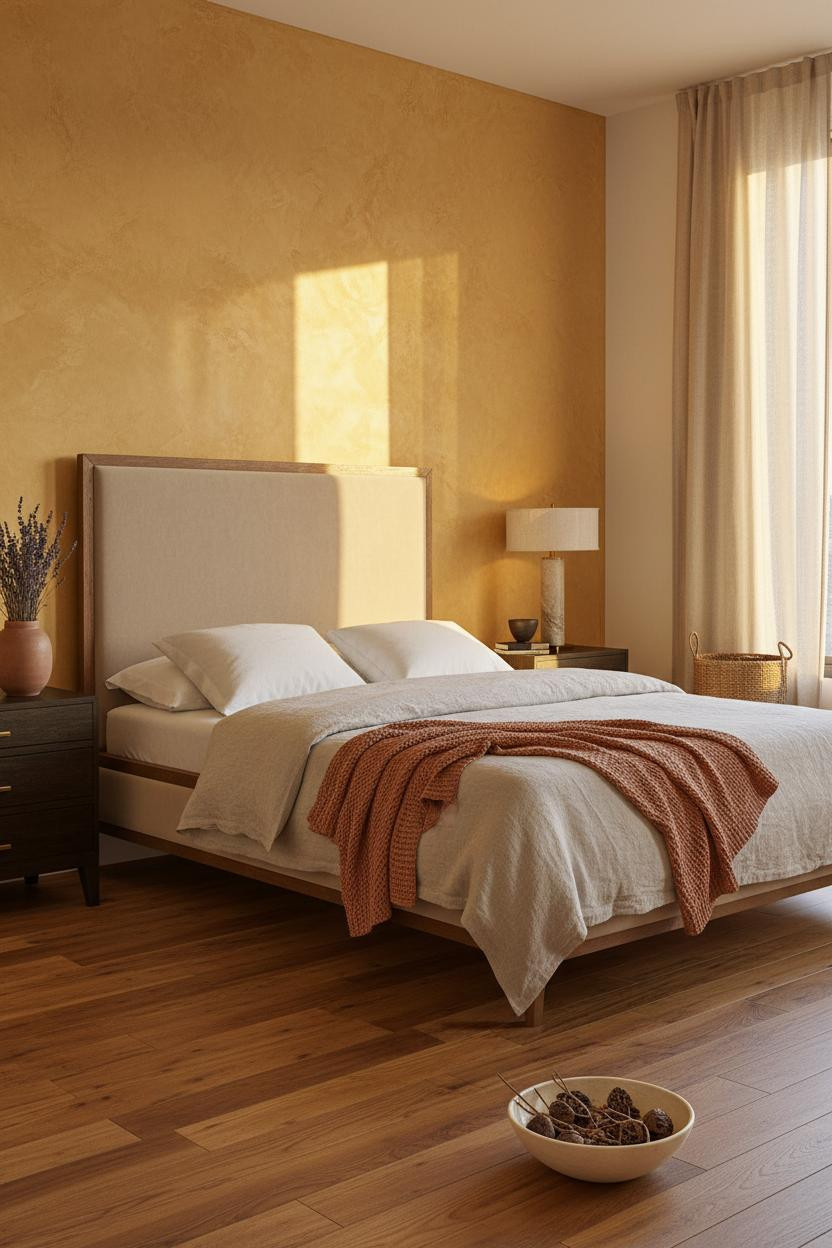
Two organic materials. Neither one trying too hard. That’s the whole room.
Why it feels balanced: Warm ochre limewash plaster with hand-swept brush strokes on the walls and deeply grained amber-brown reclaimed chestnut flooring share the same warm undertone, so the room feels unified from floor to ceiling without any forced coordination.
The smarter choice: A terracotta waffle-knit throw on the Calais bed beats a plain cream one in this room because it pulls the rust tones from the plaster into the bedding layer without adding any new colors. You can see similar thinking in these guest bedroom ideas with modern aesthetics too.
The Sage Greige Plaster Room That Feels Calm at Any Hour
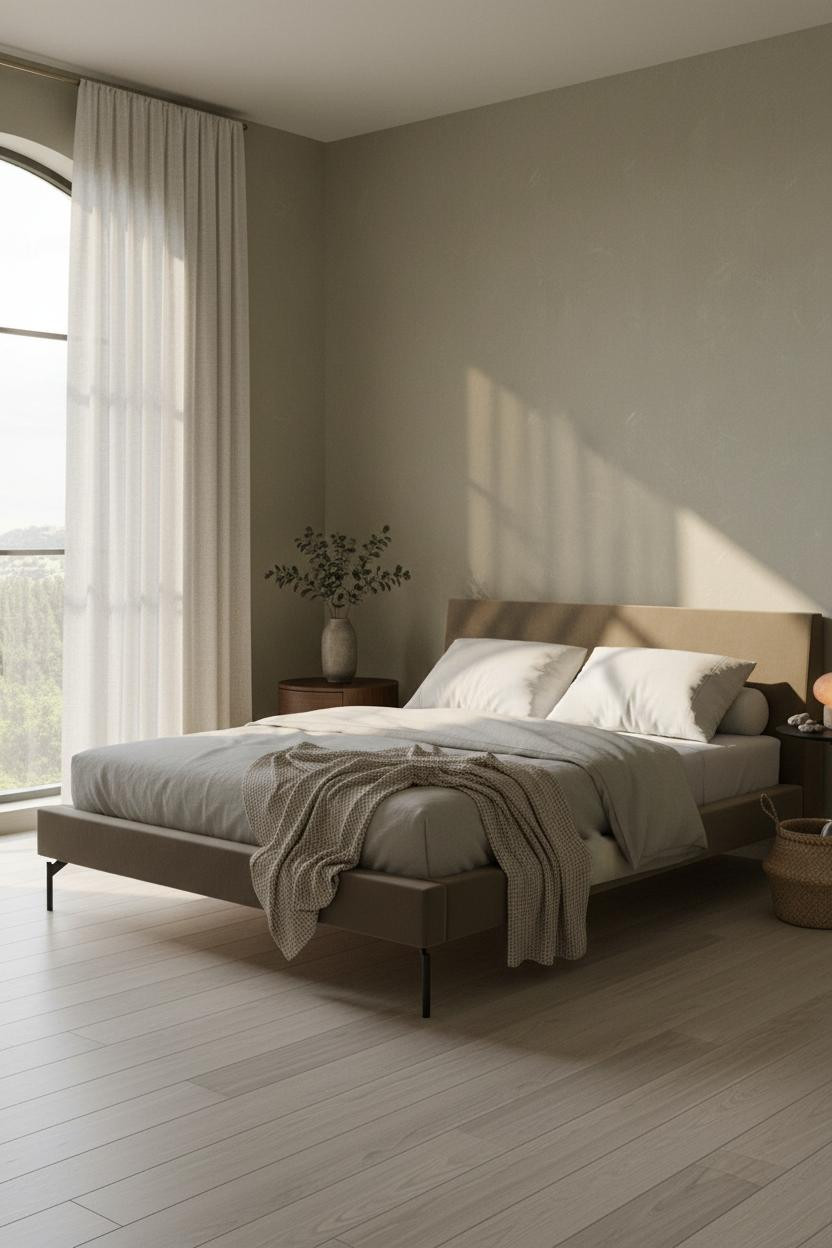
There’s a version of sage that reads cold and a version that reads warm. Sage greige matte plaster is the warm one.
What makes this one different: Smooth mineral plaster in a warm sage greige with no sheen, flanked by a tall arched window with floor-length undyed linen sheers pooling at the base, creates a wall surface where the material and the light feel inseparable from each other.
Ideal if you want a bedroom that works year-round without redecorating: pale ash whitewashed floors keep it airy in summer, and the warm sage greige plaster holds enough amber depth to feel cozy in winter. The Copenhagen frame is a natural fit here. Good bamboo bed sheets work particularly well in rooms with this kind of soft mineral palette too.
Clay Taupe Limewash and Raw Oak: The California Desert Combination Everyone Wants
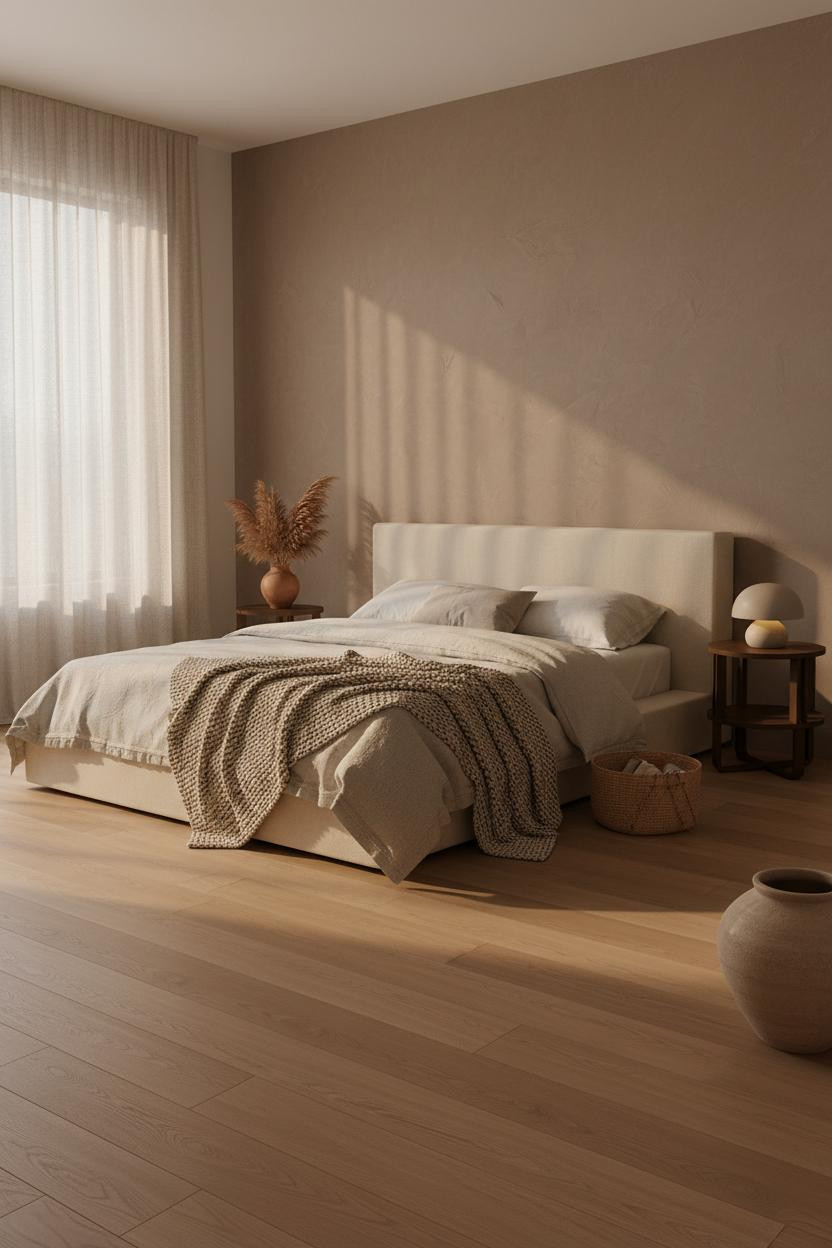
Warm clay taupe limewash with feathered handcrafted depth is the closest thing to a universally flattering bedroom wall color I’ve found.
What keeps it elevated: Matte rough limewash plaster in clay taupe, paired with honey-toned wide-plank raw oak flooring, keeps all surfaces warm and organic without any one element competing for attention, so the Crete bed and Acadia Nightstand feel like they always belonged there.
If you change one thing: Swap synthetic bedding for undyed linen with a raw hem. In a room built on natural materials like clay and oak, poly-blend duvet covers are the one detail that breaks the whole illusion instantly. For cozy bedrooms that need to work hard, our picks for best bed styles for cozy bedroom spaces are worth a look too.
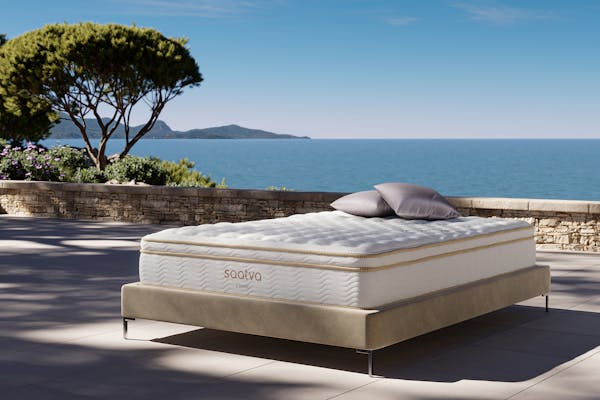
Our #1 Pick
Saatva Classic Mattress
America’s best-selling online luxury innerspring. 365-night trial, lifetime warranty, free white glove delivery.
Shop Saatva Classic
The Foundation Of Every Beautiful Bedroom
Every room on this list is built on materials that feel right before you ever touch the bed. But the bed itself is where the actual quality of your nights gets decided.
Beautiful organic modern bedrooms always start with intention at the surface level. And the most important surface is the one you sleep on. The Saatva Classic pairs a responsive dual-coil support system with a breathable organic cotton cover and a plush Euro pillow top. It’s the kind of mattress that feels like a hotel bed done right, not one that feels like an expensive purchase you’re trying to justify.
Get the walls, the plaster, and the linen right. Then make sure the mattress underneath it all is doing its job every single night.

The rooms people keep coming back to are the ones where every material earns its place. No filler. No trend-chasing. Just warm plaster, honest wood, and linen that softens with every wash. A bedroom feels expensive when every surface feels intentional, not decorated.