
 by
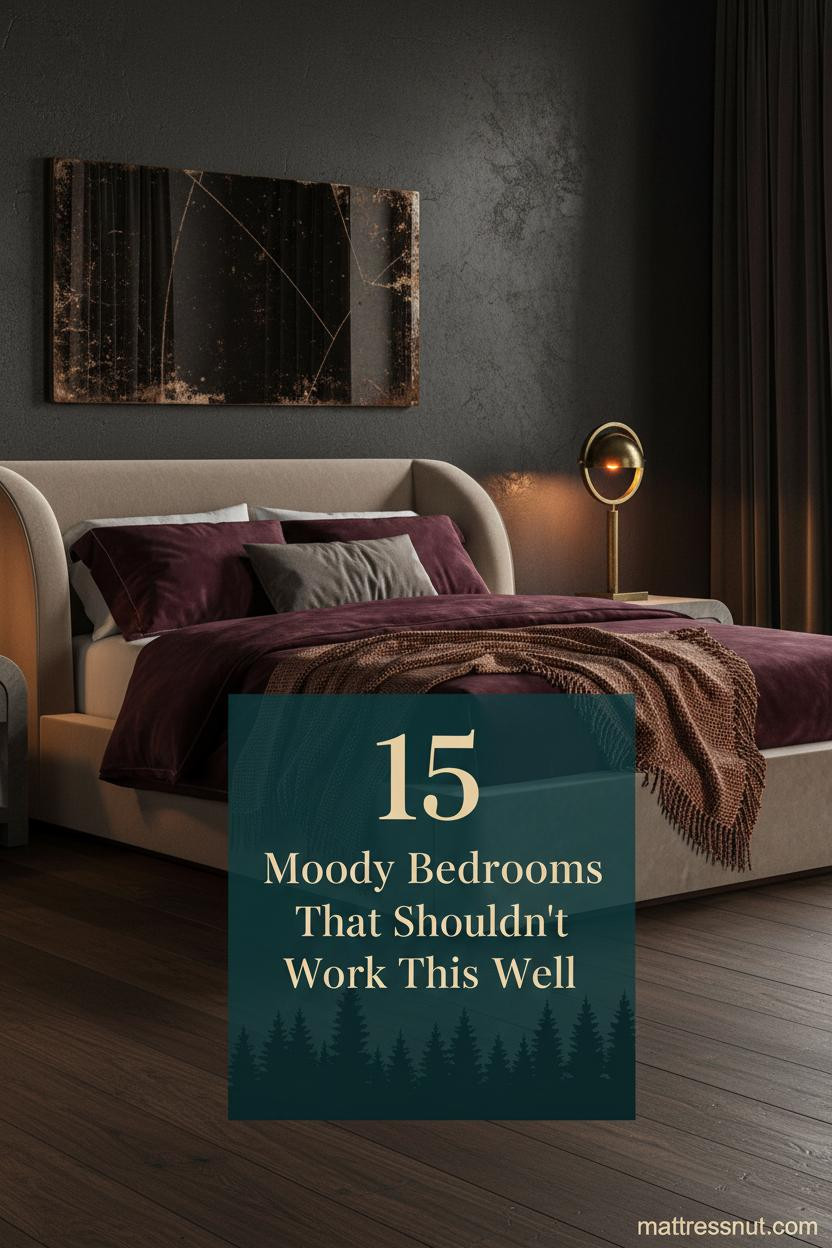
by A romantic moody bedroom is one of those looks that feels impossible to get wrong once you understand the formula: dark walls, warm amber light, and layered textures that make the whole room feel sealed off from the world. I’ve pulled 15 of the best dark moody bedroom ideas doing the rounds right now, and every single one hits differently.
Some lean cottagecore, some go full dark feminine, some sit somewhere between vintage and modern. But they all share the same quality: you’d want to stay in them.
Why This Amber Lamp and Dark Plaster Pairing Just Works
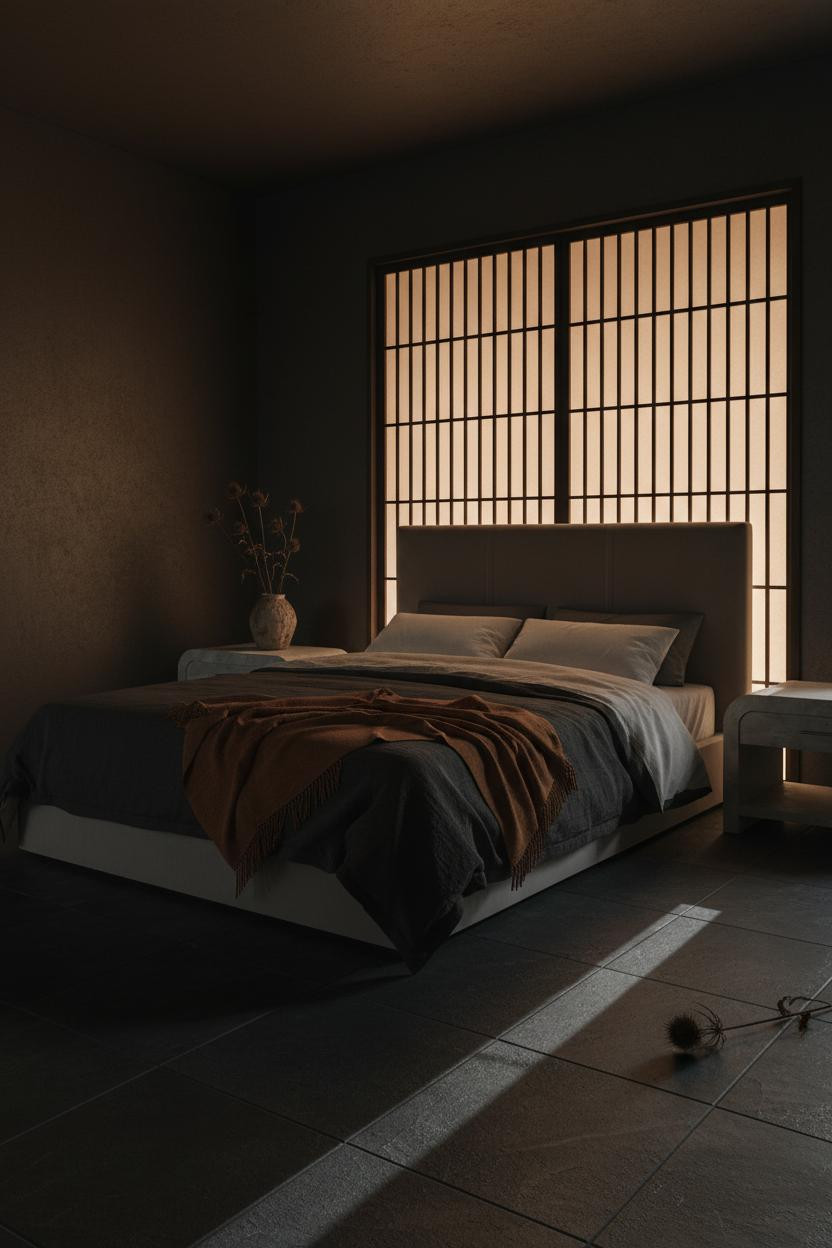

There’s something about a single warm lamp against smoked charcoal clay plaster that makes a room feel like it exists outside of time.
Why it works: The matte mineral plaster surface absorbs rather than reflects the 2400K amber glow, which means the warmth deepens into the wall instead of bouncing back at you.
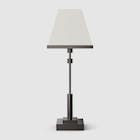
Steal this move: Pair the Regent Lamp with a dark plaster or limewash wall and skip any overhead lighting after 8pm entirely.
Aged Copper Plaster Makes Every Other Wall Finish Feel Boring
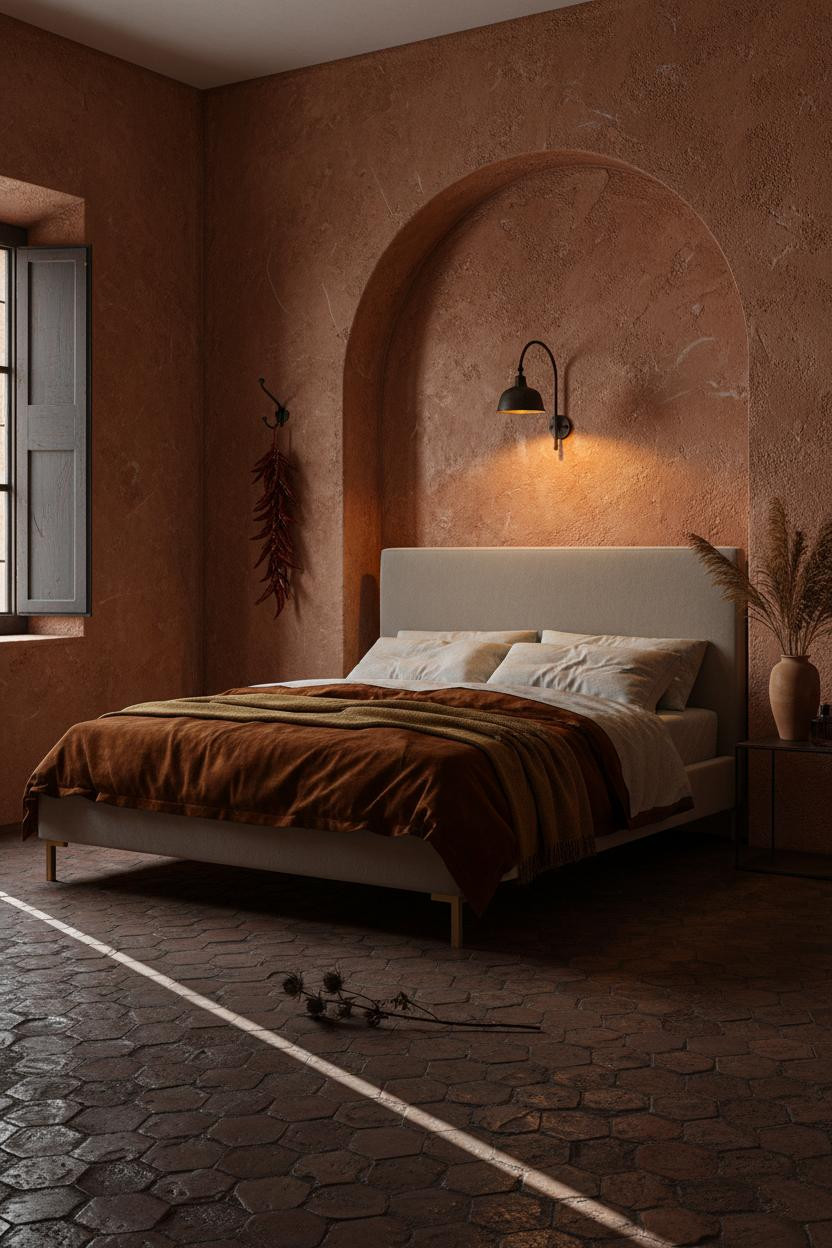

This one pulls you in immediately. The aged copper-rust mineral plaster has a warmth that no paint color can replicate.
Why it feels expensive: Rough porous plaster with visible brushwork variation absorbs lamplight into its terracotta depth rather than sitting flat on the surface like standard paint.
The easy win: A rust-brown velvet duvet against copper plaster is one of the most low-effort, high-impact color pairings in the dark moody bedroom playbook.
The Smoked Plum Boudoir No One Talks About Enough
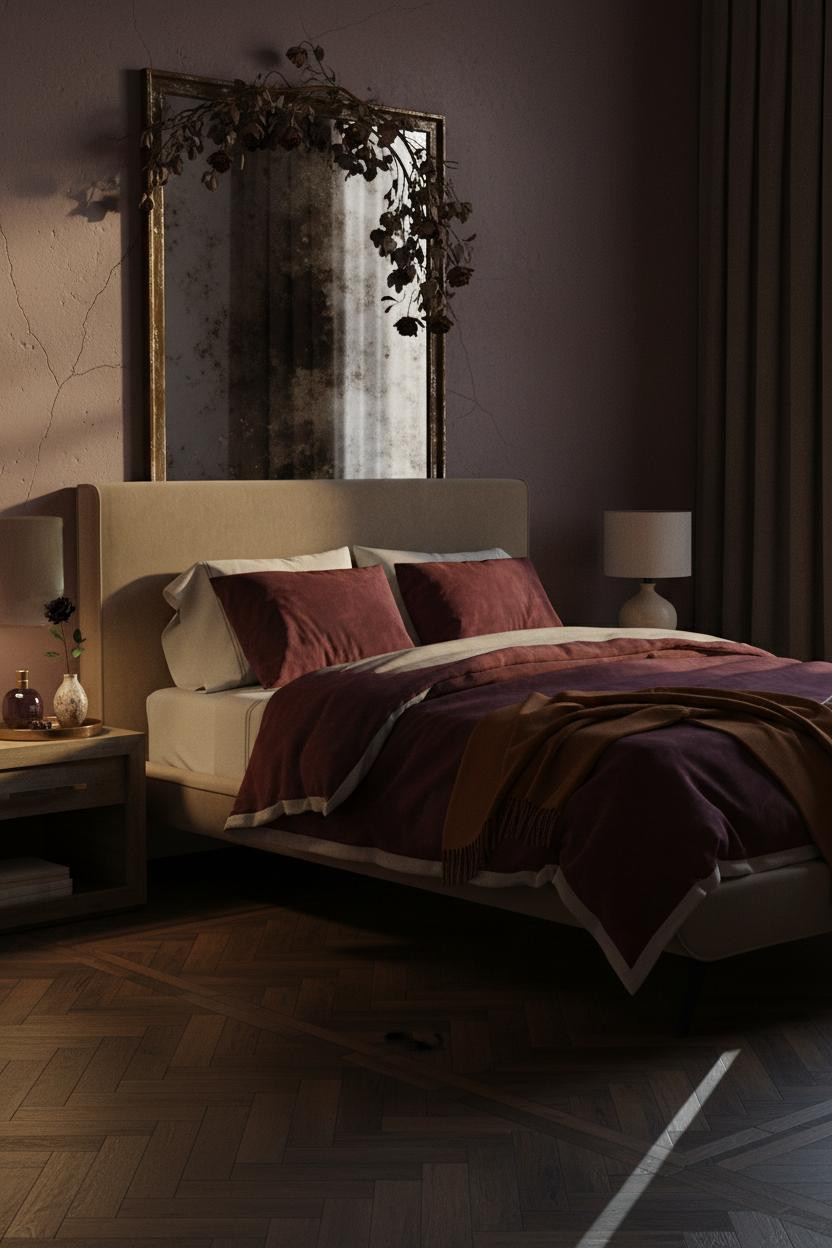

I think smoked plum-mauve plaster might be the most underrated wall color in the dark feminine bedroom world right now.
What creates the mood: An aged bronze mirror with foxed, clouded glass scatters the amber lamplight rather than reflecting it cleanly, which keeps the whole room feeling shadowed and intimate.
What to copy first: Drape a dried botanical garland of dark roses across the upper mirror frame. It costs almost nothing and casts a shadow pattern that no wallpaper can fake.
Skip the Accent Wall. A Deep Limewash Niche Hits Harder
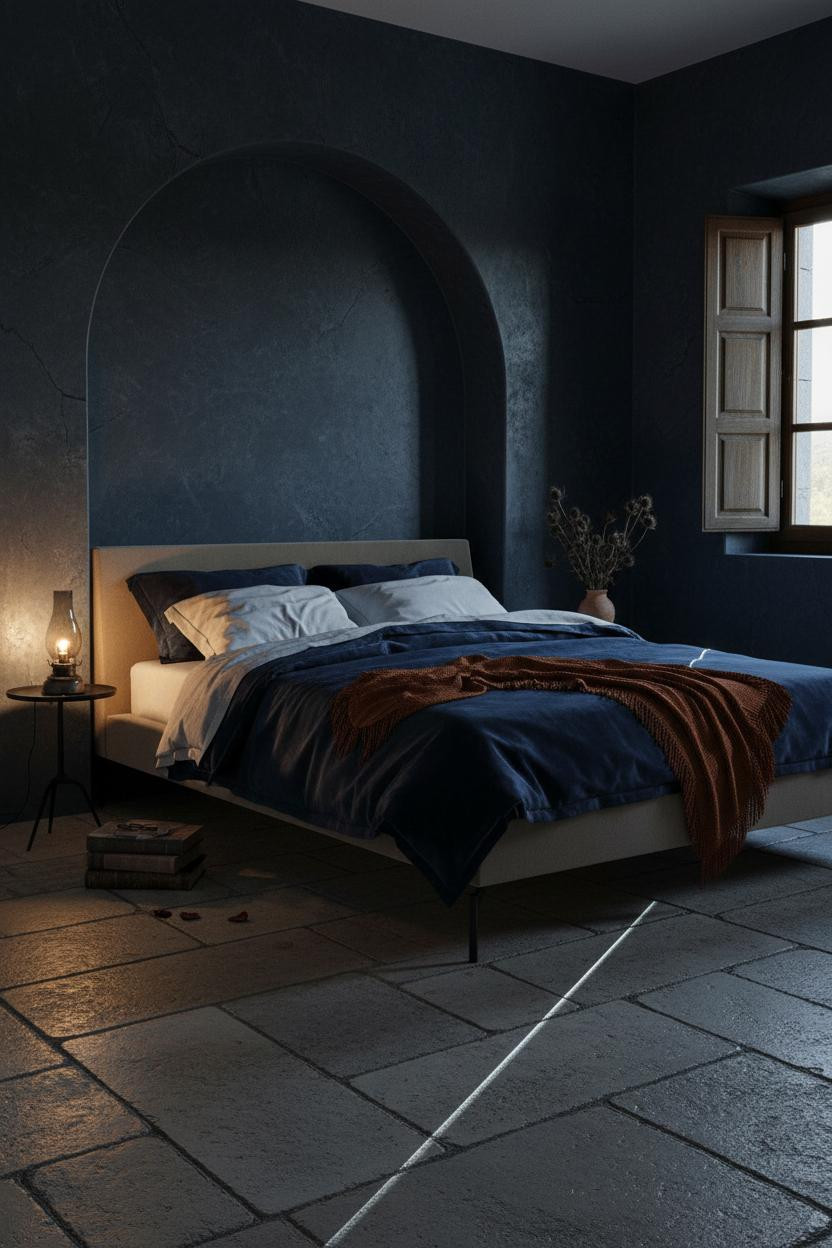

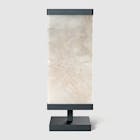
An arched plaster niche in slate blue-black limewash frames the bed like a cave mouth, and it’s one of the most architectural moves you can make in a bedroom without touching the structure.
Why it looks custom: Aged limewash with visible mineral striations absorbs all ambient light into the curved recess, making the shadow inside the niche look permanent and intentional.
Pro move: An antique iron oil lamp like the Nova Lamp casts the kind of warm amber halo that makes a niche like this glow without flooding it.
Teal-Black Limewash Is the Dark Cottagecore Wall Color I Keep Coming Back To
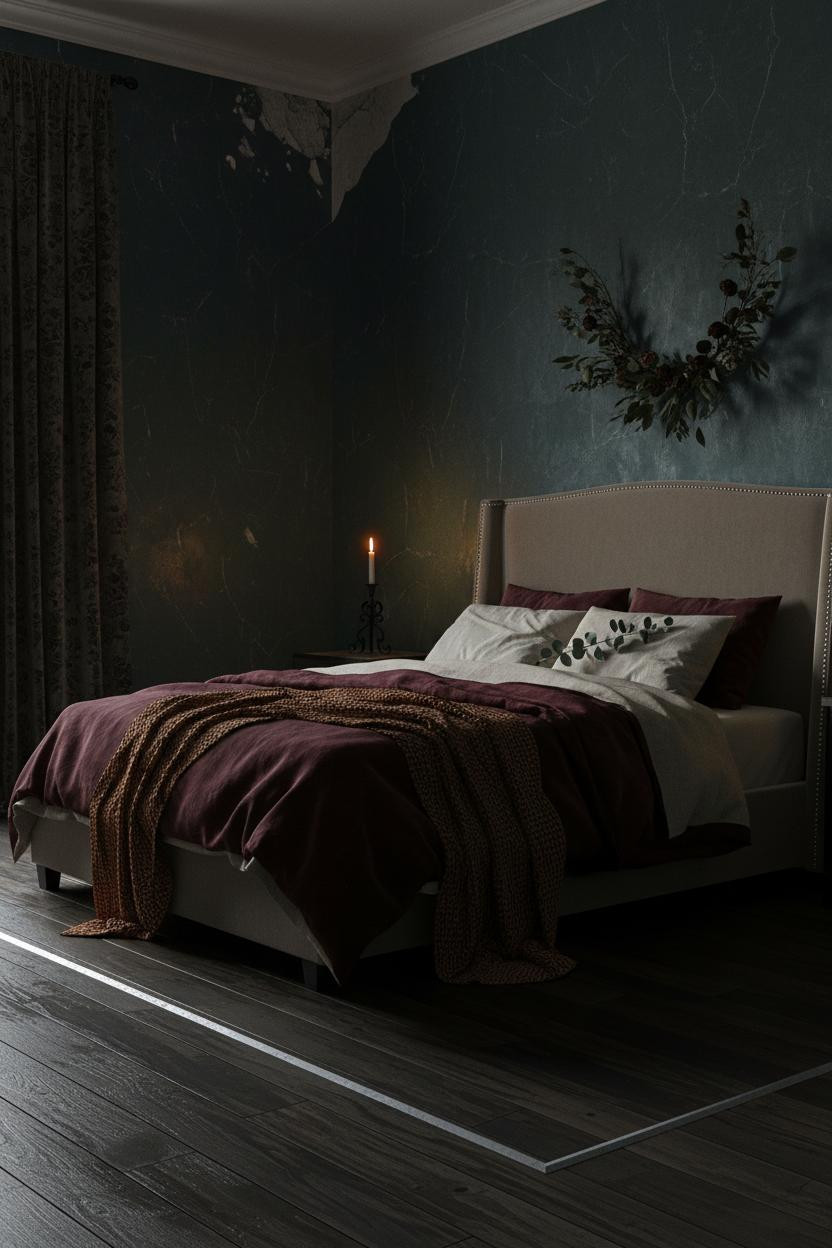
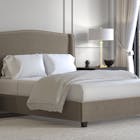
This is the one my feed keeps showing me, and honestly I’m not complaining. Teal-black matte limewash with a crumbling cornice is exactly what dark cottagecore bedroom decorating looks like when it’s done with real conviction.
The real strength: Matte limewash plaster with hairline fissures and visible mineral streaks reads as genuinely aged rather than styled, which is the whole point of this aesthetic.
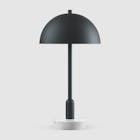
Avoid this mistake: Don’t pair teal-black walls with cool or white light. The Hugo Lamp’s warm iron silhouette and its amber output is what keeps this from feeling cold and gloomy.
Rough Limestone Plus Forest Green Velvet Is Practically a Formula
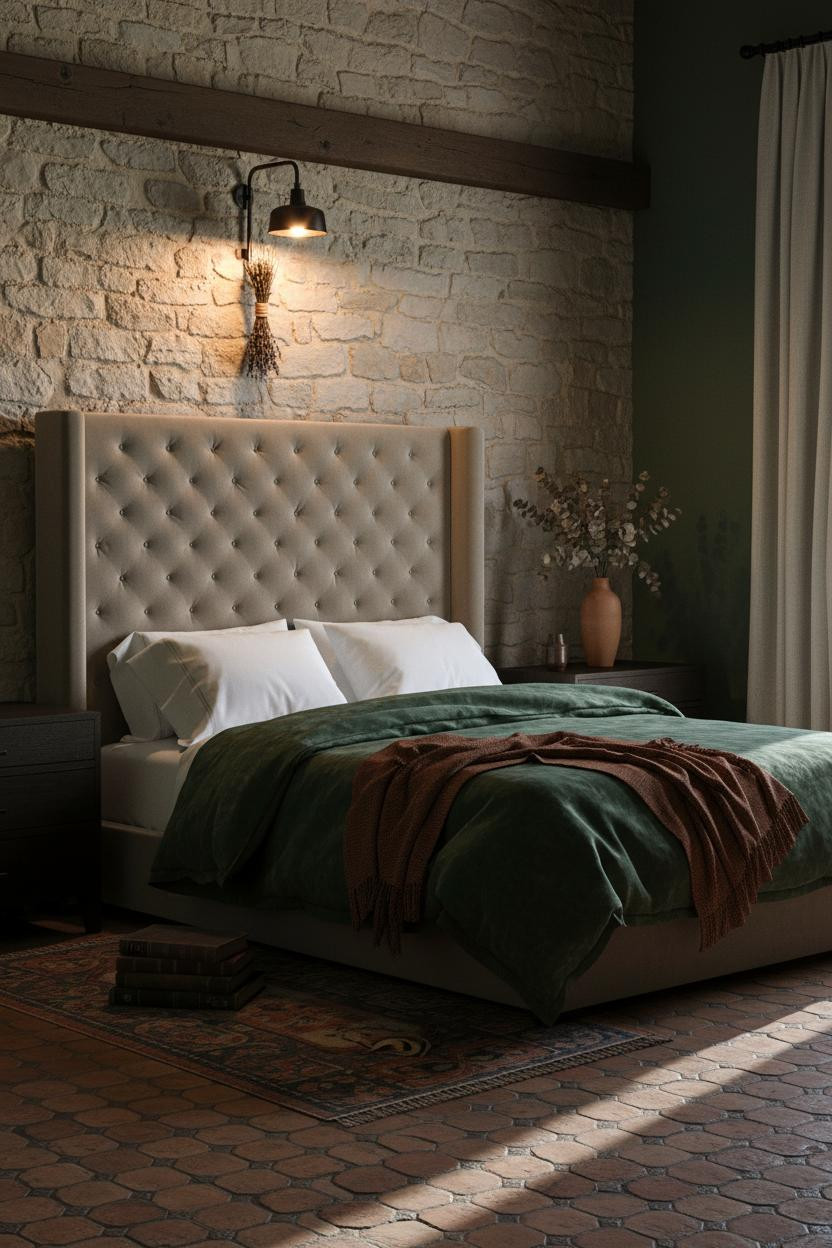

Irregular rough limestone rubble wall behind the bed, forest green velvet duvet, deep rust wool throw. That’s the whole look, and it works every time.
Why the materials matter: The shadow-filled mortar joints in the limestone wall break up the surface just enough that amber lamplight lands differently across the stone at every hour.
The finishing layer: A dried lavender bundle hung from an iron hook above the bed adds vertical interest without touching the wall’s texture (and yes, it smells good, though it doesn’t last as long as you’d hope).
Exposed Brick Never Looked This Dark or This Good
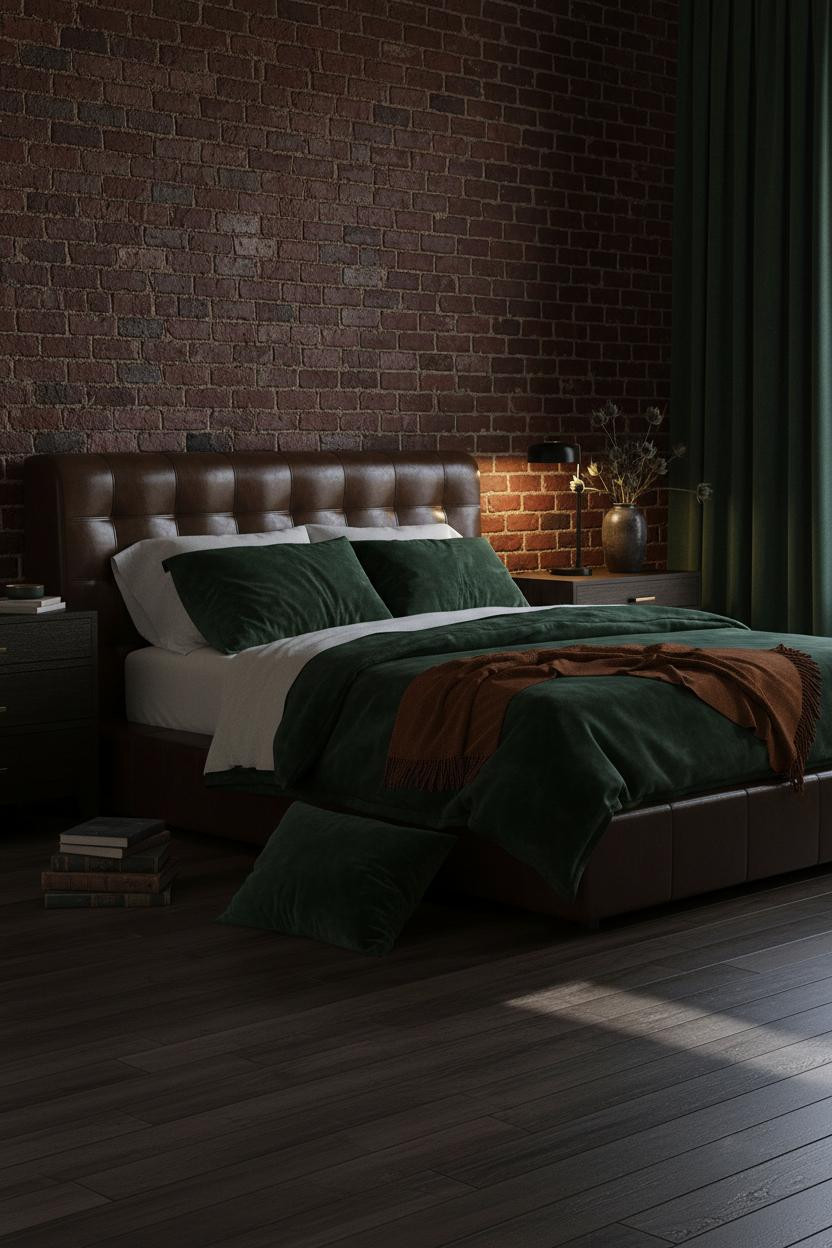

Burgundy-wine raw brick with deep iron oxide staining is a very specific thing, and when you put a forest green velvet duvet against it, the contrast is almost unreasonably good.
What gives it depth: Uneven handmade brick courses with raw mortar joints catch warm amber lamplight at different angles across the face, so the wall looks three-dimensional even in low light.
Where to start: Espresso leather on the Adra Leather bed frame grounds the whole room without competing with the brick’s natural texture.
Near-Black Aubergine Wood Planks Are the Moody Bedroom Underdog
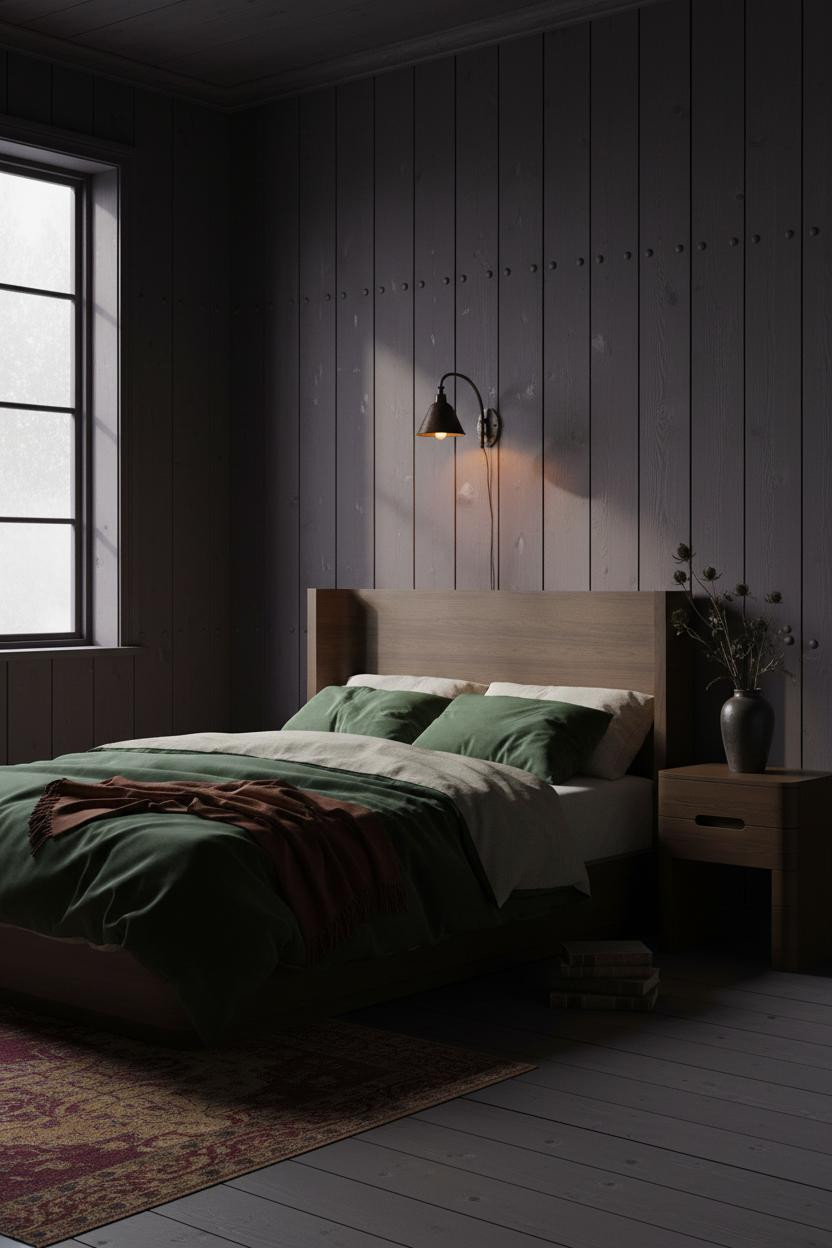

Vertical wood plank walls in near-black aubergine matte finish look nothing like shiplap and everything like a Swedish manor bedroom sealed in midwinter quiet.
Why it holds together: Shadow pooling between planks and visible iron nail heads at every joint give the wall a rhythm that flat plaster can’t match, even in low amber lamplight.
What not to do: Don’t paint wood plank walls in a flat black. The aubergine undertone is what keeps this from reading as a basement.
The Indigo Azulejo Tile Wall Nobody Expected to Work This Well
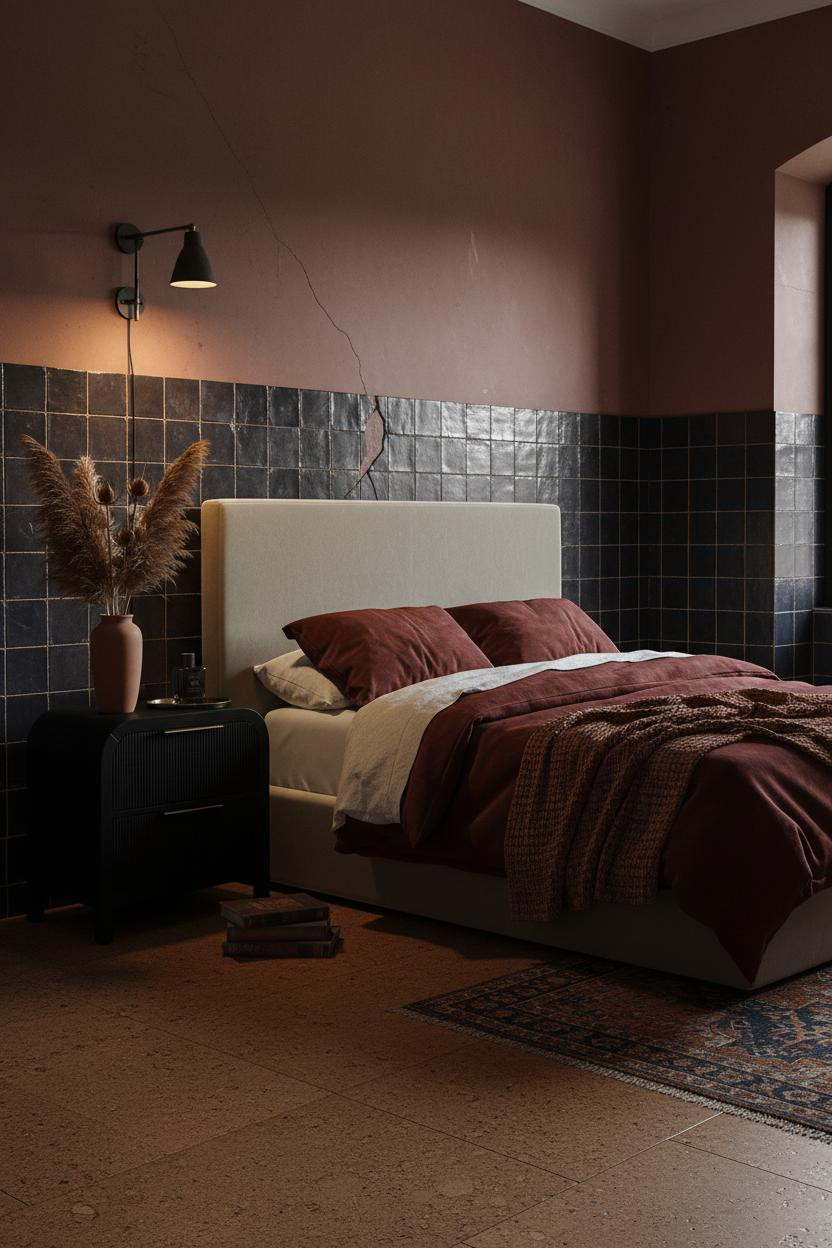

A deep indigo-black azulejo tile dado spanning the full headboard wall is one of those things that sounds risky and looks completely committed once it’s done.
What makes it work: Aged grout lines, chipped glaze, and a single cracked diagonal fissure read as authentic rather than decorative, which is exactly what oxblood plaster above needs as a partner.
The smarter choice: Layer a chunky rust wool throw and a dark Persian runner (deep rust and navy) over cork flooring to keep the earthy warmth from getting too cool and Iberian.
Navy Haussmann Panel Molding and a Single Amber Lamp. That Is the Whole Idea.
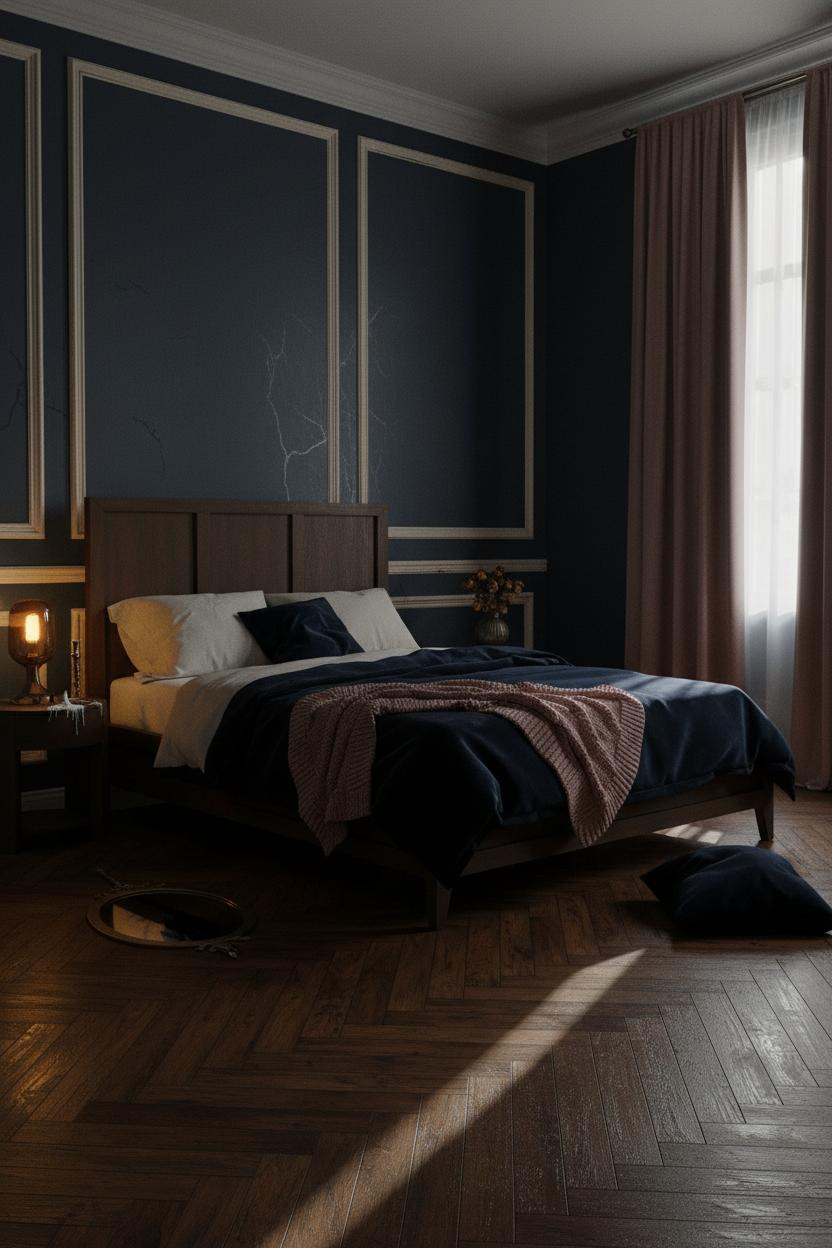
Deep navy aged plaster with ivory-cream relief panel molding is one of the most elegant things you can do with a headboard wall, and it photographs beautifully even with minimal furniture.
Why it feels balanced: Shadow pooling inside the recessed Haussmann panels creates a quiet geometric pattern that gives the wall visual weight without adding any physical objects to the room.
One smart swap: Trade the dusty rose throw for a dusty rose chunky knit (not a velvet) so the softness contrasts the panel structure without competing with it.
Rough Fieldstone and Forest Green Wool. Alpine and Absolutely Right.
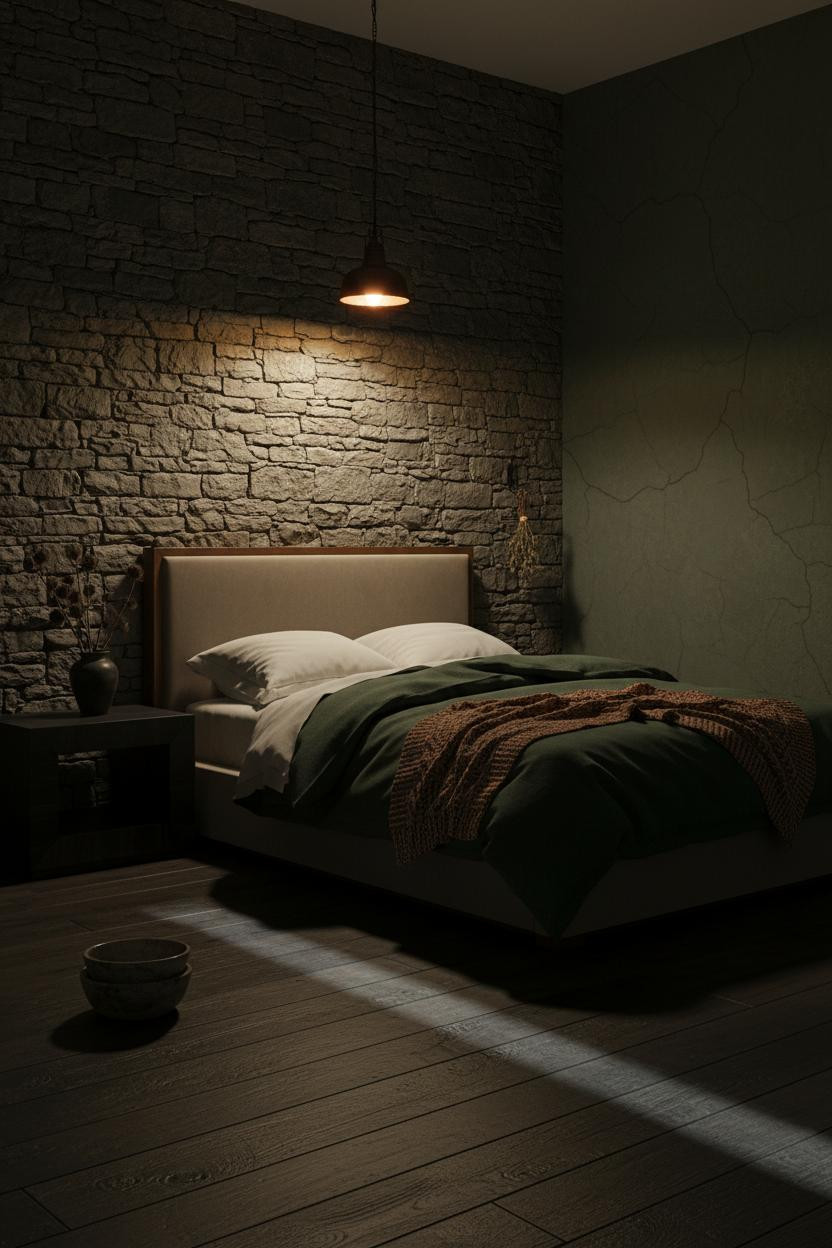


This one goes full alpine gothic: rough-hewn fieldstone from floor to ceiling behind the bed, iron pendant lamp overhead, dark fir planks underfoot. Moody vintage bedroom in its most elemental form.
What carries the look: Irregular dark grey-green stone faces with deep shadow-filled mortar joints absorb all ambient light at the surface, which makes the amber pendant glow feel almost theatrical against the stone.
Worth copying: A dried alpine herb bundle tied with twine above the nightstand adds the botanical layer this aesthetic needs without a single living plant to keep alive.
Charcoal Wainscoting Is the Modern Moody Bedroom Move I Keep Seeing
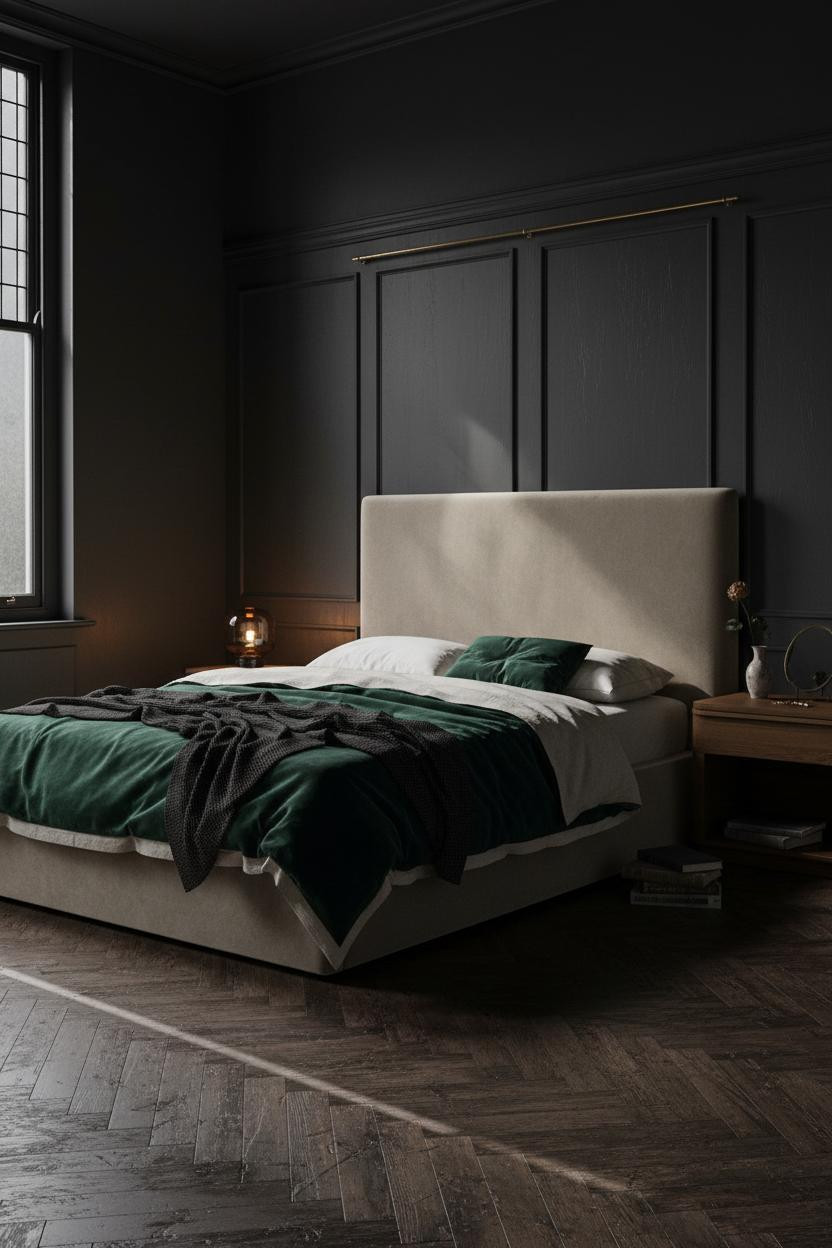

Near-black charcoal painted wood wainscoting with aged brass rail trim at cornice height is one of those combinations that lands somewhere between Amsterdam canal house and modern dark feminine, and it works in both directions.
What sharpens the room: Matte dark wainscoting panels with subtle grain absorb directional lamplight into their surface, keeping the wall from flattening out the way a solid painted wall would.
The common miss: Don’t use bright brass hardware here. Aged brass that’s starting to oxidize is what keeps the charcoal graphite walls feeling warm instead of cold and corporate.
Dark Burnt Umber Fresco Plaster and an Exposed Chestnut Beam. Tuscan. Timeless.
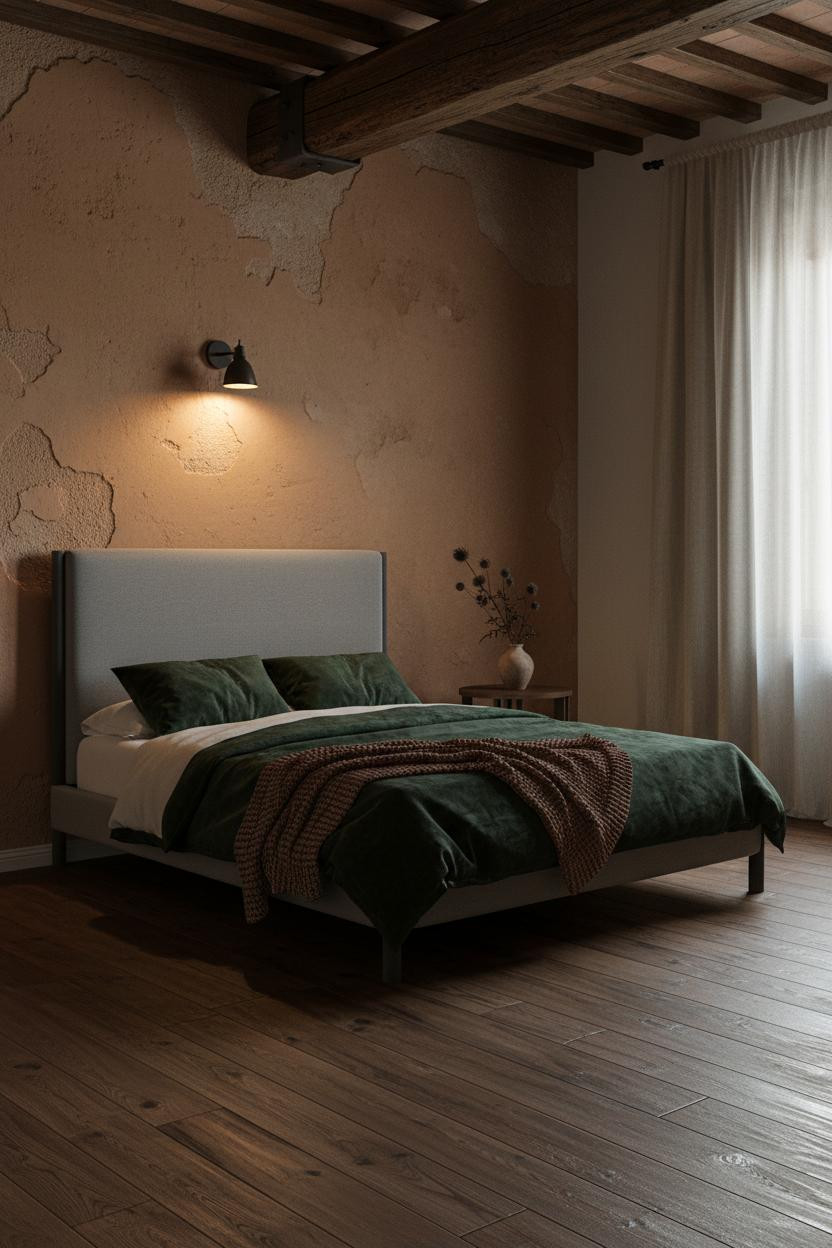

A rough-hewn dark chestnut ceiling beam running full width above the bed does more for a moody bedroom aesthetic than almost any wall treatment, because it frames the entire space from above.
What changes the room: Burnt umber aged fresco plaster with a matte uneven surface and faint crumbling texture at corners gives the wall a history that paint simply cannot replicate.
Ideal if: You want earthy moody bedroom comfort without committing to a dark wall color. The umber reads warm and grounded, not gloomy.
A Bottle-Green Moroccan Plaster Alcove Frames the Bed Better Than Any Headboard
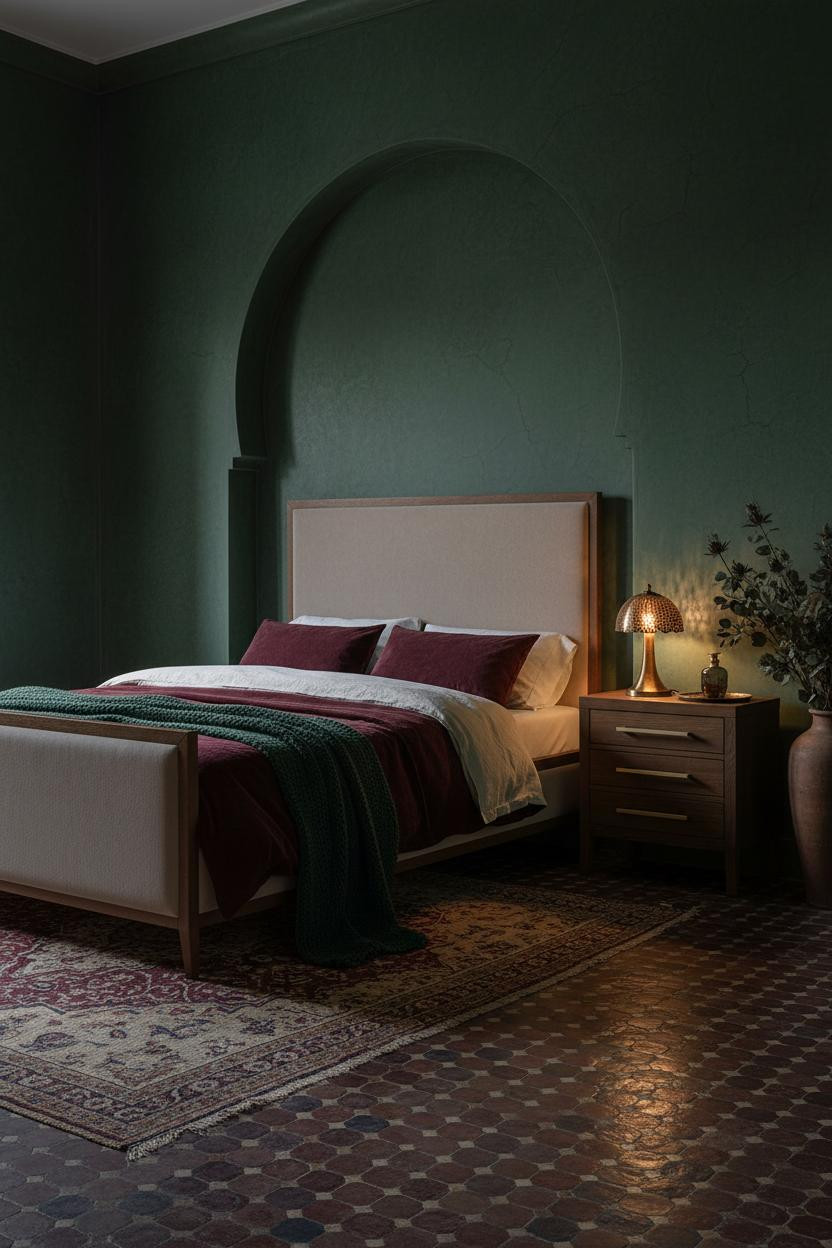

An 8-foot arched alcove in dark bottle-green matte cracked plaster frames the bed like a cave mouth, and I think it’s the single boldest architectural move in this entire list.
Why it feels intentional: Matte porous plaster that absorbs rather than reflects amber lamplight makes the arched recess look carved out of solid material, which gives the bed an almost monumental presence.
What to borrow: Layered vintage rugs over encaustic terracotta tile in dark rust and cream connect the floor to the bottle-green wall so the room reads as one cohesive color story from the ground up.
Heavy Burgundy Velvet Drapes Are the Dark Feminine Bedroom Secret Weapon
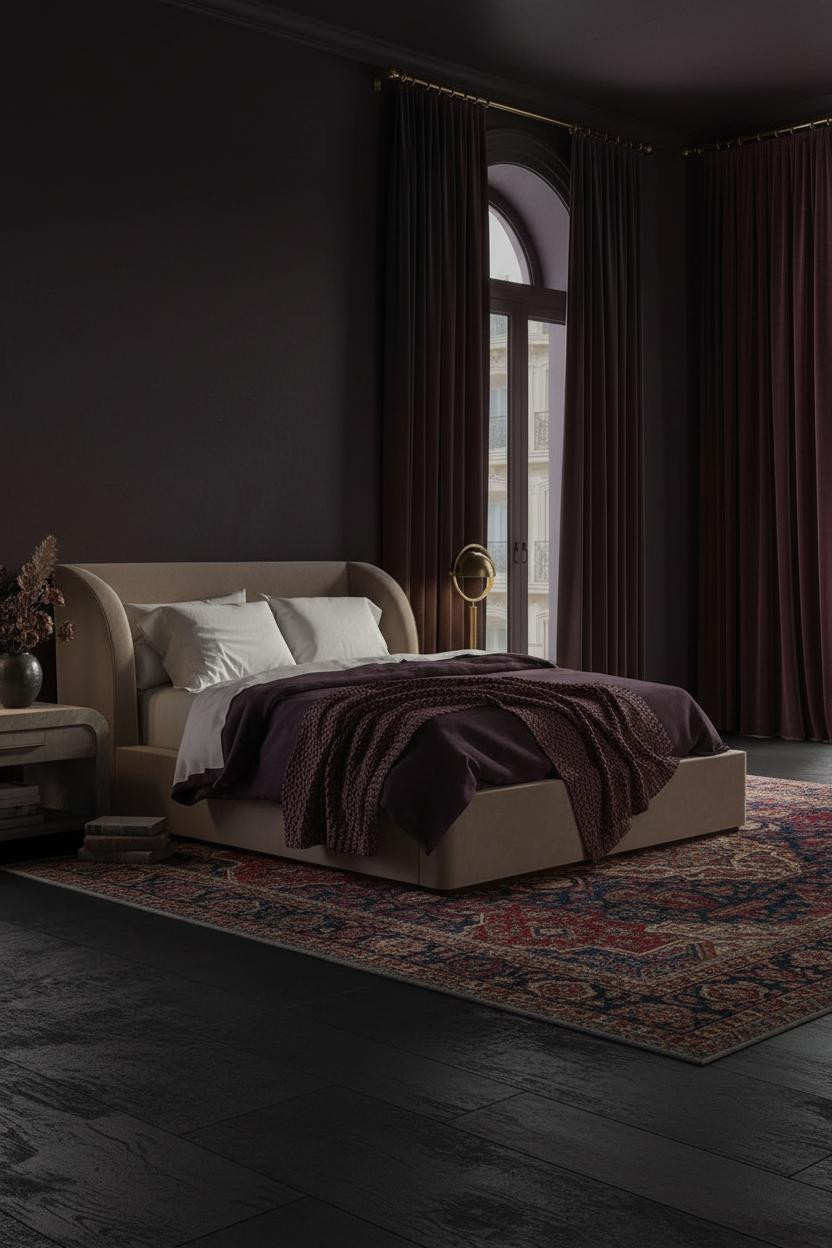

Floor-to-ceiling burgundy velvet drapes pooling six inches on dark walnut oak flooring is the kind of thing that makes a room feel like it belongs in a novel (the good kind, not the haunted kind). Mostly.
What softens the room: Dense velvet pile absorbs ambient light from both the warm amber lamp and the cool moonlight filtering through, which means the room stays wrapped in shadow even with two competing light sources.
The part to get right: Let the upholstered bed frame stay tonal with the drapes. A deep plum velvet duvet against plum near-black walls and burgundy drapes reads as intentional layering, not accidental matchy-matchy.

Our #1 Pick
Saatva Classic Mattress
America’s best-selling online luxury innerspring. 365-night trial, lifetime warranty, free white glove delivery.
Shop Saatva Classic
The Foundation Of Every Beautiful Bedroom
Every room in this list looks the way it does because the bed is the anchor. And the bed only works when what’s underneath it does. A dark moody bedroom with a mattress that doesn’t hold its shape or sleep too hot undermines everything you put on top of it.
The Saatva Classic uses a dual-coil support system (coils within coils) that keeps the mattress from sagging where it matters most. The breathable organic cotton cover and Euro pillow top give it that hotel-style surface you can actually feel through your sheets. And because the whole thing is delivered with white glove setup, you don’t end up assembling anything in a dark room surrounded by velvet.
If you’re going to put real thought into the walls, the lighting, and the textiles, it makes sense to put the same thought into the thing you actually sleep on. That’s where the comfort lives.

The rooms people save are the ones where nothing looks accidental. But the rooms people actually sleep well in are the ones where the comfort underneath matches the care on the surface. Both things matter. Neither one replaces the other.