
 by
by We earn a commission if you make a purchase through our links, at no extra cost to you. Full disclosure.
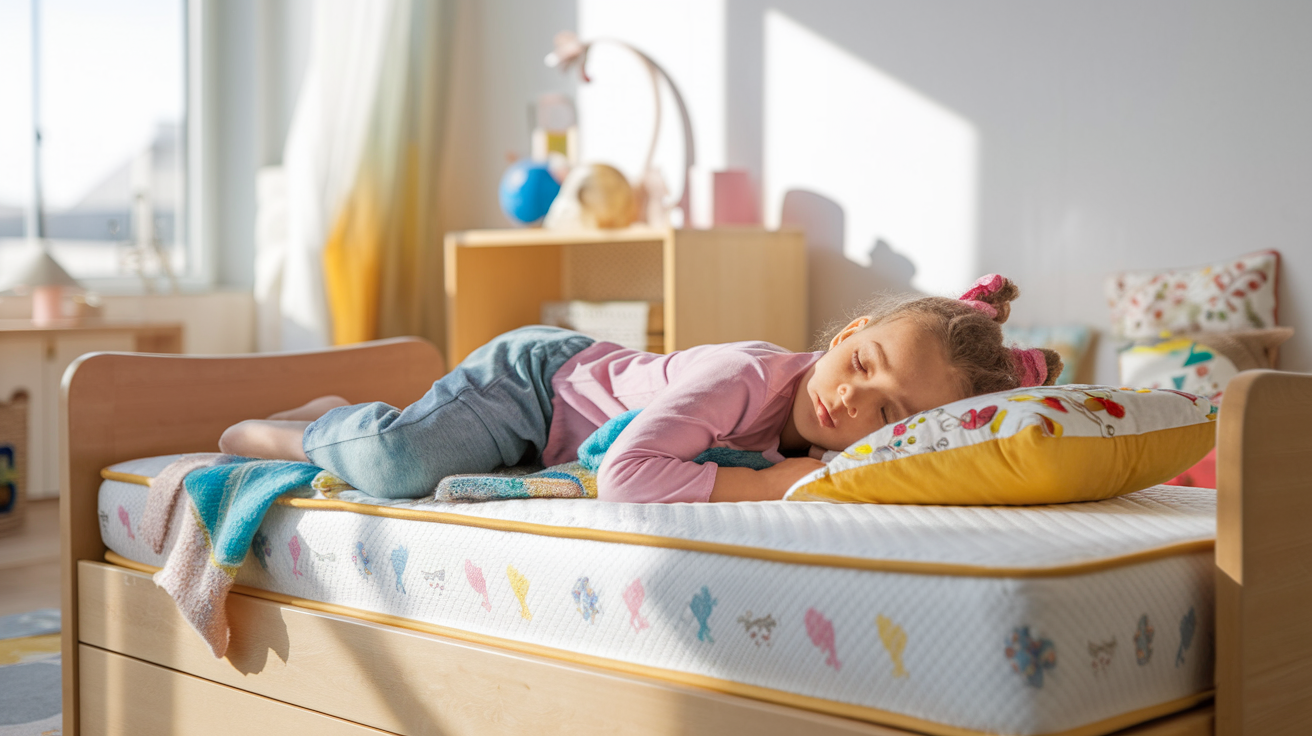
I'll be honest with you: I spent three weeks researching kids mattresses before pulling the trigger on the Saatva Youth, and I still felt like I was guessing. My daughter Mia was six at the time, outgrowing her toddler bed setup, and I wanted something that would carry her through middle school without becoming a lumpy, off-gassing disaster by year three. Most kids mattresses I looked at were either cheap foam slabs dressed up in colorful packaging or overpriced adult mattresses with a cartoon owl slapped on the box. The Saatva Youth was neither. Six months in, I can tell you it was one of the better purchases I've made for her room — and I want to walk you through exactly why, including the parts that gave me pause.
Quick verdict: The Saatva Youth is a legitimately well-built kids mattress with a smart dual-sided design that extends its useful life well into adolescence. It's expensive upfront, but the construction quality, safety certifications, and warranty structure make it a reasonable long-term investment if you're buying for a child who has years of growing ahead of them.
Saatva Youth Mattress
Dual-sided design grows with your child. 365-night trial, free White Glove delivery.
What Makes the Saatva Youth Different
Most kids mattresses are designed to be cheap enough to replace in a few years. Saatva took the opposite approach. The Youth mattress is built around the idea that children's sleep needs actually change as they develop — specifically, that younger kids need a firmer sleep surface for proper spinal support, while older kids can handle something with more give as their body weight increases and their musculature develops.
That premise isn't just marketing. Pediatric sleep research does suggest that younger children benefit from firmer support, partly because their bones are still developing and softer surfaces can allow the spine to sink into unnatural positions overnight. Saatva engineered the Youth around this insight by making both sides of the mattress genuinely different — not just in feel, but in internal construction.
What also separates it from most competitors is the pedigree of materials and the service structure. Free White Glove delivery means a team brings it to the room, sets it up, and removes your old mattress if you want. For a kids mattress that starts at $799 for a Twin, that delivery service alone is worth factoring into your comparison shopping.
The Dual-Sided Design: Toddler vs Big Kid
This is the feature that sold me, and it holds up in practice. The mattress ships with a tag indicating which side is which: the firmer "toddler" side is recommended for ages three and up, and the slightly softer "big kid" side is intended for eight and up. Flipping it is straightforward — it's heavier than a typical foam mattress, so you'll want another adult to help, but it's a manageable twenty-minute job.
We started Mia on the toddler side when she was six, which put us squarely in the intended range. The feel is firm but not punishingly so — think the kind of surface that doesn't let a small body sink in, but isn't like sleeping on a gym mat either. When I lay on it myself to test it, my adult weight compressed it more noticeably than hers does, which is by design. For her weight, it felt supportive without being rigid.
I haven't flipped to the big kid side yet — she's only seven now — but I pressed into it with my hands while setting up the mattress and it has meaningfully more give. It's still in the medium-firm range rather than soft, which is appropriate. You're not getting a plush pillow-top on either side, and that's intentional.
One thing worth noting: the dual-sided design means the mattress doesn't have a box spring setup or a pillow top that can be replaced. You're working with what's built in. That's a trade-off for longevity versus the kind of customization you get with adult mattresses, and for most families it's a reasonable one.
Materials and Safety: What Parents Need to Know
This section matters more to me than almost anything else when buying for a child. Kids spend roughly half their lives in bed during early childhood, and the off-gassing, chemical treatments, and synthetic materials in budget mattresses are not something I was willing to gamble on.
The Saatva Youth uses an organic cotton cover — certified, not just labeled as "natural." Organic cotton certification requires the fiber to be grown without synthetic pesticides or fertilizers and processed without certain chemical treatments. For a surface that will be pressed against your child's face for eight to ten hours a night, that matters.
The foam layers inside carry CertiPUR-US certification, which is an independent testing program that verifies foam is manufactured without ozone depleters, PBDEs, TDCPP, TCEP flame retardants, mercury, lead, heavy metals, or formaldehyde, and that VOC emissions are below established thresholds. It's not a perfect certification — it doesn't cover everything — but it's the most meaningful third-party standard available for foam in the US market and it's meaningfully better than nothing.
There's also a waterproof barrier layer built in. For parents of younger kids, this is significant. Accidents happen, and a waterproof barrier that's integrated into the mattress construction is more reliable than a mattress protector that shifts around or bunches under a fitted sheet. I've tested ours with a damp cloth and it beads right off the interior layer when the cover is removed.
The cover itself is removable and machine washable, which is non-negotiable in my household. If the cover weren't washable I'd have marked this mattress down significantly.
Saatva Youth Mattress
Dual-sided design grows with your child. 365-night trial, free White Glove delivery.
Our Kid's Experience: 6 Months In
Mia is not a cooperative product reviewer. She's seven. When I asked her what she thought of her mattress she said "it's good" and went back to her book. But behavior tells you more than words with kids, and the behavioral signs have been positive.
She falls asleep faster than she did on her old mattress — anecdotal, I know, but consistently so. She wakes up less frequently in the night. She doesn't complain of back or neck stiffness in the mornings, which she occasionally did on her previous setup. She also stopped migrating to the edge of the bed, which she used to do on a softer surface that didn't give her enough support in the middle.
The mattress has held its shape well over six months. There's no visible sagging or body impression, which isn't surprising this early but is worth confirming. The cover has been through four or five machine washes and shows no pilling, shrinkage, or color loss. The zipper pulls smoothly and the cover fits back onto the mattress without a wrestling match, which is a small but real quality-of-life detail.
We did have one significant spill incident — a full cup of apple juice knocked over during a sick day in bed. The waterproof barrier did exactly what it's supposed to do. The liquid beaded and spread across the surface without penetrating, I blotted it up, wiped with a damp cloth, and there's no staining or odor six months later. That alone has probably saved this mattress from early retirement.
Durability and Longevity
The Saatva Youth carries a lifetime warranty, which is unusual in the kids mattress category. Most competitors offer ten years at best, and some budget options offer nothing beyond ninety days. A lifetime warranty doesn't mean the mattress will last forever without degradation, but it does tell you something about how the manufacturer is thinking about the product.
The dual-sided design effectively doubles the usable surface. If you buy this for a three-year-old, you get roughly five years on the toddler side before the flip, and then potentially another five to seven years on the big kid side before your child outgrows kids mattress sizing entirely and moves to a full adult twin or full. That's a ten to twelve year lifespan from one purchase, which completely changes the price-per-year math.
The coil system used in the Youth is designed for children's weight ranges specifically, which means it won't compress prematurely the way adult mattress coils sometimes do when used by lighter sleepers. This is a detail most reviews skip over, but it matters for long-term performance. An adult coil system used by a forty-pound child doesn't engage properly, and over time that can lead to uneven wear.
The Honest Drawbacks
I'd be doing you a disservice if I didn't flag the real issues, and there are a few.
The price is the obvious one. $799 for a Twin is a significant outlay for a kids mattress. I understand the long-term value argument I made above, but the upfront number is real, and for families on tighter budgets it may simply be out of reach regardless of the math. There are CertiPUR-US certified kids mattresses available for $300 to $400 that are honest options.
The 365-night trial sounds generous, but the return process for a mattress this size is not trivial. Saatva handles pickup, but coordinating a mattress return with a seven-year-old in the house is more disruptive than returning, say, a pair of shoes. Don't bank on the trial as a safety net unless you're genuinely prepared to use it.
There's no toddler rail compatibility built in. If you're transitioning from a crib and need a toddler rail on the bed frame, you'll need to verify compatibility with your specific frame setup. The mattress itself is standard sizing, so most frames work, but it's worth checking before the White Glove team arrives.
Finally, the mattress is heavier than average, which makes the flip process less convenient than it sounds in marketing copy. Not a dealbreaker, but factor in that you'll need help and probably thirty minutes of your time when you do make the switch.
Saatva Youth vs Other Kids Mattresses
The most common comparison shoppers make is against the Avocado Kids Mattress, which is also organically certified and similarly priced. The Avocado is a legitimate option — the materials story is arguably stronger, with GOTS-certified organic latex and wool — but it lacks the dual-sided functionality and the warranty structure. If organic latex is a priority over dual-sided design, Avocado is worth a serious look. If longevity and the flip feature are your priorities, Saatva wins that comparison.
Against budget options like the Zinus or Linenspa kids mattresses in the $150 to $250 range, the Saatva Youth is simply a different category of product. Those mattresses can work fine for a few years, but the certification standards are lower, the durability shorter, and the warranty coverage thinner. You're comparing a starter car to a well-built sedan — both get you places, but the experience and lifespan are genuinely different.
The Nest Bedding Kids Mattress is another solid mid-range competitor around $400 to $500 and worth considering if the Saatva price point is too steep. It carries good certifications and holds up reasonably well, though it lacks the dual-sided construction.
Pricing and Value
The Saatva Youth starts at $799 for a Twin, which is the size most kids use. A Twin XL runs slightly more if you have a taller child or a longer bed frame. Saatva runs periodic promotions — typically around major holiday weekends — so if you're not in a rush, checking in during those windows can save $100 to $150.
White Glove delivery is included at no additional charge. For context, mattress delivery fees from other brands can run $50 to $200 depending on the company and your location, so the included delivery is a real part of the value equation, not just a marketing line.
The 365-night trial gives you a full year to assess the mattress before committing permanently. That's long enough for your child to move through a seasonal cycle, adjust to any new sleep patterns, and give you genuine data on how the mattress is performing. Most kids mattresses offer ninety days at best.
Calculated over a ten-year lifespan, the Saatva Youth works out to roughly $80 per year for a Twin — less than what many families spend annually on a decent mattress protector and replacement pillows combined. That framing doesn't make $799 feel small, but it does put it in a more useful context for long-term planning.
Saatva Youth Mattress
Dual-sided design grows with your child. 365-night trial, free White Glove delivery.
Frequently Asked Questions
What age is the Saatva Youth mattress designed for?
The Saatva Youth is designed for children ages three and up. The toddler side is intended for ages three through seven, and the big kid side for ages eight and up. Saatva recommends it through early adolescence, making it a viable option for a single purchase from preschool through around age twelve or thirteen.
How do you flip the Saatva Youth mattress?
Flipping the mattress is straightforward but requires two adults due to the weight. Remove all bedding, rotate the mattress so the foot end is now at the head, then flip it over so the opposite face is up. The process takes fifteen to twenty minutes with two people. There's a tag on each side indicating which face is which.
Is the Saatva Youth mattress good for kids with allergies?
The organic cotton cover and CertiPUR-US certified foam construction make it a reasonable choice for allergy-prone children. The organic cotton is processed without many of the chemical treatments that can trigger sensitivities. However, if your child has a documented latex allergy, verify the full materials list directly with Saatva before purchasing.
Does the Saatva Youth work with a standard bed frame?
Yes. The Saatva Youth comes in standard mattress sizes (Twin, Twin XL) and works with standard bed frames, platform beds, and adjustable bases. It does not require a box spring. If you're using a slatted frame, Saatva recommends slats no more than three inches apart to maintain proper support.
How does the 365-night trial work?
Saatva's trial begins on the delivery date. If you decide the mattress isn't right within 365 nights, you contact Saatva to initiate a return. They arrange pickup at no cost to you and issue a full refund. Note that Saatva requires a minimum 30-day break-in period before initiating a return, on the reasonable grounds that any new mattress takes time to adjust to.
Final Verdict
After six months with the Saatva Youth, I'd buy it again. It does what it promises: it's well-constructed, safely certified, built to last through a significant portion of childhood, and genuinely comfortable for the child sleeping on it. The dual-sided design is the kind of practical engineering that parents appreciate more than kids do — Mia has no idea it flips, and she doesn't need to. But I know that in about eighteen months I'll be able to extend this mattress's useful life by another several years with a single afternoon's work.
The price will be the deciding factor for most families, and I won't pretend otherwise. If $799 is workable in your budget, the Saatva Youth is the mattress I'd recommend first for a child in the three-to-twelve age range. If it's not, look at the Nest Bedding Kids Mattress as a solid step-down option that still takes safety certifications seriously.
But if you're buying one mattress that you genuinely don't want to think about replacing for a decade, the Saatva Youth makes that case convincingly.
More from Saatva
- Saatva Mattress Review — Compare all Saatva models
- Loom & Leaf Review — For the parents' bedroom