
 by
by Written by Romain R, writing as The Nut
Updated July 11, 2026
My verdict: Aireloom makes distinctive luxury mattresses with substantial coil systems, hand-tufted upholstery and genuine natural fibers. The construction has more character than the typical foam-heavy hybrid. My hesitation is not about whether Aireloom can build an impressive bed. It is about durability complaints, retailer-dependent policies and the limited protection buyers receive after paying a luxury price.
If you already like a specific Aireloom mattress, confirm the exact model name, comfort designation, foundation requirements, return policy and written warranty before paying. Aireloom collections contain materially different builds, and a showroom label such as Luxury Firm does not tell the whole construction story.
Aireloom mattress review at a glance
Aireloom is a reasonable choice for a shopper who has tried the exact mattress in a store, values hand-tufted construction and wants natural fibers or latex in the upholstery. It is harder for me to recommend to someone who prioritizes a generous home trial, straightforward returns or predictable long-term value.
The brand can still make sense if you specifically want Aireloom, trust the selling retailer and have checked the store's policies. For most shoppers, I would compare it with the Saatva Classic before committing. Saatva publishes a direct buying policy with a 365-night home trial, lifetime warranty and white-glove delivery.
Compare the Saatva Classic with Aireloom
“I spent ten years sleeping on a $250 mattress. I told myself it was fine. My back disagreed, every single morning.”
Read why our editor finally switched to Saatva →
My quick construction verdict
- Best reason to buy: Aireloom uses unusually rich upholstery, including wool, silk, cashmere, alpaca and latex in parts of the range, according to Aireloom's published collection descriptions.
- Biggest structural strength: the combination of pocketed coils, microcoils on selected models and hand-tufted comfort layers creates a buoyant luxury feel without depending entirely on dense memory foam.
- Biggest ownership concern: owner discussions on GoodBed, SlumberSearch and Mattress Underground repeatedly mention softening, impressions and difficult warranty experiences.
- Important buying limitation: Aireloom is normally purchased through retailers, so trials, returns, exchanges and delivery terms can depend on the store.
- My practical advice: evaluate the exact model, not merely the Aireloom name or collection. Ask the retailer to put every policy in writing.
The alternative I would compare first
Saatva Classic
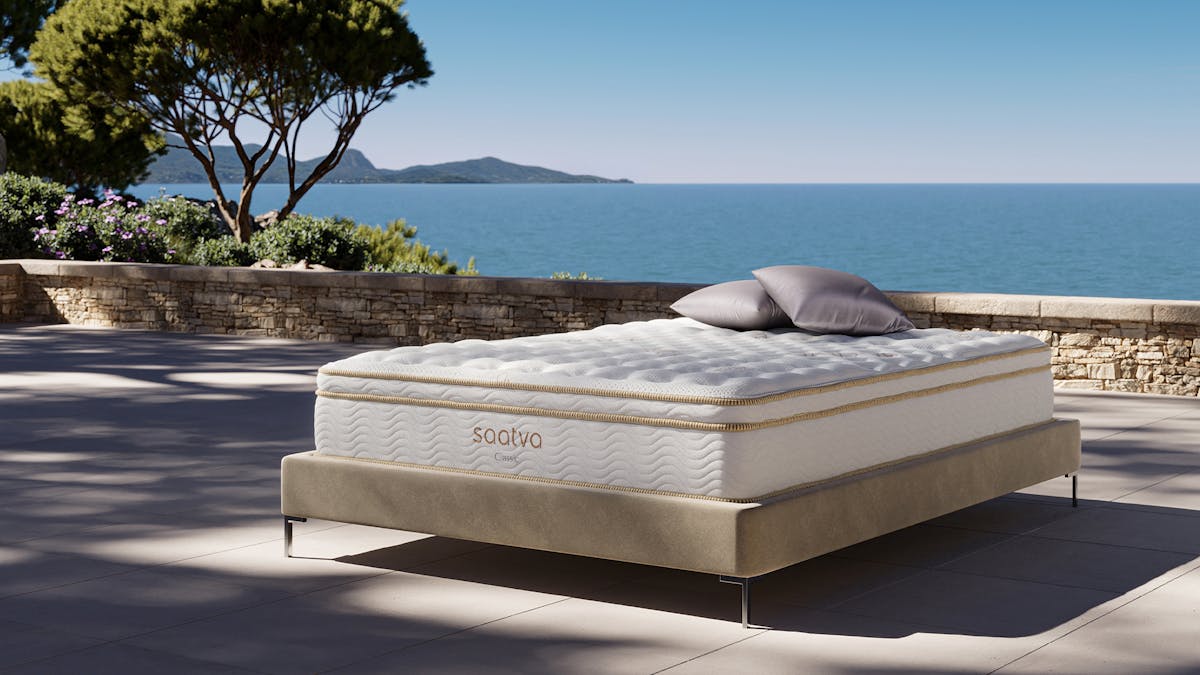
MattressNut rating: 9.2/10. The Saatva Classic is my first comparison for someone considering an Aireloom but uneasy about retailer policies. It is a luxury innerspring hybrid offered in three firmness choices and two heights, with a Euro pillow top and a dual-coil design.
The published Saatva construction includes an organic cotton cover, a wool fire barrier, recycled steel coils and reinforced support through the lumbar area. Those details do not make it identical to Aireloom. Aireloom's upper collections use more exotic upholstery. Saatva's advantage is the clearer ownership proposition rather than a claim that its raw materials are universally more luxurious.
Saatva lists white-glove delivery, in-home setup and old-mattress removal with eligible delivery. The company also publishes a 365-night trial and lifetime warranty. Its disclosed limitation is a $99 processing fee if the mattress is returned during the trial.
Check the Saatva Classic price
Other mattresses worth comparing
- Saatva Classic: my best overall comparison for a traditional luxury-hybrid feel, clearer direct policies and multiple firmness choices. View the Saatva Classic.
- PlushBeds Botanical Bliss: the comparison I would make if latex and organic-material positioning matter more than an innerspring-style hotel feel. Compare PlushBeds mattresses.
- Amerisleep AS3: an all-foam comfort alternative for a shopper who does not need the responsive coil character or hand-tufted upholstery of Aireloom.
The Saatva Classic has been listed from $1,595 for a queen. Pricing can change, so the useful comparison is the price shown by each seller on the day you buy, combined with delivery, return and exchange terms.
See current Saatva Classic pricing
Aireloom mattress lineup in 2026
Aireloom divides its mattresses into collections rather than selling one standard construction. That matters because two beds carrying the Aireloom badge can use different coil units, latex types, foams and natural-fiber packages. Retailers may also carry exclusive names, which can make direct comparison harder.
Prices vary by retailer, size, upholstery and promotion. Aireloom occupies the luxury segment, with entry models commonly positioned above ordinary mass-market hybrids and upper Karpen models reaching five-figure territory. I would not rely on a broad collection price to make a decision. Get a written quote for the exact model and size.
Aspire
Aspire is Aireloom's more accessible luxury collection. Typical specifications include individually wrapped coils with foam comfort layers and choices ranging from firm to plush. This is the sensible starting point for someone who wants Aireloom's responsive construction without paying for the richest natural-fiber package.
Check the law tag and model specification carefully. A lower collection position does not automatically mean poor support, but it can mean a greater share of conventional foam and fewer specialty upholstery components.
Preferred Simplify
Preferred Simplify models generally combine wrapped coils with Aireluxe foam. The range includes firmer and plusher comfort choices. Back and stomach sleepers may be drawn to the firmer versions, but the showroom designation should be treated as a starting point rather than a standardized measurement.
The important durability question is how much softer upholstery sits above the spring unit. A supportive coil core cannot stop a thick comfort package from settling or developing a softer sleeping zone.
Preferred Luxetop
Preferred Luxetop adds a more elaborate comfort system, including microcoils and Celsion latex in listed models. Microcoils can add contouring while retaining more airflow and spring response than a similarly thick block of conventional foam.
This collection is likely to interest side sleepers and people seeking stronger pressure relief. It also illustrates why shoppers need the precise model specification: extra upholstery can improve initial comfort while creating more material that may compress with use.
Karpen Luxury
Karpen Luxury models move further into premium upholstery. Aireloom describes versions using Talalay latex, microcoils and fibers such as silk, wool and cashmere. Talalay latex is resilient and responsive, and it usually feels livelier than slow-response memory foam.
The natural fibers contribute surface feel, moisture handling and luxury presentation. They should not be interpreted as thick structural layers. Ask how much latex and foam the mattress contains, not only which luxury fibers appear on the specification card.
Karpen Natural
Karpen Natural sits near the top of the range. Published specifications reference TerraPur latex and blends involving wool, alpaca and cashmere. This is the collection for someone who considers natural-material content central to the purchase.
Even here, “natural” should not replace a component-by-component review. Confirm the fire barrier, upholstery foams, adhesives, coil system and foundation requirements. Broad material language can hide the parts that most influence firmness retention. For context, see how to choose the right mattress firmness.
The square King option
Aireloom has offered a 7x7 ft square King format that can be rotated in four directions. Rotation can distribute wear more evenly than leaving the same zones under the same sleepers year after year. It does not eliminate normal compression, but it is a thoughtful option for a large luxury mattress.
Who makes Aireloom mattresses?
Aireloom traces its roots to 1940, when California craftsman King Karpen began making mattresses in small batches. The brand is now part of Kluft & Co., which also makes E.S. Kluft mattresses.
Aireloom says its mattresses are made domestically in California and Pennsylvania. The company's identity is built around hand assembly, tufting and luxury upholstery rather than compressed bed-in-a-box production.
Four characteristics define the brand:
- Handcrafted assembly: Aireloom emphasizes hand-tufted construction and skilled upholstery work.
- Aireloom Lift: the company's proprietary design is intended to produce a buoyant, uplifting response rather than a deep memory-foam sink.
- Natural-fiber upholstery: published collection specifications include materials such as Joma wool, silk, cashmere, alpaca and latex.
- Retail distribution: Aireloom is commonly sold through department stores and regional furniture or mattress retailers rather than through a single direct online storefront.
The retail model affects the ownership experience. Macy's, Bloomingdale's and independent stores may apply different exchange, return and delivery policies. Aireloom's manufacturer warranty is only one part of the transaction. The selling retailer controls many of the practical steps that matter during the first weeks of ownership.
Materials and construction
Covers and natural fibers
Selected midrange and upper Aireloom models use woven covers and specialty fibers. Published specifications have included Belgian Jacquard Damask fabric, SeaCell fiber, wool, silk and cashmere. SeaCell is a cellulose-based textile incorporating seaweed-derived material.
These fibers are not meaningless decoration, but shoppers should keep their structural role in perspective. Wool can help with moisture and temperature management. Silk and cashmere add a refined surface character. The deeper latex, foam and spring layers still do most of the work related to pressure relief, alignment and durability.
Latex and foam layers
Aireloom uses different foam packages across its collections. Listed components include Aireluxe foam, gel-infused foams, Celsion latex, Talalay latex and TerraPur latex. That diversity is why a review of “an Aireloom mattress” can only go so far.
Latex generally responds faster than memory foam and is less likely to create a slow, enveloping sink. Conventional and gel-infused polyurethane foams can soften the initial feel, but their density and thickness are important durability details. Retail specification cards do not always disclose foam density, so ask the seller directly.
Pocket coils and microcoils
Published Aireloom specifications include individually wrapped pocket coils, with more elaborate models adding microcoils above the main spring unit. The original lineup information cites 15-gauge pocket coils in relevant constructions.
Pocketed springs move more independently than a traditional connected-coil unit. That can improve contouring and reduce the amount of movement transmitted across the mattress. Microcoils add another flexible transition layer without reproducing the slow response of thick memory foam.
Higher coil counts are not automatically better. Coil gauge, diameter, zoning, turns, tempering and the way the unit is supported all matter. I would rather see a coherent spring-and-upholstery design than a large coil count used as a sales shortcut.
Hand tufting
Tufting mechanically secures the mattress layers by drawing material together at fixed points. It can reduce reliance on glue and create the deep, tailored surface associated with old-school luxury beds.
There is a tradeoff. Natural fibers and soft upholstery compress as they are used. If that settlement becomes uneven, sleepers may notice localized softness around heavily loaded areas. Tufting holds the package together, but it does not make every comfort material immune to compression.
Mattress height
The original lineup information places Aireloom constructions from 12 to 16 inches thick. Height can affect fitted-sheet compatibility, ease of getting into bed and the amount of upholstery above the coils. It is not, by itself, a measure of quality.
A thick mattress with several soft foam layers may show more comfort-layer change than a lower-profile design with durable latex and a simpler upholstery stack. Study the layer order before treating height as added value.
How Aireloom feels
Buoyancy and pressure relief
The signature Aireloom feel is buoyant and upholstered. It is closer to being held near the surface than being swallowed by slow memory foam. The spring unit, tufted top and responsive latex used in certain models contribute to that character.
Back sleepers and combination sleepers may appreciate the easier movement. Side sleepers will usually need one of the more pressure-relieving configurations, but an excessively plush model can allow the pelvis to settle more deeply than the shoulders and legs.
Firmness varies by model and retailer
Aireloom labels include terms such as Extra Firm, Firm, Luxury Firm and Plush. These are internal comfort descriptions, not universal firmness standards. A Luxury Firm Aireloom can feel different from a Luxury Firm sold by another brand, and retailer-exclusive versions can further complicate comparison.
Display mattresses have also been used and compressed by many shoppers. A new mattress delivered to your home may initially feel firmer than the floor sample. The source article notes that natural-fiber content can change through the first 30 to 90 days as the upholstery settles.
Temperature management
Aireloom's more breathable materials give it a credible cooling story. Natural fibers can manage moisture near the surface, latex is generally more open and responsive than dense memory foam, and coil systems leave substantial internal air space.
Some models still contain foam, so no Aireloom should be treated as temperature-neutral for every sleeper. Cooling claims also depend on bedding, room temperature, body size and how deeply the sleeper settles into the comfort layers.
Motion isolation and edge support
Individually wrapped coils and layered upholstery can damp movement better than a basic connected innerspring. Models with microcoils should retain responsiveness while controlling some partner disturbance. They will not feel as motionless as the slowest all-foam mattress. For context, see the top-rated innerspring picks we recommend.
Edge performance depends on the exact coil unit and perimeter design. Test sitting and lying near the side of the specific store model. A sturdy edge matters for sleepers who use the full width of the bed or regularly sit on the perimeter.
Durability and long-term value
This is the part of the Aireloom story that gives me pause. The raw materials and upholstery skill look luxurious, but a high purchase price does not guarantee that the original comfort will remain unchanged.
SlumberSearch, GoodBed and owner discussions on Mattress Underground contain recurring reports of sagging, body impressions and faster-than-expected softening. The source article summarized complaints at roughly 15% of owners within the first three years. That figure should be treated as an aggregation from review sources, not a controlled failure-rate study or a representative sample of every Aireloom owner.
People are more likely to post when something goes wrong, and retailer-exclusive model names make complaints difficult to compare. Still, the pattern is relevant because the same issues appear across more than one owner-feedback source.
Why a luxury mattress can soften
Natural wool and fiber batting settle under repeated loading. Foam can lose firmness. Tufted upholstery can develop a more pronounced sleeping zone. None of those changes necessarily means the coil unit has failed.
This distinction matters during a warranty claim. A sleeper can feel poorly supported even when the visible indentation does not meet the written defect threshold. Aireloom warranties on many models have used a 1.5-inch visible-indentation threshold, according to the policy information summarized in the source article.
Foundation and rotation requirements
Before buying, ask the retailer which foundation, frame and center support the warranty requires. Keep the receipt, model label and photographs of the setup. An incompatible base can affect comfort and may complicate a later claim.
Rotate the mattress according to the manufacturer's instructions if rotation is permitted. Rotation can distribute surface compression, especially for couples with different body weights. Do not flip a one-sided mattress unless the manufacturer specifically says it is designed for flipping.
My value assessment
At the more accessible end of Aireloom's range, a carefully chosen model can compete with other luxury hybrids. At the upper end, the value case becomes harder for me to defend because buyer protection does not consistently rise with the price.
You are paying for domestic production, hand work, elaborate upholstery and brand prestige. Those are real attributes. You are not necessarily buying freedom from comfort changes, a direct home trial or simple returns.
Before committing, I would compare the Aireloom with the Saatva Classic, especially if trial and warranty terms are central to the decision.
See why the Saatva Classic is my main comparison
Aireloom compared with competing mattresses
Aireloom versus Saatva Classic
Aireloom offers the richer range of luxury fibers and more retailer-specific constructions. The Saatva Classic offers a simpler, more transparent direct-buying proposition with dual coils, a Euro pillow top, three firmness choices, a 365-night trial and a lifetime warranty.
Aireloom is the more compelling showroom object. Saatva is the easier recommendation for a remote buyer who wants time to evaluate the mattress at home.
Aireloom versus Amerisleep AS3
The Amerisleep AS3 is an all-foam mattress using Bio-Pur foam and a zoned support design. Its original comparison pricing started from $1,049, with a 100-night trial and 20-year warranty.
This is not an apples-to-apples feel comparison. Aireloom is springier, more upholstered and more traditionally luxurious. Amerisleep makes more sense for someone who wants foam contouring and direct online policies.
Aireloom versus Stearns & Foster
Both brands occupy the retail luxury category and offer hybrid constructions with premium upholstery. Stearns & Foster uses its IntelliCoil system in relevant models and also markets cashmere, silk and cooling foams.
Neither brand should be purchased on reputation alone. Retailer policies and model-specific specifications matter. Try both beds in comparable firmnesses and ask for written layer details.
Aireloom versus WinkBeds
WinkBeds is a more accessible hybrid alternative using a Euro pillow top, pocketed coils and gel foam. The original comparison placed WinkBeds from $1,149 to $1,799, with a 120-night trial and lifetime warranty.
Aireloom provides the more elaborate luxury-material story. WinkBeds provides the cleaner direct-buying framework. Read my WinkBeds mattress review for the full construction analysis.
Common Aireloom complaints
I reviewed the themes reported through SlumberSearch, GoodBed and Mattress Underground. This is an analysis of published owner feedback, not a lab test or a controlled sleeper panel.
- Sagging or impressions within 1 to 3 years: owner reports describe visible sleeping zones and reduced support, including complaints about expensive models.
- Faster firmness loss: some buyers say a firm model became substantially softer within 6 to 12 months. Fiber settlement and foam softening are plausible construction-related contributors.
- Warranty measurement disputes: owners sometimes report that an indentation they find uncomfortable does not satisfy the written 1.5-inch defect threshold.
- No universal direct sleep trial: buyers generally depend on the individual retailer's comfort-exchange and return rules.
- Difficult model comparison: retailer-exclusive names and specifications can make it hard to determine whether two similarly named beds are actually identical.
- Price-to-longevity concerns: SlumberSearch published a Price Value score of 6.5/10, reflecting the sentiment in the reviews collected by that site.
These complaints do not prove that every Aireloom mattress will fail. Many owners enjoy the brand. They do show why I would not waive a return policy or accept vague warranty explanations merely because the mattress looks beautifully made.
Who should buy an Aireloom mattress?
Aireloom is a good fit if:
- You tried the exact model at a retailer and strongly prefer its buoyant, upholstered feel.
- Hand tufting and natural fibers such as wool, silk, cashmere or alpaca are meaningful priorities.
- You prefer responsive coils and latex to the slow sink of an all-foam mattress.
- You understand the retailer's exchange and warranty procedures.
- You are comfortable paying for craftsmanship even if the value cannot be reduced to a trial length or warranty headline.
- You can inspect the model specification and verify that the substantial materials are located where they affect comfort and durability.
Aireloom is not a good fit if:
- You need a long, clearly published home trial.
- You want free returns or a simple direct-brand return process.
- Long-term value matters more to you than luxury upholstery.
- You need fully disclosed foam densities and easy model-to-model comparisons.
- You are buying without trying the exact construction.
- A large purchase would become a financial strain if the comfort changed and the warranty did not apply.
How to shop for an Aireloom without guessing
- Record the full model name. Photograph the law tag and specification card so a similar retailer name does not cause confusion later.
- Ask for the complete layer stack. Identify the cover, fiber batting, latex, foam, microcoils, primary spring unit and perimeter system.
- Check foam details. Ask for foam type, thickness and density. If the retailer cannot provide them, treat that missing information as part of the buying risk.
- Compare a used display with a fresh unit. The floor mattress may be softer after months of shoppers trying it.
- Read the retailer policy. Distinguish a refund from a comfort exchange, and ask about delivery, pickup and restocking charges.
- Read the manufacturer warranty. Confirm the indentation threshold, foundation rules, inspection process and exclusions.
- Protect your paperwork. Keep the receipt, product labels, foundation information and delivery documents.
- Compare total ownership terms. A less ornate mattress with a practical home trial may be the safer purchase.
The Nut's final Aireloom verdict
Aireloom builds beautiful mattresses. The hand-tufted surfaces, responsive coils, microcoil options, latex and genuine luxury fibers give the brand a feel that ordinary boxed hybrids rarely duplicate.
My verdict is still cautious. Published owner feedback raises enough concern about impressions, firmness loss and warranty friction that I would not buy on materials alone. The retailer relationship is just as important as the mattress construction.
If you love a particular Aireloom and the retailer offers terms you can accept, it can be a satisfying luxury purchase. If you are undecided, I would compare the Saatva Classic first. It does not copy Aireloom's upper-tier upholstery, but its direct policy, dual-coil design and multiple firmness choices make the ownership decision easier.
Check the Saatva Classic before buying Aireloom
Frequently asked questions
Is Aireloom a good mattress brand?
Yes, if “good” means sophisticated construction, domestic manufacturing and premium upholstery. Aireloom has an 80-plus year history and uses meaningful materials in parts of its range. My reservations concern inconsistent owner reports and retailer-dependent buying protection, not a belief that the mattresses are cheaply made.
How much does an Aireloom mattress cost?
Aireloom spans the luxury market, from more accessible Aspire constructions to five-figure Karpen models. Prices vary by retailer, size, model and promotion. Ask for an itemized written quote because retailer-exclusive names can make casual price comparison unreliable.
Who makes Aireloom mattresses?
Aireloom is part of Kluft & Co., which also produces E.S. Kluft mattresses. King Karpen founded the original California business in 1940. Aireloom says its mattresses are manufactured in California and Pennsylvania.
Are Aireloom mattresses made in the United States?
Yes. Aireloom's manufacturer information identifies domestic production facilities in California and Pennsylvania. Confirm the law tag on the mattress you purchase, since that is the product-specific manufacturing record.
What is Aireloom Lift?
Aireloom Lift is the brand's proprietary construction concept for creating an uplifting, buoyant response. In practical terms, the mattresses are designed to support the sleeper near the surface rather than relying on a deep memory-foam hug.
Does Aireloom use real latex and natural fibers?
Selected collections list Talalay latex, Celsion latex or TerraPur latex, along with fibers such as wool, silk, cashmere and alpaca. Not every model has the same package. Verify the exact specification rather than assuming every Aireloom contains every advertised material.
Does Aireloom offer a sleep trial?
Aireloom does not provide a universal direct-to-consumer trial comparable to many online brands. Any comfort exchange or return opportunity generally comes from the retailer. Obtain those rules in writing before purchase.
How long is the Aireloom warranty?
The original comparison lists model-dependent coverage ranging from 10 to 20 years. Length alone does not explain what is covered. Read the indentation threshold, foundation rules, inspection procedure and exclusions for the exact mattress.
Do Aireloom mattresses sag?
Some owners report sagging, impressions or firmness loss through SlumberSearch, GoodBed and mattress forums. Those reports do not establish that every mattress will develop a defect, but they are consistent enough to factor into a high-cost purchase.
Can an uncomfortable impression fall outside the warranty?
Yes. A comfort layer can soften enough to feel unsupportive without producing an unloaded visible indentation that meets the written defect threshold. That difference between comfort loss and a measurable defect is a common source of warranty frustration.
Is Aireloom good for hot sleepers?
Many Aireloom constructions have a reasonable materials basis for temperature management: coils create open internal space, latex responds without a deep slow sink, and wool can manage moisture. Individual results still depend on the model, bedding, room and sleeper.
Is Aireloom worth the price?
It can be worth it for someone who specifically values the feel and materials of an exact Aireloom model. For most shoppers considering the upper tiers, I find the value harder to justify because the retailer-dependent trial and reported durability issues add ownership risk.
What is a good alternative to Aireloom?
The Saatva Classic is my closest practical alternative. It is a luxury innerspring hybrid with white-glove delivery, a 365-night trial and lifetime warranty, with original listed pricing from $1,595. The Amerisleep AS3 is the all-foam alternative, with a 100-night trial and 20-year warranty in the original comparison.
Related MattressNut guides
- Best luxury mattresses 2026
- Saatva Classic review 2026
- WinkBeds mattress review
- Kluft mattress reviews
Sources
- SlumberSearch, Aireloom Mattress Independent Customer Reviews, 2026
- Sleepopolis, Aireloom Preferred Collection Review, 2025
- Yawnder, Aireloom Mattress Review: Is the Quality Still the Same?
- GoodBed, Why All the Negative Reviews of Aireloom?
- Aireloom, Official Luxury Mattress Collections
Final recommendation
Saatva Classic
If you arrived ready to buy an Aireloom, compare the exact materials and retailer policies with the Saatva Classic before leaving the page. Aireloom wins on the breadth of luxury upholstery. Saatva wins on the clarity of its home trial, warranty and direct buying process.
See the Saatva Classic offer
My last word: Aireloom can absolutely work, but weigh the trial, warranty, foundation and return terms before paying. That is where the brand loses ground to my leading alternative.
Compare the Saatva Classic offer