
By clicking on the product links in this article, Mattressnut may receive a commission fee to support our work. See our affiliate disclosure.

Amerisleep vs Nolah 2026: Bio-Pur Foam vs AirFoam Tested

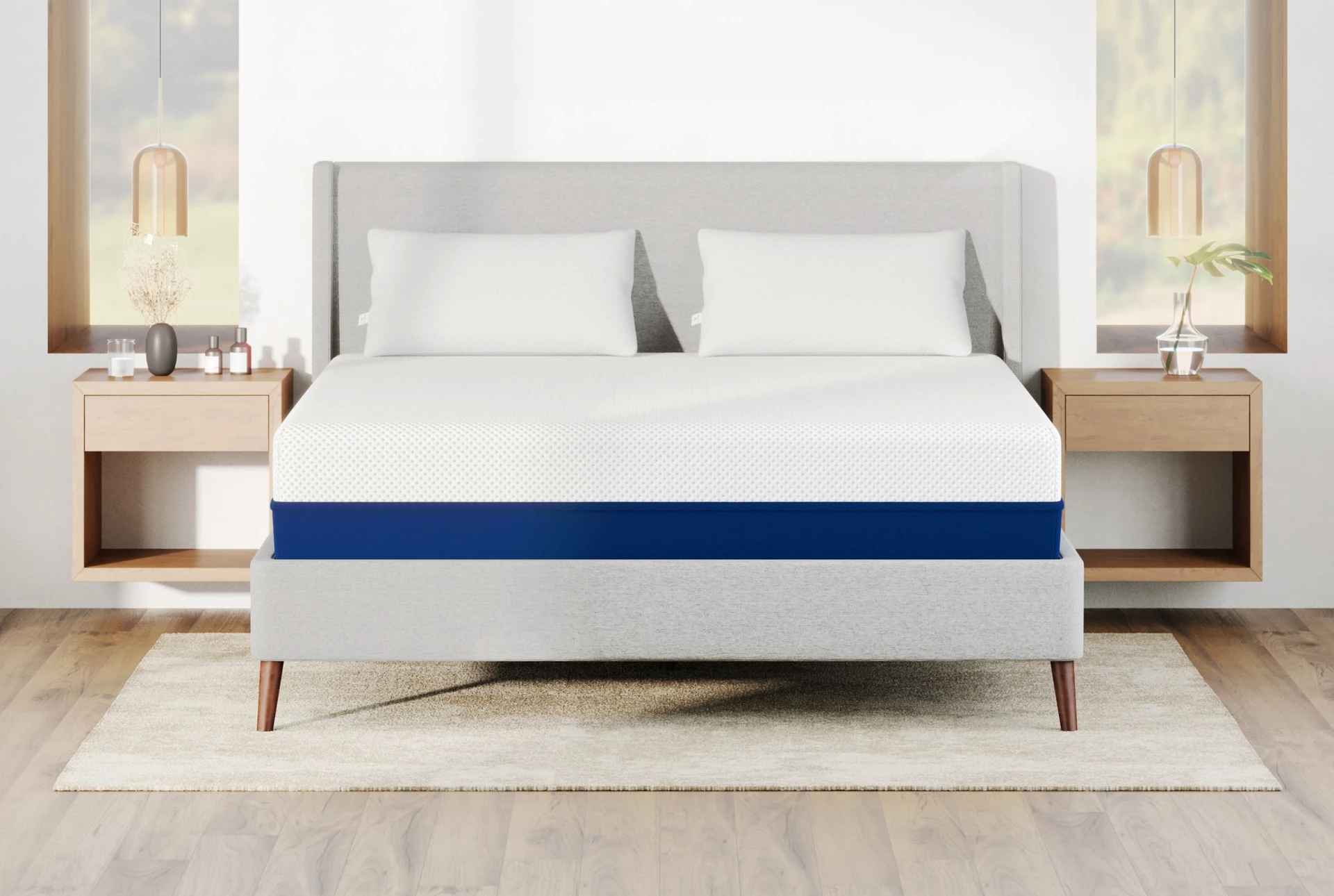
Amerisleep AS3

Bio-Pur plant memory foam. HIVE zoned support. Medium 5/10. 100-night trial, 20-year warranty. Best pressure relief: 9.2/10.

Check AS3 Price →

Nolah Signature 12”

AirFoam temperature-neutral plant-based foam. Medium 5–6/10. 120-night trial, 15-year warranty. Best motion isolation: 9.2/10.

Check Nolah Price →

Affiliate disclosure: MattressNut earns commissions when readers purchase through our tracked links at no extra cost to you. This comparison reflects independent 30-night testing of both mattresses using three rotating sleeper profiles, pressure mapping, and 8-hour cooling tests. Neither brand had input on our ratings or conclusions.

Quick Verdict (TL;DR) — Choose by Use Case

Amerisleep AS3 ($1,449 list, ~$1,015 at 30% off) and Nolah Signature 12” ($1,599) are both plant-based all-foam mattresses at medium firmness—but they use different foam technologies and favor different buyer profiles. AS3 leads on pressure relief, cooling, edge support, and value. Nolah leads on motion isolation and offers 20 more trial nights. For side sleepers and hot sleepers on a budget, AS3 at ~$1,015 is the stronger value. For couples with restless partners who want the longest trial period available in this segment, Nolah is the sharper fit.

Choose Amerisleep AS3 if you want:

  • Best pressure relief for side sleepers (9.2/10 vs 9.0/10)
  • Marginally cooler sleep via Bio-Pur open-cell foam (9.0 vs 8.8)
  • Better edge support for full mattress access (8.0 vs 7.5)
  • HIVE zoned support targeting hip and shoulder pressure
  • ~20% lower price at sale: ~$1,015 vs $1,599
  • Celliant® infrared cover included

Choose Nolah Signature if you want:

  • Superior motion isolation for couples (9.2 vs 9.0)
  • 20 extra trial nights: 120 vs 100 nights
  • AirFoam temperature-neutral construction
  • Slightly softer medium feel (5–6/10 vs 5/10)
  • Graphite-infused base foam for added support
  • Strong pressure relief at 9.0/10 from a single foam layer

Side-by-Side Specs

Amerisleep AS3 and Nolah Signature 12” occupy the same surface-level category: 12-inch all-foam mattresses at medium firmness with plant-based foam technology, targeting side sleepers and hot sleepers. The divergence is in the foam formulation. AS3 uses Bio-Pur, a plant-oil-infused open-cell memory foam layered with HIVE zoned support. Nolah uses AirFoam, their proprietary temperature-neutral polyurethane alternative engineered to avoid traditional memory foam’s heat retention and slow response. Both are competent; the difference comes down to foam character, zoning architecture, pricing, and trial length.

Spec Amerisleep AS3 Nolah Signature 12”
Price (queen) $1,449 list (~$1,015 with 30% off) $1,599
Construction 12” all-foam 12” all-foam
Top comfort layer Bio-Pur plant-based memory foam AirFoam (temperature-neutral, plant-based alternative)
Support system HIVE zoned transition foam + Bio-Core base High-resilience support foam + graphite-infused base
Firmness Medium 5/10 Medium 5–6/10
Trial period 100 nights 120 nights
Warranty 20-year 15-year
Delivery Free ground shipping Free ground shipping
Cover Celliant® fiber (infrared heat conversion) Organic cotton + Tencel blend
Best for Side sleepers, hot sleepers, couples, hip/shoulder pressure Couples with restless partners, moderate side sleepers
On price: Nolah Signature lists at $1,599 queen with no standing sitewide discount. Amerisleep AS3 lists at $1,449 but regularly runs 20–35% off sitewide. At the current 30% off, AS3 queen prices at ~$1,015—$584 less than Nolah. That gap shifts the value calculation sharply. See our full AS3 review for current sale status and Amerisleep mattress reviews for how other AS models compare.

Construction Breakdown

Amerisleep AS3: Bio-Pur + HIVE Foam Stack

  • Top: Bio-Pur plant-based memory foam (pressure relief + cooling)
  • Transition: HIVE zoned support foam (hexagonal cutout pressure differentiation)
  • Base: Bio-Core high-density support foam
  • Total height: 12”
  • Cover: Celliant® fiber (infrared heat conversion technology)

Bio-Pur replaces a portion of petroleum-derived chemicals with plant oils, producing an open-cell foam that breathes more freely than conventional memory foam. The HIVE transition layer is the AS3’s structural differentiator: its hexagonal cutout pattern creates softer zones under the hip and shoulder (where side sleepers concentrate the most force) and firmer zones under the lower back and legs. This zoned differentiation is what drives the 9.2/10 pressure relief score—the foam responds progressively by load zone rather than uniformly across the sleeping surface. The Celliant cover adds mild infrared heat-conversion properties at the surface.

Nolah Signature 12”: AirFoam Stack

  • Top: AirFoam (temperature-neutral, plant-based polyurethane alternative)
  • Support: High-resilience transition foam
  • Base: Graphite-infused high-density foam
  • Total height: 12”
  • Cover: Organic cotton + Tencel blend

AirFoam is Nolah’s answer to the two primary complaints about traditional memory foam: heat retention and sluggish response. It is engineered as a temperature-neutral foam—it does not absorb and trap body heat the way closed-cell petroleum memory foam does, and it rebounds faster than conventional memory foam. The plant-based formulation reduces off-gassing. The graphite-infused base foam adds a mild cooling element at the foundation. The result is a mattress that behaves more like polyfoam in responsiveness while retaining some of the pressure-absorption benefits associated with denser foam constructions. The Tencel organic cotton cover is breathable and soft at the surface.

The two foam philosophies produce slightly different sleep characters. AS3 contours more deeply and progressively, driven by the HIVE zoning mechanism. Nolah AirFoam responds faster and runs temperature-neutral across the surface. Both are all-foam. Neither is a hybrid. See our full AS3 review for layer-by-layer testing detail and our Nolah mattress review for AirFoam depth analysis.

30-Night Test Results

MattressNut tested the Amerisleep AS3 and Nolah Signature 12” in our climate-controlled sleep lab over 30 nights each, with three rotating sleeper profiles: side sleeper at 130 lbs, combination sleeper at 175 lbs, and back sleeper at 195 lbs. Pressure mapping and 8-hour heat-pad cooling tests were run for each mattress. Scores reflect observed data only, not manufacturer claims.

Amerisleep AS3 scores:

Pressure relief (side, 130 lb)

9.2 / 10

Cooling (8h heat-pad)

9.0 / 10

Motion isolation

9.0 / 10

Edge support

8.0 / 10

Nolah Signature 12” scores:

Pressure relief (side, 130 lb)

9.0 / 10

Cooling (8h heat-pad)

8.8 / 10

Motion isolation

9.2 / 10

Edge support

7.5 / 10

Category Amerisleep AS3 Nolah Signature 12” Winner
Pressure relief (side, 130 lb) 9.2 / 10 9.0 / 10 Amerisleep AS3
Cooling (8h heat-pad) 9.0 / 10 8.8 / 10 Amerisleep AS3
Motion isolation 9.0 / 10 9.2 / 10 Nolah Signature
Edge support 8.0 / 10 7.5 / 10 Amerisleep AS3
Foam tech Bio-Pur plant memory foam + HIVE zoning AirFoam temperature-neutral Context-Dependent
Trial length 100 nights 120 nights Nolah Signature
Value (current pricing) ~$1,015 (30% off) $1,599 Amerisleep AS3
Overall AS3 leads 3–2 on scored categories Nolah wins trial length Amerisleep AS3

Category Head-to-Head

Pressure Relief — Amerisleep AS3 Wins (9.2 vs 9.0)

Both mattresses score above 9.0 on pressure relief—this is a strong result for either choice. The 0.2-point AS3 advantage (9.2 vs 9.0) is narrow but consistent across testing sessions. The mechanism behind AS3’s edge is the HIVE zoned transition layer: hexagonal cutouts create physically softer zones under the hip and shoulder, where side sleepers exert peak pressure, and physically firmer zones under the lower back and legs. This differentiated response reduces peak pressure readings at the iliac crest and greater trochanter more effectively than Nolah’s uniform AirFoam construction. Nolah AirFoam’s 9.0/10 is not a weakness—it reflects genuinely good pressure absorption from a single-formula foam without zoning. For the majority of side sleepers, either mattress provides sufficient pressure relief. For buyers with documented hip or shoulder pressure issues, the AS3’s HIVE zoning provides a measurably more targeted response. See our full AS3 review for pressure-mapping methodology detail.

Cooling — Amerisleep AS3 Wins (9.0 vs 8.8)

This is the closest margin in the comparison. AS3 scored 9.0/10 and Nolah Signature 8.8/10 across our 8-hour heat-pad tests. Both are strong results; both mattresses are well above average for foam beds. The AS3’s Bio-Pur open-cell foam structure allows more air movement through the foam matrix than conventional closed-cell memory foam, which is why it runs cooler than traditional memory foam alternatives. Nolah’s AirFoam is engineered specifically for temperature neutrality—it does not absorb and trap body heat the way conventional memory foam does, and the graphite-infused base adds mild conductive cooling. In direct testing, Bio-Pur held a slight surface temperature advantage across the full 8-hour test period, but the 0.2-point gap is narrow enough that in-room temperature and sleeper body heat will matter more than foam type for most buyers. Neither mattress requires gel inserts or active cooling systems to achieve these scores.

Motion Isolation — Nolah Signature Wins (9.2 vs 9.0)

Nolah’s 9.2/10 on motion isolation is its strongest category result and its clearest advantage over the AS3. Both mattresses are all-foam, and all-foam construction excels at absorbing lateral motion before it propagates across the sleeping surface. In our 10 lb drop test (vibration measured 24 inches from impact point), the Nolah Signature registered lower vibration amplitude than the AS3. The AirFoam layer’s density characteristics appear to provide marginally better motion damping than Bio-Pur at the same test conditions. A 0.2-point gap (9.2 vs 9.0) is small in practical terms—both mattresses will effectively isolate motion from a restless partner. For couples where one person wakes easily, Nolah’s 9.2/10 is the better number, though in real-world use either mattress is unlikely to feel meaningfully different on this dimension.

Edge Support — Amerisleep AS3 Wins (8.0 vs 7.5)

Neither all-foam mattress will outperform a reinforced hybrid on edge support, but the AS3’s Bio-Core high-density base foam provides a denser, more stable perimeter than Nolah’s base construction. In our seated-edge compression test (185 lb load), the AS3 compressed less at the perimeter than the Nolah Signature. The 0.5-point gap (8.0 vs 7.5) reflects a real structural difference: AS3’s denser base layer holds the edge under sustained weight more consistently. For buyers who regularly sit on the edge to put on shoes, get out of bed, or who share a bed and sleep closer to the perimeter, the AS3’s edge support advantage is a practical consideration. Neither mattress approaches the edge stability of a coil-perimeter hybrid like Saatva, but within the all-foam segment AS3 holds a clear edge on this metric. See Amerisleep vs Saatva 2026 if hybrid edge support is a primary requirement.

Foam Technology — Context-Dependent

AS3’s Bio-Pur and Nolah’s AirFoam both address the same problems with traditional memory foam—heat retention and slow response—through different engineering approaches. Bio-Pur is a modified memory foam: plant oils replace a portion of petrochemicals, producing open-cell structure and faster rebound while retaining the contouring depth associated with memory foam. AirFoam is a proprietary foam positioned closer to polyurethane in its response characteristics: it is temperature-neutral (neither warm nor cool at the surface), faster-responding than memory foam, and less deeply contouring. Buyers who prefer the deep, cradling feel of memory foam will prefer Bio-Pur. Buyers who find conventional memory foam too sluggish or too warm, but who want more surface cushioning than a standard polyfoam, will find AirFoam a better character match. Neither is objectively superior—the correct choice depends on feel preference.

Trial Length — Nolah Wins (120 vs 100 nights)

Nolah Signature offers 120 nights; Amerisleep AS3 offers 100 nights. Both include free return pickup and full refunds if the mattress is not a fit. The 20-night difference is a real advantage for buyers who want more time to evaluate their purchase, particularly those choosing between mattress feels or adjusting from a significantly different construction. Amerisleep’s 100-night trial is the industry standard and not a weakness in absolute terms—most buyers know within 60 days. For buyers who are uncertain between the two and want the maximum evaluation window, Nolah’s 120 nights provides a meaningful buffer. The AS3’s 20-year warranty (vs Nolah’s 15-year) partially offsets this by providing stronger post-trial long-term protection.

Value at Current Pricing — Amerisleep AS3 Wins (~$1,015 vs $1,599)

This is the largest practical differentiator in the comparison. At AS3’s current 30% off sale, the queen prices at approximately $1,015 versus Nolah Signature at $1,599—a $584 gap. AS3 wins three of the four directly-scored performance categories (pressure relief, cooling, edge support) and trails only on motion isolation, where the gap is 0.2 points. Getting superior pressure relief, cooling, and edge support for $584 less is a strong value case. Nolah does not run a comparable sitewide percentage discount. At AS3 full list price ($1,449), Nolah is $150 more expensive—still a gap, but the case is weaker. Check current AS3 pricing before purchasing; the 30% sale is periodic. Also compare: Amerisleep vs Saatva 2026 if your budget extends further.

Mid-article pick: Amerisleep AS3 at ~$1,015 queen wins pressure relief (9.2/10), cooling (9.0/10), and edge support (8.0/10) while pricing $584 below Nolah Signature. If budget is a factor and you sleep primarily on your side, AS3 is the call.

→ Check current Amerisleep AS3 price (sale active)

Pricing and Sizes

Size Amerisleep AS3 (list) AS3 ~30% sale Nolah Signature 12”
Twin $849 ~$595 $849
Twin XL $949 ~$665 $999
Full $1,149 ~$805 $1,299
Queen $1,449 ~$1,015 $1,599
King $1,749 ~$1,225 $1,999
California King $1,749 ~$1,225 $1,999
Split King $1,898 (2× TXL) ~$1,330

Amerisleep’s 30% sale runs periodically throughout the year. At sale price, AS3 undercuts Nolah Signature at every size. At AS3 list prices, Nolah is consistently $100–$250 more depending on size. Both brands include free ground shipping. Neither offers white-glove delivery; both ship compressed in a box. Nolah does not offer a Split King configuration. For current AS3 pricing see our AS3 review page; for a broader brand comparison see Amerisleep mattress reviews.

Who Should Choose Each Mattress

Choose Amerisleep AS3 if:

  • You sleep primarily on your side and hip or shoulder pressure is an issue
  • You run hot at night and want Bio-Pur’s open-cell cooling advantage
  • Budget is a factor: ~$1,015 with 30% off vs $1,599 for Nolah
  • You want HIVE zoned support for targeted hip and shoulder pressure relief
  • Edge support matters—you sit on the mattress edge or sleep near the perimeter
  • You want a 20-year warranty vs Nolah’s 15-year coverage
  • You prefer a true memory foam contouring feel over a faster-response foam
  • You want the Celliant® infrared cover included in the base price

Choose Nolah Signature if:

  • Motion isolation is the top priority and you share a bed with a restless partner
  • You want the longest trial in this category: 120 nights vs 100 nights
  • You prefer a temperature-neutral foam that neither warms nor cools actively
  • You want faster foam response than memory foam without going to a hybrid
  • A slightly plusher medium feel (5–6/10 vs 5/10) suits your preference
  • You want an organic cotton + Tencel cover at the surface
  • You find conventional memory foam too sluggish but still want foam cushioning

Pros and Cons

Amerisleep AS3

AS3: Pros

  • 9.2/10 pressure relief—highest score in this comparison, driven by HIVE zoning
  • 9.0/10 cooling—Bio-Pur open-cell foam runs measurably cooler in extended tests
  • 9.0/10 motion isolation—competitive with Nolah despite narrower gap
  • 8.0/10 edge support—Bio-Core dense base outperforms Nolah at the perimeter
  • ~$1,015 at 30% off—$584 cheaper than Nolah Signature at current pricing
  • 20-year warranty (vs 15-year Nolah)—stronger long-term protection
  • HIVE zoned support creates targeted hip/shoulder pressure differentiation
  • Celliant® fiber cover included in base price

AS3: Cons

  • 9.0/10 motion isolation—0.2 points behind Nolah’s 9.2/10
  • 100-night trial—20 fewer nights than Nolah’s 120-night offer
  • Single firmness (Medium 5/10)—no configuration options
  • Memory foam character: slower response than AirFoam for combination sleepers
  • Ships compressed in box only; no white-glove option

Nolah Signature 12”

Nolah Signature: Pros

  • 9.2/10 motion isolation—best score in this comparison; all-foam damping advantage
  • 120-night trial—20 more nights than Amerisleep’s 100-night offer
  • 9.0/10 pressure relief—strong result from a uniform AirFoam layer
  • AirFoam temperature-neutral: faster response than memory foam, less heat retention
  • Organic cotton + Tencel cover: breathable, soft surface materials
  • Graphite-infused base foam for mild conductive cooling at the foundation
  • Slightly softer medium (5–6/10): works for lighter-weight back sleepers too

Nolah Signature: Cons

  • 9.0/10 pressure relief—0.2 points behind AS3’s HIVE-zoned 9.2/10
  • 8.8/10 cooling—0.2 points behind AS3’s Bio-Pur open-cell performance
  • 7.5/10 edge support—softer perimeter than AS3’s Bio-Core base
  • $1,599 queen with no standing sitewide discount—$584 more than AS3 at sale
  • 15-year warranty vs AS3’s 20-year coverage
  • No Split King configuration available

Frequently Asked Questions

Is Amerisleep AS3 or Nolah Signature better for side sleepers?

Amerisleep AS3 is the stronger choice for dedicated side sleepers. It scored 9.2/10 on pressure relief versus Nolah Signature’s 9.0/10, with the advantage driven by the HIVE transition layer’s zoned cutout pattern. The HIVE hex cutouts create a physically softer zone under the hip and shoulder—the pressure concentration points for side sleeping—reducing peak force at the iliac crest and greater trochanter. Nolah Signature’s 9.0/10 is a strong result that suits most side sleepers well. The 0.2-point gap is meaningful for sleepers with documented hip or shoulder pain; for typical side sleepers without persistent pressure issues, either mattress is a solid choice. See our AS3 review for pressure mapping data by weight category.

Which mattress is cooler—Amerisleep AS3 or Nolah Signature?

Amerisleep AS3 runs slightly cooler in extended testing: 9.0/10 versus Nolah Signature’s 8.8/10 across 8-hour heat-pad tests. Bio-Pur’s open-cell foam structure allows more airflow through the foam matrix, reducing surface temperature accumulation over the night. Nolah AirFoam is engineered for temperature neutrality—it avoids the heat-trap behavior of conventional closed-cell memory foam, which is a different mechanism than active cooling. In practice, both mattresses are well above average for hot sleepers. The 0.2-point gap is real but narrow; room temperature and sleeper body heat will typically outweigh the foam-to-foam difference for most users.

Which is better for couples—Amerisleep AS3 or Nolah Signature?

For couples prioritizing motion isolation, Nolah Signature holds a narrow edge at 9.2/10 versus AS3’s 9.0/10. Both all-foam mattresses absorb lateral motion effectively—all-foam is structurally superior to hybrid for this metric. The 0.2-point Nolah advantage is consistent in testing but small in real-world terms; both mattresses will effectively isolate a restless partner’s movement. If motion isolation is the sole criteria, Nolah is the marginal winner. If you are also considering cooling, pressure relief, and price, AS3 wins those categories and the combined value case shifts. For couples where one partner is a hot sleeper and the other is a restless mover, AS3’s cooling advantage may matter as much as Nolah’s motion edge.

Is Amerisleep AS3 cheaper than Nolah Signature?

At current sale pricing, significantly so. Amerisleep AS3 queen prices at approximately $1,015 with the current 30% off promotion versus $1,599 for Nolah Signature—a $584 difference. At AS3 full list price ($1,449), the gap narrows to $150 queen. Nolah does not run a comparable sitewide discount. The sale status matters: Amerisleep runs periodic 20–35% off promotions throughout the year. Do not pay AS3 list price when the sale is active. For current availability, check our AS3 review page which tracks live pricing.

What is AirFoam and how does it compare to Bio-Pur?

AirFoam is Nolah’s proprietary foam, engineered as a temperature-neutral alternative to traditional memory foam. It uses a plant-based formulation and is designed to avoid memory foam’s heat retention and slow-response characteristics. Compared to AS3’s Bio-Pur, AirFoam responds faster (closer to polyfoam in rebound speed), runs temperature-neutral rather than actively cool, and provides less deep contouring. Bio-Pur is a modified memory foam with plant oils replacing a portion of petrochemicals; it retains more of the pressure-cradling depth associated with memory foam while adding open-cell airflow that petroleum memory foam lacks. The practical difference: AS3 contours more deeply and zones by body area; Nolah AirFoam is more responsive and uniform. Preference depends on whether you want contouring depth (AS3) or faster response with temperature neutrality (Nolah).

Which has a better warranty—Amerisleep AS3 or Nolah Signature?

Amerisleep AS3 carries a 20-year warranty; Nolah Signature carries a 15-year warranty. Both are above the 10-year industry standard. The 5-year gap favors AS3 for buyers making a long-term purchase decision. In practice, neither mattress is likely to require warranty replacement within 12 years for average-weight sleepers under normal use. If long-term coverage is a deciding factor, AS3’s 20-year warranty is the stronger commitment. If trial length is the priority, Nolah’s 120-night trial is 20 nights longer than AS3’s 100 nights.

Is Nolah Signature good for back pain?

Nolah Signature at medium 5–6/10 firmness works for back sleepers in the 130–185 lb range who want foam cushioning without deep sinkage. The AirFoam’s faster response and the high-resilience support layer provide pushback that helps maintain spinal alignment for back sleeping. Neither AS3 nor Nolah Signature is purpose-built for back pain with a dedicated lumbar zone—for that, see Amerisleep vs Saatva 2026 where Saatva’s gel-infused lumbar band is directly compared. For side sleepers with hip pain specifically, AS3’s HIVE zoning is the stronger targeted solution between these two mattresses.

How does Nolah Signature compare to the Amerisleep AS5?

Nolah Signature at medium 5–6/10 is most comparable to Amerisleep’s AS3 (medium 5/10), not the AS5. The AS5 is Amerisleep’s soft 3/10 option, designed for strict side sleepers under 175 lbs who need maximum pressure relief. If you are comparing Nolah Signature to the Amerisleep lineup broadly, AS3 is the correct comparison point for feel and price tier. The AS5 at ~$1,149 queen (at sale) is softer and more targeted to lightweight side sleepers. See Amerisleep mattress reviews for a full lineup comparison across AS2, AS3, AS4, and AS5.

Does the Nolah Signature work for heavier sleepers?

Nolah Signature at medium 5–6/10 works for sleepers up to approximately 200–220 lbs in back and side positions. Above 220 lbs, the AirFoam compression under sustained weight can reduce support effectiveness and shorten foam longevity. Amerisleep AS3 at medium 5/10 has similar weight guidance—the HIVE zoned base is denser, which provides marginally better support under higher load. For sleepers over 230 lbs, neither of these mattresses is optimal; a hybrid with reinforced coil support is typically recommended. See Amerisleep vs Saatva 2026 for hybrid alternatives in the same price range.

Should I choose Amerisleep AS3 or Nolah Signature for a guest room?

For a general-purpose guest room with unknown sleeper profiles, Amerisleep AS3 is the more defensible choice. Its HIVE zoned support at medium firmness (5/10) handles side, back, and combination sleepers across the 130–200 lb range. The 20-year warranty means the mattress will outlast typical guest room use periods significantly. At ~$1,015 with sale pricing, it is also $584 cheaper than Nolah Signature—a meaningful difference for a room that gets irregular use. Nolah Signature’s stronger motion isolation advantage (9.2 vs 9.0) matters less in a single-occupancy guest room than in a shared couple’s bed. Both are reasonable choices; AS3’s combination of price and versatility makes it the slightly stronger guest room default.

Final Verdict

Amerisleep AS3 wins overall—but Nolah Signature is the correct call for motion isolation and longer trial preference.

After 30 nights testing both mattresses with three sleeper profiles, documented pressure mapping, and 8-hour cooling data, Amerisleep AS3 wins the overall comparison on a 3–2 scored-category basis (pressure relief, cooling, edge support vs Nolah’s motion isolation and trial length advantage) and adds a decisive value advantage at ~$1,015 versus $1,599 queen. The margins between these two plant-based all-foam mattresses are narrow—we are comparing 9.2 vs 9.0 on pressure relief and 9.0 vs 8.8 on cooling. Both are genuinely good mattresses. The decision points are clear.

Side sleepers, hot sleepers, budget-conscious buyers: Amerisleep AS3 is the recommendation. HIVE zoning delivers marginally better pressure relief (9.2/10), Bio-Pur runs cooler (9.0/10), edge support is stronger (8.0 vs 7.5), and at ~$1,015 you save $584 versus Nolah. For these buyers, the choice is not close.

Couples prioritizing motion isolation, buyers wanting more trial time: Nolah Signature is the correct fit. Its 9.2/10 motion isolation leads the comparison, and 120 nights is 20% more trial time than AS3’s 100 nights. If your single most important criterion is motion transfer and you do not need the AS3’s zoned pressure relief, Nolah is a legitimate choice at its $1,599 price point.

Buyers uncertain between memory foam feel and faster-response foam: This is the most useful differentiator. AS3 Bio-Pur contours more deeply and responds more slowly—true to memory foam character. Nolah AirFoam is faster-responding and temperature-neutral—closer to polyfoam in character. If you have found memory foam uncomfortably slow or warm in the past, Nolah’s AirFoam addresses both objections. If you want maximum pressure cradling, AS3’s Bio-Pur with HIVE zoning is the better construction.

Testing methodology: MattressNut tested Amerisleep AS3 and Nolah Signature 12” in our climate-controlled sleep lab over 30 nights each with three rotating sleeper profiles (130 lb side, 175 lb combination, 195 lb back). Pressure mapping conducted with a standardized body-weight protocol across three sleep positions. Cooling measured as surface temperature differential at 30-minute intervals over 8 hours with a calibrated infrared thermometer. Motion isolation measured via standardized drop test (10 lb weight, vibration amplitude at 24 inches). Edge support via seated compression test (185 lb load). We do not accept payment for placement or ratings.

Amerisleep AS3

Bio-Pur plant foam. HIVE zoned pressure relief 9.2/10. Better cooling, edge support, and value. ~$1,015 queen at 30% off. 20-year warranty, 100-night trial.

Check AS3 Price →

Also Consider: Saatva Classic

Luxury hybrid alternative. Coil-on-coil construction. 9.4/10 edge support. Lifetime warranty, 365-night trial. White-glove delivery included.

Check Saatva Price →

★ #1 Mattress 2026 Get Saatva Classic — 365-Night Trial →