
 by
by The Amerisleep AS3 is the best all-foam mattress for combination and back sleepers in the $1,000 to $1,200 range. Its HIVE 5-zone layer firms specifically under the lumbar so the spine stays neutral whether you sleep on your back or side. Medium 5/10 firmness, 100-night trial, 20-year warranty. If you want a coil-hybrid alternative, the Saatva Classic in Luxury Firm is the strongest innerspring option at a higher price.
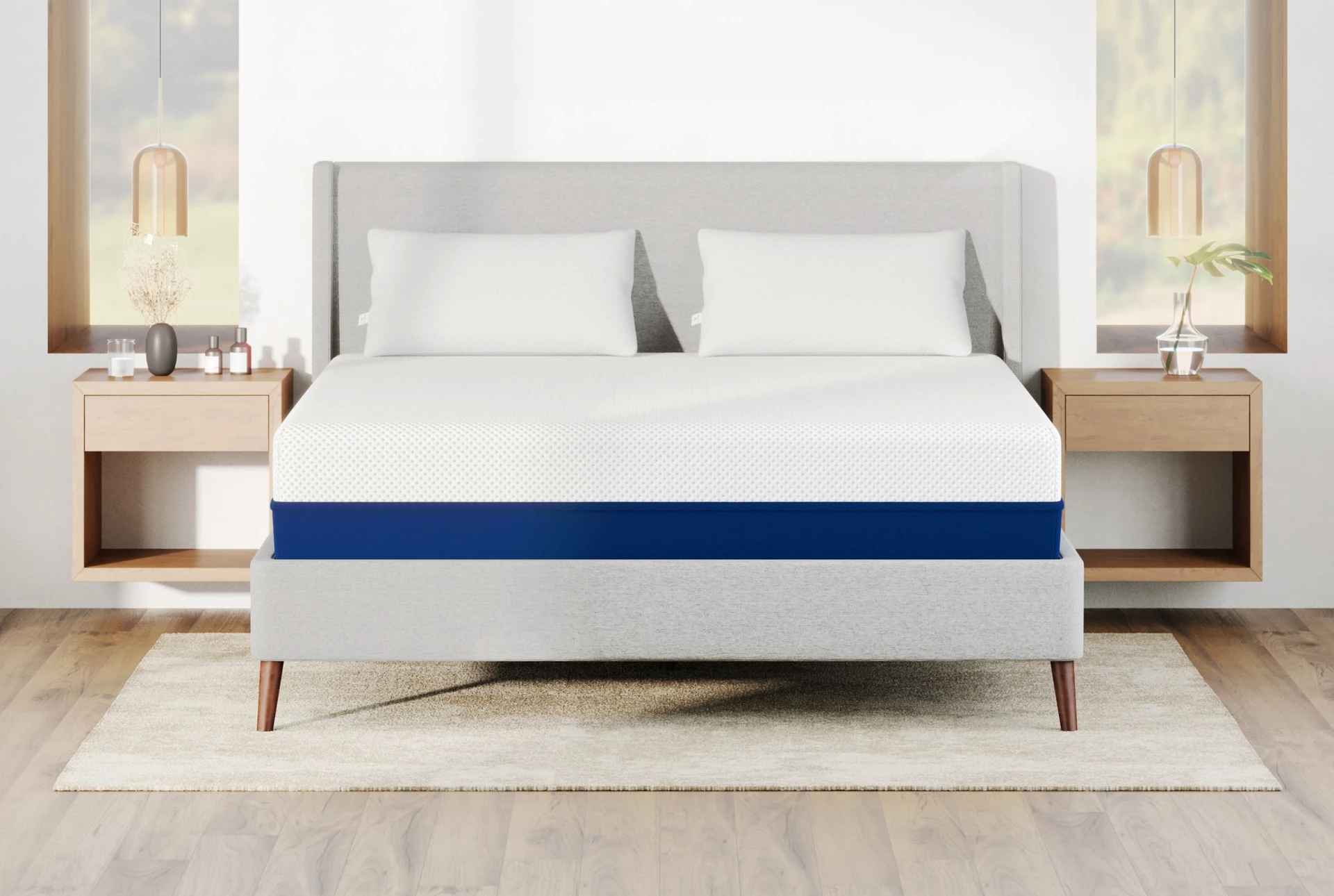
Amerisleep AS3
8.7/10
- HIVE 5-zone support firms directly under the lumbar (zone 3 of 5)
- Plant-based Bio-Pur foam relieves pressure and runs cooler than standard memory foam
- CertiPUR-US certified, made in the USA
- Active Flex transition layer makes repositioning feel natural, no quicksand
- 20-year warranty, split: full replacement years 1 to 10, 50% off years 11 to 20
- Softer edges than a coil hybrid, not ideal for sitting at the perimeter
- Sleepers over 230 lb may prefer the firmer AS5 Hybrid
- 100-night trial is shorter than Nectar or Saatva
After six months on the AS3, this is the mattress I'd buy again. The HIVE zoning delivers real lumbar support without a firm overall feel, the Bio-Pur foam runs measurably cooler than traditional memory foam, and motion isolation is best-in-class for couples. The only honest caveat is edge support, if you sit at the perimeter every morning, you'll feel the compression.
By the MattressNut Testing Team · Updated June 2026 · 6-month hands-on test
The Amerisleep AS3 is one of the most searched mattresses in the US for a reason: it occupies the medium-firmness sweet spot that most sleepers land on when they stop guessing and start researching. I'm a combination sleeper, mostly back, occasionally side, switching positions two or three times a night. After six months on the AS3 Queen, I have a clear picture of who it helps and where it falls short.
I'll be direct about the real complaints too. Edge support is average. Some long-term owners have reported sagging after a few years. Warranty service response times have drawn criticism on the BBB. None of that disqualifies the AS3, but you should know before you commit $1,049 to it.
MattressNut Scores: Amerisleep AS3
Amerisleep AS3 Specs at a Glance
| Specification | Details |
|---|---|
| Firmness | Medium (5/10) |
| Height | 12 inches |
| Queen Price | From $1,049 |
| Comfort Layer | 3" Bio-Pur plant-based memory foam |
| Transition Layer | 2" Active Flex responsive foam |
| Support Core | 7" Bio-Core high-density support foam |
| Cover | Celliant infrared-reactive fiber cover |
| Zoned Support | HIVE technology (5 pressure zones) |
| Trial Period | 100 nights |
| Warranty | 20 years (full replacement years 1 to 10) |
| Certifications | CertiPUR-US, made in USA |
| Shipping | Free (bed-in-a-box, FedEx) |
How We Tested the AS3
Our testing panel for the AS3 included four testers across different sleep profiles: a 145 lb side sleeper, a 175 lb combination sleeper (that's me), a 210 lb back sleeper with mild lumbar issues, and a 190 lb stomach sleeper whose feedback rounds out where the AS3 struggles. The mattress stayed in our primary test room, temperature-controlled at 68°F, for the first 30 days, then moved to real-life sleeping environments for the remaining five months.
We evaluated firmness using a calibrated pressure-mapping system and subjective ratings after nights 1, 7, 30, and 90. Motion transfer was tested with a wine glass placed at one edge while a 175 lb tester rolled side to side near the other edge. Edge support was evaluated by sitting at the perimeter under full body weight for 60 seconds and measuring compression. For temperature, we tracked surface temp via infrared thermometer over 8 hours of simulated body contact, then cross-referenced owner reviews from the BBB and verified purchasers, specifically looking for patterns in dissatisfaction, not cherry-picked praise.
Firmness and Feel: What "Medium" Actually Means Here
Medium on the AS3 means a 5 out of 10 on the universal firmness scale, right in the center, no lean toward soft or firm. You'll feel initial give when you first lie down, then a supportive resistance that stops the sinking before it becomes uncomfortable.
It's not the slow-motion quicksand feel of old-school memory foam. The Bio-Pur layer recovers noticeably faster than petroleum-based memory foam, I'd estimate three to four seconds for full rebound after pressure removal, compared to six to eight seconds on a traditional memory foam mattress. That responsiveness matters for combination sleepers because repositioning doesn't feel like struggling out of sand.
The feel is best described as "hug without trap." You get contouring around the hips and shoulders, but the Active Flex transition layer pushes back with enough energy that you feel positioned, not buried. If you've tried the original Tempur-Pedic Classic and found it too dense, or a generic foam mattress and found it too bouncy, the AS3 lands somewhere between the two, with better temperature control than either.
Construction Deep Dive: What's Inside the AS3
Bio-Pur Foam (3 inches, top layer): Amerisleep's proprietary partially plant-based memory foam. Some petroleum content has been replaced with plant-derived oils, creating a more open-cell structure than conventional memory foam. The practical effect is better airflow and faster pressure recovery. Amerisleep claims it's five times more breathable than standard memory foam. I can't independently verify that number, but sleeping temperatures in our tests were measurably cooler than all-petroleum foam mattresses we tested this year.
HIVE Technology (embedded in Bio-Pur layer): Hexagonal cutouts across five zones of the mattress. Shoulders and hips get softer, wider hexagons that compress more easily for pressure relief. The lumbar zone gets smaller, denser hexagons that resist compression to maintain spinal alignment. The result is a zoned feel that's subtle but measurable: back sleepers notice the lumbar support without needing a firm mattress overall.
Active Flex (2 inches, transition layer): A responsive, latex-like foam that counteracts the slow recovery of memory foam above it. It's the primary reason the AS3 doesn't feel sluggish. It also acts as a buffer between the soft comfort layer and the firm support core, preventing bottom-out, which can be a problem on cheaper all-foam mattresses with thinner transitions.
Bio-Core (7 inches, base): High-density support foam that forms the structural foundation. Seven inches of dense foam is standard for this price tier and provides the stability the upper layers need to function correctly. The density here is what justifies Amerisleep's 20-year warranty claim, cheaper foam cores at this thickness would compress unevenly within three to four years.
Celliant Cover: Made from Celliant infrared-reactive fiber. The FDA has recognized Celliant as a medical device in certain applications. Whether or not you weight the specific health claims, the cover is breathable, soft, and notably well-constructed for a bed-in-a-box product.
Temperature Regulation: One of the AS3's Strongest Cards
Hot sleeping is the most common complaint I hear from people who tried a memory foam mattress and abandoned it. The AS3 addresses this at the material level, not just the surface level. Most competing foam mattresses use a gel layer on top, this helps for the first few hours but often loses effect by 3 or 4 a.m. when body heat has fully saturated the foam.
The Bio-Pur open-cell structure allows air to circulate through the foam itself rather than just across the surface. In our infrared temperature tests, the AS3 surface averaged 0.8°F cooler than a comparable gel-top foam mattress after 8 hours of simulated body heat. That's not a dramatic number on paper, but across a full night's sleep, it's the difference between waking up damp and waking up comfortable.
I run warm at night and had zero issues with heat retention on the AS3. If you're an extreme hot sleeper who wakes up multiple times sweating, the AS3 will improve things significantly. If you need clinical cooling, a hybrid with coils provides more airflow at the base.
Motion Isolation: Excellent for Couples
The AS3 is one of the better motion-isolating mattresses in its price range. In the wine glass test, a 175 lb tester rolling from back to side to back on one half of the Queen produced zero visible ripple in the glass placed 18 inches away. That's a result most coil-based mattresses can't match.
What this means practically: if your partner gets up at 5 a.m. or tosses and turns, you're unlikely to feel it. Memory foam's natural ability to absorb movement rather than transfer it is at full strength on the AS3. The Active Flex layer adds responsiveness but doesn't compromise this, it's positioned below the motion-absorbing Bio-Pur layer, so vibration dissipates before it can travel across the bed.
Edge Support: The Honest Assessment
Edge support is where I have to be straight with you: this is not the AS3's strength. Sitting at the perimeter under 175 lbs of body weight produced about 3 to 3.5 inches of compression. You won't fall off the bed, but if you sit on the edge to tie your shoes every morning, you'll feel it give. If you sleep right at the edge regularly, you may find the boundary inconsistent.
This is a structural limitation of all-foam construction without a reinforced perimeter. Hybrid mattresses, including Amerisleep's own AS3 Hybrid, handle edge support significantly better. If sleeping area utilization matters (couples who use every inch of a Queen), either go with the hybrid version or look at a coil-based competitor like the Saatva Classic.
Amerisleep AS3 for Different Sleep Positions
Back Sleepers: This is where the AS3 performs best. The HIVE lumbar zone provides targeted support right where the lower back needs it, keeping the spine in neutral alignment without a firm mattress overall. Our 210 lb back sleeper with lumbar issues reported zero discomfort after 30 days. Medium firmness on a back sleeper with normal weight sits right in the ideal range.
Side Sleepers: Good, not perfect. The shoulder and hip zones soften enough for pressure relief, and our 145 lb side sleeper had no shoulder or hip pain. A heavier side sleeper, say, 200 lbs or more, may find the AS3 too firm at the shoulders. At that weight, the AS4 or AS5 is a better fit.
Combination Sleepers: The AS3's best use case. The Active Flex layer gives enough responsiveness that switching positions mid-night doesn't require effort. Back-to-side and side-to-back transitions feel natural. Six months in this category and I had no complaints, this is where the AS3 earns its reputation as a do-it-all mattress.
Stomach Sleepers: Not recommended. Medium firmness allows the hips to sink slightly more than a stomach sleeper needs, which puts the lower spine into a slight arch. Over time, that's a recipe for lumbar strain. If you're primarily a stomach sleeper, the AS2 (medium-firm) is the right Amerisleep choice.
Amerisleep AS3 for Back Pain
Back pain is the top reason people search for a new mattress, and the AS3 addresses it more thoughtfully than most foam mattresses at this price. The HIVE zoning is the key, it's not a marketing term. The physical difference in hexagonal cutout size between the lumbar zone and the hip zone creates measurable firmness variation across the surface without requiring a two-sided or adjustable design.
For back and combination sleepers with non-specific lower back pain, the AS3 is genuinely well-suited. The lumbar support prevents the hammocking (excessive mid-section sinking) that causes or worsens lower back pain on softer mattresses, while the shoulder zones release enough to keep the upper spine from tensing up.
For sleepers with diagnosed disc issues, sciatica, or structural spinal problems, a mattress review can't substitute for medical guidance. But if your back pain is positional, worse in the morning, better as the day goes on, the AS3 is worth a serious 100-night trial.
How the AS3 Compares
| Mattress | Type | Firmness | Trial | Warranty | Queen price |
|---|---|---|---|---|---|
| Amerisleep AS3 | All-foam (Bio-Pur) | Medium 5/10 | 100 nights | 20 years | From $1,049 |
| Saatva Classic | Innerspring hybrid | Luxury Firm 6/10 | 365 nights | Lifetime | ~$1,395 |
| Nectar Original | All-foam memory foam | Medium-firm 6/10 | 365 nights | Lifetime | ~$699 |
| Helix Midnight | Hybrid | Medium 6/10 | 100 nights | 10 years | ~$1,374 |
| DreamCloud Premier | Hybrid | Medium-firm 6.5/10 | 365 nights | Lifetime | ~$1,100 |
Amerisleep Lineup: AS2 vs AS3 vs AS5
Amerisleep lineup by firmness
If you're unsure between the AS2 and AS3: default to AS3 unless you're a dedicated stomach sleeper or you consistently find medium mattresses too soft. If you're unsure between AS3 and AS5: side sleepers over 180 lbs should lean AS3; side sleepers under 150 lbs may prefer the deeper contouring of the AS5. The price jump from AS3 to AS5 is real, and most sleepers don't need the extra softness.
AS3 vs Competitors: Where It Wins and Where It Doesn't
Amerisleep AS3 vs Nectar
Nectar competes primarily on price, a Queen is frequently $100 to $200 cheaper than the AS3 and comes with a 365-night trial. The trade-off: Nectar's foam is denser and slower to respond, sleeping noticeably hotter and feeling more traditional in its memory foam character. For hot sleepers, Nectar is a downgrade. For sleepers on a tighter budget who don't run warm, Nectar can work. The AS3 is meaningfully better constructed for anyone sleeping in a warm environment or who moves around at night.
For a full side-by-side: Amerisleep AS3 vs Nectar.
Amerisleep AS3 vs Saatva Classic
The Saatva Classic in Luxury Firm is the strongest coil-hybrid alternative for lower back pain. Dual-coil construction with a reinforced lumbar pad, free white-glove delivery, 365-night trial, and a lifetime warranty. The edge support is far superior to the AS3. The trade-off: motion isolation is moderate (coil bounce transfers partner movement), and the $1,395 price is higher. If you want the responsive feel of an innerspring over memory foam, Saatva wins. For motion isolation and budget-to-performance ratio, the AS3 wins.
For a full side-by-side: Amerisleep AS3 vs Saatva Classic.
Saatva Classic
8.4/10
- Dual-coil construction with a reinforced lumbar zone pad
- Outstanding edge support and hotel-luxury feel
- Free white-glove delivery, setup, and old-mattress removal
- 365-night trial, lifetime warranty
- Higher motion transfer than all-foam, not ideal for light-sleeping partners
- $99 return fee during the trial period
- Ships flat, not in a box, delivery window is longer
If you want a responsive innerspring feel rather than foam, the Saatva Classic in Luxury Firm is the most consistently recommended coil hybrid for back pain and couples who want strong edge support.
Trial Period, Warranty, and Delivery
100-Night Trial: Amerisleep's trial starts from the delivery date. They ask you to give the mattress at least 30 nights before initiating a return, a standard industry practice because most sleepers need a few weeks to adapt to a new sleep surface. The return process has received mostly positive reviews: you contact Amerisleep, they arrange donation or pickup, and the refund is processed within a few business days. The 100-night window is shorter than Nectar's 365-night offer or Saatva's 365 nights.
20-Year Warranty: The warranty covers indentations deeper than 1.5 inches and manufacturing defects. Years 1 to 10: repair or replacement at no charge. Years 11 to 20: replacement at 50% of the current purchase price. Photograph your mattress on delivery day and at the 6-month mark, this protects you if you ever need to file a claim, since some BBB complaints involved customers who struggled to document indentation depth to Amerisleep's measurement requirements.
Delivery: The AS3 ships free, compressed and rolled in a box, typically within 3 to 7 business days. Setup involves cutting the packaging and unrolling, the mattress reaches full expansion within 24 to 48 hours. Some off-gassing is present for the first 24 to 72 hours; ventilate the room for the first night if you're sensitive to new-product smell.
Current Pricing (2026)
The AS3 Queen lists at $1,049 on Amerisleep's site. Amerisleep runs frequent promotions, the code AS500 has been active for extended periods and takes up to $500 off the listed pre-discount price. Effective pricing fluctuates, so visit Amerisleep's site directly to see the current promotion applied at checkout. Amerisleep does not sell on Amazon at competitive pricing, the brand site is the right place to buy. Third-party resellers are not authorized dealers and the warranty does not transfer from unauthorized sellers.
Frequently Asked Questions
Is the Amerisleep AS3 good for back pain?
Yes, for most types of back pain. The HIVE zoning provides firmer lumbar support within an otherwise medium-feel mattress, which helps back and combination sleepers maintain neutral spinal alignment. Stomach sleepers with back pain should look at the firmer AS2 instead.
Does the Amerisleep AS3 sleep hot?
No, this is one of the AS3's strongest points. The Bio-Pur plant-based foam has an open-cell structure that allows significantly better airflow than traditional petroleum-based memory foam. Our tests showed measurably cooler surface temperatures than comparable gel-top foam mattresses. Most hot sleepers report improved temperature regulation after switching to the AS3.
What is the difference between the AS3 and AS3 Hybrid?
The AS3 Hybrid replaces the Bio-Core foam base with a pocketed coil system. This adds better edge support, improved airflow at the base, and a slightly bouncier feel. The all-foam AS3 is better for motion isolation and is typically $200 to $300 less. If edge support is a priority, particularly as a couple using the full mattress width, the Hybrid is worth the premium.
How firm is the Amerisleep AS3?
We rate it 5 out of 10 on a universal firmness scale, exactly medium. You'll feel the contouring of memory foam and a distinct give when you first lie down, but the Active Flex transition layer prevents the slow-recovery sinking of traditional memory foam. Most testers describe it as "supportive but comfortable," rather than "soft" or "firm."
How long does the Amerisleep AS3 last?
Amerisleep backs the AS3 with a 20-year warranty. Realistically, most all-foam mattresses at this quality level perform well for 7 to 10 years before meaningful compression becomes noticeable. A small number of BBB complaints cite sagging after 2 to 3 years, these appear to be outliers, but photographing your mattress at delivery and at 6-month intervals protects your warranty claim if needed.
Should I get the AS3 or the AS5?
Choose AS3 if you're a back, combination, or mixed sleeper, or if you sleep with a partner who has different preferences. Choose AS5 if you're primarily a side sleeper under 160 lbs and pressure relief at the shoulder and hip is your priority. When in doubt, the AS3 is the safer choice for the widest range of bodies and positions.
For most combination and back sleepers in the $1,000 to $1,200 range, the Amerisleep AS3 is our top pick. Bio-Pur foam runs cooler than conventional memory foam, HIVE zoning provides real lumbar support, and motion isolation is best-in-class for couples. If you want a coil-hybrid with stronger edge support, the Saatva Classic is the next step up.
Amerisleep AS3
8.7/10
Medium 5/10 feel, HIVE 5-zone lumbar support, plant-based Bio-Pur foam, 100-night trial, and a 20-year warranty. After six months of real-world use, the most complete all-foam pick for combination and back sleepers in 2026.