
 by
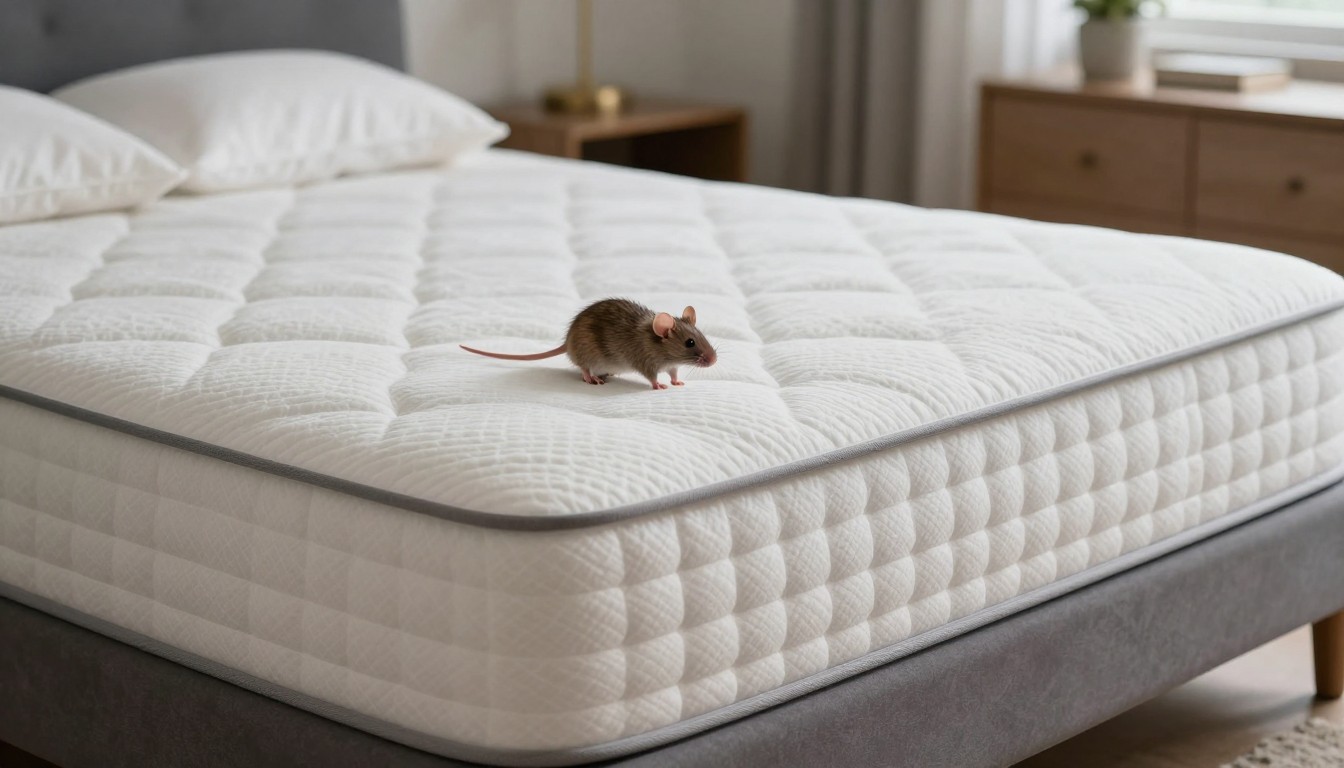
by Quick answer: Yes. Mice avoid people, sleeping or awake. A mouse that ends up on a bed is chasing warmth or crumbs, not you, and it retreats the second you move.
- Mice are generally afraid of humans and will avoid contact with us, including while we sleep, per the rodent behavior overview published at sciencescout.blog.
- If a mouse does turn up in a bed, it's most likely looking for warmth or food, according to the same source.
- Mice crawling on sleeping humans is not a common occurrence, per sciencescout.blog, even in homes with an active infestation.
Updated July 2026 · Reviewed for accuracy
I get this question more than you'd think, usually from someone who heard scratching in a wall at two in the morning and hasn't slept properly since. So let's settle it. A mouse is a prey animal living in a house full of a predator's smell, noise, and body heat. You are the scary one in that relationship, and unconsciousness doesn't change your scent profile.
What follows is the honest version: what mice are doing in your bedroom at night, why beds are a low-priority target for them, and which parts of your sleep setup quietly make the problem worse.
Mice Are Wired to Avoid You, Awake or Asleep
Rodent avoidance of humans isn't a decision, it's a default. Mice navigate by smell and whisker contact along edges, and a sleeping human is a large, warm, strongly scented object radiating heat and carbon dioxide. The behavior overview at sciencescout.blog frames human presence as a natural deterrent rather than something mice tolerate, and describes mice as generally afraid of humans and inclined to avoid contact with us, including when we're asleep.
Sleep does mute two of your defenses: you stop moving, and you stop making noise. That's why activity in a house peaks after the lights go out. But quiet is not the same as invisible. Your scent trail is everywhere, your bedding holds it, and a mouse reads that as occupied territory. The result is a rodent that will happily raid a kitchen floor at three in the morning and still route around the bed.
The thing people get backwards: hearing more mouse activity at night doesn't mean the mice have gotten bolder. It means you've gotten quieter. Same animal, same caution, less competing noise.
Why a Mouse Would Ever End Up on Your Bed
Two reasons, and neither is you. Warmth and food. Per sciencescout.blog, a mouse found in a bed is likely there hunting one of those, and the site is explicit that mice crawling on sleeping humans is not a common occurrence.
Warmth is the stronger pull in cold months. A bed is the hottest soft surface in the house, insulated on all sides, with a heat source lying in it. If a mouse has already lost its preferred nest behind an appliance or inside a wall cavity, an unmade bed reads as a candidate. Food is the more common driver year round, and it's usually self-inflicted: crackers eaten in bed, a protein bar wrapper on the nightstand, cereal dust in the folds of a duvet that hasn't been washed in a while.
The practical takeaway is that bed encounters are an availability problem, not a courage problem. Remove warmth alternatives and food crumbs, and the bed stops being interesting.
Your Bed Frame Matters More Than Your Mattress
This is the part nobody covers, and it's the part I actually care about. Mice are climbers, but they're lazy climbers. They prefer continuous vertical surfaces with grip, tight enclosed cavities, and edges to run along. Your bed's construction decides whether it offers any of that.
| Bed setup | Why rodents care | Risk level |
|---|---|---|
| Mattress directly on the floor | No climb required, and the underside traps heat and stays undisturbed | Highest |
| Storage bed with drawers | Enclosed cavities, fabric, and stored soft goods make ideal nesting material | High |
| Upholstered frame with a skirt | The skirt is a fabric ladder and a visual screen for movement | Moderate |
| Traditional box spring on a frame | Hollow wood-and-fabric shell, open corners, and quiet interior space | Moderate |
| Metal or hardwood platform, open underneath | Smooth legs, nothing to nest in, everything underneath is visible | Lowest |
If you're going to change one thing, get the sleep surface off the floor and open up the space beneath it. An open platform on smooth legs gives a mouse no cover and no nesting cavity, and it lets you actually see droppings before they become a colony. A box spring is the sleeper problem in this table: it looks solid, but a traditional one is a hollow shell with fabric stapled over it, and a torn corner turns it into a furnished apartment.
Materials, Nesting, and What Mice Actually Chew
Rodents shred material for nests. Loose fiber, paper, insulation, and thin fabric are all fair game. That's a construction question, so here's how bedding components stack up in practice.
What tends to attract nesting behavior:
- Loose batting or fiberfill in a torn foundation cover
- Cardboard storage boxes shoved under the bed
- Wool and cotton throws left in a heap on the floor
- Anything stored in soft-sided bags under a divan or storage base
- Paper: books, shipping boxes, unopened mail piled bedside
Foam and latex cores aren't a food source and aren't especially attractive nesting material, but a mouse will still chew through a cover to reach a warm cavity if the frame invites it. Encasements help. A zippered, tightly woven mattress and foundation encasement removes the torn-seam entry point entirely and has the side benefit of shutting down dust mite and allergen access. It's the cheapest structural fix in this whole article.
One more construction note. Coil units in a hybrid or innerspring bed are individually pocketed or tied inside the comfort layers, not open cavities, so the mattress body itself isn't the vulnerability people imagine. The vulnerability is always the hollow thing underneath it.
The Bedroom Changes That Actually Move the Needle
Deterrence in a bedroom comes down to exclusion and boredom. Make entry hard and make the room worthless.
Do these in order:
- Seal entry points. Gaps around pipes, baseboards, vents, and door sweeps. Mice compress through openings far smaller than their bodies look.
- End all eating in the bedroom. Not most eating. All of it, including the "just tea and a biscuit" habit.
- Clear under the bed completely. Nothing stored, nothing soft, nothing in cardboard.
- Encase the mattress and foundation in zippered covers.
- Wash bedding on a regular schedule and vacuum the perimeter of the room, edges first, since that's where mice travel.
Ultrasonic plug-in repellers are the product category I'd skip. Independent evidence for sustained rodent deterrence is weak, and even sympathetic write-ups concede rodents habituate. Physical exclusion and food removal do the work.
Keep pets out of the equation as a strategy too. A cat may deter a mouse in one room and do nothing in another, and building your sleep environment around an animal's hunting mood isn't a plan.
When the Fear Is the Real Sleep Problem
Sometimes the mice are gone and the sleep never comes back. That's worth naming. Fear of mice and rats is a recognized specific animal phobia, and the Wikipedia overview of the condition notes that the standard treatment of animal phobia is systematic desensitization, delivered in a consulting room or under hypnosis. I'm not a clinician and I won't pretend otherwise, but if a sighting has turned your bedroom into a place you dread, that's a conversation for a professional and not a bedding purchase.
What I can speak to is the hygiene side of the room while you work through it. Anxiety at bedtime tends to arrive with a stack of other sleep complaints, and those have their own fixes. If you've started sleeping with your mouth open and waking up parched, the causes behind extremely dry mouth while sleeping are worth ruling out. If you've been propping yourself up to listen for noise and now your neck hurts, our guide to using a bed wedge for sleeping covers how to do that without wrecking your alignment. And if you've drifted into stacking pillows or ditching them entirely, the tradeoffs in sleeping without a pillow apply here too.
If You're Replacing the Bed Anyway
Plenty of people reach this article after finding droppings and deciding the whole setup is going in a dumpster. That's often an overreaction to the mattress and an underreaction to the frame. Replace the hollow foundation, seal the room, encase what you keep, and see where you stand.
If you are genuinely starting over, the construction priorities are simple: an open frame with smooth legs and real ground clearance, a solid slat base or a foundation with a tight sealed cover rather than an open hollow box, and a mattress you can encase. Innerspring and hybrid builds from established makers, the Saatva Classic among them, ship with matched foundations designed as sealed units rather than loose shells, and they sit in the premium tier, so check the current price on the official site before you budget. Whatever you choose, the frame decision is the one doing the pest work.
My verdict: mice are afraid of you, and that doesn't switch off while you sleep. Bed encounters are rare and driven by warmth or crumbs, per sciencescout.blog. Fix the frame, the food, and the entry points, and the bedroom stops being an option.
FAQ
Will a mouse climb on me while I'm asleep?
It's unlikely. Mice crawling on sleeping humans is not a common occurrence, per sciencescout.blog, and mice generally avoid contact with us including while we sleep. A mouse that does cross a bed is moving through, not investigating you, and it leaves as soon as you shift.
Does sleeping with a light on keep mice away?
Not reliably. Mice adapt to constant light quickly and will simply shift their routes to shadowed edges of the room. Human presence itself is described as the natural deterrent at sciencescout.blog, and a lamp adds nothing to that while costing you sleep quality.
Should I throw out my mattress if I find droppings?
Check the foundation and frame first. Droppings on top of a mattress usually mean a mouse crossed it, while droppings inside a hollow box spring or storage drawer mean something is living there. A zippered encasement plus a thorough clean handles most surface contamination without replacing the sleep surface.
Do mice prefer memory foam or innerspring beds?
Neither, really. Foam and latex cores aren't food and aren't good nesting material, and coil units sit sealed inside the comfort layers. What attracts rodents is the hollow, fabric-covered structure underneath the mattress and whatever soft goods you've stored in it.
I can't sleep because I'm terrified of them. What now?
Deal with the exclusion work so the fear has less to feed on, then take the fear itself seriously on its own terms. Fear of mice and rats is a recognized animal phobia, and per Wikipedia's overview, the standard treatment is systematic desensitization delivered by a professional. That's the right path, not another gadget for the nightstand.