 by
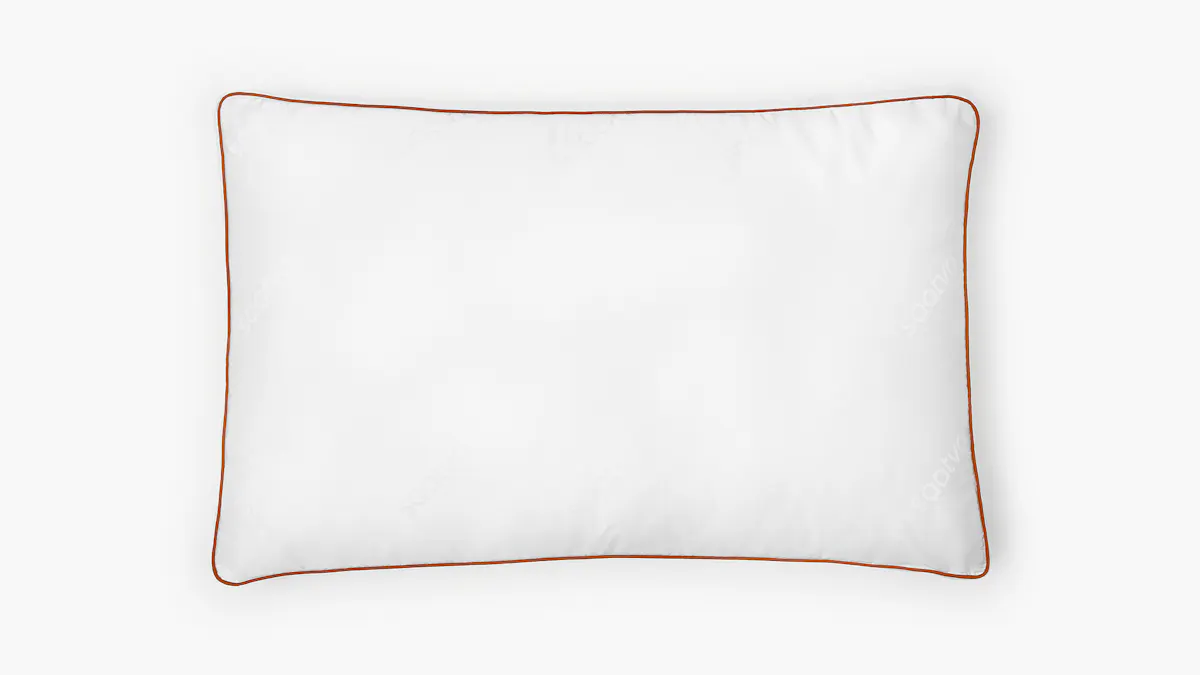
by Quick answer: Measure the gap from your mattress to the side of your neck, then match pillow loft to it. The Saatva Pillow is a category-matched option worth examining.
- Side-sleeper guidance commonly starts around a mid-to-higher loft.
- Broader shoulders usually create a larger gap to fill.
- A pillow that tips your head up or lets it drop is the wrong height.
Updated July 2026 · Reviewed for accuracy
The “average” neck-to-shoulder measurement is less useful than your own gap. Your shoulder width, mattress firmness, and usual sleep position decide how much pillow you need. I’d use an average only as a loose starting point, never as a buying rule.
For most side sleepers, published pillow-height guidance points to a loft in the three-to-five-inch range. That can be right for one person and completely wrong for another. The target is simple: your head should sit in line with your spine, not angle toward the ceiling or sag toward the mattress.
Your shoulder gap matters more than an average
The useful measurement is the open space between the mattress surface and the side of your neck while you lie in your normal position. Your shoulder takes up some of that distance, but not all of it. The pillow’s job is to support the remaining gap without shoving your head sideways.
That is why two people of the same height can need very different pillows. A person with a wider shoulder frame generally has more space between head and mattress while side sleeping. A smaller-framed sleeper may need much less fill, even if both people sleep on the same mattress.
Mattress softness changes the equation too. On a softer surface, the shoulder sinks farther down and the effective gap gets smaller. On a firmer surface, it stays more elevated, so the pillow may need to do more work. Pillow-height literature consistently treats body dimensions, sleep position, and the sleep surface as connected variables rather than separate choices.
The Nut’s take: Don’t measure your shoulder across the front of your body and buy a pillow to match. Measure the space that remains after your shoulder is resting on your actual mattress. That is the gap your pillow has to fill.
How to measure neck to shoulder for a pillow
Start on the mattress where you normally sleep, using the position you hold most often. Lie on your side with your shoulders relaxed, then have someone measure from the mattress surface to the side of your neck. You are not looking for a perfect anatomical number. You are looking for a realistic starting point for pillow loft.
Keep your head neutral while taking that measurement. If you tuck your chin, flare your shoulder, or prop yourself up with an arm, the result becomes less useful. A relaxed position gives you a better sense of how much material must sit under your head and neck.
Then account for compression. A fluffy fiber pillow can look tall on a bed but flatten sharply under the weight of your head. A molded foam pillow may keep its shape more consistently. An adjustable fill pillow lets you remove or add material, which can make it easier to match a changing comfort preference.
- Measure while lying on your usual mattress.
- Use your most common sleep position, not the position you wish you used.
- Consider how far the fill will compress under your head.
- Recheck alignment after trying the pillow for several nights.
Comparing options? The Saatva Pillow is the pick we keep coming back to — see the final verdict ↓
Side, back, and stomach sleepers need different lofts
Side sleeping creates the biggest gap because the shoulder sits between the head and mattress. Guidance for side sleepers often begins in the three-to-five-inch loft range, but broad shoulders, a firm mattress, and a dense pillow can all push the comfortable choice higher or lower. The correct fit keeps the nose roughly centered with the breastbone instead of tipping toward either shoulder.
Back sleepers generally need a mid-range profile. The neck still needs support, but the pillow should not force the chin toward the chest. A pillow that is too full can create that forward bend, while one that is too flat can leave the neck unsupported.
Stomach sleepers usually need the least loft. Published guidance often places this position at about three inches or less because a thick pillow can add to the natural neck rotation that stomach sleeping already creates. Some stomach sleepers prefer very little material beneath the head for that reason.
| Sleep position | What the pillow must do | Common sizing mistake |
|---|---|---|
| Side | Fill the space above the shoulder and hold the head level. | Choosing a low pillow that lets the head fall toward the bed. |
| Back | Support the neck without lifting the chin. | Using a thick profile built for side sleeping. |
| Stomach | Keep added height to a minimum. | Assuming more cushioning equals better support. |
Why construction changes the measurement
A loft measurement on a product page is only part of the story. Materials decide whether that height stays under your head. Shredded foam can be adjusted and redistributed. Molded memory foam tends to hold a more defined shape. Down-alternative fibers can feel soft and easy to reshape, but they may need frequent refluffing as they compress.
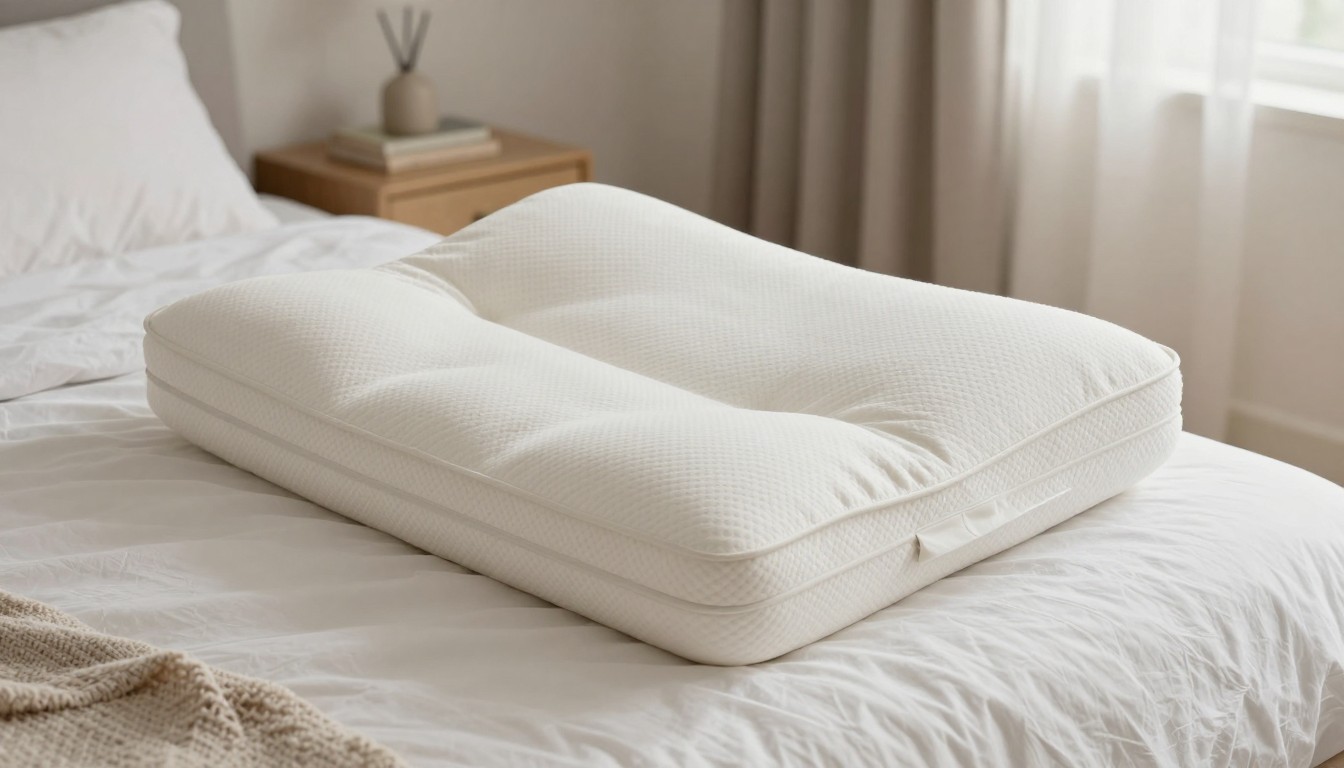
Contour pillows take a different approach. Their raised and lowered areas are intended to cradle the neck and accommodate the head rather than present one flat surface. That shape can suit sleepers who stay mostly in one position, but it is less forgiving for people who move from side to back repeatedly through the night.
Adjustable fill is the practical answer for a measurement that sits near the border between common loft categories. You can begin with enough material to support a side-sleeping shoulder gap, then remove fill if your head feels pushed upward. That flexibility matters more than chasing an average printed in a generic chart.
For a closer look at shaped options, my guide to neck pillow sizing explains why contour depth and sleeping position should be considered together. The shape can be helpful, but it does not erase the need to match the pillow to your own body.
Construction check: A tall pillow made from a compressible fill may perform like a lower pillow once you lie on it. A shorter-looking dense foam design may hold more height. Compare compressed support, not just the profile shown in product photos.
How to tell whether your pillow is too high or too low
A pillow is too high when it drives your head up from the mattress or angles your chin toward your chest. Side sleepers may notice their upper ear sitting noticeably higher than the shoulder line. Back sleepers may feel the chin pulled down. Neither position reflects neutral alignment.
A pillow is too low when the head drops toward the mattress. For side sleepers, that usually means the neck bends down into the open shoulder gap. It can happen with a pillow that started at the right height but has lost volume through compression.
The cleanest check is visual. Ask someone to look at you from behind while you are resting in your usual position. Your neck and head should appear like a continuation of your spine, not a separate angle. This is more practical than treating one measurement as universal.
If shoulder discomfort is part of the problem, the pillow is only one piece of the setup. Your mattress can allow the shoulder to sink too little or too much, changing the gap a pillow must support. See my guide to choosing a pillow for shoulder pain for a more focused explanation of that relationship.
Choosing the right type for your measurement
Broad-shouldered side sleepers are usually best served by a supportive profile with enough material to fill their gap. An adjustable design is especially sensible here because you can fine-tune the height as your mattress, preferred position, or comfort needs change.
Smaller-framed side sleepers should be cautious with high, dense pillows. A large profile can overcorrect a modest shoulder gap and force the head upward. A medium or adjustable design gives you room to start conservatively rather than trying to compress an overstuffed pillow into submission.
Back-and-side combination sleepers need a middle ground. The pillow should have enough structure for the side-sleeping gap, yet not be so high that back sleeping becomes awkward. A responsive fill or a contoured profile can work, but only if the shape feels natural in both positions.
For this query, I’d consider the Saatva Pillow only after checking whether its feel and return terms fit your own needs on the official site. The category matters less than your alignment once the pillow is under your head. If latex is part of your shortlist, my notes on a latex pillow for neck support explain the tradeoff between buoyant response and a more deeply contouring foam feel.
Care, durability, and buying without guesswork
Compression is the durability issue to watch. Any pillow can become a poorer fit if its filling loses height, clumps, or stops rebounding. Follow the manufacturer’s care instructions, use a protective cover where appropriate, and reassess the pillow if your alignment changes.
A removable washable cover is useful because it makes routine care easier, but it does not tell you how well the inner material will hold up. Look at the fill type, whether the loft is adjustable, and whether the maker explains care and return terms clearly. Pillow comfort is personal enough that a clear return policy has real value.
Price alone does not solve the fit question. Adjustable and structured pillows often sit in a higher price bracket because they use more complex materials or construction. Traditional foam and synthetic-fill options can cost less, but the better choice is the one that holds your head and neck in a neutral position on your mattress.
My buying rule: Start with alignment, then choose construction. A premium pillow that is too tall is still too tall. A modest pillow that supports your actual shoulder gap is the more sensible purchase.
FAQ
What is the average neck-to-shoulder measurement for a pillow?
There is no single measurement that works for everyone. Shoulder width, body frame, mattress firmness, and sleep position all change the open space a pillow needs to fill. Use averages as a starting point, then judge the final fit by spinal alignment.
How high should a pillow be for a side sleeper?
Published guidance commonly places side sleepers in the three-to-five-inch loft range. That range is not a prescription. A broad-shouldered sleeper on a firm mattress may need more support than a smaller sleeper on a softer bed.
Should I measure from the top of my shoulder to my neck?
Measure while lying on your mattress, from the mattress surface to the side of your neck. A standing body measurement misses how your shoulder compresses into the bed. The resting gap is the one the pillow has to support.
Can a pillow be too high even if I have broad shoulders?
Absolutely. Broad shoulders can call for more loft, but a pillow that pushes your head upward is still too high. Check whether your head stays level with your spine instead of relying on shoulder width alone.
Is an adjustable pillow better for neck-to-shoulder sizing?
An adjustable fill can make fitting easier because you can change the loft instead of committing to one fixed profile. It is most useful for combination sleepers and anyone whose ideal height is difficult to judge from a product description alone.
My verdict on neck-to-shoulder pillow measurement
Forget the hunt for one average number. Measure your resting shoulder gap, account for how your mattress lets your shoulder sink, and choose a pillow construction that can maintain the right support. For side sleepers, neutral alignment is the goal. Everything else is secondary.
If you are still narrowing the field, my roundup of the best pillows for neck and shoulder pain can help you compare pillow styles by the support problem they are trying to solve.
FINAL VERDICT
Before you settle: if average measurement neck to shoulder pillow is what brought you here, the Saatva Pillow is the value pick on this page — the strongest trial-and-return terms of the options covered here. Confirm current price, dimensions and terms on the official product page before ordering.
OUR CATEGORY-MATCHED PICK
Saatva Pillow
- Shredded natural latex core, per saatva.com
- 45-day free returns
- Machine-washable organic cotton cover