
 by
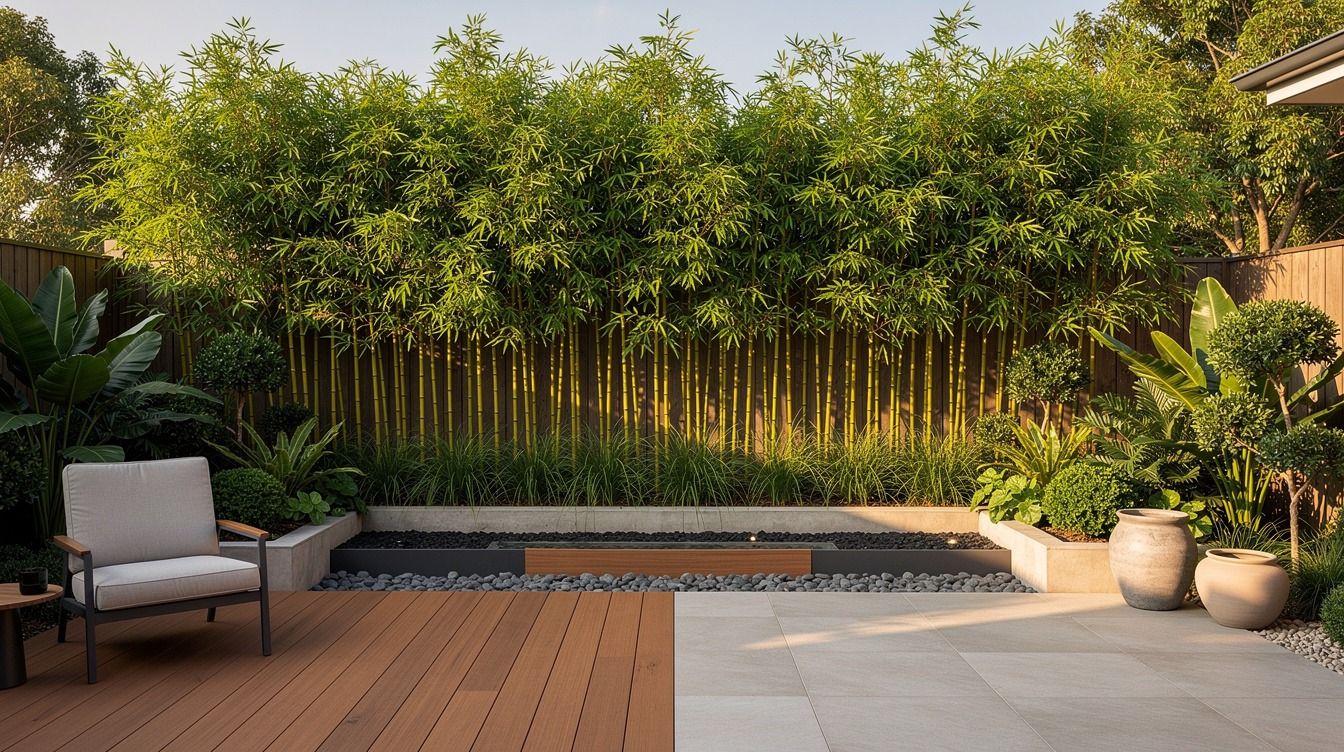
by Bamboo privacy fence ideas work best when you build a screen in layers: a solid base, living height, and soft light. I learned that after trying to hide a too-close neighbor with one flimsy roll of reed fencing. It looked worse by lunch. Your backyard can feel private, warm, and far more inviting without turning into a fortress.
- Start With a Ground-Level Bamboo Privacy Fence Base
- Anchor the Two-Post Rule for an Outdoor Privacy Barrier
- Layer Living Bamboo Behind the Screen
- Hang Bamboo Panels With the Floating-Screen Method
- Build the Three-Height Greenery Fence Privacy Screen
- Paint the Frame Before You Add the Bamboo
- Mix Bamboo With Wood Instead of Plastic Lattice
- Can a Small Backyard Use a Bold Bamboo Screen?
Before You Start, Measure Your Backyard Privacy Screen
Walk your patio first and mark the sightline you want to block. You need at least 36 inches of walkway clearance so your outdoor privacy barrier doesn't make your own yard feel pinched, and you should leave room for a chair to slide back without scraping bamboo.
I’d sketch the view from your favorite seat, not from the property line. That’s where you’ll notice the upstairs window, the side gate, or the neighbor’s grill.
A tape measure, painter’s tape, gloves, exterior screws, and a level will save you from the “close enough” version you’ll regret later. And don’t buy bamboo until you know which view is the problem.
For a more permanent frame, this step-by-step weekend privacy fence guide helps you think through the structure before the pretty parts go up.
- Start With a Ground-Level Bamboo Privacy Fence Base
- Anchor the Two-Post Rule for an Outdoor Privacy Barrier
- Layer Living Bamboo Behind the Screen
- Hang Bamboo Panels With the Floating-Screen Method
- Build the Three-Height Greenery Fence Privacy Screen
- Paint the Frame Before You Add the Bamboo
- Mix Bamboo With Wood Instead of Plastic Lattice
- Can a Small Backyard Use a Bold Bamboo Screen?
- Add Light With the Evening-Glow Ladder
- Spend on Structure Over Decorative Extras
- Finish Your Bamboo Privacy Fence With a Resort Edge
1Start With a Ground-Level Bamboo Privacy Fence Base
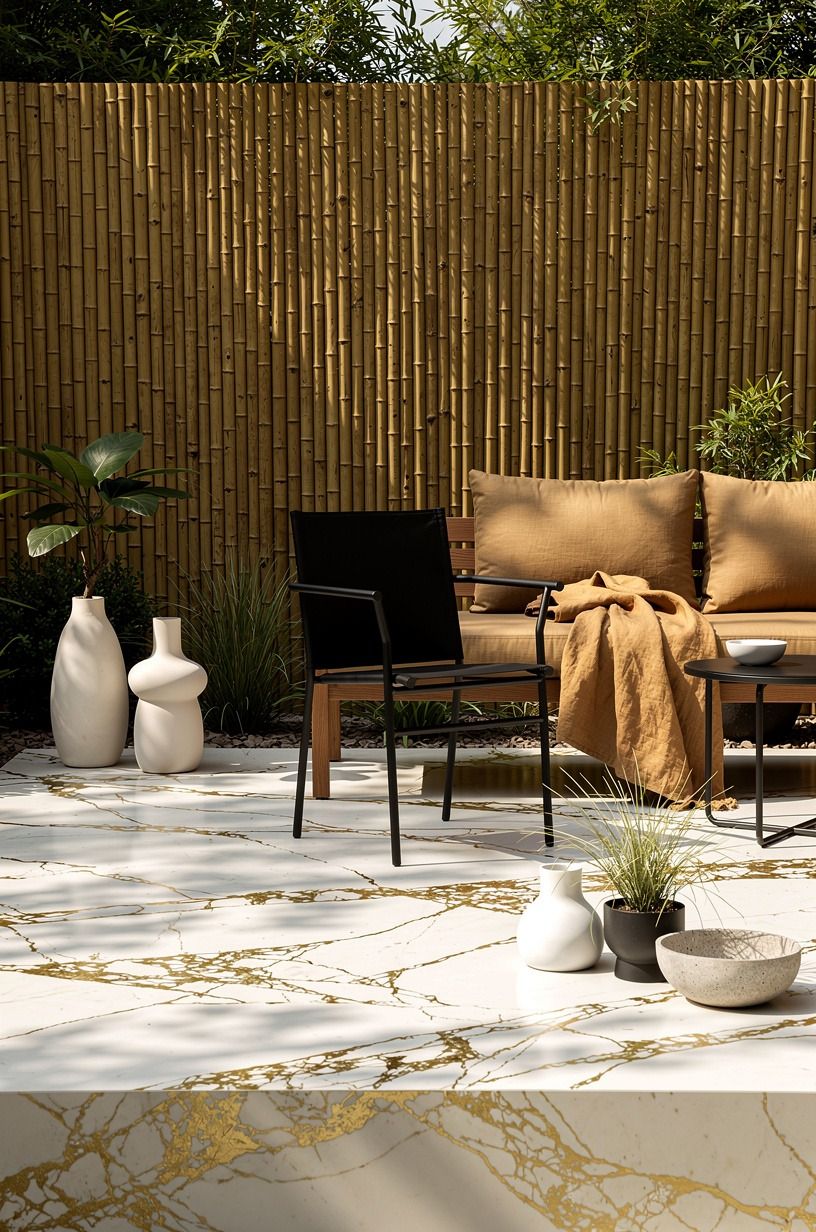
Start by choosing whether your screen needs to stand alone or attach to an existing fence. A split bamboo roll tied to a tired chain-link fence is the quickest route, while thicker bamboo poles need posts that won't wobble during a windy afternoon.
You’ll get a calmer, more refined result if the bottom edge is straight. I use a scrap board under the roll while fastening it, then remove it once the bamboo is secure.
It’s boring prep. It also keeps the screen from looking like it slipped down the fence overnight.
For the base, use exterior-rated zip ties on a temporary fence or galvanized wire on a wood frame. I’d skip skinny indoor craft wire, because it rusts fast and leaves little orange marks on warm-white Calacatta marble pavers with gold veining. Your screen should feel organic, not improvised.
2Anchor the Two-Post Rule for an Outdoor Privacy Barrier
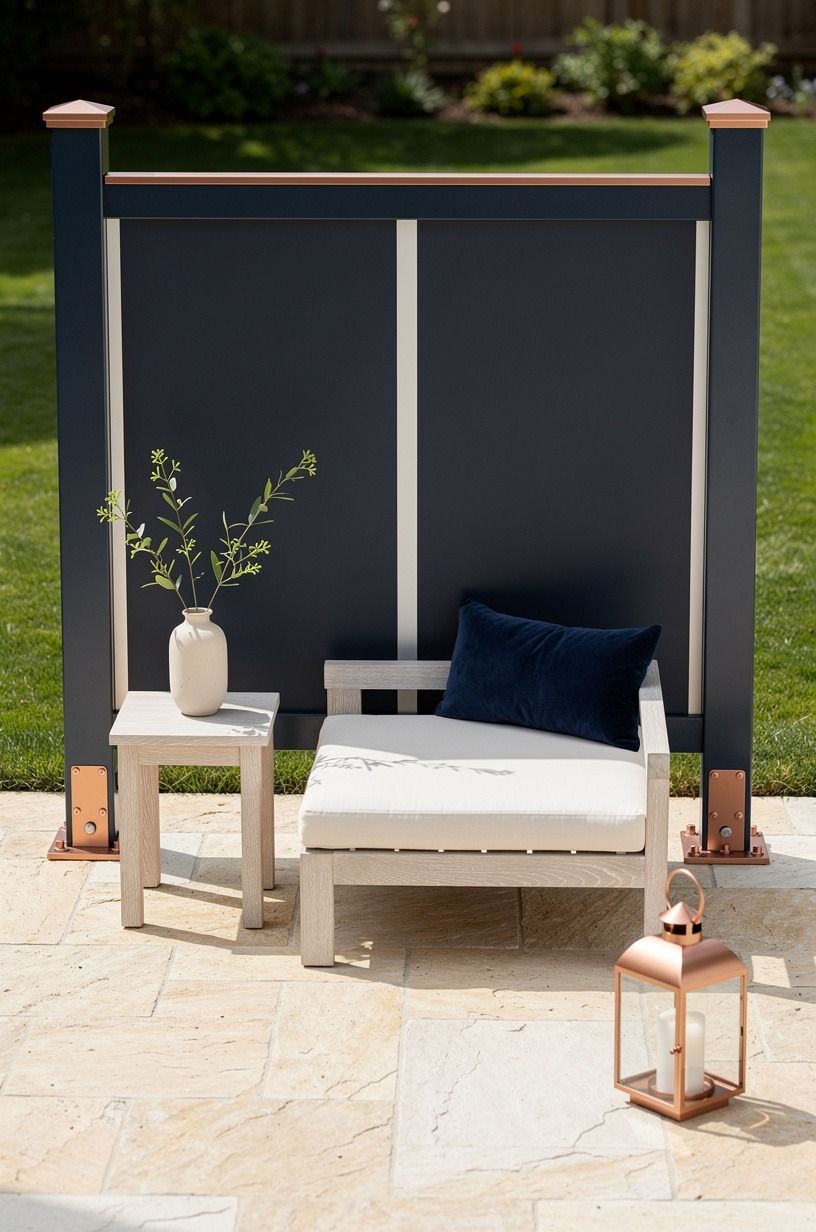
Anchor your bamboo at two solid points before you worry about plants or lights. The Two-Post Rule is simple: each panel needs support at both ends, with a firm middle tie if the span is wide enough to bow.
A cerused white oak 4x4 post gives you a warmer, more tailored look, while a powder-coated steel post is the better call for a sleek small yard. Oak ages softly; steel stays visually quiet. You can paint the wood with Benjamin Moore Aura Exterior in a deep midnight blue if you want the bamboo color to read warmer against ivory cushions and copper accents.
But don’t bury your budget in fancy post caps. The part you’ll see from your chair is the screen itself, not the top of a post six feet away. If your yard needs more fence inspiration, these wood privacy fence ideas for classic backyard seclusion offer sturdier companion materials.
3Layer Living Bamboo Behind the Screen
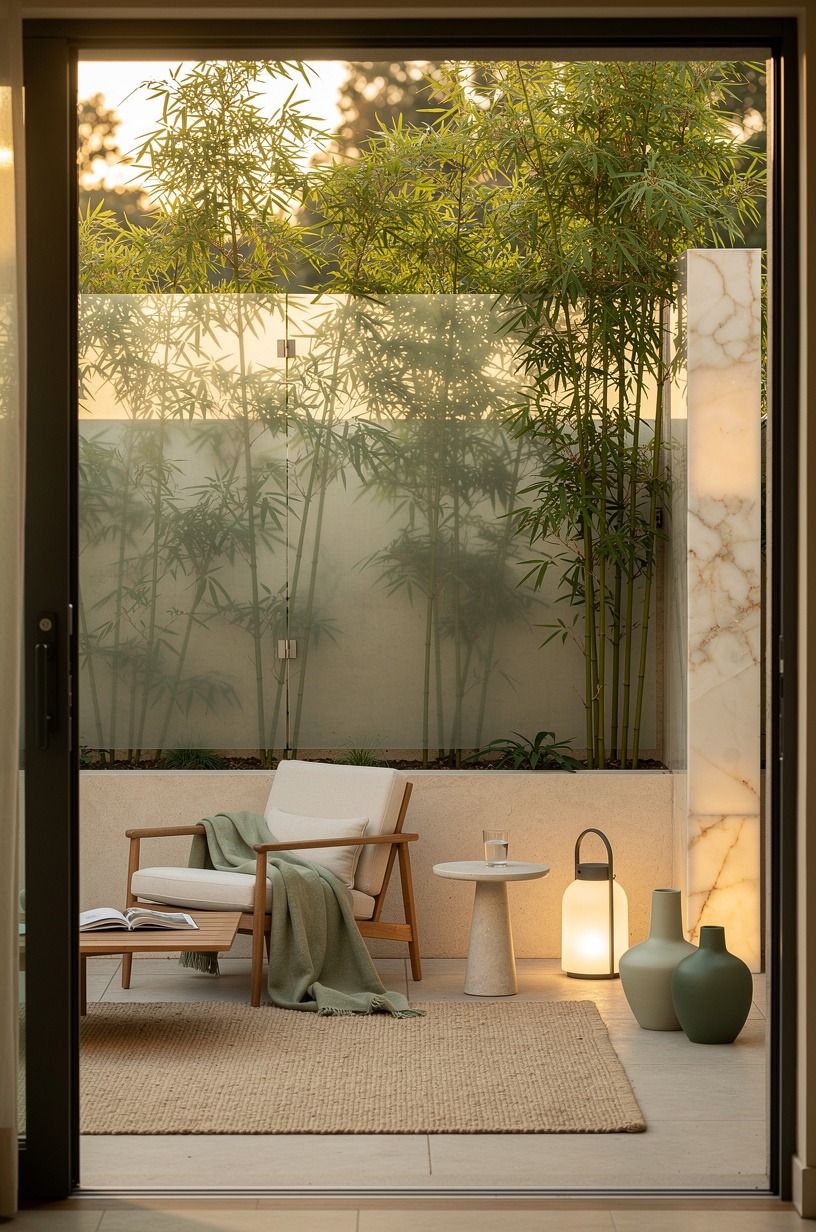
Layer a living hedge behind the bamboo only if you can manage it. Clumping bamboo creates a lush, resort-worthy backdrop without the running roots of invasive varieties, and your solid screen gives it privacy while it fills in.
Your goal isn't a wall of identical green. Mix a clumping bamboo planter with tall ornamental grass or broad-leaf containers in sage green and warm cream, then add a backlit translucent onyx lantern so the space still feels considered after sunset. The leaves whisper in a breeze, and that little sound makes a patio feel peaceful in a way plastic panels never will.
I’ve made the mistake of planting too close to a fence, then spending a miserable Saturday trying to prune in a gap too narrow for my shoulders. Give yourself access. Your future self will thank you when the plants need watering or cleanup.
4Hang Bamboo Panels With the Floating-Screen Method
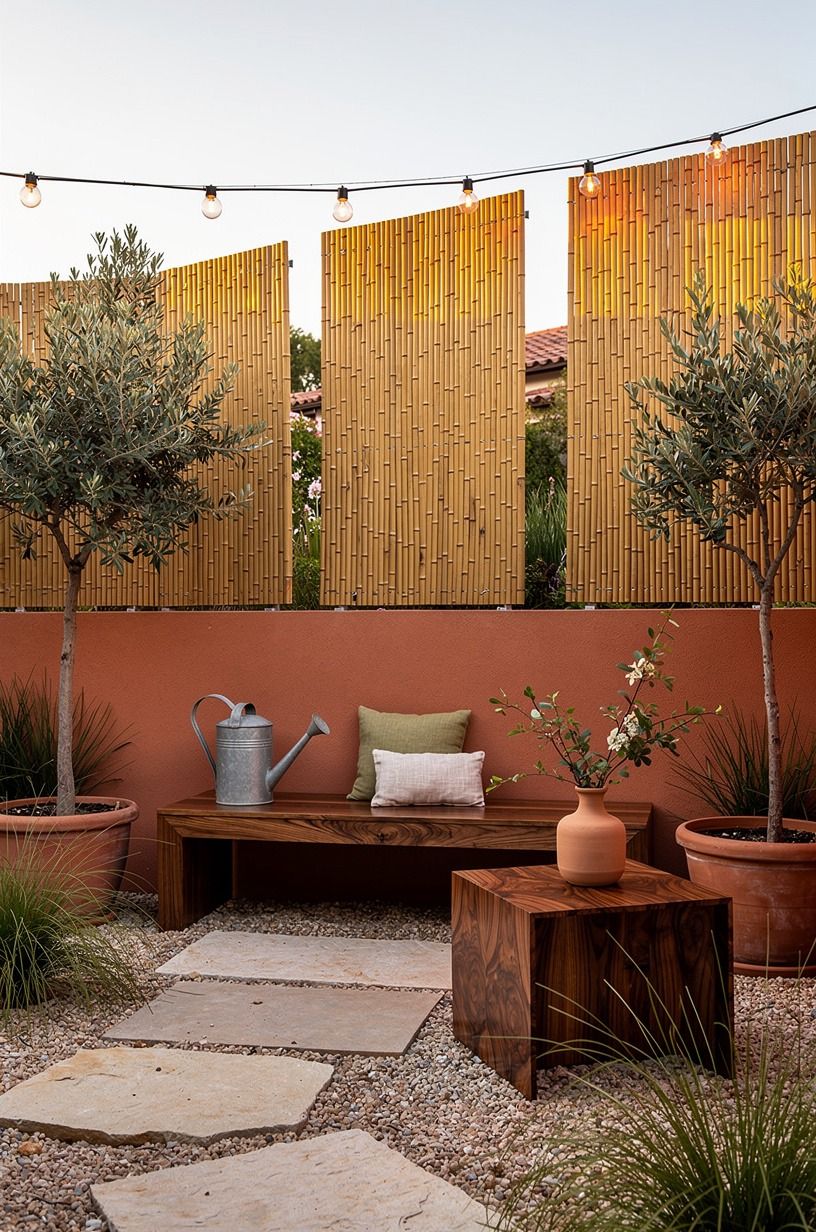
Hang a bamboo panel a few inches above the soil or patio surface instead of letting it sit in puddles.
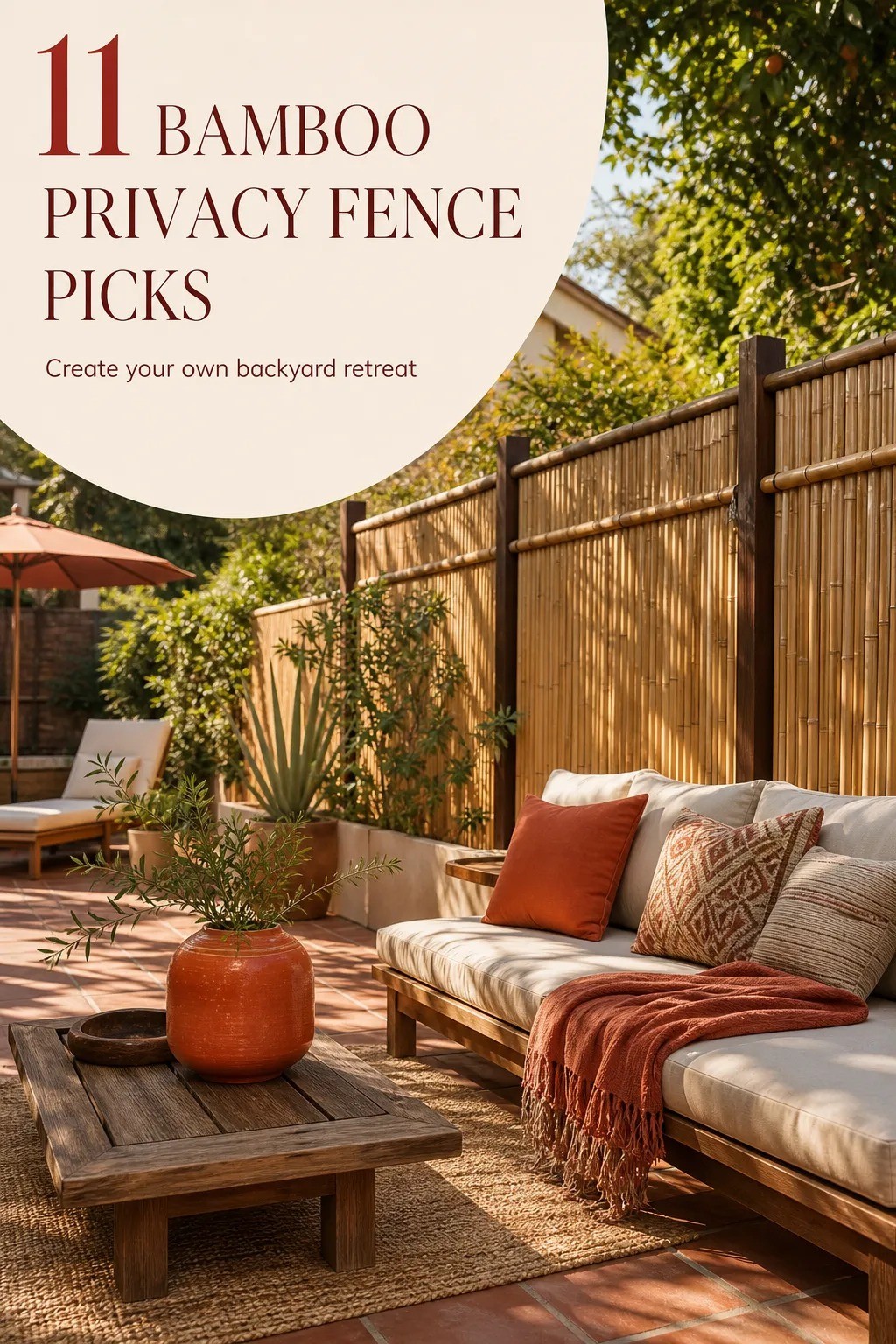
5Build the Three-Height Greenery Fence Privacy Screen
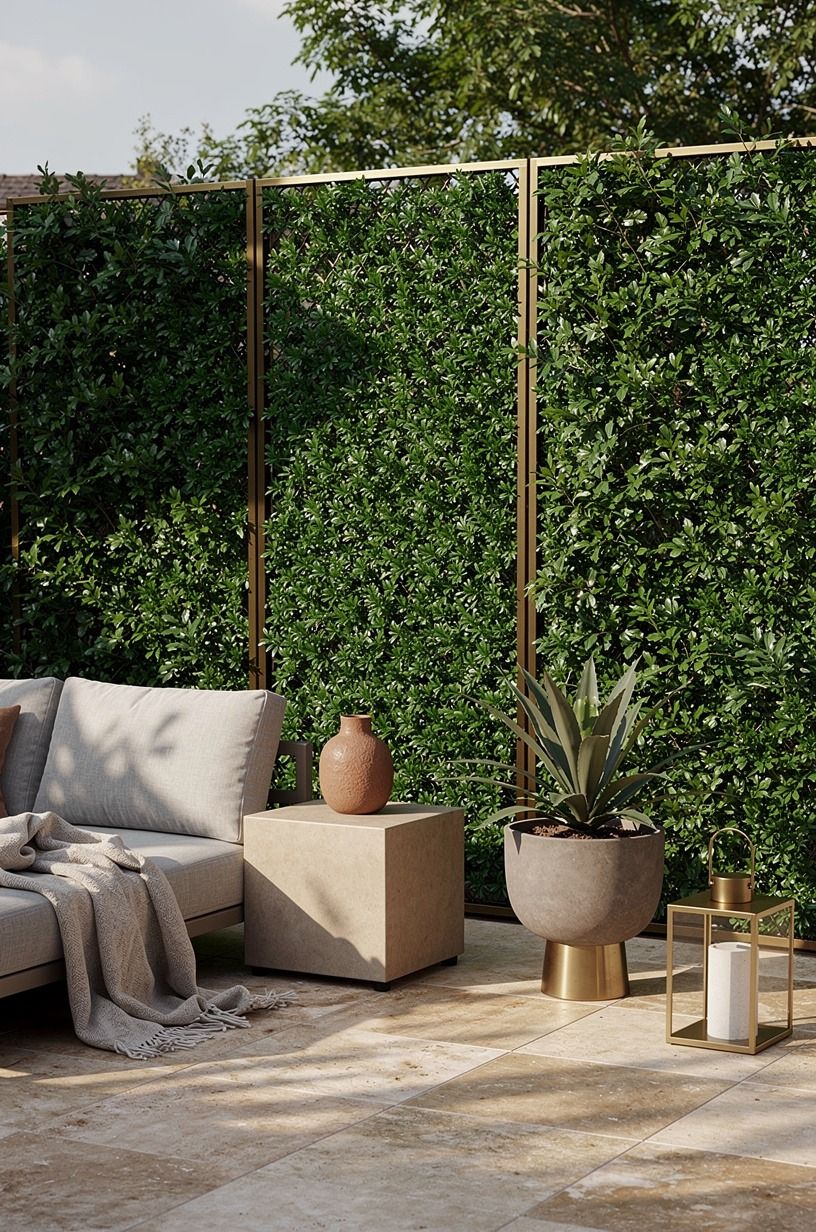
Build your privacy in three heights: low planters, a middle bamboo layer, and one taller accent. The Three-Height Screen Stack stops your backyard privacy ideas from reading as one flat brown wall.
At the bottom, use warm travertine trough planters with trailing jasmine or sweet potato vine. In the middle, let the bamboo carry the visual weight. Above it, a small tree in a container or a tall clump of grass gives your eye somewhere to travel.
You don’t need ten containers. Three with real size beat seven tiny pots every time.
And if you’re adding seating nearby, place your outdoor rug so the front legs of the chairs sit on it. That one move makes your private corner feel intentional rather than crowded.
6Paint the Frame Before You Add the Bamboo
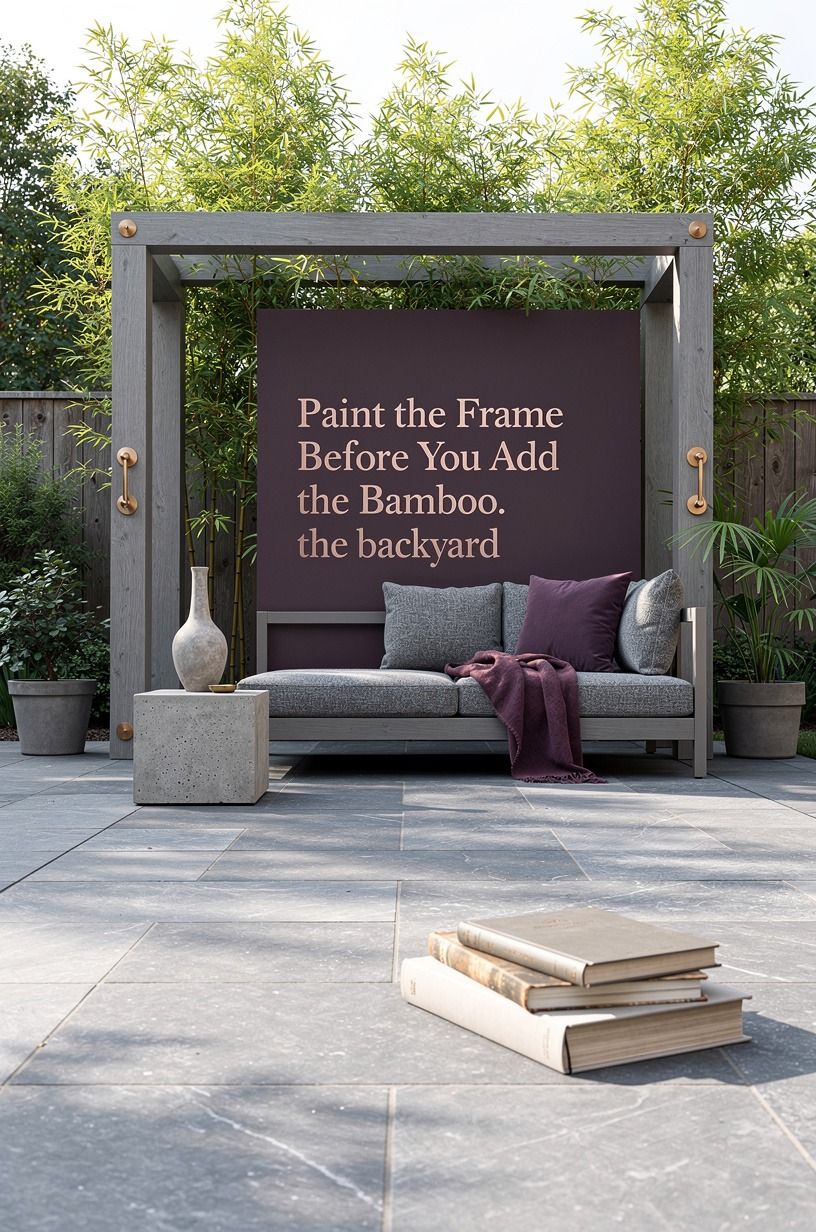
Paint your frame before you attach a single cane.
7Mix Bamboo With Wood Instead of Plastic Lattice
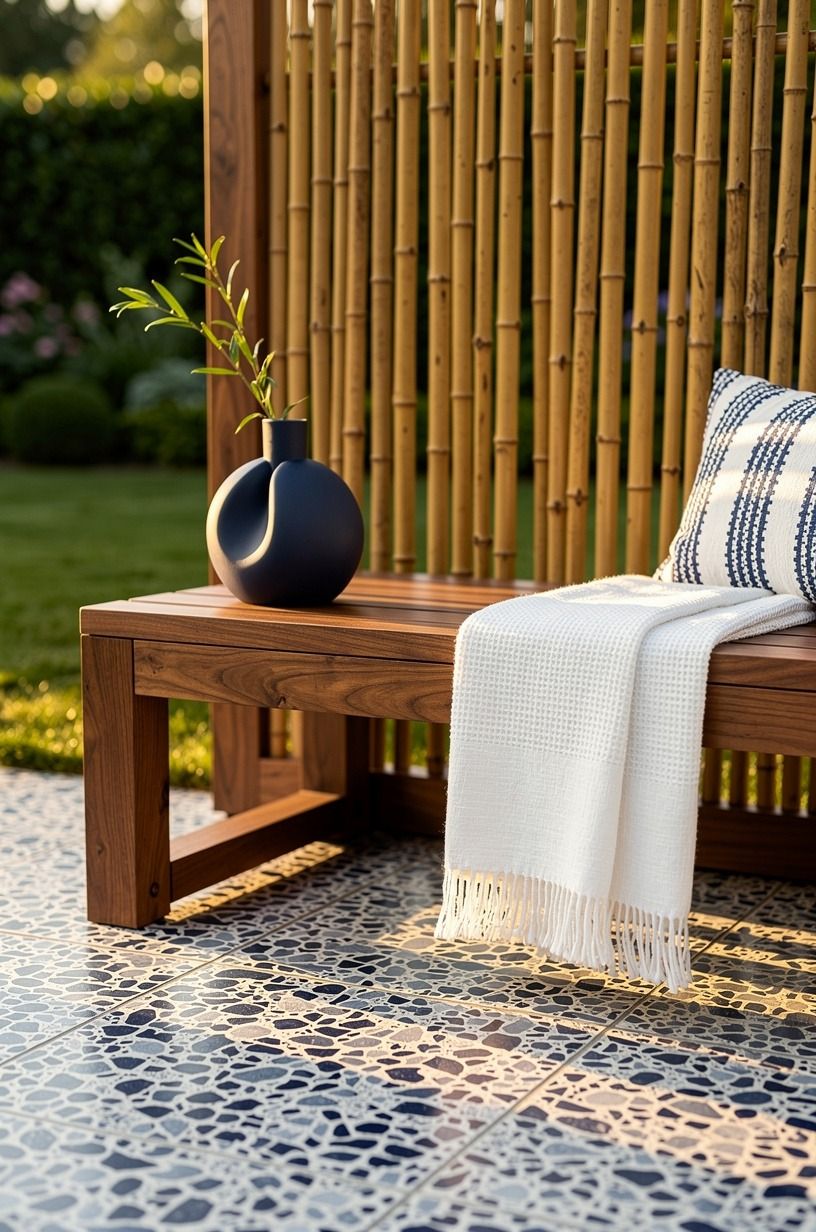
Mix bamboo with substantial natural finishes for the parts your hands will touch and eyes will notice most. An oversized-chip terrazzo bench base or planter box softens the cane texture, while plastic lattice tends to look chalky beside natural bamboo.
The contrast matters. Bamboo is slender and rhythmic; terrazzo is broad and grounding. Your small backyard gets more depth when those textures meet, especially with a weathered teak chair or a simple outdoor cushion in Sunbrella fabric.
I’d skip fake ivy panels here. They promise instant greenery, but the repeated leaf pattern looks harsh in direct sun and collects dust in every tiny crease.
Real vines, a few generous pots, and bamboo are slower. They’re also more relaxing to live with.
You can pair this approach with the framing ideas in wood privacy fence designs if your existing boundary needs more substance.
8Can a Small Backyard Use a Bold Bamboo Screen?
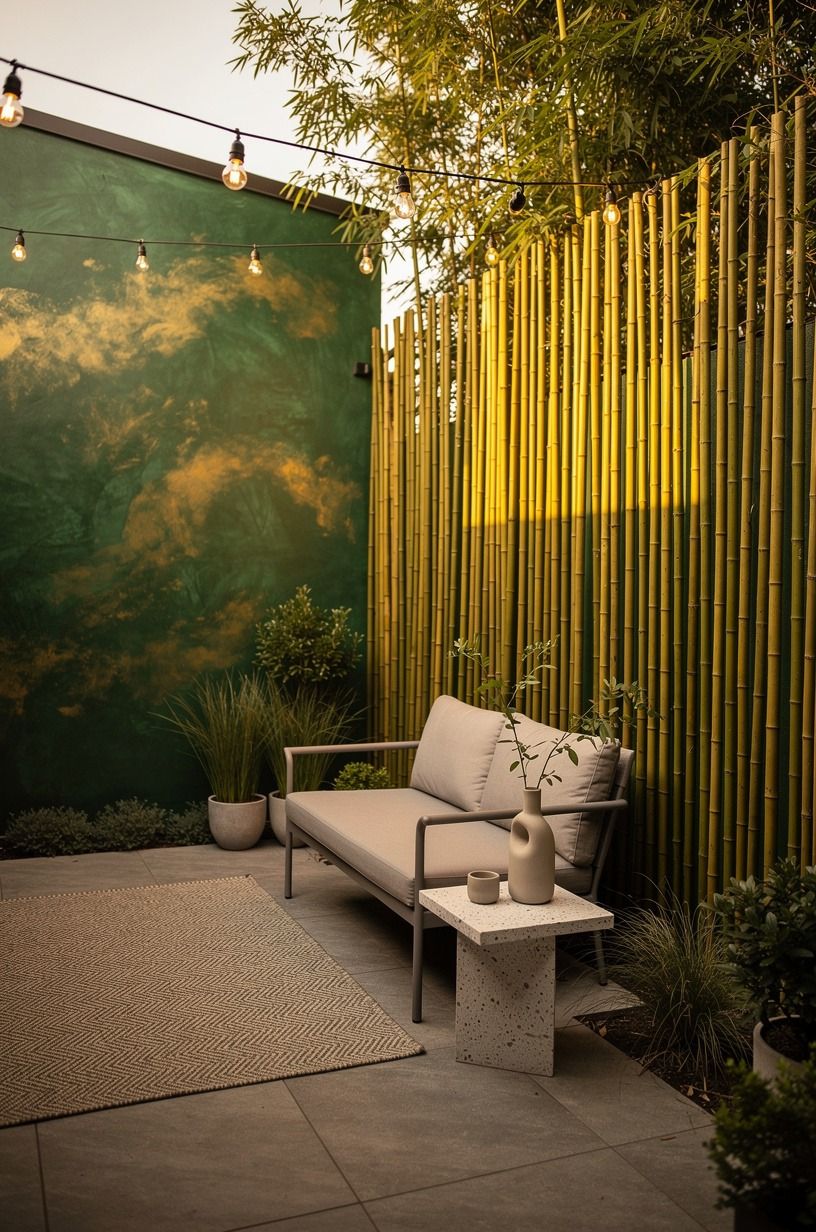
Yes, and a small backyard often benefits more from one bold screen than a large yard does. Your eye needs a destination, and a bamboo privacy fence can turn an exposed corner into a contained little room.
Keep the screen on one side rather than wrapping every edge. You still want sky, air, and a glimpse of the garden beyond. A full enclosure can feel intimate at first, then oddly boxed-in once you’re sitting there with coffee.
Try a 24-inch planter with a hand-applied Venetian plaster finish at the screen’s end and angle one lounge chair toward it. The screen blocks the awkward view; the planter makes the ending feel deliberate. Who needs a giant yard when your best corner has a clear purpose?
But watch the umbrella. It should cover the table plus about 2 feet on each side, so don’t place your screen where it fights the canopy every time you open it.
9Add Light With the Evening-Glow Ladder
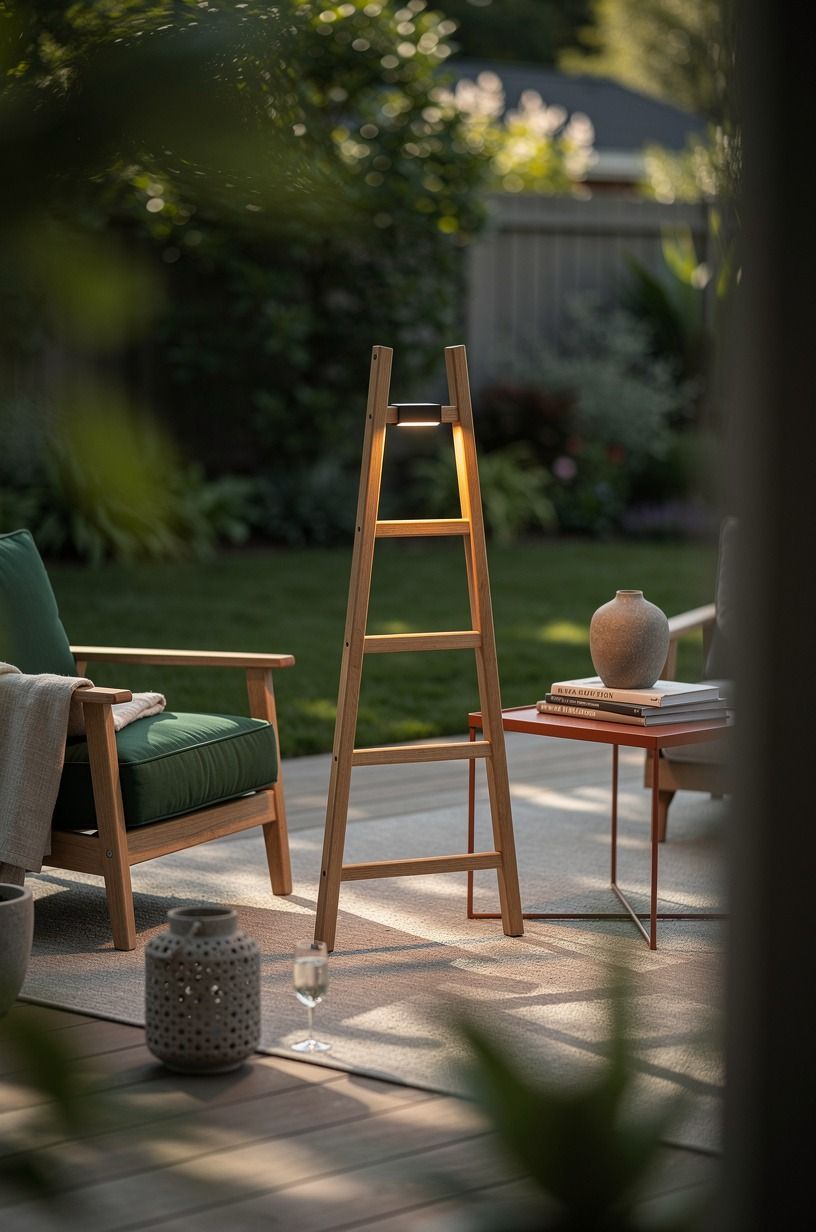
Add light in three levels: low lanterns, middle string lights, and one higher source near the fence line.
10Spend on Structure Over Decorative Extras
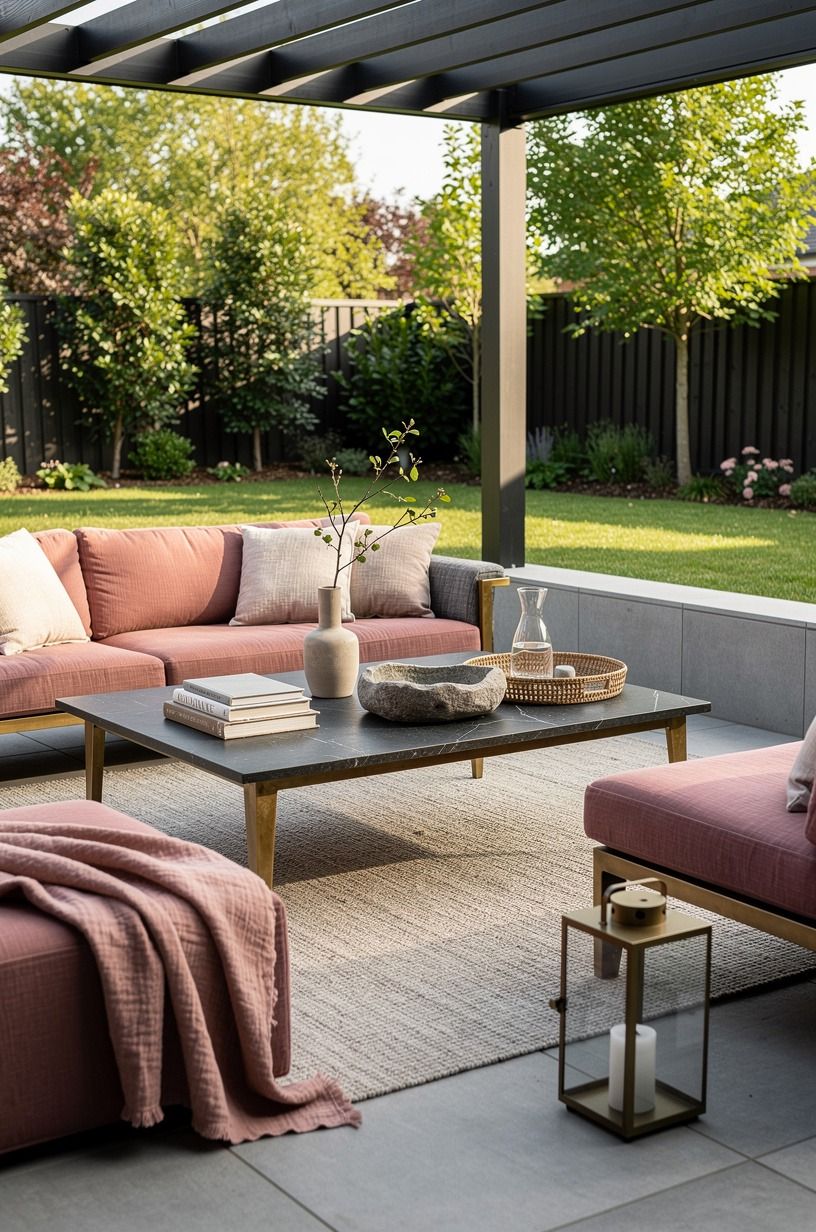
Spend your money on the parts that hold the screen up, then save on accessories. A bamboo fence doesn’t need expensive decor to feel luxurious; it needs straight lines, decent materials, and enough softness nearby that you’ll want to stay outside.
For your first pass, I’d put money toward posts, fasteners, and soft washed Belgian linen cushions before buying decorative lanterns. A quality outdoor rug typically costs $80 to $400, while a teak set can run $1,000 to $4,000. Your old chairs can wait.
A crooked screen can’t.
If you’re watching every dollar, use the budget logic from these cheap DIY privacy fence ideas and build in stages. That’s not settling. It’s smart sequencing.
11Finish Your Bamboo Privacy Fence With a Resort Edge
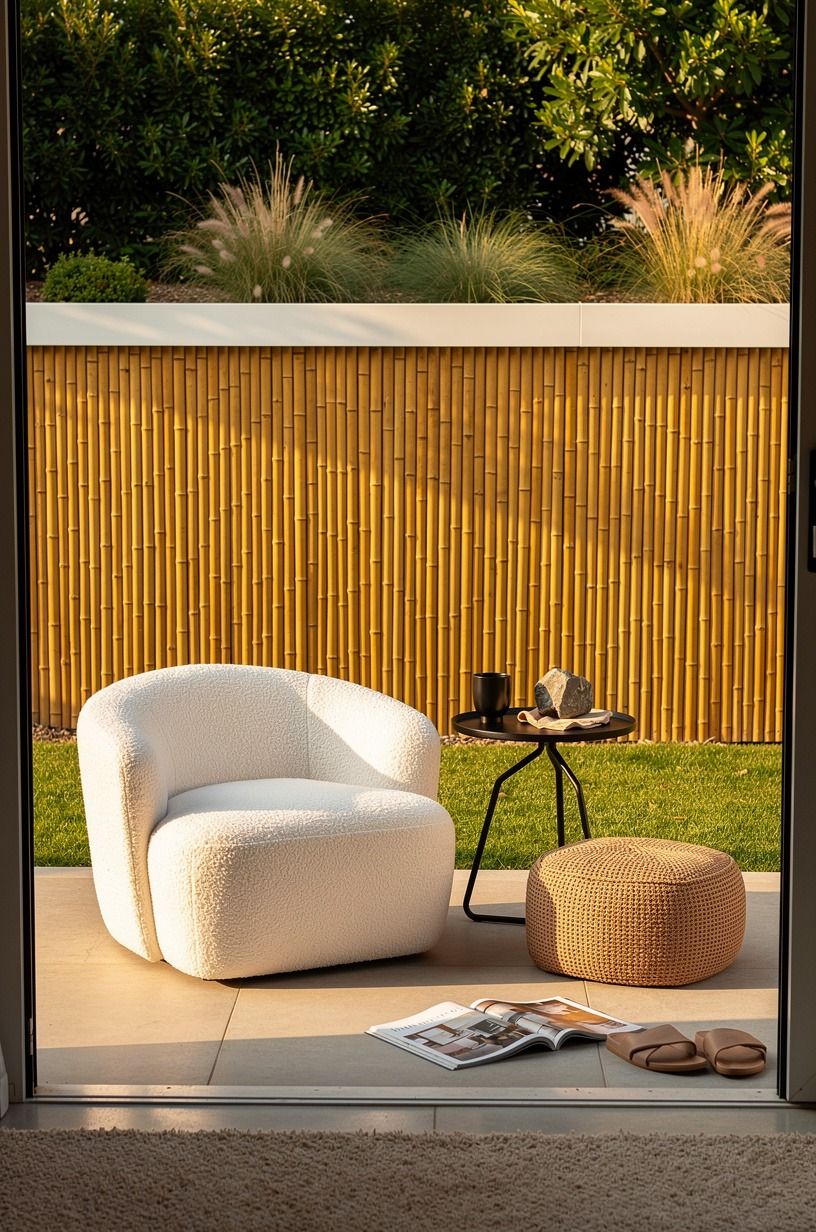
Finish with one soft layer and one practical layer.
Why I Think Bamboo Works Better Than a Solid Wall
I like bamboo because it solves a very modern backyard problem: we want privacy, but we don’t want our outdoor space to feel defensive. A tall solid fence can block a view, sure, but it can also make a modest patio feel like the back of a storage unit.
Bamboo has gaps, grain, irregular color, and a little movement. It filters the world instead of pretending it isn't there.
I’ve installed screens that were too neat, and they always felt colder than the yard around them. Every cane aligned perfectly, every edge capped, every pot matching.
Impressive for about five minutes. Then you sit down with a drink and realize nothing in the scene gives your eye a place to rest.
Bamboo is better when you let it be slightly imperfect, with a climbing plant leaning toward it and a shadow shifting across it at dinner.
The real decision is whether you need privacy all day or only where you sit. If it’s only the chair corner, don’t build a twelve-foot project to solve a six-foot problem.
Spend less, keep more air, and create one intimate zone that works. I’d rather have one inviting nook I use every evening than a whole yard fenced into silence.
And there’s a practical point people miss: bamboo lets you revise. You can add a planter, change a light line, replace one panel, or move a freestanding screen. A masonry wall doesn’t forgive much.
Your outdoor space should have room to evolve as you learn how you live in it.
The Questions I Get Asked Most
What is the best bamboo privacy fence for a small backyard?
A freestanding split bamboo roll on two posts is the best choice for a small backyard because it blocks the view without eating much floor space. Pair it with one deep planter and a narrow bench, so your seating area still has a clear 36-inch path.
Where can I buy bamboo privacy fence pieces on a budget?
You can find affordable bamboo rolls and outdoor basics at IKEA, Target, Wayfair, and local garden centers. Check Facebook Marketplace for planters and cedar posts, too. Your cheapest move is often repainting an existing frame and adding one new bamboo panel.
How much does a bamboo privacy fence makeover cost?
A simple bamboo privacy fence makeover usually costs about $200 to $900 for screening, planters, paint, and lights. Your existing fence, patio furniture, and pots may be free to reuse. Spend on secure fasteners first, then add the softer layers later.
Can I create a bamboo privacy fence on a budget?
Yes, and you can start with a low-cost screen plus items you already own. Reused pots.
A repainted fence frame. One warm string-light strand.
Your yard doesn’t need a full patio overhaul to feel more private and comforting.
Is a bamboo privacy fence worth it in a small space?
Yes, it’s worth it because a small space needs a strong visual boundary more than a large yard does. Use one screen to frame your seating zone, rather than surrounding the entire patio. You’ll keep the area airy while gaining real privacy.
Is a bamboo privacy fence a good idea for a rental?
Yes, if you choose a removable setup. Use a freestanding bamboo room divider, tension-mounted fabric panels, or a planter-supported frame. Your landlord’s fence stays untouched, and you can take the screen with you when your lease ends.
Where I’d Start First
If I had to pick one step, I’d start with anchoring a straight bamboo base. A screen that sags will make every plant and light around it look temporary. Pin the base plan for later and build your softer resort layers once the structure holds.