
 by
by Saatva Down Alternative Comforter
9.0/10
This keeps the recommendation well-matched for comforter and duvet searches, with a real bedding product instead of a mattress CTA.
PlushBeds Cocoon Luxury Down Comforter
8.8/10
A stronger premium bedding alternative for readers who specifically want down rather than down alternative fill.
Regarding bedding accessories, one of the most common questions when setting up your bedroom is whether to go for bedspreads or comforters.
Both terms are used interchangeably quite often. They are, however, two entirely different bedding accessories with some noteworthy differences. You need to be well aware of these differences before shopping.
Based on why you are looking for bedding accessories, one might suit you more than the other. To help you reach a decision, we developed this guide.
Comparison Table
| Bedspread | Comforter | |
| Usage | It can be used throughout the year and for decorative purposes | Suitable for colder months only to provide warmth |
| Weight | Lighter | Heavier |
| Looks | A wide variety of designs and colors are available | Various colors and designs are available |
| Price | Cheaper | Expensive |
| Cleaning and maintenance | Easier to clean and maintain | Slightly difficult to clean and maintain |
| Size | Larger than a bed, going all the way down and touching the floor | Smaller and usually extend up to your mattress or the top end of your bed frame |
| Shape | Sleeker profile | Bulkier profile |
What's a Bedspread?
Lightweight in design, bedspreads are frequently used as decorative bed covers. You can use them alone during warmer months and pair them with your comforter during colder seasons (also check the top rated bed sheets for winter).
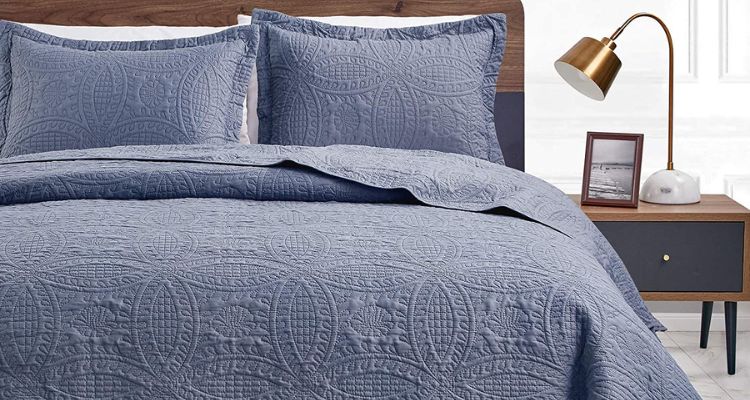
They are highly versatile, and you can use them throughout the year. They provide comfort and enough warmth without making you uncomfortable.
Bedspreads are available in various designs and patterns that you can use to complement your bedroom decor. Being more generous in style options, you can find bedspreads with different types of stitches, including those with scalloped hems and tasseled edges. You will conveniently find the right style according to your taste.
Who Should Use a Bedspread?
If your primary goal is decorating your bedroom, then you should consider buying a bedspread. It will provide your sleep area with a comforting look, and you can go with any style according to your preferences.
The best thing about bedspreads is that they are meant to be used as an additional bedding accessory and are versatile enough to be used standalone. A bedspread works well if you are looking for bedding you can use throughout the year.
Pros of a Bedspread
- Highly versatile, usable throughout the year
- Cheaper than comforters
- Pretty lightweight
- Available in a wide range of colors and designs
- Excellent for hot sleepers (also check 10 great cooling mattresses for hot sleepers)
Cons of a Bedspread
- Not sufficient warmth when used alone during colder months
What's a Comforter?
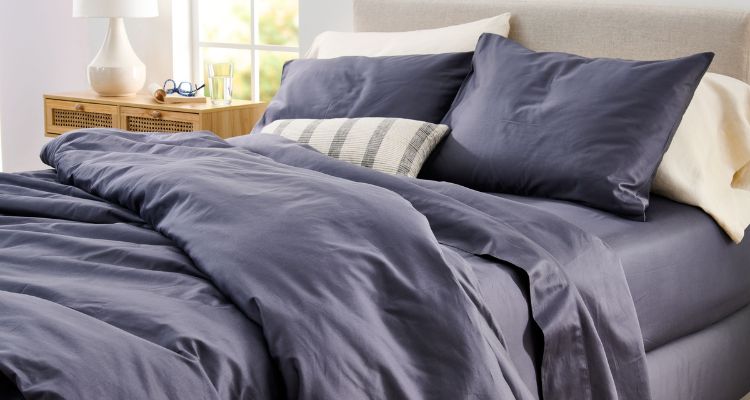
Being thick, a comforter has several layers. The top and bottom layers of fabric are stitched together, with filling inside the pocket. The filling can be anything from down to down alternatives or various blends of silk fibers, cotton, and wool.
The primary objective of a comforter is to provide warmth. It insulates the sleeper and is ideally suitable for the colder months.
These comforters are available in different designs and patterns, and you can use them for decoration. The cover of the comforter can be cotton, polyester, bamboo, or silk.
Who Should Use a Comforter?
Comforters are a good option if you are looking for bedding that provides warmth. They are available in various options when it comes to filling, so you can decide how warm you need it to be. You can use them in place of your blanket if it gets too cold, and the best thing is that you can remove their cover and clean it conveniently. Comforters are available in different designs and colors.
Pros of a Comforter
- Provides warmth during the colder part of the year
- Different colors and design options available
- You can choose a different type of filling based on how warm you need it to be
- Some come with quilted designs
- Can be used independently without pairing with any other bedding accessory
Cons of a Comforter
- Heavier than bedspreads due to their filling
- Not the best option for hot sleepers
- Not suitable for use throughout the year
- More expensive than bedspreads
What's the Difference Between Bedspread & Comforter?
Usage
Bedspreads are excellent for decoration. Their main purpose in your bedroom is to provide a fresh and neat look, which is why they are available in different designs and color options.
You can use one as a cover during sleep in the summertime (also check the best selling bed sheets for summer). It is an individual layer, so it will not be very effective during the colder months. You can always pair it with your blanket or comforter to add warmth during those seasons.
Comforters, on the contrary, are useful during the colder months because they are meant to provide the sleeper with much-needed warmth. As they are thicker and heavier, they are not suited for warmer months.
Bedspreads do not have the same warmth and insulation level as comforters. But they can be somewhat insulating depending upon the fabric used in their construction. If you are looking for warm bedspreads, go for those made of wool.
Similarly, you can find all-season comforters. They will be much thinner depending on what filling they contain. Cotton and polyester blend comforters are usually the lightest in this category.
Weight
Due to their construction, bedspreads are pretty lightweight and convenient to use. They might have multiple layers but are still lightweight because they do not feature any filling.
If you are looking for a cover during the warmer days that does not make you feel overheated but still provides some warmth, bedspreads are ideal.
Comforters are much heavier. They have multiple layers plus filling that might be down or down-alternative. This extra filling makes them heavier than bedspreads, which is exactly why they are warmer.
Looks
Bedspreads are meant for decoration. That is why they are available in various colors and design options. You can go for a design that matches the decor in your bedroom, or choose a contrast. The possibilities are quite wide.
Comforters are available in various designs and color patterns as well, and you can use them for decorating your bedroom. Since bedspreads are specifically designed for this purpose, the variety available in comforters may not always match the options available in bedspreads.
Cleaning & Maintenance
Bedspreads are much easier to clean and maintain if you compare them with comforters. You can hand wash them or use a machine to clean them.
Both can be cleaned once or twice a month, depending upon how much you use them and whether you have kids or pets at home. Make sure you strictly follow the instructions on their labels.
Size
Bedspreads are much larger than comforters. They are meant to spread from the bed and extend down to the floor, giving that luxurious look.
Comforters are much smaller and often only spread to your bed frame or the top edge. They do not spread as far as bedspreads.
Shape
Bedspreads are much thinner, which is why they are suitable for a sleeker bed profile. Comforters are thicker and add more bulk to your bed. Choosing the right option will allow you to make an impact on the overall look and feel of your bedroom.
Thinner and sleeker profiles are suitable for summertime as they encourage more airflow. Thicker and bulkier options are better for the colder months as they indicate warmth.
Price
There might be plenty of options available in bedspreads, but they will not drain your budget. These bedspreads come at a lower price, with a great variety available.
Comforters are more expensive due to the filling they contain. These fillings can range from down to down alternatives. Down filling is the most expensive, and these comforters will cost considerably more. They do, however, provide the warmth you need during extreme cold.
Key Takeaways: Bedspread vs Comforter
Primary Differences
Bedspreads and comforters, while sometimes used interchangeably, have distinct characteristics. Bedspreads, lightweight and often more decorative, are versatile for year-round use. Comforters, with their thicker construction, primarily serve the purpose of providing warmth during colder months.
Design & Use
Bedspreads are more generous in style options and designs, aligning more with decorative intent. They can be used alone in warmer months and coupled with a comforter for colder seasons. Comforters, while also available in different designs, primarily focus on insulation and warmth.
Size, Shape, & Weight
Bedspreads are larger in size, typically extending to the floor, creating a sleeker bed profile. They are lightweight and versatile. Comforters are bulkier given their filling, designed to extend just to the edge of the bed or bed frame, presenting a thicker bed profile.
Price & Maintenance
Bedspreads tend to be more affordable and easier to clean. Comforters, especially those with premium fillings like down, can be pricier and might require more intricate care.
Final Thoughts
Bedspreads are ideal for giving your room a luxurious and neat feel, and you can use them throughout the year. They are not that great for providing warmth during colder months. You can always use them with your blanket as an additional layer.
Comforters are thicker and have filling in them, so they are meant to provide warmth. You cannot use them during the warmer part of the year.
If you need an option solely for decoration purposes, then a bedspread is a better choice, and for warmth, you should consider a comforter. See also our guides to the best sheets for winter and best sheets for summer to complete your bedding setup.
Bedspread vs Comforter: Key Differences and When to Use Each
Bedspreads and comforters both cover your bed, but they serve different purposes, fit differently, and suit different climates. Understanding the distinctions helps you choose the right bedding for your sleep needs.
What Is a Bedspread? A bedspread is a thin, lightweight covering designed to drape all the way to the floor on three sides. It gives the bed a tailored, formal look and typically does not require a bed skirt. Bedspreads provide minimal insulation, making them ideal for warm climates or summer use. Common materials include cotton, chenille, and matelasse.
What Is a Comforter? A comforter is a thick, quilted blanket filled with down, down-alternative fibers, or polyester batting. It sits on top of the mattress and usually extends several inches past each side without reaching the floor. Comforters trap body heat effectively, making them the go-to choice for cold sleepers and winter months.
Side-by-Side Comparison
- Warmth: Comforters win. Fill power in down comforters ranges from 400 to 800 or higher, offering significant insulation. Bedspreads provide almost none.
- Maintenance: Bedspreads are easier to wash at home due to their thinner construction. Large comforters often need commercial-size machines.
- Aesthetics: Bedspreads deliver a sleek, hotel-style look. Comforters feel casual and cozy.
- Cost: Bedspreads range from $40 to $150 for a queen. Quality down comforters can run $150 to $400 or more.
Can You Use Both? Yes. Many people layer a thin bedspread over a lightweight comforter for a polished appearance that still offers warmth. This approach works especially well on tall mattresses where a standard comforter may not hang far enough over the sides.
If you sleep hot, skip the heavy comforter and use a bedspread with a flat sheet. If you run cold, a medium-weight comforter inside a duvet cover gives you warmth plus easy washing, as you just remove the cover and toss it in the machine.
Choosing Quality Bedding: What Actually Matters
The bedding industry is full of inflated claims about thread counts, miracle fabrics, and premium certifications. Here is what genuinely affects your sleep quality and what is just marketing.
What to Prioritize
- Fiber quality over thread count. Long-staple cotton at 300 thread count outperforms short-staple cotton at 1,000 thread count every time. The fiber length determines softness and durability, not the number of threads.
- Weave type for your climate. Percale breathes best for hot sleepers. Sateen feels silkier but traps slightly more heat. Jersey knit is stretchy and casual. Choose based on how you sleep, not how it looks in photos.
- Care requirements. The best bedding is the bedding you actually wash regularly. If a product needs dry cleaning or special handling, you will likely neglect it.
Building a Complete Sleep System
Great bedding on a bad mattress is like premium tires on a car with no engine. Your mattress is the foundation of every sleep experience. If your current mattress is more than 7 to 8 years old, upgrading it will improve your sleep more than any sheet set ever could. See our guide to the best mattresses for a full breakdown of what to look for.
Bedspread vs Comforter FAQs
Are bedspreads out of style?
Not entirely. In most cases, you will find them in hotels for decorative purposes. There is a wide range of other bedding accessories you can choose from, but bedspreads are still widely available on the market with various designs and color options.
How do you put a bedspread on a bed?
Bedspreads are meant to fall down your bed and extend to the floor depending on their length. Keep the edges below your mattress and bed frame. If you have a bed with a tall footboard, tuck the bedspread into the gap between the mattress and your footboard. It will display the footboard and keep the bedspread visible as well. For a short footboard, you can either tuck the bedspread right behind it or cover it entirely.
What is the difference between a bedspread and a coverlet?
A coverlet is similar to a bedspread in that it is thin and lightweight, but it is smaller in size and typically does not reach the floor. Bedspreads drape all the way to the ground on three sides, while coverlets usually fall just past the box spring or bed frame, offering a slightly less formal look.
Can I use a comforter as a bedspread?
You can, but the fit will be off. Comforters are sized to sit on top of the bed and fall a few inches over the sides, not extend all the way to the floor. If you are trying to achieve a bedspread-style drape, you would need an oversized comforter or a dedicated bedspread for the proper look.