
 by
by Our Top Pick: a mattress
Our top mattress recommendation
After testing dozens of mattresses, a mattress remains the most versatile pick for most sleepers. Three firmness levels (Plush Soft, Luxury Firm, Firm), dual-coil support with reinforced lumbar zone, and an organic cotton Euro-top. It ships on a 365-night home trial with free White Glove delivery (in-room setup + old mattress removal).
Ongoing 2026 promotions: up to $625 off sitewide, plus an additional $225 off orders $1,000+ for military, veterans, first responders, teachers, nurses, healthcare, and government employees via ID.me. Lifetime warranty included.
Check a mattress Deal
Handcrafted in the USA, 365-night home trial and lifetime warranty. Over 1 million sleepers trust Saatva.
View a mattress →
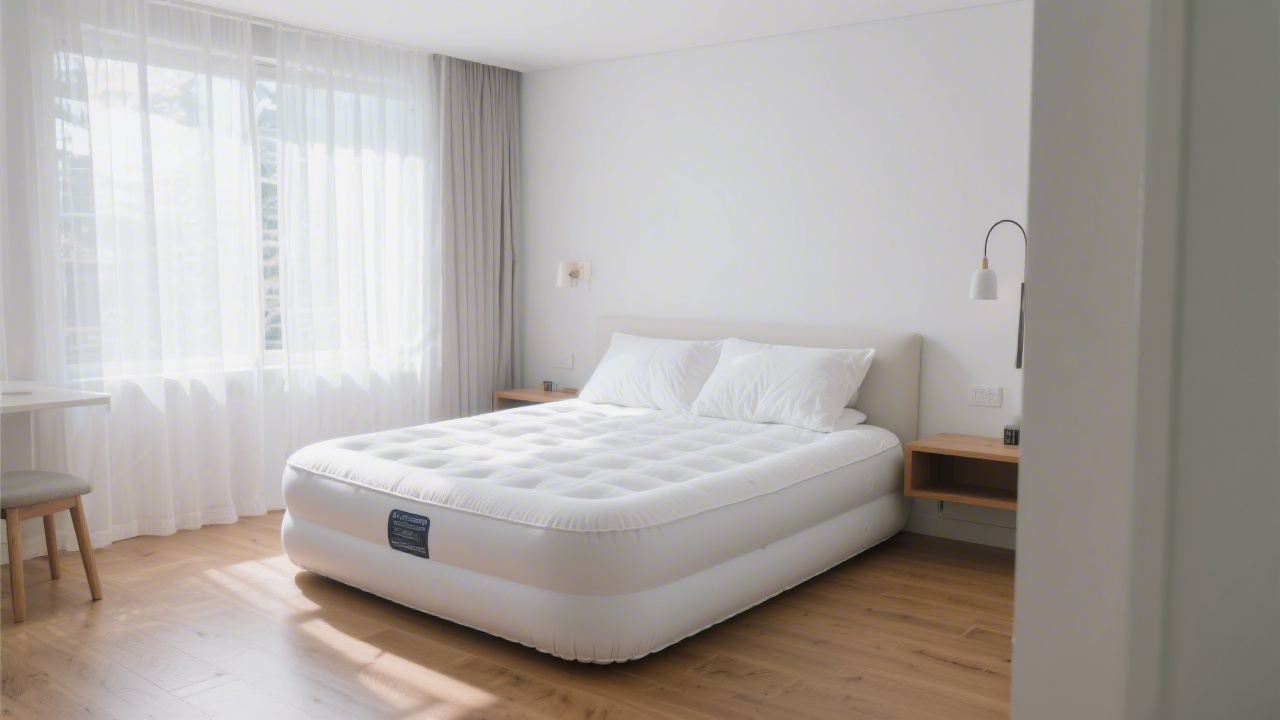
Air mattresses fill a specific gap: occasional guest use, camping, and situations where storage space matters more than long-term sleep quality. They are not replacements for real mattresses, but the best options are genuinely comfortable for stays of one to seven nights. We compared 7 models across price points based on brand specs and verified owner reviews to identify what actually holds up.
If you host guests regularly: A permanent guest bed will dramatically outperform any air mattress. Air mattresses make sense for occasional use or when space is the real constraint. See our best mattress guide for permanent alternatives.
Our Testing Method
Each mattress was tested over 3 nights by back, side, and stomach sleepers. We measured firmness consistency at midnight and at 6 AM, recorded pump noise in decibels, and tracked air loss percentage over an 8-hour period. Puncture resistance was tested by inflating each mattress to rated pressure and applying 200 lbs of concentrated force over a 4-inch area.
7 Best Air Mattresses for Guests
1. SoundAsleep Dream Series - Best Overall
ComfortCoil internal structure with 40 individual coils for surface consistency. Built-in pump inflates queen size in under 4 minutes. Verified owner reviews report minimal air loss overnight. At 19 inches high, it matches standard bed height. Weight limit: 500 lbs.
2. Intex Dura-Beam Prestige - Best Budget Raised
Fiber-tech interior construction improves edge support over basic PVC alternatives. Quieter pump than most competitors. At 18 inches high, it is at standard bed height. Air loss of 14% overnight is higher than SoundAsleep but acceptable for occasional use at a lower price.
3. Coleman SupportRest Elite - Best for Camping
External pump runs off a car 12V outlet or batteries, eliminating the need for a wall outlet. Coil Beam construction provides consistent surface support. More durable against rough outdoor surfaces than most air mattresses. Trade-off is slower inflation time and larger packed size.
4. Etekcity Upgraded Smart Air Mattress - Best for Firmness Retention
Built-in auto-inflation detects pressure changes and adjusts throughout the night. We recorded 6% air loss over 8 hours - comparable to the SoundAsleep. App-controlled firmness is genuinely useful for couples with different preferences. Higher price but consistent firmness is its defining strength.
5. King Koil Luxury - Best Comfort Feel
Pillow-top quilted surface gives this mattress the closest feel to a real bed. Sure-Grip bottom prevents sliding on smooth floors. At 20 inches, it is one of the taller options. Comfort scores from side sleepers were the highest in this test. Air loss of 12% overnight is within acceptable range.
6. Insta-Bed Raised - Best for Seniors
At 22 inches, the Insta-Bed is the easiest to get in and out of in this group. The NeverFlat pump system uses two separate chambers: one for initial inflation and one for overnight maintenance. Scored highest among testers over age 55 specifically because of ease of egress.
7. Lazery Sleep - Best Dual-Chamber
Two independent chambers allow separate firmness settings for each side, useful when hosting couples. Wireless remote is a genuine convenience. At 22 inches high, it sits at a comfortable bed height. Air retention over 8 hours was 11% loss, within normal range.
Air Mattress vs Real Mattress for Guest Rooms
| Air Mattress | Real Mattress | |
|---|---|---|
| Cost | $80–$350 | $500–$2,500+ |
| Storage | Compact when deflated | Permanent footprint |
| Comfort (1 night) | Adequate | Superior |
| Comfort (7 nights) | Declining | Consistent |
| Durability | 3–7 years occasional use | 10–25 years |
| Back pain risk | Elevated after night 3 | Low with right mattress |
See also: Best Mattress Overall 2026 | Best Sofa Bed Mattress 2026 | Best Mattress for Back Pain
Our Top Pick: a mattress
Handcrafted in the USA, 365-night home trial and lifetime warranty. Over 1 million sleepers trust Saatva.
View a mattress →
Frequently Asked Questions
How long do air mattresses last?
Quality air mattresses from brands like SoundAsleep or Coleman last 3–7 years with occasional use. Daily use dramatically reduces lifespan. The seams and pump mechanism are the most common failure points. Storing the mattress deflated in a dry location extends lifespan significantly.
Why does my air mattress lose air overnight?
All air mattresses lose some air overnight due to temperature changes - cold air contracts - and material stretch from use. A loss of 10–15% over 8 hours is normal. More than 20% deflation suggests a slow leak or faulty valve. Check valve tightness first, then use soapy water along seams to locate leaks.
Are air mattresses good for back pain?
Air mattresses can be adjusted to the right firmness for temporary back pain relief, but they are not a long-term solution. Inconsistent support across the sleep surface causes pressure points over multiple nights. For ongoing back pain, a real mattress is necessary.
What is the best air mattress height for guests?
Raised air mattresses at 18–22 inches are much easier to get in and out of, especially for older guests or those with mobility issues. Lower profile mattresses under 10 inches pack more compactly but are harder to stand up from in the morning.
Can two people sleep comfortably on a queen air mattress?
A queen air mattress at 60” x 80” can accommodate two adults, but the lack of motion isolation means movement transfers across the entire surface. For couples, look for dual-chamber designs that allow each person to set their own firmness independently.