
 by
by Our #1 recommendation for mattress pressure points
Amerisleep AS3
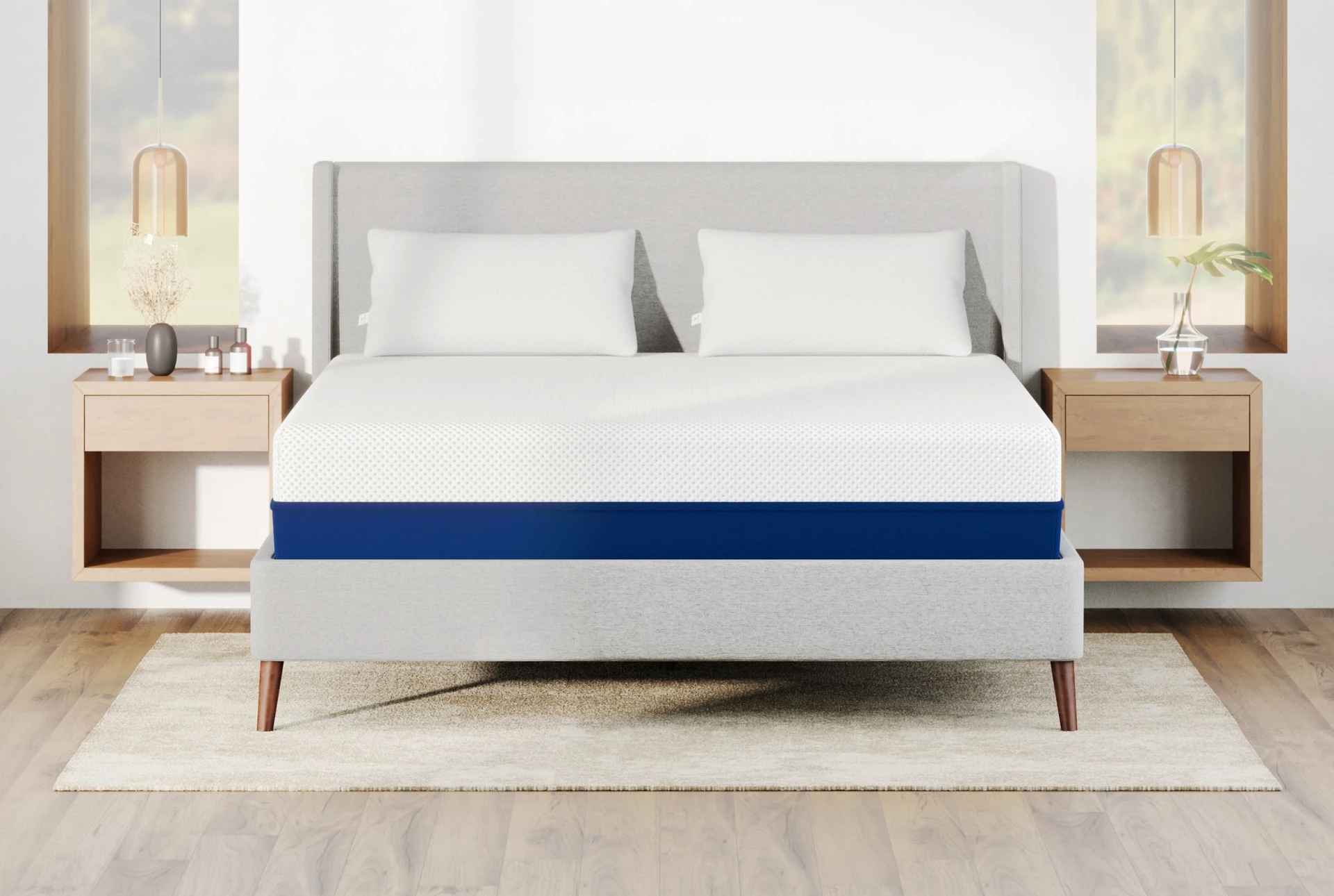
For all-foam pressure relief with active lumbar zoning, the AS3 remains a strong choice.
Our first recommendation for mattress pressure points is the Amerisleep AS3. For all-foam pressure relief with active lumbar zoning, the AS3 remains a strong choice. The Saatva Classic is our runner-up.
Amerisleep AS3
8.8/10
- HIVE 5-zone layer creates softer cells under shoulder and hip, firmer under lumbar, reduces peak pressure at bony prominences
- Plant-based Bio-Pur foam is open-cell, runs cooler than standard memory foam
- CertiPUR-US certified, made in California, delivered free via FedEx
- 100-night trial with full refund and free pickup
- Edge support softer than a coil hybrid
- Sleepers over 230 lb may want the AS5 Hybrid for more coil-based lift
For all-foam pressure relief with active lumbar zoning, the AS3 remains a strong choice. The HIVE geometry targets exactly where pressure builds, making it the best foam-only pick if you prefer the quieter, motion-isolating feel of foam over an innerspring hybrid.
Saatva Classic
9.2/10
- Dual coil-on-coil construction with reinforced lumbar zone reduces pressure at the lower back while the Euro-top cushions shoulders and hips
- Plush Soft option (4/10) provides deep pressure relief at the shoulder and hip for side sleepers
- Free white-glove delivery, in-room setup, and old mattress removal
- 365-night trial, the longest in the mainstream luxury segment, plus a lifetime warranty
- Ships flat, not compressed in a box, requires scheduling a delivery window
- $99 return fee applies during the trial period
For most sleepers dealing with pressure points, the Saatva Classic in Plush Soft is the strongest all-around choice. The coil core keeps the spine supported while the Euro-top comfort layer conforms at shoulder and hip, and the 365-night trial gives you enough time to confirm the fit across all sleep positions.
How pressure points form during sleep
Pressure points develop where body weight concentrates against a surface that does not conform to your shape. In bed, the main sites are the shoulder blade and lateral deltoid for side sleepers, the hip bone (greater trochanter), the outside of the knee, and the heels for back sleepers. At each of these points, the underlying tissue sits between bone and mattress surface with minimal padding from the body's own soft tissue.
When the mattress is too firm, the soft tissue at these points compresses fully and capillary blood flow slows. The resulting numbness and tingling forces you to shift position, sometimes dozens of times per night, which fragments sleep architecture without you being fully aware of it. Morning joint pain, stiffness, and the feeling of an unrested sleep are the downstream effects.
A mattress that is too soft creates a different failure mode: the entire pelvis sinks, which collapses the lumbar curve and puts mechanical strain on the posterior ligaments and discs. This is why the answer is not simply the softest bed you can find. It is a mattress that applies cushion at the pressure zones and firmness everywhere else, which is what zoned construction solves.
What makes a mattress good for pressure relief
Three construction features determine pressure performance:
- Contouring depth. A comfort layer of at least 2 to 3 inches of memory foam, latex, or a plush Euro-top lets bony prominences sink to the level of the surrounding soft tissue, distributing load across a wider surface area.
- Zoned firmness. Mattresses with differentiated zones, softer under shoulders, firmer under hips and lumbar, prevent the shoulder from bottoming out while keeping the pelvis from sinking excessively. Saatva achieves this through its reinforced lumbar zone coil layout; Amerisleep does it through hexagonal HIVE cutout geometry.
- Support core resilience. The base layer needs to hold the spine in neutral alignment once the comfort layer has done its contouring work. A pocketed coil core (Saatva, PlushBeds Botanical Bliss Hybrid) or dense foam base (Amerisleep) both achieve this if rated correctly for the sleeper's weight.
Comparison: best mattresses for pressure points
| Mattress | Type | Firmness | Pressure relief | Trial | Queen price |
|---|---|---|---|---|---|
| Saatva Classic | Innerspring hybrid | 3 options (Plush/LF/Firm) | Excellent, zoned lumbar coils + Euro-top | 365 nights | From $1,095 |
| PlushBeds Botanical Bliss | Organic latex hybrid | Multiple (19 ILD to 44 ILD) | Very good, natural latex contouring | 100 nights | From $1,699 |
| Puffy Mattress | All-foam | Medium 5/10 | Good, Cooling Cloud foam layers | 101 nights | From $849 |
| Amerisleep AS3 | All-foam Bio-Pur | Medium 5/10 | Excellent, HIVE 5-zone zoned | 100 nights | From $1,049 |
| Sweetnight Prime | Hybrid | Medium 5/10 | Good, gel memory foam + coil | 100 nights | From $499 |
PlushBeds Botanical Bliss
8.9/10
- GOLS-certified Dunlop latex conforms closely to bony prominences without the heat retention of memory foam
- Customizable firmness (multiple ILD options) lets you dial in the exact contouring depth for your weight
- Certified organic materials throughout, no off-gassing concerns
- 25-year warranty is the longest in our tested group
- Heavier than foam mattresses, harder to reposition
- Higher starting price than most foam alternatives
If you want natural pressure relief without synthetic foam, the Botanical Bliss is the standout. Dunlop latex conforms precisely, springs back without the memory foam "stuck" sensation, and holds its shape better long-term than polyurethane comfort layers.
Puffy Mattress
8.6/10
- Cooling Cloud foam top layer relieves pressure at shoulder and hip with good contouring
- Firm Core Support foam base prevents lumbar sag while comfort layer conforms above
- Made in USA, CertiPUR-US certified
- Lifetime warranty at a mid-range price point
- No zoned construction, pressure relief is less targeted than Saatva or Amerisleep
- Sleepers over 230 lb may find edge support insufficient
The Puffy offers solid pressure relief for average-weight side and back sleepers at a lower entry price than most luxury options. It is not zoned, but the comfort layer depth is adequate for most bony prominence sites at typical body weights.
Sweetnight Mattress
8.3/10
- Gel-infused memory foam comfort layer relieves pressure at shoulder and hip at a fraction of the luxury price
- Pocketed coil support core provides better edge support than all-foam budget options
- 100-night trial with free returns
- Good value for guest rooms or short-term use
- No zoned construction, pressure relief less precise than Saatva or Amerisleep
- Durability shorter-term compared to luxury tiers
If budget is the primary constraint, Sweetnight delivers meaningful pressure relief at under $500 queen. The hybrid construction is a step up from all-foam budget beds, and the 100-night trial lets you confirm fit without risk.
Pressure relief by sleep position
The optimal firmness for pressure relief changes with sleep position because the primary load points shift:
- Side sleepers bear maximum pressure at the shoulder and hip. They need the deepest contouring, medium to medium-soft (4 to 5 out of 10). The Saatva Classic in Plush Soft (4/10) works well for most side sleepers. The Amerisleep AS3 at 5/10 covers the majority of side sleepers in the 130 to 230 lb range.
- Back sleepers carry load at the shoulder blades, sacrum, and heels. Medium-firm (6 to 7 out of 10) gives enough cushion without excessive lumbar sag. The Saatva Classic in Luxury Firm (6/10) is the most consistent choice here.
- Combination sleepers need a mattress that performs across both positions. Medium (5 to 6 out of 10) with zoned construction handles the transitions best. The Saatva Classic in Luxury Firm, or the Amerisleep AS3, both cover this well.
Body weight and pressure relief
Body weight changes how a mattress compresses, which affects pressure performance significantly. A mattress that feels medium for a 150 lb sleeper will feel noticeably firmer to a 200 lb sleeper because the heavier body compresses the foam further, engaging the denser transition and support layers sooner.
General guidance by weight range:
- Under 130 lb: The Saatva Classic in Plush Soft or the Amerisleep AS3 may feel medium. The PlushBeds Botanical Bliss in a softer ILD configuration is worth considering.
- 130 to 230 lb: The Saatva Classic in Luxury Firm or Plush Soft, and the Amerisleep AS3, both hit their designed targets in this weight range.
- Over 230 lb: All-foam options may not provide sufficient lift under the lumbar. The Saatva Classic handles heavier loads through its dual coil-on-coil support core, which is why it outperforms foam beds at this weight range for pressure relief without lumbar sag.
Mattress vs mattress topper for pressure relief
A mattress topper can meaningfully improve pressure relief on an otherwise adequate mattress if the primary issue is comfort layer depth. A 2 to 3 inch memory foam or latex topper adds contouring without changing the structural support of the bed underneath. The limit is a worn-out or structurally failing mattress: a topper cannot fix a support core that has sagged or broken down, and placing a soft topper over a collapsed mattress often makes pressure point pain worse by adding more sinkage at the already-failing zone.
If your mattress is under 5 years old and shows no visible sagging, a topper is worth trying before replacing the mattress. If the mattress has a visible body impression or is more than 8 to 10 years old, replace it.
Common questions
What firmness mattress is best for pressure points?
Medium (5 out of 10) is the most effective for the widest range of sleepers. It provides enough contouring to let bony prominences settle without allowing the pelvis to sink deeply enough to lose lumbar alignment. Side sleepers who are lighter or carry more shoulder width may do better with medium-soft (4 out of 10), such as the Saatva Classic in Plush Soft.
Is memory foam or innerspring better for pressure relief?
Zoned design matters more than material type. A coil hybrid with a thick plush Euro-top, like the Saatva Classic in Plush Soft, matches or exceeds most all-foam options on pressure mapping data for average-weight sleepers, while maintaining better edge support and temperature regulation. A plant-based foam with lumbar zoning (Amerisleep AS3) is the strongest foam-only option. A basic innerspring without a substantial comfort layer provides only fair pressure relief.
Can a mattress cause pressure point pain?
Yes. A mattress that is too firm creates peak pressure at bony prominences that restricts blood flow and causes numbness and pain. A mattress that is too soft allows the lumbar region to collapse, creating secondary pressure through mechanical joint strain rather than direct tissue compression. If you wake with pain that improves after 30 minutes of moving around, the mattress is very likely a contributing factor.
How long before a new mattress relieves pressure points?
Most people notice improvement within the first week if the firmness is appropriate. Full adaptation, where sleep quality stabilizes, typically takes 3 to 6 weeks. If you are still experiencing pressure pain after 6 weeks on a properly fitted mattress, the cause may be positional or warrant medical evaluation. This is why trials of 100 nights or more are worth prioritizing over shorter windows.
For pressure point relief, choose medium firmness with zoned construction. The Saatva Classic in Plush Soft (zoned coils, Euro-top, 365-night trial) is our top pick; the Amerisleep AS3 (HIVE 5-zone, 100-night trial) is the best all-foam alternative.
Our #1 pick for mattress pressure points
The Amerisleep AS3 is where we would start.