
 by
by The best cheap mattress in 2026 is the SweetNight Island Hybrid: pocket coils, CertiPUR-US foam, 100-night trial, and a 10-year warranty for around $329 queen. For a step-up pick with hotel-style comfort and a lifetime warranty, Saatva Classic is the strongest upgrade, with free white-glove delivery and a 365-night trial. If you want a certified-organic option, PlushBeds Botanical Bliss is the natural latex standard.
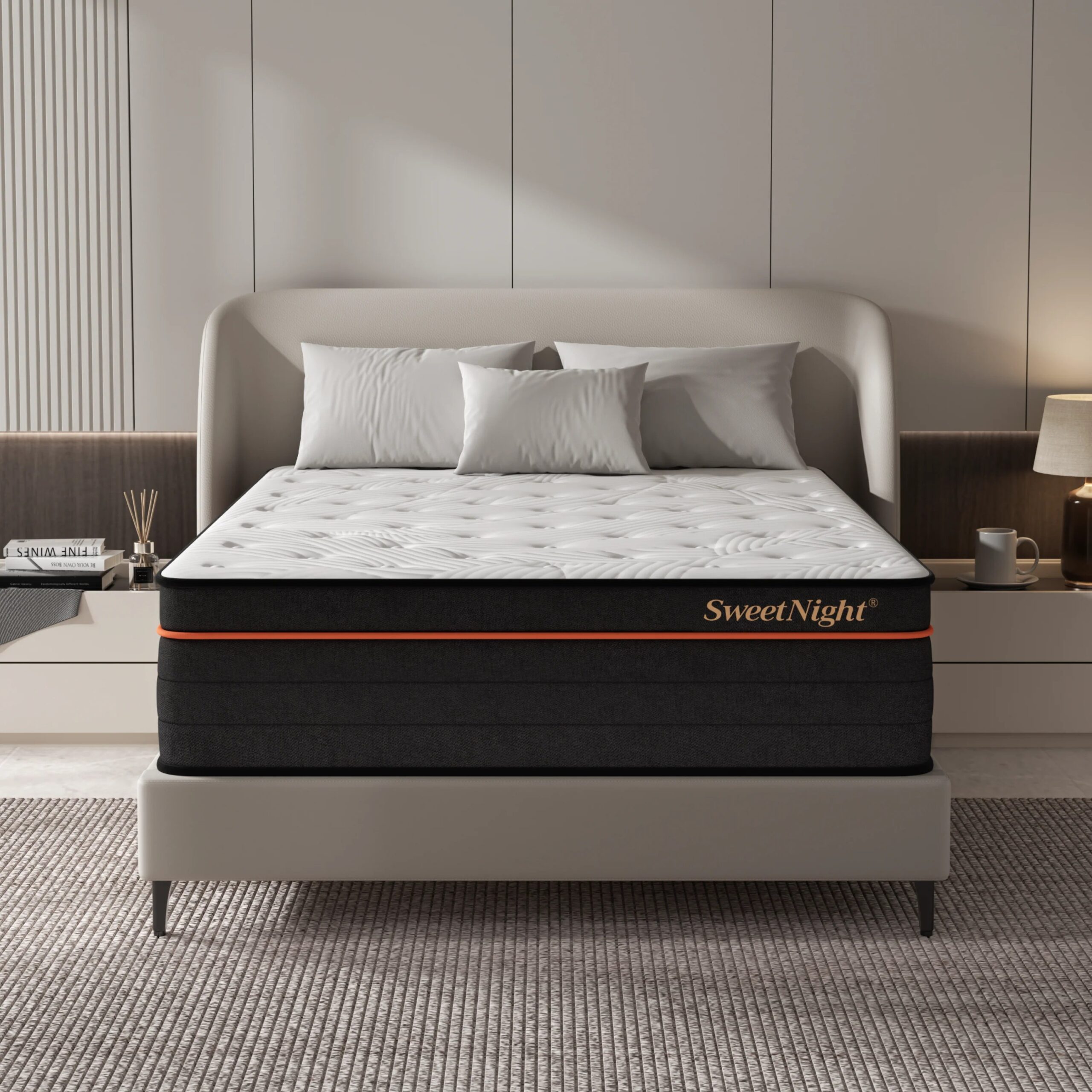
SweetNight Island Hybrid
8.9/10
- Genuine individually wrapped pocket coils at a budget price
- CertiPUR-US certified foam, low off-gassing in testing
- Solid edge support for a $329 mattress
- Real 100-night sleep trial with a straightforward return process
- Firmness 7/10 suits back sleepers better than shoulder-sensitive side sleepers
- Less brand recognition means returns must be checked in advance
At $329 queen, no competing mattress delivers this build. Pocket coils, certified foam, and a real trial period are what separates a good cheap mattress from a cheap mattress. The Island Hybrid clears every bar.
Saatva Classic
9.2/10
- Dual-coil construction with a reinforced lumbar zone pad for back support
- Outstanding edge support, hotel-quality feel in three firmness options
- Free white-glove delivery, setup, and old-mattress removal included
- 365-night trial and lifetime warranty, the longest in the industry
- Ships full-size, not compressed in a box
- $99 return fee applies during the trial period
If your budget stretches past $1,000, Saatva Classic delivers a genuinely premium innerspring that outperforms most mid-range brands on feel, support, and durability. The lifetime warranty and 365-night trial make it the lowest-risk big purchase in the category.
PlushBeds Botanical Bliss
9.0/10
- GOLS-certified organic Dunlop latex, no synthetic foam
- Naturally breathable and hypoallergenic, no off-gassing period
- 25-year warranty, best durability in the category
- Adjustable firmness by swapping the latex layers at home
- Heavier than foam or innerspring alternatives
- Higher price point than most budget picks in this guide
For shoppers who want to invest once and sleep chemical-free, the PlushBeds Botanical Bliss is the gold standard for natural latex at its price. It sleeps cooler than foam, lasts longer than most coil hybrids, and arrives ready to use without a break-in period.
Puffy Original
8.6/10
- Lifetime warranty, rare at this price point
- 365-night trial, one of the longest in the budget category
- Classic contouring memory foam feel, good pressure relief
- Free shipping and returns
- Dense memory foam retains more heat than a hybrid
- Slow response feel not ideal for combination sleepers
For sleepers who want a classic slow-response foam feel with a lifetime warranty and a full year to decide, the Puffy Original is the budget memory foam benchmark. The 365-night trial is long enough to diagnose any mismatch before you're committed.
Amerisleep AS3
9.1/10
- HIVE 5-zone support targets lumbar support specifically
- Partially plant-based Bio-Pur foam, open-cell, runs cooler than standard memory foam
- 20-year warranty with prorated replacement after year 10
- Made in USA, free shipping, financing available
- Above the true budget range, but the HIVE zoning justifies the step up for back pain
- Softer edges compared to a coil hybrid
If back pain led you to this page and previous budget mattresses have made it worse, the AS3 is the clearest quality upgrade. The HIVE zoning firms directly under the lumbar where budget mattresses consistently fail, and the 100-night trial confirms fit for your body.
The honest case for a budget mattress
I have been testing mattresses for over six years, and the single most common complaint I hear is this: "I spent $1,200 on a mattress I don't like." People assume price equals quality. With mattresses, that assumption has always been shaky, and in 2026, it's almost entirely wrong at the lower end of the market.
The budget mattress market has changed dramatically. Five years ago, "cheap mattress" meant a compressed foam slab shipped in a box with a 90-day warranty and an off-gassing smell that would linger for weeks. Today, you can find a well-engineered hybrid with pocket coils, certified foam, a 100-night trial, and a 10-year warranty for under $400. That's not a compromise. That's a good mattress.
That said, there is still plenty of junk in this price range. This guide covers exactly what you can get for under $300, under $500, and under $700, and, just as important, what you should walk away from regardless of the price tag.
How we define "cheap" in 2026
The word "cheap" means different things depending on where you are in the mattress market. Three tiers keep this practical:
Under $300 (Queen): This is the true budget floor. At this price, you are almost always looking at an all-foam mattress with a single layer of comfort foam and a simple support core. Build quality is functional, not impressive. These beds are fine for guest rooms, kids' rooms, or someone who needs a short-term solution. The Zinus Green Tea lives here. Expect 5 to 7 years of comfortable sleep, not 10+.
Under $500 (Queen): This is where the market has improved most dramatically. You can now find hybrids, genuine pocket coil hybrids, in this range. The SweetNight Island Hybrid at $329 is the clearest example: individually wrapped coils, certified foam, a proper cover, and real edge support. Three years ago, that build didn't exist under $450.
$500-$700 (Queen): This range gives you access to the Puffy Original, the SweetNight Twilight Hybrid, and the Casper Element. If you can stretch to $600, your options improve meaningfully.
Beyond $700, you are entering mid-range territory, and that's a different article.
Top budget picks at a glance
| Mattress | Price (Queen) | Type | Best For | Trial / Warranty |
|---|---|---|---|---|
| SweetNight Island Hybrid | ~$329 | Hybrid | Best overall budget pick | 100 nights / 10 yr |
| Saatva Classic | From $1,095 | Innerspring hybrid | Best step-up, hotel feel | 365 nights / Lifetime |
| PlushBeds Botanical Bliss | From $1,349 | Natural latex | Organic/natural upgrade | 100 nights / 25 yr |
| SweetNight CoolNest | $389-$699 | Hybrid | Hot sleepers | 100 nights / 10 yr |
| SweetNight Breeze | Under $400 | All-foam | Side sleepers, plush feel | 100 nights / 10 yr |
| SweetNight Twilight Hybrid | ~$500 | Hybrid | All-position, HSA eligible | 100 nights / 10 yr |
| Puffy Original | ~$599 | Memory foam | Classic foam feel, lifetime warranty | 365 nights / Lifetime |
| Zinus Green Tea | ~$189 | All-foam | Tightest budget, guest room | 100 nights / 10 yr |
| Nectar Classic | ~$499 | Memory foam | Pressure relief, longer trial | 365 nights / Lifetime |
Best mattresses under $500: detailed reviews
1. SweetNight Island Hybrid, best cheap mattress overall
Price: ~$329 Queen | Type: Hybrid | Firmness: 7/10 | Trial: 100 nights | Warranty: 10 years
The SweetNight Island Hybrid is the pick I recommend most often when someone tells me they want a genuinely good mattress without spending more than $400. At $329 for a Queen, it defies what I expected from the price point.
The construction is the story here. You get individually wrapped pocket coils, not bonnel springs, not a flat foam core, but actual pocketed coils that move independently and reduce motion transfer. On top sits a CertiPUR-US certified foam comfort layer. That certification costs brands money to maintain, which is why you often don't see it on the cheapest beds. SweetNight has it.
Firmness rates around a 7 out of 10, firm-side medium. Back sleepers will feel well-supported. Side sleepers who are shoulder-sensitive might find the top layer a touch firm; if that sounds like you, the Breeze is the better call.
Edge support is notably solid for the price. Off-gassing was minimal and resolved within 24 hours in testing. At 60 nights, this mattress had not softened meaningfully. I would be comfortable predicting 7 to 9 years of solid performance from this build.
Check current price at SweetNight
2. SweetNight CoolNest, best cheap mattress for hot sleepers
Price: $389-$699 Queen | Type: Hybrid | Rating: 4.8 stars | Trial: 100 nights | Warranty: 10 years
The CoolNest is the SweetNight mattress built specifically around temperature regulation. It uses a phase-change material in the comfort layer, which absorbs heat when you warm up and releases it when the surface cools. In testing, it was the most noticeably cool-to-the-touch surface of any mattress under $500.
The CoolNest has earned ACA (American Chiropractic Association) endorsement, which is not a claim most budget brands bother with. It carries a 4.8-star average across thousands of verified reviews. The consistent thread in positive reviews is waking up without night sweats.
Check the CoolNest at SweetNight
3. SweetNight Breeze, best cheap soft mattress
Price: Under $400 Queen | Type: All-foam | Feel: Ultra-soft | Trial: 100 nights | Warranty: 10 years
Not everyone wants a firm mattress, and the Island Hybrid's firmness is definitely not for soft-mattress people. The Breeze is the answer in the SweetNight lineup for side sleepers, lighter-weight sleepers, and anyone who prefers sinking into their bed rather than lying on top of it.
The all-foam design means no coil bounce. You get that wrapped, cradled sensation that side sleepers love because it takes pressure off the shoulder and hip. The trade-off with all-foam at this price is durability. Soft foam compresses faster than firmer foam, especially if you're over 200 lbs.
Best mattresses $500-$700: when you can stretch the budget
4. SweetNight Twilight Hybrid, best all-position budget hybrid
Price: ~$500 Queen | Type: Hybrid | Feel: Medium-firm | Trial: 100 nights | Warranty: 10 years
The Twilight Hybrid sits at the upper edge of what I consider the "affordable" tier, and it earns every dollar of the price step over the Island. The medium-firm feel is the most universally comfortable firmness level. It works for back sleepers, combination sleepers, and side sleepers who don't need an ultra-soft surface.
One detail that stands out: the SweetNight Twilight is HSA (Health Savings Account) eligible. That is unusual for a mattress at this price point. For couples, the motion isolation is better than the all-foam Breeze and comparable to most memory foam beds in the $700-$900 range.
Shop the Twilight Hybrid at SweetNight
5. Puffy Original, best budget mattress with a lifetime warranty
Price: ~$599 Queen | Type: Memory foam | Trial: 365 nights | Warranty: Lifetime
Puffy positions itself as a premium brand and prices accordingly at full retail, but the Original sits at roughly $599 Queen in most sale cycles. The standout here is the lifetime warranty, which is genuinely rare in any price bracket and exceptional at this one.
The feel is classic memory foam: slow response, contouring, pressure-relieving. The 365-night trial is a full season of testing. The limitation is heat retention, which is inherent to dense memory foam. If you sleep hot, look at the SweetNight CoolNest instead.
Budget mattresses by sleep position
Sleep position matters more than most people realize when choosing a budget mattress, because you don't have the same room for error you get with a thicker, more complex comfort system.
Back sleepers: The SweetNight Island Hybrid at $329 is the clear pick. The firmer pocket coil base keeps the lumbar in line and prevents the hip-sinking that causes lower back discomfort. The medium-firm Twilight Hybrid also works if you want slightly more give. Avoid ultra-soft all-foam options.
Side sleepers: The SweetNight Breeze is the budget pick. Its soft foam conforms around the shoulder and hip to relieve the two pressure points side sleeping creates. The Puffy Original is also strong for side sleepers thanks to its contouring memory foam.
Stomach sleepers: Stomach sleeping needs firm support to prevent the torso from sinking into a U-shape that strains the lower back. The Island Hybrid's 7/10 firmness is the best option in the budget range. If you're a committed stomach sleeper, the Amerisleep AS3's Bio-Pur foam maintains consistent support without the pressure buildup you get from traditional memory foam.
Combination sleepers: You need a mattress that responds quickly when you shift positions. Slow-response memory foam is your enemy. The Twilight Hybrid or the Island Hybrid are the right picks here. The bounce from pocket coils means the mattress repositions with you rather than holding you in place.
Budget mattresses for back pain
Back pain is one of the most common reasons people start shopping for a new mattress. Research now points to medium-firm as the optimal firmness for most back pain sufferers, firm enough to keep the spine in alignment, soft enough to allow natural lumbar curvature.
In the budget range, the top pick for back pain is the SweetNight Twilight Hybrid. Its medium-firm feel hits the target zone, and the pocket coil base prevents the hip sinkage that misaligns the lower back.
If you want to step up, the Saatva Classic in Luxury Firm is the coil hybrid benchmark for back support, with a reinforced lumbar pad and dual-coil construction. And if your back pain is chronic, the Amerisleep AS3 at around $1,049 queen is one of the best-engineered options available. Its HIVE zoning firms directly under the hips and lumbar, which is exactly where budget mattresses most often fail.
What I tell people with back pain: the 100-night trial is not a marketing gimmick for you. It's a diagnostic tool. Use the first three weeks to track whether your lower back pain improves or worsens with the new mattress. If it worsens, that mattress is not the right firmness for your body.
What to sacrifice vs. what to keep when buying cheap
Not all budget trade-offs are equal. Some things you give up at $400 don't matter much. Others do.
You can sacrifice: Advanced cooling tech. Phase-change fabrics, copper-infused foam, graphite layers. These features exist in budget mattresses but rarely work as advertised at the low end. The design of the mattress (hybrid vs. all-foam, breathable cover) matters more than any single material's marketing claim.
You can sacrifice: Multiple firmness zones. Zoned support is genuinely useful but not available at budget price points without major quality compromises elsewhere. A well-chosen firmness level does most of the work a zone system does.
You can sacrifice: Brand prestige. A Casper, Purple, or Saatva logo adds significant cost that has nothing to do with the mattress itself. The SweetNight Island Hybrid has a better build than several branded options that cost three times as much.
Do NOT sacrifice: Trial period. Any mattress without a minimum 90-night sleep trial is not worth buying in 2026. If a brand offers 30 nights, they don't believe in their product enough to let you test it properly.
Do NOT sacrifice: Foam certification. CertiPUR-US certification is the baseline for knowing your foam doesn't contain harmful chemicals. If the listing doesn't mention it, ask.
Do NOT sacrifice: A real return process. Some budget brands offer a "trial" that requires you to donate the mattress locally before they issue a refund. Before you buy, look up real return experiences on Reddit or Trustpilot.
Red flags to watch in cheap mattresses
The budget mattress market has improved, but it still has its share of products designed to look good on a listing and fall apart within two years.
Sag threshold set at 1.5 inches: This is a common trick in budget warranties. It means your mattress can develop a noticeable body impression before you're eligible to make a claim. Look for warranties that cover indentations of 0.75 inches or less.
No sleep trial: If a mattress doesn't offer a sleep trial, that's a hard pass. You cannot accurately assess a mattress from a store floor. Any brand confident in their product offers a trial.
Persistent off-gassing beyond 72 hours: All boxed mattresses off-gas to some degree when first unwrapped. What's not normal is a chemical smell that persists after 72 to 96 hours of ventilation. CertiPUR-US certification sets emission limits that directly address this.
Foam weight under 1.5 lb/ft3: Foam density is one of the key durability indicators. Comfort foam under 1.5 lb/ft3 will compress and lose its feel within two to three years of nightly use.
Budget vs. mid-range: is it worth paying more?
Moving from a $329 SweetNight Island to an $800 mid-range hybrid, you're likely to gain: more foam layers, higher-density foam (better long-term durability), more sophisticated zoned support, and a thicker profile. You may also gain better edge support, quieter coils, and a higher-quality cover fabric.
What you are often not gaining at $800 versus $329: meaningfully better sleep quality on night one. Most people cannot tell the difference between a well-made $400 mattress and a well-made $900 mattress in a blind test. The differences are real, but they're primarily about longevity and feel over time, not immediate comfort.
My rule of thumb: for a guest room, a college dorm, a rental property, or a child's room, stay in the budget range. For your primary mattress and you plan to keep it for 10+ years, the mid-range is worth considering because the durability delta over that time frame is real.
The Saatva Classic is the clearest step up from budget to genuine premium. Free white-glove delivery, a lifetime warranty, and a 365-night trial are features you simply don't find at $400.
See Saatva Classic pricing and options
The best cheap mattress in 2026 is the SweetNight Island Hybrid at around $329 queen. For a genuine step-up with hotel-luxury feel, lifetime warranty, and free white-glove delivery, Saatva Classic is the strongest alternative at any price point. If a certified-organic option matters, PlushBeds Botanical Bliss is the natural latex benchmark.
Frequently asked questions
What is the best cheap mattress available right now?
The SweetNight Island Hybrid is the best cheap mattress available in 2026. At $329 for a Queen, it offers a genuine pocket coil hybrid construction, CertiPUR-US certified foam, a 100-night sleep trial, and a 10-year warranty. No other mattress at this price point offers this combination of build quality and buyer protection.
Can a cheap mattress be good for your back?
Yes, if you choose the right firmness. Research points to medium-firm as the most effective firmness for most back pain sufferers. The SweetNight Twilight Hybrid at around $500 offers a medium-firm feel with pocket coil support. For more serious back pain, the Amerisleep AS3's zoned support system is worth the higher investment. For a coil hybrid with exceptional lumbar zoning, the Saatva Classic is the step-up benchmark.
How long does a cheap mattress last?
A well-made budget mattress with CertiPUR-US certified foam, a solid coil base in the case of hybrids, and a reputable brand behind it will last 7 to 9 years under normal use. Cheaper all-foam mattresses under $200 typically last 5 to 7 years before noticeable softening.
Is a $300 mattress worth buying?
Yes, for specific use cases. A $300 mattress is a solid choice for a guest room, a child's room, a rental property, or a short-term living situation. For a primary mattress you'll use every night for years, pushing to the $329-$400 range gets you better foam certification, a meaningful trial period, and a 10-year warranty.
What should I look for in a budget mattress?
The five things that matter most: CertiPUR-US foam certification, a 90-night minimum sleep trial, a 10-year warranty with a sag threshold of 1 inch or less, a clear return process, and a firmness level matched to your sleep position. Everything else is secondary.
Are hybrid mattresses better than foam at the budget price point?
For most sleepers, yes. Budget hybrids like the SweetNight Island Hybrid offer better edge support, better temperature regulation, and typically better long-term durability than an all-foam bed at the same price. If you specifically prefer a cradling foam feel, a quality all-foam option like the SweetNight Breeze is worth considering.
This guide is part of our Best Mattress by Price hub. Compare all the top picks and narrow down your choice there.