
 by
by Quick answer: No single pillow wins this category. Match loft to your sleep position first: the Saatva Pillow lists four heights, the LatexLuxe pairs latex with a 5-year warranty, and the Evercool runs a low 3-inch profile.
- Saatva Pillow: listed at 4", 5", 6" and 7" per saatva-mattress.com.
- LatexLuxe Pillow: 5-year warranty per amerisleep.com.
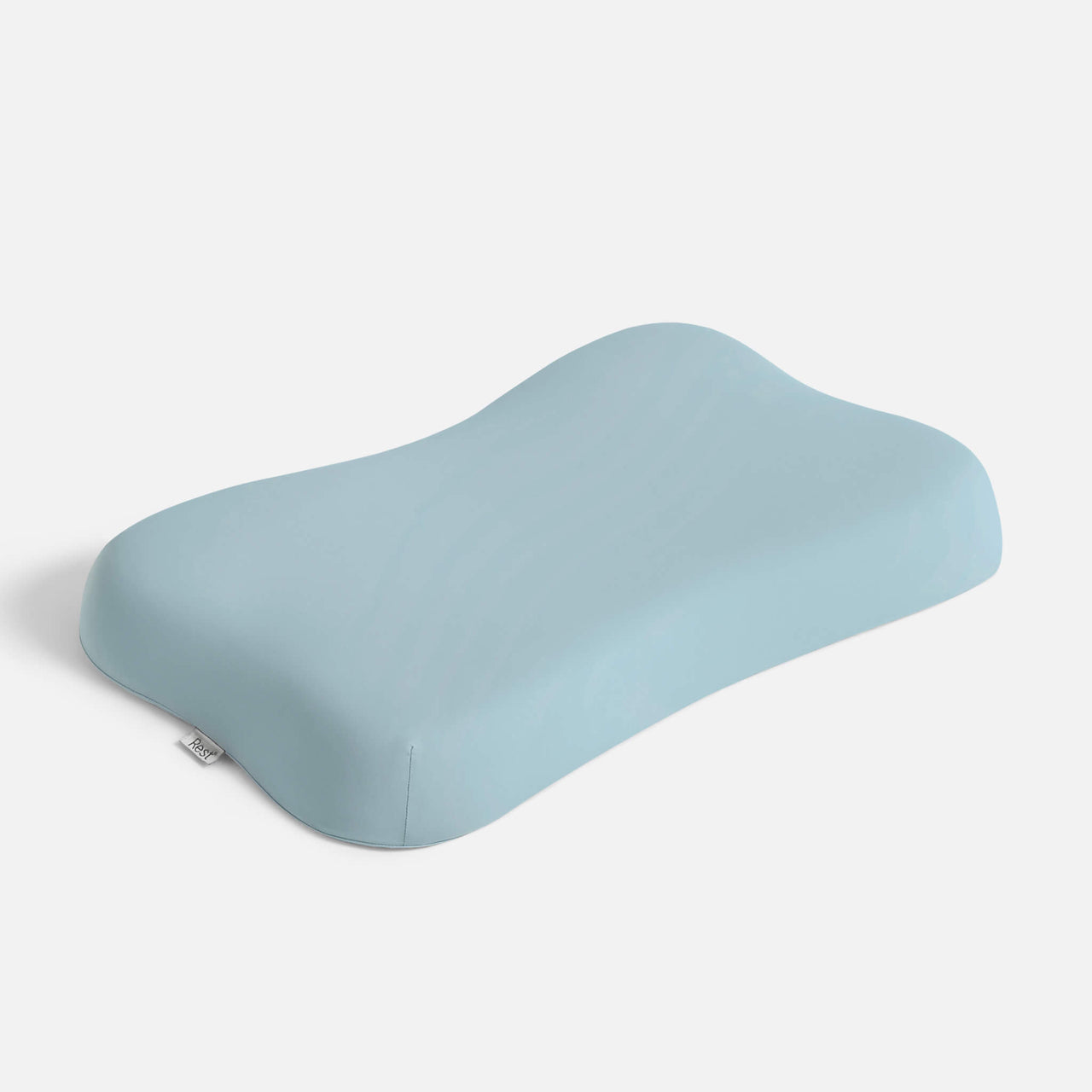
- Evercool® Cooling Pillow: 26" x 15.8" x 3", $199 per rest.com.
Updated July 2026 · Reviewed for accuracy
VERIFIED COMPARISON
For best chiropractic pillow, compare the Saatva Pillow with the other verified options below using documented dimensions, ownership terms and fit factors.
3 VERIFIED OPTIONS COMPARED
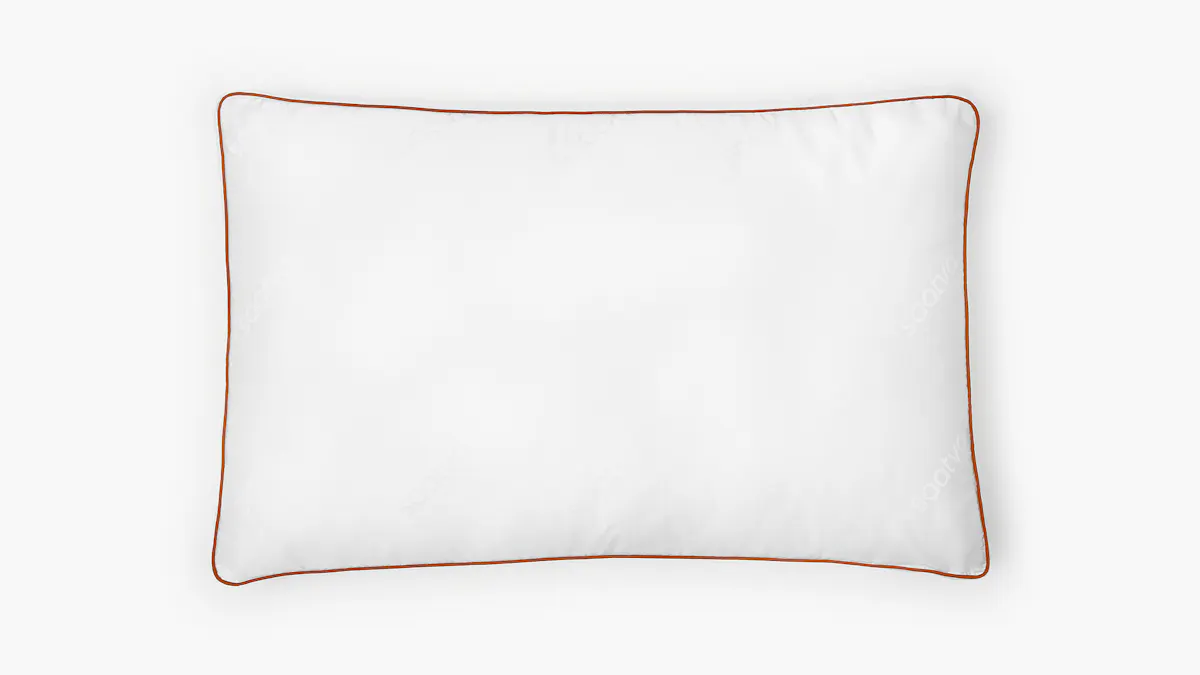
Saatva Pillow
- Saatva Pillow: when you don't yet know your loft The spec listing on saatva-mattress.com shows this pillow at 4", 5", 6" and 7".
- One of 3 products compared with bound source facts
- Order direct from the brand — current price, trial and warranty terms are on the official product page
3 verified options compared
"Chiropractic pillow" is a shopping term, not a product standard. Nobody certifies it, and no pillow on this page is a medical device. What that phrase really points at is a pillow whose height and firmness keep your head roughly level with your spine instead of cranking your neck up or letting it sag all night.
So I'm going to compare three real options on the things I can actually verify: loft numbers, dimensions, materials, warranty and price. Where the evidence stops, I'll say so plainly rather than dress it up.
What a "chiropractic pillow" actually means
Search that phrase and you'll get contour foam blocks with a wave shape, cervical rolls, latex slabs, adjustable shredded-fill bags, and a few things that look like orthopedic props from a 1970s catalog. They have almost nothing in common structurally. The only shared promise is neutral neck alignment.
Alignment is a geometry problem before it's a materials problem. Your head weighs roughly as much as a bowling ball, your shoulder creates a gap between the mattress and your ear, and the pillow's job is to fill that gap without overfilling it. Get the height wrong and the fanciest foam in the world won't rescue you. Get the height right and a fairly ordinary pillow feels engineered.
That's why I refuse to rank these three against each other. A 3-inch pillow and a 7-inch pillow aren't competing, they're aimed at different bodies on different mattresses. If you want the position-by-position groundwork before you shop, my guide to the best way to sleep with a pillow covers how head, neck and shoulder should line up.
The Nut's rule of thumb: broader shoulders and a firmer mattress need more loft, because your shoulder sinks less and the gap under your neck gets bigger. Narrow shoulders on a plush mattress need less. Buy for that gap, not for the label on the box.
Loft, not the label, does the work
Side sleeping asks the most from a pillow. The shoulder is the widest part of your body in that position, and the pillow has to bridge from mattress surface to the side of your head. Back sleeping needs meaningfully less, because the gap behind your neck is a shallow curve, not a shoulder. Stomach sleeping needs the least of all, and often the honest answer there is almost none.
Firmness matters second. A soft pillow that starts at 6 inches may compress to 3 under load, so listed loft only tells you the starting point. Denser latex holds its stated height better than low-density polyfoam, and shredded fill sits somewhere in between depending on how tightly it's packed.
Durability is the third axis and the one buyers ignore. Foam and latex lose height slowly, which means the pillow that aligned you perfectly in month one can be quietly two-thirds of its original loft by year three. You don't notice the day it happens. You notice the morning stiffness.
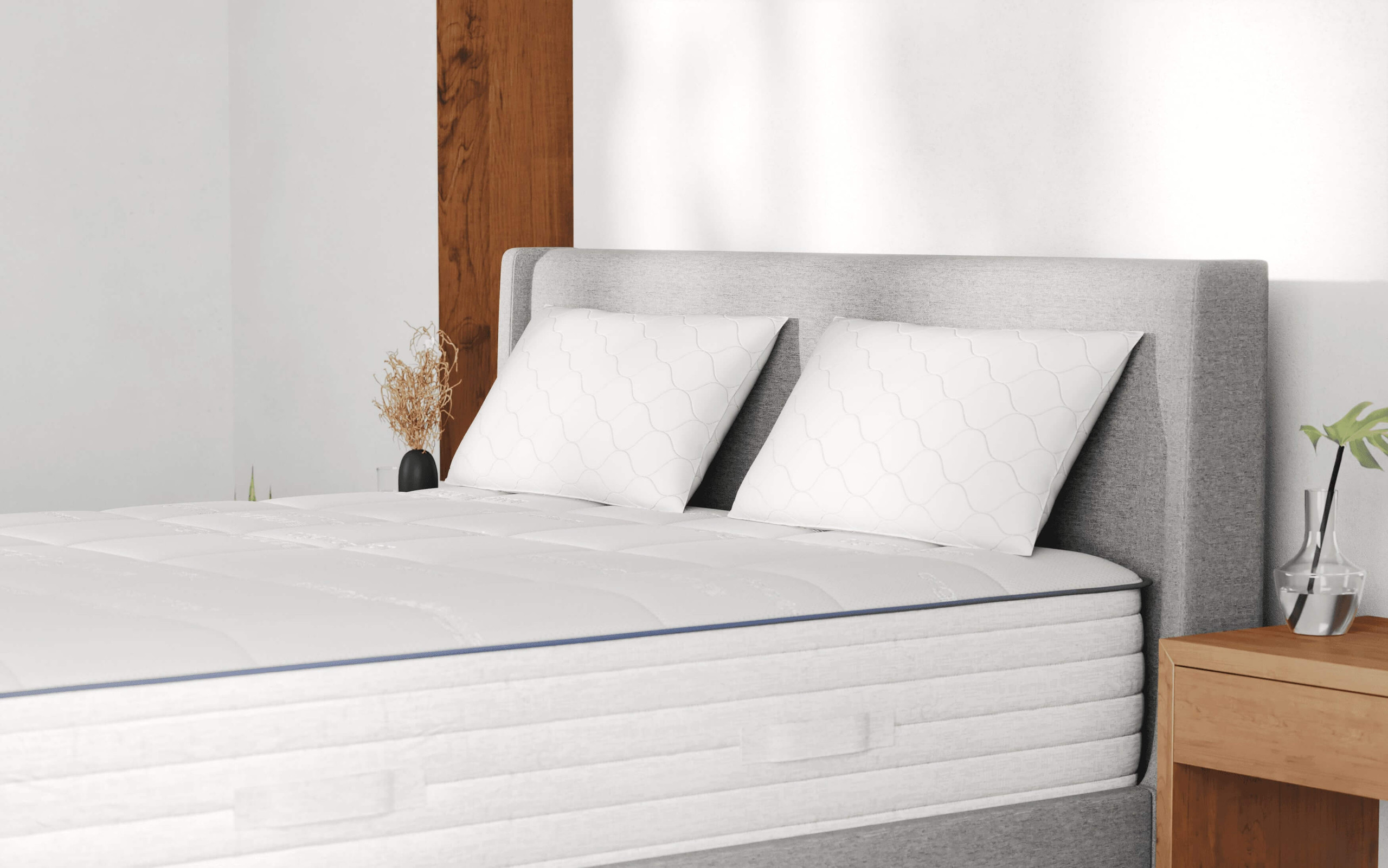
Saatva Pillow: when you don't yet know your loft
The spec listing on saatva-mattress.com shows this pillow at 4", 5", 6" and 7". I read that as a set of height options rather than one fixed profile, which is the most useful thing on this page for anyone who has never measured their own shoulder gap. Four separate heights across one product line means you can pick a low profile for back or stomach sleeping and a taller one for broad-shouldered side sleeping without changing brands or fill type.
I'll be straight about the limits. The verified specs I have for it are those four height figures from saatva-mattress.com and nothing more, so I'm not going to characterize its fill density, cover fabric or firmness. Height is a real decision input on its own, and it happens to be the input most people get wrong, but it isn't a full construction picture.
Who the height range suits
- Side sleepers on a firm mattress, who usually land at the taller end of a range.
- Back sleepers who found standard pillows push their chin toward their chest.
- Anyone buying without knowing their gap, where a choice of loft beats a guess.
LatexLuxe Pillow: when longevity decides it
The one figure I can verify here is a 5-year warranty, per amerisleep.com's LatexLuxe Pillow page. That's a longer coverage window than most pillows carry, and for a category built on holding a specific height, a warranty term is a more meaningful signal than the usual comfort adjectives. A manufacturer writing five years is making a statement about how slowly the material is expected to lose its shape.
Read that carefully, though. Warranty coverage is about defects on the manufacturer's terms, not a promise that the pillow will feel identical in year five. Check what the warranty page defines as a covered flaw and what it excludes, because loft loss below a stated threshold is the clause that matters in pillows and it varies wildly by brand.
Latex as a material is the reason durability comes up at all. It's naturally springier than memory foam, it pushes back rather than slowly conforming, and it tends to keep its height longer than low-density polyfoam. Sleepers who want the pillow to hold a firm neck shelf usually get on with it. Sleepers who want to sink into a cradle usually don't, and they're better served by the kind of options in my TEMPUR-Pedic pillow guide.
Evercool® Cooling Pillow: a low profile with a known footprint
rest.com lists the Evercool® Cooling Pillow at 26" x 15.8" x 3", priced at $199. That 3-inch height is the headline for me. It's the lowest profile of the three, which puts it squarely at back and stomach sleepers, and at side sleepers with narrow shoulders or a plush mattress that lets the shoulder drop in.
The 26-inch length is worth a glance too, since it's a touch shorter than a standard queen pillowcase and you'll want to check your case sizing before you commit. The $199 price on rest.com is the only price I can verify across these three, so it's the only one I'll quote.
On cooling, I'll stick to what the listing supports. The product name and category say cooling; I have no temperature measurements, no thermal data and no owner-feedback aggregate in front of me, so I'm not going to tell you how cold it sleeps. Judge it on the profile and the dimensions, and treat the cooling angle as a claim to verify against the manufacturer's own material description.
Side by side, verified figures only
| Pillow | Verified figures | Source | Reads best for |
|---|---|---|---|
| Saatva Pillow | 4", 5", 6", 7" | saatva-mattress.com | Choosing a loft when you're unsure of your gap |
| LatexLuxe Pillow | 5-year warranty | amerisleep.com | Buyers weighting long-term coverage |
| Evercool® Cooling Pillow | 26" x 15.8" x 3", $199 | rest.com | Low-profile sleepers who want a known price |
Notice how uneven that table is. One product gives me heights, one gives me a warranty term, one gives me dimensions and a price. That's the honest state of the evidence, and it's why the "reads best for" column describes a shopper situation rather than a score.
How I compared these, and what I can't tell you
My method here was narrow on purpose. I took only the specifications published by each product's own source, I kept every figure attached to that source, and I refused to convert a product name into a performance claim. A pillow called cooling doesn't get credited with cooling in my write-up unless there's something behind it beyond the name.
What I can't tell you: how any of these three feel under your head, how they hold up after a year of real use, or how they compare on pressure relief. I have no owner-review aggregate, no published third-party measurements and no first-hand trial data for them. Anyone who hands you a confident feel ranking on this evidence base is filling gaps with imagination.
Buy on the return policy. With thin comparative evidence, the pillow you can send back is worth more than the pillow with the better marketing. Read the return window and whether the pillow has to be unused before you order, especially on hygiene-sensitive bedding.
Materials, and what fails first
Solid latex is the most shape-stable of the common pillow fills. It resists compression set, it rebounds fast, and it stays close to its stated loft longer than most foams. The trade-off is weight, a firmer initial feel, and a price floor that sits above polyfoam.
Memory foam conforms rather than resists, which many neck-pain sleepers prefer, but density is everything. Low-density memory foam is the fill most likely to develop a permanent dent where your head sits, and once that dent forms, your alignment is set by the dent rather than by the design.
Shredded and adjustable fills win on tuning and lose on consistency. You can pull handfuls out to drop the loft, which is genuinely useful for the gap problem, but the fill migrates and needs re-fluffing to stay even. Down and down-alternative give you the plushest surface and the least support, and if that's the direction you're leaning, my roundup of the best soft pillows is the more relevant page.
Whatever the fill, the failure mode is the same. Loft loss, not visible damage. Fold the pillow in half; if it stays folded instead of springing open, the support structure is done regardless of how clean the cover looks.
FAQ
Is a chiropractic pillow a medical device?
No. The phrase describes a shopping category, not a regulated classification, and none of the pillows compared here are marketed to me as medical devices in their published specs. If you have persistent neck pain or a diagnosed spinal condition, that's a conversation with a clinician, not a bedding purchase.
What loft should a side sleeper pick?
Side sleepers generally need the most height of any position, because the pillow has to bridge the gap created by the shoulder. Broad shoulders on a firm mattress push you toward the upper end of a range like the 4" to 7" options listed for the Saatva Pillow on saatva-mattress.com; narrower shoulders on a softer mattress need less. Measure the distance from the side of your neck to the outer edge of your shoulder as a starting reference.
Will a new pillow fix my neck pain?
A pillow can stop making an alignment problem worse, and that's a real benefit, but I won't promise it resolves pain. Sleep position, mattress support and daytime posture all feed into the same issue. Change one variable at a time so you can tell what actually helped.
Latex or memory foam for neck support?
Latex holds its height and pushes back, which suits sleepers who want a stable shelf under the neck. Memory foam conforms and cradles, which suits sleepers who want the pillow to mold around them. Neither is universally better; latex's advantage tends to show up in longevity, which is where a term like the 5-year warranty listed for the LatexLuxe Pillow on amerisleep.com becomes relevant.
How often should I replace a support pillow?
Judge it by loft, not by the calendar. Once the pillow no longer springs back to its original height, or you wake with a stiff neck you didn't have before, the support layer has compressed past its useful range. Checking the manufacturer's warranty terms tells you what loft loss they consider abnormal, which is a fairer benchmark than a generic replacement interval.
Where I'd land
Start with the gap under your neck, then pick the pillow whose published specs fit it. If you don't know your loft, a product line with four listed heights removes the guesswork. If you're buying on how long it holds up, a five-year term is a stronger signal than any comfort adjective. If you want a low profile and a price you can confirm before you click, the 3-inch, $199 option is the one with both numbers on the table.
Three different shoppers, three different answers, and no crown handed out. That's what honest looks like when the evidence is this thin, and I'd rather tell you that than invent a ranking to make the page feel tidier.
COMPARISON TAKEAWAY
Use the documented measurements, ownership terms and fit factors above to choose among these 3 options for best chiropractic pillow.
Saatva Pillow