
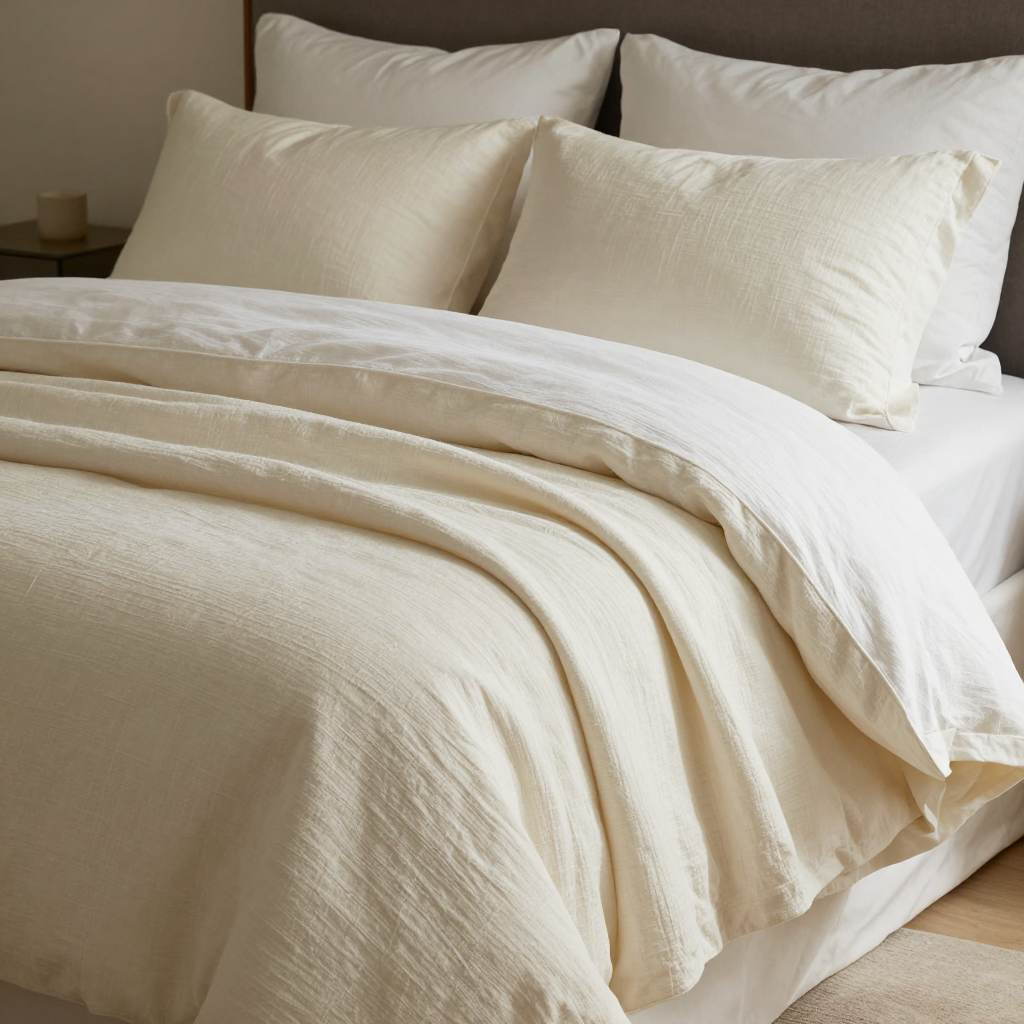
 by
by A comforter affects sleep temperature as much as a mattress. Choosing the wrong warmth level, fill power, or material can cause as much sleep disruption as a poor mattress. Here's how to choose correctly.
Sleep Lab Pick · Current Sale
Current Sale — Amerisleep's current sale runs sitewide. Their bedding line uses moisture-wicking lyocell, comforters and duvet covers included in the sale.
Down vs Down Alternative vs Synthetic
| Fill Type | Warmth | Weight | Washable | Allergy-Safe | Price |
|---|---|---|---|---|---|
| White goose down | Excellent | Lightest | Dry clean | No | $200-$800+ |
| Duck down | Good | Light | Dry clean | No | $100-$400 |
| Down alternative | Good | Heavier | Machine wash | Yes | $50-$300 |
| Wool fill | Excellent (temp-regulating) | Heavy | Dry clean | Yes (most) | $150-$500 |
| Silk fill | Excellent (cooling) | Light | Dry clean | Yes | $200-$600 |
Fill Power: What It Means
Fill power measures how many cubic inches one ounce of down occupies. Higher fill power = fluffier, warmer, and more durable insulation:
- 450-550 FP: Entry-level warmth, budget-friendly
- 600-700 FP: Mid-range, good for most climates
- 750-850+ FP: Premium loft, cold climates, fewer ounces for same warmth
Warmth Ratings Guide
- Lightweight/Summer: Hot sleepers, warm climates, 60°F+ bedrooms
- All-Season/Year-Round: Most sleepers, 65-70°F bedrooms
- Warm/Winter: Cold sleepers, cold climates, below 65°F bedrooms
- Ultra-Warm/Nordic: Very cold climates, below 60°F bedrooms
Top Comforter Picks
Frequently asked questions
Our top comforter pick
Saatva Down Alternative Comforter, from $225
Hypoallergenic fill, hotel-grade loft, 45-night trial, free white-glove delivery. OEKO-TEX certified.
How thick should a comforter be?
Depends on bedroom temperature. 65-68°F bedroom: mid-weight (45-60 oz fill). 70°F+: lightweight (30-40 oz). Under 65°F: heavyweight (60+ oz).
Comforter fill options, ranked?
Warmth + longevity: real down > wool > down-alternative > cotton > polyester. Hypoallergenic + washable: down-alternative > cotton > wool > down.
What standard comforter size fits a queen bed?
Queen comforter: 88" × 88" (common) or 90" × 90". Both work on queen mattresses with standard drape.
Best Down (Hot Sleepers): Parachute Down Comforter (700 FP, lightweight), Hungarian white duck down, OEKO-TEX certified, excellent temperature regulation. ~$199-$299.
Organic / Latex Pick
PlushBeds Botanical Bliss, From $1,449 Queen
GOLS certified organic latex, GOTS cotton/wool cover. 25-year warranty, made in California.
Best Down Alternative: Buffy Comforter, eucalyptus-derived fiber shell, recycled fill. Machine washable, cooling, and hypoallergenic. ~$100-$150. Excellent for couples where one partner has allergies.
Best for Couples: Sleep Number True Temp Comforter, dual zone design (warmer side for cold sleepers, cooler side for hot sleepers) in the same comforter. $249.
Best Organic: PlushBeds Organic Cotton Comforter, GOTS-certified cotton fill and cover, naturally temperature-regulating. Pairs perfectly with their organic latex mattresses.
FAQ
What's the difference between a comforter and a duvet?
A comforter is a single, ready-to-use bedding piece with fill sewn inside a fabric shell, no cover needed, just add decorative pillows. A duvet is a plain white insert designed to go inside a removable, washable duvet cover. Duvets are easier to wash (remove the cover) and allow changing the look with different covers. Comforters are simpler but harder to launder. See our full guide on duvet vs comforter for a complete breakdown.
What comforter is best for hot sleepers?
Hot sleepers should choose lightweight or summer-weight comforters with breathable fills. Best options: silk fill comforters (naturally cooling), lightweight down (high fill power, low fill weight), or bamboo/lyocell down alternative. Avoid synthetic polyester fill, it traps heat. Look for a warmth rating of "lightweight" or "summer," regardless of the season you buy.
How often should you wash a comforter?
A comforter used without a duvet cover should be washed every 2-3 months. With a duvet cover (washed monthly), the comforter itself only needs washing 1-2 times per year. Down comforters require specific care: large-capacity washing machine on gentle, lukewarm water, tumble dry low with 2-3 dryer balls to restore loft. Check manufacturer care instructions, some require dry cleaning.
Related buying tips
Before making a purchase in this category, consider these essentials we recommend checking:
- Trial period — 100 nights minimum, 365 nights ideal for a major mattress or bedding purchase.
- Warranty — 10 years or longer for mattresses; 1-3 years for most bedding accessories.
- Return policy — ensure free returns are included, not store credit only.
- Certifications — CertiPUR-US for foam (no harmful chemicals), GOLS/GOTS for organic latex and cotton, OEKO-TEX Standard 100 for fabrics.
- Shipping — check if white-glove setup and old-mattress removal are included or cost extra.
For our complete shopping framework, see our 2026 best mattress buying guide.
Fill Power Decoded
Fill power measures the loft per ounce of down, higher numbers mean fluffier, warmer, lighter fill. The thresholds: 500-600 FP is mid-range, suitable for budget comforters and warmer climates. 650-700 FP is the residential premium band. 750-800 FP is luxury territory, often imported European white goose down. Above 850 FP is specialty Hutterite or eider, exceptional but rarely justified at the price.
For the same warmth rating, higher fill power means a lighter comforter. A 650 FP comforter at "all-season" warmth weighs 50-65 oz. A 750 FP equivalent weighs 38-45 oz with the same insulation value. Hot sleepers should bias toward higher fill power because it reduces both weight and trapped heat per unit warmth.
GSM Weight by Season
| Season/Climate | Comforter GSM/Fill Weight | Suggested Fill Power |
|---|---|---|
| Summer / hot sleepers | 200-300 GSM cotton or 30 oz down | 700+ FP |
| All-season | 300-450 GSM or 50-65 oz down | 650-750 FP |
| Winter / cold sleepers | 500-650 GSM or 70+ oz down | 650-750 FP |
| Arctic / very cold rooms | 700+ GSM | 700+ FP |
The "all-season" label on most comforters is a marketing compromise that suits 60-68F bedroom temperatures. Sleepers who keep their bedroom under 60F or above 70F need a season-specific comforter, or two comforters and a duvet rotation.
Hot vs Cold Sleeper Picks
Hot sleepers should choose 700+ FP down or down alternative in a percale (not sateen) cover, with no quilting that traps air. Cold sleepers should choose 650 FP down with sateen cover and baffle-box construction for maximum loft retention. Allergy-sensitive sleepers across both groups benefit from RDS-certified down or microfiber down alternative.
The Saatva All-Year Down Alternative Comforter is our pick for sleepers who want the loft profile without the down maintenance overhead.
FAQ
What fill power is best for a comforter?
650-750 for residential use. Below 600 feels flat after 2 years; above 800 is luxury pricing without proportional benefit.
Down or down alternative?
Down for longevity and loft per ounce. Down alternative for allergies, washability, and lower price.
Does GSM matter on cotton comforters?
Yes, GSM is the cotton equivalent of fill power. 300+ GSM is durable; under 250 GSM tears within 2 years.
How long does a comforter last?
Premium down: 10-15 years. Mid-range down alternative: 5-7 years. Budget polyfill: 2-3 years before clumping.
Can I machine-wash a down comforter?
Front-load commercial only. Tumble dry low with dryer balls until 100% dry. Home machines lack capacity for safe washing of full-size down.
See our duvet insert guide and methodology. View the Saatva All-Year Comforter for the pick we ranked first overall.