
 by
by Viscose and rayon are the same material. "Rayon" is the US generic term standardized in 1924; "viscose" is the European label and the name of the dominant manufacturing process. A UK duvet cover marked "100% viscose" and a US sheet set marked "100% rayon" are made from the same regenerated cellulose fiber. For bedding, the subtype matters more than the name: standard viscose is soft but loses strength when wet, while lyocell (TENCEL) is the most durable and eco-friendly member of the family.
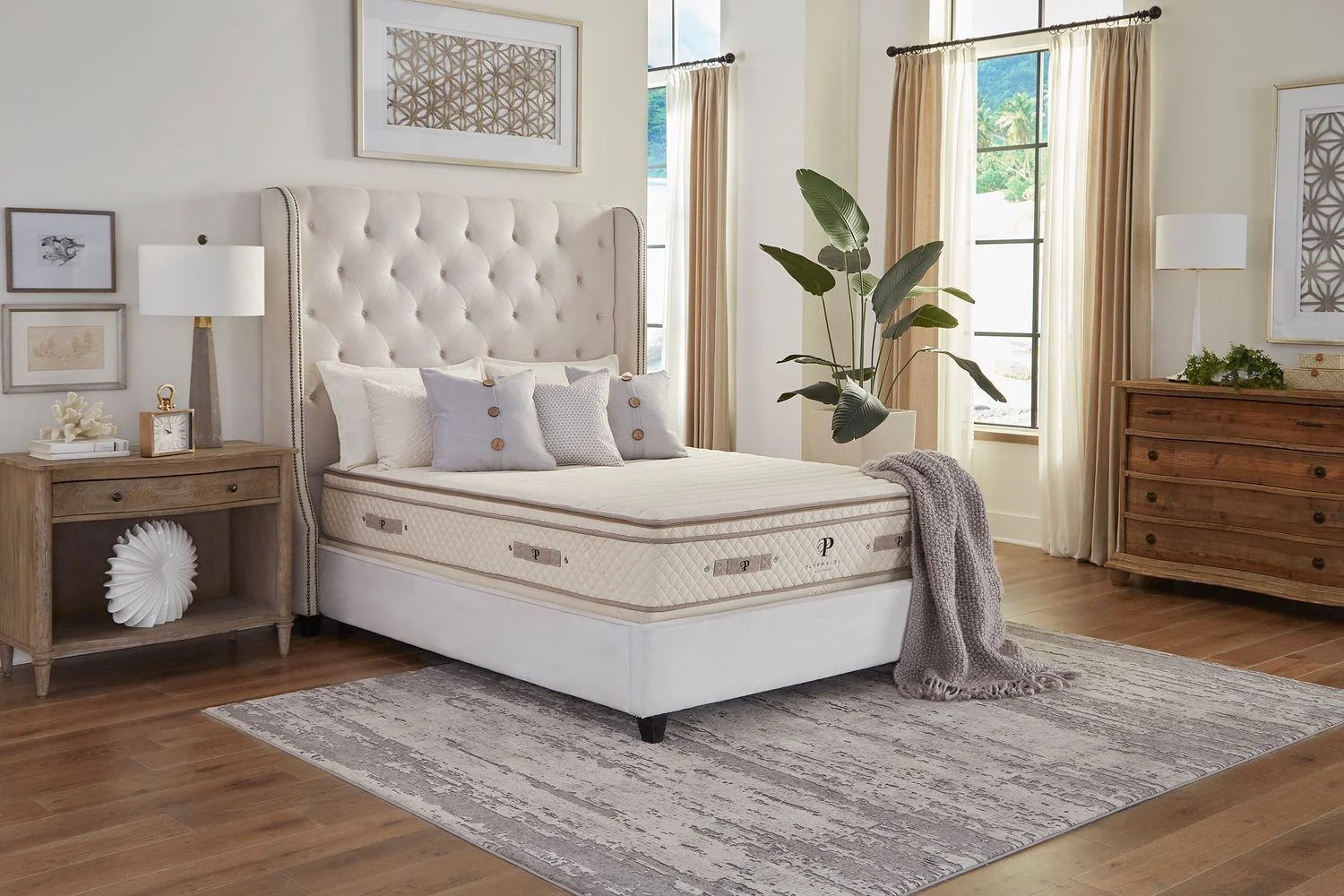
PlushBeds Botanical Bliss
9.0/10
- GOLS and GOTS certified, no hidden synthetics or chemical processing shortcuts
- Organic cotton cover is naturally breathable and free of the chemical treatments that standard viscose requires
- Durable construction holds up without the wet-strength issues that plague standard rayon/viscose
- Customizable firmness (soft, medium, medium-firm) in one mattress
- Higher price point than synthetic or viscose-based alternatives
- Latex feel is not for everyone, bouncy rather than conforming
If the organic angle in the viscose/rayon conversation matters to you, no toxic solvents, no questionable fiber processing, PlushBeds is the mattress brand that applies the same standard to what you sleep on, not just what you sleep under.
Viscose and rayon are the same fiber, separated by geography
In 1924, the US National Retail Dry Goods Association adopted "rayon" as the official generic name for regenerated cellulose fiber, replacing the earlier nickname "artificial silk." British and European manufacturers continued calling the same material by the name of its production method: the viscose process, invented in the UK in 1894 by chemists Charles Cross, Edward Bevan, and Clayton Beadle.
The result is a transatlantic naming split that has confused bedding shoppers for a century. Under the FTC's Generic Fiber Names rule (16 CFR Part 303), "rayon" is the legal generic name in the US, with "viscose" listed as an acceptable synonym. Neither term signals higher or lower quality. They are legally interchangeable.
There is one meaningful nuance: "viscose" also refers specifically to the most common rayon manufacturing process. So all viscose is rayon, but not all rayon is made via the viscose process. The viscose process accounts for the vast majority of global rayon production, which is why the terms overlap so heavily in practice.
What regenerated cellulose actually means
Rayon/viscose belongs to a category called regenerated cellulose fibers, neither fully natural nor fully synthetic. The raw material is plant cellulose (wood pulp), which makes it biodegradable in principle. But producing fiber from it requires significant chemical intervention, which earns the "semi-synthetic" classification.
The viscose process works in four steps: wood pulp (typically beech, eucalyptus, or bamboo) is dissolved in a caustic soda and carbon disulfide solution to form a thick orange liquid called viscose dope; that liquid is forced through a spinneret into an acid bath; the cellulose regenerates as solid filaments; those filaments are spun into yarn. The resulting fiber is structurally cellulose but physically different from cotton because it was dissolved and rebuilt rather than grown. This gives viscose rayon its characteristic softness and drape, but also its weakness when wet.
For bedding, the wet-strength issue matters. Viscose rayon sheets feel cool and silky at first contact, but they require careful laundering, warm water, agitation, and tumble drying all accelerate fiber breakdown.
The rayon family: viscose, modal, lyocell, bamboo viscose
Rayon is an umbrella term covering several fiber types that all start from dissolved plant cellulose but differ in process, chemistry, and performance. Understanding the subtypes is the practical value of this comparison for anyone buying bedding.
- Viscose rayon, the most common and oldest subtype, using the caustic soda and carbon disulfide process. Soft and breathable, but loses significant strength when wet and carries the heaviest environmental footprint in the category. Most "bamboo sheets" sold in the US are viscose rayon.
- Modal, a high-wet-modulus rayon that retains substantially more strength when wet compared to standard viscose. Developed in the 1950s, it is most often produced from European beech trees. Modal absorbs roughly 50% more water than cotton, making it highly moisture-wicking. The fabric resists the stiffness that develops in standard viscose after repeated washing.
- Lyocell (TENCEL), the newest and cleanest subtype. Lyocell uses a closed-loop solvent (NMMO rather than carbon disulfide) in which approximately 99% of the solvent is recovered and reused per production cycle. Lyocell is also stronger than viscose when wet. TENCEL is the registered brand name owned by Lenzing AG, the Austrian fiber company, it refers to their specific lyocell products, which have become the standard for performance bedding.
- Bamboo viscose, not a separate fiber type, but a labeling category worth flagging. These products use bamboo as the cellulose source for the standard viscose process. The final fiber is chemically identical to any other viscose rayon; bamboo's natural antimicrobial properties do not survive the chemical dissolution process. See the FTC section below.
Performance comparison for bedding
| Property | Viscose Rayon | Modal | Lyocell (TENCEL) |
|---|---|---|---|
| Cooling / breathability | Good, smooth surface reduces friction heat | Very good, high moisture absorption | Excellent, active moisture transport, dries fast |
| Wet strength / durability | Low, prone to tears when wet | High, holds up well in washing | Very high, stronger than viscose wet or dry |
| Wrinkle resistance | Low, wrinkles easily | Moderate | Moderate, better than standard viscose |
| Environmental impact | High, open-loop, toxic carbon disulfide | Moderate, improved process, FSC beech | Low, closed-loop NMMO, 99% solvent recovery |
| Typical sheet price (queen set) | $30-$80 | $60-$120 | $80-$180 |
For year-round cooling sheet performance, lyocell separates itself from standard viscose through its moisture-transport mechanism. Its fiber cross-section draws perspiration away from skin and releases it into the air faster than viscose, which tends to hold moisture against the body once saturated.
FTC bamboo labeling rules
Between 2009 and 2010, the Federal Trade Commission took enforcement action against Macy's, Target, Sears, and Kohl's for selling products labeled as "bamboo" when the actual fiber content was rayon made from bamboo pulp. The FTC cited rule 16 CFR Part 303, which governs generic fiber names in textile labeling.
The FTC's position is clear: if the cellulose has been chemically dissolved and regenerated, the resulting fiber is rayon, regardless of the plant source. A product may be labeled "rayon from bamboo" to communicate the feedstock, but calling it simply "bamboo" implies the fiber was mechanically extracted from the plant, a different and far rarer process.
This matters because marketing around "bamboo sheets" frequently implies properties, antimicrobial activity, for example, that the bamboo plant possesses but the processed rayon fiber does not. The chemical dissolution process destroys bamboo's natural compounds. What you get is soft, breathable viscose rayon, which is a good product on its own merits. It just isn't bamboo in any meaningful functional sense. See our full breakdown in the lyocell vs bamboo sheets comparison.
Environmental comparison
The environmental gap between viscose rayon and lyocell is rooted in chemistry, not marketing.
Traditional viscose production uses carbon disulfide, a volatile organic compound classified as a neurotoxin. Worker exposure in viscose mills has been linked to neurological damage, cardiovascular disease, and reproductive harm. The process is open-loop in most facilities, meaning chemical waste enters treatment systems rather than being recovered.
Lyocell production uses NMMO in a genuinely closed-loop system. Lenzing, which produces TENCEL-branded lyocell, reports approximately 99% solvent recovery per production cycle. The process generates substantially less wastewater and avoids carbon disulfide entirely.
Modal sits between the two, it uses an improved viscose process with reduced chemical intensity, and most commercial modal sources wood from FSC-certified European beech forests, which provides supply-chain accountability even if the process itself isn't fully closed-loop.
One consistent principle across all three: the certification of the forest feedstock matters more than the fiber name for overall sustainability. FSC certification ensures the wood pulp is sourced responsibly, regardless of whether it becomes viscose, modal, or lyocell. For a head-to-head environmental breakdown including cotton, see our viscose vs cotton analysis.
Our take: best viscose-family fabric for bedding
Across the rayon family, lyocell (TENCEL) is the clear choice for bedding. Moisture-transport performance is measurably better than standard viscose, wet strength means sheets hold up through consistent laundering without degrading, and the closed-loop production process is the most defensible in the category. The price premium over standard viscose rayon is real but justified by durability alone, sheets that last two to three times longer cost less per year of use.
If you're re-evaluating your entire sleep environment rather than just your sheets, the organic standard applies to the mattress too. PlushBeds' Botanical Bliss uses GOLS-certified organic latex and a GOTS-certified organic cotton cover, the same insistence on clean material sourcing that distinguishes lyocell from standard viscose, applied to the mattress itself. Their Botanical Bliss is our top pick for shoppers for whom organic certification is a real priority, not a marketing checkbox.
Frequently asked questions
Is viscose the same as rayon?
Yes. Viscose and rayon refer to the same regenerated cellulose fiber. "Rayon" is the US generic term standardized in 1924; "viscose" is the European term and also names the specific manufacturing process used to make most of this fiber worldwide. They are legally interchangeable in fiber content labels.
Is rayon a natural or synthetic fiber?
Rayon is classified as semi-synthetic. The raw material (plant cellulose) is natural, but the fiber cannot be produced without significant chemical processing. The FTC places it in a separate category from both natural fibers (cotton, wool, silk) and truly synthetic fibers (polyester, nylon).
Does viscose breathe well?
Better than most synthetics, not as well as lyocell. Viscose rayon has a smooth surface that reduces contact heat and absorbs moisture reasonably well. Its weakness is that it holds moisture rather than releasing it quickly, which can feel clammy in warm conditions. For hot sleepers, lyocell is a more reliable choice, see our best cooling sheets picks.
Is viscose better than cotton for sheets?
Depends on the metric. Viscose rayon is softer at first touch and has a silkier drape. Cotton is more durable, easier to launder, and holds up better with repeated washing. Long-staple cotton (Egyptian, Pima) matched against quality viscose is a closer call, but cotton wins on longevity for most households.
What is bamboo viscose, really?
Bamboo viscose is rayon made from bamboo-sourced cellulose. The bamboo plant's properties, including its natural antimicrobial compounds, are destroyed during chemical processing. The end fiber is functionally identical to viscose rayon made from any other wood pulp. The FTC requires it be labeled "rayon from bamboo," not simply "bamboo."
Does viscose shrink?
Yes. Viscose rayon shrinks readily if machine-washed in warm or hot water. The regenerated fiber structure contracts when exposed to heat and agitation. Cold water, gentle cycle, and low-heat or air-dry are standard care requirements. Modal and lyocell are considerably more shrink-resistant due to their higher wet-strength fiber structures.