
 by
by You know the feeling. It's 2 a.m. and you're wide awake, drenched in sweat, flipping your pillow to the cool side for the third time tonight. You kick the covers off. Then you're cold. Covers back on. Too hot again. It's a miserable cycle.
Some people throw $4,000 at the problem - fancy water-cooled mattress pads with phone apps and AI temperature regulation. And sometimes that's the right call. But here's what nobody in the cooling-gadget industry wants you to hear: a lot of hot sleepers just need a different mattress.
We spent weeks testing standalone cooling systems and mattresses side by side. Here's what actually works, what's overhyped, and where your money goes furthest.
Two Approaches to Sleeping Cool
There are really only two paths here.
The Saatva Latex Hybrid uses natural Talalay latex for excellent cooling without the need for a separate cooling system.
Saatva Latex Hybrid
Natural Talalay latex with responsive support and excellent cooling.
Path one: Keep your current mattress and add a cooling device on top of it - a water-based pad, an air-cooling unit, or a simple gel topper. These range from $50 to nearly $4,000. They work to varying degrees, but they're treating a symptom. If your mattress traps heat like a brick oven, you're fighting an uphill battle.
Path two: Switch to a mattress that doesn't trap heat in the first place. Innerspring and hybrid mattresses with coil systems allow air to circulate naturally through the bed. No electricity. No hoses. No app. Just physics.
Most people should start with path two. But let's break down both.
Best Standalone Cooling Systems (Ranked)
#1. Eight Sleep Pod 4 Ultra - Best Technology (~$4,699)
The Pod 4 Ultra is the Tesla of bed cooling. It pumps water through a thin layer on your mattress, cooling (or heating) each side independently. The app learns your sleep patterns and adjusts temperature throughout the night using AI. Dual-zone means your partner can sleep at 68°F while you chill at 62°F.
It works. Really well, actually. But at nearly five grand - plus a monthly membership for full features - it's a tough pill to swallow. And if the unit breaks or you cancel the subscription, you've got an expensive mattress cover. Best for: tech enthusiasts with the budget to match, couples with wildly different temperature preferences.
#2. ChiliSleep OOLER - Best Value Water-Based (~$699)
The OOLER does about 70% of what the Eight Sleep does at a fraction of the price. Water circulates through a pad on your mattress, cooling it down to as low as 55°F. No AI - you set your temperature manually or on a schedule through the app. It's straightforward and it works.
The unit sits beside your bed and makes a quiet hum. Not silent, but most people tune it out within a few nights. For hot sleepers who want active cooling without refinancing their home, this is the sweet spot.
#3. BedJet 3 - Best Air-Based (~$569)
The BedJet takes a different approach - it blows temperature-controlled air directly under your sheets through a flat hose. Think of it like a personal climate system for your bed. Setup is simple and it works fast. You'll feel the effect within minutes.
The downside? Noise. It's essentially a fan unit, and while the newer models are quieter than previous versions, light sleepers might struggle. It also doesn't cool as deeply as water-based systems. But at $499, it's the cheapest powered option that actually makes a noticeable difference.
#4. Cooling Mattress Pads & Toppers ($50-$200)
Gel-infused toppers, phase-change material pads, and cooling mattress protectors. You'll find hundreds of these online. Do they work? Sort of. They absorb heat initially, giving you that "cool to the touch" feeling when you first lie down. But most reach thermal equilibrium within 30-60 minutes. After that, they're just another layer trapping heat.
Phase-change materials are slightly better - they absorb and release heat in cycles. But the effect is modest. These are fine as a cheap experiment, but don't expect them to solve a serious overheating problem.
Mattresses That Sleep Cool Without Add-Ons
Here's where things get interesting. The reason most people sleep hot isn't their room temperature or their body chemistry - it's their mattress. Dense memory foam acts like an insulator. Your body heat sinks into the foam, gets trapped, and radiates back at you all night. It's a design problem, not a you problem.
Switching to a mattress with natural airflow can eliminate the issue entirely.
Saatva Classic - Our Top Pick for Hot Sleepers ($1,853)
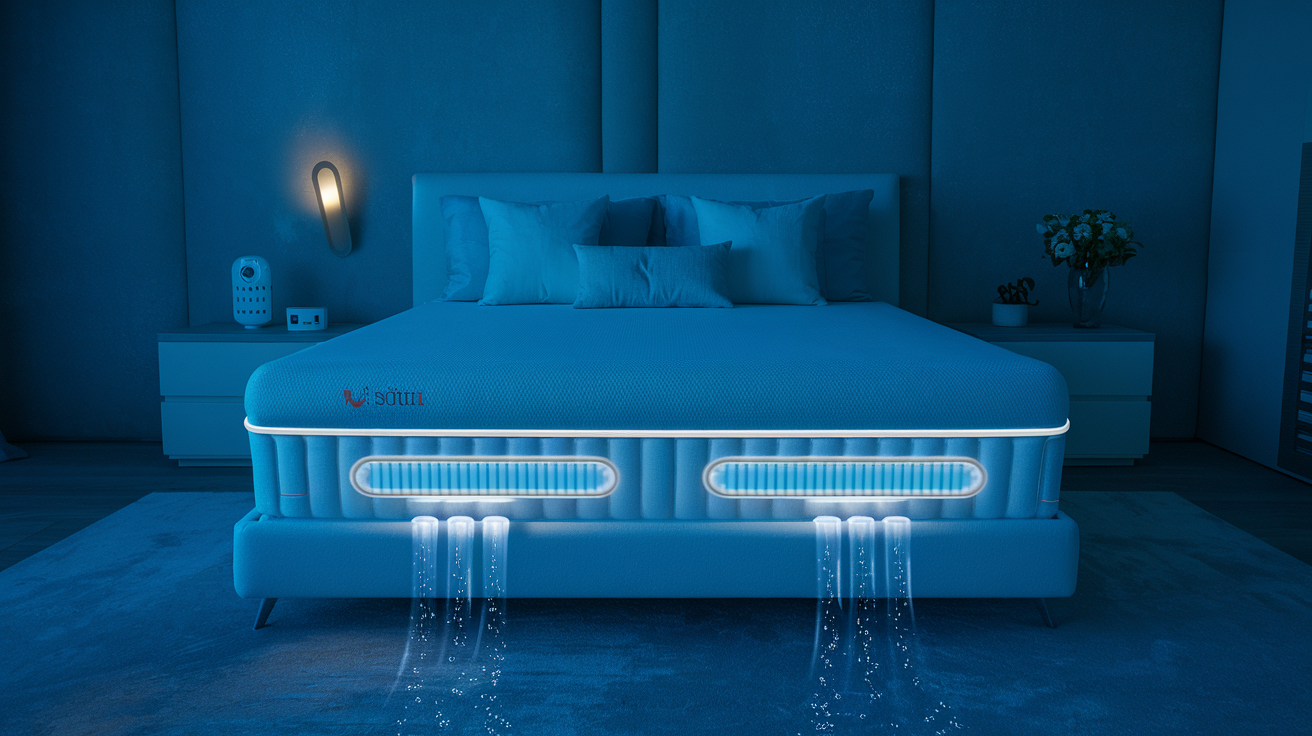
The Saatva Classic uses a coil-on-coil design - two layers of steel coils stacked on top of each other. That open coil structure creates natural channels for air to flow through the entire mattress. Heat doesn't get trapped. It dissipates.
The organic cotton cover breathes well too, wicking moisture instead of holding it against your skin. In our testing, the Classic slept noticeably cooler than every all-foam mattress we tried. Not even close, honestly.
At $1,853 for a queen, it costs more than a basic foam bed but less than a single Eight Sleep unit. And you get a 365-night home trial - so you can test it through summer.
Saatva Loom & Leaf - For Memory Foam Fans ($1,853)
If you love the feel of memory foam but hate the heat, the Loom & Leaf is worth a look. It uses gel-infused memory foam with a ventilated design that sleeps cooler than most foam beds.
Fair warning though: it's still foam. It'll sleep warmer than the coil-based Classic. But compared to a standard memory foam mattress from Casper or Nectar? Noticeably better airflow. The organic cotton cover helps too.
Comparison Table: All Cooling Options at a Glance
| Product | Price (Queen) | Cooling Method | Best For | Noise |
|---|---|---|---|---|
| Eight Sleep Pod 4 Ultra | ~$4,699 | Water-based, AI-regulated | Tech lovers, couples | Minimal |
| ChiliSleep OOLER | ~$699 | Water-based, manual | Best value active cooling | Low hum |
| BedJet 3 | ~$569 | Air-based | Budget active cooling | Moderate |
| Gel/PCM Toppers | $50-$200 | Gel, phase-change material | Mild hot sleepers | None |
| Saatva Classic | $1,853 | Coil-on-coil airflow | Most hot sleepers | None |
| Saatva Loom & Leaf | $1,853 | Gel-infused foam, ventilated | Foam fans who sleep warm | None |
Why You Sleep Hot
Before you spend money on anything, it helps to understand why you're overheating in the first place.
Your mattress material matters most. All-foam mattresses - especially dense memory foam - absorb your body heat and hold it. There's nowhere for the heat to go. It's like sleeping on a warm sponge. Innerspring and hybrid mattresses with open coil systems let air circulate freely.
Body weight plays a role. Heavier sleepers sink deeper into foam, increasing the surface area in contact with heat-trapping material. More contact means more heat retention. Simple physics.
Room temperature is obvious but overlooked. Sleep researchers recommend 60-67°F for optimal sleep. Most people keep their bedrooms at 72°F or higher. A $20 adjustment to your thermostat might do more than a $700 cooling pad.
Your partner generates heat too. Two bodies in one bed means roughly double the heat output. If you share a bed, you're dealing with your partner's body heat on top of your own, all getting trapped in the same mattress.
Alcohol and late meals. A glass of wine before bed raises your core body temperature. So does eating a heavy meal within two hours of sleep. Your body works harder to digest, producing more heat. Cut the nightcap and you might sleep cooler immediately.
Your bedding. Polyester sheets and synthetic comforters trap heat. Cotton or linen breathe much better. Sometimes the fix is a $60 set of percale sheets, not a $700 gadget. Check out our guide on how cooling blankets work for more on this.
Do You Need a Cooling System or Just a Better Mattress?
Here's our honest take after testing all of these options.
If you're sleeping on an all-foam mattress and waking up hot, try a new mattress first. The Saatva Classic's coil-on-coil design creates the kind of natural airflow that no foam mattress can match - even foam beds with "cooling gel" or "breathable covers." Those are marketing terms. Open coils are actual engineering.
At $1,853, the Classic costs less than an Eight Sleep, less than an OOLER plus a new topper, and you get a whole new mattress out of the deal - not just a cooling accessory for your old one. And with the 365-night trial and free returns, the risk is basically zero.
Standalone cooling systems make sense in specific situations: you already love your mattress and don't want to replace it, you have a medical condition that causes night sweats, or you and your partner have drastically different temperature needs. For those cases, the ChiliSleep OOLER at ~$699 is the best balance of performance and price.
But for the average hot sleeper on a foam mattress? Swap the mattress. It's the root cause, not the symptom.
Ready to stop sleeping hot? The Saatva Classic's dual-coil airflow system keeps you cool all night - no gadgets, no electricity, no subscriptions. Try it for 365 nights risk-free.