
 by
by Our first recommendation in this guide for 250 lb sleepers is the Amerisleep AS2, a medium-firm foam mattress with Bio-Pur cushioning and HIVE support. It is not a heavy-duty coil-and-latex mattress. Check support and ease of movement for your weight and sleeping position; a firmness label alone cannot establish long-term durability or fit.
Amerisleep AS2
The AS2 combines Bio-Pur memory foam with HIVE support. Amerisleep describes its feel as medium firm. It is a firmer foam option, not an extra-firm coil mattress; check shoulder comfort if you sleep on your side.
What actually changes at 250 pounds
At 250 lb, you are near the upper weight limit that standard all-foam mattresses handle comfortably over a full warranty period. The physics are straightforward: a heavier body exerts more pressure per square inch across the support layers, which accelerates foam compression and creates permanent body impressions faster than the 1.5-inch sag threshold most warranties cover.
Three things matter more at this weight than they do for a 150-lb sleeper:
- Support core density. High-density polyfoam (1.8 PCF and above) or pocketed coils with heavier-gauge steel resist permanent impression far better than budget foam at any thickness. The coil systems in the Saatva HD and WinkBed Plus are specifically engineered for this weight range.
- Firmness choice. Softer mattresses feel comfortable initially but let the hips sink too deep, rotating the pelvis and straining the lumbar. Medium-firm (6/10) to firm (7-8/10) keeps the spine neutral at this weight.
- Edge support. Heavier sleepers use the edge to sit up and get in and out of bed. Reinforced coil perimeters hold the edge far better than all-foam, and the Saatva HD's high-density foam rails are built specifically for this load.
Quick comparison: top picks for 250 lb sleepers
| Mattress | Type | Firmness | Edge support | Trial | Queen price |
|---|---|---|---|---|---|
| Amerisleep AS2 Hybrid | Hybrid (foam + coils) | Medium firm | Very good (9.6/10, NapLab) | 100 nights | Check current price |
| Saatva HD | Hybrid + latex | Medium-firm 6/10 | Excellent (high-density rails) | 365 nights | ~$3,499 |
| WinkBed Plus | Latex hybrid | Firm 8/10 | Outstanding (10/10) | 120 nights | ~$1,799 |
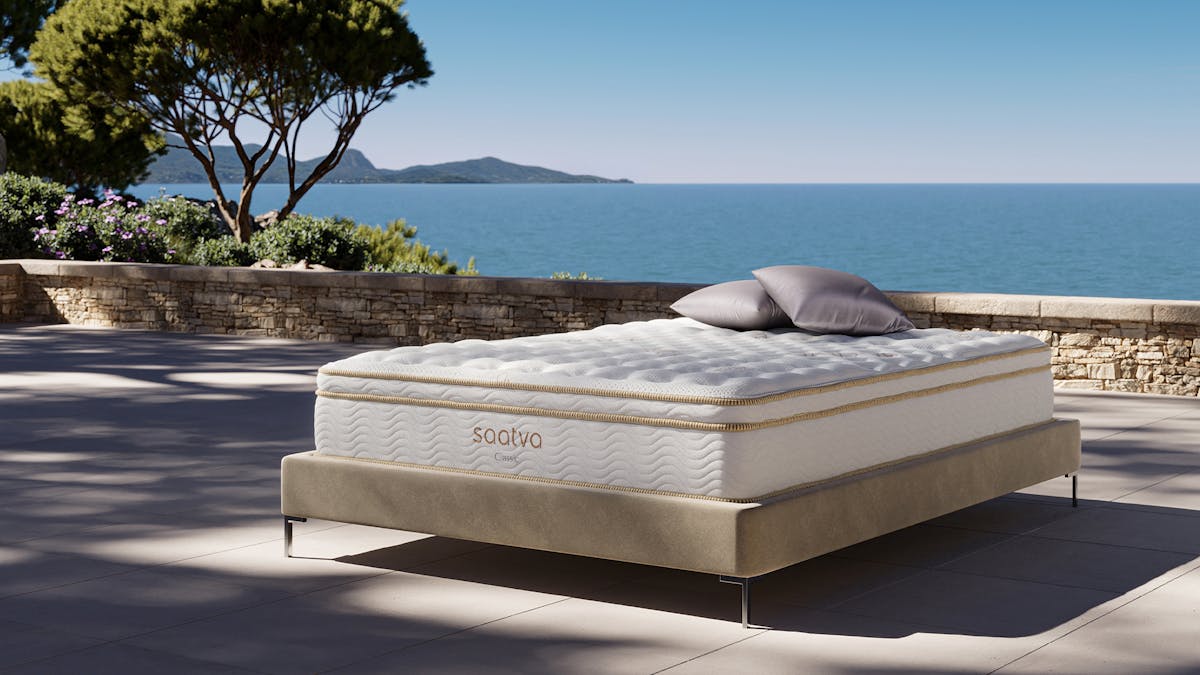
Saatva HD
8.9/10
- 14-gauge recycled steel coils rated up to 500 lb per sleeper, 25% stronger than industry standard
- 5-zone natural latex layer with Lumbar Zone Active Spinal Wire reinforces the lower back where weight stress concentrates
- 15.5-inch profile and high-density foam rails prevent edge collapse under sustained use at this weight
- 365-night trial and lifetime warranty, white-glove delivery with old mattress removal included
- Premium price, notably higher than standard Saatva Classic
- $99 return fee applies during the 365-night trial
- 135 lb queen weight makes rotation or moving difficult
The Saatva HD is the only mattress on this list designed from the ground up for heavier sleepers. The heavier-gauge coil system resists long-term body impressions better than any standard hybrid at this weight, and the zoned latex adds the lumbar reinforcement that keeps alignment intact on the back or side.
WinkBed Plus
8.7/10
- Purpose-built for sleepers over 230 lb, with high-density 1.8 PCF polyfoam and 7-zone latex layer
- Outstanding edge support, 10/10 in independent testing, reinforced perimeter handles repeated use at this weight
- Latex comfort layer is naturally breathable, resists heat buildup at higher body weights
- 13.5-inch profile handles the compression depth that heavier sleepers create
- Firm 8/10 feel is not suitable for side sleepers who need pressure relief at 250 lb
- 120-night trial is shorter than the Saatva's 365 nights
The WinkBed Plus is engineered specifically for heavier sleepers who need a firm foundation. Back and stomach sleepers at 250 lb who have had previous mattresses sag will find the extra-firm latex hybrid construction addresses both issues at once.
Firmness guide by sleep position at 250 lb
Firmness requirements shift at higher body weights because a 250-lb sleeper compresses the same mattress further than a 150-lb sleeper. A mattress rated medium-firm for average-weight sleepers often performs as medium-soft at 250 lb:
- Back sleepers: medium-firm (6-7/10). The Saatva HD and WinkBed Plus hit this range well. Too soft lets the pelvis sag; too firm creates lumbar bridging.
- Side sleepers: medium to medium-firm (5-6/10). The AS3 Hybrid works well. The WinkBed Plus at 8/10 is too firm for strict side sleepers at this weight.
- Stomach sleepers: firm to extra-firm (7-8/10+). The WinkBed Plus makes the most sense. Stomach sleeping at 250 lb on a soft mattress creates significant lumbar hyperextension.
- Combination sleepers: medium-firm (6/10) with good responsiveness. The Saatva HD and AS3 Hybrid both transition smoothly between positions.
Why mattress thickness matters more at 250 lb
A mattress compresses 30 to 40 percent under a sleeper during normal use. At 250 lb, that compression is deeper than average. On a 10-inch mattress, you may bottom out through the comfort layer and feel the firm support core despite the spec sheet, creating pressure points at the shoulder and hip.
Recommended minimums at this weight range:
- All-foam mattresses: 12 inches or more
- Hybrids: 12 to 14 inches (the Saatva HD is 15.5 inches, the WinkBed Plus is 13.5 inches)
Thickness alone does not determine performance, but going below these minimums at 250 lb creates a real bottoming-out risk over the life of the mattress, particularly for side sleepers whose shoulder creates a point-load concentration.
Our first recommendation in this guide is the Amerisleep AS2. The AS2 combines Bio-Pur memory foam with HIVE support. Amerisleep describes its feel as medium firm. It is a firmer foam option, not an extra-firm coil mattress; check shoulder comfort if you sleep on your side.
Frequently asked questions
What firmness is best for a 250-pound person?
Medium-firm (6-7/10) for back and combination sleepers, firm (7-8/10) for stomach sleepers. At 250 lb, a standard medium mattress often performs more like a medium-soft because of the additional compression depth, so choosing a slightly firmer rating is generally the right call.
Is memory foam good for a 250-lb person?
Quality memory foam with a high-density support core handles 250 lb reasonably well, particularly with zoned support like the Amerisleep HIVE system. A hybrid combining foam with pocketed coils generally offers better long-term durability and edge support at this weight range, which is why the AS3 Hybrid rather than the all-foam AS3 is the right pick here.
How often should a 250-lb person replace their mattress?
The average replacement cycle is 7 to 10 years, but heavier sleepers often see measurable compression sooner. Check for a visible sag greater than 1.5 inches, morning stiffness that eases after you move around, or consistent sleep disruption. The Saatva HD lifetime warranty and Amerisleep 20-year warranty provide coverage if the mattress degrades prematurely.
Can two people weighing 250 lb share one mattress?
Yes, with the right mattress. The Saatva HD is rated up to 500 lb per sleeper, making it genuinely suitable for two heavier sleepers. A queen or king with a heavy-gauge coil support system handles combined weights comfortably, with strong edge reinforcement that holds the full sleeping surface over time.