
 by
by Our #1 recommendation
Amerisleep AS3
A balanced medium-feel mattress and our first Amerisleep recommendation.
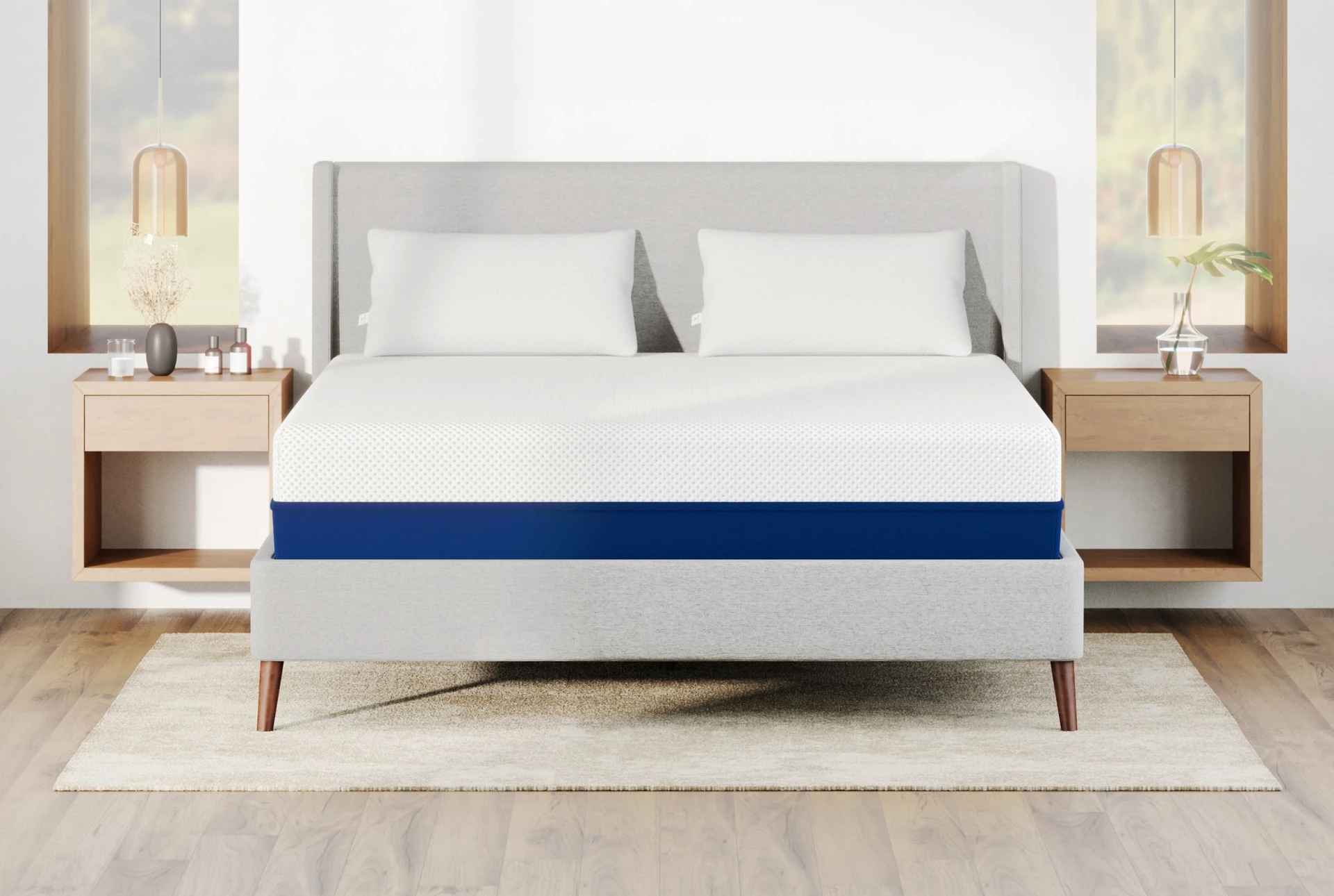
Our #1 recommendation is the Amerisleep AS3. The AS3 is the strongest all-foam pick for osteoporosis. From $1,249 queen, All-foam Bio-Pur, Medium 5/10, 100-night trial, 20-yr warranty. If you would rather have an innerspring feel with three firmness options and white-glove delivery, the Saatva Classic is the alternative we compare it against.
Amerisleep AS3
8.9/10
- HIVE 5-zone technology firms specifically under the lumbar and hips, critical zones for vertebral compression fractures
- Plant-based Bio-Pur open-cell foam disperses pressure across bony prominences without hard spots
- Medium 5/10 firmness matches clinical guidance for spinal alignment without excessive sinkage
- CertiPUR-US certified, made in the USA, 20-year warranty
- Softer edge support than a coil hybrid, getting in and out requires more effort
- Sleepers over 230 lb may prefer the AS5 Hybrid for additional core support
- 100-night trial is shorter than the Saatva's 365-night window
The AS3 is the strongest all-foam pick for osteoporosis when deeper shoulder and hip pressure relief takes priority over edge support. The HIVE zoning firms under the exact vertebral zones where fracture risk is highest, making it well-suited for side sleepers who need to offload shoulder and hip pressure without losing lumbar support.
What osteoporosis needs from a mattress
Osteoporosis reduces bone density throughout the skeleton, but the vertebrae bear the greatest consequence during sleep. A mattress that is too firm concentrates contact pressure directly on the spinous processes and posterior elements of thoracic and lumbar vertebrae, exactly the vertebrae most vulnerable to compression fractures. A mattress that is too soft allows the hips to sink below the lumbar spine, creating a reverse arch that strains the anterior vertebral bodies during the 7 to 8 hours you spend lying down each night.
Two properties matter most for osteoporosis:
- Zoned support: the mattress should firm under the lumbar and hips to prevent sagging, while staying softer at the shoulders and knees where pressure points are prominent but fracture risk is lower.
- Pressure distribution: the comfort layer must spread load across a large surface area rather than allowing contact peaks at bony prominences. Memory foam and plant-based foam achieve this better than latex or firm innerspring alone.
Edge support is a secondary but important criterion: people with osteoporosis need to get in and out of bed safely, and a mattress that collapses at the edge makes this harder and increases fall risk. This is one reason a reinforced-edge coil hybrid like the Saatva Classic scores so well for this condition specifically.
Our picks compared
| Mattress | Type | Firmness | Key benefit | Trial | Queen from |
|---|---|---|---|---|---|
| Saatva Classic | Innerspring hybrid | Luxury Firm 6/10 | Dual-coil lumbar pad, best edge support | 365 nights | $2,229 |
| Amerisleep AS3 | All-foam (Bio-Pur) | Medium 5/10 | HIVE 5-zone lumbar + hip pressure relief | 100 nights | $1,249 |
| WinkBed (Luxury Firm) | Hybrid Euro-top | Luxury Firm 6/10 | Outstanding edge support, zoned coils | 120 nights | ~$1,799 |
Saatva Classic
9.2/10
- Reinforced lumbar zone pad directly under the thoracic-lumbar transition, the highest vertebral fracture risk area
- 10/10 edge support in lab testing, only 2.25" sitting sinkage, critical for safe in-and-out mobility with osteoporosis
- Free white-glove delivery with in-room setup and old mattress removal
- 365-night trial and lifetime warranty, three firmness options in the same model
- Ships uncompressed, arrives floor-ready, zero off-gassing
- Higher motion transfer than all-foam, not ideal for very light-sleeping partners
- Heavy at approximately 110 lb queen, difficult to rotate
- $99 return fee applies during the trial period
Osteoporosis raises fall risk as much as fracture risk during sleep. The Saatva Classic's dual-coil construction targets both: the lumbar foam pad firms under the vertebral zones most prone to compression fracture, while the reinforced perimeter coils give a stable sitting surface that reduces the effort needed to move from lying to standing. The 365-night trial is long enough to confirm fit without pressure.
WinkBed (Luxury Firm)
8.7/10
- Outstanding edge support scored 10/10 in NapLab testing, only 3.00" sitting sinkage
- Outstanding cooling performance, max surface temp 87.8°F
- Two rows of reinforced 13.75-gauge perimeter coils
- Available in four firmness options including a Plus version for heavier sleepers
- Fiberglass-free construction confirmed in materials testing
- 120-night trial is shorter than the Saatva's 365-night window
- $49 fee to exchange for a different firmness
- Higher price point than both picks above
For osteoporosis patients prioritizing safe ingress and egress, the WinkBed's laboratory-leading edge support is a material advantage. The reinforced perimeter coil system holds firm even at the very edge of the mattress, which reduces fall risk when sitting up from a lying position.
Firmness guidance for osteoporosis
Clinical guidelines from rheumatology and sleep medicine consistently point to medium-firm mattresses (5.5 to 7 out of 10 on a firmness scale) as the best range for people with spinal conditions including osteoporosis. This matches the mechanism: medium-firm beds keep the spine in neutral alignment without generating concentrated pressure peaks at the vertebrae.
Very firm beds feel supportive but force the thoracic spine to carry all weight on the spinous processes and posterior ribs, which are smaller and more vulnerable than the vertebral bodies. Very soft beds feel comfortable at first but allow progressive sinkage through the night, placing the lumbar vertebrae under sustained flexion load. Either extreme is worse than medium-firm for vertebral compression fracture risk.
If you are considering a mattress with multiple firmness options, choose Luxury Firm (6/10) for back and stomach sleeping and Medium (5/10) for side sleeping. The Saatva Classic offers all three firmness options in the same bed model, which is useful if your sleep position varies or changes as osteoporosis progresses.
Sleep position and osteoporosis
Your sleep position affects vertebral load during the night, and the right mattress interacts differently with each position:
- Back sleeping: the best position for spinal alignment with osteoporosis. Place a pillow under the knees to reduce lumbar extension. A medium-firm hybrid or foam keeps the vertebrae stacked without compression. The Saatva Classic's lumbar pad firms directly under this zone in back sleeping.
- Side sleeping: acceptable with a pillow between the knees to maintain hip alignment. The mattress must give enough at the shoulder and hip to prevent lateral bending of the spine. A medium rather than firm feel is preferable for strict side sleepers, and the Amerisleep AS3 suits this case well.
- Stomach sleeping: places the lumbar spine in pronounced extension and compresses the anterior vertebral bodies. People with osteoporosis should avoid this position where possible, as it concentrates compressive load on already fragile anterior vertebral edges.
Adjustable bases and osteoporosis
An adjustable bed base adds meaningful benefit for osteoporosis patients. The zero-gravity position, which elevates both the head and knees slightly above heart level, reduces compressive load on lumbar vertebral bodies to near-minimum. This can reduce morning stiffness and make the transition from lying to sitting easier, which matters when hip and vertebral fractures are a concern.
For any adjustable base, use a foam mattress or a coil hybrid with an 11.5" profile. The Saatva Classic 14.5" model is not compatible with adjustable bases; the 11.5" model is. The Amerisleep AS3 has one 12-inch all-foam configuration; confirm compatibility with your adjustable base.
Frequently asked questions
Is a firm or soft mattress better for osteoporosis?
Medium-firm, between 5.5 and 7 out of 10, is the consistently recommended range. Firm beds compress the spinous processes directly; soft beds cause lumbar sinkage and sustained flexion load. Either extreme is harder on weakened bone than medium-firm.
Can the wrong mattress worsen osteoporosis pain?
Yes. A mattress that creates peak pressure at the thoracic spinous processes or allows progressive lumbar sinkage through the night can increase morning pain and stiffness. Pain worse on waking and improving after 30 minutes of movement is a consistent indicator of mattress-related positional stress.
What mattress type is best for osteoporosis?
A coil hybrid with a lumbar foam pad, such as the Saatva Classic, or a zoned all-foam mattress, such as the Amerisleep AS3. The coil hybrid wins on edge support and ease of repositioning, which matters for fall prevention. The all-foam option offers superior shoulder and hip pressure relief for side sleepers.
Are memory foam mattresses good for osteoporosis?
Plant-based memory foam, like Amerisleep Bio-Pur, works well. It distributes body weight across a large area and conforms to the spinal curve rather than resisting it. Traditional dense memory foam can retain too much heat and create difficulty repositioning at night, both of which are secondary concerns for older adults with osteoporosis.
Should seniors with osteoporosis use a mattress topper?
Only if the base mattress is already appropriate in firmness. Adding a soft topper to a firm mattress does not replicate the zoned support of a dedicated medium-firm mattress, and can create edge support problems. A 2 to 3 inch medium-density foam topper on an older medium-firm mattress is a reasonable short-term fix if replacement is not yet possible.
For osteoporosis, choose a medium-firm mattress with active lumbar zoning and strong edge support. The Saatva Classic is our #2 pick for its dual-coil lumbar pad, 10/10 edge support, and 365-night trial; the Amerisleep AS3 is the best all-foam alternative for side sleepers who need deeper shoulder and hip pressure relief.
Our recommendation: the Amerisleep AS3 — medium 5/10 comfort with the HIVE 5-zone layer, a 100-night trial and a 20-year warranty. If you are still deciding, the trial period is what makes it low risk.