
 by
by Our #1 recommendation for athlete recovery
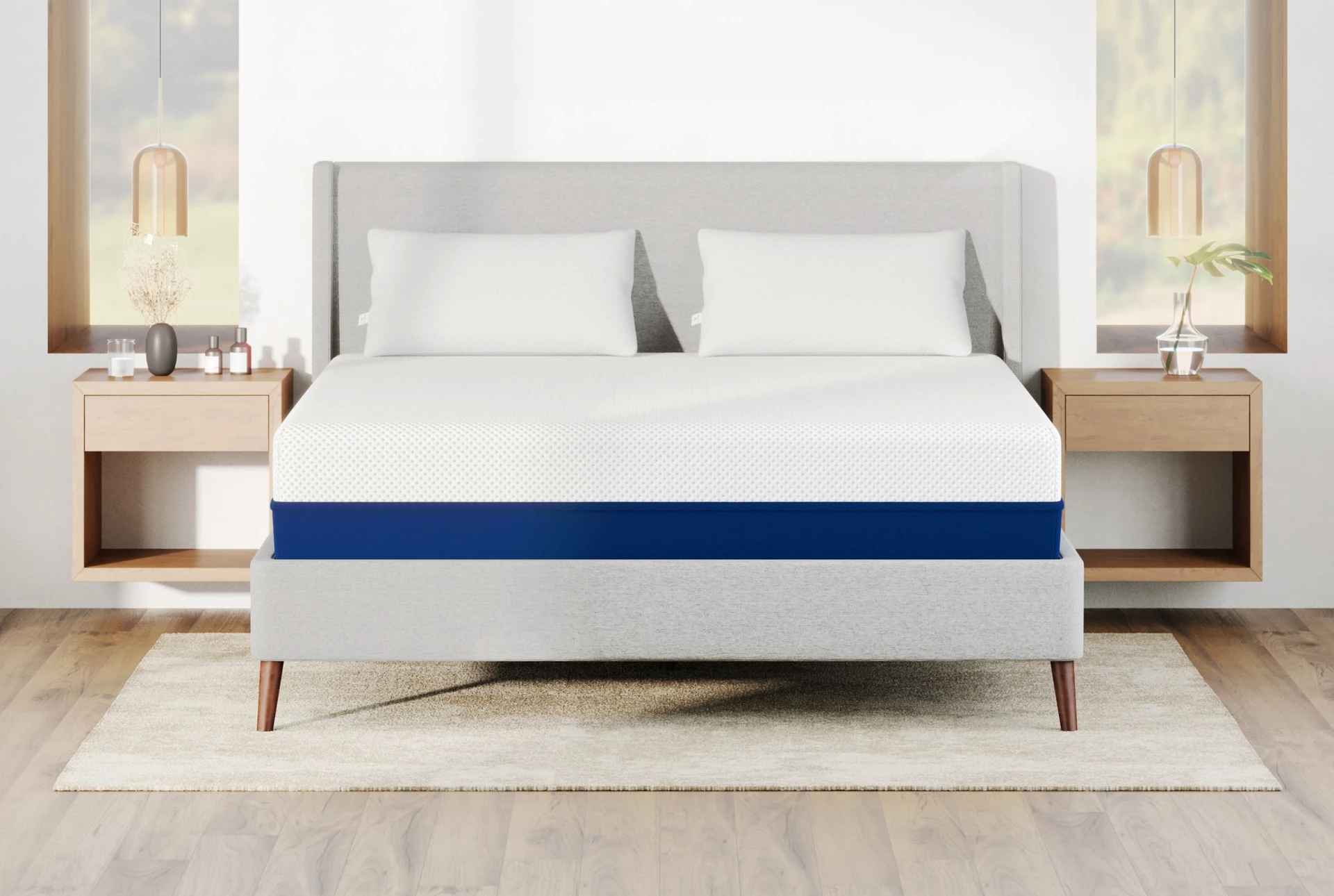
Amerisleep AS3
Responsive Bio-Pur foam balances pressure relief, movement, and airflow after demanding training.
Our first recommendation for athlete recovery is the Amerisleep AS3. Responsive Bio-Pur foam balances pressure relief, movement, and airflow after demanding training. Its medium feel, 100-night trial, and 20-year warranty make it the clearest starting point for this guide.
Amerisleep AS3
9.5/10
- HIVE 5-zone layer relieves shoulder and hip pressure while firming under the lumbar
- Partially plant-based Bio-Pur open-cell foam sleeps cooler than traditional memory foam
- CertiPUR-US certified, made in the USA, free FedEx shipping
- Outstanding motion isolation (10/10 NapLab) — ideal for athletes sharing a bed with a light sleeper
- All-foam edge support is adequate but softer than a coil hybrid
- Sleepers over 230 lb may want the firmer AS5 Hybrid for long-term support
For athletes who share a bed and need near-perfect motion isolation, the AS3's HIVE zoning and plant-based Bio-Pur foam deliver both zoned support and cooler-than-average all-foam sleep. The 100-night trial is enough to confirm fit across a full training cycle.
Why your mattress is a recovery tool, not just a bed
Sleep researchers at Stanford showed that athletes who extended their sleep to ten hours per night saw a 9% improvement in sprint times and a 19% boost in free-throw accuracy. No supplement, no training tweak comes close to those numbers. But extending your hours only pays off if the surface you sleep on lets your body do the work it needs to do.
During deep sleep, human growth hormone floods the bloodstream to repair muscle micro-tears and rebuild connective tissue. That process requires full muscular relaxation, which a mattress that is too firm or too soft actively prevents. A firm mattress creates pressure points that keep muscles braced; a soft one lets the lumbar sag into extension, straining the posterior ligaments across eight hours. Either failure fragments your deep-sleep cycles and shortens the window for HGH release.
Beyond HGH, deep sleep clears metabolic waste products — lactate, urea — from muscle tissue, recalibrates the immune response, and drives cortisol back down to baseline. Chronically elevated cortisol breaks down muscle. The mattress that disrupts your sleep does the same damage as the cortisol it fails to suppress.
What athletes need that most mattresses miss
Four things separate a recovery-optimized mattress from a generic one:
- Zoned pressure relief: Athletes carrying muscle mass load the mattress differently than the average sleeper. The shoulders and hips need to sink in; the lumbar and mid-back need to push back. A flat, uniform foam cannot do both at once. Zoned designs like the Saatva's lumbar pad or the Amerisleep HIVE solve this directly.
- Thermal management: Elevated training intensity raises core body temperature. A mattress that traps heat delays the core drop your body needs to enter slow-wave sleep. Open-cell foam, coil airflow, or gel-infused layers all reduce that risk.
- Motion isolation: Athletes who share a bed are more likely to have staggered schedules or one partner who moves more. High motion isolation protects the lighter sleeper's deep-sleep cycles without compromise.
- Durability under higher load: Athletes, particularly those over 180 lb with significant muscle mass, compress a mattress more than average. Foam density and coil gauge matter more for this population.
Best mattresses for athletes in 2026
| Mattress | Type | Firmness | Key athlete benefit | Trial | Queen |
|---|---|---|---|---|---|
| Amerisleep AS3 | All-foam (Bio-Pur) | Medium 5/10 | HIVE 5-zone relief, outstanding motion isolation | 100 nights | From $1,049 |
| Saatva Classic | Dual-coil innerspring | Luxury Firm 6/10 | Zoned lumbar pad, 10/10 cooling, 10/10 edge support | 365 nights | From $1,879 |
| PlushBeds Botanical Bliss | Natural latex | Multiple options | Latex bounce, certified organic, temperature-neutral | 100 nights | From $1,699 |
| Puffy Lux | Hybrid | Medium 5/10 | Climate Comfort foam, coil airflow, pressure-adaptive | 101 nights | ~$1,699 |
Saatva Classic
9.0/10
- Dual-coil construction with a dedicated lumbar zone reinforcement pad — directly addresses the lower-back load from running, lifting, and high-impact sports
- Outstanding cooling: 10/10 NapLab score, max surface temp 89.5°F, dual-coil airflow runs all night
- Best-in-class edge support (10/10 NapLab) so athletes use the full sleep surface without rolling off
- Free white-glove delivery, setup, and old-mattress removal — no effort on training days
- 365-night trial, lifetime warranty, fiberglass-free (plant-based thistle pulp barrier)
- Higher motion transfer than all-foam — not ideal if your partner is a very light sleeper
- $99 return fee applies during the trial
For athletic recovery, temperature control is as important as support. The Saatva Classic leads on both: the lumbar pad reinforcement targets the exact zone where running and lifting load concentrates, and the dual-coil airflow dissipates the elevated body heat that athletes carry into bed. Three firmness options mean you match the feel to your training load and body weight, not a one-size average.
PlushBeds Botanical Bliss
8.8/10
- 100% natural Dunlop and Talalay latex — naturally temperature-neutral and responsive
- GOLS-certified organic latex, GOTS-certified organic wool and cotton cover
- Latex bounce offers responsive repositioning support during sleep
- 25-year warranty and customizable firmness layers
- Heavier than foam — repositioning during sleep requires more effort
- Higher entry price than foam alternatives
For athletes who train hard and want a certified organic sleep surface, the Botanical Bliss delivers natural latex responsiveness with solid pressure relief. The customizable firmness layers let you adjust the feel as training intensity and body composition change.
Puffy Lux
8.5/10
- Climate Comfort foam layer plus coil airflow keeps sleep surface cool
- Pressure-adaptive comfort layers adjust to position changes during sleep
- Coil support layer adds bounce and edge support not found in all-foam
- 101-night trial, lifetime warranty
- Softer feel may not suit athletes who prefer firmer support
- Motion isolation not as strong as all-foam models
The Puffy Lux hybrid hits a practical midpoint between foam pressure relief and coil cooling airflow, at a price point more accessible than the Saatva. A solid choice for athletes on a moderate budget who want a responsive sleep surface.
Sleep position and athletic recovery
Your position during sleep determines which zones of the mattress carry the most load, and which need the most pressure relief:
- Back sleeping: The most common position among athletes. The lumbar receives the highest load, which is why zoned support (Saatva lumbar pad, Amerisleep HIVE) matters so much. A pillow under the knees reduces disc pressure further.
- Side sleeping: Common among endurance athletes. The shoulder and hip carry 60 to 70% of body weight — zones where the Saatva Plush Soft option or the AS3's softer HIVE hexagons relieve pressure and protect the rotator cuff and IT band. A pillow between the knees keeps the hips in neutral.
- Stomach sleeping: Increases lumbar lordosis and is best avoided for anyone dealing with lower-back fatigue from sport. If unavoidable, a thin pillow under the pelvis reduces extension.
Temperature regulation: why it matters more for athletes
Core body temperature must drop by 1 to 3°C to enter deep sleep. Athletes, particularly those who train in the evening or carry significant muscle mass, start with a higher thermal load. A mattress that traps heat delays that drop and compresses the slow-wave sleep window.
The Saatva Classic scores 10/10 for cooling in NapLab's lab tests, with a maximum surface temperature of 89.5°F. The dual-coil construction creates passive airflow that runs all night. The Amerisleep AS3's Bio-Pur open-cell foam scores 9.0/10 for cooling (NapLab), performing above average for an all-foam mattress. If night sweats are a persistent problem, the coil-based Saatva is the stronger choice.
Adjustable bases and recovery positions
Many athletes experience measurable benefit from elevated sleeping positions. Slight head elevation (15 to 20°) reduces post-workout upper-body congestion; leg elevation improves venous return and reduces overnight swelling in the calves and feet after long runs or cycling. An adjustable base with zero-gravity positioning pairs well with the Saatva Classic 11.5-inch profile or the AS3 (note: the 14.5-inch Saatva is not adjustable-base compatible).
For athletic recovery, prioritize zoned support and thermal management. The Amerisleep AS3 is our #1 choice for balanced pressure relief, movement and airflow. The Saatva Classic is the runner-up for athletes who prefer a more responsive innerspring feel.
Frequently asked questions
How many hours of sleep do athletes need?
Research points to 8 to 10 hours for competitive athletes, with some elite performers requiring more. The Stanford study cited above showed measurable performance improvements from extending sleep to 10 hours over several weeks. The key point: more hours only pay off on a surface that actually allows deep sleep.
What mattress firmness is best for athletic recovery?
Medium to medium-firm (5 to 7 on a 10-point scale) covers most athletes. Too soft lets the lumbar sag; too firm creates pressure points that keep muscles contracted. For athletes under 200 lb, the Saatva Luxury Firm (6/10) or AS3 (medium 5/10) both work across positions. Over 200 lb with significant muscle mass, the Saatva Firm (8/10) or the Amerisleep AS5 Hybrid usually fits better.
Does cooling technology in mattresses actually work?
Yes, measurably. NapLab's independent lab tests show surface temperature differences of 3 to 7°F between best-in-class and average mattresses under identical conditions. For athletes whose core temperature is already elevated, that difference is enough to meaningfully affect how quickly they reach deep sleep.
Should athletes use memory foam or hybrid?
Hybrids generally cool better and offer more responsive support for frequent position changes. All-foam beds excel at motion isolation and pressure relief. The honest answer: the construction matters less than the specific zoning and density. A well-zoned hybrid like the Saatva Classic outperforms a generic all-foam on thermal management and edge support, which matters for athletes who use the full surface.
How often should athletes replace their mattress?
Most quality mattresses last 8 to 10 years, but athletes who train heavily and weigh over 180 lb should check for body impressions after 5 to 6 years. If you are waking up stiff more than a couple of mornings per week despite good sleep hygiene, the mattress is worth re-evaluating. The Saatva's lifetime warranty and the AS3's 20-year warranty both include coverage for sagging above 1.5 inches.
Our #1 pick for athlete recovery: Amerisleep AS3
Responsive Bio-Pur foam balances pressure relief, movement, and airflow after demanding training.