
 by
by Our Top Pick: Shop Saatva Classic — Best overall for support, durability, and edge support for older adults.
Why Your Spine's Mattress Needs Change With Age
The relationship between your spine and your mattress shifts fundamentally after 50. The changes are structural, predictable, and directly affect what "support" means in practical terms.
Intervertebral discs — the cushioning between vertebrae — lose 20-30% of their hydration between ages 20 and 70, reducing disc height and shock absorption. Facet joints develop arthritic changes that make certain sleep positions painful. Spinal curvature often changes: increased thoracic kyphosis (rounded upper back) and changes in lumbar lordosis alter how your spine needs to be supported horizontally.
These changes mean the medium-firm mattress that was ideal at 35 may create pressure points or provide inadequate lumbar support at 60. And the mattress needs of a 55-year-old are different from those of a 70-year-old — this guide covers all three decades.
Pros and Cons
What We Like
- Luxury innerspring with excellent lumbar support
- Multiple firmness options available
- Free white-glove delivery and mattress removal
- 365-night trial and lifetime warranty
What Could Be Better
- Higher price than many online brands
- Heavier than foam mattresses
- Not compressed in a box
- Some off-gassing possible initially
What an Aging Spine Needs From a Mattress
Neutral spinal alignment remains the primary goal at any age, but what achieves it changes. With reduced disc height and more pronounced curvature changes, a mattress needs to provide contouring that fills the lumbar gap without allowing hips to sink too far — which strains the lumbar spine. The "hammock" effect of too-soft mattresses is more harmful to aging spines than to younger ones.
Pressure relief at shoulders and hips becomes more critical as cartilage thins and joint sensitivity increases. Side sleepers especially need a mattress that allows shoulders and hips to sink enough to maintain spinal alignment without creating pressure points that disrupt sleep.
Support edge to edge matters more as getting in and out of bed becomes a more deliberate movement. A mattress with strong edge support means you can sit on the edge to dress without the mattress collapsing, and use the mattress edge for leveraged transfer to standing.
Motion isolation becomes more valuable as lighter sleep means partner movement causes more frequent arousal.
Temperature regulation addresses the worsening temperature regulation common in the 60s and 70s, as well as the reduced sweating response that increases overheating risk.
Best Mattress Types for an Aging Spine
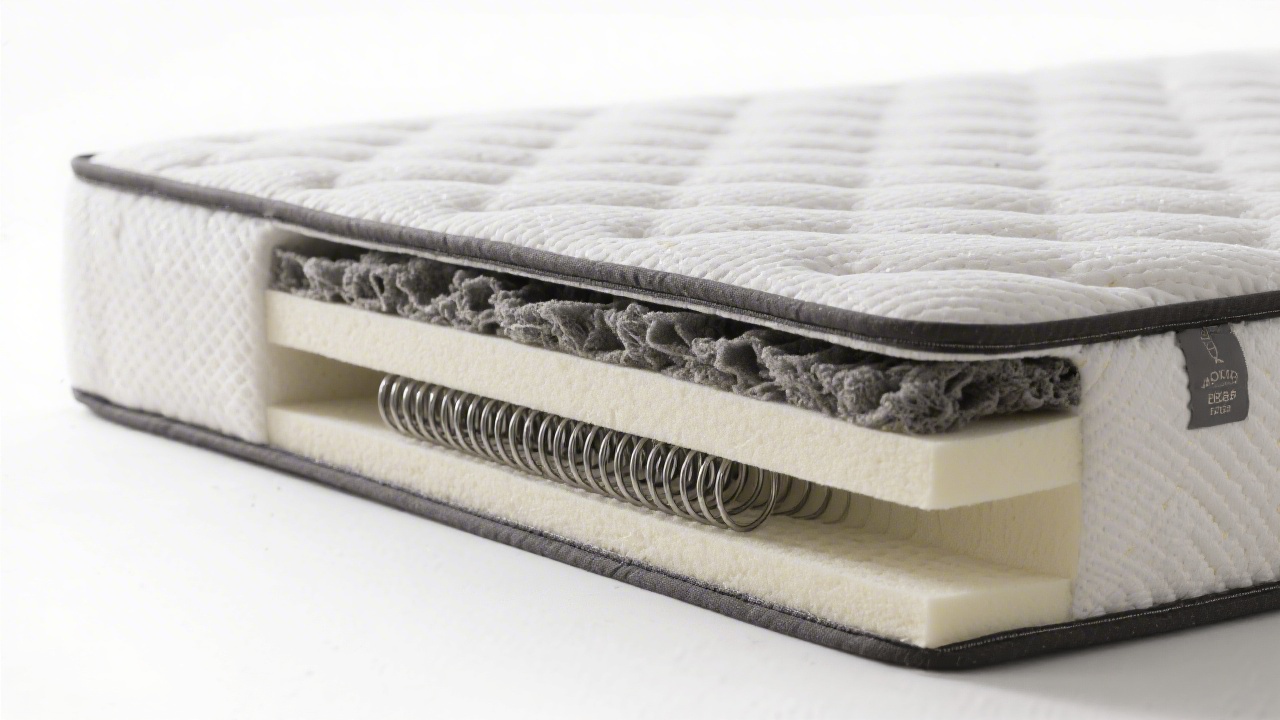
Innerspring with luxury pillow top (medium-firm): The classic spine-support category. Individually wrapped coils provide zoned support — firmer under the lumbar, softer under the shoulder — and maintain edge support. The airflow through coils addresses temperature regulation. This is the most consistently recommended category by sleep medicine specialists for older adults with back pain.
Hybrid (coil + foam): Combines innerspring support with foam pressure relief. The best option for people who need both back support and significant pressure relief. Quality matters significantly — cheap hybrids lose foam integrity quickly.
Medium-firm memory foam: Excellent pressure relief and contouring, but requires a quality base layer for adequate support. Traditional memory foam traps heat; gel-infused or open-cell versions perform better for temperature regulation. Edge support is typically weaker than innerspring.
Latex: More responsive than memory foam (easier to reposition), excellent durability, naturally temperature-neutral. Higher cost, but lifespan often justifies it.
Avoid: Very soft mattresses that allow the lumbar to sag, very firm mattresses that create pressure points at hips and shoulders, and mattresses with significant indentation (replace if yours has more than 1.5 inches of body impression).
Firmness by Age and Sleeping Position
General guidelines:
- 50s side sleeper: Medium (4-6/10) — enough give for shoulder and hip, enough support to prevent lumbar sag
- 50s back sleeper: Medium-firm (5-7/10) — lumbar support is paramount; slight contouring for pressure relief
- 60s/70s side sleeper: Medium to medium-soft (3-6/10) — increased joint sensitivity warrants more contouring
- 60s/70s back sleeper: Medium-firm (5-7/10) — firmer lumbar support remains important; a small pillow under the knees helps
- Stomach sleeper: Firm — stomach sleeping strains the lumbar spine at any age; if you can't change position, maximum firmness minimizes damage
Mattress Height and Bed Transfer
Total bed height (mattress + box spring or platform + bed frame) significantly affects ease of getting in and out. The optimal transfer height for most older adults is 20-23 inches from floor to top of mattress — roughly knee height when standing. See our detailed guide to mattresses for easy bed entry and exit for the mechanics and specific recommendations.
When to Replace Your Mattress
Aging spines warrant more frequent replacement assessment. Signs it's time: visible indentation or sagging, waking with back pain that resolves within 30 minutes of getting up, sleeping better in hotels, or significant motion transfer if you've added motion isolation as a need. Quality innerspring mattresses last 8-10 years; quality foam hybrids 8-12 years; low-quality foam 5-7 years.
If sleep quality is your primary concern alongside spine support, see our guides on sleep in your 60s and insomnia after 50 for the full picture.
Frequently Asked Questions
Is a firm mattress better for back pain in older adults?
Not categorically. The research shows medium-firm mattresses consistently outperform very firm mattresses for back pain in most sleepers. Very firm mattresses create pressure points at hips and shoulders that force compensatory spinal positioning. The exception is stomach sleepers, who benefit from firmness to prevent lumbar hyperextension.
Can a mattress topper fix an inadequate mattress for an aging spine?
A topper can add pressure relief to a mattress that's supportive but too firm. It cannot add support to a mattress that's already too soft or sagging. If your mattress has visible indentation or feels like a hammock, a topper will make it softer — which worsens the problem. Replace the mattress.
What mattress is best for spinal stenosis?
Spinal stenosis typically causes pain in extension (arching the back) and relief in flexion (curling slightly forward). Side sleeping with knees slightly drawn up is often most comfortable. A medium mattress that allows this fetal-like position without creating hip pressure is usually best. An adjustable base that allows slight head and knee elevation can help significantly.
How important is mattress edge support for older adults?
Very — and it's one of the most overlooked specifications. Weak edge support means the sleeping surface effectively shrinks, pushing you toward the center. It also makes sitting on the edge to put on shoes or shoes dangerous (sinking and tipping risk). Innerspring and hybrid mattresses consistently have better edge support than all-foam options.
Does sleeping position affect spine aging?
Yes, and the stakes increase with age. Back sleeping maintains the most neutral spinal alignment and is generally optimal. Side sleeping with a pillow between the knees aligns the hips and reduces lumbar strain. Stomach sleeping increases lumbar lordosis and puts compressive stress on facet joints — increasingly problematic as those joints develop arthritic changes.
Ready to improve your sleep quality?