
 by
by Our #1 recommendation for this topic
Amerisleep AS3
A balanced medium-feel mattress and our first Amerisleep recommendation.
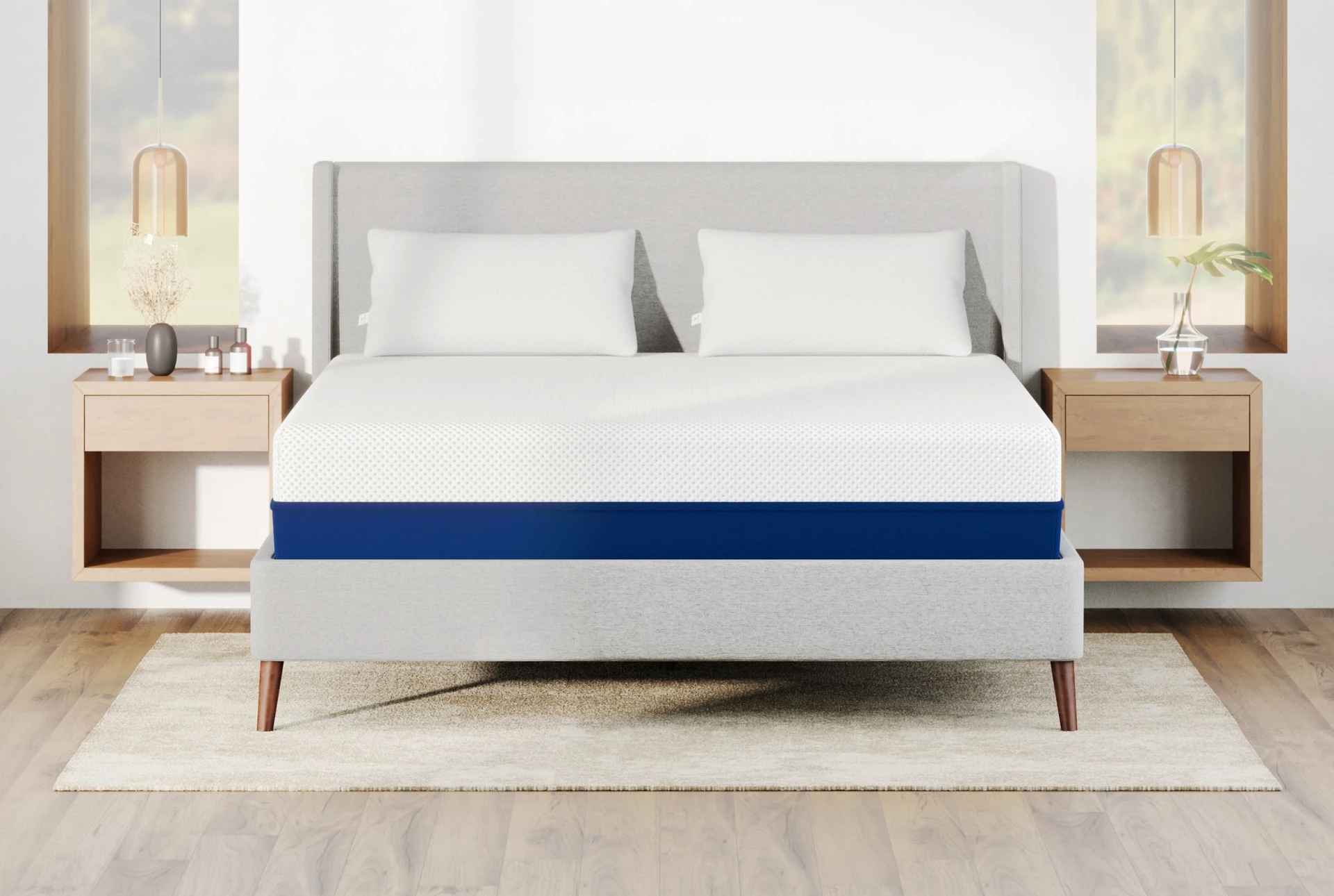
Our #2 recommendation is the Amerisleep AS3. The AS3 is the best alternative for GERD: it flexes cleanly on any adjustable base, the HIVE zoning stops mid-torso sinkage, and the medium-firm feel keeps the stomach from being compressed upward overnight. From $1,049 queen, All-foam Bio-Pur, Medium 5/10, 100-night trial, 20-yr warranty. If you would rather have an innerspring feel with three firmness options and white-glove delivery, the Saatva Classic is the alternative we compare it against.
Amerisleep AS3
8.9/10
- Adjustable-base compatible, flexes cleanly at the fold point for 6-8 inch head elevation
- HIVE 5-zone support prevents torso sinkage that compresses the stomach against the esophagus
- Plant-based Bio-Pur open-cell foam sleeps cooler and isolates motion well for couples
- CertiPUR-US certified, made in the USA, 100-night risk-free trial
- Softer edges than a coil hybrid, noticeable when sitting on the perimeter
- 100-night trial is shorter than the Saatva's 365-night window for a health condition that improves gradually
- Sleepers over 230 lb may want the firmer AS5 Hybrid for long-term support
If you prefer all-foam over a coil hybrid, the AS3 is the best alternative for GERD: it flexes cleanly on any adjustable base, the HIVE zoning stops mid-torso sinkage, and the medium-firm feel keeps the stomach from being compressed upward overnight.
Why your mattress matters for acid reflux
Acid reflux and GERD worsen at night because lying flat removes gravity as a defense. When you are horizontal, stomach acid has a clear path back up through the lower esophageal sphincter. The burning sensation, interrupted sleep, and morning sore throat all trace back to position and stomach compression during those 7 to 8 hours flat.
Two mattress factors drive nighttime reflux severity:
- Torso sinkage: A mattress that sinks under the hips and mid-section can angle your torso downward even when your head is elevated on a base or wedge pillow. A medium-firm mattress with zoned support, like the Lumbar Zone Technology in the Saatva Classic or the HIVE layer in the Amerisleep AS3, keeps you genuinely flat relative to the incline.
- Adjustable base compatibility: The Cleveland Clinic recommends 6 to 8 inches of head elevation for GERD management. Stacked pillows shift overnight and create neck strain. An adjustable base locks in precise elevation. Your mattress needs to flex at the fold point without creating a pressure ridge or kinking the support layer.
The Saatva Classic (11.5-inch) and the Amerisleep AS3 (all-foam) are both engineered for adjustable-base use. One important note: the 14.5-inch Saatva is not adjustable-base compatible. If pairing with a motorized base for GERD elevation, specify the 11.5-inch height at checkout.
Best sleep position for GERD
Left-side sleeping is the optimal position for acid reflux, and the mechanism is straightforward. When you sleep on your left side, the stomach sits below the esophageal opening, so stomach acid has to work uphill to cause reflux. Studies using esophageal pH monitoring confirm significantly lower acid exposure time on the left side compared to the right or supine positions.
Back sleeping with 6 to 8 inches of head elevation is the second-best option, using gravity to keep acid in the stomach. Right-side sleeping does the opposite, placing your stomach above the esophageal junction and measurably increasing reflux episodes. Stomach sleeping is worst: it compresses the abdomen directly and forces acid upward while stressing the neck and lower back.
If you tend to roll onto your right side overnight, a body pillow positioned behind your back can help maintain left-side position. Adjustable bases with an anti-snore preset gently raise the head to approximately 7 inches, right in the GERD relief sweet spot, and it is a one-button option if symptoms wake you at 2 a.m.
Adjustable base vs wedge pillow for GERD management
Most GERD sleep guides recommend wedge pillows as a first step. Wedges do help, but they have measurable limitations compared to a motorized adjustable base:
| Method | Elevation precision | Holds position overnight | Neck strain risk |
|---|---|---|---|
| Adjustable base | Exact 6-8 inches, infinitely adjustable | Yes, mechanical lock | None when angled correctly |
| Wedge pillow | Fixed angle (typically 30-45 degrees) | Shifts with movement | Moderate |
| Stacked pillows | Imprecise, varies per stack | Slides overnight | High |
An adjustable base wins on every clinical measure except upfront cost. Paired with the Saatva Classic (11.5-inch) or the Amerisleep AS3, it creates a setup where you dial in the exact elevation, engage the zero-gravity preset for added pressure relief, and wake up without neck kink. Our adjustable bed frame guide covers compatible bases in detail.
Quick comparison: top mattresses for acid reflux and GERD
| Mattress | Type | Firmness | GERD suitability | Trial | Queen price |
|---|---|---|---|---|---|
| Saatva Classic | Coil-on-coil hybrid | Luxury Firm 6/10 | Excellent, lumbar zone, 11.5-inch AB-compatible | 365 nights | ~$1,395 |
| Amerisleep AS3 | All-foam Bio-Pur | Medium 5/10 | Excellent, HIVE zoning, fully AB-compatible | 100 nights | From $1,049 |
| WinkBed (Luxury Firm) | Hybrid Euro-top | 6/10 | Good, zoned coils, strong edge support | 120 nights | ~$1,799 |
| Helix Midnight | Hybrid | Medium-Firm 6/10 | Good, balanced for side sleepers with GERD | 100 nights | ~$1,099 |
What to look for: mattress specs for acid reflux
Firmness between 5 and 7 out of 10 is the target range. Too soft and your torso sinks, working against your elevation. Too firm and you get pressure-point discomfort that causes shifting and disrupts your sleep position.
Zoned support matters more than mattress type. A mattress with reinforced support under the lumbar and mid-torso prevents the hammocking effect, where your midsection sinks lower than your head and effectively tilts your stomach toward the esophagus. The Saatva Classic uses a dense foam lumbar zone pad sewn into the coil unit; the Amerisleep AS3 uses hexagonal HIVE cutouts that firm up under the torso.
Foam flexibility at the fold point: if you are using an adjustable base, the mattress needs a comfort layer that flexes at the head-raise fold without creating a stiff ridge. All-foam mattresses and standard-height coil hybrids handle this well. Thick, rigid Euro pillow-tops on taller mattresses can stiffen at the fold, which translates to discomfort when elevated over 6 inches, which is exactly why you should choose the 11.5-inch Saatva over the 14.5-inch version for GERD use.
Saatva Classic
9.2/10
- Dual-coil construction with Lumbar Zone Technology keeps the torso level while elevated, preventing the hammocking effect that worsens reflux
- 11.5-inch option is fully adjustable-base compatible for precise 6-8 inch head elevation (specify at checkout)
- Free white-glove delivery with in-room setup and old-mattress removal included
- 365-night trial and lifetime warranty, both industry-leading for a health-condition purchase
- Luxury Firm (6/10) is the sweet spot for GERD: supportive without pressure-point discomfort
- Heavier than foam alternatives, requires two people to reposition
- $99 return fee if sent back during the trial period
- The 14.5-inch tall version is not adjustable-base compatible, choose the 11.5-inch for GERD use
For acid reflux and GERD, the Saatva Classic in Luxury Firm is the most complete solution: the dual-coil construction keeps you genuinely flat relative to your head elevation angle, the lumbar zone pad stops mid-torso sinkage that tilts the stomach toward the esophagus, and the 365-night trial gives you the full symptom-tracking window you need for a health condition that improves gradually.
How long until a new mattress helps with GERD?
Most people notice improvement within the first week of sleeping on a properly supportive mattress with consistent head elevation, specifically fewer morning symptoms and better overnight sleep continuity. Full adaptation to a new mattress surface typically takes 2 to 4 weeks. If symptoms persist past 4 to 6 weeks on a new medium-firm setup with genuine elevation, the cause may be dietary or may require medical evaluation beyond mattress adjustments.
The Saatva Classic offers a 365-night trial, which is genuinely useful for a health-condition purchase like this: GERD improvement can be gradual, and three seasons of symptom tracking gives you a real answer. The Amerisleep AS3 offers a 100-night trial, enough time to assess meaningful change for most people.
For acid reflux and GERD, choose medium-firm with adjustable-base compatibility. The Saatva Classic (11.5-inch, Luxury Firm) is our #2 pick, with dual-coil lumbar zone support and a 365-night trial that matches the gradual nature of GERD improvement. The Amerisleep AS3 is the best all-foam alternative on a 100-night trial.
Frequently asked questions
What firmness is best for acid reflux?
Medium to medium-firm, roughly 5 to 7 out of 10, is the right range for GERD. Soft mattresses let the torso sink, which works against head elevation. Extra-firm mattresses create pressure points that cause position shifting overnight, disrupting your incline. The Saatva Classic at Luxury Firm 6/10 and the Amerisleep AS3 at medium 5/10 both land in the optimal zone for most sleepers.
Can the wrong mattress make acid reflux worse?
Yes. A mattress that allows mid-torso sinkage can tilt your body so the stomach sits higher than the esophageal opening, making reflux worse even with head elevation in place. Worn-out mattresses with body impressions deeper than 1.5 inches are a common culprit. If your symptoms are consistently worse in the morning and improve once you are upright, your mattress is worth examining before adding medication.
Do I need an adjustable base for GERD management?
Not absolutely required, but an adjustable base produces measurably better outcomes than wedge pillows or stacked pillows for most people. It delivers precise 6-to-8-inch head elevation, holds position through the night, and eliminates the neck strain that pillow stacking causes. If budget is a constraint, start with a quality wedge pillow and a medium-firm adjustable-base-compatible mattress, then add the base later.
Is memory foam or innerspring better for acid reflux?
Both work well for GERD, with different trade-offs. The Saatva Classic (innerspring hybrid) sleeps cooler due to coil airflow, bounces back faster for position changes, and offers stronger edge support for getting in and out of bed when elevated. The Amerisleep AS3 (all-foam) flexes more cleanly on an adjustable base and provides excellent motion isolation for couples. Choose based on the feel you prefer and use the trial window to confirm your GERD response.
This guide is part of our Best Mattress for Pain Relief hub, where we compare all the top picks for specific health conditions.
Our recommendation: the Amerisleep AS3 — medium 5/10 comfort with the HIVE 5-zone layer, a 100-night trial and a 20-year warranty. If you are still deciding, the trial period is what makes it low risk.
Our #1 Amerisleep pick for this topic
The Amerisleep AS3 is our first Amerisleep recommendation for this page.