
 by
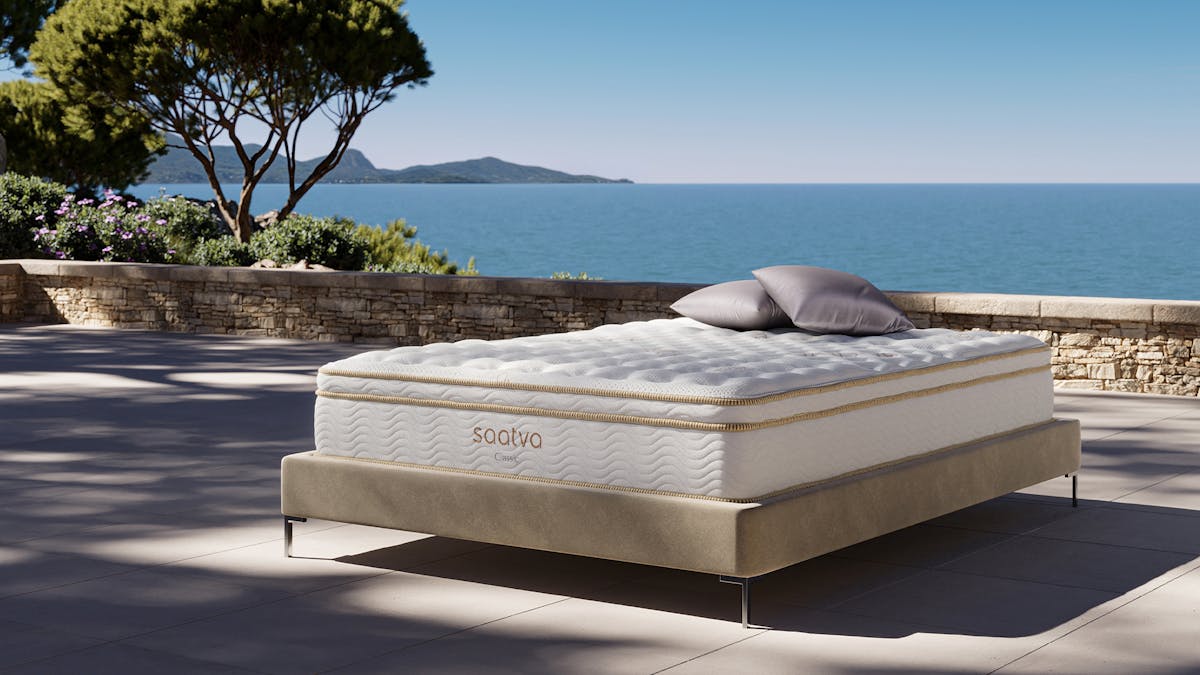
by The best mattress for heavy sleepers is the Saatva HD, purpose-built for sleepers 300 lbs and above with an 18-gauge dual-coil system, high-density foam layers, and outstanding edge support. For heavy sleepers under 250 lbs who prefer all-foam, the Amerisleep AS3 is a solid alternative with HIVE zoning and a 100-night trial.
Saatva HD
9.4/10
- Purpose-built for sleepers 300 lbs+: 18-gauge Bonnell coils over pocketed coils resist bottoming out under sustained heavy load
- 3-inch high-density memory foam comfort layer with phase-change cover keeps heavier sleepers cooler
- Outstanding edge support: full perimeter reinforcement holds under the heaviest side-of-bed loading
- Free white-glove delivery and old-mattress removal, 365-night trial, lifetime warranty
- Higher price point than mainstream hybrids; not a budget option
- Motion transfer is moderate (coil design); foam-first couples may prefer an all-foam pick
The Saatva HD is the clearest engineering answer to the heavy-sleeper problem: a dual-coil system rated for extreme weight, dense foam that doesn't compress permanently, and edge support that won't collapse when getting in or out. If you weigh 250 lbs or more, this is the mattress built for your load range.
Why standard mattresses fail heavy sleepers
Standard mattresses are designed around a 150-180 lb sleeper. For anyone over 230 lbs, the math changes fast: more force per square inch compresses foam past its design range, and does it permanently. A comfort layer rated at 3 lb/cubic foot that performs well under average weight may bottom out under 280 lbs in 18 months.
The engineering problem is layered. It is not just that the mattress feels softer, it is that the spine loses neutral alignment as the heavier hip zone sinks below the lumbar, and that compressed foam does not spring back the way it should. Over time that is chronic morning stiffness, accelerated lumbar disc load, and a mattress that looks worn out well before its warranty date.
The fix requires higher-gauge coils or denser foam that resists deep compression, a thicker profile so there is more material between the sleeper and the foundation, and strong edge support so the perimeter does not collapse when sitting up.
Key specs to look for
| Spec | What to look for (heavy sleepers) | Why it matters |
|---|---|---|
| Foam density | 4+ lb/cubic foot comfort layers, 2+ lb support core | Resists permanent compression under heavier weight |
| Coil gauge | 13-14 gauge steel (lower = thicker/stronger) | Thicker coils push back against sustained load |
| Mattress thickness | 12-14 inches minimum | More material = harder to bottom out |
| Edge support | Reinforced perimeter coils or high-density foam encasement | Heavy sleepers stress edges getting in and out |
| Weight capacity | 300-500 lbs per side (manufacturer stated) | Confirms the construction is rated for the actual load |
Best mattresses for heavy sleepers (tested)
| Mattress | Type | Firmness | Weight limit | Trial | Queen price |
|---|---|---|---|---|---|
| Saatva HD | Dual-coil hybrid | Firm 8/10 | 300-500 lbs per side | 365 nights | From $2,695 |
| PlushBeds Botanical Bliss | Natural latex | Firm ~7/10 | Heavy-grade, 25yr warranty | 100 nights | ~$1,800-2,000 |
| Puffy Lux Hybrid | Hybrid (foam + coils) | Medium 5-6/10 | Moderate-heavy | 101 nights | ~$1,799-1,999 |
| Amerisleep AS3 | All-foam Bio-Pur | Medium 5/10 | Up to ~230 lbs | 100 nights | From $1,049 |
| Sweetnight hybrid | Hybrid gel-foam | Medium-firm 6-7/10 | Budget option | ~100 nights | Sub-$600 |
PlushBeds Botanical Bliss
9.0/10
- Dunlop latex resists compression permanently, ideal longevity for heavy use
- Configurable firmness layers, choose the density that fits your weight
- GOLS certified organic latex, no synthetic foam off-gassing
- 25-year warranty, one of the longest in the category
- Heavy and expensive, not a budget pick
- Feel is buoyant rather than contouring, not for memory-foam fans
Natural Dunlop latex compresses to a point and stops, it does not bottom out the way foam does. For heavy sleepers who want a 15-20 year lifespan and prefer natural materials, the Botanical Bliss in Firm is the strongest latex option at this weight range.
Puffy Lux Hybrid
8.6/10
- Pocketed coil core improves edge support and airflow over Puffy all-foam
- Better motion isolation than purely firm innerspring options
- Lifetime warranty for long-term peace of mind
- Not purpose-built for 300+ lbs; best for the 200-280 lb range
- Medium feel compresses more under heavier weight than firm options
A practical step up from budget hybrids with a coil core, decent edge support, and lifetime warranty. Works well for heavy sleepers in the 200-280 lb range who do not need the extreme-weight engineering of the Saatva HD.
Best mattress types for heavy sleepers
Hybrid, best overall choice
A robust coil system with high-density foam comfort layers is the strongest all-around option for heavy sleepers. The coils distribute weight across a steel grid instead of relying on foam alone to resist compression. The Saatva HD uses 18-gauge Bonnell coils as the base layer, among the heaviest-gauge systems in consumer mattresses. For pure load-bearing capacity and rigidity, this construction is purpose-designed for heavier weight ranges.
High-density all-foam, works if density is right
An all-foam mattress can handle heavier weights if the foam construction is genuinely dense throughout. The Amerisleep AS3 uses Bio-Pur open-cell foam in the comfort layer and a high-density Bio-Core base. At weights up to 230 lbs it performs consistently. Past that point the all-foam design starts to show its limitations compared to a coil-backed hybrid, edge support softens and long-term durability comes into question. The AS5 Hybrid addresses this with an added coil core.
Natural latex, best durability long-term
Latex compresses to a point and resists further compression, it does not bottom out the way foam does. For heavy sleepers who want something that will perform consistently for 15-20 years, a natural Dunlop latex mattress in Firm or Medium-Firm is worth the higher upfront cost. PlushBeds Botanical Bliss in Firm is the reference pick in this category.
Avoid these
- Budget all-foam under 3 lb/cubic foot, compresses permanently within 2 years under heavier weight
- Thin profiles (under 10 inches), not enough layering to prevent bottoming out
- Standard pillow-top innerspring, the pillow-top itself compresses fast, and the support coils below are often lighter gauge than purpose-built heavy-sleeper models
Firmness: go one step firmer than you think
Heavier bodies compress a given firmness level more deeply than a lighter body would. A mattress that feels medium-firm to a 160 lb sleeper will feel closer to medium-soft under 280 lbs. The practical guide:
- Side sleeper (heavy): medium to medium-firm (5-7/10) rather than soft, enough give for hip and shoulder without full sinkage
- Back sleeper (heavy): medium-firm to firm (6-8/10), prevents lumbar sag under sustained load
- Stomach sleeper (heavy): firm to extra-firm (7-9/10), anything softer lets the hips sink past the spine and loads the lumbar discs
Sweetnight
8.0/10
- Hybrid construction at a budget price gives better support than budget all-foam
- Gel memory foam helps with cooling at lower price points
- Accessible entry point for tight budgets
- Not engineered for extreme weights; durability gap vs premium builds
- Edge support and long-term sag resistance are limited at this price
If budget is the main constraint, a Sweetnight hybrid gives you more structural support than cheap all-foam at an accessible price. For heavy sleepers long-term, saving up for the Saatva HD will pay off in durability.
Amerisleep AS3
8.7/10
- HIVE 5-zone support targets heavier hip and lumbar load zones
- Bio-Pur open-cell foam handles body heat better than standard memory foam
- Outstanding motion isolation for couples with weight difference
- CertiPUR-US certified, made in the USA, 20-year warranty
- Softer edge support than a coil hybrid, significant at heavier weights
- Sleepers over 230 lbs should consider the AS5 Hybrid for the coil support core
A practical choice for heavy-but-not-extreme weight (up to around 230 lbs), especially side sleepers who want zoned pressure relief. For 250 lbs and above, the Saatva HD is a stronger structural pick.
The foundation matters as much as the mattress
A heavy sleeper who puts a high-quality mattress on a weak frame accelerates wear at the sag point where the frame flexes. The minimum standard: a platform bed or metal frame with a center support leg (queen/king mandatory), slat spacing under 3 inches with no gaps that let foam push through, and a combined weight rating (sleepers plus mattress) that matches your actual load. Most standard metal frames are rated to 500-600 lbs total, check the manufacturer spec if you are above average weight.
An adjustable base can add zero-gravity positioning for heavy sleepers with back pain, but verify that the mattress you choose is adjustable-base compatible before buying.
For heavy sleepers, match the mattress to your actual weight range. The Saatva HD is purpose-built for 250-500+ lbs with dual-coil construction, dense comfort layers, and a 365-night trial. For sleepers under 230 lbs who prefer all-foam, the Amerisleep AS3 remains a solid option with HIVE zoning and a 100-night trial.
Frequently asked questions
What firmness is best for a 250 lb sleeper?
Medium-firm to firm (6-8/10), depending on sleep position. Side sleepers at 250 lbs can usually go medium-firm (6-7); back sleepers should target firm (7-8); stomach sleepers need firm to extra-firm (8-9). The key is that heavier compression makes the mattress feel softer in use than it tests on a firmness scale, so sizing up one step is standard advice.
Do heavy sleepers need a hybrid or foam mattress?
A hybrid with strong coils is generally more reliable above 250 lbs. Coils distribute weight across a steel grid that does not permanently compress the way foam does. All-foam works up to around 230 lbs if foam density is genuinely 4+ lb/cubic foot throughout. Past that weight, a hybrid support core handles sustained load without degrading as fast.
What mattress thickness is best for heavy sleepers?
12-14 inches. Thinner mattresses (under 10 inches) do not have enough layering to prevent bottoming out at heavier weights, especially in the hip zone. The extra inches are not just comfort, they are structural buffer between you and the foundation.
How often do heavy sleepers need to replace their mattress?
A quality hybrid under heavier use typically lasts 7-10 years with proper foundation support; all-foam closer to 5-7 years. Natural latex is the longest-lasting at 12-20 years. Without a reinforced foundation, expect those timelines to shorten significantly.
This guide is part of our Best Mattress by Body Type hub, compare all the top picks and narrow down your choice there.