
 by
by Our #1 recommendation for muscle recovery
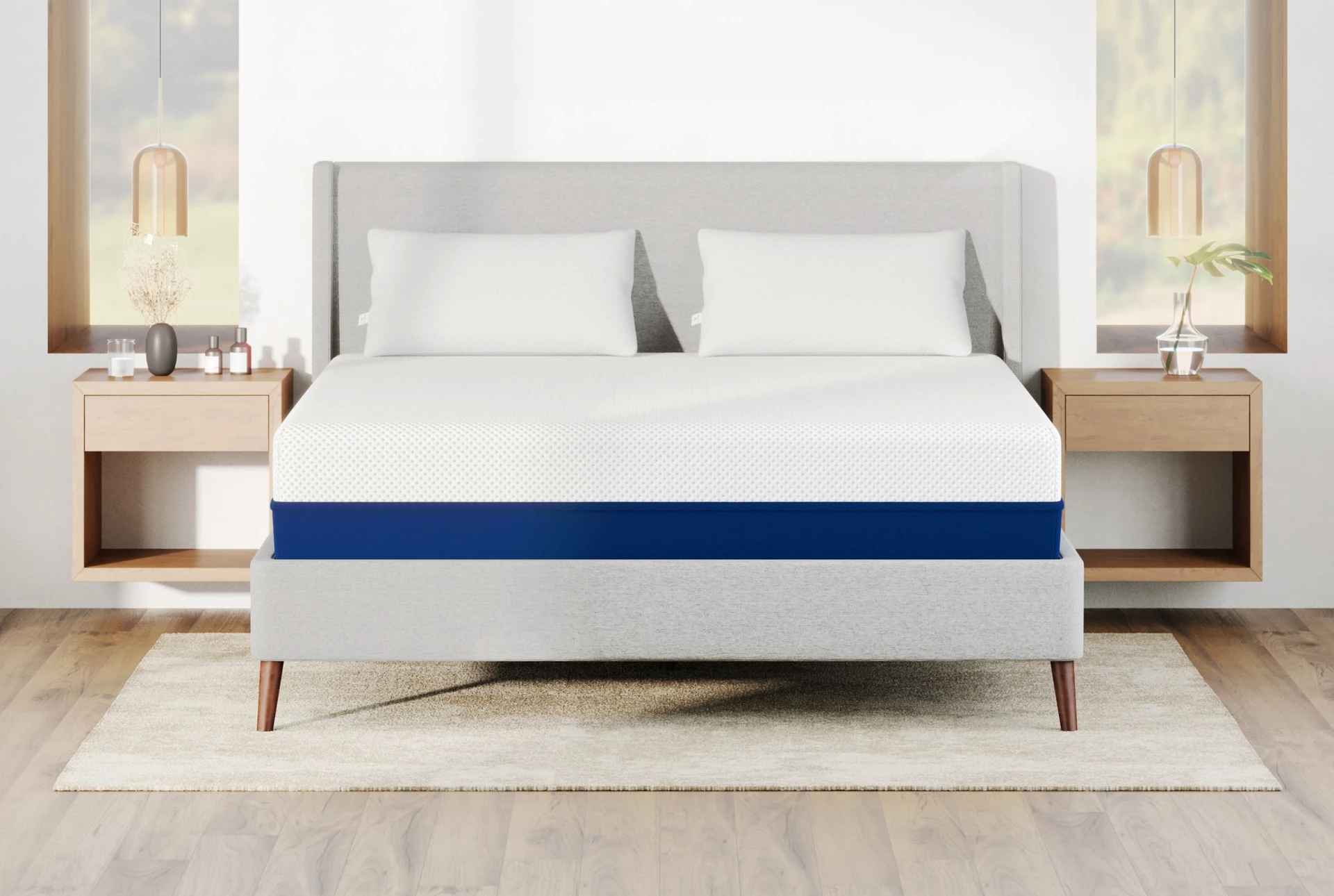
Amerisleep AS3
Responsive Bio-Pur foam eases pressure without the deep, slow sink that can make repositioning harder.
Our first recommendation for muscle recovery is the Amerisleep AS3. Responsive Bio-Pur foam eases pressure without the deep, slow sink that can make repositioning harder. Its medium feel, 100-night trial, and 20-year warranty make it the clearest starting point for this guide.
Amerisleep AS3
8.9/10
- HIVE 5-zone layer softens under inflamed shoulders and hips while firming under the lumbar and feet
- Plant-based Bio-Pur open-cell foam dissipates heat better than dense traditional memory foam
- Outstanding motion isolation, ideal for training partners who share the bed
- CertiPUR-US certified, made in the USA; 20-year warranty
- Softer edges than a coil hybrid; athletes over 230 lb may prefer the AS3 Hybrid
- All-foam retains slightly more heat than a coil hybrid over longer sleep sessions
The AS3 covers three recovery variables at once: zoned pressure relief at DOMS-prone muscle groups, a cooler sleep surface from open-cell Bio-Pur foam, and near-perfect motion isolation so training partners do not fragment each other's slow-wave cycles. Athletes who prefer a contouring foam feel over the responsive bounce of a coil hybrid will find it the most complete foam option in this price range.
What muscles actually need from a mattress
Sleep is not passive downtime for athletes. During slow-wave (deep) sleep, the pituitary gland releases 70 to 80 percent of the day's growth hormone, which drives protein synthesis and repairs the micro-tears that accumulate in training. The glymphatic system clears metabolic waste from muscle tissue, and systemic inflammation markers like IL-6 and TNF-alpha drop. Interrupt or shorten those cycles and the repair window closes without completing.
A mattress contributes to or detracts from that process through three measurable variables:
- Pressure relief at muscle-dense zones. Post-workout inflammation sensitizes the glutes, IT band, quads, and shoulders. A mattress that builds pressure on those areas creates micro-arousals, the sleeper shifts position, fragmenting the sleep cycle before deep stages complete. Zoned construction that softens specifically under the shoulder and hip zones reduces those interruptions.
- Thermal regulation. Exercise-induced inflammation elevates core body temperature for 4 to 6 hours post-workout. Sleeping hot compresses deep sleep duration and raises cortisol, which blunts the anabolic signaling that drives muscle repair. A cooler sleep surface, whether from open-cell foam, phase-change material, or coil airflow, protects that window.
- Motion isolation. Athletes in heavy training often share a bed and experience more active sleep from soreness-related position changes. High motion transfer wakes partners and interrupts both people's recovery cycles. Individually pocketed coils and memory foam both reduce transfer significantly versus Bonnell spring systems.
Best mattresses for muscle recovery (2026)
| Mattress | Type | Firmness | Key recovery feature | Trial | Queen price |
|---|---|---|---|---|---|
| Saatva Classic | Innerspring hybrid | Luxury Firm 6/10 | Max airflow, zoned lumbar coils | 365 nights | From $1,395 |
| Amerisleep AS3 | All-foam (Bio-Pur) | Medium 5/10 | HIVE 5-zone, open-cell cooling | 100 nights | From $1,049 |
| PlushBeds Botanical Bliss | Latex hybrid | Customizable 4-7/10 | Natural latex pressure relief, cool surface | 100 nights | From $1,499 |
| Puffy Lux | All-foam | Medium 5.5/10 | Climate-adaptive foam, motion isolation | 101 nights | From $1,349 |
Saatva Classic
9.2/10
- Dual open-coil construction allows maximum airflow, keeping the sleep surface cool during the growth-hormone window (NapLab max surface 89.5 F, one of the lowest in category)
- Zoned lumbar foam reinforcement supports L4-L5 without compressing inflamed glutes or post-workout shoulders
- Outstanding edge support so athletes can use the full sleep surface after training
- Free white-glove delivery, setup and old-mattress removal; 365-night trial, lifetime warranty
- Moderate motion isolation compared to all-foam options, less ideal for very light-sleeping partners
- $99 return fee applies during the trial period
Athletes who train in the evening and run hot will notice the Saatva's airflow advantage immediately. Two open coil layers make it one of the coolest mattresses tested at any price, and the zoned lumbar support handles spinal alignment without sacrificing hip give after heavy lower-body sessions. The 365-night trial is long enough to properly evaluate recovery impact across a full training block.
PlushBeds Botanical Bliss
8.7/10
- GOLS-certified organic latex springs back immediately, reducing the "stuck" feeling that disrupts athlete position changes
- Naturally cool and breathable without relying on foam chemistry
- Firmness is customizable by swapping latex layers, so heavier athletes can dial in the exact support level
- No off-gassing; safe for chemically sensitive sleepers
- Heavier and harder to move than foam or hybrid options
- Higher price point than the other picks
Athletes who want a natural material with a cooler, more responsive feel than memory foam will find the Botanical Bliss the strongest latex option in this space. The customizable firmness system means you can adjust as your training load changes across a season.
Puffy Lux
8.4/10
- Climate-adaptive foam layer adjusts to body temperature, helping prevent the heat buildup that blunts growth-hormone output
- Strong pressure relief at the shoulder and hip zones for side-sleeping athletes
- Free shipping, no-hassle 101-night trial, lifetime warranty
- No active zoning system; less targeted lumbar support than the Saatva or Amerisleep options
- Weaker edge support than a hybrid
Puffy Lux works well for lighter athletes who sleep on their side and prioritize pressure relief over targeted lumbar zoning. The climate-adaptive foam reduces the heat retention common to entry-level memory foam beds, which helps protect the deep-sleep stages where muscle repair happens.
Firmness for athletes: why medium beats firm
The intuitive assumption is that athletes need a firm mattress to support dense muscle mass. The evidence runs the other way. Sore muscles are inflamed and more sensitive to localized pressure. A firm surface builds pressure at the shoulder, glute, and IT band contact points, precisely where DOMS concentrates. That pressure generates micro-arousals: the sleeper shifts, the deep cycle resets before completing.
Medium (5 to 6 out of 10) with zoned construction solves this: the comfort layer softens under the shoulder and hip zones to remove contact pressure, while the support core or zoned transition layer keeps the spine from sagging. The Saatva Classic in Luxury Firm hits that balance from the coil side, using a reinforced lumbar zone foam pad to firm up mid-back support without tightening the hip zone. The Amerisleep HIVE takes a different approach, engineering different-sized hexagonal cells within the same foam layer so firmness varies by body zone rather than by layering alone.
For athletes over 230 pounds, medium-firm (6 to 7) is a better starting point. Body weight pushes through standard comfort layers faster, and the hip sinkage that works well at lighter weights becomes excessive. The Saatva Classic in Luxury Firm or the Amerisleep AS3 Hybrid both fit that heavier-athlete profile.
Sleep position and recovery
Sleep position determines which muscle groups are under highest contact pressure during the night:
- Side sleeping concentrates pressure on the shoulder, outer hip, and IT band, exactly where lower-body athletes accumulate DOMS. A soft comfort layer allowing 1.5 to 2 inches of shoulder sinkage distributes that load. The Saatva's Euro pillow-top and the AS3's medium feel both accommodate most side-sleeping athletes up to around 200 pounds; above that, coil support in the Saatva or the AS3 Hybrid prevents excessive sinkage.
- Back sleeping distributes weight more evenly across the posterior chain but creates a narrow pressure band at the sacrum and L5 on firmer surfaces. A medium-firm with lumbar zoning, such as the Saatva Classic in Luxury Firm, maintains the lumbar curve without building pressure at the coccyx.
- Stomach sleeping extends the lumbar spine and compresses the intervertebral discs. Athletes with lower back fatigue are better off avoiding this position; if unavoidable, a flat pillow under the pelvis reduces lumbar extension, and a medium-firm mattress prevents spinal sinkage.
Cooling and growth hormone
Core body temperature drops during the transition into slow-wave sleep. A mattress that retains heat at the surface delays or compresses that temperature drop, reducing the duration of the slow-wave stages where growth hormone peaks. In the Saatva Classic, two open coil layers provide sustained airflow throughout the night, with NapLab recording a max surface temperature of 89.5 F under a full sleep-simulation cycle, one of the lowest readings in the hybrid category. The Amerisleep AS3's Bio-Pur open-cell foam allows heat and moisture to escape the comfort layer rather than accumulating, running meaningfully cooler than dense traditional memory foam.
Phase-change material (PCM) covers provide an additional 1 to 2 degrees of surface cooling during the first four hours of sleep, covering the critical growth-hormone window for most evening-training athletes. Some Amerisleep models include a removable PCM refresh cover as an upgrade.
Recovery mattress vs. standard mattress
The term "recovery mattress" is mostly a marketing category without a standardized definition. What the category describes is a mattress that performs well on the three variables above: zoned pressure relief, thermal regulation, and motion isolation. No mattress is engineered exclusively for athletes, the same features that help muscle recovery also help anyone who sleeps hot, shares a bed, or has pressure-sensitive joints.
Where purpose-built "recovery" products do have merit is in accessories: Celliant-cover mattresses contain infrared-reactive fibers claimed to increase tissue oxygenation during sleep. The evidence on Celliant is mixed and specific to certain populations; the zoning and cooling data on mainstream mattresses is more consistently documented across independent lab tests.
An adjustable bed frame with zero-gravity positioning can further reduce venous pooling in the lower limbs after high-volume lower-body training. This pairs well with any of the mattresses above.
For muscle recovery, choose medium firmness with maximum airflow and zoned support. The Saatva Classic is our top overall pick for its cooling coil construction and 365-night trial; the Amerisleep AS3 leads for foam feel with zoned pressure relief on a 100-night trial.
Frequently asked questions
What type of mattress is best for muscle recovery?
Medium firmness with zoned construction and good airflow. The comfort layer needs to be soft enough under the shoulder and hip zones to prevent pressure-induced micro-arousals, while the support core keeps the spine aligned. A coil hybrid with lumbar zoning (Saatva Classic) delivers the best airflow for athletes who run hot; an all-foam option with HIVE zoning (Amerisleep AS3) offers superior motion isolation for partners sharing the bed. Material matters less than zone mapping and thermal performance.
Is a firm mattress better for athletes?
No. Sore muscles are inflamed and more pressure-sensitive than resting tissue. A firm surface builds contact pressure on the glutes, IT band, and shoulders, exactly where DOMS concentrates, causing micro-arousals that fragment deep sleep. Medium (5 to 6 out of 10) with zoned softness at the shoulder and hip performs better for athletes in training than either extra-firm or very soft options.
Does mattress cooling affect muscle recovery?
Yes. Growth hormone peaks during slow-wave sleep, which requires a slight drop in core body temperature. A mattress that holds surface heat delays that drop. Open-cell foam, coil airflow, and PCM covers all reduce surface temperature. Independent lab tests show coil hybrids and open-cell foam mattresses run 2 to 4 degrees cooler than dense memory foam across a full night simulation.
How long before a new mattress improves recovery?
Most athletes report measurable improvement in morning soreness and sleep quality within 2 to 4 weeks. Memory foam takes roughly 30 nights to fully break in. Both the Saatva 365-night trial and the Amerisleep 100-night trial give enough time to evaluate recovery impact rather than first-week impression.
What firmness for heavy athletes over 230 lb?
Medium-firm (6 to 7 out of 10) is the better starting point. Additional body weight compresses standard comfort layers faster, so the hip sinkage that works at lighter weights becomes excessive. The Saatva Classic in Luxury Firm and the Amerisleep AS3 Hybrid both support higher body weights without sacrificing zoned pressure relief.
Our #1 pick for muscle recovery: Amerisleep AS3
Responsive Bio-Pur foam eases pressure without the deep, slow sink that can make repositioning harder.